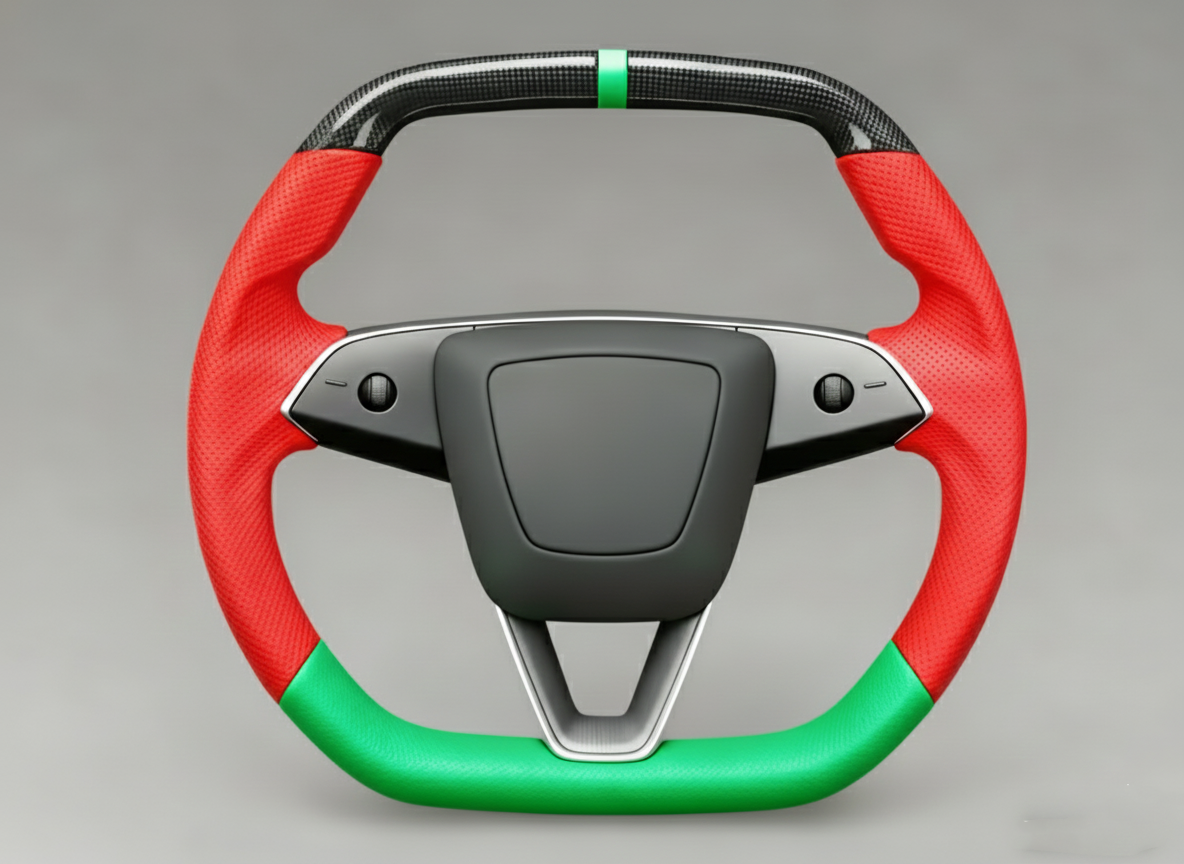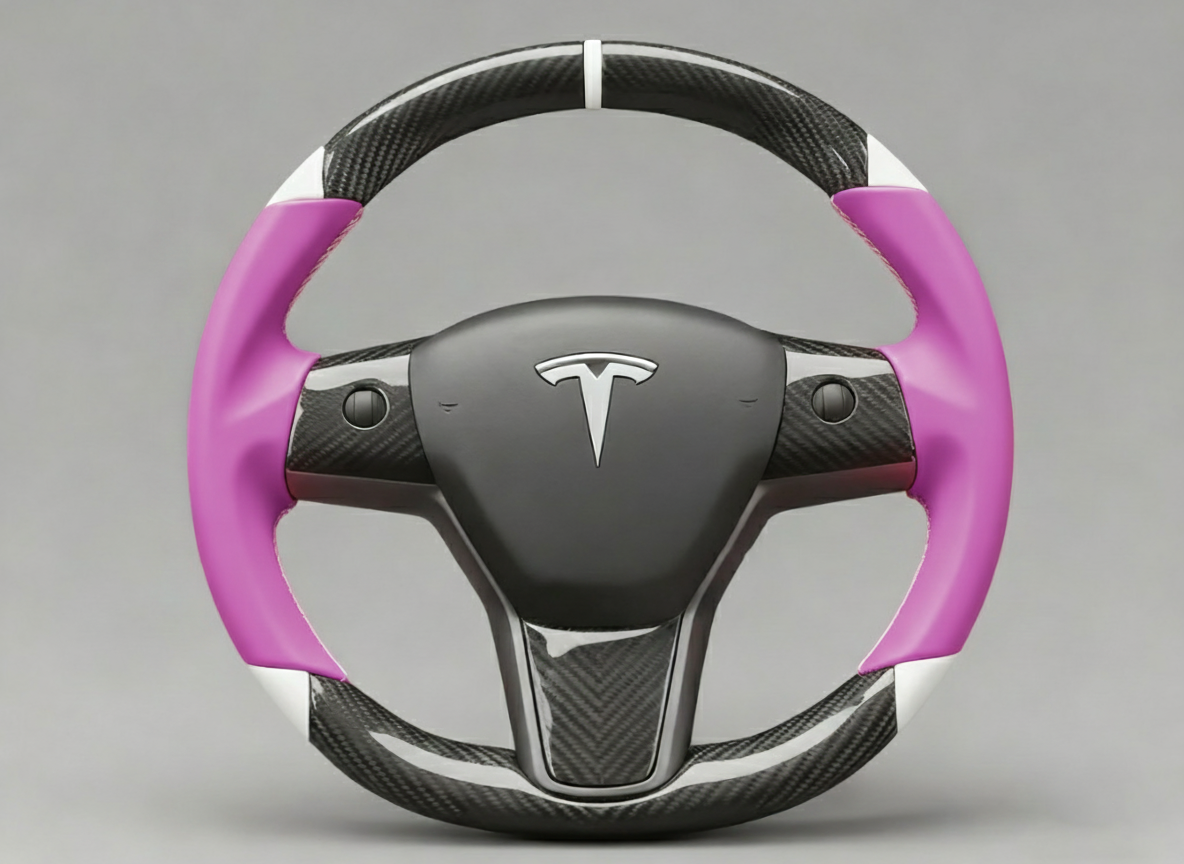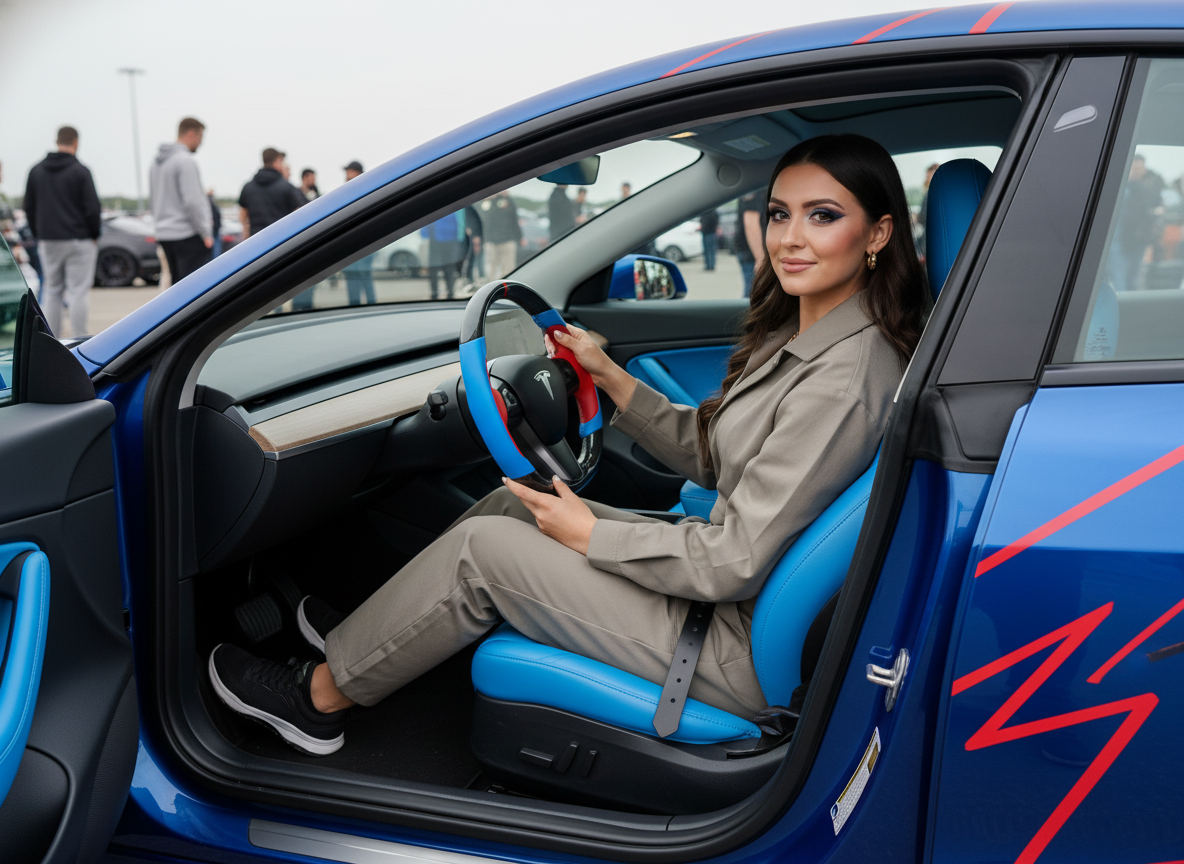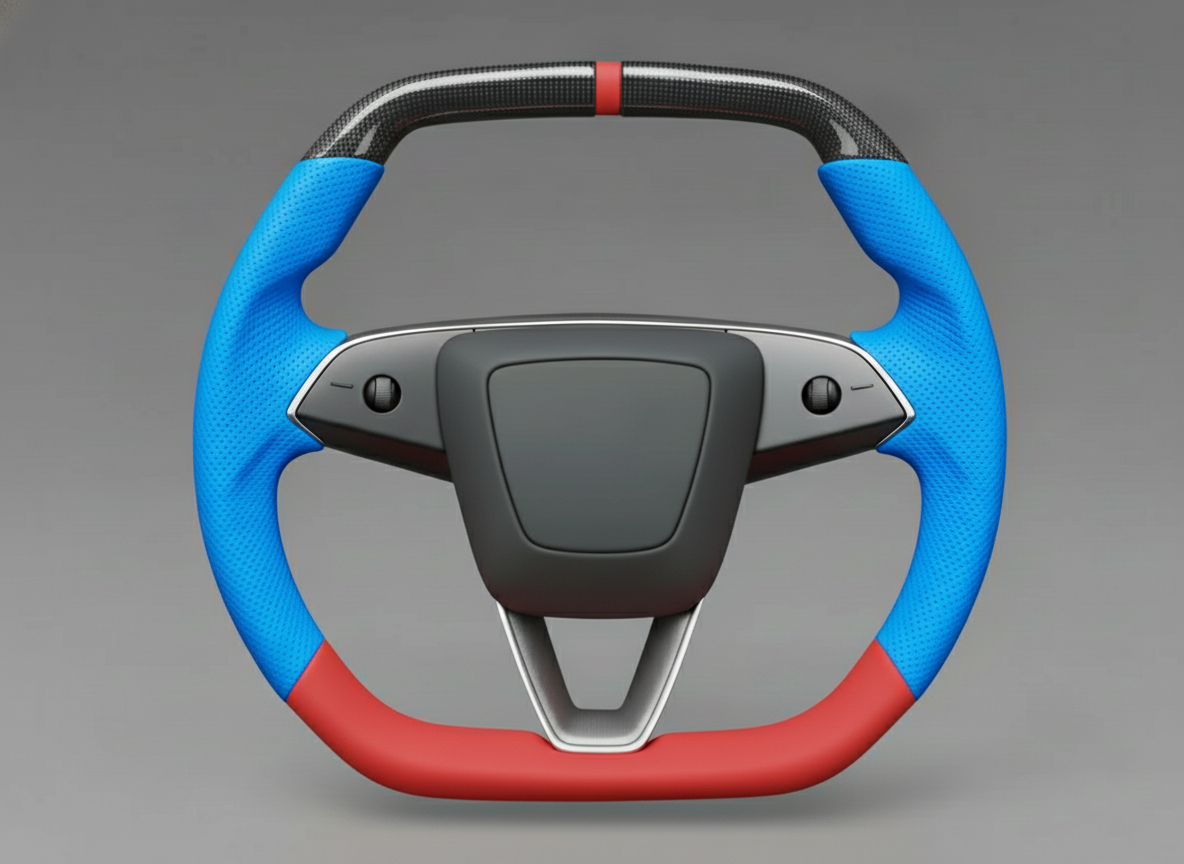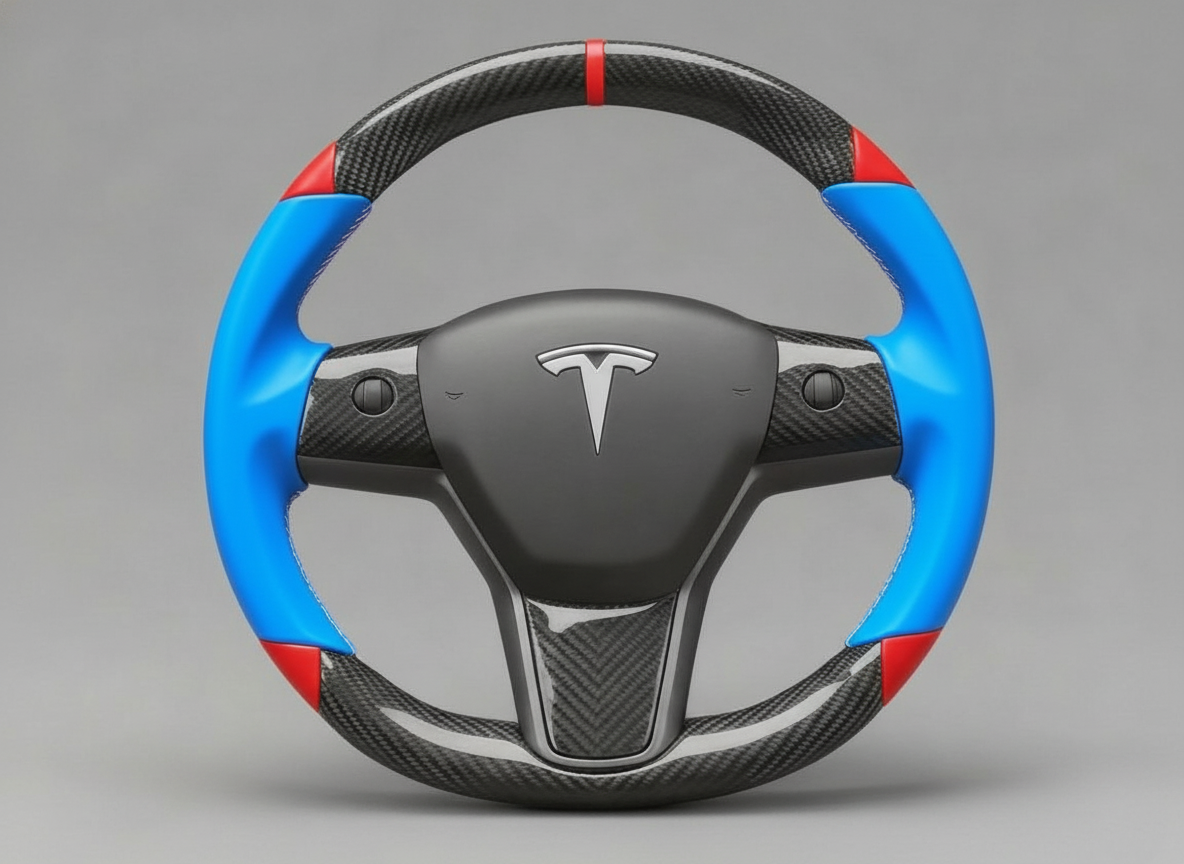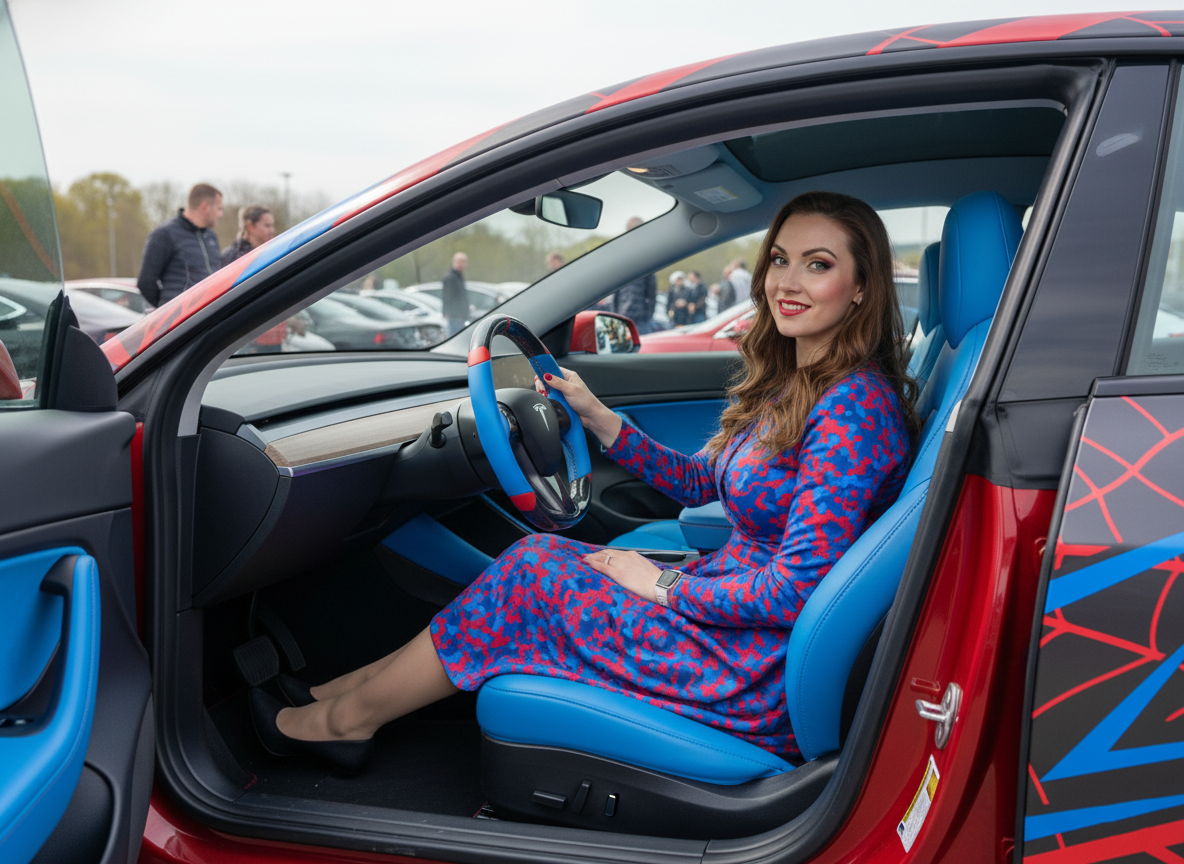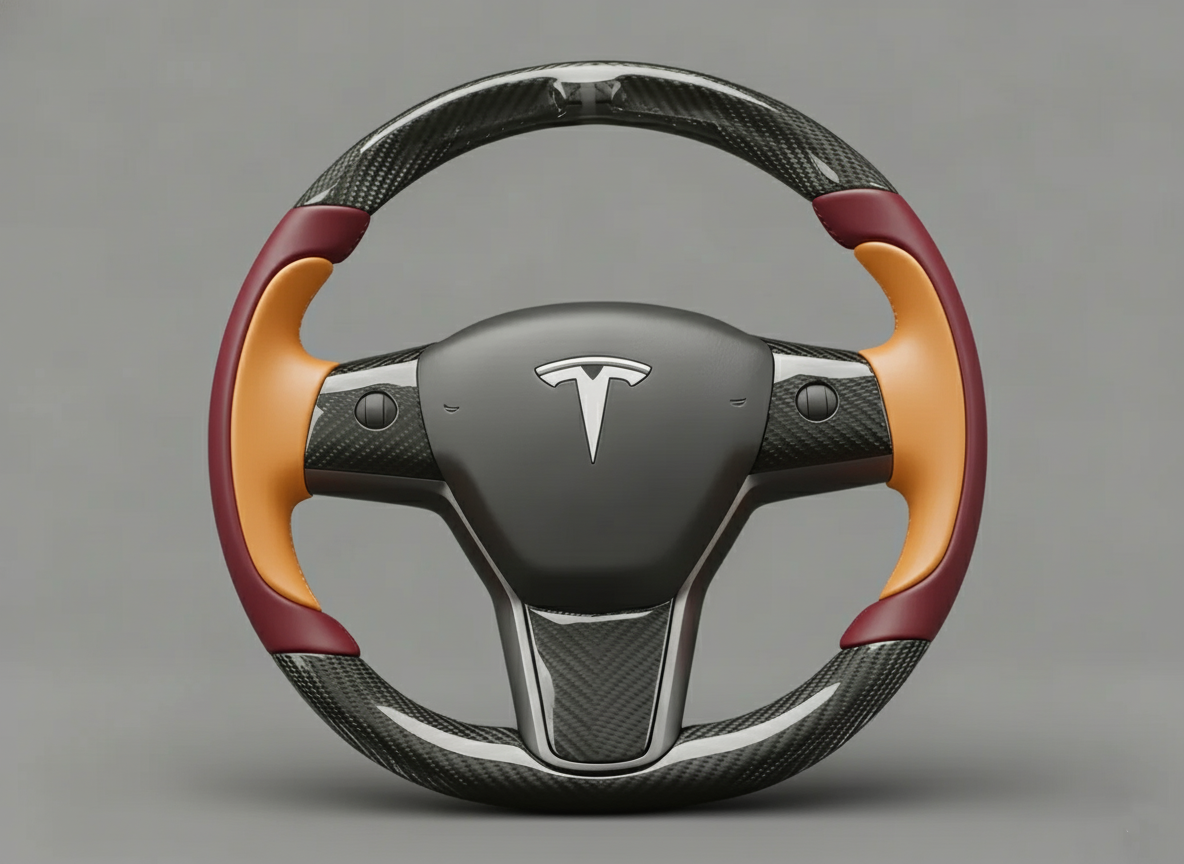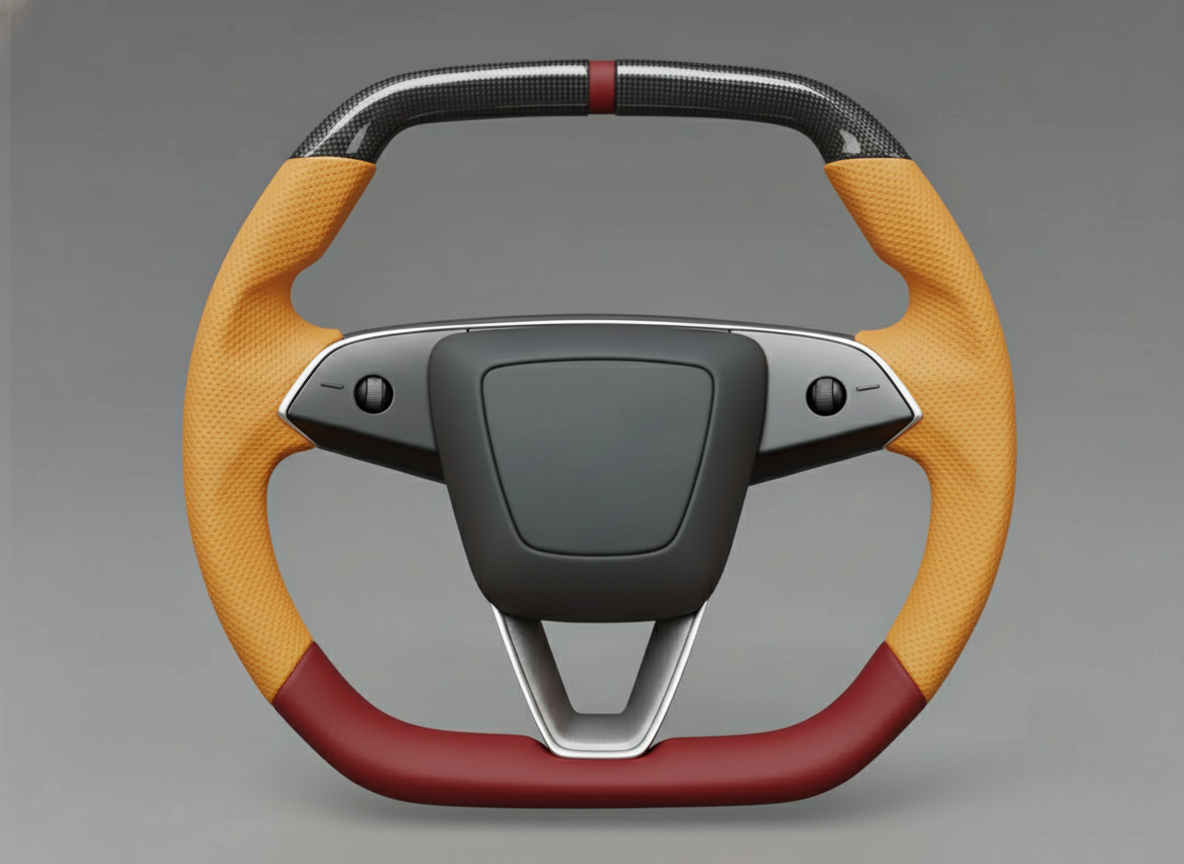
Carbon fiber steering wheels typically weigh only about 1.2kg, and their high-rigidity structure significantly enhances steering road feel feedback.
Its surface resin coating is acid and heat resistant, completely solving the pain point of the factory leather peeling when exposed to sweat.
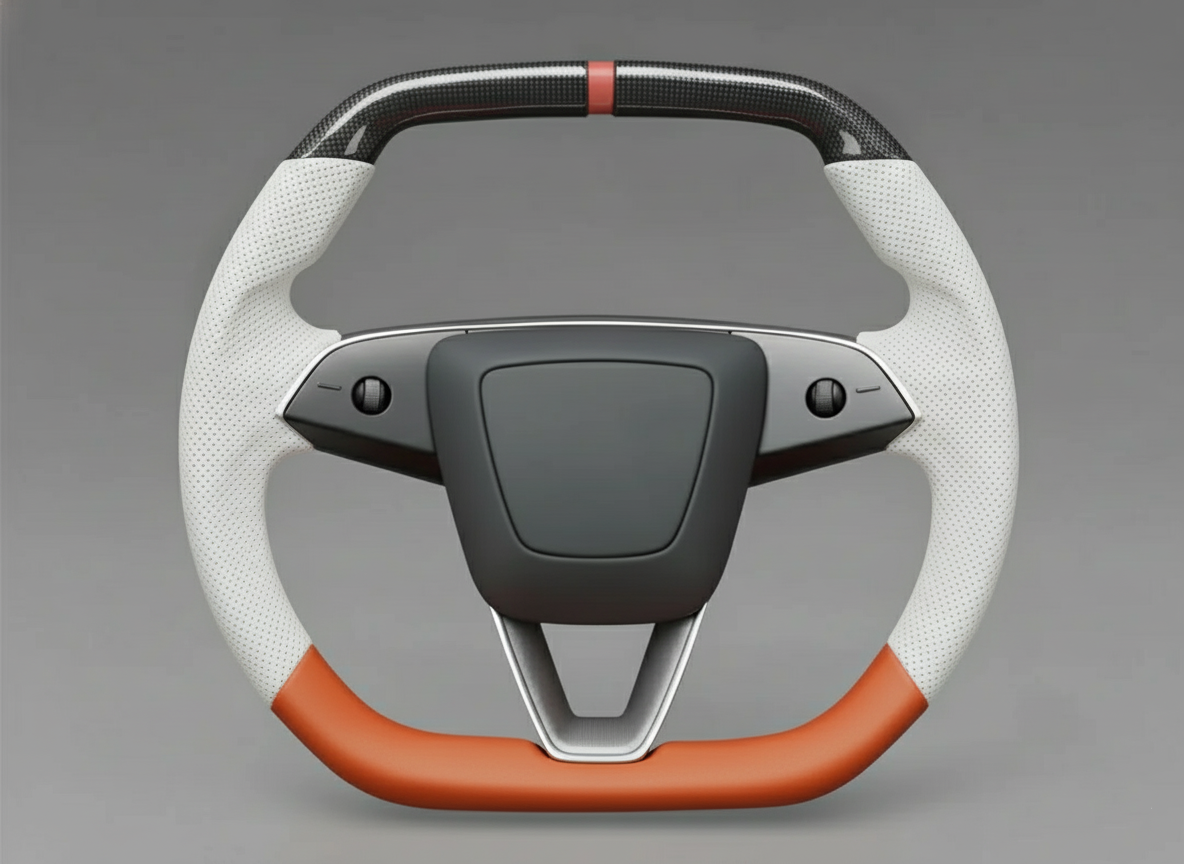
The unique 3K woven texture possesses extreme technological beauty, and paired with ergonomic side grips, it not only elevates the interior class but also provides a stable, non-slip control experience during spirited driving.
Durability
For Model 3/Y owners, the factory synthetic leather steering wheel is extremely prone to peeling and bubbling after 30,000 to 50,000 kilometers of high-frequency use.
In contrast, steering wheels made from Japanese Toray T700 grade carbon fiber boast a tensile strength of up to 4900 MPa, which is more than 5 times that of ordinary steel.
Combined with a surface-encapsulated industrial-grade Epoxy Resin clear coat, it builds a high-hardness protective layer approximately 1.5mm thick, completely isolating sweat acid corrosion and UV aging, achieving an ultra-long service life synchronized with the vehicle's "full life cycle".
Toray Carbon Fiber
The fundamental reason this material can completely replace the factory polyurethane foam and stamped steel structure lies in its extremely high Specific Strength.
The standard tensile strength of T700S is 4900 MPa (711 ksi), while ordinary A36 structural steel is only 400-550 MPa.
At the same weight, its tensile resistance is more than 10 times that of steel, or under the same strength requirements, its weight is only 1/5 of steel.
This material was originally developed for the wing and fuselage structures of the Boeing 777 and 787.
Its transplantation to the automotive interior field is a typical example of technology trickle-down.
Through carbonization treatment of PAN (polyacrylonitrile) precursors in high-temperature inert gas above 2000°C, all elements except carbon atoms are removed, leaving a tightly packed graphite microcrystal structure.
Typical Toray T700S fiber density is only 1.80 g/cm³, while the density of aluminum alloy used for automotive chassis and interior skeletons is about 2.7 g/cm³, and steel is as high as 7.85 g/cm³. At the microscopic level, every visible "carbon fiber strand" is actually composed of 3000 (i.e., 3K specification) filaments with a diameter of only 7 microns, which is about 1/10 the diameter of a human hair.
High-end steering wheels typically use the Pre-preg process, rather than the cheaper Wet Lay-up.
Pre-preg refers to carbon fiber cloth that has been impregnated with uncured epoxy resin in precise proportions at the factory, usually stored in freezers at -18°C to prevent the resin from reacting prematurely.
During manufacturing, technicians apply the T700 pre-preg cloth to the steering wheel mold and send it into an Autoclave, curing it under a pressure of 4-6 bar and high temperatures of 120°C-150°C.
The uniform pressure provided by the autoclave can completely squeeze out tiny air bubbles between layers, controlling the Void Content to below 1%, whereas ordinary vacuum bagging processes often have a void content of 3%-5%.
Extremely low porosity directly improves the Interlaminar Shear Strength, ensuring that the composite material layers will not experience Delamination when the steering wheel is subjected to accident impacts or stress changes caused by long-term sun exposure and high temperatures.
2x2 Twill Weave is currently the most mainstream texture choice in the Tesla aftermarket, not only because of its stereoscopic visual refraction effect but also because twill weave has better Drapability compared to Plain Weave. When wrapping complex curved surfaces like the 3 and 9 o'clock positions of the steering wheel, twill fabrics can fit the mold corners more smoothly without producing fiber wrinkles or breaks, ensuring continuity of force bearing.
Besides the fiber itself, the thermal performance of the resin matrix determines the steering wheel's survivability in summer sun exposure environments.
Cheap products often use polyester resins, whose Glass Transition Temperature (Tg) is often below 80°C.
Once the temperature inside the car soars, the resin softens, leading to deformation of the carbon fiber pattern or even surface collapse.
Using aerospace-grade epoxy resin under the Toray certification system, its cured Tg is typically set above 130°C.
Even when exposed to the scorching sun in Arizona for hours, the material remains in a glassy state, maintaining extremely high modulus and hardness.
This resin system usually adds Hindered Amine Light Stabilizers (HALS), which capture free radicals induced by ultraviolet rays at the molecular level, preventing resin degradation and yellowing, and blocking the path of aging from the chemical structure.
For drivers, another physical property of carbon fiber material is its unique Damping Coefficient.
Metal materials (such as the magnesium-aluminum alloy skeleton inside the factory steering wheel) typically transmit high-frequency vibrations from the road to the palm almost without filtering, causing hand numbness during long-distance driving.
Because carbon fiber composite materials are a two-phase interface combination of fiber and resin, phonons scatter and dissipate energy when passing through different media interfaces.
This makes carbon fiber steering wheels naturally capable of absorbing high-frequency road noise (NVH).
Data shows that the Loss Factor of carbon fiber composites is usually between 0.01 and 0.05, while aluminum alloy is only 0.0001 to 0.001.
This high damping characteristic filters out annoying fine vibrations while retaining the low-frequency feedback of tire grip changes, allowing the driver to perceive road conditions more clearly rather than being disturbed by noise.
Chemical Inertness
The factory standard synthetic leather or Vegan Leather is essentially a porous polymer material.
Its surface microporous structure allows sweat molecules to penetrate into the material.
As moisture evaporates, residual salt crystals expand inside the fibers, while acidic substances catalyze a Hydrolysis reaction in the polyurethane coating.
This is the fundamental chemical mechanism that causes the steering wheel to become sticky, have uneven gloss, or even suffer from skin peeling after two or three years.
In contrast, the industrial-grade Epoxy Resin and Polyurethane Clear Coat covering the surface of the carbon fiber steering wheel build a completely dense hydrophobic barrier.
This thermosetting polymer forms a highly cross-linked three-dimensional network structure during the curing process with minimal molecular gaps, blocking the physical path for liquid molecules to penetrate inward.
Sweat can only stay on the coating surface, completely eliminating the conditions for chemical degradation.
With changes in personal hygiene habits, chemical threats in the car environment have escalated from simple biological secretions to high-concentration industrial solvents.
Hand sanitizers with Ethanol or Isopropanol as the main components typically contain 60% to 80% alcohol concentration.
Frequent contact with high-concentration alcohol will cause the protective film on the surface of the factory leather to be "washed away," subsequently dissolving the dye layer, causing irreversible fading or whitening.
The Automotive Grade Clear Coat used on carbon fiber steering wheels usually undergoes strict Solvent Resistance Tests, such as the MEK (Methyl Ethyl Ketone) rub test, proving that it can withstand repeated wiping with strong organic solvents without changing surface gloss or hardness.
This chemical inertness stems from the resin matrix's extremely high Cross-link Density.
Solvent molecules cannot insert themselves between polymer chains to destroy intermolecular forces, so Swelling or dissolution cannot occur.
Even if the driver grips the steering wheel immediately after using hand sanitizer, the evaporated alcohol merely stays briefly on the resin surface before naturally volatilizing, leaving no traces of chemical etching.
Besides cleaning solvents, cosmetics like hand creams and sunscreens containing mineral oils, synthetic esters, and chemical sunscreens (such as Avobenzone) actually act as potent Plasticizers.
When these oils are in long-term contact with factory soft materials, Migration occurs, penetrating into the plastic or synthetic leather, causing polymer chain slippage. Macroscopically, this manifests as the material softening, bubbling, or even losing elasticity and permanently deforming.
The hard coating on the surface of carbon fiber composites typically reaches a Pencil Hardness of 2H-3H or Shore D 85 or above.
This high-hardness surface has natural resistance to oil penetration (Oleophobic properties); oil molecules cannot find attachment points or permeation channels on the dense resin surface.
Under high-temperature sun exposure, the pores of factory materials open up, accelerating oil absorption, while the resin layer on the carbon fiber surface possesses an extremely high glass transition temperature, maintaining chemical stability in the glassy state under high in-car temperatures and rejecting the intrusion of oil molecules.
To intuitively quantify the defensive advantages of carbon fiber materials against common in-car chemicals, the following table lists the specific impact comparison of different chemical substances on factory materials vs. carbon fiber coatings:
| Chemical Aggressor | Main Component | Factory Synthetic Leather/Leather (OEM) Reaction Mechanism | Carbon Fiber (Epoxy/Clear Coat) Reaction Mechanism |
|---|---|---|---|
| Human Sweat | Lactic acid, Urea, Salts (pH 4.5-6.0) | Acidic Corrosion & Hygroscopicity: Microporous structure absorbs sweat; acidic substances trigger hydrolysis; salt crystals destroy fiber structure, leading to long-term stickiness. | Physical Barrier: Surface is dense and non-porous; acid cannot penetrate; salts form floating dust after drying, restorable by wiping with a damp cloth. |
| Hand Sanitizer | Ethanol, Isopropanol (60%+) | Solvent Dissolution: Strong solvents destroy the surface protective film and dissolve dyes, causing the coating to thin, fade, or develop white spots. | Solvent Resistance: High cross-link density polymer network structure is chemically inert to alcohol solvents, with no reaction and no swelling. |
| Sunscreen/Hand Cream | Mineral oil, Titanium Dioxide, Chemical Sunscreens | Plasticizer Migration: Oils penetrate between polymer chains, acting as plasticizers leading to material softening, bubbling, and separation from the substrate (peeling). | Anti-Oil Penetration: High surface energy coating; oils float on the surface and cannot enter the molecular interior, not changing the material's physical properties. |
| All-Purpose Cleaner (APC) | Surfactants, Ammonia (pH 9-11) | Alkaline Degradation: High pH cleaners accelerate the aging of the leather surface coating, leading to dry cracking or hardening. | Alkaline Resistance: Cured epoxy resin is extremely stable in weak alkaline environments and can withstand repeated cleaning with standard interior cleaners. |
| Soda/Coffee | Carbonic acid, Sugar, Caffeine | Staining & Adhesion: Liquids penetrate the texture and are hard to completely remove; sugar residues lead to bacterial growth and mildew. | Easy Cleanability: Liquids roll off as beads, do not penetrate, leave no residue, and will not breed bacteria. |
In extreme environmental test standards, such as the SAE J2527 automotive interior accelerated weathering standard, carbon fiber components usually need to undergo simulated acid rain, high-humidity cycles, and spot tests with various chemical reagents.
Results show that the specially formulated epoxy resin system retains a Gloss Retention rate of over 95% after 24 hours of contact with 5% sulfuric acid or sodium hydroxide solutions.
UV Aging Resistance
Ultraviolet radiation in the solar spectrum is the primary physical factor causing Photodegradation of automotive interior materials.
Although Tesla's laminated glass roof and windows can block most UVB radiation, UVA rays with wavelengths between 320nm and 400nm can still penetrate the glass into the car.
Superimposed with the greenhouse effect brought by the panoramic sunroof, the steering wheel in the cockpit is exposed to an extreme environment known as "high light and thermal load" for a long time.
The Polyurethane (PU) or synthetic leather used in factory steering wheels belongs to organic high polymer polymers.
The bond energy of the carbon-carbon bonds (C-C Bonds) in their molecular chains is about 347 kJ/mol, and the photon energy of ultraviolet rays with a wavelength of 300-400nm covers exactly this bond energy range.
Ultraviolet rays have the energy to cut polymer molecular chains, directly leading to the fracture of the material's microstructure.
This photochemical reaction manifests macroscopically not just as visual fading, but more seriously as the material losing ductility, leading to Embrittlement, and finally, fine cracks or Chalking appearing on the top of the steering wheel.
To combat this ubiquitous radiation erosion, high-quality carbon fiber steering wheels employ multiple protection strategies during manufacturing.
The first is introducing compounded anti-aging additives into the epoxy resin Matrix.
High-end resin systems typically add two key types of chemical agents in specific proportions: Ultraviolet Absorbers (UVA) and Hindered Amine Light Stabilizers (HALS).
The mechanism of UVA follows the Beer-Lambert Law; it preferentially absorbs harmful UV photons and, through the Excited State Intramolecular Proton Transfer (ESIPT) mechanism, instantly converts the absorbed high-energy radiation into harmless heat energy and dissipates it, thereby protecting the resin molecular chains from being cut.
Because even if a small amount of UV light penetrates the UVA defense and breaks the polymer bonds, the resulting active Free Radicals will trigger a chain degradation reaction.
HALS can quickly react with these free radicals to deactivate them, fundamentally interrupting the chain reaction of photo-oxidative degradation.
This dual stabilization system allows the modified epoxy resin to withstand over 2000 hours of continuous strong UV irradiation in ASTM G154 standard accelerated aging tests, whereas unmodified ordinary resins typically show obvious Yellowing and surface gloss loss within 500 hours.
Besides the modification of the matrix resin, the outermost Clear Coat constitutes the final physical line of defense.
This coating, developed specifically for automotive exterior standards, typically has a very High Solids Content.
- Multi-layer Spraying Process: High-quality carbon fiber steering wheels typically use a "three-coat, three-bake" process, with the total thickness of the clear coat reaching over 1.5mm. The thick clear coat not only provides a deep stereoscopic visual effect but, more importantly, forms a light-filtering layer with a specific optical refractive index.
- Anti-yellowing Indicators: An important parameter for measuring clear coat quality is the Delta E (ΔE) color difference value. In outdoor exposure tests in high-radiation areas like Florida or Arizona, the ΔE change value of high-quality Automotive Clear Coat is usually controlled within 1.0.
- Gloss Retention: Xenon arc aging tests conducted according to ISO 11341 or SAE J2527 standards show that after irradiation simulating 5 years of sunlight (approx. 3000kJ/m² @ 340nm), the 20° Gloss Retention of top-tier clear coat surfaces can still maintain over 90%.
This industrial-grade anti-aging capability is particularly important for convertibles or models with large panoramic sunroofs, as the UV Index inside these vehicles is far higher than in traditional sedans.
During high-temperature periods in summer, the temperature of the dashboard and steering wheel surface inside the car can easily break through 70°C.
The inherent thermal stability of carbon fiber composites, combined with anti-UV coatings, allows them to maintain chemical inertness under the dual pressure of high temperature and high radiation.
Aesthetics
The standard 3K 2x2 Twill Weave is interwoven from 3,000 carbon filaments per bundle, presenting a holographic stereoscopic depth of field under light that ordinary printed products cannot simulate.
Up to 3 layers of high-hardness epoxy resin clear coat typically have a thickness controlled between 1.0mm - 1.5mm, which not only protects the carbon cloth but also produces an optical effect similar to a lens, enhancing the contrast of the texture.
Owners can choose Gloss Units (GU) based on the center console material: Glossy Version (>90 GU) echoes the glass texture of the large center screen, while the Matte Version (<15 GU) can precisely match the diffuse reflection characteristics of the Model 3/Y factory wood grain or white trim panels, achieving a high degree of visual unity.
3K Weave Texture
3K stands for exactly 3,000 filaments contained in each Carbon Fiber Tow.
The diameter of each filament is only 5 to 7 microns, about 1/10 to 1/20 the diameter of a human hair.
When these 3,000 extremely fine filaments are tightly bundled into a flat ribbon with a width of about 1.5mm to 2mm, they constitute the basic unit of weaving.
In the Tesla aftermarket, 2x2 Twill Weave is currently the most widely applied specification.
This weaving method is formed by the weft yarn crossing over two warp yarns and then passing under two warp yarns (Over 2 / Under 2), thereby creating a signature 45-degree diagonal texture visually.
Compared to simple Plain Weave (1x1), 2x2 Twill is not just for aesthetic considerations; its physical properties allow the carbon cloth to fit the complex curved shapes of the steering wheel more easily without cutting fibers, especially at the 3 and 9 o'clock grip positions, reducing the risk of texture breakage or excessive distortion, thus ensuring visual continuity.
This physical structure of thousands of filaments arranged together endows the carbon fiber surface with a unique optical property—Anisotropic Reflection. Since carbon filaments are cylindrical and their surfaces are extremely smooth, light hitting the fiber bundles does not undergo uniform diffuse reflection like it would on black paint. Instead, light undergoes specific refraction and reflection along the length of the fibers. When the viewing angle or light source position changes slightly, the same bundle of carbon fiber will instantly switch between deep black and silver-grey. This phenomenon is known as "Chatoyancy" in gemology. Under direct sunlight, a high-quality 3K carbon fiber steering wheel will present a holographic-like 3D depth of field, as if the texture is suspended beneath the transparent resin coating rather than printed on the surface.
For owners pursuing extreme detail, the transparency of the resin Matrix and the fitting process of the carbon cloth directly determine the aesthetic ceiling.
Top-tier carbon fiber steering wheels typically use the Pre-preg process, where the carbon cloth is pre-impregnated with a precise ratio of epoxy resin during the weaving stage.
This process controls the resin-to-fiber ratio at around 35% - 40%, far lower than the traditional Wet Layup process.
Under a microscope, the edges of high-quality 3K textures should be straight and distinct, without "fraying" or loose fibers.
The subsequently applied 1.0mm to 1.5mm thick Clear Coat not only serves as anti-UV protection to prevent the epoxy resin from Yellowing under long-term sun exposure but also acts as an optical lens.
This transparent medium increases the refraction path of light, further amplifying the stereoscopic sense of the woven texture, making the black background deeper and the grey reflections more dazzling.
On a complex ring structure like a steering wheel, the Alignment of the 3K texture is the watershed distinguishing industrial assembly line products from handmade boutique items.
Since the steering wheel is a closed ring (or the semi-ring of a Yoke), wrapping flat carbon cloth onto a cylinder inevitably creates tension changes.
Low-standard processing leads to obvious Weave Distortion on the inner and outer rings, or even texture misalignment at the seams.
High-standard craftsmanship requires technicians to precisely calculate the stretch ratio of every inch of carbon cloth during the laying process, ensuring that the signature 45-degree diagonal lines remain parallel and continuous across the entire steering wheel body.
Especially for the Tesla Model S/X Plaid style Yoke steering wheel, handling the corners is particularly difficult. Qualified products require the texture to maintain a 90-degree warp and weft interwoven structure at sharp bends without obvious stretching deformation, which usually takes hours of manual adjustment to achieve.
There is a process in the market called "Hydro-dipping" that simulates carbon fiber, often mistaken for real 3K weave. Hydro-dipping is essentially a 2D printing technology that only covers the object's surface with a layer of black and grey pigment patterns. Under any lighting condition, the reflection of a hydro-dipped surface is uniform and flat, completely missing the dynamic depth of light and shadow that changes with angles found in real carbon fiber. Furthermore, the pixels of hydro-dipped patterns are clearly visible upon close inspection, lacking the microscopic silky texture of real carbon fiber bundles. Real 3K carbon fiber can be felt as physical layers of fiber when a fingernail gently scratches over an unpainted edge, whereas a hydro-dipped surface feels like completely smooth plastic. For Tesla owners, this visual difference is particularly obvious under strong light; the crystalline translucency of real carbon fiber is a physical optical phenomenon that no printing technology can simulate.
In addition, Areal Weight is a hidden indicator for measuring the aesthetic texture of 3K carbon cloth.
Standard 3K carbon cloth used for steering wheel wrapping typically has an areal weight of 200gsm (grams per square meter).
If a manufacturer uses sparsely woven carbon cloth (e.g., a low gram weight version) to save costs, the Gaps between fiber bundles will become larger.
In the final product, these gaps will reveal the underlying black primer or substrate, causing the overall visual effect to appear "loose" and not full.
High-density 200gsm weaving ensures that fiber bundles are tightly arranged with almost no gaps, giving the entire surface a dense, solid visual tension like metal armor.
Surface Gloss Treatment
In industrial standards, Gloss is usually measured using a gloss meter at a 60-degree incident angle, with the unit being GU (Gloss Units).
For high-end carbon fiber steering wheels in the Tesla aftermarket, surface treatments are mainly divided into two camps: Glossy (>90 GU) dominated by specular reflection, and Matte (<15 GU) dominated by diffuse reflection.
These two distinctly different physical surface states stem from differences in the microscopic particle structure within the Clear Coat formula and completely different paths in the subsequent sanding and polishing processes.
Glossy surfaces build an optically flat surface through the stacking of multiple layers of High-Solids Polyurethane or epoxy resin clear coats, aiming to maximize light Transmission and Specular Reflection, thereby producing the so-called "lens effect";
Matte surfaces, on the other hand, introduce specific proportions of Silica or other matting agents into the clear coat.
By changing the microscopic roughness of the surface to scatter incident light, they eliminate harsh bright spots, presenting a warm texture similar to anodized aluminum or dry rock.
This optical treatment thickness is usually controlled between 0.5mm and 1.0mm. Too thin leads to a lack of depth, while too thick may lead to cracking under extreme temperatures due to mismatched Coefficients of Thermal Expansion (CTE).
Glossy Finish:
After the carbon fiber cloth is laid and cured, technicians spray 3 to 5 layers of anti-UV clear coat.
After each layer is sprayed, it needs to be baked and cured at a specific temperature (usually 60°C - 70°C).
To achieve a "Wet Look" like liquid mercury, the surface must undergo extremely tedious Color Sanding.
This process starts with 800 grit sandpaper and gradually transitions to 1500 grit, 2000 grit, and even 3000 grit ultra-fine wet sanding.
Each level of sanding aims to level the "Orange Peel" on the clear coat surface until the surface appears absolutely smooth under a microscope.
Finally, using compounds and polishes with polishing pads of different cutting forces for high-speed polishing, the surface gloss soars to over 95 GU.
- Visual Depth Enhancement: The smooth glossy clear coat acts as a magnifying glass. When light enters, it refracts at the interface of the clear coat and carbon fiber, illuminating the deep carbon filaments, and then reflects back.
- Hardness and Protection: High-quality glossy clear coats typically have a pencil hardness of 2H to 3H. This hard shell effectively resists nail scratches and is hydrophobic. For the Model S/X Yoke steering wheel, the glossy surface creates visual continuity with the glass cover of the instrument panel, reinforcing the tech feel of the "digital cockpit".
- Maintenance Characteristics: While the physical smoothness of the glossy surface is beautiful, it also easily reveals fingerprint oils and fine scratches (Swirl Marks). Under direct strong light, sun marks caused by long-term wiping will be magnified due to specular reflection. However, the advantage of the glossy surface lies in its repairability.
Matte/Satin Finish:
When light hits this surface, it does not reflect along the same angle like hitting a mirror, but undergoes Diffuse Reflection, scattering light in all directions.
This physical scattering mechanism significantly reduces the intensity of reflected light received by the human eye, thereby eliminating the "oily" look of the surface and revealing the original texture direction and color of the carbon fiber.
- Anti-Glare Functionality: In a driving environment, matte steering wheels have significant safety advantages. When sunlight enters directly through the front windshield, a glossy steering wheel may produce harsh Glare at certain angles, interfering with the driver's vision. The low gloss of the matte surface (usually controlled at a 10-20 GU satin effect or <5 GU full matte effect) can completely absorb this stray light, ensuring a pure field of view under any lighting condition.
- Tactile Experience: Due to the presence of microscopic particles, the matte surface feels like silk or dry paper, with a lower coefficient of friction, feeling dry and non-sticky. For drivers whose palms sweat easily, the matte coating provides more stable grip friction than the glossy coating and does not become slippery under the action of sweat like the glossy surface.
- Matching Tesla Interior Language: Since the 2021 facelift, Tesla Model 3 and Model 4 have gradually phased out Piano Black, switching to matte black trim and Open-Pore Wood. A matte carbon fiber steering wheel can achieve a 1:1 perfect fusion in gloss with these factory matte parts, avoiding the visual fragmentation where a glossy steering wheel looks too abrupt or like an "add-on" in a fully matte interior.
- Maintenance Taboos: Maintenance of matte surfaces has strict exclusivity. It is absolutely forbidden to use any polishing agents or car waxes with abrasive components, as abrasion will smooth out the microscopic particles on the surface, causing irreversible "shiny spots" locally and destroying overall uniformity. Only specialized Matte Detailers or mild soapy water can be used for cleaning.
Shape Reshaping View
The most significant change lies in the introduction of the Yoke (irregular) or half-width steering wheel.
This design completely removes the upper rim of the traditional steering wheel at the 10 o'clock to 2 o'clock positions, eliminating a physical obstruction area of about 120 to 140 degrees.
From the driver's Eye Point, this modification reopens the previously divided visual channel, allowing the line of sight to penetrate to the instrument panel or the road ahead without hindrance.
In Tesla Model S and Model X Plaid models, this open design solves the problem of the traditional round steering wheel's upper rim chronically blocking the top information of the 12.3-inch digital instrument panel, increasing the effective visible area of the instrument panel from the original 75%-80% to a 100% complete display.
This change in form is not just for the sake of being different but is based on dual considerations of ergonomics and visual psychology.
After removing the interference in the upper field of view, the driver's Peripheral Vision feels more spacious, the boundary between the road outside the windshield and the interior of the cockpit is weakened, creating a "panoramic" immersive experience similar to a fighter jet cockpit.
Besides the expansion of the vertical field of view, the carbon fiber molding process allows designers to make micron-level adjustments to the lateral geometric structure of the steering wheel, thereby changing the lateral visual tension of the cockpit.
Traditional 370mm diameter round steering wheels often present a sense of "fullness" visually, occupying the main space in front of the driver's seat.
However, Flat-Bottom or D-shaped steering wheels made via carbon fiber molds typically reduce the vertical height by 15mm to 25mm, making the bottom contour straight.
This geometric compression creates an illusion of a "lowered center of gravity" visually, making the entire steering mechanism look more compact and solid.
For cockpits with limited legroom, the flat-bottom design physically increases the vertical clearance between the thigh and the steering wheel by about 3cm to 5cm, eliminating the visual oppressiveness when entering and exiting the vehicle.
This non-circular contour implies a "centered" state when static; the parallel relationship between its horizontal bottom edge and the ground subconsciously conveys a sense of order and mechanical precision, a geometric order that round steering wheels find hard to express.
The high-strength characteristics of carbon fiber composites (tensile strength exceeding 3500 MPa) allow the steering wheel rim to be made more slender and with sharper chamfers, forming a sharp contrast with traditional PU foam materials that can only be made into rounded shapes.
In Tesla's minimalist interior, the sharpness of these lines directly affects the conveyance of a "tech feel".
Using CNC machined aluminum alloy molds for autoclave curing allows for the design of finger grooves up to 15mm deep at the 3 and 9 o'clock grip positions, as well as sharp fold lines with an edge radius of less than 2mm.
These sculpture-like hard lines form clear boundaries between light and dark under light and shadow, enhancing the stereoscopic volume of the steering wheel.
In contrast, due to process limitations, the edge radius of factory foam-wrapped steering wheels is usually greater than 5mm, with soft light and shadow transitions but lacking force.
The factory full-circle design with a thick airbag cover appears as a heavy black block visually.
Carbon fiber Yoke steering wheels or sports steering wheels with hollow designs, by removing excess material volume, concentrate the visual center of gravity on the 3 and 9 o'clock grip areas and around the central airbag cover.
The application of this "Negative Space"—i.e., the vacancy in the upper part of the steering wheel—allows light to pass through the steering column area and shine onto the dashboard trim, increasing the flow of light inside the car.
For models like Model 3 and Model Y that have canceled the traditional instrument panel, the visual penetrability of the Yoke allows the continuous display of the transverse air vents and wood grain/white trim lines, no longer interrupted by a huge ring, thereby reinforcing the "horizontal extension" design language intended by the vehicle interior, making the interior space visually perceived as wider than its actual size.
| Feature Dimension | Traditional Round Steering Wheel (Round OEM) | Flat-Bottom Sports Steering Wheel (Flat-Bottom) | Irregular Steering Wheel (Yoke / Steering Wheel) |
|---|---|---|---|
| Vertical View Obstruction | High (blocks top of dashboard or lower edge of road) | Medium (retains only upper rim obstruction) | None (completely open, 0% obstruction) |
| Dashboard Visibility | 75% - 85% (depending on seat height) | 80% - 90% | 100% (Panoramic Display) |
| Legroom Gain | None (0mm) | +15mm to +30mm | +10mm to +20mm (depends on lower edge design) |
| Geometric Contour Features | Continuous curve, visually full | Straight bottom, visual center of gravity pressed down | Rectangular/Butterfly shape, visually minimalist |
| Interior Style Match | Traditional Sedan/SUV | Performance Car/GT Sports Car | Aviation/Cyberpunk/Futurism |
| Line Sharpness | Low (R > 5mm radius) | High (R < 2mm acute angle possible) | Extremely High (multi-faceted sculptural feel) |
| Visual Weight | Heavy (closed figure) | Medium (semi-closed figure) | Light (open figure, large negative space) |
When the driver's line of sight is no longer framed by a heavy circle but perceives the road ahead through a minimalist controller that seems suspended in the air, the vehicle's driving atmosphere ascends from a simple "control tool" to a "digital cockpit".
Every turn of a line, every contraction of a contour, is a precisely calculated visual guide, aiming to focus the driver's attention more on the road while enjoying the industrial precision beauty brought by the carbon fiber texture in their peripheral vision.
Weight
Factory Tesla steering wheels usually use an aluminum-magnesium alloy skeleton wrapped in polyurethane foam, with a total weight of about 1.3 to 1.5 kg (excluding the airbag module).
In contrast, steering wheels made of Toray T700 grade dry carbon fiber have a material density of only 1.6 g/cm³, far lower than aluminum alloy's 2.7 g/cm³.
This material replacement typically achieves a physical weight reduction of 30% to 40%.
For the driver, the reduction in weight at the outer rim directly reduces the Moment of Inertia, making the steering feel lighter, while removing the excessive filtering of road vibrations by the heavy foam layer, retaining more authentic chassis feedback.
Material Density Comparison
Standard Toray T700 grade carbon fiber has a filament density typically stable around 1.80 g/cm³.
However, the density of the final product depends not only on the fiber itself but is determined by the ratio of fiber to the resin Matrix.
In high-quality Pre-preg processes, manufacturers use epoxy resin as the matrix, with a density of about 1.1 to 1.2 g/cm³.
Through the Autoclave process, curing under 6 bar pressure and 120 degrees Celsius high temperature, excess resin is squeezed out, and the density of the final Carbon Fiber Reinforced Polymer (CFRP) composite is usually controlled between 1.50 and 1.60 g/cm³.
This data has extremely high reference value in materials science because it represents the extremely low density level that solid materials can achieve while maintaining structural rigidity.
Although Tesla's factory steering wheel skeleton uses relatively light magnesium alloy (density approx. 1.74 g/cm³) or aluminum alloy (density approx. 2.70 g/cm³), the weight of the steering wheel mainly comes not from the skeleton but from the thick Polyurethane (PU) foam wrapped around the skeleton and the synthetic leather on the surface.
Although polyurethane foam has a low density, its volume is huge to ensure a full grip, and its internal structure lacks high modulus support, necessitating solid filling.
The high Specific Modulus of carbon fiber allows manufacturers to make it into a hollow structure or wrap only extremely thin laminates.
A 1mm thick carbon fiber laminate is strong enough to withstand tensile stresses exceeding 2000 MPa, which allows the outer ring structure of the steering wheel to maintain its shape with almost no increase in solid fillers.
"Specific Strength is the ratio of a material's tensile strength to its density. The specific strength of carbon fiber is typically more than 5 times that of high-strength steel and 2 times that of aluminum alloy. Under equivalent strength requirements, carbon fiber components typically weigh only 20% of steel components and 60% of aluminum components."
Cheap carbon fiber steering wheel modifications on the market often use "wet carbon" processes, i.e., applying resin and pasting carbon cloth directly onto the factory steering wheel's leather or foam layer.
This practice actually increases the volume and weight of the steering wheel because extra resin and fiber layers are superimposed on the original materials.
True high-performance carbon fiber steering wheel modifications involve stripping the factory polyurethane foam layer and leather, building a carbon fiber shell directly on the metal skeleton.
Since the density of the carbon fiber composite (~1.6 g/cm³) is slightly higher than polyurethane foam but far lower than the thickness volume required to maintain shape, the final product achieves a reduction in physical mass.
By precisely calculating the Fiber Volume Fraction (FVF), high-end manufacturing processes can control the FVF at around 60%, ensuring that most of the weight comes from the load-bearing fibers rather than dead-weight resin.
Cheap products use polyester resin with high shrinkage and higher density, while aerospace-grade epoxy resin not only has lower density but its cross-linked cured network structure is tighter.
Under microscopic observation, the cross-section of a high-quality carbon fiber steering wheel shows extremely low Void Content, typically below 1%.
The existence of voids is not only a structural defect but is usually accompanied by resin-rich areas, leading to uneven local density.
Homogenized material density distribution is crucial for rotating parts, ensuring that the steering wheel does not generate minute centrifugal force deviations due to uneven mass distribution during rotation.
Although this deviation is hard to detect at low speeds, the physical mass balance is one of the basic data points for stable system operation during high-speed automatic assisted driving or intense maneuvering.
From the perspective of elemental composition, steel consists mainly of iron with an atomic weight of 55.85; aluminum has an atomic weight of 26.98; while carbon, the main component of carbon fiber, has an atomic weight of only 12.01.
Without sacrificing the airbag module (typically weighing about 300-400 grams) and necessary electronic control units, the 300 to 500 grams weight reduction obtained by replacing the steering wheel rim material is a massive physical quantitative change for, and only for, the unsprung mass at the end of the steering column.
Lowering Moment of Inertia
For a Tesla steering wheel with a diameter of about 370mm (14.5 inches), the mass distribution of its Rim contributes exponentially to the moment of inertia.
To pursue grip softness, the factory steering wheel wraps the metal skeleton with high-density polyurethane foam, heating resistance wire mesh, and heavy synthetic leather.
Although these materials have low individual densities, because they are all concentrated at the outermost ring, 17 to 18 cm from the center of rotation, they result in a huge radius of gyration.
"In dynamic driving, most of the steering Torque input by the driver is used to overcome the system's moment of inertia, rather than directly acting on the tire's deflection. Lowering the moment of inertia essentially improves the mechanical efficiency of the steering input."
By removing the originally heavy foam filling layer and retaining only an extremely thin carbon fiber shell, the modification part can reduce the linear mass density of the steering wheel's outer rim by over 40%.
This change in mass distribution directly affects the vehicle's Yaw Rate response.
When the driver performs an emergency lane change or attacks corners on a track, they need to complete left-right switching of the steering wheel within an extremely short time window (usually 200-300 milliseconds).
The angular acceleration torque required for a low-inertia carbon fiber steering wheel is significantly reduced, allowing hand movements to translate more synchronously into wheel movements, eliminating the time lag of "swinging a heavy object" found in factory steering wheels.
Although the EPAS motor can provide huge assist torque to mask the physical weight of the steering wheel, it cannot eliminate the Phase Lag caused by inertia.
The control logic of the EPAS system is based on data from torque sensors.
The motor only intervenes when the sensor detects the driver's input torque.
If the steering wheel's own inertia is too large, a large portion of the initial torque detected by the sensor constitutes an invalid component used to overcome static friction and inertia, leading to a microsecond-level delay in motor response.
After switching to low-inertia carbon fiber components, the total load of the system is reduced, and the motor's output can be purely used to overcome the friction between the tires and the ground (i.e., aligning torque), rather than wasted on accelerating the mass of the steering wheel itself.
This change manifests in data streams as a decrease in peak steering current and a shortening of the time delay between steering angle and body yaw angle.
For users pursuing extreme driving precision, this direct mechanical connection feel, with the physical filter removed, is a physical reality that electronic algorithm simulations cannot replace.
Steering Motor Efficiency
When we replace the steering wheel with a carbon fiber component that is 30% to 40% lighter, we change the Mechanical Impedance of the system.
For a steering assist motor with a rated power typically between 300 watts and 600 watts, the weight reduction at the load end significantly reduces the Armature Current required by the motor when executing the same steering action.
This change is particularly obvious when the vehicle is stationary or moving at low speeds because tire friction with the ground is greatest at this time, and the motor is under high load conditions.
Reducing the physical mass of the steering wheel actually reduces the parasitic inertial load that the motor must overcome before overcoming static friction, allowing the motor to start rotating with lower energy consumption, reducing energy loss within the system.
During dynamic driving, the EPAS system needs to constantly fine-tune to maintain the vehicle in a straight line or correct the steering angle.
This fine-tuning is often high-frequency and small-amplitude. Physics principles show that the torque required to drive an object to change its motion state is proportional to the object's moment of inertia.
The factory's heavy polyurethane and metal skeleton structure requires the motor to output extra torque in every tiny correction to accelerate and decelerate the steering wheel itself.
This continuous acceleration and deceleration cycle generates a large amount of useless work at the microscopic level and causes the temperature of the internal motor coils to rise gradually.
In contrast, the extremely low gyroscopic mass of the carbon fiber steering wheel allows the motor to work with a smoother current curve.
In scenarios of long-duration spirited driving or track days, this efficiency improvement translates into a reduced risk of motor Thermal Derating.
When the motor temperature is too high, the system automatically limits the assist level to protect the hardware.
Lightweight components indirectly delay the triggering of the thermal protection mechanism by reducing the motor's continuous workload, ensuring consistency of steering feel under all operating conditions.
| Performance Metric | OEM Heavy Wheel | Carbon Fiber Lightweight Wheel | Impact on Steering Motor |
|---|---|---|---|
| Step Response Time | Slower, physical hysteresis exists | 15-20% Faster (Estimated) | Motor can execute ECU commands more rapidly, reducing phase delay. |
| Peak Current Demand | High, used to overcome startup inertia | Lower | Reduces instantaneous thermal load on MOSFETs and motor coils, extending electronic component life. |
| Return Overshoot | Obvious, requires reverse braking by motor | Minimal | Reduces motor correction workload during return, making control logic simpler and more efficient. |
| Vibration Transfer | Absorbed by foam layer, signals blurred | High-fidelity transfer | Motor sensors can read road aligning torque more clearly, optimizing force feedback algorithms. |
| Micro-correction Precision | Low, affected by inertial smoothing | High | Allows motor to perform more delicate angle adjustments, reducing correction frequency. |
For Tesla models equipped with Autopilot or Full Self-Driving (FSD) capabilities, the efficiency of the steering motor is directly related to the system's execution precision.
In autonomous driving mode, the vehicle computer (FSD Computer) acts as the driver, sending digital commands to the steering motor.
The larger inertia of the factory steering wheel is equivalent to adding a low-pass filter in the control loop, causing high-frequency fine-tuning commands sent by the computer to potentially be swallowed or delayed due to mechanical hysteresis.
The low inertia characteristic of the carbon fiber steering wheel greatly expands the frequency response bandwidth of the steering system.
When the autonomous driving algorithm detects crosswinds or road tilt and attempts to make extremely small compensations, the lightweight steering wheel can immediately respond to the motor's weak torque input without creating a mechanical dead zone due to its own dead weight.
This millisecond-level response difference manifests in data records as an increase in correction frequency and a decrease in single correction amplitude, meaning the system can use gentler, more frequent actions to maintain lane centering, rather than waiting for the deviation to accumulate to a certain extent before making abrupt large-scale corrections.