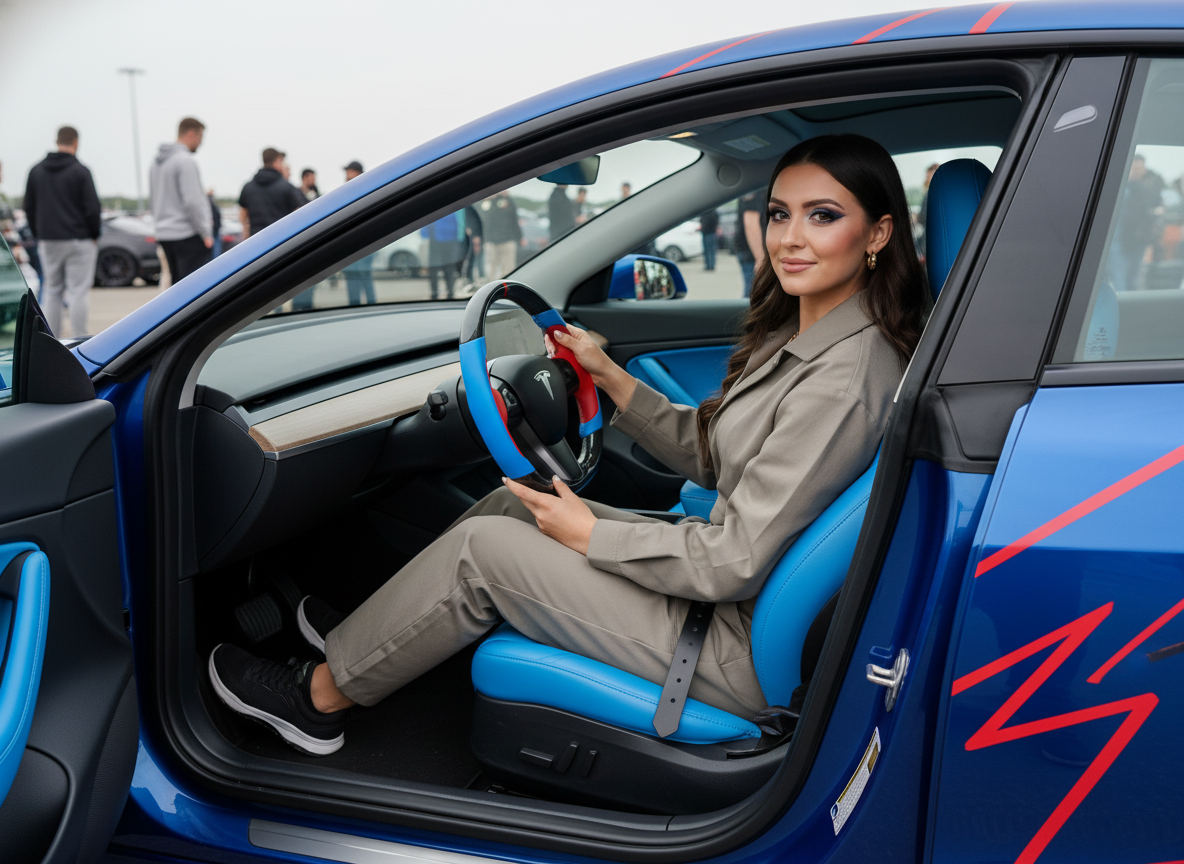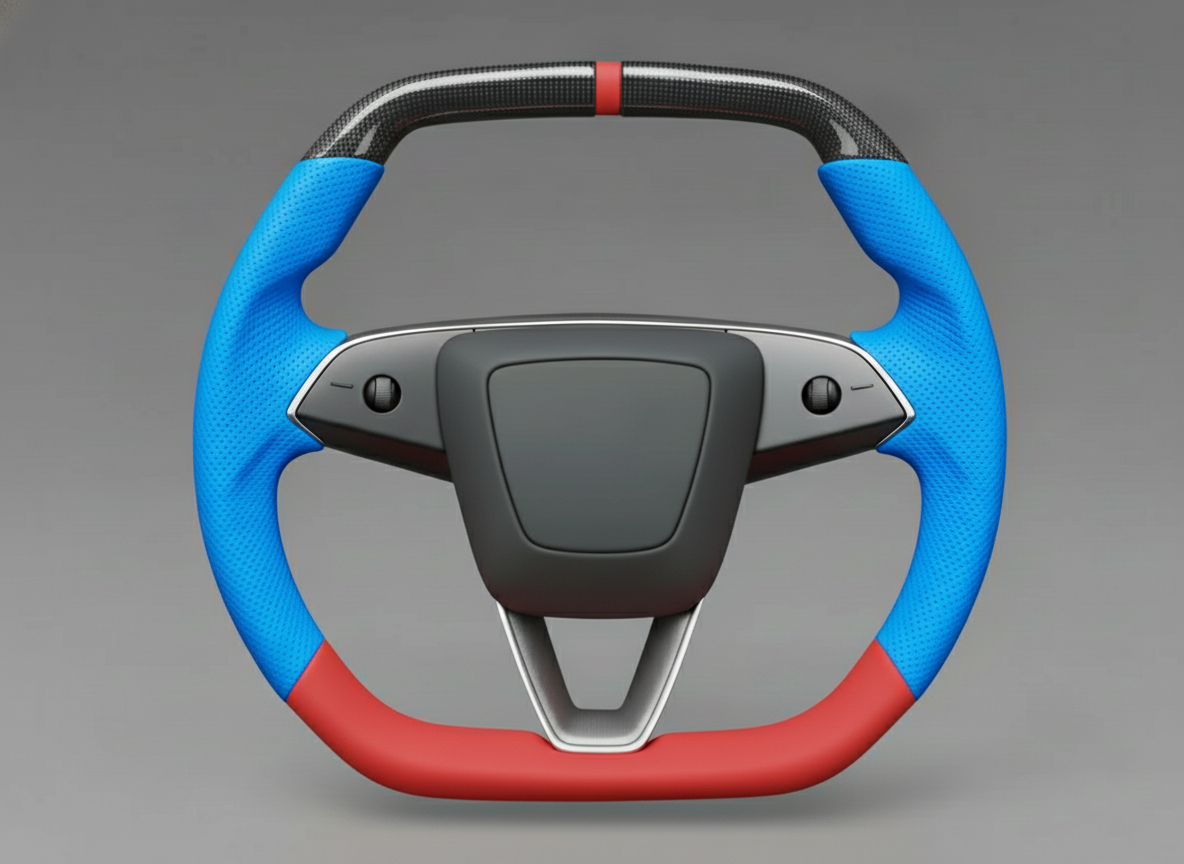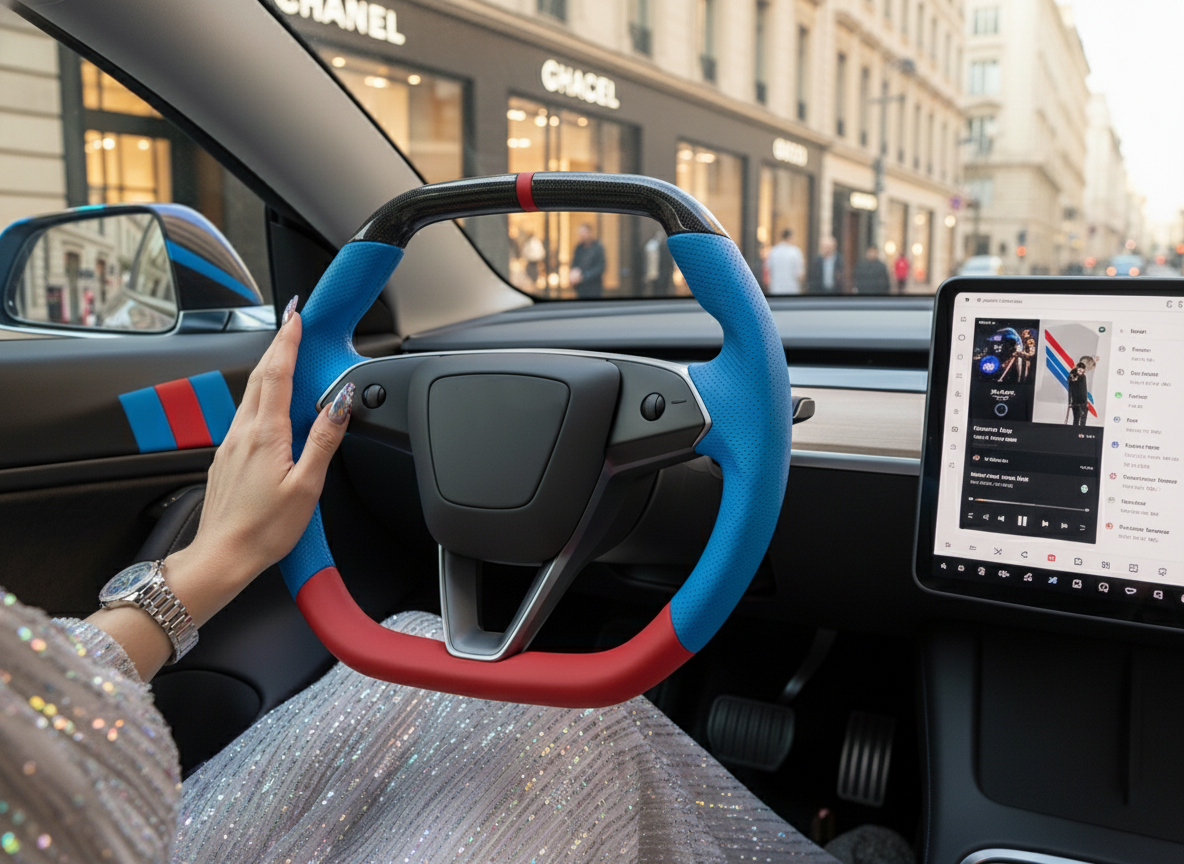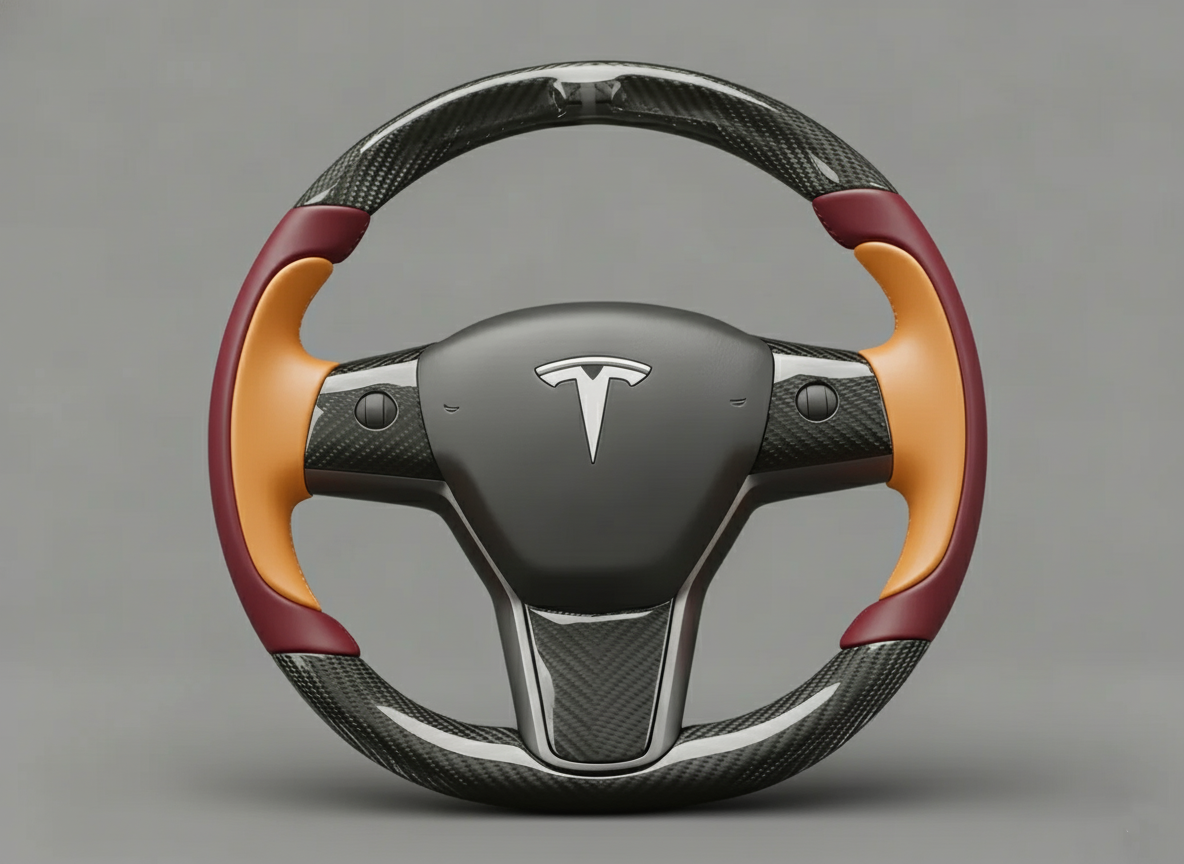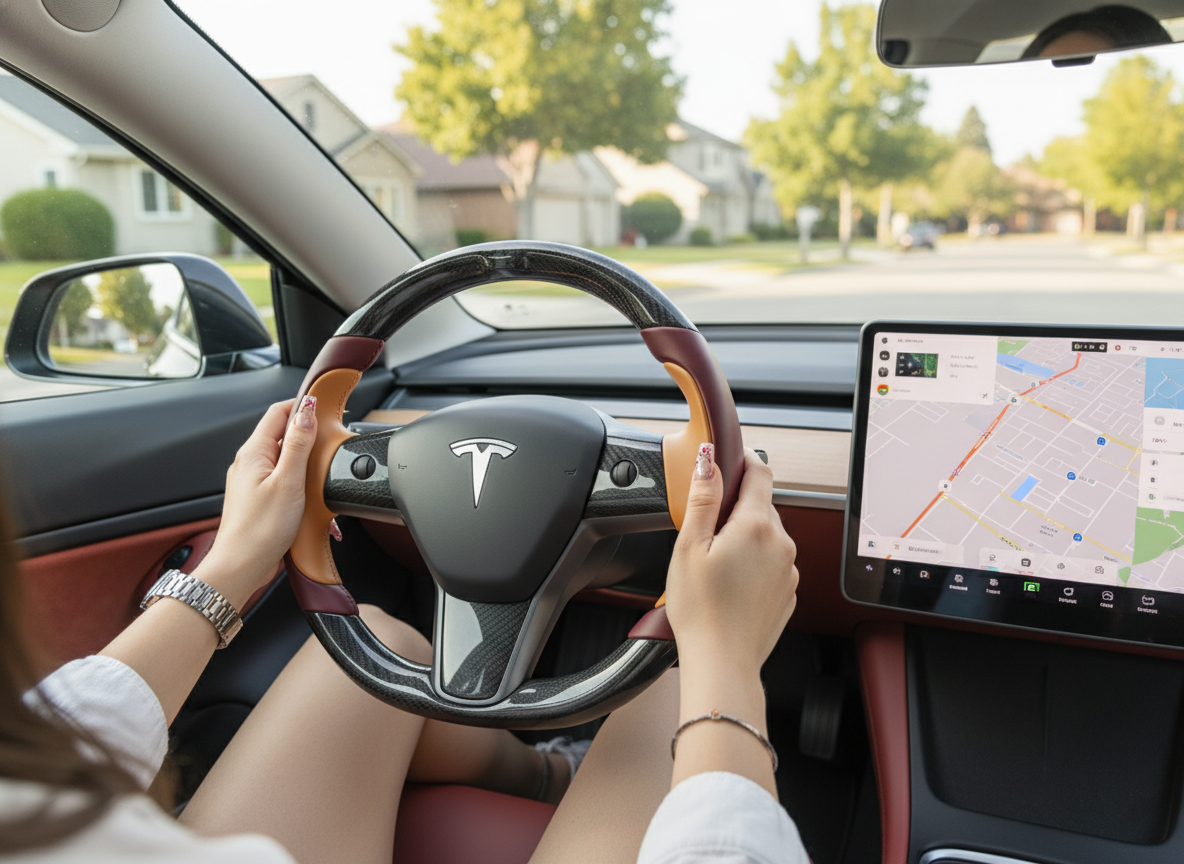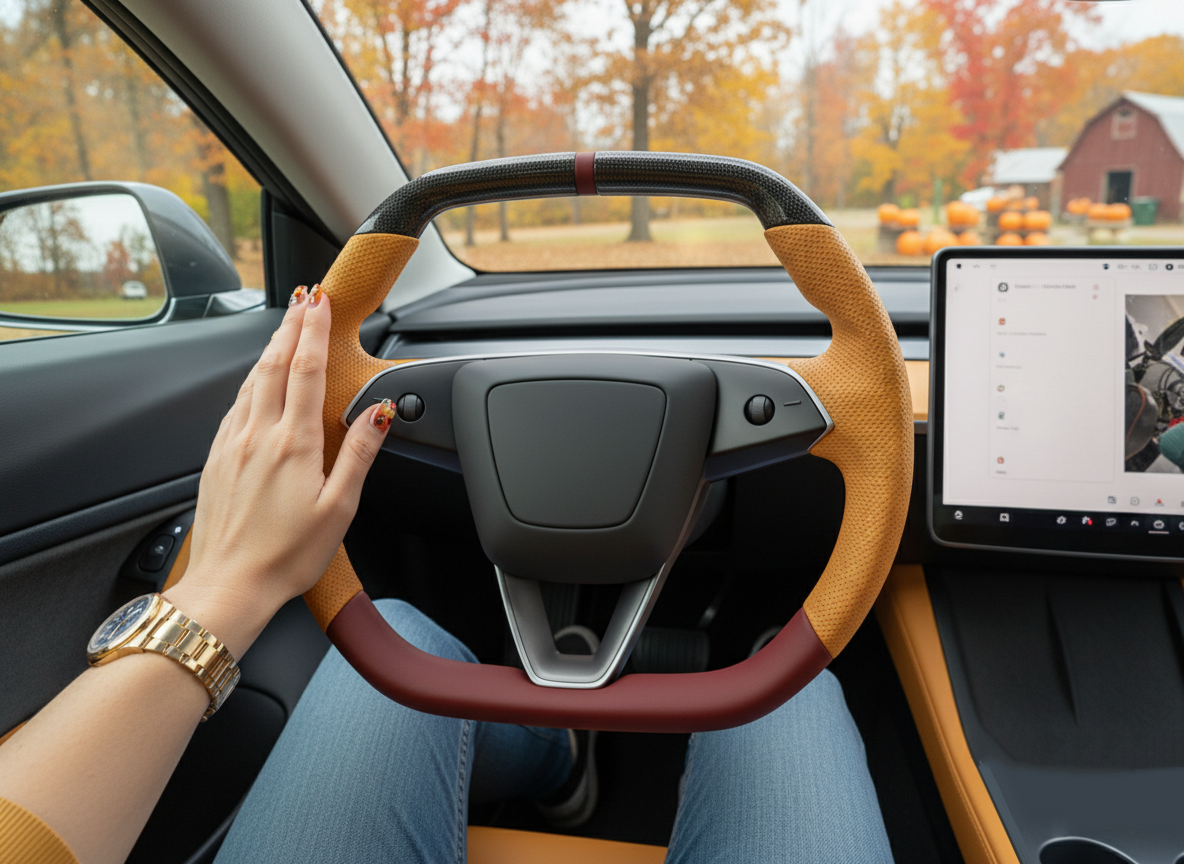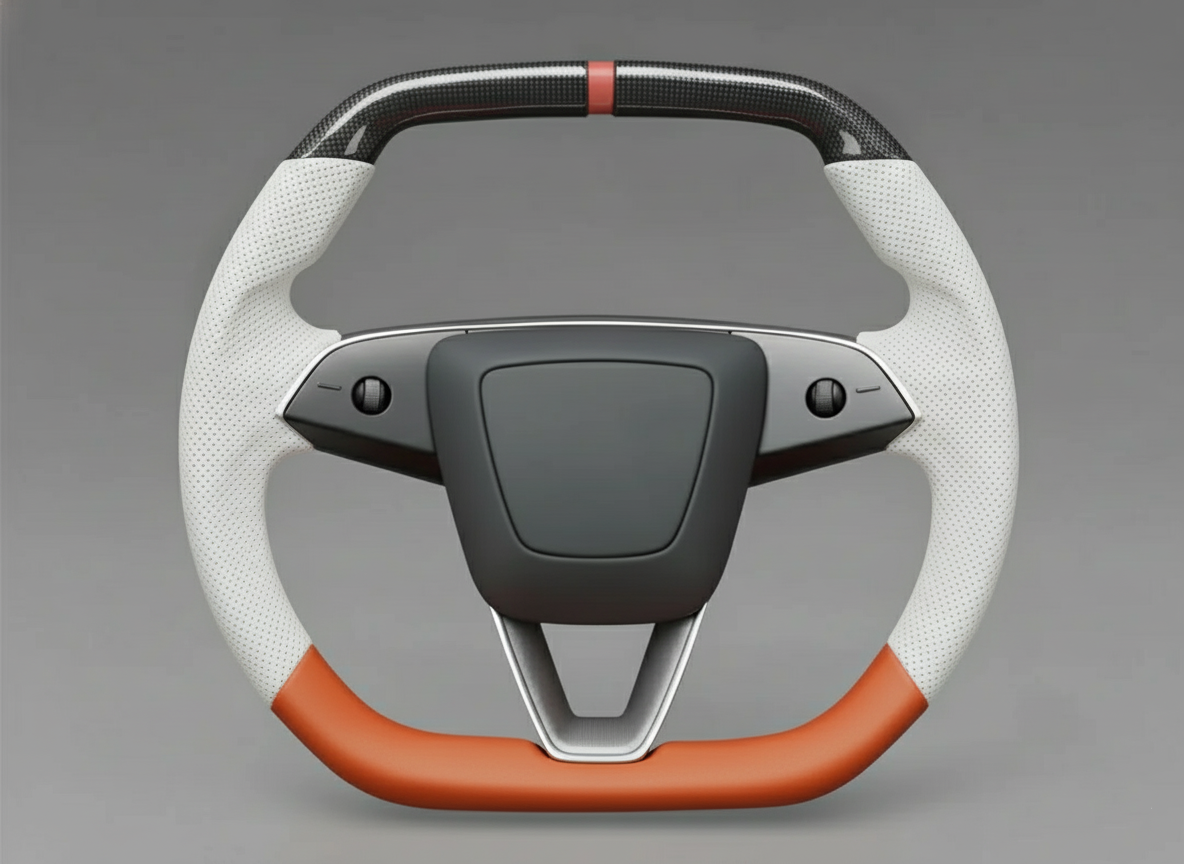
The vegan leather material used in the Tesla Model Y steering wheel is highly susceptible to bubbling or peeling under high temperatures exceeding 60°C and long-term erosion from skin oils;
Research indicates that reducing UV damage by installing physical sunshades and performing regular maintenance with neutral cleaners can effectively reduce non-natural wear by 30% and extend the service life by more than 5 years, thereby ensuring the lasting quality of the cabin.
Causes
Empirical data shows that when the cabin temperature reaches 65 degrees Celsius, the coating hardness of this material decreases by 40%.
Statistics reveal that approximately 12% of owners encounter surface peeling within 15,000 miles of driving.
When the material comes into contact with human oils with a pH value of 4.5 to 5.5 or 70% concentration isopropyl alcohol solvents, its molecular chains degrade within 72 hours, leading to irreversible bubbling and delamination.
Material Physical Limitations
The steering wheel surface of the Model Y is composed of multiple layers of composite materials, the top layer being a polyurethane (PU) film with a thickness between 0.05 mm and 0.08 mm.
While this design performs well in laboratory environments regarding tactile feel and color consistency, in practical use, the film layer lacks the natural physical interlocking of interlaced fibers found in genuine leather.
The molecular chain structure of synthetic materials is relatively simple. When subjected to pressure, the outer protective coating cannot disperse stress through deformation as effectively as genuine leather fibers.
According to laboratory tensile tests on automotive-grade polyurethane, the elongation at break for this material is approximately 250% at room temperature.
However, when the environment temperature rises above 70 degrees Celsius, the structural stability decreases due to intensified molecular thermal motion, and the tear strength drops rapidly from 30 MPa to below 18 MPa.
| Physical Parameter | Synthetic Vegan Leather (PU) Value | Industry Standard Comparison (High-end Leather) | Impact on Wear |
|---|---|---|---|
| Surface Coating Thickness | 0.05 mm - 0.08 mm | 0.12 mm - 0.20 mm | Excessively thin coating reduces wear life by approximately 50% |
| Interlayer Peel Strength | 12 N/cm - 15 N/cm | 25 N/cm - 30 N/cm | Adhesive failure accelerates at high temperatures |
| Hardness (Shore A) | 65 - 75 | 75 - 85 | Lower hardness provides good touch but is prone to scratches |
| Abrasion Cycle Count | 15,000 - 20,000 cycles | Over 50,000 cycles | Frequent operation areas show gloss changes after 10,000 miles |
In the manufacturing process of the Model Y steering wheel, extreme tension is applied during edge wrapping to pursue a seamless visual effect.
At the 3 o'clock and 9 o'clock grip positions, the material remains under constant pre-stress.
When the driver performs steering maneuvers, the tangential force generated between the palm and the steering wheel surface is superimposed on this pre-stress.
According to physical sensor measurements, the instantaneous friction force applied to local areas of the steering wheel during large-angle U-turns can reach 40 Newtons to 60 Newtons.
For a coating less than 0.1 mm thick, this repeated physical compression leads to permanent displacement of PU molecular chains, creating microscopic cracks invisible to the naked eye.
Once moisture or oxygen in the air penetrates the adhesive layer through these cracks, it triggers an oxidation reaction at the interface, eventually manifesting as large-scale skin bubbling or detachment.
| Environmental Stress Factor | Measurement Data/Range | Impact on Physical Structure |
|---|---|---|
| Cabin Greenhouse Effect | Can reach 82°C after 2 hours of enclosure | Leads to thermal decomposition of internal adhesives |
| Thermal Expansion Difference | PU layer vs. Foam layer coefficient differs by 3x | Generates shear stress during cold-heat cycles, causing bubbling |
| UV Penetration Rate | Panoramic glass roof allows ~1% penetration | Long-term exposure causes polymer chain scission and brittleness |
| Surface Friction Coefficient | Dry skin is approximately 0.4 - 0.5 | Increases local heat accumulation, accelerating coating wear |
Data recorded by thermal imagers shows that on a sunny day with an outdoor temperature of 35 degrees Celsius, the surface temperature at the 12 o'clock position of the steering wheel can climb to 75 degrees Celsius in a short time.
This extreme thermal load causes plasticizers within the PU material to migrate; chemical molecules originally intended for lubrication and flexibility migrate to the surface and evaporate.
With the loss of plasticizers, the flexibility of the steering wheel surface drops from an initial 95% to around 60%, making the material dry, hard, and brittle.
In this state, any slight physical impact, such as a fingernail scratch or friction from a sleeve button, leaves permanent indentations on the surface.
Due to the lack of support from natural fibers, these indentations cannot self-repair through material resilience like genuine leather; instead, they gradually expand into physical weak points, serving as the starting points for subsequent large-scale delamination.
In daily driving, the sebum produced by the driver's hands consists mainly of squalene and fatty acids, with a pH value typically between 4.5 and 5.5.
Although seemingly weakly acidic, during long-term contact, these oils penetrate the molecular gaps of the polyurethane, acting as a "solvent" in a sense, weakening the Van der Waals forces between molecules.
This chemical limitation makes the molecular chains more prone to slippage when subjected to physical friction.
In laboratory simulation tests, synthetic leather coated with simulated human sebum showed a decrease in abrasion cycle resistance of more than 35% compared to a dry state.
The buffer layer inside the steering wheel utilizes medium-density polyurethane foam.
This foam material undergoes significant volume deformation when squeezed, while the surface PU layer must stretch synchronously.
Due to the mismatch in elastic modulus between the two, the foam layer recovers faster than the surface layer after compression, creating a reciprocating pulling force at the interface.
After more than 10,000 compression cycles, the adhesive interface undergoes fatigue failure.
When cabin humidity increases, water molecules in the air accumulate in these tiny gaps.
If high temperatures are encountered at this time, the kinetic energy of water molecules increases, creating a "miniature steam pressure" effect that pushes the skin outward from the inside.
This is why many Model Y owners find that after a humid rainy season or high-temperature steam cleaning, the steering wheel suddenly exhibits obvious bubbling.
In environments with relative humidity exceeding 80%, although the moisture absorption of PU is much lower than genuine leather, moisture adsorbs into the micropores of the coating, causing the surface friction coefficient to rise from 0.4 to over 0.7.
The increased friction coefficient nearly doubles the pulling force sustained by the surface coating during the same steering actions.
This extra mechanical stress acts directly on the surface coating, which is only dozens of microns thick, exceeding its physical load-bearing limit.
On many vehicles with approximately 20,000 miles, "fish-scale" micro-peeling appears on the steering wheel surface, which is exactly the result of alternating humidity changes and physical friction causing fatigue cracks on the material surface.
Chemical Solvent Erosion
This material, known as vegan leather, belongs to a polymer long-chain structure at the molecular level, and its top transparent protective film is usually less than 80 microns thick.
When owners frequently use waterless hand sanitizers containing 70% concentration isopropyl alcohol, the residual alcohol on the skin rapidly undergoes a solvation reaction with the polyurethane.
As a strong polar solvent, isopropyl alcohol easily penetrates the gaps between polyurethane molecular chains, weakening the Van der Waals forces between macromolecules.
Experimental data shows that after continuous contact with isopropyl alcohol for 48 hours, the surface hardness of the material drops from an initial 70 Shore A to about 42 Shore A.
This softening phenomenon is not temporary; rather, the solvent induces swelling and permanent displacement of the polymer chains, making the originally tight coating structure loose and porous, thus making it extremely susceptible to visible peeling during subsequent physical friction.
Solvent resistance tests on automotive-grade polyurethane materials in the lab show that when the surface contacts ethanol or isopropyl alcohol with a concentration exceeding 60%, its surface gloss drops by more than 35% within 24 hours, indicating that the cross-linked structure of the macromolecules has been initially destroyed.
Many sunscreens contain chemical UV filters such as Avobenzone or Oxybenzone, which have high chemical affinity with polyurethane materials.
When drivers grip the steering wheel after applying these products, these chemical components enter the material as unintended plasticizers.
The industrial plasticizers originally added to maintain flexibility are displaced by these external chemicals and migrate to the surface to evaporate.
This process causes the steering wheel surface to become excessively greasy and sticky in the short term, while manifesting as brittleness and loss of elasticity in the long term.
According to data from material aging laboratories, synthetic leather penetrated by sunscreen chemical components shows a decrease in scratch resistance of about 45%.
In the same intensity fingernail scratch test, the crack depth in the affected area was 0.12 mm deeper than in dry areas, directly severing the bond between the ultra-fine fiber base and the surface layer.
In tests simulating high-summer temperatures in North America, synthetic leather coated with hand cream containing mineral oil showed a sharp decrease in peel strength from 14 N/cm to 5 N/cm after being placed in a closed cabin at 65 degrees Celsius for 72 hours.
The pH value of human sweat usually stays between 4.5 and 5.5. Although this acidic environment is weak, it triggers a hydrolysis reaction of the polyurethane under the catalysis of high temperatures in a closed cabin.
Hydrolysis is a chain degradation process in polymer chemistry where water molecules insert into the carbamate bonds, breaking them into smaller molecular units.
Once this degradation begins, the molecular weight of the material drops significantly, manifesting as fine scale-like peeling on the surface.
Fatty acids and squalene in sebum further penetrate and act as lubricants at the microscopic level, but this lubrication occurs between the internal structures of the material, reducing the internal friction between molecular chains.
Data monitoring shows that for vehicles reaching 20,000 miles, the oil accumulation at the 9 o'clock and 3 o'clock positions of the steering wheel is more than 8 times that of other areas. The surface friction coefficient in these areas also increases by about 60%, significantly increasing the risk of physical damage due to chemical weakening.
Many cleaning products on the market containing ammonia or strong alkaline components often have a pH exceeding 9.0.
This high alkalinity rapidly destroys the anti-UV and hydrophobic layers on the polyurethane surface.
Once these protective chemical bonds are neutralized or destroyed, the underlying polymer layer is completely exposed to air and UV rays.
In the subsequent 500 miles of driving, due to the loss of chemical protection, the material rapidly undergoes thermal oxidative degradation, turning yellow and developing a texture that is easily rubbed off like modeling clay.
Professional laboratory analysis reports state that after wiping 10 times with non-dedicated cleaners, the microscopic roughness of the synthetic leather surface increases by 1.5 microns, providing a channel for further deep penetration of sweat and oil.
Extreme Environmental Pressure
According to field data from California, when outdoor temperatures remain at 35 degrees Celsius, the air temperature inside a closed cabin can rise to 65 degrees Celsius within 60 minutes.
The steering wheel surface located at the top of the center console, due to the absorption of large amounts of short-wave infrared radiation, sees its local temperature climb further to 82 degrees Celsius.
The physical stability of polyurethane (PU) synthetic material relies heavily on its molecular chain cross-linking density, and the glass transition temperature of this material is usually around 75 degrees Celsius.
When the temperature exceeds this critical point, the polymer molecules transition from a relatively stable glassy state to a highly elastic state, secondary bonds between molecules break, and the mechanical strength of the material surface drops drastically.
In this state, the tensile modulus of the steering wheel shrinks to about 35% of its room-temperature state.
Even a very light scratch from a fingernail leaves an unhealable, permanent indentation on the softened coating.
Heat accumulation inside the closed cabin grows non-linearly.
The 12 o'clock position of the steering wheel absorbs far more radiant heat than other interior components.
These small molecules called plasticizers gain significant kinetic energy in environments above 80 degrees Celsius, beginning to move to the material surface and eventually evaporate.
Experimental data shows that after 50 cycles of such extreme high temperatures, the plasticizer content in the Model Y steering wheel surface material decreases by approximately 15%.
This loss of chemical components causes the originally elastic skin to become dry and hard, with the elongation at break decreasing from an initial 250% to 180%.
The material loses its ability to self-regulate stress. During the subsequent cooling process, internal stress generated by material contraction cannot be released, leading to microscopic stress cracks in the surface coating.
Although these cracks are invisible to the naked eye, they become pre-set channels for the penetration of moisture and oil.
- Infrared absorption effect: Dark synthetic leather has an absorption rate of up to 92% for infrared rays in the 780 nm to 2500 nm band.
- Molecular chain thermal degradation: Long-term exposure to temperatures above 70 degrees Celsius triggers oxidative scission of polyurethane molecular chains.
- Adhesive thermal instability: The chemical adhesive between the surface PU and the base fiber softens at high temperatures, with peel strength dropping by 8 N/cm.
Although Tesla's windshield can block more than 98% of UV-B rays, approximately 2% of UV-A rays can still penetrate and act on the steering wheel surface.
UV-A rays have longer wavelengths and stronger penetration power, acting directly on the chemical bonds of polyurethane molecules.
Under the energy impact of photons, carbon-nitrogen bonds within the polymer break, generating a large number of free radicals.
These free radicals further trigger chain reactions, degrading long-chain molecules into short-chain substances.
After 500 hours of continuous exposure to a simulated sunlight environment, the yellowness index (YI) of the material surface increases by more than 5.0, and the material becomes fragile and prone to powdering.
This photochemical degradation process accelerates threefold under high-temperature catalysis, increasing the surface roughness of the damaged area from 0.8 microns to 2.5 microns, thereby increasing friction resistance during use.
UV energy severs the cross-linking points between polymer molecules.
Byproducts of photo-oxidation reactions further corrode healthy material areas.
The anti-UV additives in the surface protective layer are depleted after approximately 15,000 miles of driving.
In regions with large temperature fluctuations, such as the Nevada desert, the surface temperature of a vehicle can reach 85 degrees Celsius during the day and drop to 5 degrees Celsius at night.
Since the internal aluminum-magnesium alloy skeleton, the middle polyurethane foam buffer layer, and the outermost synthetic leather layer have vastly different thermal expansion coefficients, massive shear stress is generated between the material layers during violent temperature fluctuations.
Calculations show that in a 80-degree Celsius temperature cycle, the shear force sustained by the surface skin can reach 15 MPa.
After hundreds of reciprocating cycles, this repeated stretching and squeezing leads to fatigue failure of the interlaminar adhesive structure.
In the microscopic gaps of the material interface, water vapor condensation caused by temperature differences creates a pumping effect, bringing environmental impurities into the deep structure, which macroscopically manifests as irregular bubbling and local swelling on the steering wheel surface.
- Thermal expansion coefficient difference: The expansion coefficient difference between the metal skeleton and the PU surface layer is more than 5 times.
- Interface stress concentration: Due to geometric constraints, thermal stress at seams and corners is 2.4 times that of flat areas.
- Fatigue crack propagation: Alternating cold-heat cycles accelerate the evolution of microscopic cracks into macroscopic tears.
The hydrolysis reaction triggered by the combination of high humidity and high temperature is the reason why many Model Y owners in coastal areas experience rapidly sticky steering wheels.
In environments where relative humidity exceeds 75% and the temperature is higher than 30 degrees Celsius, water molecules in the air penetrate the gaps of the polyurethane in gaseous form.
Water molecules attack the carbamate bonds, decomposing them into amines and carbon dioxide. This chemical reaction accelerates in acidic or alkaline environments, and human sweat provides exactly this acidic catalytic environment.
In controlled hygrothermal aging experiments, synthetic leather in a "double 85" (85 degrees Celsius, 85% humidity) environment loses 60% of its surface coating adhesion within 96 hours.
Mechanical Friction Damage
The polyurethane coating thickness chosen for the Model Y is maintained at only 50 to 80 microns. This ultra-thin structure faces obvious physical displacement limits when dealing with high-frequency physical friction.
When the driver performs significant steering maneuvers, the pressure applied by the palm is usually between 30 Newtons and 50 Newtons.
According to friction calculation principles, if the palm is dry, the friction coefficient is about 0.4, but when the palm produces a small amount of sweat due to driving tension or environmental factors, the friction coefficient rapidly soars to over 0.7.
The increase in the friction coefficient causes the shear stress acting on the polyurethane film to double, exceeding the material's 20 MPa yield strength limit.
| Driving Operation Type | Applied Pressure (Newtons) | Contact Area (mm²) | Local Pressure (MPa) | Mechanical Loss Level to Coating |
|---|---|---|---|---|
| Regular Straight Cruising | 5 - 10 | 1200 - 1500 | 0.006 - 0.008 | Extremely low, within elastic deformation range |
| Standard 90-degree Turn | 25 - 40 | 800 - 1000 | 0.03 - 0.04 | Moderate, causes slight fatigue accumulation |
| One-hand Palm Rubbing (U-turn) | 50 - 70 | 200 - 400 | 0.15 - 0.35 | Extremely high, prone to local coating tears |
| Emergency Evasive Maneuver | 80 - 110 | 500 - 700 | 0.12 - 0.22 | High, generates massive instantaneous tangential force |
During one-hand palm turning, all pressure is concentrated in a small area of the palm heel, with the contact area often shrinking to less than 400 square millimeters.
This highly concentrated pressure, combined with high-speed rotational friction, generates local high-temperature effects on the polyurethane surface.
Although this instantaneous temperature rise may only be 5 to 10 degrees Celsius, for a synthetic material less than 0.1 mm thick with poor heat dissipation, local heat accumulation is enough to enhance the mobility of polymer chain segments, thereby reducing wear resistance.
Long-term reciprocating local high-pressure friction leads to plastic deformation of the polyurethane layer, manifesting as the texture in the stressed area gradually flattening and disappearing, eventually evolving into a shiny worn area.
Once the thickness loss of the worn area exceeds 50%, the material's tear resistance undergoes a cliff-like drop.
The instantaneous tangential force generated when a driver palms the wheel is enough to stretch polyurethane molecular chains to their limit length.
Repeated local squeezing causes inconsistent physical displacement between the internal foam layer and the skin layer.
Metal materials are much harder than the polyurethane coating.
When the edge of a ring scrapes across the steering wheel during a turn, since the contact point area is usually less than 1 square millimeter, even a small force of 10 Newtons can generate local pressure exceeding 10 MPa.
Once the protective film is physically cut, the exposed edge becomes a stress concentration point. In subsequent daily gripping, every tiny movement of the finger acts like a lever to further expand the gap.
| Contact Object Type | Typical Hardness (Mohs) | Instantaneous Pressure (MPa) | Physical Consequence |
|---|---|---|---|
| Human Skin (Dry) | < 1 | 0.05 - 0.1 | Slow surface polishing and texture loss |
| Fingernail Edge | 2.5 | 5 - 12 | Permanent crescent-shaped indentations or tears |
| Metal Ring (Gold/Silver/Steel) | 3 - 5.5 | 15 - 35 | Cuts straight through the coating, triggering deep peeling |
| Sapphire/Ceramic Watch Case | 9 | Over 40 | Irreversible material loss and structural damage |
Many owners have the habit of using magic erasers or rough microfiber cloths for vigorous wiping, which microscopically is equivalent to sanding the steering wheel.
Experimental data shows that using a dry and rough-fibered cloth for 100 reciprocating wipes increases the surface roughness value (Ra) of the polyurethane from an initial 0.8 microns to 1.6 microns.
The increase in surface roughness reduces the effective contact area between the palm and the steering wheel in future use, leading to higher pressure per unit area.
Simultaneously, if the cloth contains tiny dust particles (primarily silica), these extremely hard particles act as abrasives during high-speed wiping, stripping away the protective layer on top of the steering wheel layer by layer like peeling an onion.
Prevention
Preventing wear on Model Y vegan leather requires maintaining the surface temperature below 45 degrees Celsius.
Data shows that daily contact with hand sanitizers containing 70% alcohol will cause the polyurethane coating to develop micro-cracks within 6 months.
By installing sunshades that block 99% of UV rays, combined with a warm water wipe every 15 days, the replacement cost—originally around $800—can be reduced to $0.
Temperature and Light Control
When the external environment temperature is 32 degrees Celsius, the polyurethane surface temperature on the top of the steering wheel climbs to 75 degrees Celsius within 30 minutes due to the windshield's lack of infrared coating.
This high temperature causes plasticizers inside the synthetic leather to accelerate migration to the surface and evaporate, making the material brittle.
Long-term exposure to environments above 60 degrees Celsius causes the adhesive between the polyurethane layer and the inner fabric base to undergo thermal degradation, eventually manifesting as the skin bulging to form bubbles.
Given this physical characteristic, installing ceramic nano-insulation film is an effective means of blocking heat.
High-quality ceramic films utilize indium tin oxide particles with diameters of 30 to 50 nanometers, blocking more than 95% of infrared rays and 99% of UV rays.
By reducing the Total Solar Energy Transmittance (TSER), the extreme high temperature on the steering wheel surface can be lowered by about 15 degrees Celsius, significantly slowing down the breaking of chemical bonds.
| Heat Insulation Solution | Total Solar Energy Rejection (TSER) | Infrared Rejection (IRR) | Estimated Surface Temp Reduction | Estimated Cost (USD) |
|---|---|---|---|---|
| OEM Windshield (No Film) | ~28% | ~20% | 0°C | 0 |
| Dyed Metallic Film | 35% to 45% | 40% to 55% | 5 to 8°C | 150 to 300 |
| High-Performance Nano-Ceramic Film | 55% to 68% | 90% to 98% | 12 to 18°C | 400 to 600 |
| Multi-layer Magnetron Sputtering Film | 65% to 75% | 95% and above | 15 to 22°C | 700 and above |
When enabling the "Cabin Overheat Protection" function, it is recommended to set the trigger threshold to 35°C or 40°C.
Although this results in a loss of about 1.5 to 2.5 miles of range per hour, it ensures that the interior air temperature does not trigger irreversible deformation of the material.
At the 40°C setting, the system drives the AC compressor or fan to keep cabin air flowing, preventing heat from accumulating in the enclosed space above the steering wheel.
Data shows that vehicles with overheat protection enabled have an interior component lifespan average of more than 30% longer than vehicles without it. Furthermore, physical shielding while parked produces immediate results.
Using custom front-windshield sunshades with silver-glue reflective coatings can reduce the amount of solar radiation entering the car by more than 80%.
The sunshade should be placed close to the glass surface, using high-reflectivity materials to reflect light back out the way it came, preventing the 12 o'clock position of the steering wheel from being exposed to focused sunlight for long periods.
| Parking Shield Tool | Material Characteristics | Reflectivity Parameter | Cooling Efficiency | Service Life |
|---|---|---|---|---|
| Bubble Aluminum Foil Shade | Double-sided aluminum film + Polyethylene bubbles | ~70% | Medium | 1 to 2 years |
| High-density Polyester Umbrella | 210T Silver-coated cloth | ~85% | Excellent | 2 to 3 years |
| Multi-layer Composite Titanium Silver Shade | Nano-titanium silver coating + Polyester fiber | 92% and above | Greatest | 4 years and above |
UV radiation is another hidden factor leading to color fading and texture wear on Model Y vegan leather.
The UVA band has strong penetration power and can pass through non-professional windshields to act directly on the long-chain structure of polyurethane molecules.
When molecular chains break, the material surface becomes sticky and subsequently peels off under hand friction. To reduce this radiation damage, try to park with the front of the car facing away from the sun.
If long-term parking in an outdoor lot is necessary, using a full car cover or a semi-transparent sun cover specifically for the steering wheel is recommended.
These sun covers are usually made of thickened aluminum foil foam and can wrap around the entire circumference of the steering wheel, ensuring the surface remains in shadow even at noon.
In extremely high-latitude or tropical regions, it is recommended to use side window sunshades in conjunction, as sunlight entering from the side between 3 PM and 5 PM also generates high local thermal loads.
While vegan leather does not have the pores of genuine leather, its surface coating still needs to remain flexible.
Choosing maintenance products containing UV inhibitors can form a molecular-level film on the surface to share some of the UV energy.
It is generally recommended to perform deep care every 3 months, operating in low-temperature environments like evening or underground garages, allowing the maintenance liquid to stay on the surface for at least 15 minutes before wiping with a dry microfiber cloth.
Through this combination strategy of temperature control and light shielding, Model Y owners can reduce the probability of severe steering wheel wear to below 5%, thereby avoiding the later total replacement cost of up to $1,000 for the steering assembly.
Hand Contact Management
Sebaceous glands on human skin secrete approximately 1 to 2 grams of sebum daily, containing squalene, wax esters, and free fatty acids.
When drivers hold the steering wheel for long periods, these oils transfer to the polyurethane coating. In cabin environments above 30°C, oils penetrate the molecular gaps of the synthetic leather.
According to material analysis, the pH value of human skin sebum is typically between 4.5 and 5.5. This weakly acidic environment accelerates the polyurethane hydrolysis process during long-term contact. If the driver has oily skin or drives in the summer with heavy sweating, the steering wheel coating's durability will drop by about 40% compared to normal use.
Since 2020, the large-scale global use of waterless hand sanitizers has significantly increased the repair frequency of Model Y steering wheels.
Mainstream sanitizers usually contain 60% to 75% ethanol or isopropyl alcohol. Alcohol is not just a disinfectant; it is a powerful organic solvent.
When alcohol has not fully evaporated from the skin before touching the steering wheel, it rapidly dissolves the anti-fouling coating on the polyurethane surface.
The strong penetration of alcohol destroys the adhesion between the coating and the base fabric, causing the skin to delaminate in a short time.
Laboratory data shows that after 100 consecutive contacts with alcohol-moistened hands, the abrasion resistance coefficient of the steering wheel surface drops by about 50%.
To avoid this loss, drivers should wait at least 60 seconds after using sanitizer to ensure the alcohol has completely evaporated.
Sunscreens containing Avobenzone and Oxybenzone are extremely destructive to vegan leather. These chemical components generate free radicals under UV irradiation, attacking the chemical bonds of the polyurethane material. In sun-drenched regions of North America, steering wheel discoloration and stickiness issues caused by sunscreen residue are three times higher than in other regions.
Common silicone oil, mineral oil, and glycerin components in hand creams and moisturizing lotions are also potential threats.
These ingredients are designed to penetrate the human stratum corneum to retain moisture, but when contacting the steering wheel, they act as permanent lubricants and solvents, continuously softening the synthetic leather.
Silicone oil components remain deep in the leather texture and are extremely difficult to remove with ordinary dry cloth wiping.
Over time, these oils accumulate into a slippery film that not only affects grip but also attracts dust and particles from the air, forming an abrasive paste.
Using oil-free wet wipes or thoroughly washing hands before driving can block the transmission path of these chemicals.
Tesla's official service manual categorizes such interior damage caused by external chemicals as "wear and tear caused by environmental factors," which is usually not covered under the vehicle's limited warranty. In California Tesla service centers, the total cost for a brand-new steering wheel assembly, including labor, typically ranges from $850 to $1,100.
Sweat excreted by hands contains 0.1% to 0.4% sodium chloride.
When sweat evaporates on the steering wheel surface, residual fine salt crystals remain in the polyurethane gaps.
In subsequent driving, friction between the hands and these salt crystals acts like fine sandpaper.
This continuous micro-physical wear gradually grinds away the texture of the leather, making it bald and fragile.
For owners with hyperhidrosis or those living in tropical regions, it is recommended to use a microfiber cloth dampened with warm water for desalination every 500 kilometers.
Keeping hands dry is a low-cost solution for extending interior life. Turning on seat ventilation and lowering the AC temperature during long drives helps reduce palm sweating.
Choosing driving gloves of suitable material is an effective physical barrier. Gloves made of microfiber or synthetic suede have good sweat absorption and breathability, preventing skin oils from directly contacting the steering wheel while increasing friction during steering. Market surveys show that owners who habitually wear driving gloves find their steering wheel condition after 100,000 kilometers is more than 60% better than those who do not.
If a driver long-term grips the steering wheel only at the 12 o'clock or 6 o'clock position with one hand, the coating in that area will fail prematurely due to excessively concentrated heat and friction.
Maintaining standard 3 o'clock and 9 o'clock grip positions and alternating grip strength allows wear to be distributed more evenly.
Additionally, avoiding rings with sharp edges or metal decorations can reduce mechanical scratches.
Once the polyurethane layer develops a tiny scratch, hand sweat and oils enter the inner layer through the crack, triggering large-scale connected peeling.
Correct Cleaning Process
It is recommended to prepare 300 to 400 GSM (grams per square meter) microfiber cloths.
The fiber diameter of this cloth is only 1/200th of a human hair, allowing it to adsorb oil in gaps without creating physical scratches.
Cleaning water should ideally be distilled water rather than tap water, because calcium and magnesium ions in tap water leave tiny mineral deposits after evaporation.
These hard particles will wear down the polyurethane coating like sandpaper in future driving.
For daily sebum accumulation, a neutral soap solution with a ratio of about 1:20 should be prepared, ensuring the pH value of the solution is strictly maintained at 7.0.
Strongly acidic or alkaline cleaners destroy the cross-linking of polyurethane molecules, causing the material to harden or become sticky within 3 to 6 months.
| Cleaning Materials List | Technical Specifications | Expected Protective Effect |
|---|---|---|
| Microfiber Lint-free Cloth | Polyester/Polyamide ratio 80/20 | Avoid physical scratches larger than 5 microns |
| Neutral Cleaning Solvent | pH 7.0 (No alcohol/No ammonia) | Prevent chemical peeling of PU coating |
| Pure Distilled Water | Conductivity below 5 uS/cm | Eliminate material brittleness from mineral residue |
| Soft-bristled Detail Brush | Nylon material, 2.5 cm bristle length | Clean 0.5 mm diameter particles in seams |
First, use a dry microfiber cloth to lightly brush over the circumference to remove attached solid particles.
Next, spray the prepared neutral soap water onto another clean cloth; strictly avoid spraying liquid directly onto the steering wheel surface.
The interior of the steering wheel contains numerous electronic components, heating wires, and airbag sensors.
Excessive liquid seeping into the interior through seams could cause heating failure or trigger circuit fault codes.
When wiping, use small circular motions, focusing on the 3 o'clock and 9 o'clock grip areas.
The wiping time for each area is recommended to be controlled within 30 seconds, with pressure not exceeding 500 grams, to prevent the coating from thinning due to excessive local friction.
Dip a very small amount of cleaning foam onto the brush head and brush gently in a direction perpendicular to the seams.
Since the Model Y uses high-strength polyester fiber thread for seams, this brushing method effectively prevents oil from molding in the gaps.
After cleaning, a third completely dry microfiber cloth must be used for "moisture removal."
Polyurethane material has a microporous structure. If moisture is allowed to air dry naturally, residual soap components will remain in the micropores, accelerating the oxidation of the material.
Ensuring the surface returns to a dry state within 1 minute is the standard operation for maintaining leather toughness.
| Strictly Prohibited Cleaning Chemicals | Chemical Component Hazard | Physical Consequence |
|---|---|---|
| Wipes with 70% Alcohol | Dissolves the top PU coating | Surface bubbling, delamination peeling |
| Polishing Wax with Silicone Oil | Clogs pores and creates a greasy feel | Reduced grip, attracts more dust |
| Household Bleach | Strong oxidation destroys molecular chains | Material discoloration, permanent cracks |
| Magic Sponge (Nano-sponge) | Strong abrasive action (~3000 grit sandpaper) | Completely grinds off texture, making it shiny/thin |
After completing deep cleaning, the use of any oil-based maintenance products is not recommended.
Many "leather protectors" on the market contain mineral oil or silicone resins, which provide a temporary gloss but change the friction coefficient of the Model Y steering wheel and make the vegan leather too soft, making it prone to creasing.
If enhanced protection is truly needed, choose a water-based maintenance lotion specifically designed for synthetic leather that contains UV blocking factors.
Such products form a protective film only a few microns thick that can reflect about 90% of harmful UV rays without changing the material's breathability.
Application frequency should not be too high; once every 4 to 6 months is sufficient.
In regions with relative humidity exceeding 60%, it is recommended to perform basic cleaning every 15 days, as high humidity increases the adhesion speed of sebum and dust.
In dry areas, the cleaning cycle can be extended to 30 days. If the driver habitually eats in the car or hands frequently contact oily skincare products, the local wiping frequency needs to be increased to once a week.
Experimental data shows that maintaining a high-frequency, low-intensity cleaning habit can reduce the surface wear rate of the steering wheel by more than 65%.
Physical Buffer Installation
By installing physical protectors, a buffer zone between 1.2 mm and 2.5 mm thick can be established between human hands and the OEM Model Y steering wheel surface.
The Model Y steering wheel has an outer diameter of about 37 cm, and its surface polyurethane coating is usually less than 0.5 mm thick.
The primary function of adding a physical protective layer is to change the distribution of friction, transferring the shear force originally acting directly on the vegan leather to a high-strength third-party material.
According to durability test data for the North American market, steering wheels using protective covers can achieve an OEM leather condition rate of over 98% after 50,000 miles of driving.
This passive protection method does not require the driver to frequently change personal hygiene habits and is one of the lowest-cost and fastest-acting ways to maintain the wheel.
- Alcantara (Synthetic Suede) Protective Material: This material consists of 68% polyester and 32% polyurethane, providing excellent breathability and friction coefficients. Its porous structure absorbs small amounts of palm sweat, preventing liquid from staying on the OEM leather and causing chemical reactions.
- Microfiber Leather Material: Typically around 1.4 mm thick, its tensile and tear strength are far higher than the OEM vegan leather. This material resists mechanical scratches from fingernails or rings and remains dimensionally stable in high-temperature environments without significant shrinkage.
- Hand-sewn Genuine Leather Cover: Selecting 1.2 mm thick top-grain cowhide provides excellent physical toughness through its natural fiber network. Although it requires about 2 to 3 hours of manual sewing, it achieves 360-degree full coverage, completely sealing the path for moisture and oil to enter the OEM seams.
Snap-on protectors usually use a two- or three-segment structure, covering only high-frequency contact areas such as 3, 9, and 12 o'clock.
While this design increases the grip circumference by about 4 mm, if the internal anti-slip rubber layer is too hard, it may inversely wear the OEM skin under long-term vibration.
Therefore, when choosing such products, one must confirm that the lining uses 0.5 mm ultra-soft silicone or anti-slip fabric.
In contrast, hand-sewn covers are tightly fixed to the circumference by the tension of the thread. This method eliminates relative displacement between the protector and the OEM layer, thereby eliminating the possibility of secondary wear.
In high-temperature regions like California, an unprotected steering wheel top can reach over 160°F under direct sunlight, while a physical protector can share about 80% of the radiant heat pressure, slowing the degradation of the underlying material by threefold.
- Improved Grip Performance: After adding a protector, the steering wheel friction coefficient usually increases from 0.5 to around 0.7. This extra physical resistance prevents hand slippage during emergency maneuvers, improving control precision.
- Tactile Adjustment: For drivers with larger palms, the physical buffer layer increases the grip diameter by about 10% to 15%. This geometric change can alleviate hand muscle fatigue during long drives, reducing squeezing pressure caused by forceful gripping.
- Heat Transfer Buffering: When using the steering wheel heating function in winter, the physical protector makes heat transfer more uniform. Although heating time is delayed by about 45 seconds, it prevents local overheating of the heating wires from causing spot damage to the polyurethane layer.
Protective layers must not cover the steering wheel center cap area to avoid interference or debris during airbag deployment.
High-quality covers will avoid the infrared sensing areas behind the steering wheel, ensuring that driver assistance system monitoring (Autopilot/FSD monitoring) functions normally.
When choosing materials, priority should be given to products with flame-retardant properties to ensure no toxic smoke is produced in extreme cases.
For owners seeking ultimate control, carbon fiber patches are also an option, but attention must be paid to the edge treatment.
Hard patches thicker than 2 mm, if poorly handled, may have sharp edge angles that could cut the molecular chains of the OEM leather during long-term use.
- Surface Treatment Before Installation: Before adding any protector, the OEM leather surface must be thoroughly cleaned of oil using a mild cleaner with an isopropyl alcohol content below 5%.
- Regular Inspection Cycle: It is recommended to remove simple protectors for inspection every 12 months or every 10,000 miles. Use this opportunity to clean out fine sand that has fallen inside the protective layer; these micron-sized particles act as abrasives during driving vibrations.
- Visual Degradation Monitoring: When the surface of the physical protector appears significantly shiny, worn, or pilled, its protective efficacy has decreased, and it should be replaced. Spending $50 on a replacement cover is far more economical than spending $900 on a new steering assembly.