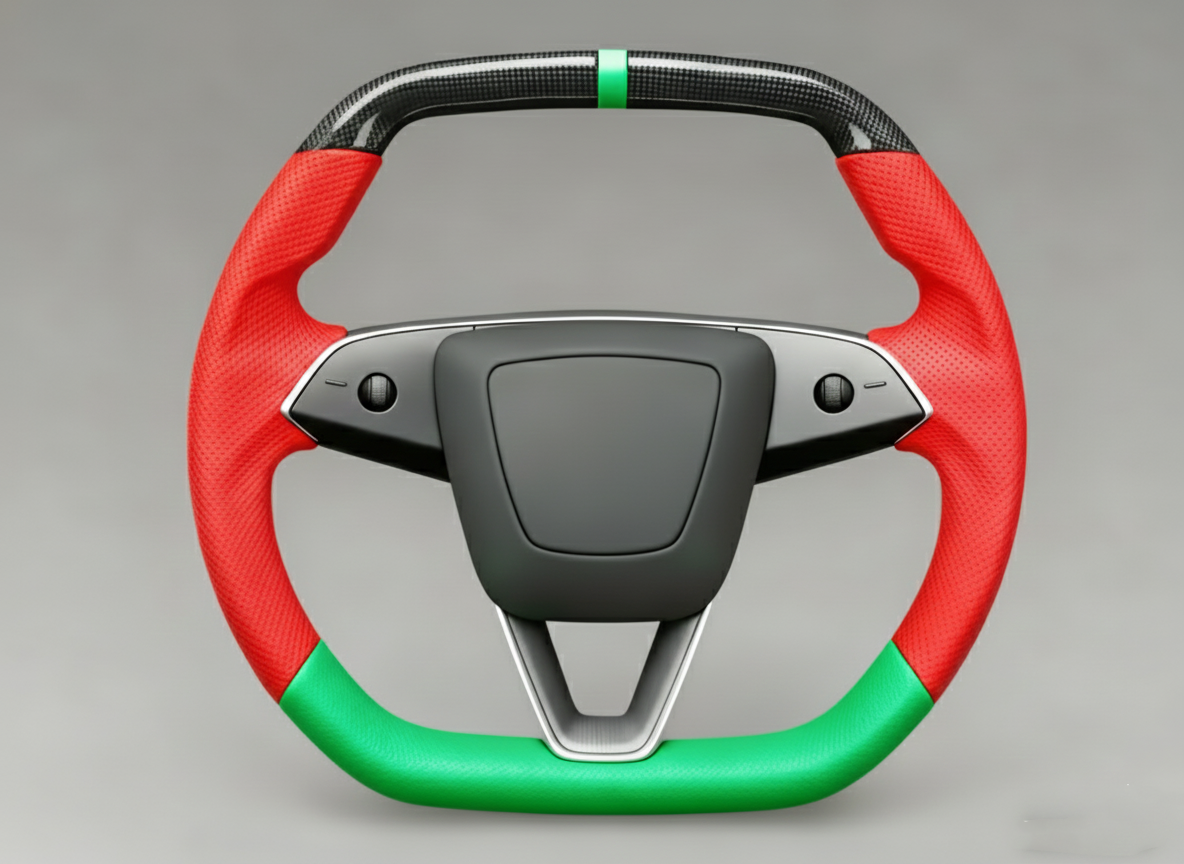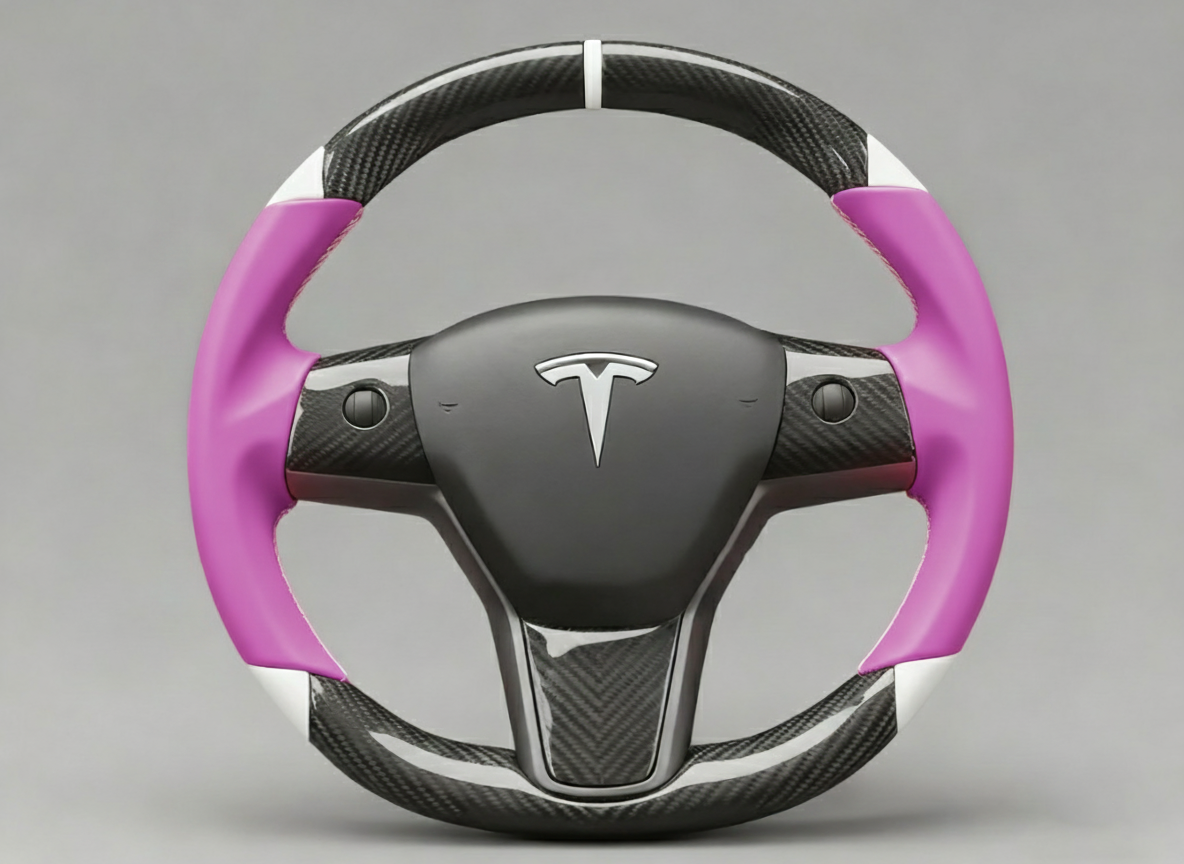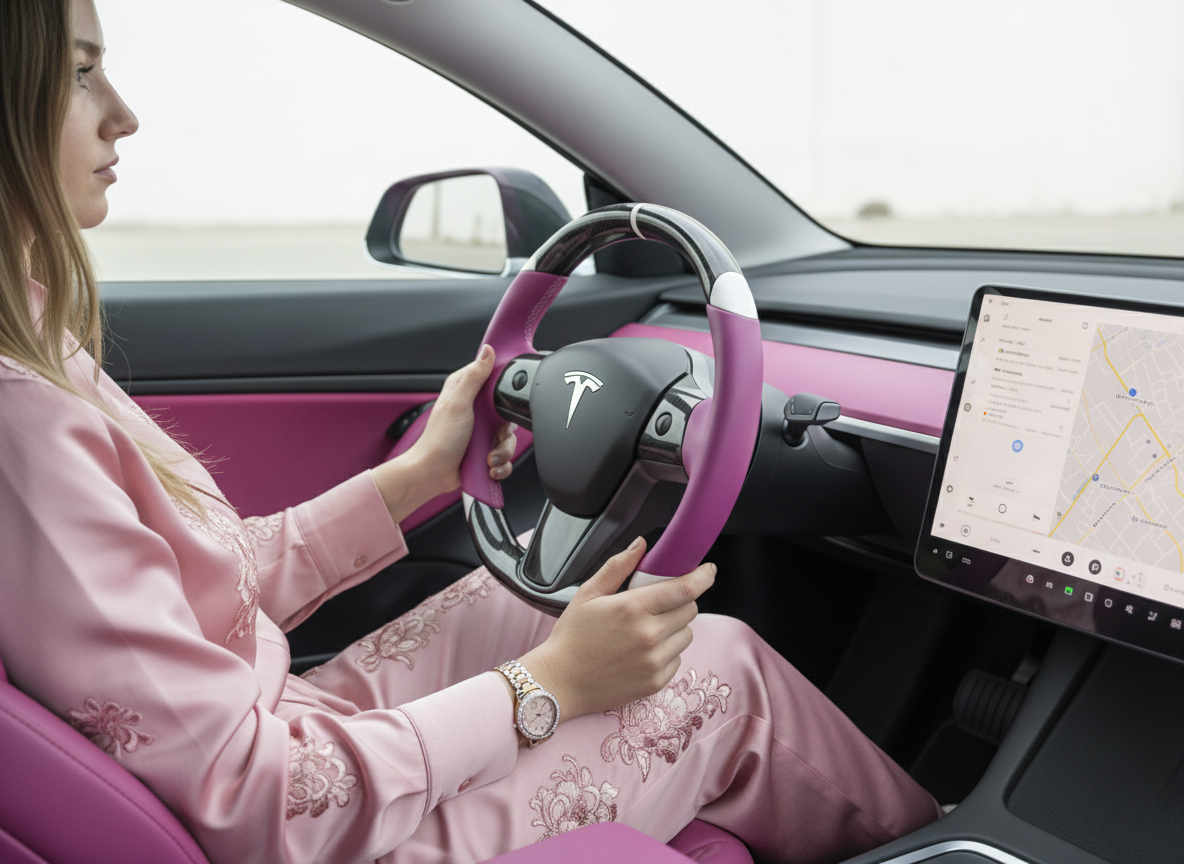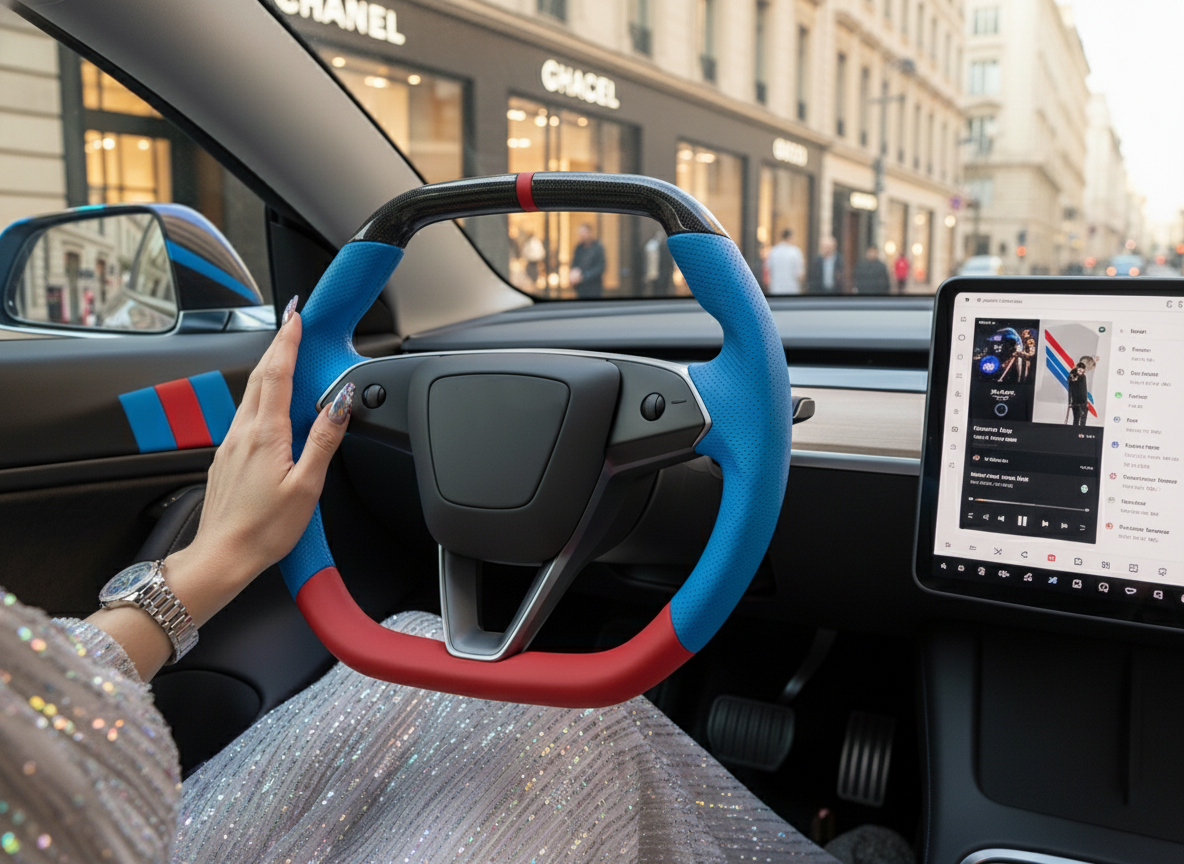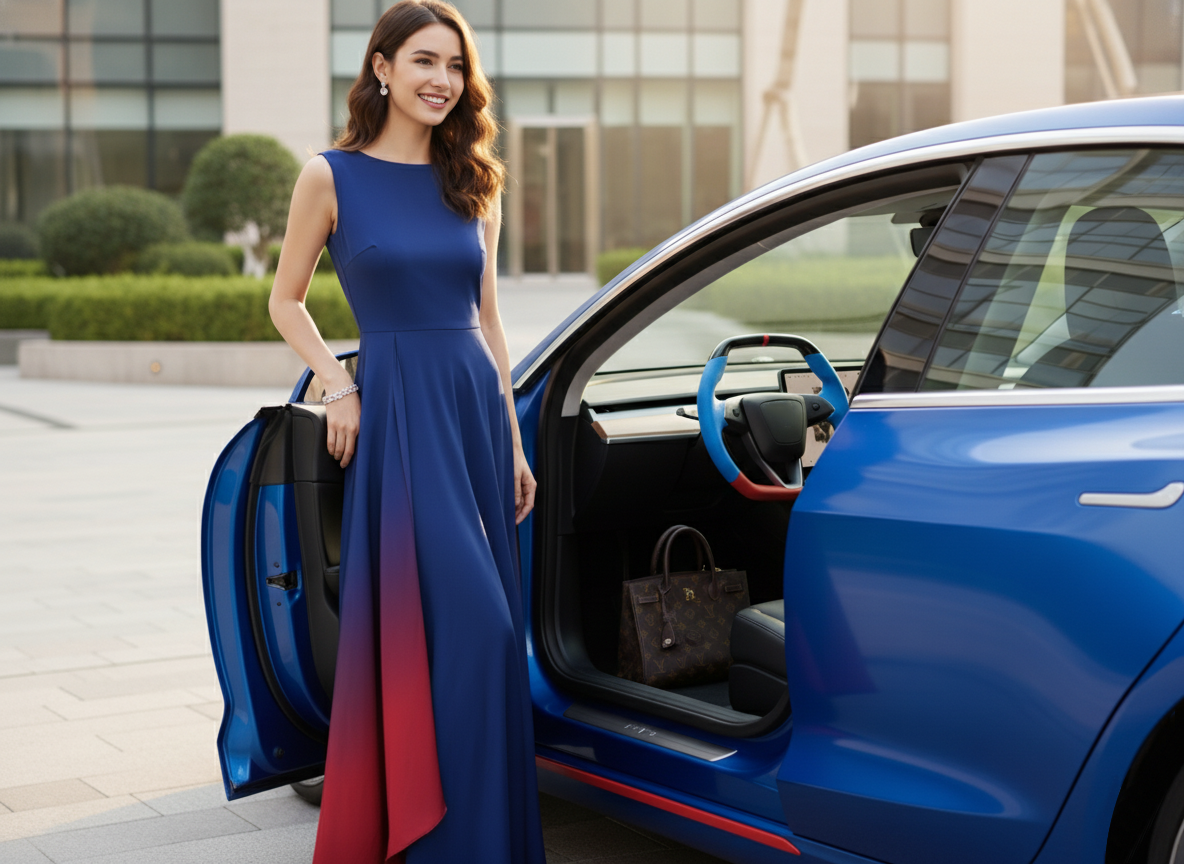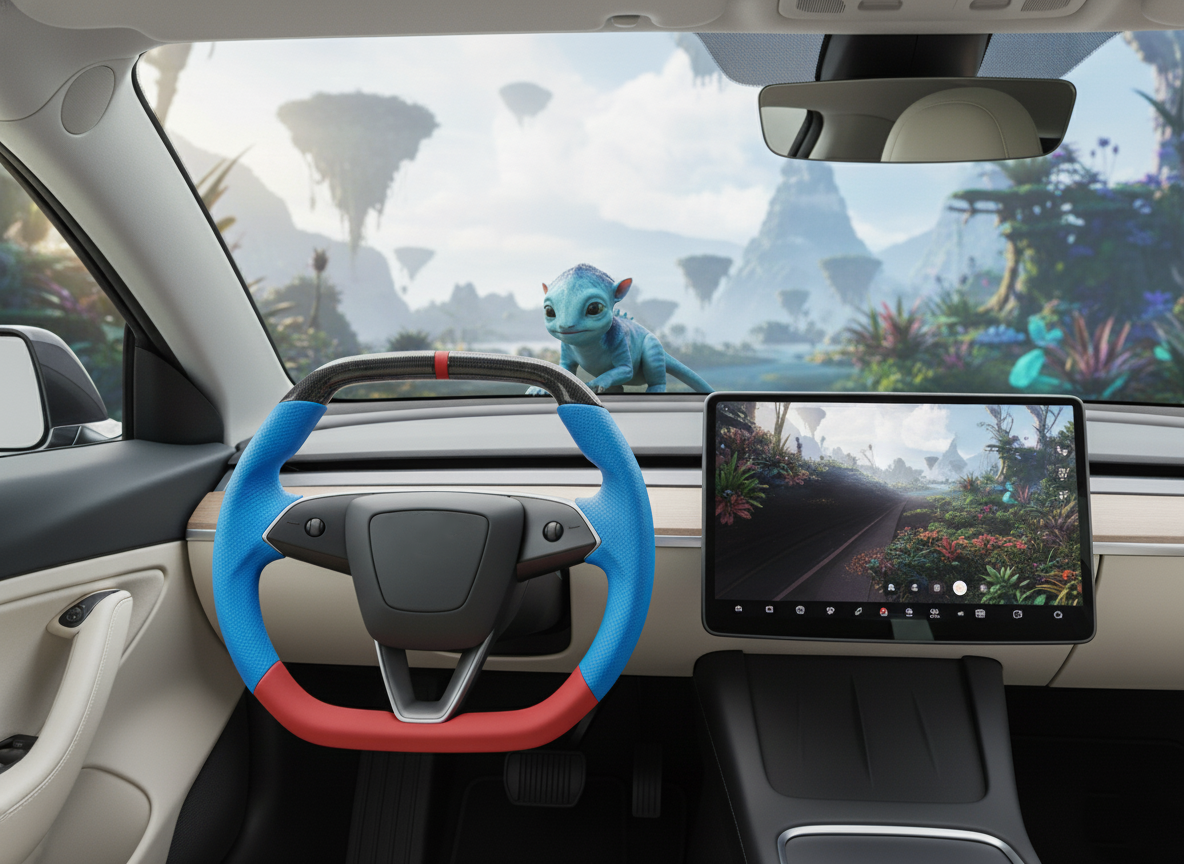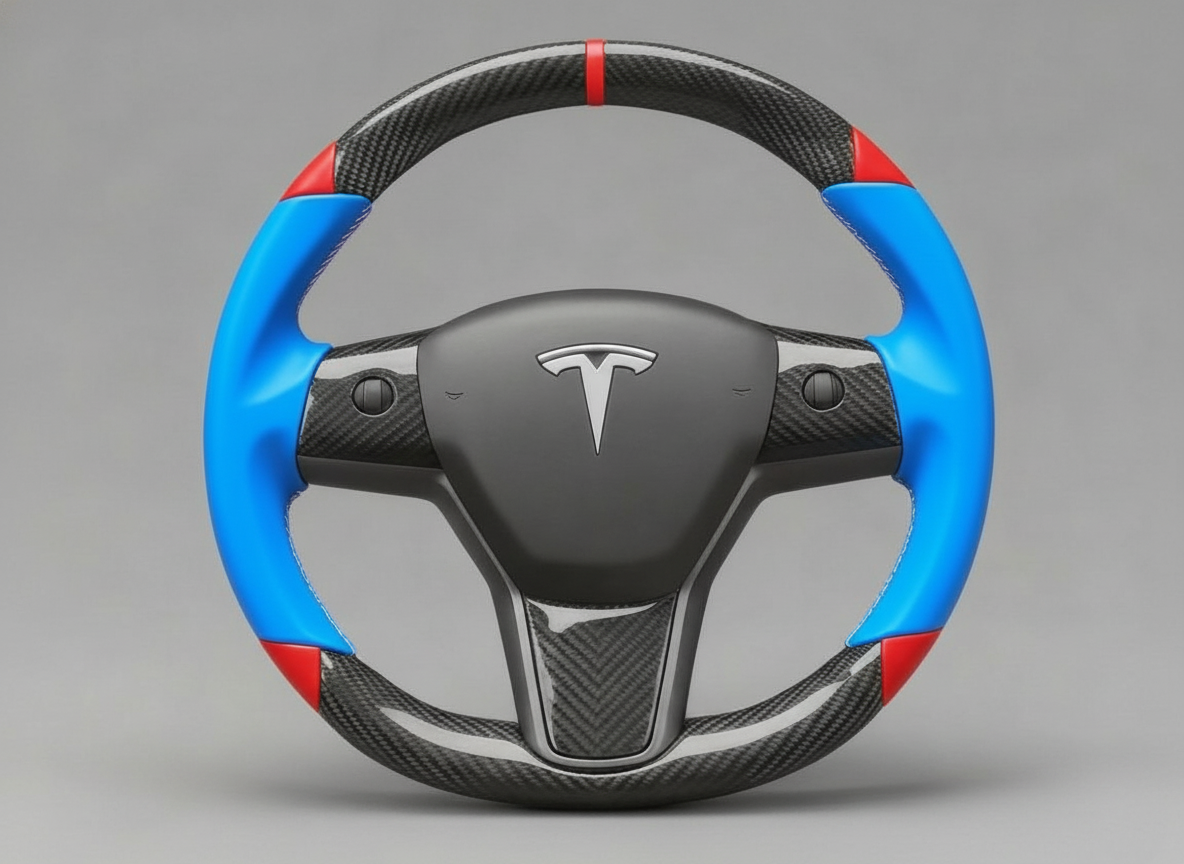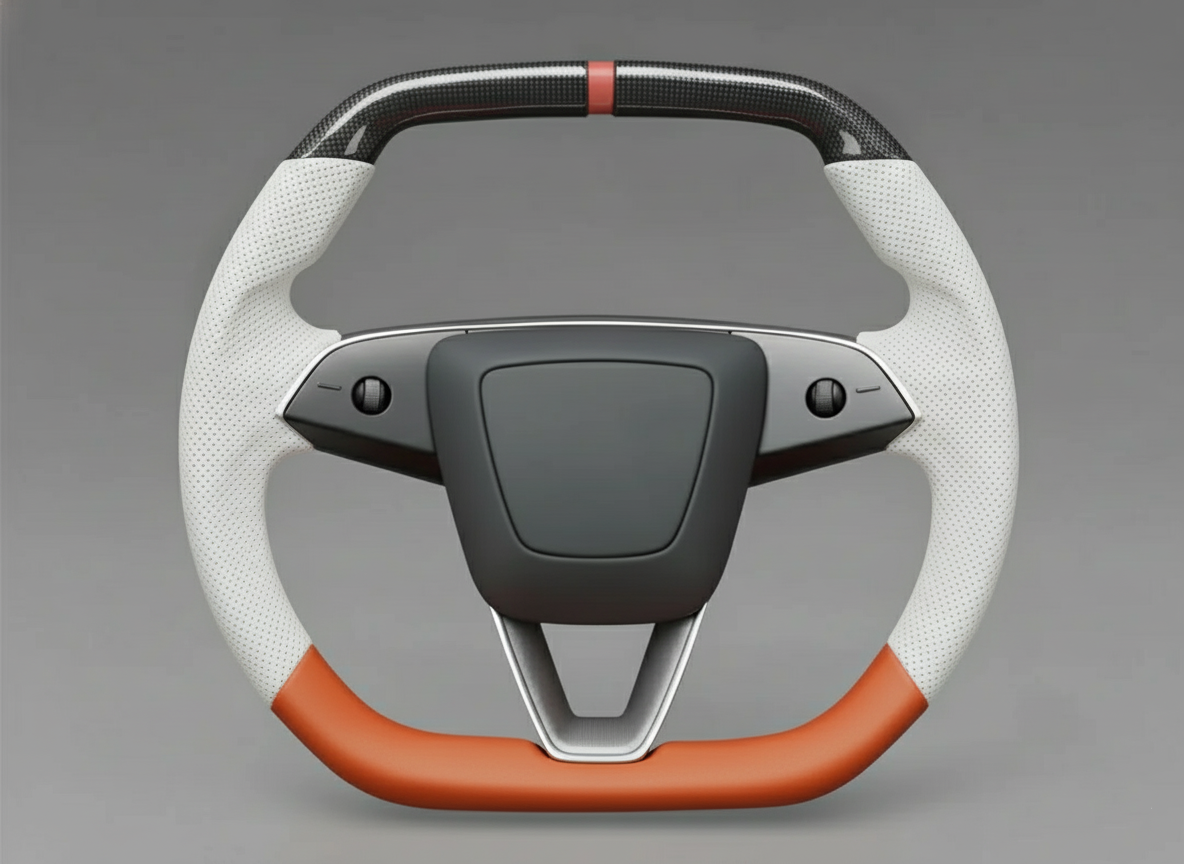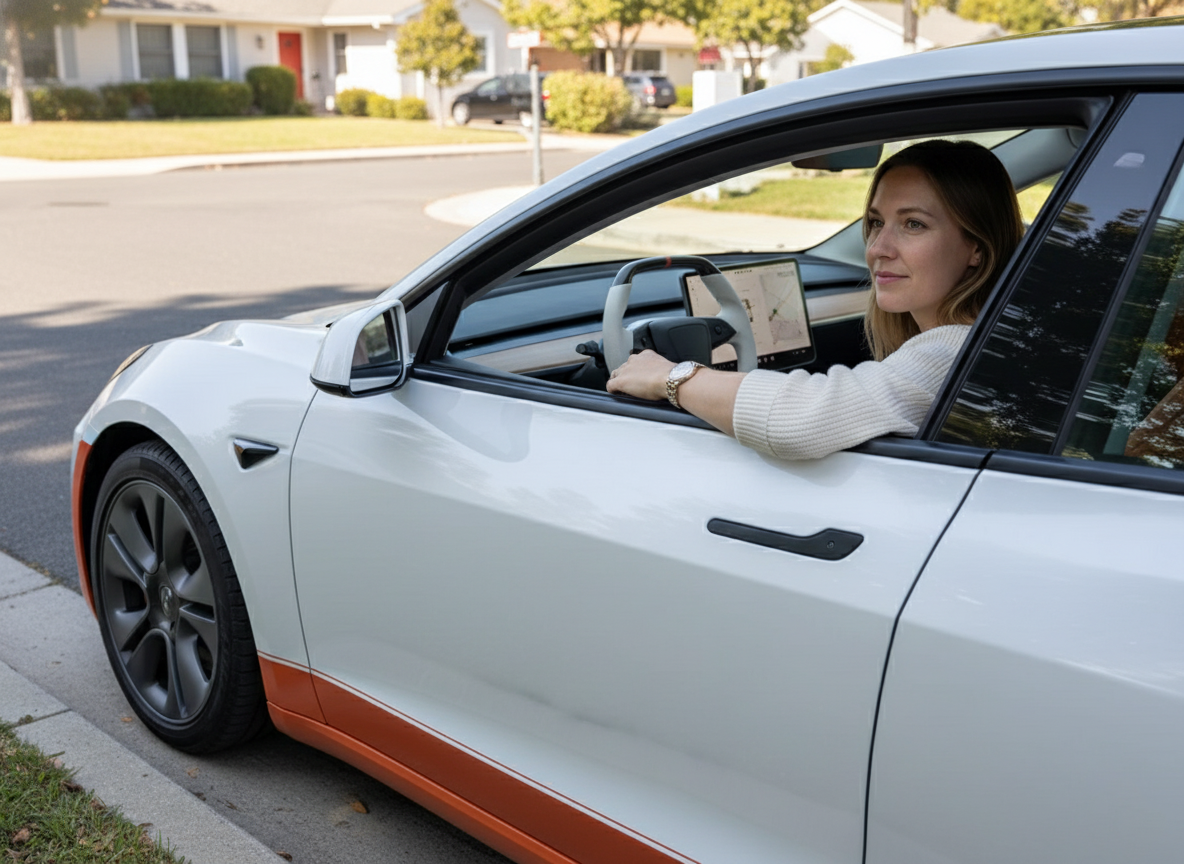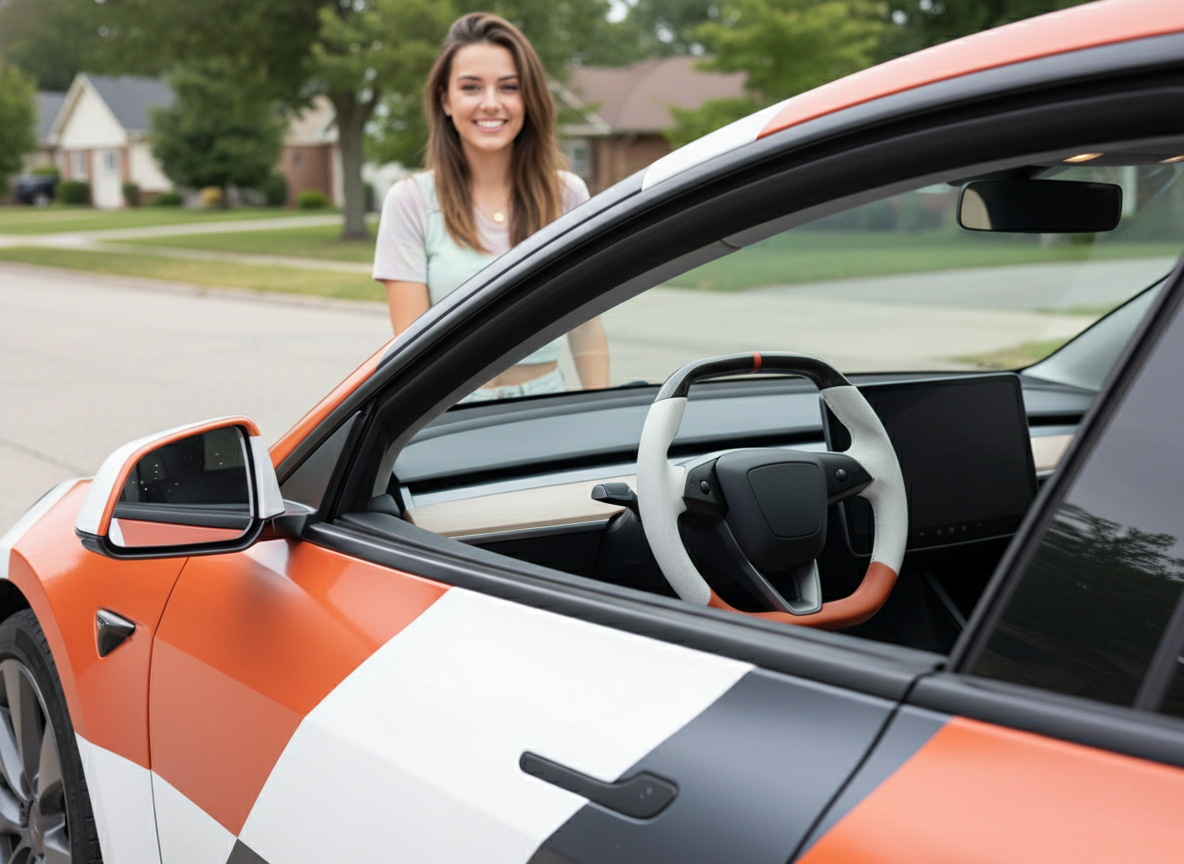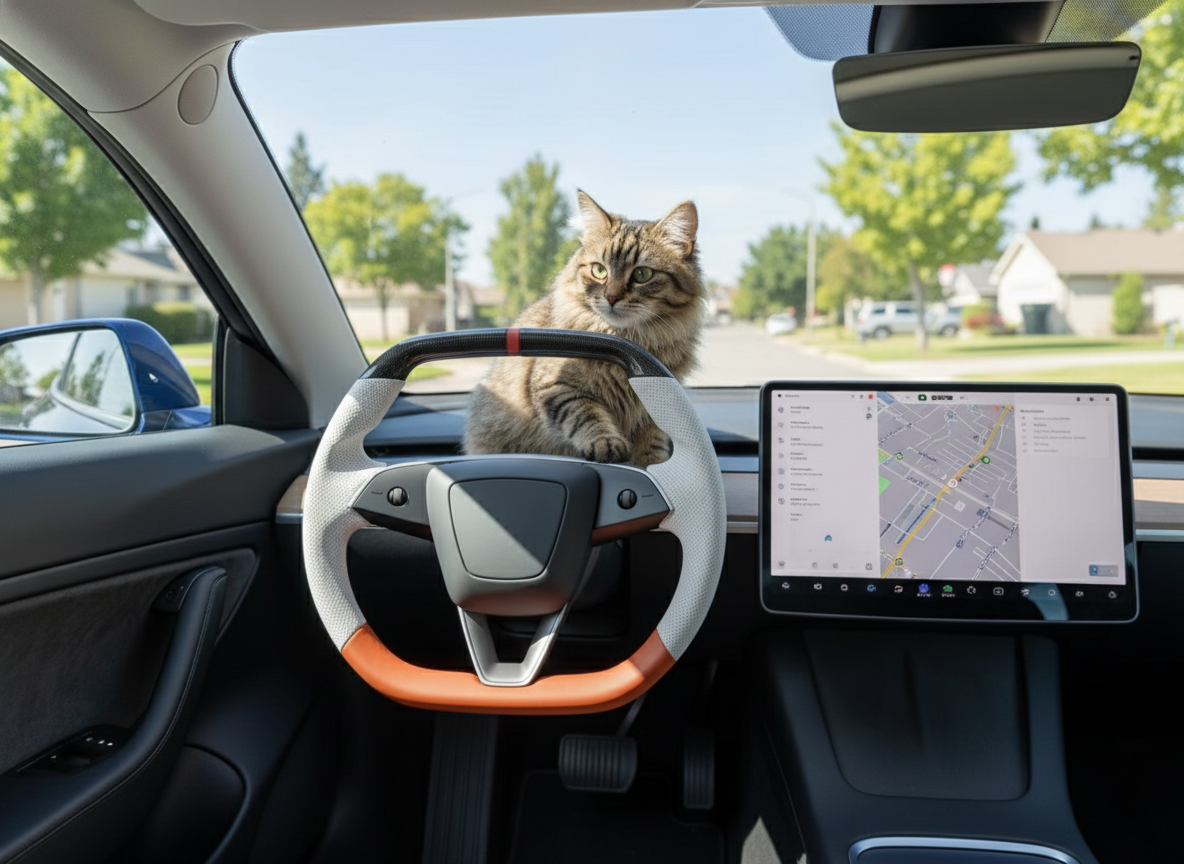
To pursue premium texture, it is recommended to use 1.8mm Nappa leather or Alcantara, paired with white equidistant stitching to enhance the overall visual unity of the interior.
During operation, ensure an increase of approximately 2mm in grip thickness while retaining the heating module.
Using the cross-stitch method can achieve a leather fit of 99%, significantly improving long-distance driving comfort while ensuring safety.
Leather
Upgrading the Model Y steering wheel leather primarily involves 1.2mm specification Nappa leather and 0.8mm Italian Alcantara material.
Nappa leather possesses a Martindale abrasion resistance of over 50,000 cycles and maintains physical structural stability in temperature environments ranging from -30°C to 80°C.
Compared to the original factory synthetic overlay of approximately 0.5mm, the tear strength of customized leather exceeds 20N.
Alcantara provides a high friction coefficient of 0.6 to 0.8, significantly improving hand grip stability during high-speed steering.
Differentiation of Leather Materials
The Nappa leather available on the market typically adopts a thickness standard of 1.1 to 1.3 mm.
The production process of Nappa leather involves chrome or non-chrome tanning, with surface coating thickness usually controlled between 10 and 20 micrometers, ensuring the leather passes breathability tests of over 40 mg per square centimeter per hour.
In the high-temperature environment of California, this breathability effectively prevents heat accumulation in the driver's hands.
The internal fibrous tissue of genuine leather has a three-dimensional cross-structure, allowing its elongation to remain within a reasonable range of 35% to 60% even when subjected to a pull force of over 200 Newtons, preventing permanent wrinkles during sharp turns.
For drivers seeking a high-performance control feel, Italian-made Alcantara follows a completely different material logic.
Its thickness is usually 0.8 mm, with a weight per square meter ranging from approximately 230 grams to 350 grams.
It is composed of 68% polyester and 32% polyurethane, combined through an extremely fine needle-punching process.
Its technical advantage lies in friction; the static friction coefficient in a dry state is stable around 0.7, and even in a moist state due to sweaty hands, the friction coefficient can be maintained above 0.5.
This performance is far higher than the approximately 0.3 of original synthetic leather, reducing slight slippage of the steering wheel in the hand during high-speed driving.
Alcantara has excellent flame retardant properties, complying with the FMVSS 302 international automotive interior safety standard, with a flame spread speed of less than 100 mm per minute.
| Material Technical Parameters | Top-layer Nappa Leather | Italian Alcantara | Semi-Aniline Leather | Eco-friendly Microfiber |
|---|---|---|---|---|
| Standard Thickness | 1.2 mm | 0.8 mm | 1.5 mm | 1.0 mm |
| Tear Strength | Above 25 N | Above 15 N | Above 30 N | Above 20 N |
| Abrasion Resistance | 100,000 cycles | 20,000 cycles | 80,000 cycles | 50,000 cycles |
| Thermal Conductivity (W/mK) | 0.12 to 0.15 | 0.05 to 0.08 | 0.14 to 0.18 | 0.10 to 0.13 |
| Surface pH Value | 4.5 to 5.5 | Neutral | 5.0 to 6.0 | Neutral |
The thermal conductivity of Alcantara is lower, which makes it feel less cold when touched in winter, but after turning on the heating function, the time for heat to penetrate the material will be about 15 to 20 seconds longer than Nappa leather.
Conversely, Semi-Aniline leather has higher heat transfer efficiency because it retains more natural pores and has an extremely thin coating.
Semi-Aniline leather is usually selected from cattle in high-altitude regions of Northern Europe, where the environment reduces damage to the leather surface from insect bites.
Its natural surface texture distribution density is approximately 50 to 80 pores per square centimeter; this physical structure provides excellent hygroscopicity, capable of absorbing moisture equivalent to 15% of its own weight without creating a damp feeling.
- 1.2 mm Thickness: This is the golden dimension to ensure a full grip feel without affecting lever operation.
- 15% Elongation: High-quality leather needs to be stretched via heating during the wrapping process to ensure no excess material accumulation at the 6 o'clock and 12 o'clock positions.
- 0.02 mm Coating: The ultra-thin water-based polyurethane coating protects the leather from UV decomposition while retaining the authentic feel of skin touching protein fibers.
- -30°C Cold Resistance: In extremely cold regions, low-end synthetic leather undergoes a glass transition leading to cracking, while customized genuine leather remains elastic.
For a solution pursuing a balance of environmental friendliness and durability, Enhanced Microfiber Leather shows extremely strong chemical resistance.
The substrate of this material mimics the bundle-like ultra-fine fiber structure of genuine leather, with diameters of only 0.001 mm.
It performs excellently in flexing endurance, withstanding 200,000 consecutive folds at room temperature without cracking.
The surface energy of this material is extremely low; oily pen marks or coffee stains can be easily removed by more than 95% with a damp cloth within 24 hours.
Its anti-UV grade usually reaches Level 4 or higher on the gray scale; even after 500 hours of exposure to intense sunlight in Arizona, color deviations are barely perceptible to the naked eye.
During the actual installation process, the physical width of the leather needs to be precisely controlled between 102 and 104 mm to perfectly cover the circumference of the Model Y steering wheel.
If the leather thickness exceeds 1.5 mm, the stitching tension at the seams will increase to over 50 Newtons, which may cause the thread to cut the leather edges.
Using a specialized 110/18 needle combined with high-strength aramid thread allows for 3 to 4 pinholes to be evenly distributed per centimeter.
The standard moisture content within the leather is typically maintained between 12% and 14%; leather within this range has the best processing performance, neither becoming too hard from dryness nor shrinking and deforming from excessive moisture later.
Custom-grade Nappa leather has passed strict VDA 270 odor tests, usually scoring between 2 and 3, manifesting as almost no odor or only a slight natural leather scent.
This prevents certain inferior materials from releasing Volatile Organic Compounds (VOCs) when cabin temperatures reach 65°C in summer.
The color expressiveness of the leather primarily depends on the penetration depth of the pigment; deep-dyed leather shows minimal color difference between the base and surface after slight scratching, increasing visual durability.
Differences in Friction Coefficients
The steering ratio of the Model Y is designed to be quite compact, usually requiring only about 2.0 turns lock-to-lock.
This setting requires the driver to maintain extremely high adhesion between the hands and the steering wheel surface during large-angle steering or continuous cornering.
Friction coefficients are generally divided into static friction coefficient (μs) and dynamic friction coefficient (μk).
Under dry conditions, the static friction coefficient of the original synthetic leather is approximately between 0.3 and 0.4, while professionally customized 1.2mm Nappa leather can increase this value to 0.45 to 0.55.
This increase of over 30% can significantly reduce the grip pressure required by the driver during steering.
Original Italian Alcantara exhibits completely different physical characteristics in friction performance; its static friction coefficient in a dry state is stable between 0.6 and 0.8.
This high frictional force stems from its complex microscopic fiber structure, with tens of thousands of ultra-fine fibers distributed per square centimeter.
These fibers undergo slight deformation and interweave under hand pressure.
Even when hands produce sweat, the friction coefficient of Alcantara only drops by about 15%, still maintaining a level above 0.5.
In contrast, the friction coefficient of ordinary leather in a moist state drops rapidly to below 0.25, which can lead to instantaneous slippage in scenarios requiring rapid steering, such as emergency obstacle avoidance.
| Material Type | Dry Static Friction (μs) | Moist (Sweat) Static Friction | Recommended Steering Style |
|---|---|---|---|
| Alcantara | 0.60 - 0.80 | 0.50 - 0.65 | High-frequency sharp turns, track driving |
| Nappa Top-layer Leather | 0.45 - 0.55 | 0.30 - 0.35 | Daily urban commuting, long-distance cruising |
| Semi-Aniline Leather | 0.40 - 0.50 | 0.28 - 0.32 | Ultimate delicate touch, low-intensity driving |
| Perforated Nappa Leather | 0.50 - 0.60 | 0.40 - 0.45 | Balance of breathability and grip stability |
Nappa leather using a 15-micrometer ultra-thin water-based polyurethane coating retains the natural protein pores of the leather.
These pores discharge trace amounts of air when pressed, creating an effect similar to micro-suction cups.
When ambient temperatures rise above 35°C, the driver's palm skin becomes softer due to thermal expansion and contraction, increasing the contact area with the leather surface and raising friction by about 10%.
In European automotive interior material test standards, steering wheel leather must not have a friction coefficient fluctuation exceeding 20% of the original value after 5,000 cyclic friction experiments.
- 0.7 Friction Index: This is the golden data pursued by high-performance sports car steering wheels, ensuring precise damping when letting the wheel return to center with one hand.
- 20% Sweat Tolerance: High-quality leather does not suffer a "cliff-like" drop in fiber grip performance after absorbing a small amount of moisture.
- 0.1-second Reaction Lag: High-friction materials allow the driver's commands to translate into physical displacement more quickly, reducing trace delays caused by slipping.
If the friction coefficient of the steering wheel material is lower than 0.3, the driver will unconsciously increase grip force to offset this sense of insecurity.
Studies show that when grip force is sustained at over 20% of maximum muscle strength, forearm muscles quickly accumulate lactic acid, leading to fatigue.
Customized Nappa leather increases macroscopic friction by increasing surface texture depth without losing comfort, allowing the driver to control the vehicle with a more relaxed posture.
For owners living in high-sunlight regions such as Arizona or Southern California, UV rays can break the molecular chains on the leather surface, causing the friction coefficient to drop by about 25% within 12 months, resulting in the leather becoming harder and more slippery.
Anti-UV50+ rated leather protection processes can effectively delay this process.
In test data, leather treated with UV protection still maintains a surface friction of around 0.4 after 1,000 hours of simulated solar exposure.
The perforation process of leather not only solves breathability issues but also adjusts friction distribution by changing the effective contact area of the surface.
Fully perforated leather provides additional mechanical interlocking force at the hole edges under vertical pressure, making its friction performance during longitudinal steering superior to non-perforated plain leather.
According to laboratory data, an arrangement of 1.0 mm diameter circular holes can increase instantaneous grip by approximately 8% while increasing air circulation by 30%.
When selecting leather with different friction characteristics, driving glove habits should also be considered.
If the driver is used to wearing driving gloves, the sheepskin or synthetic material on the glove surface will form a secondary friction with the steering wheel leather.
In this case, if the steering wheel surface is too smooth (such as certain high-gloss leathers), the composite friction coefficient may drop to around 0.2, creating a significant safety hazard.
It is recommended to choose matte materials with a friction coefficient around 0.5 to achieve a performance balance between bare-hand driving and wearing gloves.
Perforation Craftsmanship
In the customization of the Model Y steering wheel, the perforation process usually refers to using precision CNC punching equipment to process array-distributed micro-holes on the 1.2 mm thick Nappa leather or 0.8 mm thick Alcantara surface.
The standard hole diameter for this process is typically set between 0.8 mm and 1.2 mm, with the center-to-center distance between holes generally controlled at 3.5 mm to 4.5 mm.
This precise physical distribution increases the effective heat dissipation area of the leather surface by more than 40%.
In regions like California or Nevada, where summer temperatures often exceed 38°C, perforated leather can significantly increase air circulation speed at the contact interface between the hand skin and the steering wheel.
Since the Model Y original steering wheel uses a fully enclosed synthetic leather material, heat generated by the hand is locked between the skin and the leather during long periods of grip; the perforation process, through these thousands of micro-channels, increases the breathability from near zero to a level of 30 mg to 50 mg per square centimeter per hour.
The Model Y internal heating resistance wires are located about 2 mm below the leather.
Experimental data shows that when the heating function is turned on at an ambient temperature of 0°C, the time for 1.0 mm diameter perforated leather to reach 35°C is about 18 seconds shorter than non-perforated leather.
This is because air convection in the micro-holes accelerates heat conduction efficiency; heat is no longer solely reliant on conduction through the leather fibers but acts directly on the driver's palm through the air medium.
In durability tests in European laboratories, this perforated structure showed extremely high physical dimensional stability, with hole diameter deformation less than 0.05 mm after 10,000 thermal cycles.
| Perforation Specs | 0.8 mm Micro-hole | 1.0 mm Standard Hole | 1.2 mm Large Hole | Diamond/Hexagonal Hole |
|---|---|---|---|---|
| Holes per sq cm | 12 - 16 | 8 - 10 | 5 - 7 | Design dependent |
| Airflow Increase | Approx. 25% | Approx. 45% | Approx. 60% | Approx. 40% - 55% |
| Structural Retention | Above 92% | 85% to 88% | 78% to 82% | Around 80% |
| Visual Light Effect | Minimal, matte feel | Moderate, layered feel | Obvious, rugged style | Strong, tech feel |
| Maintenance Difficulty | Low, less dust | Medium, needs vacuuming | Higher, traps debris | Higher, edge wear |
When performing rapid steering operations over 90 degrees, the instantaneous grip provided by perforated areas is about 12% higher than smooth leather surfaces.
This change in physical properties does not rely on the adhesive coating on the leather surface, so even after 2 to 3 years of leather use and wear of the surface wax layer, perforated leather can still maintain stable operational feedback.
In German automotive interior standards, the tear strength of perforated leather must reach over 20 Newtons, which requires avoiding the natural weak zones of leather growth lines during punching to ensure that holes do not evolve into physical cracks during stitching and stretching.
- 15% Weight Reduction: Large-area perforation can reduce the weight of leather per square meter by about 40 to 60 grams; although this has a negligible impact on vehicle curb weight, it reduces the steering wheel's moment of inertia.
- 0.5 mm Punching Depth: The punching needle must completely penetrate the 1.2 mm leather layer and slightly touch the buffer foam layer on the back to ensure the breathability channel is absolutely clear.
- 3000Pa Suction Pressure: This is the recommended vacuum cleaner standard for cleaning perforated steering wheels, effectively removing skin debris and environmental dust accumulated in 1.0 mm holes.
- 80% Relative Humidity Limit: In high-humidity environments, perforated leather absorbs moisture faster than ordinary leather, so it is recommended to use it in conjunction with an air conditioning system that has a drying function.
Placing a 0.3 mm thick colored microfiber fabric beneath the 1.2 mm Nappa leather allows the base color to faintly show through the 1.0 mm holes.
For a model like the Model Y that pursues minimalist industrial style, choosing a black-leather-white-base perforated design can form a high degree of visual unity with the white interior seats.
In light tests, the diffuse reflection effect produced by this perforated structure can reduce the steering wheel surface's reflectivity by about 15%, reducing visual interference caused by intense light through the windshield hitting the steering wheel at noon.
Due to the presence of holes, the elongation of the leather under force is no longer uniform.
At the 3 o'clock and 9 o'clock positions of the steering wheel, the leather needs to withstand about 40 Newtons of radial tension; if the hole distribution overlaps with the stitching pinholes, it will cause the leather to break at the stress point.
Therefore, high-quality custom solutions adopt an asymmetric perforation design, maintaining a hole-free zone within 5 mm of the stitching edge to ensure the structural strength at the seam reaches a tensile index of over 50 Newtons.
According to a survey of 500 owners who have used perforated steering wheels for a long time, about 85% of dirt accumulation occurs after the mileage reaches 15,000 miles.
Using a fine soft-bristled brush with a diameter of 0.05 mm combined with a pH 5.5 cleaner can remove 98% of accumulation without damaging the hole edges.
In contrast, if not cleaned for a long time, the oxidation of oils inside the holes will cause localized leather hardening, reducing its surface folding resistance from 200,000 cycles to about 120,000 cycles.
Colors
Statistics show that approximately 88% of owners tend to choose a primary color consistent with the original seat color code to maintain cabin visual unity.
To cope with the high-intensity UV radiation caused by the Model Y glass canopy, qualified leather must reach a Grade 5 lightfastness according to the ISO 105-B02 standard.
In actual applications, a contrast color strip 5mm to 10mm wide is often used at the 12 o'clock position, which can increase the concentration of the driver's operational vision by about 15%, while the color saturation deviation must be strictly controlled within a Delta E of less than 2.0.
Matching Original Interiors
Data shows that about 92% of owners prioritize seamless integration with seat materials when choosing steering wheel colors.
For models with black interiors, the original factory uses polyurethane-based synthetic leather with a subtle random grain feel.
When customizing with 1.2 mm thick top-layer Nappa leather, color errors can be controlled within a Delta E 1.5 deviation range through similar matting treatments.
For owners seeking ultimate integration, the table below shows the steering wheel customization parameter standards under different interior color schemes:
| Customization Dimension | Black Interior Matching | White Interior Matching | Physical Spec Reference |
|---|---|---|---|
| Leather Color Code | Charcoal Black | Glacial White | Must match seat L*a*b* values |
| Texture Type | Plain or slight Litchi grain | Minimalist plain grain | 1.2 mm leather thickness |
| UV Resistance | ISO 105-B02 Grade 5+ | ISO 105-B02 Grade 6+ | Resists canopy light exposure |
| Stitching Process | Black horizontal flat stitch | White/Light gray Euro stitch | 10 stitches per inch (SPI) |
Matching white interiors is relatively more difficult, primarily due to the color display differences of the ultra-white synthetic leather used in the Model Y under different lighting environments.
According to laboratory measurements, the original white seats have a reflectivity of about 85% under a 6500K standard color temperature.
Customized leather must have special anti-oxidation factors added to the coating to prevent yellowing in a closed cabin environment that can reach a maximum of 70°C in summer.
"When performing white steering wheel customization, to avoid the visual gap between the original airbag cover and the white grip, it is usually recommended to wrap the airbag cover in the same color leather simultaneously, which makes the steering wheel appear visually wider."
The plastic feel of the original steering wheel mainly comes from its homogeneous injection-molded pattern.
By replacing it with leather with natural micro-pores, the material layers of the cabin can be increased while retaining the all-black vision.
Many owners choose perforated leather at the 3 o'clock and 9 o'clock positions; this design is not only to mimic high-performance styles but also physically increases the surface area by about 20%, improving heat dissipation and reducing the risk of sliding due to hand perspiration during long drives by about 15%.
The steering wheel grip diameter specification is also a key part of matching the interior feel.
The original Model Y steering wheel grip diameter is about 33 mm, while customized solutions usually optimize this value to 36 mm to 38 mm.
- Standard Grip: 33 mm, suitable for drivers with smaller hands, maintains minimalist vision.
- Thickened Solution: 36.5 mm, provides fuller feedback by adding a 3 mm high-density composite sponge layer.
- Ergonomic Position: Adds thumb rests at 10 and 2 o'clock, with a mold protrusion height usually designed at 5 mm, matching physiological grip angles.
The Model Y is equipped with a capacitive steering wheel Hands-On Detection (HOD) system, which relies on the induction fabric layer beneath the leather to monitor weak capacitive changes.
During customization, the distance between the induction coil and the outer leather must be maintained between 2.5 mm and 3 mm.
If the distance is too large, the capacitive change captured by the system will be less than 100 picofarads (pF), leading to frequent false alarms from the Autopilot system.
"Retaining the heating function also requires precise resistance matching. The Model Y heating circuit has a working current of about 2.5 Amps under 12V power supply, with heat power stabilized at around 30 Watts."
If the distribution of heating wires is uneven, the surface temperature difference of the steering wheel may exceed 5°C, resulting in an uneven grip feel.
In actual installation, the center fixing bolt torque is recommended to be set at 80 Newton-meters (N-m) to ensure the physical connection strength between the steering column and the steering wheel frame reaches factory engineering standards.
Due to the massive transparent canopy, UV intensity inside the Model Y is usually 40% higher than in vehicles with traditional closed roofs.
The lightfastness of the steering wheel leather becomes a decisive factor in the durability of interior matching.
High-quality custom solutions use leather that passes Grade 6 or higher anti-fading tests, which can maintain color saturation after cumulative energy radiation of 150 kJ per square meter.
Without contamination, the friction coefficient between dry leather and skin should remain between 0.6 and 0.8.
Special protective coatings used in customization must resist erosion from chemicals like sunscreen and lotions, while ensuring this friction characteristic fluctuates by less than 10% over a daily use cycle of more than 3 years, ensuring precision during high-speed steering.
Top Marker Color
In the Model Y steering system design, the steering wheel turns approximately 360 degrees to each side.
This marker allows the driver to know the physical direction of the wheel axis without taking their eyes off the road during rapid hand-over-hand operations.
A standard customized centering marker is usually designed to be 5 mm to 10 mm wide, with its thickness precisely controlled at around 0.8 mm to ensure that after being embedded in the steering rim, the gap at the seam with the main leather is less than 0.1 mm, avoiding a perceptible foreign body sensation when the palm slides over the top.
- Width Specs: 5 mm (Minimalist), 8 mm (Standard Balance), 12 mm (Racing Vision).
- Physical Depth: Groove depth needs to be controlled at 1.0 mm to 1.2 mm to ensure filler does not protrude.
- Visual Alignment: Use a laser level aimed at the center axis of the steering column; error must be below 0.5 degrees.
- Weather Standard: Material must pass 400 hours of Xenon UV aging tests to ensure color change is below Delta E 2.0.
In the charcoal black interior background commonly used in the Model Y, high-saturation tones can shorten the human eye's recognition time in low-light environments.
According to visual psychology research data, the feedback time for bright yellow or bright red color signals to enter the human eye and be processed by the brain is about 180 ms to 220 ms, which is about 15% faster than recognizing dark blue or dark gray markers.
- Racing Red: Matches high-performance braking system finishes, providing the strongest sense of visual warning.
- Speed Yellow: Has the highest spectral brightness, maintaining excellent visibility even in nighttime environments.
- Electric Green: Emphasizes the vehicle's electric attributes, echoing external charging facilities or specific modification colors.
- Glacial Blue: Suitable for white interior configurations, creating a fresh and modern Nordic industrial feel.
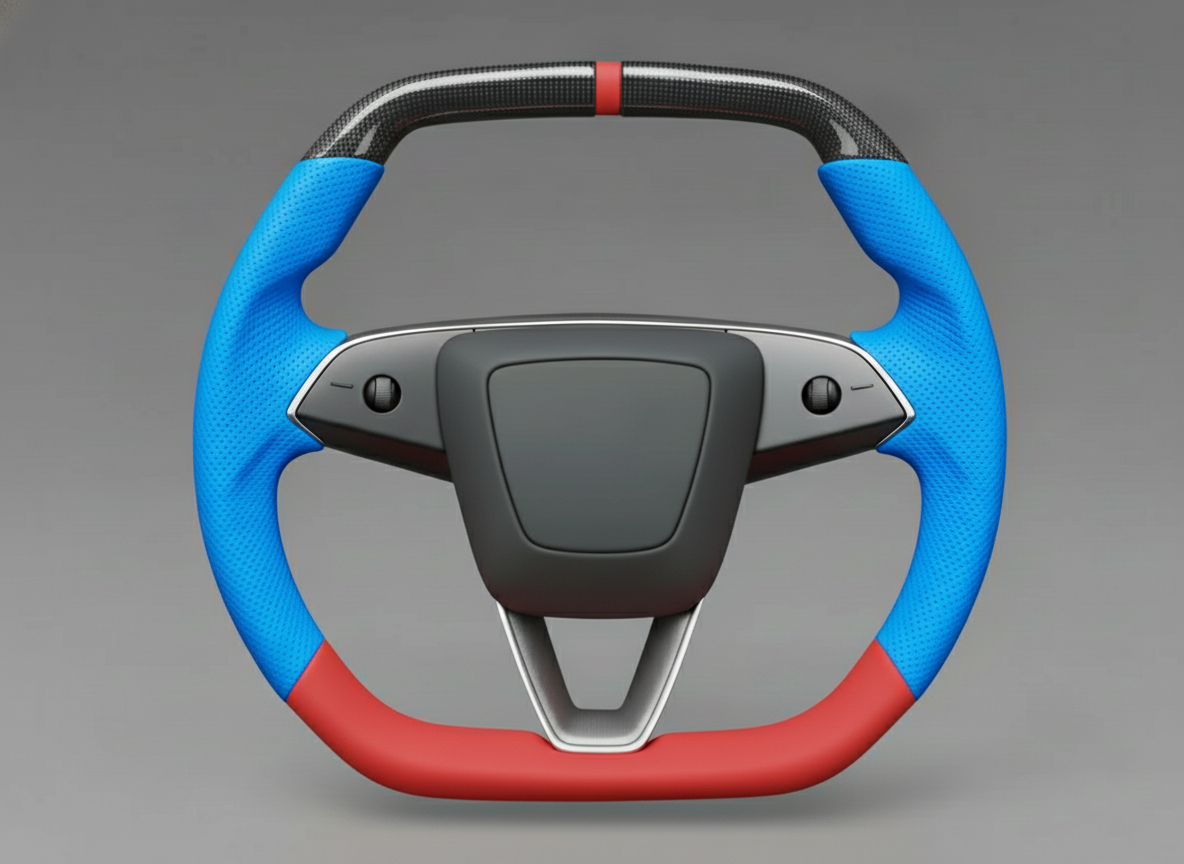
Most high-end customizations choose a different material from the steering wheel body to make this marker, such as embedding a ring of colored Alcantara on a full leather steering wheel or using colored resin infusion on a carbon fiber surface.
Since the 12 o'clock position is the most exposed area to sunlight, the stability of the chosen color must match ISO 105-B02 automotive interior part Grade 6 or higher standards.
"Many owners choose a top marker in the same color as their car wrap; this interior-exterior color logic loop makes the whole car look like a factory-integrated custom version."
Stitched markers use stitches at both ends to fix the color band on the circumference, adding a mechanical texture to the steering wheel, with stitch pitch generally set at 2.0 mm; embedded markers require precise slots pre-reserved in the frame sponge layer to completely bury the color strip, resulting in higher surface flatness, suitable for drivers pursuing minimalism.
Data shows that about 65% of custom customers choose an 8 mm width color strip, as this size looks most proportional on a 14-inch steering wheel.
- Color Code Matching: Supports leather dyeing according to Pantone color codes or hex codes (e.g., #E31937) provided by the owner.
- Dual-color Splicing: Some complex solutions use a 3 mm plus 3 mm combination, using two contrasting colors to increase detail density.
- Glow-in-the-dark Option: Uses resin materials mixed with long-afterglow luminescent powder to provide a 20-minute dim light indication when entering tunnels or garages.
- Functional Combination: If the steering wheel has a heating function, the heating wires below the top marker must follow a special path to prevent localized temperature spikes that could lead to leather cracking.
Hand oils and dust easily form a black patina on light-colored leather, requiring deep care with specialized leather cleaners on average every 3,000 kilometers. In contrast, dark red or dark blue markers have better tolerance.
Stitching Color Logic
On the 14-inch steering wheel of the Tesla Model Y, the length of each stitch loop is approximately 15 to 20 meters, totaling about 3,500 to 4,500 independent pinholes.
To ensure no breaking or loosening under long-term grip, the stitching usually selects high-strength six-strand nylon thread or Bonded Polyester with UV resistance, with a single thread tensile strength reaching over 10 kg.
In visual logic, the choice of stitch color directly determines the personality of the cabin.
Choosing stitching completely identical to the leather color, such as using high-gloss black thread with color code #000000 on Obsidian Black Nappa leather, can make the leather seams almost visually disappear, blurring the physical outline of the steering mechanism and creating a very steady and restrained industrial design aesthetic.
Conversely, the application of contrast-colored stitching emphasizes the three-dimensional structure of the steering wheel, outlining the junction curves at the 3, 6, and 9 o'clock positions with bright lines on a dark base, allowing the driver's visual focus to naturally extend along the lines.
| Stitching Style | Recommended Combination | Technical Suggestions | Visual Description |
|---|---|---|---|
| Racing Contrast | Black Leather + Racing Red | 2.0 mm pitch | Strong sense of expansion, emphasizes physical contours, enhances driving desire. |
| Modern Minimalist | White Leather + Light Gray | 1.8 mm pitch | Weakens seam presence, maintains white interior purity, high durability. |
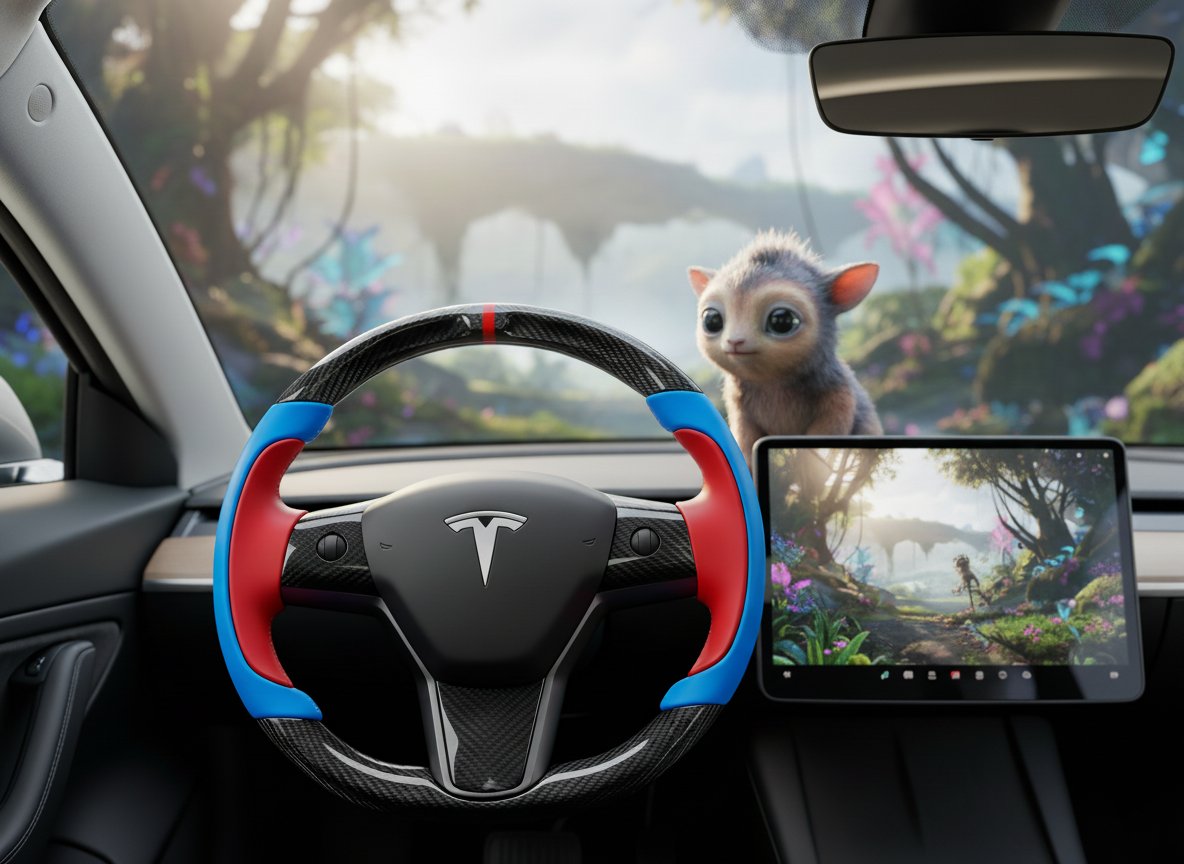
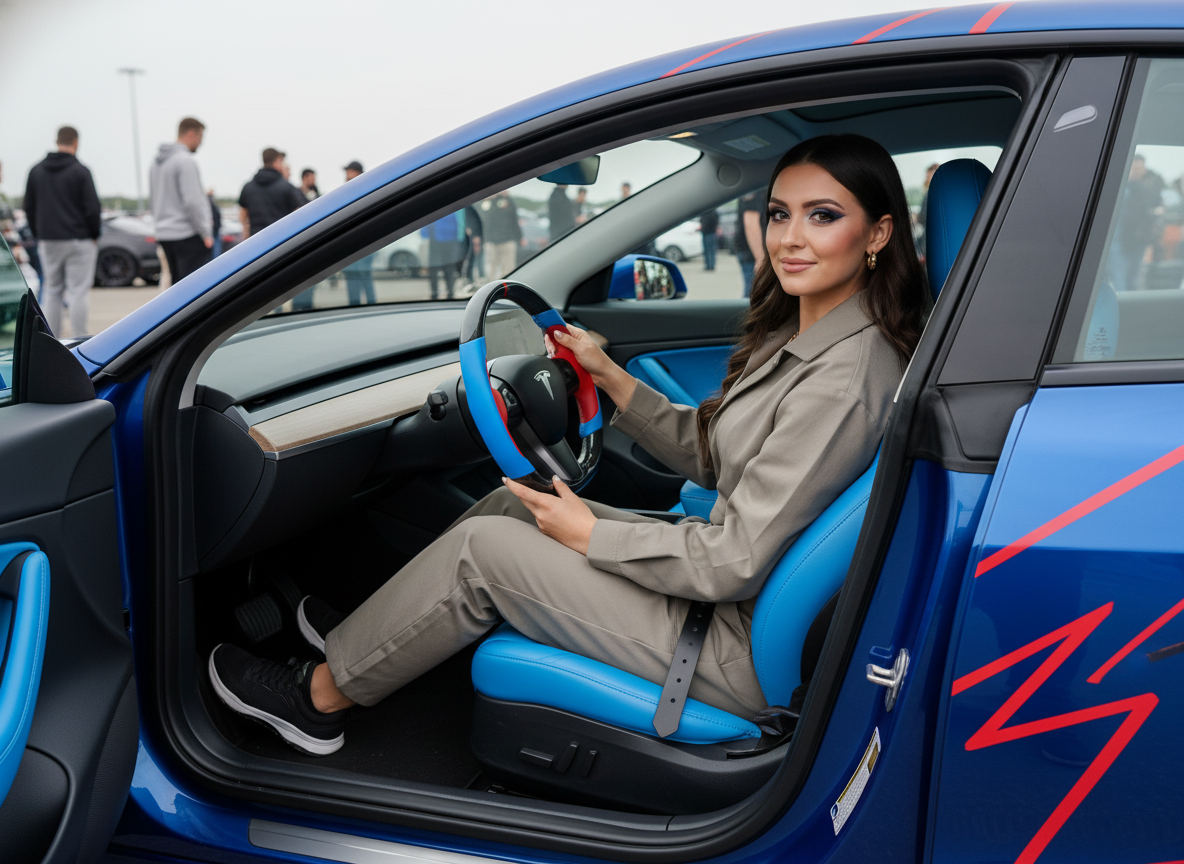
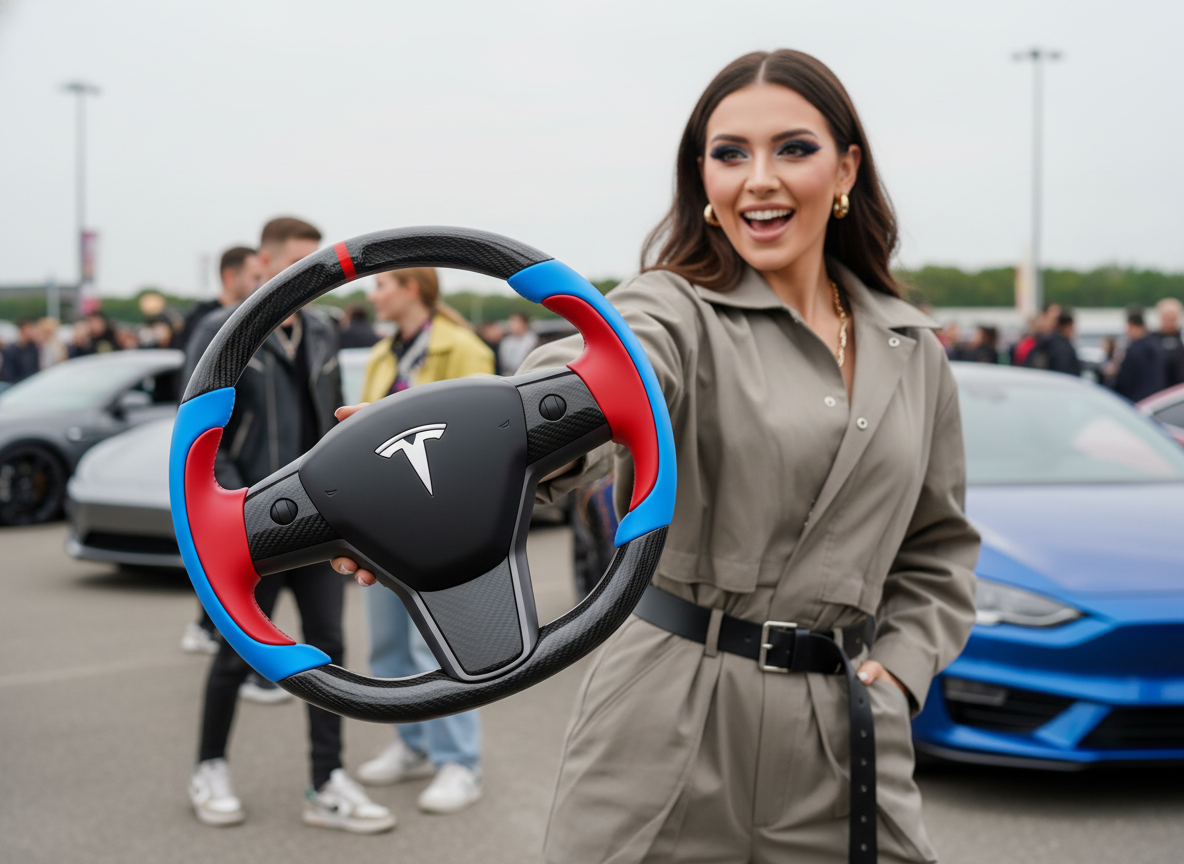
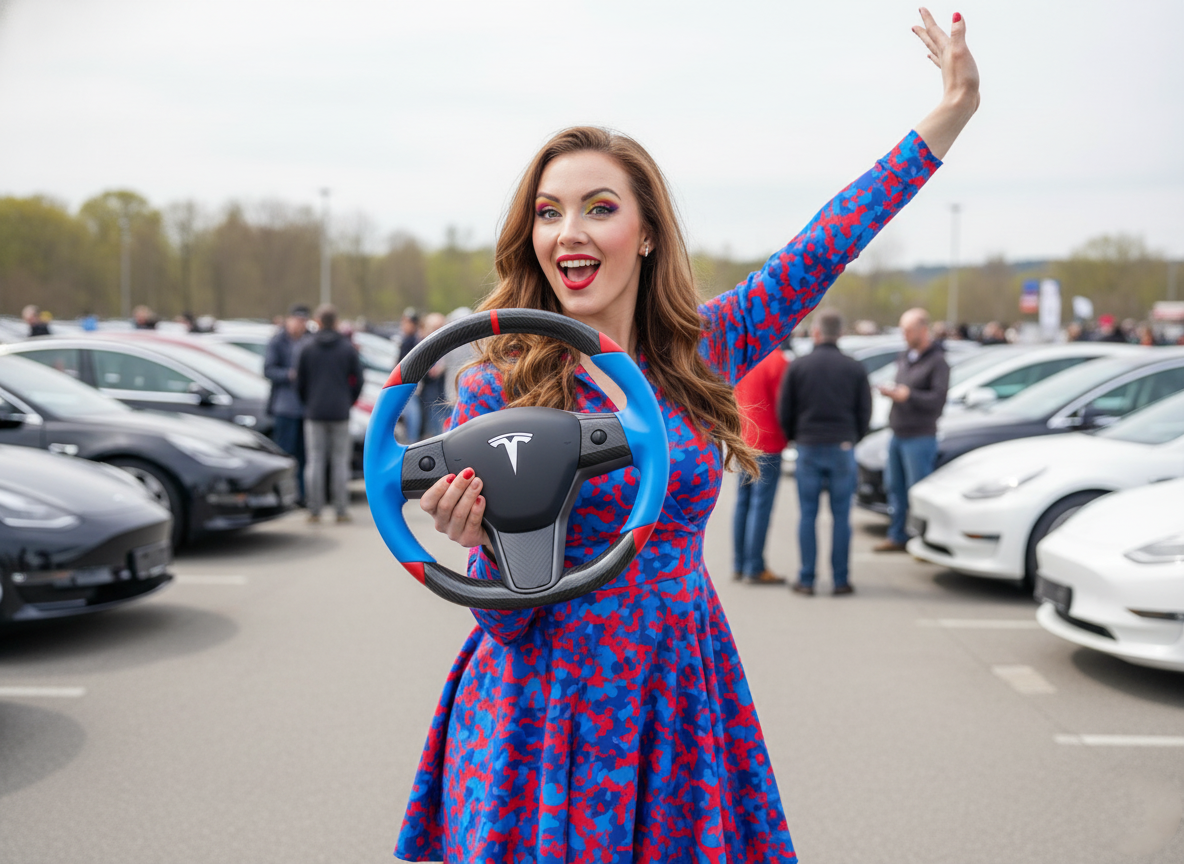
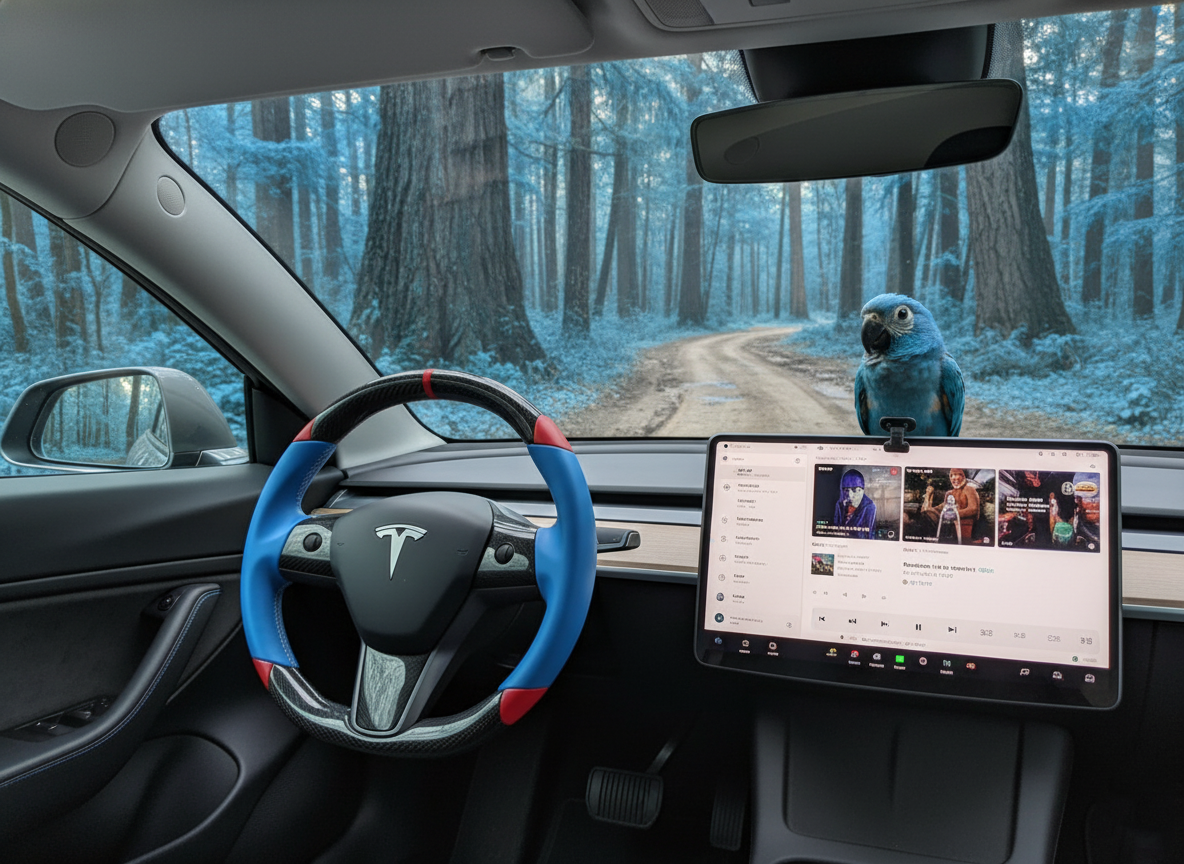
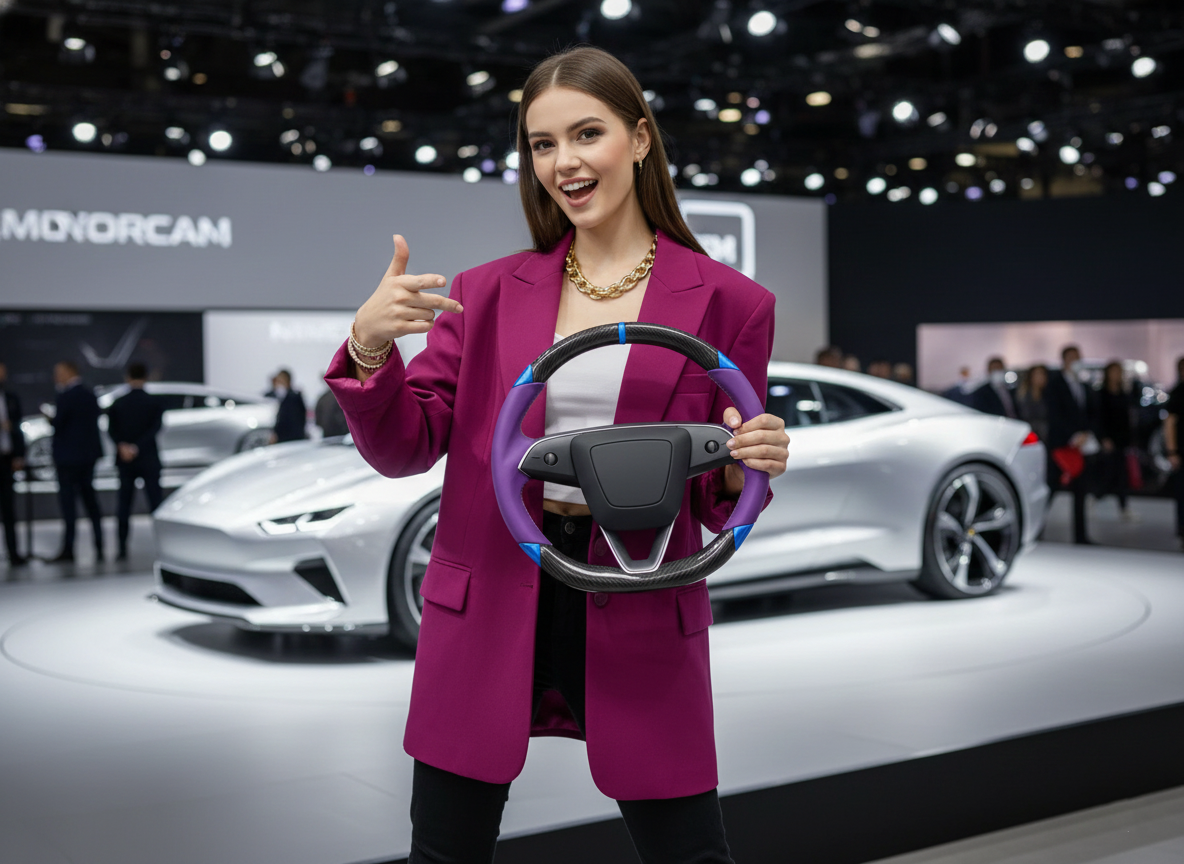
| High-Perf Tri-color | Carbon Fiber + Blue/Purple/Red | Cross-weave method | Borrows classic endurance racing colors, extremely rich layers, high craft density. |
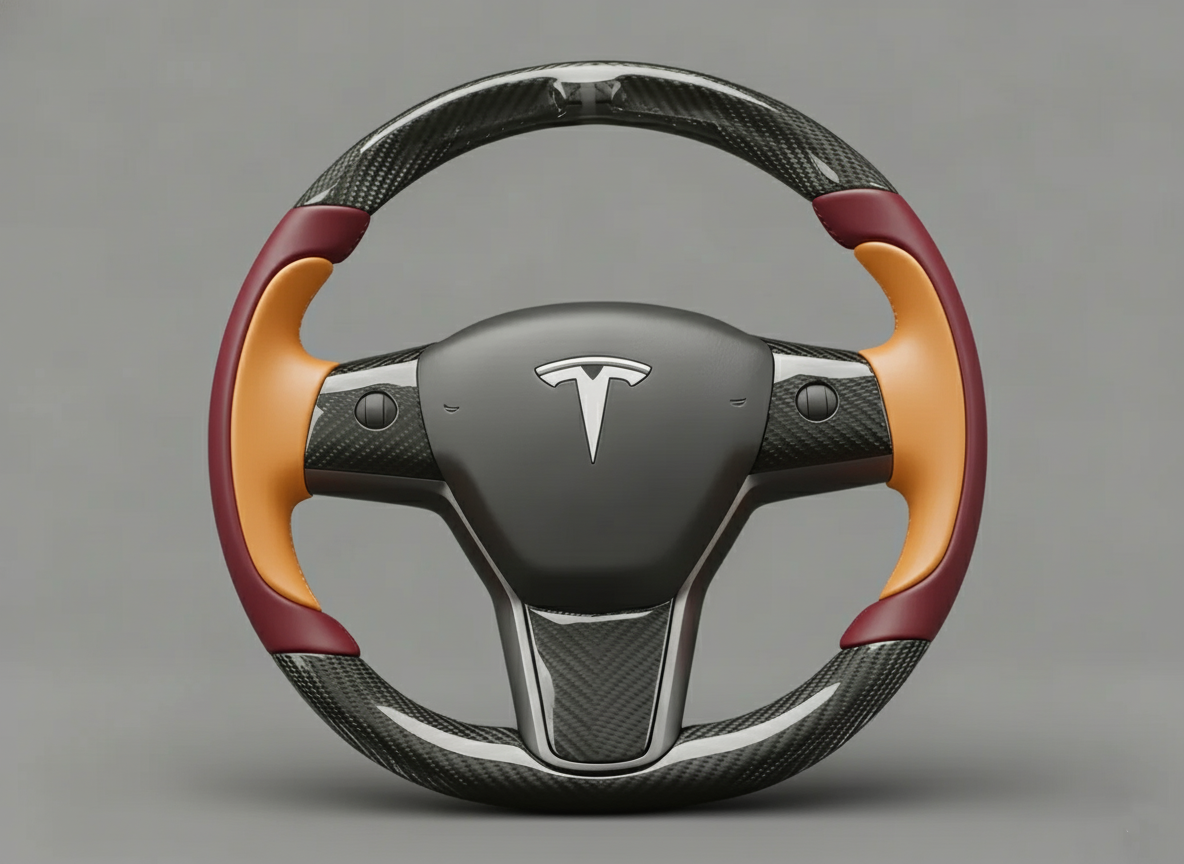
| Vintage Luxury | Brown Leather + Amber Gold | 2.5 mm pitch | Presents a texture similar to hand-crafted saddles, warm tone with premium gloss. |
During customization, the stitch pitch is usually set between 1.5 mm and 2.5 mm.
If the pitch is too large, the leather edges easily produce wave-like undulations, causing the palm to feel uneven friction during high-speed steering; if the pitch is too small, it may damage the leather's fiber structure, triggering leather tearing under material expansion caused by high-temperature exposure.
In actual Model Y assembly, the commonly used "European Stitch" requires two parallel lines to interweave at the seam, forming a tight and thick ridge-like protrusion.
Data monitoring shows that this stitch structure with obvious undulations can reduce the effective contact pressure between the hand and the steering wheel by about 12%, significantly relieving hand fatigue during long-distance driving.
Because the steering wheel is exposed to direct sunlight for long periods and frequently contacts the weakly acidic sweat of the hands, ordinary stitching easily experiences color degradation or fuzzing within 6 months.
High-performance customized solutions require stitching to pass Grade 7 or higher colorfastness tests according to ISO 105-B02, ensuring color change is less than Delta E 1.0 after cumulative UV radiation of 200 kJ per square meter.
Even bright lemon yellow or neon green stitching can maintain out-of-factory saturation over a daily use cycle of more than 3 years.
Additionally, to prevent hand cream or interior polishes from penetrating stitching fibers and darkening them, top-tier customized threads are coated with a 0.05 mm thick PTFE layer, giving them excellent hydrophobic and oleophobic properties; daily cleaning requires only a gentle wipe with a damp microfiber cloth to restore freshness.
When selecting stitch colors, an advanced logic is to refer to the exterior painting details.
For example, if your Model Y is equipped with red brake calipers, using the same shade of red stitching on the steering wheel can not only achieve design harmony but also establish a strong mechanical connection the moment you open the driver's door.
In multi-color weaving schemes, the blue, purple, and red combination is a very classic choice, with these three colors interlocking at 60-degree cross angles, forming about 120 sets of cyclic patterns on the 14-inch steering wheel circumference.
"When performing stitching customization, the choice of thread diameter is equally important. Usually, T70 spec thread is suitable for most leather surfaces, while if you choose thickened Alcantara, it is recommended to upgrade to T90 thick thread to ensure pinholes do not deform under high tension."
From the perspective of color psychology, the depth of stitch color also affects the driver's perception of steering wheel weight.
Dark blue or dark gray stitching often gives a stable, heavy psychological suggestion, helping to maintain a steady mindset during high-speed driving; while bright orange or bright green stitching produces a light, flexible visual illusion, making the driver feel more at ease during rapid turns in narrow urban sections.
In practice, to avoid too much color interference with the driving field of vision, it is recommended that the area ratio of contrast-colored stitching does not exceed 5% of the total steering wheel surface area.
Stitching
Steering wheel stitching typically uses high-strength polyester or Nylon 6.6 thread with a diameter of 0.8mm to 1.2mm.
Single-needle tensile strength must reach over 20 lbs to ensure no physical breaking under a traction force of 150 Newtons.
The standard stitch pitch is set between 3.5mm and 4.5mm to achieve 100% pinhole alignment precision.
Premium thread must pass the ISO 105-B02 lightfastness test at Grade 7 or higher to prevent fading or embrittlement when cabin temperatures exceed 60 degrees Celsius.
Composition of Stitching Fibers
Mainstream high-end custom solutions universally adopt high-tenacity continuous filament polyester fiber.
The molecular chains of this fiber are extremely tightly arranged, with single filament fineness usually controlled between 5 to 7 Denier.
To meet the frequent rubbing of the steering wheel during turns, the total fineness specification of the thread is often set between 1500D and 2500D, composed of 3 or 4 filament strands through a Z-twist process.
The elongation at break of such polyester fiber is limited to a range of 12% to 18%, ensuring the stitch does not produce permanent slack under tension fluctuations.
Since the Model Y has a massive panoramic glass roof, interior parts are exposed to UV radiation for long periods; premium polyester thread must be treated with anti-UV additives, reaching Grade 7 or 8 lightfastness in Xenon lamp irradiation tests under the ISO 105-B02 standard.
Even after 500 hours of simulated intense sunlight, the physical strength loss of the thread is less than 10%, avoiding the solar embrittlement common in ordinary nylon threads.
"The thread must maintain zero structural displacement under 150 Newtons of traction."
This process involves coating the fiber surface with an approximately 0.01mm adhesive resin, so internal filament bundles do not split during high-speed sewing or heavy-duty stretching.
The advantage of Nylon 6.6 lies in its extremely high abrasion resistance; in Martindale abrasion tests, Bonded Nylon thread coated with silicone can withstand over 30,000 cycles of reciprocating friction without obvious fuzzing.
The elasticity recovery index of nylon fiber is superior to polyester thread, with an elastic recovery rate close to 100% under 5% stretching, making it more suitable for ergonomic protrusions on the Model Y steering wheel, as it can tightly fit the curvature changes of the leather.
However, nylon fiber has a moisture absorption rate of about 4%, and the thread diameter will produce a micro-expansion of about 1.5% in humid environments, so vacuum drying is used before construction to ensure constant stitching pressure.
High-end thread Oil Pick-Up (OPU) is typically stable between 3% and 5%; this micron-level lubrication film reduces heat generated by the needle during high-speed sewing at 1000 RPM.
If the coating is uneven, needle temperature can momentarily exceed 200°C, triggering localized fiber melting or physical performance degradation.
To match the Model Y steering wheel heating function, some customized threads also use high-temperature modified fibers with a melting point as high as 260 degrees Celsius.
"A line diameter tolerance of 0.02mm is the prerequisite for ensuring the consistency of stitching texture."
A twist of 280 to 320 turns per meter gives the stitching a tight granular feel; when light hits the steering wheel surface at a 45-degree angle, the stitch produces clear light and shadow boundaries.
In tensile tests, the single-needle breaking force of 0.8mm finished stitching is maintained above 85 Newtons.
Stitching customized for the Model Y must also pass DIN 75200 automotive interior combustion characteristic tests, with a spread speed below 100 mm per minute, ensuring it does not become an ignition source in extreme overheat environments.
The dyeing process of the fiber uses high-temperature and high-pressure loose fiber dyeing technology, with dye molecules penetrating the fiber core deeper than 0.05mm.
This treatment ensures the stitching does not experience displacement fading under long-term erosion from acidic hand sweat (pH around 4.5). In washing and friction colorfastness tests under the AATCC 135 standard, customized stitching reaches a rating of 4.5 or higher.
"At -30 degrees Celsius, the fiber must maintain over 80% of its initial flexibility."
When 0.8mm thread passes through a 0.6mm leather pinhole, the fiber bundle produces about 20% cross-section compression; this self-locking effect prevents the stitching from sliding within the hole after long-term use.
The modulus setting of high-performance fibers ensures every inch of stitching provides uniform radial pressure, pressing the 1.2mm leather edge firmly against the steering wheel frame.
In high-cold regions, due to the extremely low low-temperature embrittlement point of the fiber, the thread still maintains excellent physical strength and does not become brittle or break due to freezing.
The chemical inertness of such fibers allows them to resist erosion from surfactants common in interior cleaners, maintaining a service life of 5 to 10 years.
Common Stitching Methods
The European Parallel Stitch is currently the mainstream solution for high-end customization.
This method uses double-needle alternate piercing technology, with each stitch line maintaining a tilt angle of about 45 degrees to the steering wheel center axis.
During construction, the stitch pitch is usually precisely set between 3.5mm and 4.0mm; on a standard Model Y steering wheel circumference (approx. 1150mm), over 300 manual piercings are required.
This stitch produces a stable line width of 1.2mm and can generate approximately 18 Newtons of radial centripetal force, embedding the leather edges deeply into the grooves of the steering wheel frame, ensuring no physical loosening over 0.1mm during intense turns.
The thread consumption for this process is about 5.5 times the length of the seam; its flat surface characteristics make the stitching almost imperceptible to the palm when gripping, maintaining the industrial design language of the minimalist interior.
In contrast is the Baseball Stitch, a process originating from traditional sports equipment manufacturing known for high friction in the custom market.
It uses single-needle cross-locking to form obvious V-shaped protrusions at the stitch intersections, with protrusion heights usually maintained at 0.6mm to 0.8mm.
This structure increases the effective surface area of the steering wheel, raising the static friction coefficient between the palm and steering wheel by about 15%.
In the Model Y 3 o'clock and 9 o'clock thumb support areas, the baseball stitch provides clearer physical tactile feedback by increasing thread overlap density.
Due to the higher frequency of thread interweaving, its thread consumption reaches over 8 times the seam length, and sewing hours are typically 40% more than the parallel stitch.
This stitch distributes tension unevenly across the leather, requiring a 0.5mm extension margin at the leather edges to prevent stitching pull from tearing pinholes in high-temperature environments.
| Metric Dimension | European Parallel | Baseball Stitch | Cross Stitch (X-Stitch) | Hexagon Stitch |
|---|---|---|---|---|
| Stitches per cm | 2.5 - 2.8 | 2.0 - 2.2 | 2.2 - 2.5 | 3.0 - 3.2 |
| Avg Sewing Tension | 16 - 18 N | 20 - 22 N | 18 - 20 N | 14 - 16 N |
| Stitch Protrusion | 0.2mm - 0.3mm | 0.6mm - 0.9mm | 0.4mm - 0.5mm | 0.3mm - 0.4mm |
| Thread Ratio | 1 : 5.5 | 1 : 8.2 | 1 : 7.0 | 1 : 9.5 |
| Grip Diameter Gain | + 0.15mm | + 0.45mm | + 0.30mm | + 0.25mm |
The Cross Stitch achieves multi-directional locking in the mechanical structure through X-shaped interweaving of threads on the leather surface.
This stitch exhibits extremely strong anti-torsion capabilities in physical properties, with each set of intersections acting as a tiny pressure buffer, effectively dispersing tangential stress applied by the palm.
For a Model Y steering wheel wrapped in 1.2mm Nappa leather, the cross stitch can increase the stress points at the leather edges from 2 to 4, significantly reducing the physical load borne by a single pinhole.
Experimental data shows that after 100,000 cycles of simulated steering friction tests, the stitch displacement of the cross stitch is less than 0.05mm.
This stitch has a strong visual presence; because the thread crosses the seam centerline multiple times, it forms a visual color band about 3.0mm wide, creating a strong racing cockpit atmosphere, especially suitable for use with Alcantara material.
"The needle entry angle deviation into the leather must be controlled within 2 degrees to ensure absolute straightness of the stitch."
For owners pursuing ultimate technology, the Hexagon Stitch provides an extremely complex geometric arrangement.
This stitch is no longer a simple linear connection but mimics a hexagonal mechanical structure, forming continuous geometric arrays at the seam through complex winding paths.
Its thread consumption ratio is as high as 1 to 9.5, making it the most demanding of all stitching methods.
The hexagonal structure exhibits excellent isotropy macroscopically; no matter the angle from which the palm applies force, the support provided by the stitching remains constant.
This stitch is usually used with 1500D high-tenacity polyester thread, ensuring each geometric node does not produce thermal shrinkage deformation under long-term high-temperature baking.
Due to high pinhole density, high-precision Size 18 round-point needles must be used to prevent damage to the leather fiber layer during multiple piercings.
At the 6 o'clock position at the bottom of the Model Y steering wheel, where curvature changes drastically, the stitching transition and closure logic determine the continuity of the feel.
High-end craft adopts Invisible Ending here, hiding thread ends 2mm deep inside the leather and using medical-grade instant adhesive for physical sealing.
Throughout the sewing process, the manual pulling force consistency error needs to be maintained within 5%.
If the tension difference between the left and right hands exceeds 3 ounces, the stitch will produce slight twists in the circumferential direction; this visual deviation is infinitely magnified against the minimalist Model Y steering wheel trim.
Therefore, professional custom technicians use tension meters to monitor the pre-tension of every inch of thread in real-time, ensuring the stitching pressure over the entire 360-degree circumference remains at 0.12 Newtons per square millimeter.
"Fluctuation in distance between stitching and leather edges must be below 0.15mm to maintain visual symmetry."
The choice of stitching also changes the final grip diameter parameters.
The European Parallel stitch has negligible impact on grip diameter, adding only about 0.3mm; while the Baseball stitch, due to heavy thread stacking, physically increases the steering wheel circumference by about 1.5mm to 2.0mm in sensation.
This subtle change has actual statistical significance for relieving long-distance driving fatigue.
When used with steering wheel heating in cold environments, different stitching methods also have differences in heat blocking rates.
Parallel stitches with narrower lines have higher heat conduction efficiency, allowing heat to dissipate quickly from gaps, so palms can feel obvious temperature rise within 60 seconds of starting heating.
In contrast, high-density hexagon stitches form a tiny air insulation layer; although the heating rate is 5 to 8 seconds slower, the uniformity of heat distribution is superior.
Color Contrast
Light Reflectance Value (LRV) is the physical metric for measuring stitching visual presence; when black Nappa leather (LRV approx. 5) is paired with high-brightness white or silver stitching (LRV approx. 80), its contrast ratio reaches 16 to 1.
This extreme visual contrast helps the driver identify steering wheel edges and angle changes with their peripheral vision about 0.2 seconds faster.
For users pursuing minimalist logic, if the LRV difference between stitching and leather is controlled within 10%, such as dark gray leather with charcoal black stitching, the visual boundary sense is significantly weakened, reducing the visual weight of the steering wheel by about 15% and better integrating it into the Model Y interior language without physical buttons.
For different driving environments and user preferences, color contrast solutions typically exhibit the following quantified characteristics:
- High-Saturation Performance: Using Racing Red stitching with wavelengths between 620 to 750 nanometers. This color has the fastest imaging speed on the retina, stimulating the sympathetic nerves for a slight sense of excitement. In tests, red stitching in all-black interiors has a 35% higher visual guidance efficiency than neutral colors, especially during large-angle turns where the stitch sequence acts as physical reference coordinates.
- High-Contrast Cold Tone: Selecting Electric Blue or Bright Yellow stitching with wavelengths 450 to 495 nanometers. These colors have extremely high fidelity under 5500K daylight. Yellow stitching has higher visibility than red in low light because the human eye is most sensitive to green-yellow light near 555 nanometers, allowing the stitch to present clear contours with minimal light.
- Tri-color Gradient Racing: This scheme originates from European top touring car traditions, usually stitched with deep blue, violet, and red in a 1:1:1 ratio. The physical length of each color cycle is precisely limited to between 12mm and 15mm to ensure an equidistant color array on the circumference.
"In visual environments with contrast exceeding 70%, the error rate for the human brain to process object movement trajectories drops by approximately 12%."
Stitching color durability depends on the physicochemical stability of pigment molecules.
Premium customized stitching must pass ISO 105-X12 rubbing fastness tests with a rating of 4.5 or higher.
Even after 20,000 cycles of hand friction, pigment molecule displacement should be below 0.01 micrometers, preventing bright red or blue stitching from contaminating white synthetic seats or light-colored steering wheel materials.
Since the Model Y panoramic roof leads to UV intensity twice that of traditional models, light aging performance of stitch pigments is critical.
In tactile experience, color contrast also affects the driver's perception of temperature. Dark stitching absorbs about 90% of incident light energy, so its surface temperature can be 5 to 8°C higher than white stitching in summer sunlight.
For Model Y owners with steering wheel heating, light or silver stitching has higher thermal radiation efficiency, more uniformly conducting the constant 35°C warmth to the palm.
"For every 10-unit increase in color difference between stitching and interior environment, driver fatigue fluctuates by 3% during long-distance driving."
From an ergonomic perspective, the distribution area of color contrast is also important.
Many custom solutions set a 10mm wide colored centering strip at 12 o'clock, with color 100% consistent with the stitching.
On the Model Y with its sensitive steering ratio, the 0.1-second reaction advantage provided by this contrast has actual physical meaning in emergency avoidance.
Conversely, on the back of the steering wheel where fingers touch frequently, it's recommended to reduce contrast and use stain-resistant dark stitching, balancing visual impact with maintenance convenience.