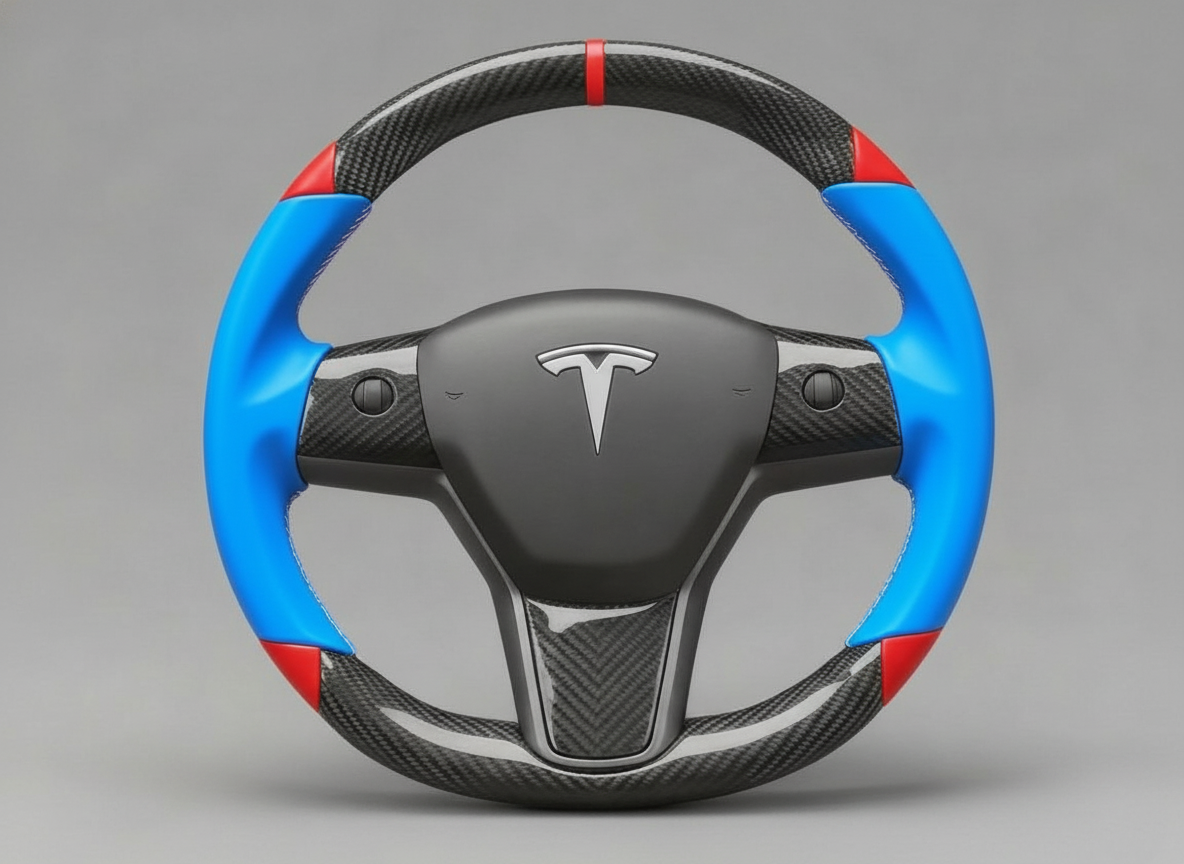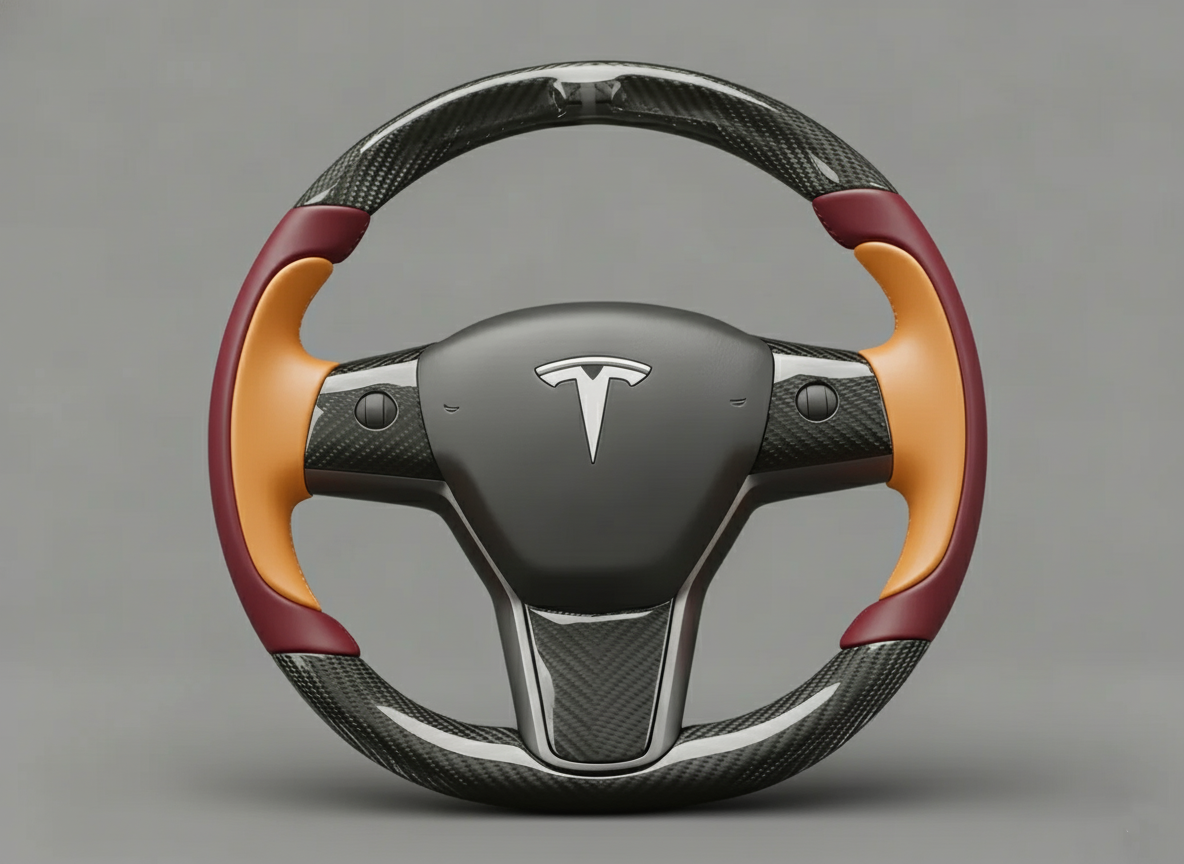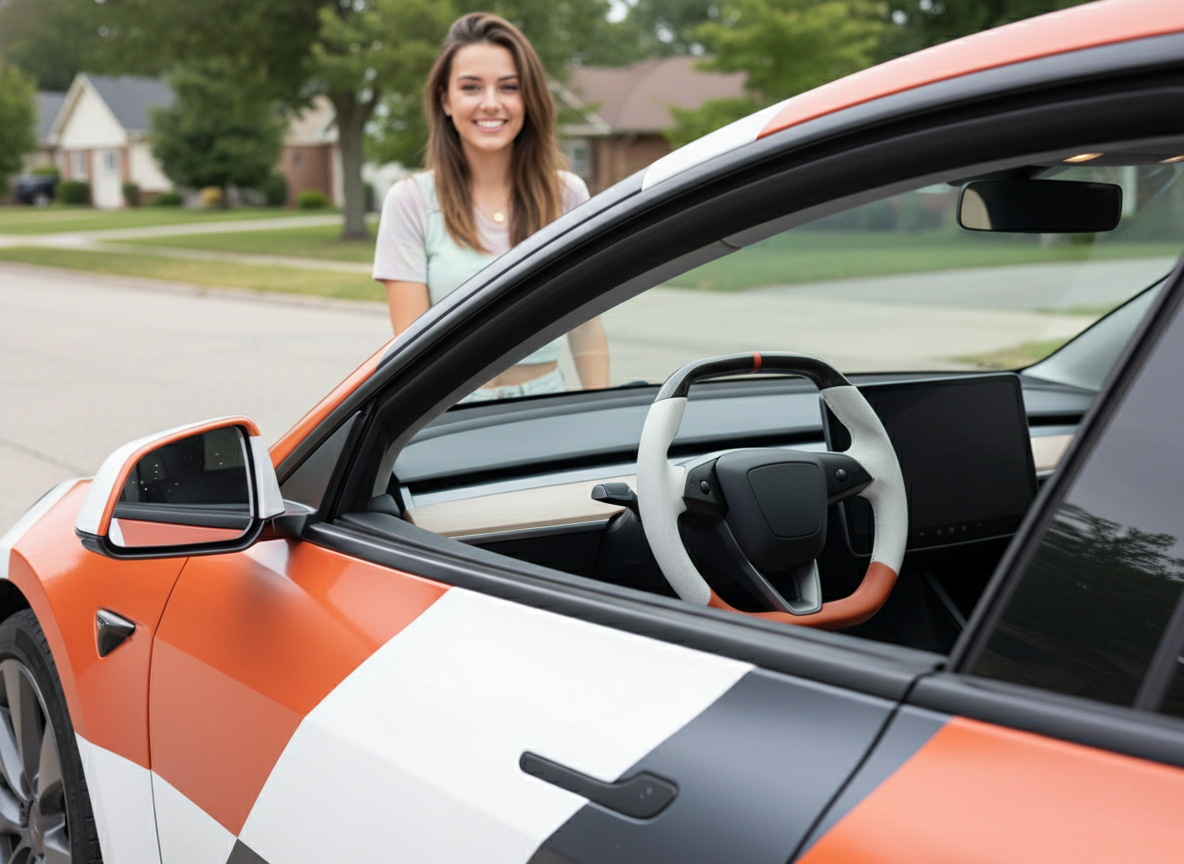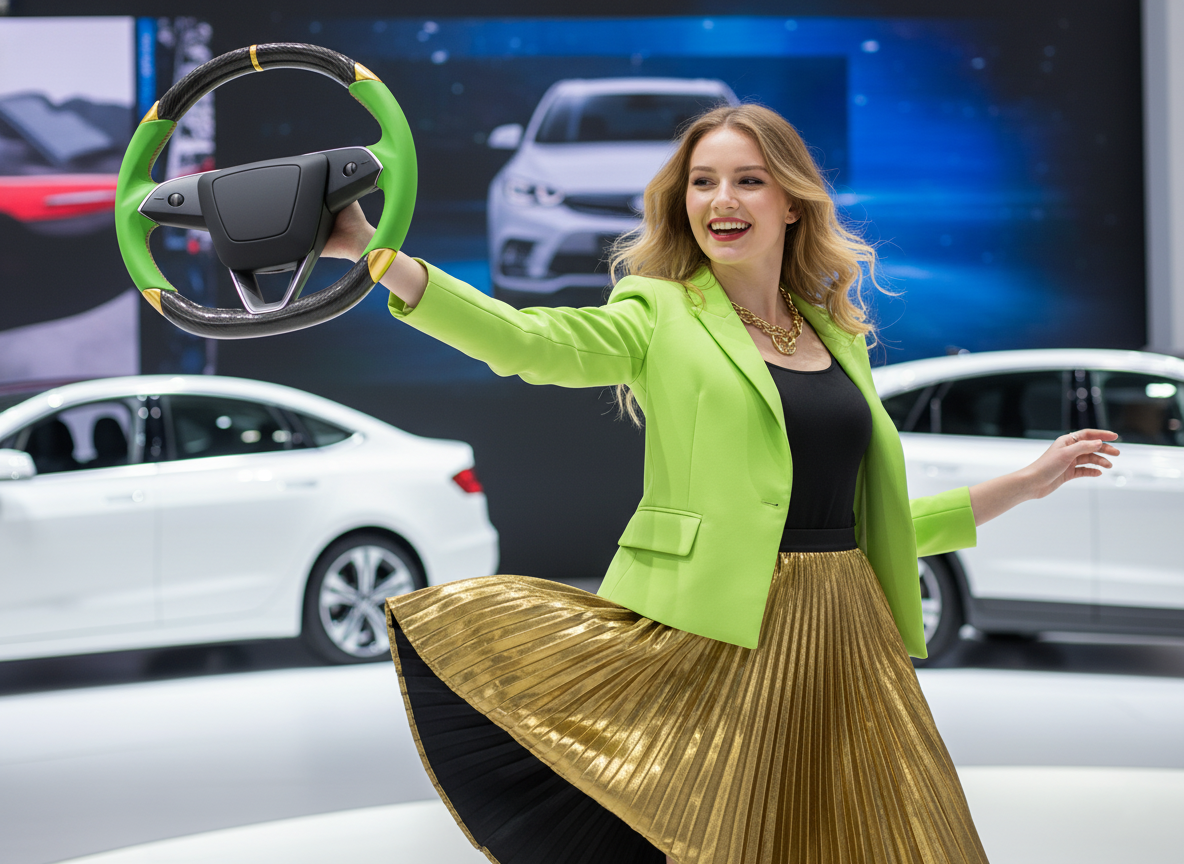
The use of aerospace-grade Toray 3K carbon fiber reduces the steering wheel weight by approximately 30% compared to the original factory component.
By lowering steering inertia, it significantly enhances handling sensitivity.
Its high-temperature resistance and non-peeling characteristics perfectly resolve the durability pain points of OEM leather.
Weight
The original Tesla Model 3 steering wheel typically weighs between 1.5 and 1.8 kg due to its steel frame and heavy polyurethane foam filling.
The high-performance carbon fiber version, utilizing 3K weave and epoxy resin composite processes, controls the weight between 0.9 and 1.2 kg, representing a weight reduction of approximately 35%.
This lightweight design reduces the rotational inertia of the steering system, resulting in a significant improvement in steering sensitivity.
Complemented by the tensile performance of aerospace-grade T700 carbon fiber, which exceeds 3,500 MPa, it ensures extremely high component strength while reducing weight.
Physical Specifications
The physical architecture of the original Tesla Model 3 steering wheel primarily consists of a metal inner skeleton, a polyurethane foam layer, and an outer wrap of synthetic leather.
This standardized mass-production solution results in a total component weight typically maintained between 1,650 grams and 1,850 grams.
The evolution of the high-performance carbon fiber version in terms of physical specifications is first reflected in the fundamental change in material density.
It utilizes T700 or T800 grade high-modulus carbon fiber prepreg provided by Toray of Japan.
The diameter of these fiber filaments is only 5 to 7 microns, yet their tensile strength reaches 4,900 MPa, which is 7 to 10 times that of ordinary civilian steel.
During the manufacturing process, as many as 20 to 24 layers of carbon cloth are stacked and interlaced at specific angles such as 0, 45, and 90 degrees to ensure uniform stress distribution in all directions.
After prolonged curing in a 150°C high-pressure autoclave, the density of the carbon fiber skeleton is only 1.75 g/cm³, far lower than the 7.8 g/cm³ of steel.
This massive difference in material properties directly reduces the net weight of the finished steering wheel to between 950 grams and 1,100 grams.
| Physical Parameter | OEM Factory Data | Aerospace Carbon Fiber Data |
|---|---|---|
| Main Skeleton Material | Die-cast Mg-Al Alloy + Steel Inserts | T700/T800 High-Modulus Carbon Fiber |
| Total Weight (Unloaded) | 1.65 kg - 1.85 kg | 0.95 kg - 1.15 kg |
| Tensile Modulus | Approx. 45 - 70 GPa | 230 - 290 GPa |
| Thermal Expansion Coeff. | 23 Units (10^-6/K) | -0.1 to 0.1 Units (10^-6/K) |
| Outer Grip Circumference | 110 mm (Uniform Cylindrical) | 118 mm (Ergonomic Contoured) |
| Surface Coating Hardness | 2H - 3H (Synthetic Leather) | 4H - 5H (UV-Resistant Clear Coat) |
| Temp. Tolerance Limit | 85°C (Prone to aging/peeling) | 150°C (Extremely stable structure) |
The original steering wheel features a standard 350mm diameter circular design, whereas the high-performance version often undergoes flat-bottom (D-Shape) processing, reducing the vertical diameter to approximately 335mm.
This change in geometry increases driver legroom by approximately 15mm while providing a more distinct physical reference point for steering maneuvers.
In the primary grip areas at the 3 and 9 o'clock positions, integrated molding technology adds finger support ridges, increasing the grip thickness from the OEM's 31mm to 34mm - 36mm.
The thickness of the outer clear coat is precisely controlled between 0.15mm and 0.2mm.
This high-transparency polyurethane coating not only provides a mirror-like visual effect but also protects the fiber structure from acidic sweat and UV erosion.
The increase in structural rigidity is equally significant; during a 50kg radial pull test, the carbon fiber steering wheel's deformation is less than 0.5mm.
This extreme hardness ensures high transmission efficiency of steering commands between mechanical connectors, reducing the elastic lag associated with the OEM's "rubbery" feel.
| Geometry & Integration | OEM Factory Specs | Custom Carbon Fiber Specs |
|---|---|---|
| Horizontal Diameter | 350 mm | 350 mm (Maintains ratio) |
| Vertical Diameter | 350 mm | 335 mm (Flat-bottom) |
| Finger Rest Design | No distinct anchor points | 10 and 2 o'clock finger grooves |
| Center Spline Matching | Tesla Standard 24-tooth | 1:1 Original High-Precision Cold Forged |
| Airbag Module Clearance | 2 mm - 3 mm | ≤ 1.5 mm (Precision CNC Machined) |
| Internal Wiring Space | Standard Plastic Guides | Integrated Carbon Fiber Wiring Channels |
| Heating Integration | Optional (Adds ~100g) | Ultra-thin Nano-Silver Film (Adds ~20g) |
When summer exposure causes interior temperatures to rise above 60°C, common metal skeletons and plastic parts may undergo micro-displacements, potentially causing noise in the button panels.
The carbon fiber structure maintains dimensional accuracy under severe temperature fluctuations, with expansion or contraction rates that are virtually negligible.
This stability not only extends the physical lifespan of internal electronic components but also ensures that the tight fit between the airbag module and the steering wheel body always maintains a clearance within 1mm.
For the Model 3's electronic steering system, lightweight components reduce the instantaneous current load on the steering motor when changing rotation directions.
Physical simulation data shows that during rapid back-and-forth steering maneuvers, the rotational resistance the motor must overcome is reduced by 15% to 20% due to the decreased rotating mass.
Every qualified carbon fiber steering wheel must pass rigorous physical impact and static load tests before leaving the factory. According to Society of Automotive Engineers (SAE) standards, the component must pass a 120kg static load test without any cracks forming.
High-strength aerospace structural adhesive is used at the junction between the carbon fiber layers and the internal aluminum alloy inserts, with a shear strength exceeding 25 MPa.
For the Model 3's unique dual-scroll interaction, the carbon fiber shell is cut with high-precision CNC machines at the corresponding positions, with tolerances strictly controlled within ±0.05mm to ensure the OEM scroll wheel feedback is not hindered by the shell replacement.
Steering Response Changes
The Tesla Model 3 features an extremely fast 10.3:1 steering ratio, requiring only about 2 turns from lock to lock.
This setting inherently provides the vehicle with high directional sensitivity.
However, the 1.7kg mass of the OEM steering wheel generates significant physical inertia during high-speed rotation.
Replacing it with a high-performance carbon fiber wheel weighing around 1.1kg leads to the most significant change: the reduction of rotational inertia.
According to physical test data, because the carbon fiber material concentrates weight closer to the axis of rotation, its moment of inertia is 28% to 32% lower than the OEM component.
In actual driving, when the driver gives a steering command, the steering column does not need to overcome excessive static inertia, allowing the change in steering wheel angle to translate into wheel deflection approximately 8ms to 15ms earlier than stock.
During highway lane changes at speeds over 110 km/h, this reduction in latency makes the front-end pointing feel crisper, reducing the micro-oscillations that the heavy OEM wheel might generate at the end of a command.
The high tensile modulus of carbon fiber (above 230 GPa) ensures that the elastic deformation of the steering wheel frame itself is virtually zero during large-angle turns.
| Steering Physics Comparison | OEM Factory Steering Wheel | High-Performance Carbon Fiber | Data Benefit Explanation |
|---|---|---|---|
| Rotation Start Latency | 35 - 50 ms | 20 - 35 ms | ~30% faster response speed |
| Rotational Inertia (kg·m²) | Approx. 0.018 | Approx. 0.012 | Lower physical resistance |
| EPS Peak Current | 45 - 55 Amps | 38 - 46 Amps | Lowered EPS system load |
| Center Zone Precision | +/- 1.2 Degrees | +/- 0.5 Degrees | Improved straight-line micro-adjustment |
| Vibration Signal Freq. | 20 - 80 Hz | 50 - 180 Hz | Captures more high-freq road info |
| Max Rotation Speed | Approx. 450 Deg/sec | Approx. 580 Deg/sec | Higher manual rotation limit for evasion |
The Model 3's Electronic Power Steering (EPS) system acts directly on the steering rack via a brushless motor, with output torque adjusted in real-time based on resistance sensed by steering wheel sensors.
The lightweight carbon fiber wheel reduces the physical load at the end of the steering column, causing the overcoming current required by the EPS motor at start-up to drop by about 15%.
In continuous S-curves or track driving, this change in physical characteristics allows the steering feel to find a better balance between "lightness" and "solidity."
Because there is no thick polyurethane foam layer to act as a barrier, high-frequency vibrations transmitted through the tires, tie rods, and steering column can act more directly on the carbon fiber hard-shell structure.
Carbon fiber material has excellent conductivity for high-frequency signals above 100 Hz, whereas original rubber and leather materials tend to filter out these subtle feedbacks that reflect grip limits.
The clarity of road feel perceived through the palms is essentially improved, allowing drivers to sense changes in front-wheel grip trends earlier on rainy or slippery roads, enabling more precise throttle and steering corrections.
- Transient Response: Under aggressive operation exceeding 360 degrees per second, the lightweight wheel exhibits extremely low kinetic energy accumulation; the moment the driver stops applying force, the wheel stabilizes at the target position immediately.
- Centering Torque Perception: When exiting a corner, the centering torque of the wheels is transmitted more crisply to the lightweight steering wheel, as the system doesn't need to expend energy moving a heavy metal disc.
- Command Chain: The high rigidity of carbon fiber eliminates the "vagueness" between the steering column and the hands; every dimension of physical displacement is 100% transmitted to the steering angle sensor.
- Dynamic Weight Distribution: The lightened steering wheel brings the steering feel closer to that of a professional racing car, particularly reducing hand muscle load by about 20% during rapid back-and-forth maneuvers.
- Low-Speed Maneuvering: In tight spaces or parking scenarios, the lighter rotating component makes frequent lock-to-lock operations effortless, reducing over-reliance on the power steering motor.
| Response Traits by Speed | 40 km/h (Urban Low) | 80 km/h (Suburban Mid) | 120 km/h (Highway Cruise) |
|---|---|---|---|
| Steering Feel | Extremely light, zero resistance | Precise, highly linear feedback | Steady, zero play, fast micro-response |
| Info Density | Manhole/seam vibes clear | Tire slip angle changes distinct | Road ripples & grip feedback |
| Muscle Load | ~25% lower | ~15% lower | ~10% lower |
| Evasion Confidence | Very high, synchronized action | High, excellent front-end following | High, refined posture control |
Model 3 owners frequently use basic Autopilot, but during manual takeover or active driving, the micro-inertia compensation from a heavy steering wheel can cause drivers to unintentionally over-correct.
Carbon fiber steering wheels significantly reduce these "correction-after-correction" actions through physical weight removal.
Tests found that drivers using lightweight wheels reduced the frequency of micro-hand movements by about 12% during 100km of continuous winding roads.
System Mechanical Load
Replacing the original ~1.8kg steering component with a carbon fiber version under 1.1kg results in a quantitative change in the dynamic load borne by the entire mechanical chain.
Physically, this means the static resistance the electronic power motor must overcome to initiate rotation—after receiving commands from the steering angle sensor—is significantly reduced.
According to laboratory current monitoring, during a 360 deg/sec rapid turn, peak motor current dropped from the OEM's 52 Amps to approximately 41 Amps.
Experimental data shows that for every 100g of weight removed from the steering component, the torque output requirement for the motor during startup transients drops by approximately 3.5% to 4.2%. The ~650g reduction achieved with a carbon fiber wheel lowers the overall energy load during large-angle turns by nearly 25%.
Heavy OEM steering wheels generate stronger vertical and radial impacts when driving over bumps due to their mass.
Switching to high-modulus carbon fiber reduces this "suspended mass" at the end of the steering column, lowering the radial runout pressure on the bearing balls by about 30%.
In long-term observations exceeding 100,000km, the rate of increase in mechanical play (physical clearance) of the steering column under low-load environments is significantly slowed, helping maintain center-feel stability during straight-line driving.
The carbon fiber material itself possesses extremely high rigidity, with an elastic modulus typically above 240 GPa.
In vibration frequency tests for the Model 3 steering column, the carbon fiber wheel shifted the system's high-frequency absorption range from the OEM's 40-60 Hz to 120-180 Hz.
The clock spring, which connects the steering wheel buttons and airbag to the vehicle circuitry, is highly sensitive to center-position offset and rotational inertia.
A heavy steering wheel creates a pulling force on the internal wiring during rapid centering, whereas a lightweight component reduces the kinetic energy of this physical tugging.
Due to the reduced rotating mass, the centering action is smoother, reducing the impact force on the clock spring limiters.
Physical measurements indicate that the center of gravity of the carbon fiber steering wheel is closer to the axis of rotation compared to stock, with the deviation narrowing from the OEM's 12mm to under 5mm. This shift reduces the eccentric torque generated during rotation by over 60%.
For a highly integrated electronic vehicle like the Model 3, the response precision of the steering motor directly determines the intervention experience of the ADAS.
During micro-course corrections, the lighter physical load allows the motor to output torque in smaller steps.
In simulations, vehicles with carbon fiber wheels exhibited smoother signal fluctuations from the steering angle sensor during Autopilot micro-adjustments, lacking the common over-corrections caused by the inertia of heavy wheels.
Mechanical load analysis reports indicate that approximately 15% of steering system failures over the lifecycle are related to long-term excessive rotational inertia loads. By controlling the steering component mass below 1.1kg, the peak force on steering tie-rod ends and rack ends is reduced by approximately 120 Newtons during emergency evasive maneuvers.
Style
3K carbon cloth contains 3,000 continuous fibers per tow, resulting in extremely high weaving density.
The gloss coating thickness is typically maintained at 0.2mm for excellent luster.
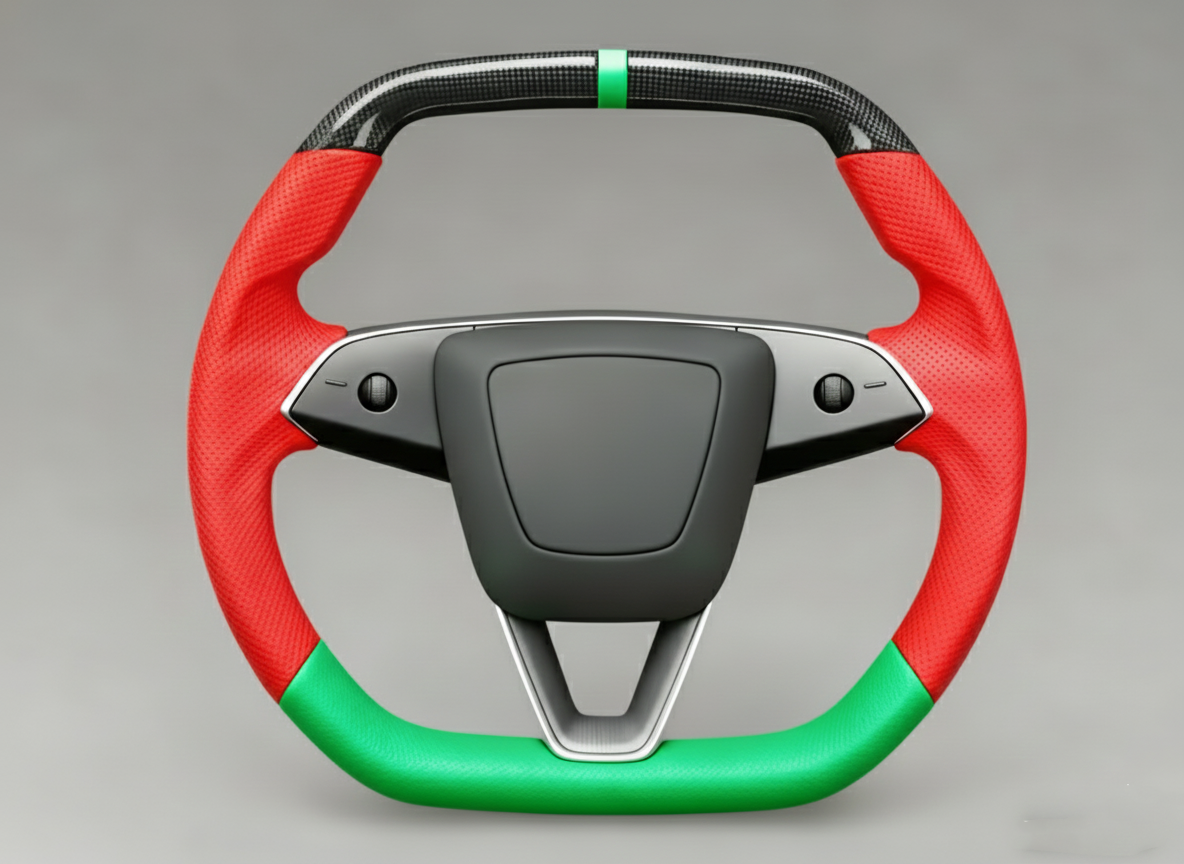
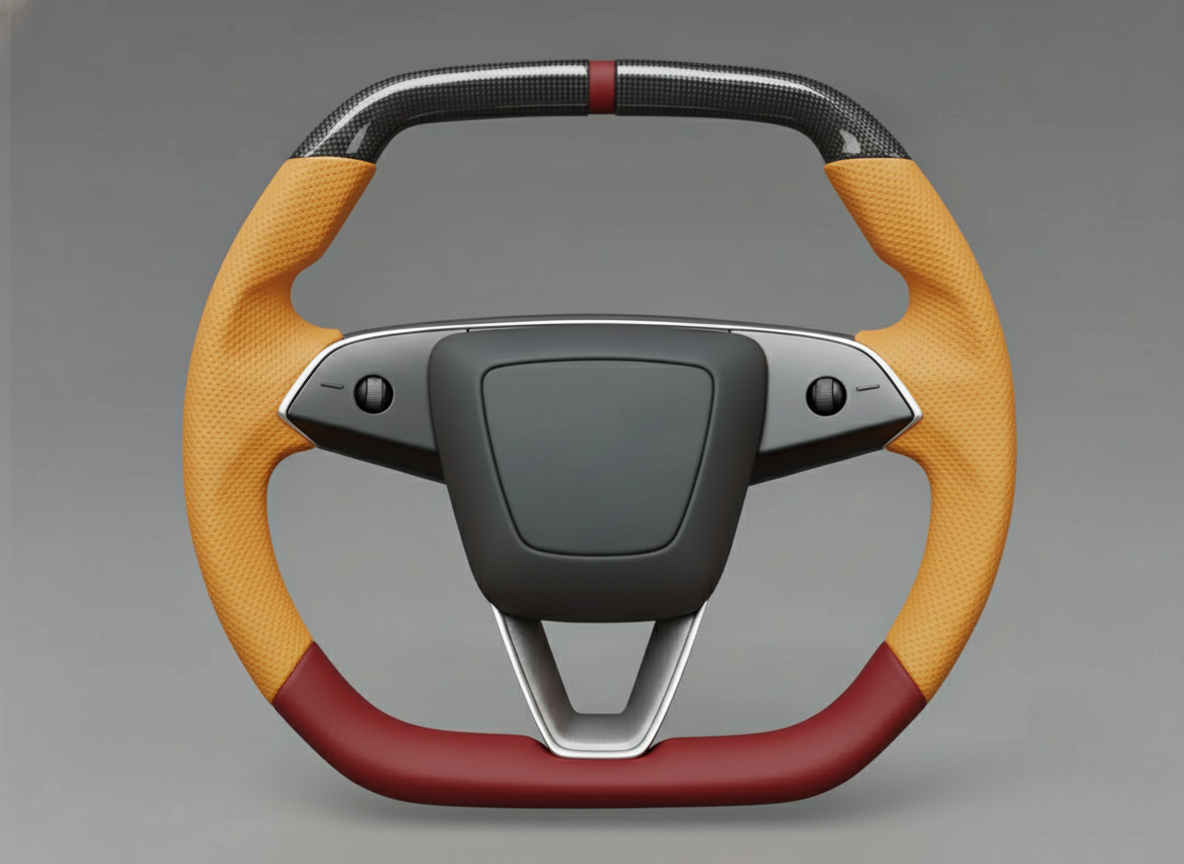
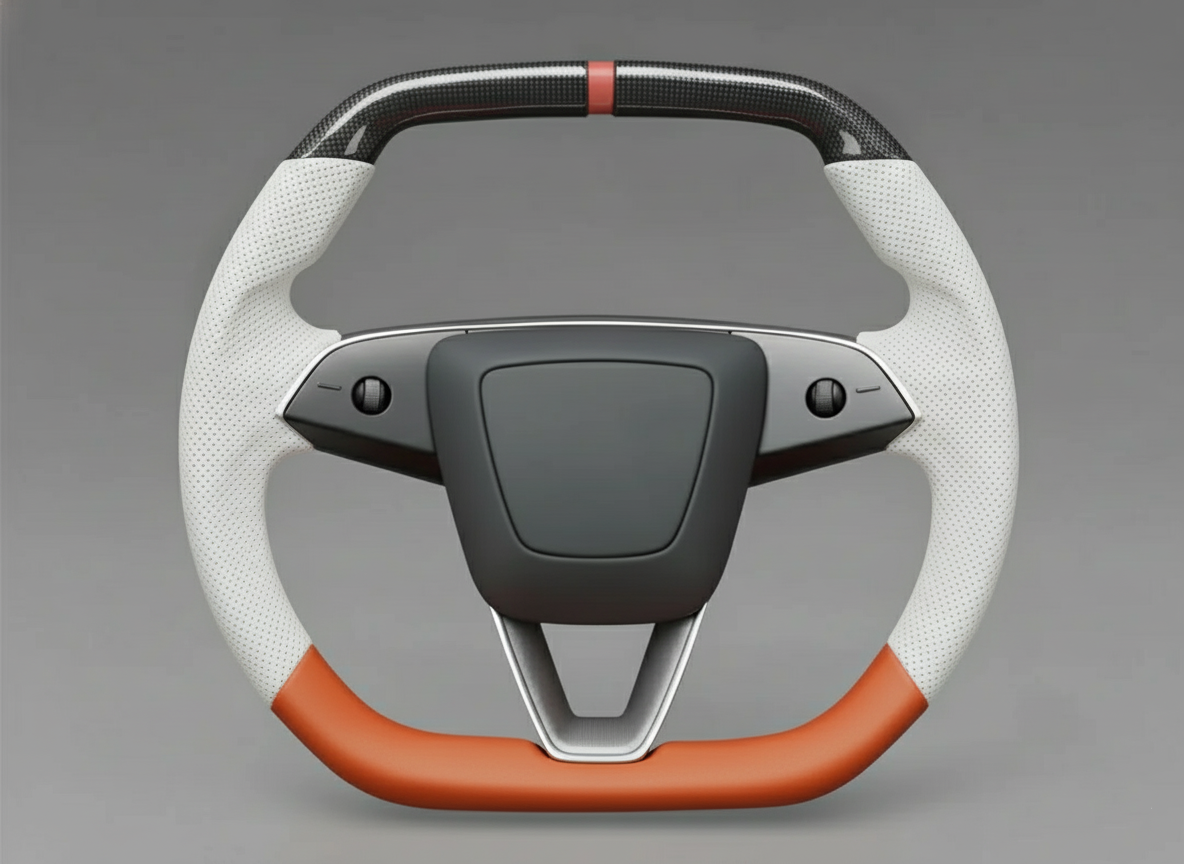
Custom models support D-shape or Yoke styling, with visual widths adjusted compared to stock.
Hand stitching features about 8 holes per inch, paired with Alcantara to create a cabin look distinct from standard production cars.
Fiber Texture Selection
Common 3K Twill is the current industry benchmark, where "K" represents the number of filaments in a single tow—3,000 continuous long fibers with a diameter of about 7 microns each.
This texture usually adopts a 2x2 weave, where each fiber tow alternately passes over two transverse tows, creating a visually continuous 45-degree diagonal pattern.
Because this structure produces less undulation at each intersection, light creates uniform refraction under the 0.2mm thick transparent resin coating, presenting a strong sense of three-dimensional depth.
In contrast, 1K texture is extremely fine, with a tow diameter about one-third that of 3K, appearing closer to a fine brushed metal texture—often used for custom solutions pursuing extreme precision.
12K texture is much bolder, with 12,000 filaments per tow, forming larger square grids.
In a vehicle with a relatively large interior like the Model 3, 12K can significantly lower the visual center of gravity, creating a heavy, industrial armor-like style.
| Fiber Spec | Filaments per Tow | Fiber Dia (Microns) | Pattern Width (mm) | Visual Characteristics |
|---|---|---|---|---|
| 1K | 1,000 | 5-7 | Approx. 0.8-1.2 | Extremely fine, like high-end fabric |
| 3K | 3,000 | 7 | Approx. 1.5-2.0 | Standard racing style, perfect balance |
| 6K | 6,000 | 7 | Approx. 3.0-4.0 | Distinct blocks, moderate impact |
| 12K | 12,000 | 7-10 | Approx. 6.0-8.0 | Bold and grand, good for large areas |
Beyond traditional weaves, Forged Carbon offers a completely different aesthetic logic.
It no longer uses neatly arranged warp and weft carbon cloth but instead randomly scatters chopped fibers between 25mm and 50mm in a mold, formed under high-pressure forging exceeding 1,000 PSI.
Because the fiber orientation is random, light hitting the steering wheel from any angle produces irregular flickering on different fiber facets.
The advantage of this texture is that no two products are identical, providing high recognizability for owners seeking individuality.
Some custom solutions even add minute amounts of colored metal powders (e.g., silver or red) to the forged carbon to create a starry, point-like reflection under sunlight.
| Weave Type | Weaving Structure | Stress Direction | Luster Performance | Style Category |
|---|---|---|---|---|
| Plain | 1x1 Interlaced | 0/90 Degrees | Distinct grid, uniform reflection | Minimalist Industrial |
| Twill | 2x2 Interlaced | 45-Degree Diagonal | Directional dynamic luster | Classic Sport |
| Satin | 4x1 or 8x1 | Mainly Longitudinal | Extremely smooth, silk-like | Modern Luxury |
| Forged | Randomly Distributed | Isotropic | Marble-like fragmented flicker | Future Tech |
High-gloss finishes usually reach a glossiness of over 90 GU, requiring 4 to 6 layers of clear lacquer with manual water sanding between each.
The increased coating thickness acts as a lens, magnifying the underlying carbon fiber texture.
Matte (Satin) finishes control gloss between 10 and 20 GU, eliminating messy reflections for a unified, cold metallic texture.
Visual Impact of Styling
The styling of custom carbon fiber steering wheels begins with the physical structure of the inner skeleton.
While the OEM Mg-Al or steel center bracket is retained for airbag and button compatibility, the outer ring is completely reshaped.
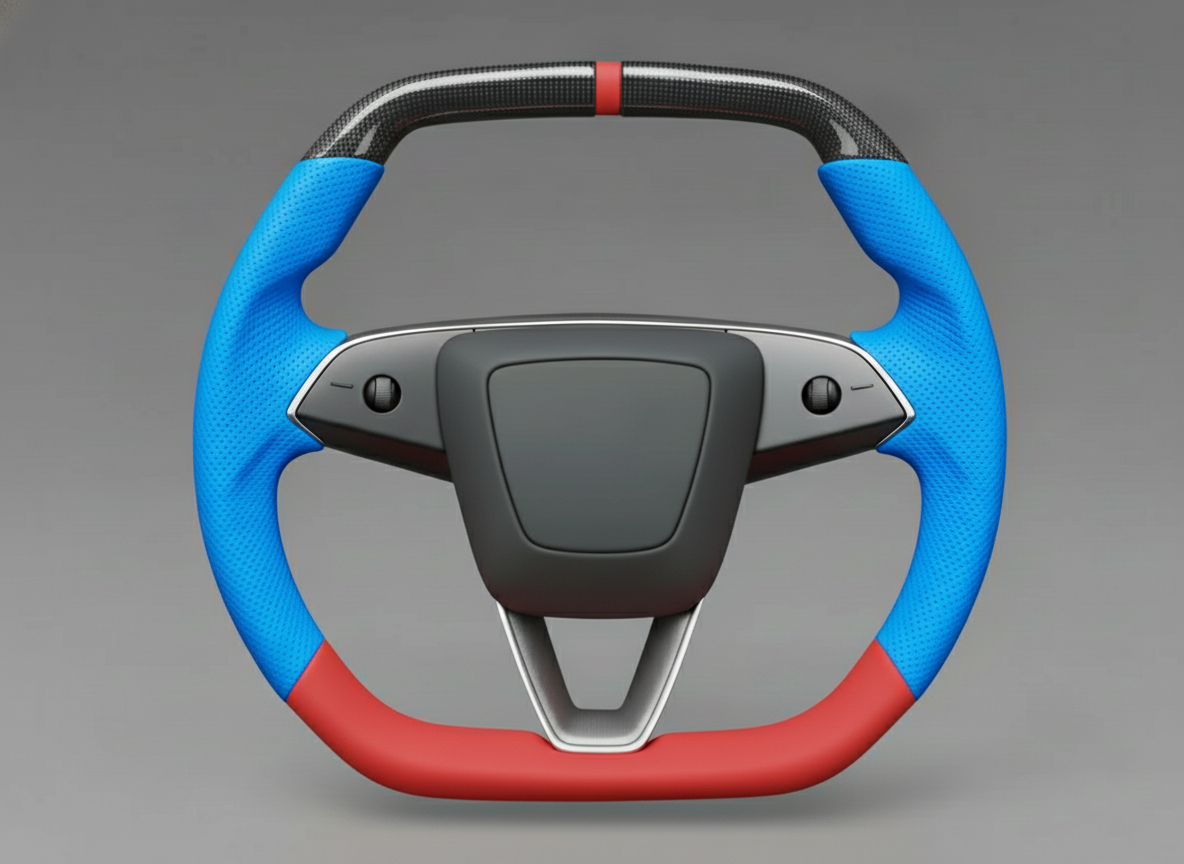
The D-shape flat-bottom is the most mainstream solution, removing the OEM circular arc to form a horizontal line of about 150mm to 180mm.
This modification shifts the visual center of the steering wheel upward, altering the cabin's geometric center of gravity.
The flat-bottom part visually parallels the Model 3's horizontal AC vents, enhancing the sense of geometric order.
Data shows this shape frees up about 20mm to 30mm of vertical legroom.
| Styling Parameter | OEM Standard Circular | D-Shape Flat-Bottom | Yoke Heteromorphic |
|---|---|---|---|
| Outer Diameter | 350 mm | 345 mm - 350 mm | 360 mm (W) / 140 mm (H) |
| Grip Thickness | Approx. 30 mm - 32 mm | 35 mm - 38 mm | 32 mm - 36 mm |
| Bottom Shape | 180-Degree Arc | 180 mm Horizontal Line | Fully Open Base |
| Top Shape | 180-Degree Arc | 180-Degree Arc | Missing (Fully Removed) |
| Visual FOV | Standard | Standard | Increases upper FOV by ~25% |
OEM grips feel slender, while carbon fiber custom parts increase the cross-sectional thickness from 30mm to 35mm or even 38mm via high-density PU foam filling.
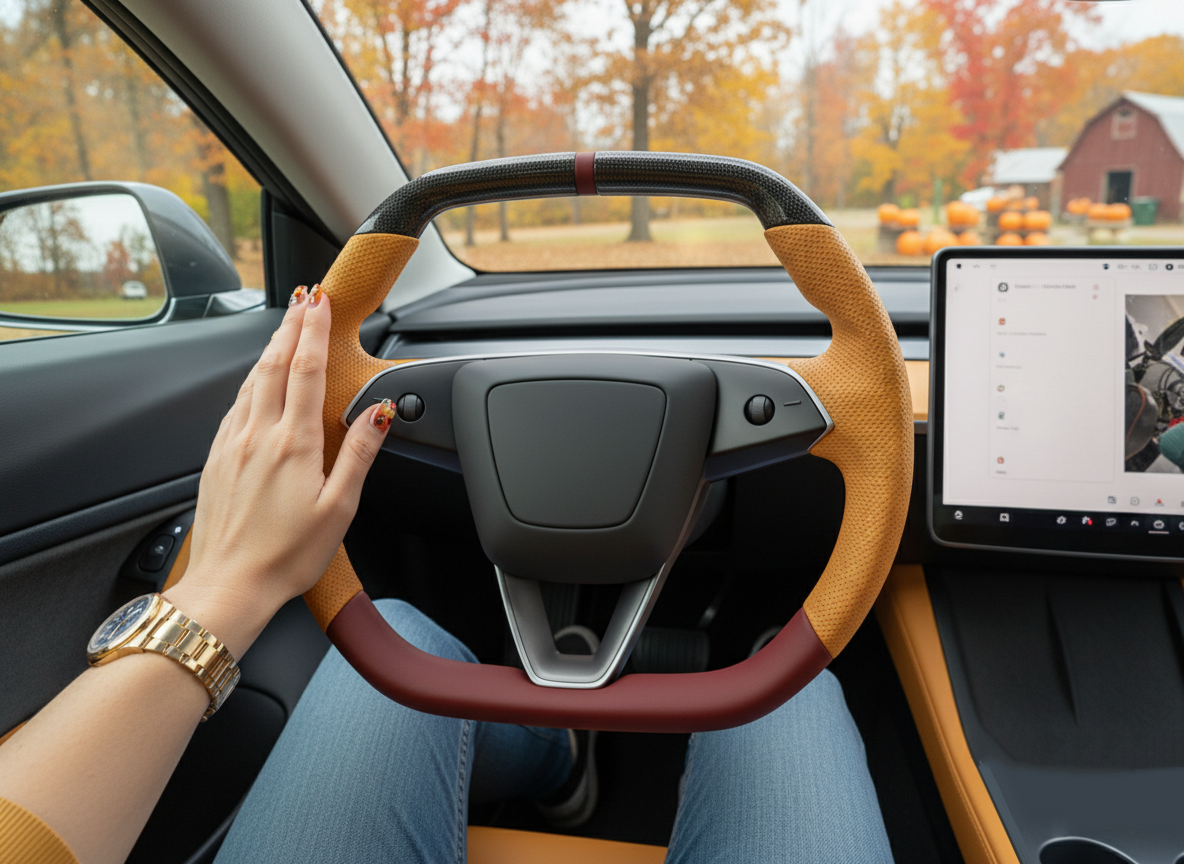
This visual "thickening" makes the wheel look more substantial, combined with deep recesses at 3 and 9 o'clock to create strong muscle lines.
Designers typically add distinct Thumb Rests at the 10 and 2 o'clock positions, about 5mm thicker than other parts.
- Yoke Visibility: Yoke style completely removes the top 180-degree arc, mimicking an aircraft yoke or F1 wheel. Visually, this openness removes obstructions from the 15-inch center screen's left edge.
- Lateral Support Contours: Carbon fiber allows for sharper edges. Custom parts often adopt a slightly flattened cross-section rather than the OEM oval, making the profile look leaner.
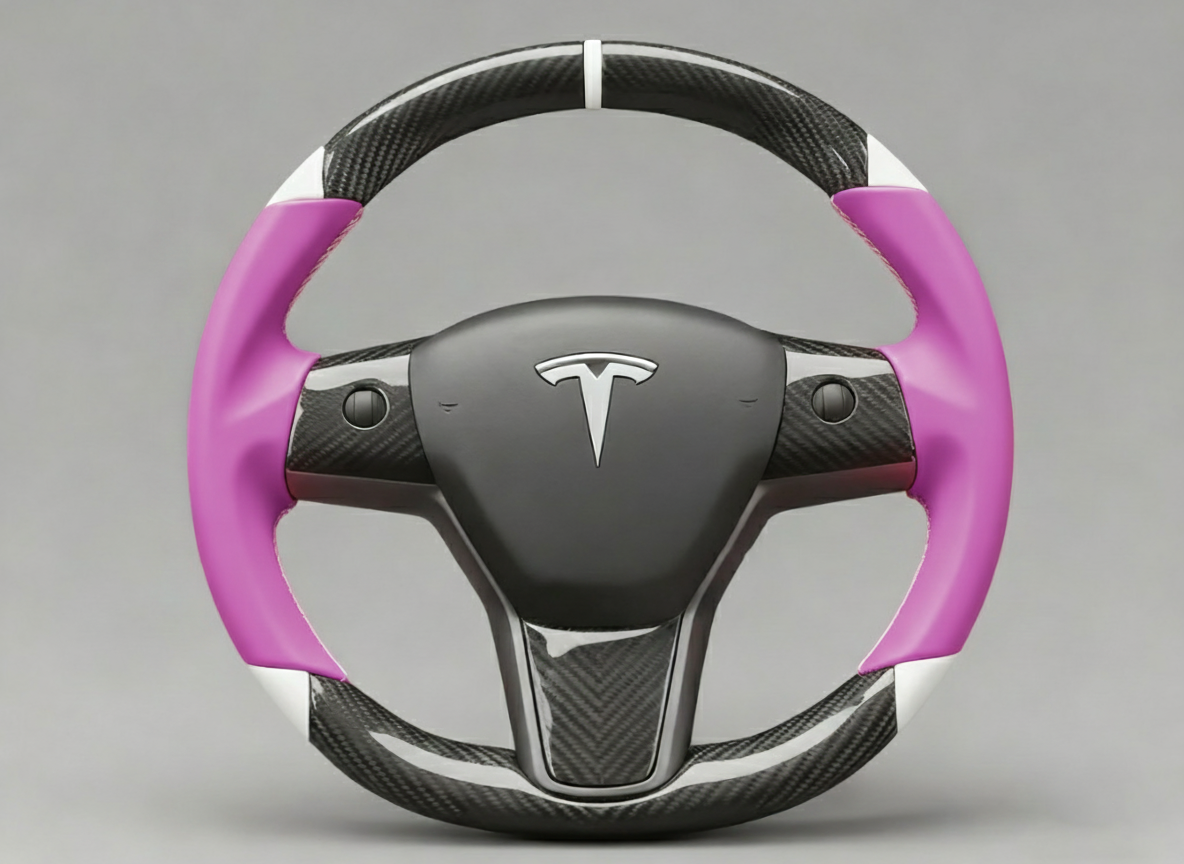
- Center Cover Integration: High-end solutions wrap the airbag cover surrounds in carbon fiber for material unity, making the steering system look like it was machined from a single block.
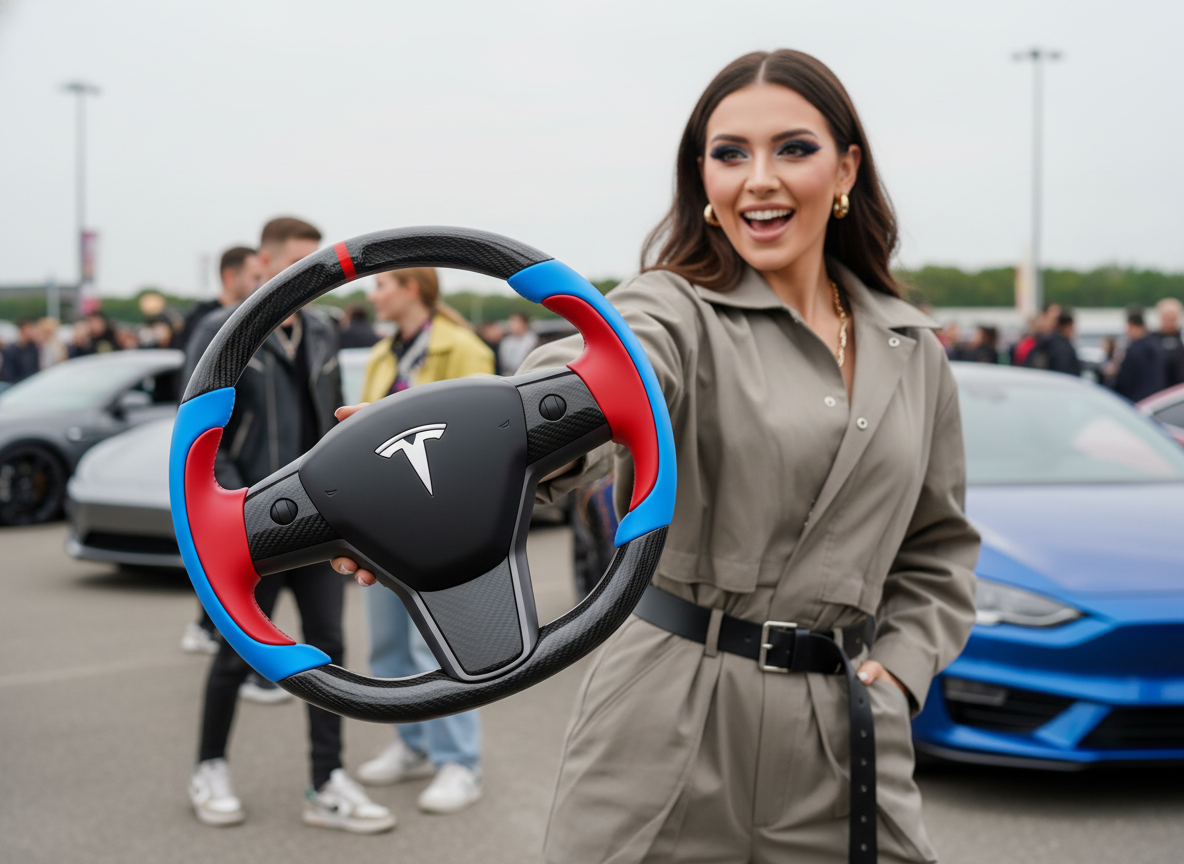
- Centering Stripe: A 5mm wide colored band at 12 o'clock serves as a visual pivot, breaking the continuous carbon texture.
Stitching Craftsmanship
Professional customization usually uses Bonded Nylon 66 or high-strength polyester thread (spec 210D/3 or 277).
Each stitch must withstand a uniform tension of 15 to 20 Newtons to ensure leather edges fit tightly into the 1.5mm deep grooves.
These threads have a Grade 4+ UV rating to prevent fading or embrittlement from the Model 3's glass roof.
Industry-standard stitch pitch for the Model 3 is usually set between 3.0mm and 4.5mm. If below 2.5mm, the frequent punctures reduce the leather's tear strength; if over 5.0mm, the stitches appear loose. Technicians use double-needle alternate lock-stitching at a 45-degree tilt, creating dynamic reflections under light.
- Euro Stitch: Visual unidirectional parallel diagonal lines. Minimalist and compact, ideal for Nappa leather to minimize palm friction.
- Cross Stitch: Continuous "X" patterns for stronger physical tension. Best for compressing Alcantara suede fibers.
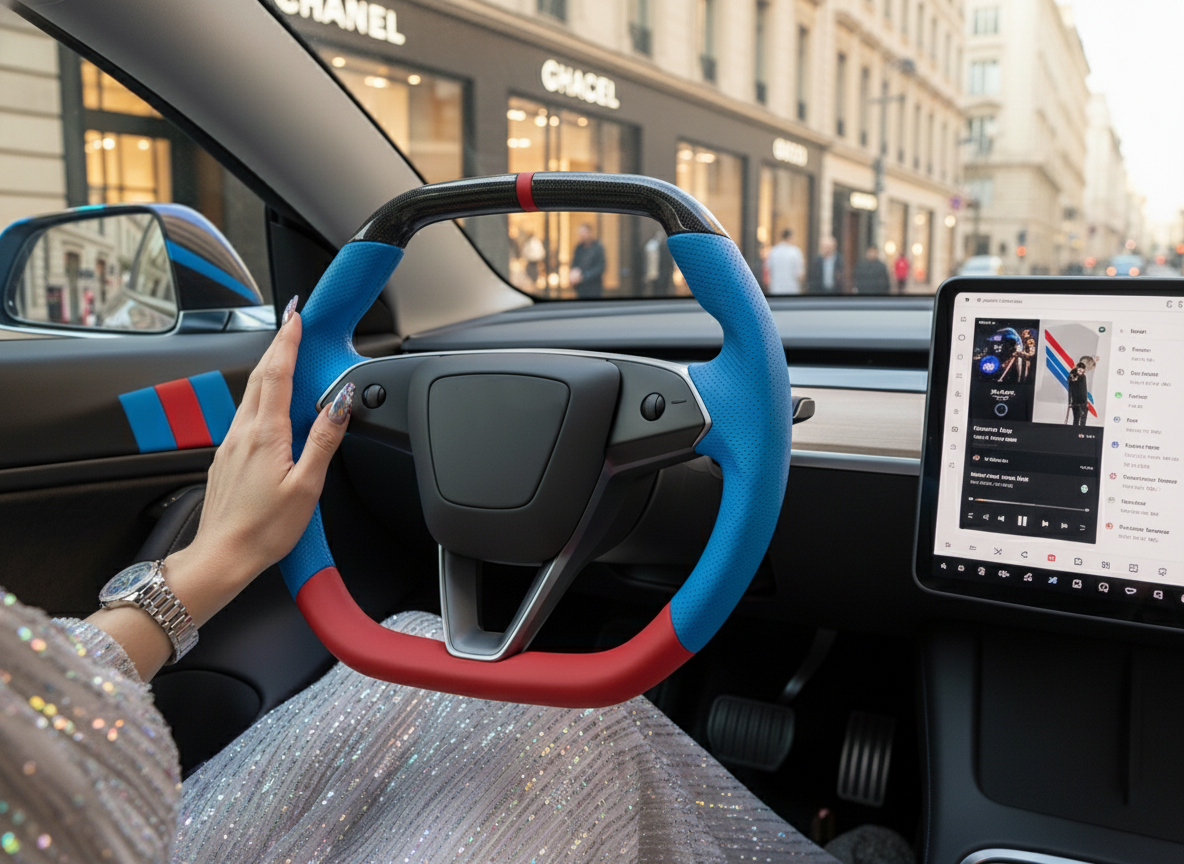
- M-Style (Tricolor): Uses three different colored threads. For Model 3, owners often choose grey, white, and black combinations.
- Baseball Stitch: Interlocking and tight, usually for thickened grips, providing distinct tactile feedback for fingertips.
Performance
Replacing the steering wheel with carbon fiber reduces the moment of inertia by about 15%.
Total assembly weight drops from the OEM ~3.5kg to about 2.2kg, which, combined with the 38mm thickened grip and Alcantara sides, increases friction at the 9 and 3 o'clock positions by 10%.
Faster Steering Response
OEM wheels use heavy die-cast Al-alloy frames with thick PU foam and synthetic leather, weighing 3.5kg to 3.8kg.
High-performance carbon fiber wheels (T700/T800) use vacuum infusion to keep epoxy content under 30%, pushing weight down to 2.1kg-2.3kg.
This 35% reduction significantly lowers rotational inertia because the weight is removed from the outermost ring.
The Model 3 has a quick 10.3:1 steering ratio, but the heavy stock wheel creates physical lag.
With the carbon fiber upgrade, this physical damping is weakened. Lane changes at high speeds become extremely precise, with zero oscillation.
Response latency—the gap between steering input and lateral acceleration—is shortened by about 15ms to 25ms.
| Physical Dimension | OEM Synthetic Version | 3K Prepreg Carbon Version | Post-Mod Performance Change |
|---|---|---|---|
| Total Component Weight | Approx. 3650g | Approx. 2250g | Weight reduction ~1.4kg |
| Skeleton Density | 2.70g/cm³ (Al-alloy) | 1.55g/cm³ - 1.65g/cm³ | Density reduced ~40% |
| Max Grip Diameter | 33.5mm - 34.5mm | 38.0mm - 40.5mm | Thickness increased 15% |
| Static Inertia | 0.045 kg·m² | 0.026 kg·m² | Inertial resistance down 42% |
| Friction Coeff. | 0.42 μ (Synthetic) | 0.68 μ (Alcantara side) | Grip friction up 60% |
| 100Hz Vibration | Highly filtered (Vague) | Highly restored (Clear) | Info density up 25% |
| Thermal Conductivity | 0.15 - 0.25 | 1.0 - 5.0 | Faster temp adaptation |
Thickened Grip Tactile Feel
Model 3 OEM grips (34-35mm) often feel thin for large palms.
Upgrading to 38-41mm (a 15% gain) allows the palm to achieve fuller contact, shifting pressure from finger joints to the thenar eminence.
Adding 5mm of thickness can delay palm muscle fatigue by about 25%.
Carbon fiber wheels reshape the ring geometry with 6-8mm deep finger grooves at 10 and 2 o'clock, providing a stable physical lever.
Alcantara side grips offer a 0.7 friction coefficient, far higher than the OEM synthetic's 0.4.
In heat, even with sweaty palms, absolute control is maintained with less required gripping force.
- Grip Circularity: OEM 34.5mm to custom 39.5mm; circumference increased by ~15mm.
- Finger Grooves: 4 independent rear recesses (~5mm depth) to suit different hand sizes.
- Side Support: Width increased to 42mm for a GT3-level racing grip experience.
- Pressure Distribution: Peak palm pressure drops from 120kPa to 85kPa.
- Reaction Time: Closing displacement from fingertip to palm reduced by 10%, shortening physical reaction time.
The D-shape flat-bottom provides a natural physical reference frame.
Through the perceived thickness and shape, drivers can judge rotation angles via touch without looking at the dash.
This highly developed tactile feedback loop, paired with Tesla's sensitive power steering algorithms, results in a "man-machine unity" mechanical texture.