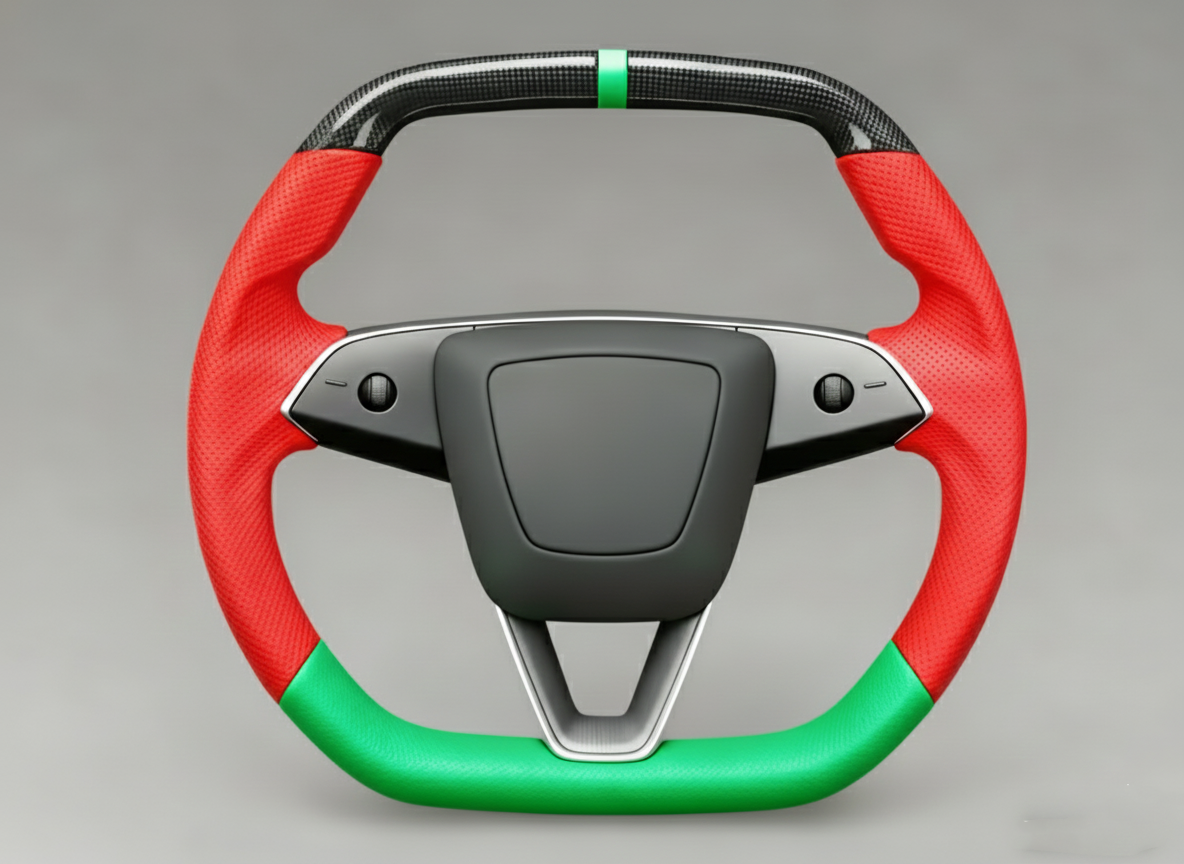
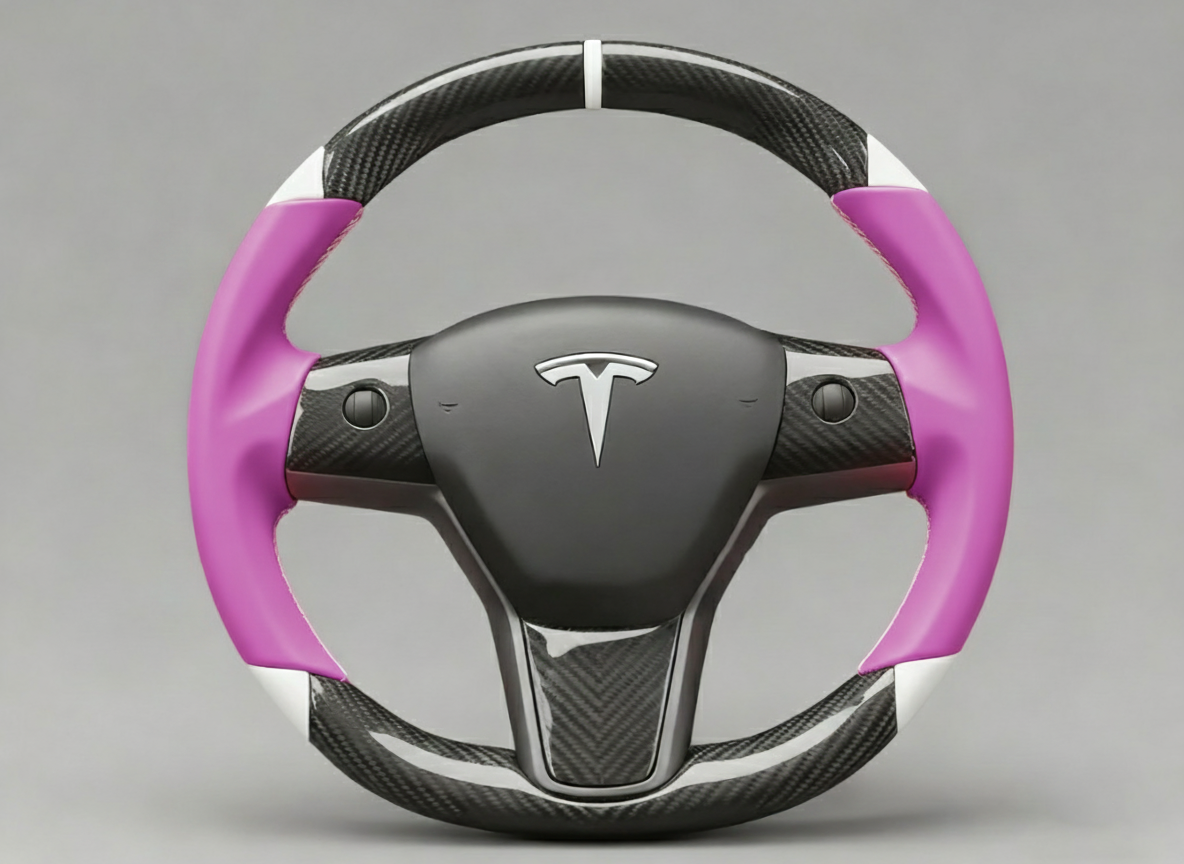
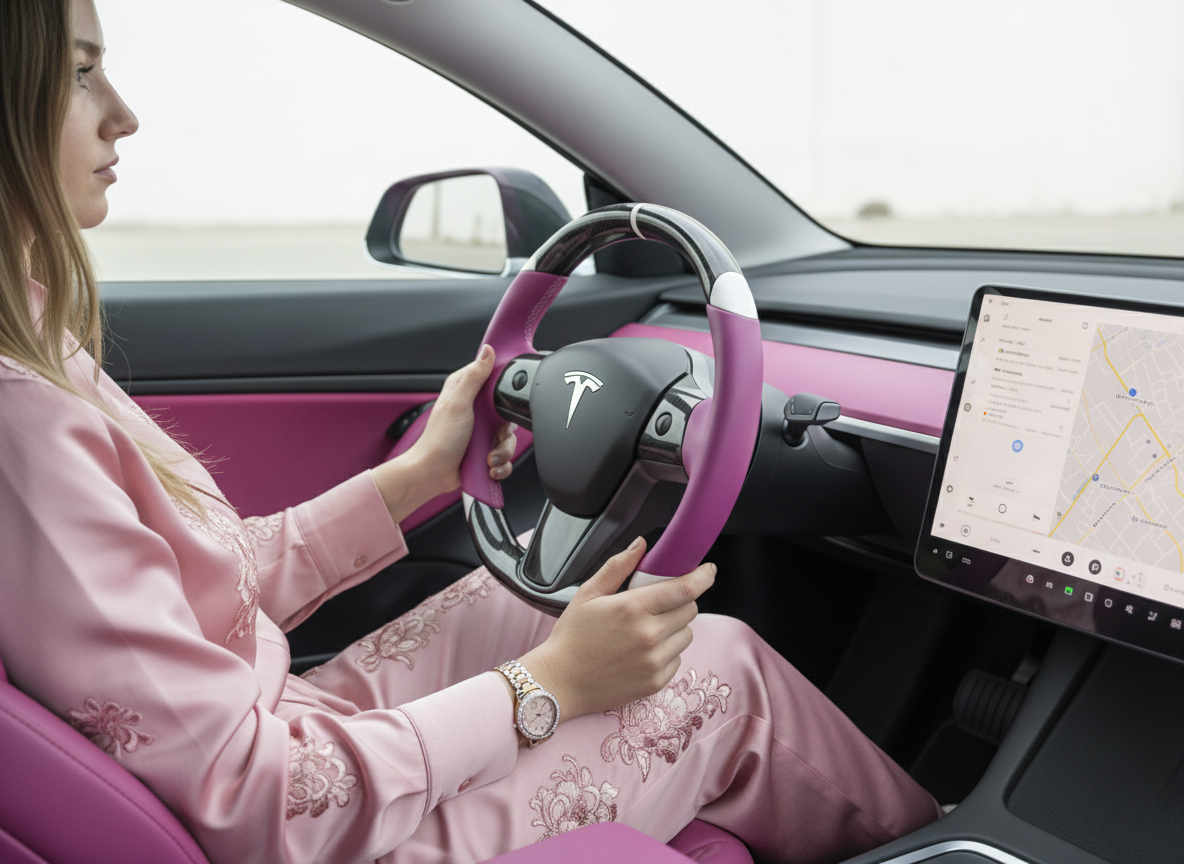
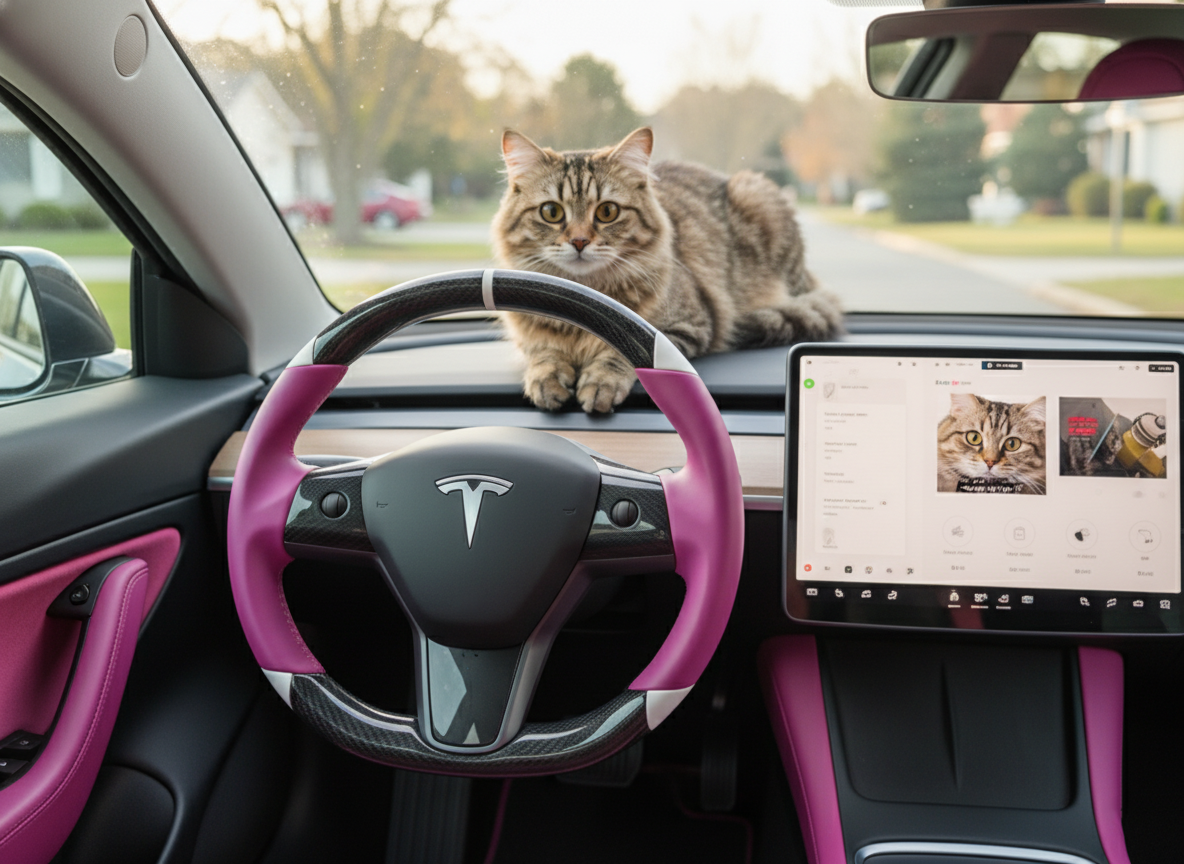
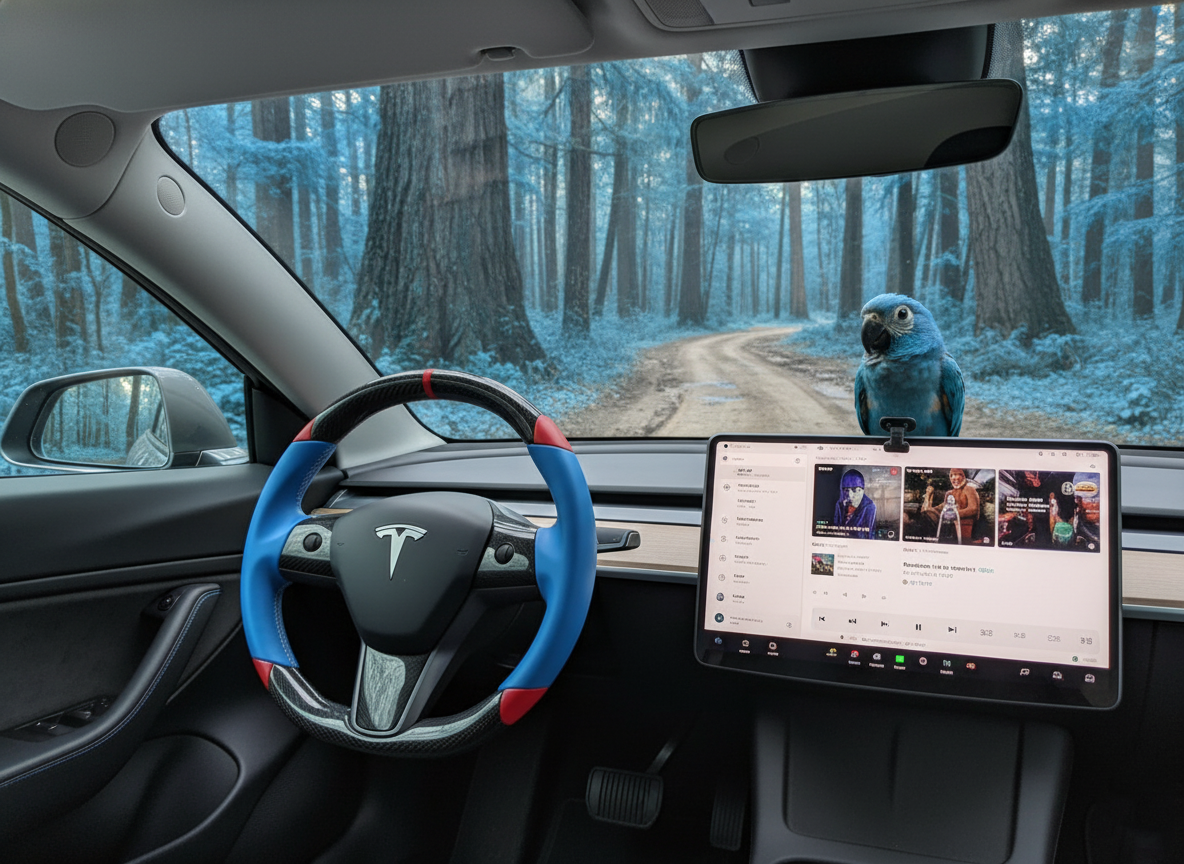
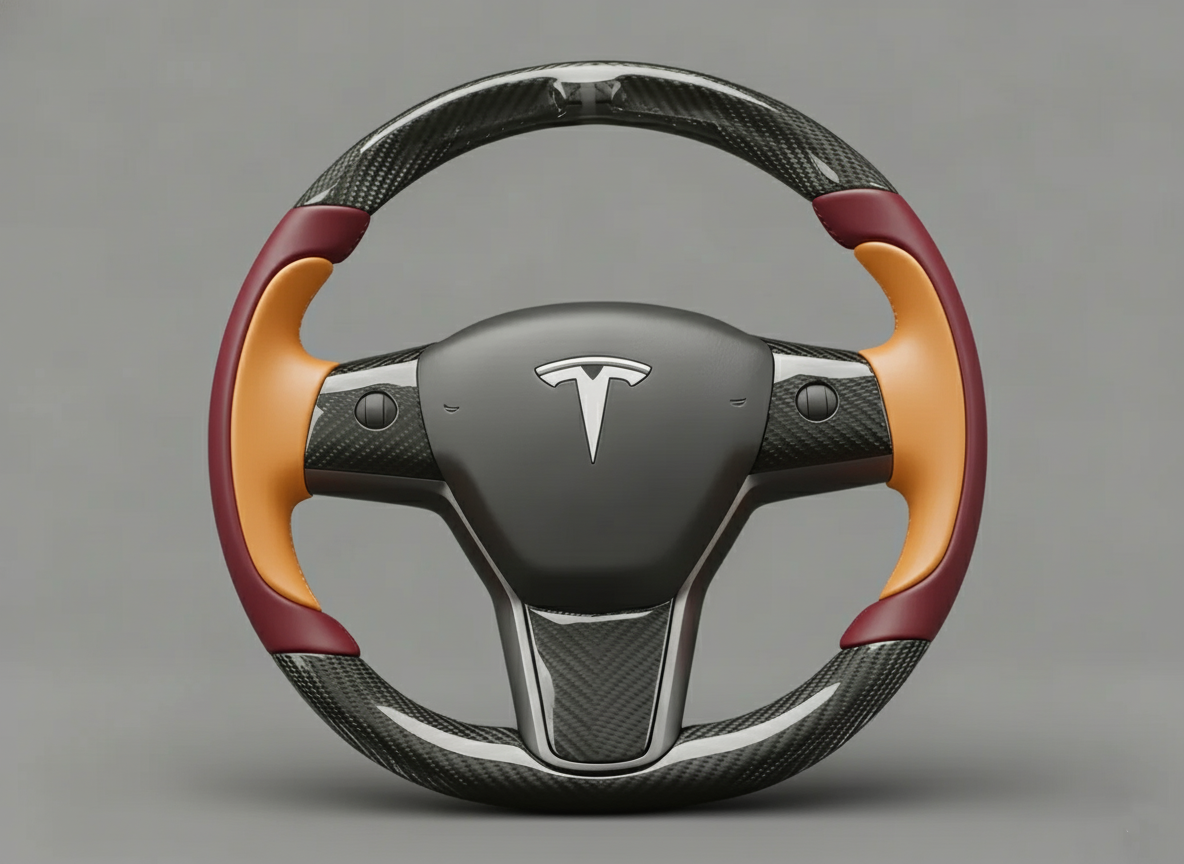
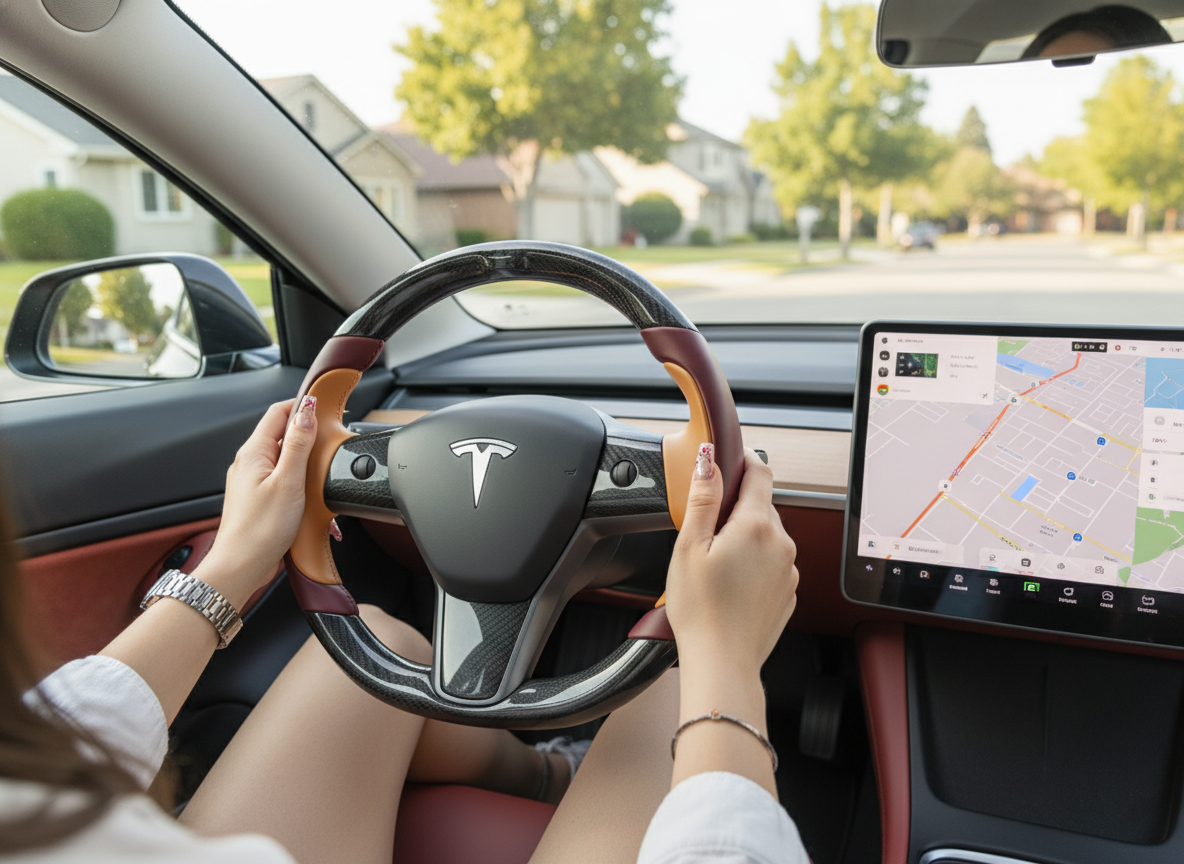
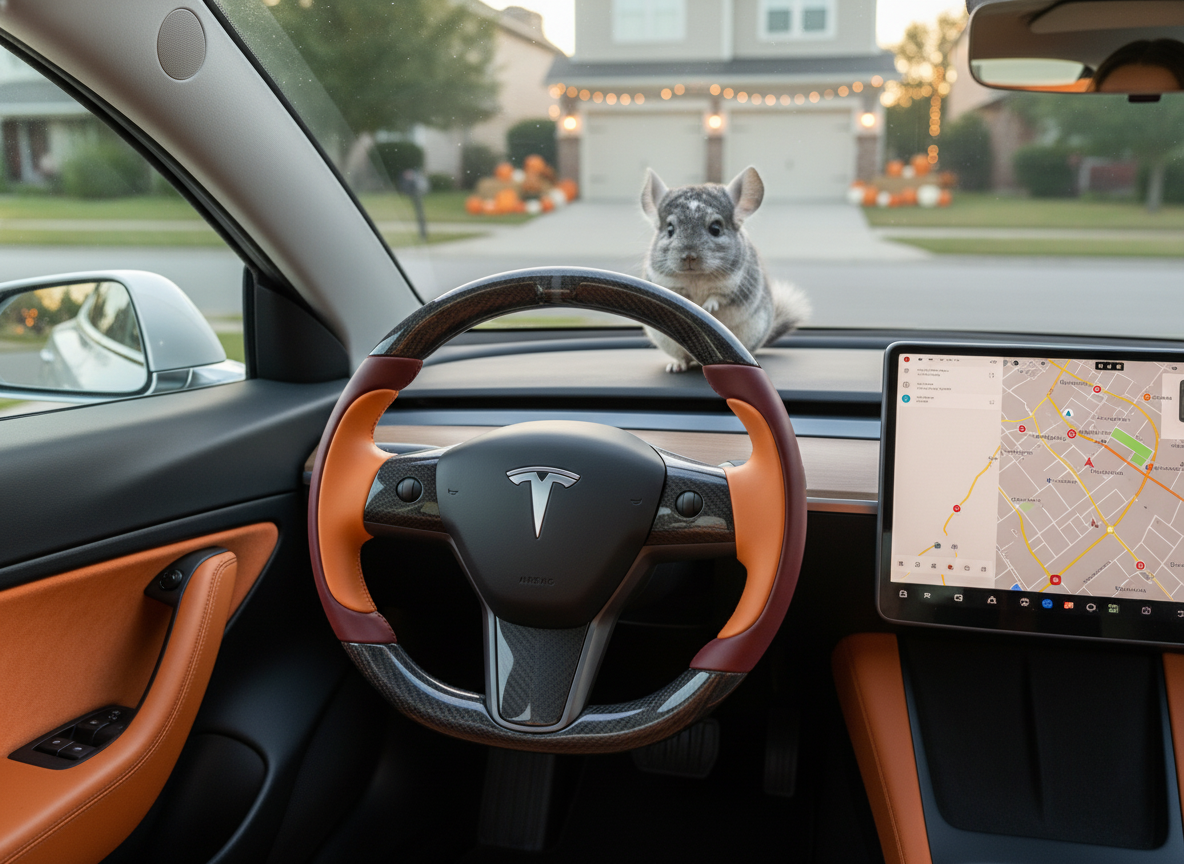
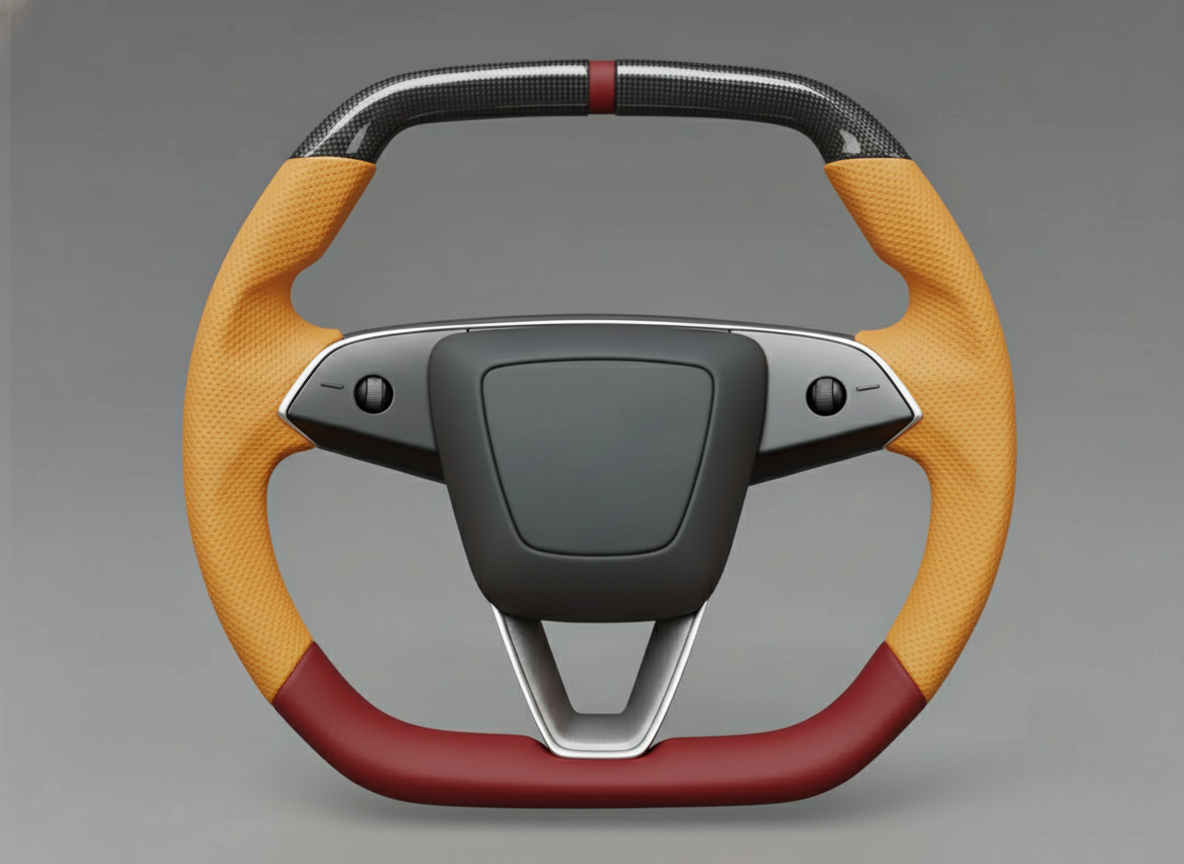
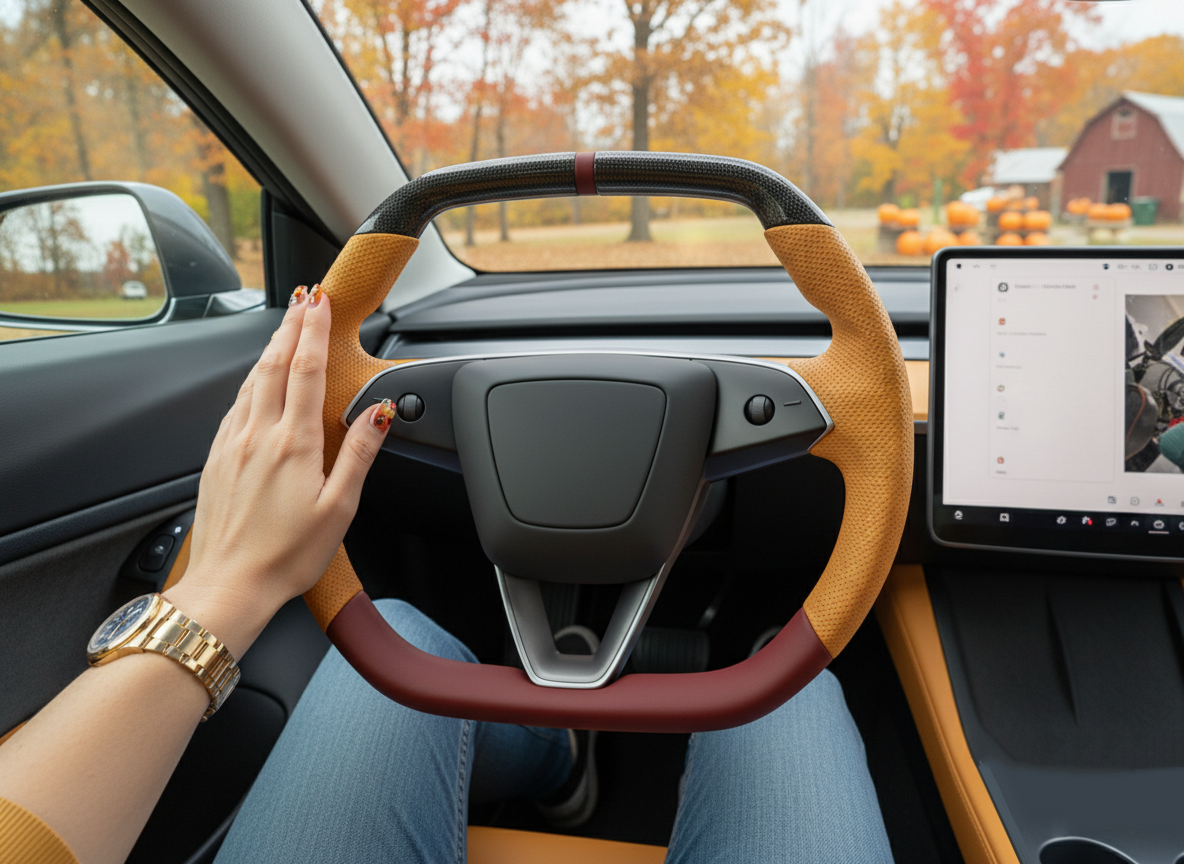
To protect the refreshed Model 3 Highland steering wheel from sun-induced aging, it is recommended to use a silver-coated windshield sunshade with a UV blocking rate of 99% when parked.
Taking just 10 seconds to pop it open and secure it flush against the windshield can cause the steering wheel's surface temperature to plummet by 20°C.
In addition, a custom-fit, sun-protective ice-silk steering wheel cover can be installed for daily use to completely block direct UV rays.
Sunshades
Data from high-sunlight regions like Arizona, USA, shows that after 2 hours of sun exposure, the surface temperature of an uncovered dashboard and steering wheel can climb to 71°C (160°F);
After deploying a 240T high-density titanium-silver coated sunshade, the temperature in the same location can drop below 43°C (110°F).
Physical shielding directly blocks UV penetration, preventing the plasticizers within the steering wheel's PU (polyurethane) material from accelerating their volatilization in environments above 50°C, thereby extending the material's natural aging cycle by 3 to 5 years.
Sun Exposure Temperature Comparison
The local noon outdoor ambient temperature was 41°C (106°F), with a solar radiation intensity peak reaching 1,050 W/m². The test vehicle was a standard Model 3 Highland, parked on an unshaded asphalt lot with the Cabin Overheat Protection feature turned off.
The Model 3's windshield has an inclination angle of about 23 degrees, with a light-transmitting glass area reaching 1.37 square meters. This physical structure causes sunlight to hit the upper half of the steering wheel and the entire dashboard almost vertically. Testers used a FLIR E8-XT infrared thermal imager to record surface temperature changes of various cabin components every 15 minutes.
During the first 30 minutes without any cover, the surface temperature of the polyurethane (PU) material at the top of the steering wheel climbed from 35°C to 58°C. When the surface reaches 50°C, the chemical plasticizers inside the material accelerate their volatilization. At the 120-minute mark of the test, a peak reading of 72.4°C (162.3°F) was measured at the top of the steering wheel.
During the same time frame the next day, a 2.2-millimeter-thick 240T titanium-silver double-layer sunshade was installed on the inside of the vehicle's windshield. The infrared thermal imager showed that the sunshade's outer surface facing the sun climbed to 81°C. The surface temperature at the top of the steering wheel was capped at 41.5°C (106.7°F), achieving a drop of 30.9°C compared to the unshielded state.
| Exposure Time | Uncovered Steering Wheel Temp | Temp Under Sunshade Protection | Uncovered Center Screen Temp | Temp Under Sunshade Protection |
|---|---|---|---|---|
| 15 Minutes | 46.2°C | 36.1°C | 43.5°C | 35.0°C |
| 30 Minutes | 58.0°C | 38.4°C | 52.1°C | 36.8°C |
| 60 Minutes | 67.5°C | 40.2°C | 60.8°C | 37.5°C |
| 120 Minutes | 72.4°C | 41.5°C | 64.2°C | 38.1°C |
The 15.4-inch center screen, located 15 centimeters to the right of the steering wheel, also absorbs massive thermal radiation when unshielded. At 120 minutes, the physical surface temperature of the screen's black bezel hit 64.2°C. Sustained high temperatures exceeding 60°C increase the expansion rate of the sealant around the screen's edge, elevating the probability of yellowing or fluid leakage.
After installing a high-density sunshade, the peak surface temperature of the center screen stalled at 38.1°C, remaining below the device's set 45°C standard operating protection threshold. The standby temperature measured at the AMD Ryzen processor cooling module area on the back of the screen simultaneously dropped from 59°C to 39°C.
Heat accumulation on material surfaces transfers into the cabin air. At the end of the 120-minute exposure period, the air temperature in the unshielded front cabin reached 69°C. Activating the AC to cool down to 21°C required the compressor to run at maximum power for about 14 minutes, consuming roughly 0.8 kWh of battery power.
The physical barrier blocks 98% of infrared heat sources from entering the cabin, holding the front air temperature peak at 46°C. Under identical environmental conditions, the AC system only needs to run for 4.5 minutes to bring the room temperature down to the 21°C setting. Power consumption for a single cooldown process is slashed to 0.25 kWh.
Physical temperature tolerance reference values for Tesla Model 3 Highland interior components:
-
Polyurethane steering wheel cover: Prolonged exposure above 55°C accelerates the dehydration and hardening process.
-
Center screen LCD layer: Surfaces hitting 70°C easily develop localized black spots, which usually recover once temperatures drop.
-
Dashboard faux wood trim: In environments above 65°C, the adhesive strength of the backing glue drops by 40%.
-
HW4.0 camera housing: Black plastic parts begin to suffer microscopic, invisible deformations at 80°C.
The HW4.0 camera module housing at the top of the windshield sits flush against the inside glass. Data read with an infrared thermometer showed surface temperatures in this area soaring to 78°C when uncovered. A sunshade's V-shaped or Velcro cutout design wraps this zone in shadow, stabilizing its temperature around 48°C.
A test fleet in Southern California recorded summer parking data for 90 consecutive days. In the test group utilizing no physical covers, the gloss level of the 9 o'clock grip area on the left side of the steering wheel plummeted by 18%. In the control group using titanium-silver sunshades, the polyurethane gloss at the same spot suffered a mere 1.5% physical degradation.
Once heat penetrates the glass, it converts into long-wave infrared radiation, which gets absorbed and trapped by dark interior materials. The 0.05-millimeter titanium-silver coating on a 240T sunshade reflects the absorbed light waves back out along their original path. The reflectivity of conventional single-layer 190T silver-coated materials sits at only 85%, meaning some thermal energy will still bleed through the fabric and conduct into the steering wheel.
Custom Vehicle Size Adaptation
The physically measured inner width of the 2024 Tesla Model 3 Highland windshield is 1,397 millimeters, with a central vertical height of 1,028 millimeters. Compared to the 2017-2023 models, the physical thickness of the interior A-pillar trim panels on the Highland version increased by 4.2 millimeters. Forcing in an older 1,400-millimeter wide sunshade causes about 15 millimeters of forced physical compression on both ends, and long-term physical friction will wear out the microfiber leather material on the A-pillar surfaces.
A 10-millimeter light-leakage gap at the edge of the windshield will introduce 45 W/m² of thermal radiation into the cabin under the noon California sun. Custom-molded sunshades utilize a precision cut of 1,395 millimeters by 1,025 millimeters. This sizing leaves a 2-millimeter tolerance for fabric thermal expansion and contraction, blocking 99.2% of peripheral vertical light from entering the cabin.
A scan report from an auto interior testing agency in Palo Alto, California, revealed that 95% of universal-size sunshades will leave a total light-leakage area exceeding 18 square centimeters on the Highland model.
The trapezoidal housing base of the Highland's upgraded Hardware 4.0 front camera module reaches a physical width of 165 millimeters and extends downwards by 112 millimeters. The maximum width of the older Model 3's HW3.0 module housing was only 120 millimeters. Applying the top U-shaped cutout of an old-version sunshade cannot wrap around the new module, resulting in a 45-millimeter unshielded exposed band around the rearview mirror area.
Sunshades adapted for the HW4.0 module employ a 170-millimeter wide V-shaped cut at the top, equipped with an industrial-grade nylon Velcro strap that is 60 millimeters long and 15 millimeters wide. The operator threads the Velcro through the 25-millimeter gap above the rearview mirror base to close it physically. The surface temperature of the plastic housing behind the rearview mirror is kept under 46°C, preventing the internal ribbon cables from accelerated aging due to 80°C sun exposure.
The edge skeleton supporting the sunshade fabric must tuck into the 8-millimeter deep gap where the windshield meets the roof headliner. Custom-adapted products use a 1.8-millimeter diameter elastic manganese steel wire, boasting a tensile strength test value of 1,200 MPa. When unfolded, the steel wire exerts 35 Newtons of lateral outward tension, relying on the original 165-millimeter wide sun visors flipped down on either side to clamp it firmly in place.
Fatigue testing by auto parts labs indicates that folding a thick steel wire over 2.2 millimeters in diameter requires a grip force of more than 80 Newtons, and excessive edge tension will loosen the roof headliner's fabric clips within 30 days.
The warp and weft yarn density of the 240T standard polyester fiber reaches 240 threads per square inch. Continuously baked in a 65°C cabin environment for 200 hours, its physical shrinkage rate remains below 0.4%. Standard 190T nylon materials exhibit a shrinkage rate of 2.1% under identical thermal conditions; this retraction causes the sunshade's edges to detach from the A-pillar support points.
-
Outer Coating Thickness: The 0.05-millimeter titanium-silver coating is vacuum-sputtered using titanium dioxide (TiO2) and micron-level aluminum powder at a 3:7 physical ratio.
-
Overall Physical Weight: The measured single-square-meter weight of the double-layer composite material is 145 grams, with total thickness strictly controlled under 0.35 millimeters.
-
Optical Blocking Parameters: Laboratory spectrometers determined its reflectivity for visible light in the 380 nm to 750 nm wavelength range to be 98.6%, and the UVA blocking rate reaches 99.8%.
The vertical physical distance from the top edge of the Highland version's 15.4-inch center screen to the inside of the windshield has shrunk to 142 millimeters. The fabric tailoring for the bottom half of the sunshade adopts a 12-degree inward tapering angle. This physical angle ensures the fabric hem naturally drapes 15 millimeters above the hidden AC vents, preventing physical contact with the 52°C metal heat dissipation layer on the back of the screen.
3D scanning data from Austin, Texas, confirmed that a sunshade hem designed to perfectly contour to the Highland dashboard's horizontal curvature requires a central downward dip of 22 millimeters.
After being physically stowed, the standardized folding loop structure shrinks to an outer diameter of 28 centimeters. The interior usable width of the Highland model's passenger glovebox is 31 centimeters, with an effective depth of 22 centimeters. The total thickness of the storage bag once packed is 3.5 centimeters, occupying about 18% of the glovebox's internal volume. Operators can also lay it flat on the rear edge of the 45-centimeter wide storage trough in the frunk.
The vertical height from the highest point of the original steering wheel's outer ring to the dashboard's horizontal plane is 115 millimeters. The steel wire's rebound physical radius at the moment the sunshade unfurls hits 650 millimeters. A fitted edge design keeps the lowest point of the rebound trajectory hovering 40 millimeters above the steering wheel, preventing the polyester fiber edge from scratching the polyurethane covering material.
For a skilled operator, physically unfolding and securing the 1,395-millimeter wide sunshade takes roughly 8 seconds. The dual-hand twisting motion to collapse it into three overlapping rings takes 12 seconds. A dimensional design perfectly matching the original car's 1,028-millimeter longitudinal space eliminates the step of manually smoothing out fabric wrinkles.
Covers
In high-sunlight areas like California or Florida, leaving a car unshielded in the summer for 30 minutes will push the Model 3's steering wheel surface temperature to 150°F (about 65°C).
The vegan polyurethane leather used in the Highland model accelerates aging when ambient temperatures continuously exceed 140°F.
An adapted steering wheel cover between 1.5 and 2 millimeters thick can block 99% of UV rays, dropping the contact surface temperature instantly by 20 to 30°F.
Material Sun Protection Differences
Under the scorching heat of over 110°F during Phoenix, Arizona summers, parking unshielded for 45 minutes causes the cabin's dashboard area to accumulate nearly 2,000 W/m² of solar radiant energy. The thermal insulation efficiency of a steering wheel cover depends entirely on the material's specific heat capacity and physical fiber structure. Physical shielding is the primary defense line against delaying the volatilization of plasticizers inside the polyurethane. Different materials exhibit precise data variances in absorbing infrared rays and reflecting ultraviolet (UV) rays.
| Material Category | UV Blocking Rate | 1-Hour Exposure Peak Surface Temp | Thermal Conductivity (W/m·K) | Physical Thickness (mm) | Shore Hardness |
|---|---|---|---|---|---|
| Genuine Alcantara | 100% | 105°F | 0.04 | 1.0 - 1.2 | N/A (Flexible) |
| High-Density Neoprene | 99% | 120°F | 0.05 | 2.5 - 3.0 | 15A - 20A |
| TPE (Thermoplastic Elastomer) | 98% | 135°F | 0.15 | 1.8 - 2.2 | 50A - 65A |
| Nappa Microfiber | 95% | 145°F | 0.12 | 1.5 - 1.8 | N/A (Flexible) |
| Carbon Fiber Coated Polymer | 92% | 155°F | 0.25 | 1.0 - 1.5 | 70D - 80D |
Alcantara is made of 68% polyester and 32% polyurethane through a complex needle-punched non-woven process. The surface is covered with ultrafine microfibers about 0.2 millimeters long, creating a natural air insulation layer. In extreme 130°F heat tests in Death Valley, California, when the original steering wheel temperature soared to 160°F, the Alcantara surface temperature remained stable at around 105°F.
The microscopic pores between the fibers not only block 100% of UV-A and UV-B rays but also keep the thermal conductivity down to 0.04 W/m·K. At just 1.2 millimeters thick, the cover doesn't add noticeable grip bulk to the 37-centimeter diameter Highland steering wheel. Once the original 14.8V steering wheel heating wire is activated, heat penetrates the Alcantara in just 45 seconds, with a temperature loss rate below 5%.
Neoprene is a synthetic microcellular foamed rubber used to make professional wetsuits, possessing extreme weather resistance and anti-ozone aging properties. Its internal closed-cell foam structure traps a vast amount of nitrogen, restricting thermal conductivity to just 0.05 W/m·K. Under Florida's intense UV radiation that lasts for 6 months over the summer, the molecular chain of Neoprene remains highly stable without suffering from embrittlement or flaking.
This material provides a 99% UV blocking rate and suppresses the peak surface temperature below 120°F under scorching sun exposure. Thickness usually ranges from 2.5 mm to 3.0 mm, increasing the steering wheel's outer diameter by about 0.25 inches once installed. High-density rubber naturally repels fatty acids found in sweat, making it ideal for drivers who frequently engage in outdoor sports and have sweaty hands.
Thermoplastic Elastomer (TPE) and high-purity silicone materials typically use an injection molding process, with surfaces processed into perforated breathable textures or faux carbon fiber patterns. TPE materials have a high melting point of 275°F, completely immunizing them against the baking high-temperature environment inside a car. They block about 98% of UV rays, but their thermal conductivity is about 0.15 W/m·K, slightly higher than fabric-based materials.
After 1 hour of unshielded sun exposure, the peak temperature of the TPE surface will hit 135°F. While significantly lower than the original car's vegan leather at 160°F, it will still feel warm to the touch when first gripping it upon entering the car. Thickness mostly sits between 1.8 and 2.2 millimeters, causing about a 2-minute physical delay in transmitting the steering wheel heating function. The surface is waterproof and oil-proof; wiping it down with clean water weekly removes any adhering micro-dust.
Nappa Microfiber is formed by a three-dimensional interlocking matrix of nylon microfibers and polyurethane resin, featuring a physical structure that closely mimics genuine leather. The UV blocking rate is around 95%, and dark dyes have a higher infrared absorption rate in sunlight. Under the noon sun in Houston, Texas, the temperature of a black microfiber surface quickly climbs to 145°F.
To improve heat dissipation, high-quality microfiber covers feature laser-perforated treatments in the 3 o'clock and 9 o'clock grip zones. Each 0.8-millimeter diameter vent hole accelerates localized heat dissipation, lowering the local contact temperature by 5 to 8°F. The thickness is typically 1.5 millimeters, offering the highest visual integration with the original Highland interior, while its anti-scalding performance sits at an intermediate level.
Carbon fiber-textured polymers mostly use PC (Polycarbonate) or ABS plastic as a substrate, with surfaces coated in high-gloss or matte anti-UV clear coats. The UV blocking rate of this material is 92%, the lowest among all common options. The thermal conductivity is as high as 0.25 W/m·K; it absorbs heat extremely rapidly, offering the weakest sun protection and insulation.
Under direct sunlight, surface temperatures can easily breach 155°F, feeling almost identical to the original car's leather and producing a noticeable burning sensation when grabbing the wheel. Hard polymers exist mostly as split snap-on shells, with thickness running as thin as 1.0 millimeters. Although visually sporty, in high UV areas like Arizona, the clear coat on the surface will suffer from yellowing or cracking and peeling due to UV degradation in about 18 months.
Infrared radiation levels dictated by geographic location and parking environments determine how quickly a material's lifespan decays. Combining sunlight data testing across different states yields the following environmental matching list:
-
Nevada/Arizona (UV Index year-round 10+): Alcantara is the top choice, utilizing its natural air layer for physical cooling to aggressively suppress contact temperatures below 110°F, protecting the original leather layer.
-
Florida/Louisiana (High humidity + High UV): Prioritize Neoprene; its closed-cell foam structure provides total immunity to mold risks in high-humidity environments while simultaneously offering 99% sun protection isolation.
-
Washington/Oregon (Frequent rain, cold winters): 1.5-millimeter thick microfiber or TPE is most suitable, balancing a >95% UV blocking rate while capping the thermal energy loss of the steering wheel heater under 15%.
Exclusive Size Requirements
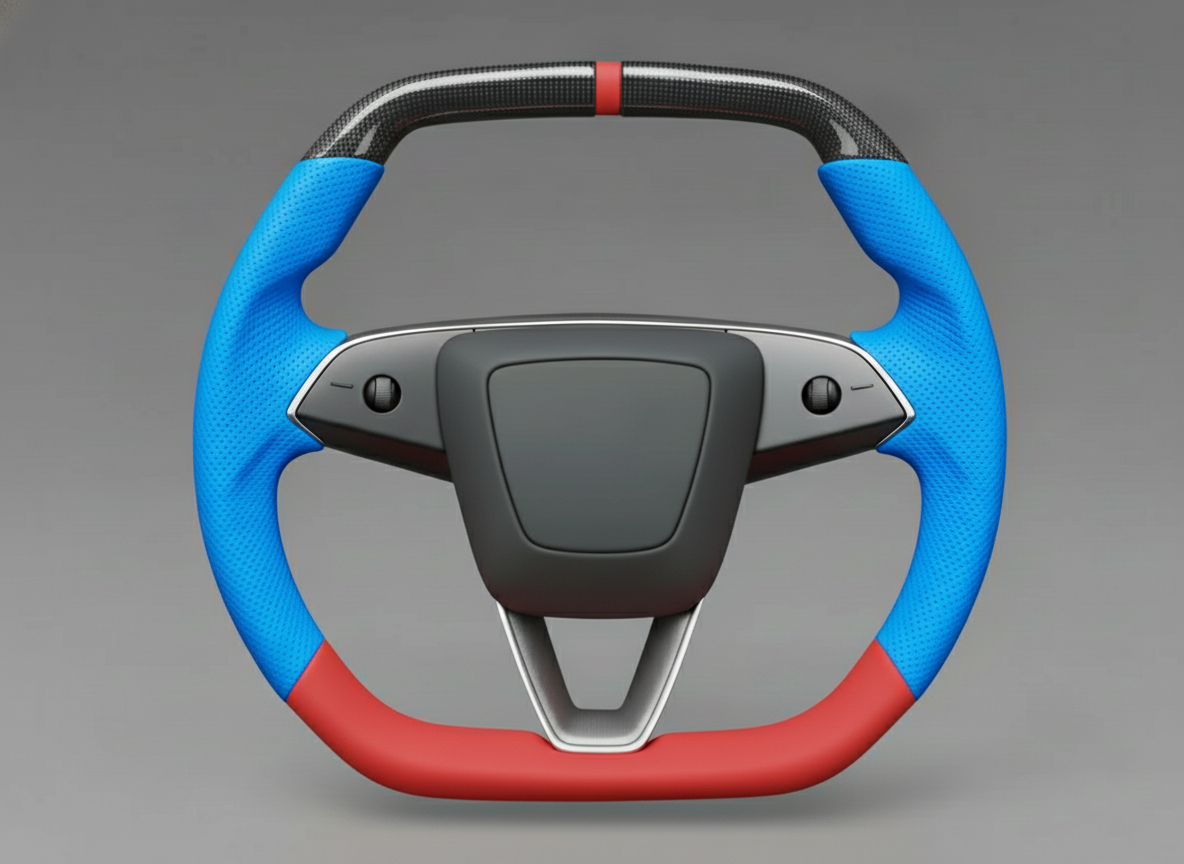
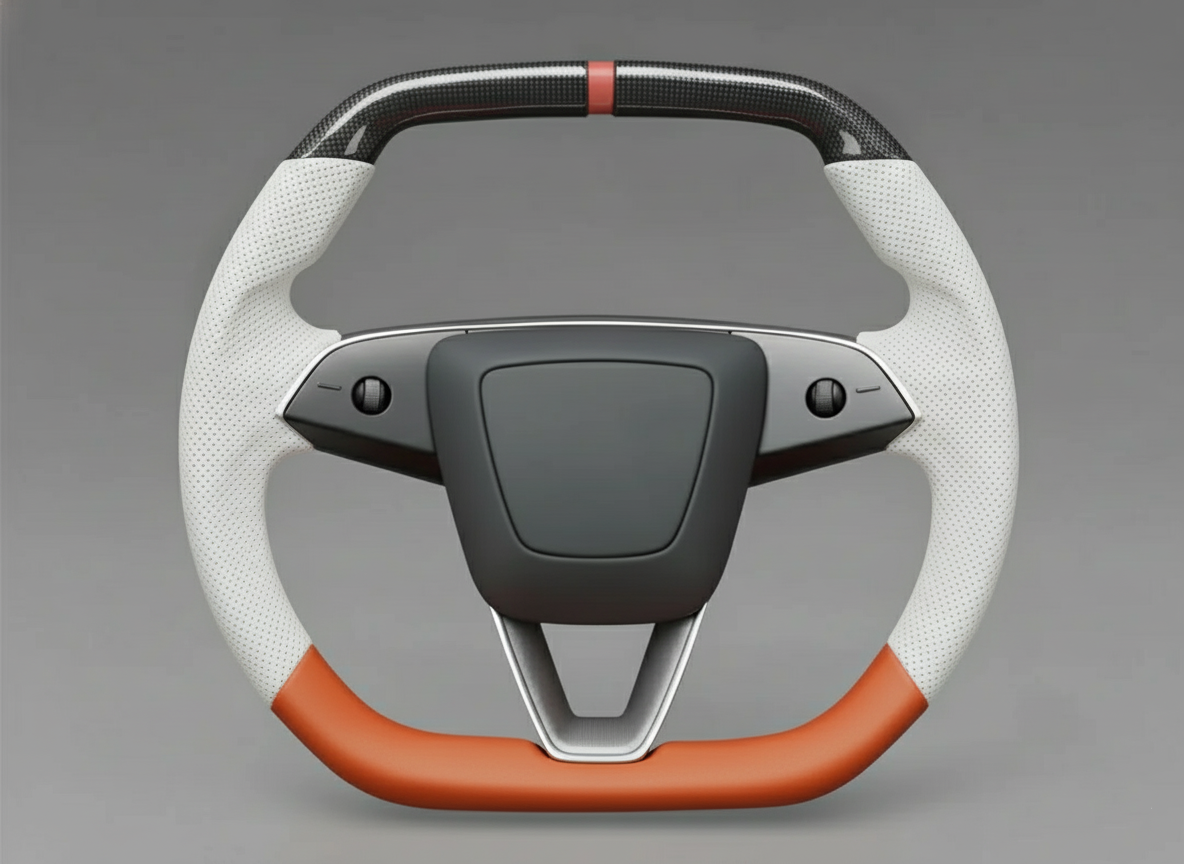
The original outer diameter of the 2024 Model 3 Highland steering wheel was precisely shrunk from the older model's 38 centimeters to 37 centimeters (14.5 inches). The overall profile shifted from a perfect circle to a flat-bottomed D-shaped geometric structure, and the thickness of the polyurethane foam layer in the lateral grip areas increased by 1.2 millimeters. Putting an older 15-inch universal cover on the new model results in 3 to 5 millimeters of slipping slack.
When driving at 65 mph on California's Highway 1, 5 millimeters of sliding slack causes a 0.2-second physical delay in steering feedback. An accurately sized cover guarantees 100% transmission of physical friction. Qualified product packaging or mold injection codes will bear the "2024 Highland 14.5 D-Shape" size identifier.
-
Outer Diameter Standard: Strictly matches 14.5 inches (370 millimeters).
-
Bottom Profile: The flat straight-section span is about 6.5 inches.
-
Cross-Section Circumference: The thickest part of the grip must fit a 4.2-inch circumference.
-
Inner Ring Anti-Slip: The depth of the silicone anti-slip mesh must reach 0.5 millimeters.
-
Stretch Resistance: Full-wrap styles require an installation pull force of roughly 15 pounds.
The Highland eliminated the physical turn signal and gear selector stalks, integrating interactive functions into touch and physical press modules at the 3 o'clock and 9 o'clock positions on the steering wheel. The left zone houses the up/down turn signals and high beam controls; the right features the wiper and microphone modules.
Around the left turn signal buttons, the physical clearance between the cover's edge and the panel must remain over 1.2 centimeters (0.47 inches). A clearance under 1 centimeter generates edge friction when the thumb presses the left-turn signal down arrow. In rush hour commutes in Austin, Texas, changing lanes requires 100% accurate button feedback.
If a full-wrap cover fails to incorporate U-shaped grooves at the 3 and 9 o'clock positions, it hikes the accidental touch-activation rate by 20%. Sectional snap-on covers usually only cover the 10-to-2 and 4-to-8 o'clock zones. Stitched covers will have physical sewing nodes exceeding 3 millimeters in thickness at the 3 and 9 o'clock positions.
-
Left Clearance: Must keep at least 1.2 centimeters away from the bottom edge of the turn signals.
-
Right Clearance: Must maintain 1.0 centimeter from the wiper button.
-
Edge Chamfering: Contact surfaces must feature a 45-degree transitional cut.
-
Thickness Tapering: Material thickness around the button zones must be reduced by 50%.
Protruding thread ends apply a physical pressure of 1.5 pounds per square inch to the skin at the base of the thumb during long drives. Molds designed with exclusive button-zone avoidance drop this pressure down to 0.2 pounds. The factory built-in heating wire mesh is distributed 1.5 millimeters beneath the polyurethane leather layer.
Activating the heater on a -5°F winter morning in Denver, Colorado, brings the steering wheel surface to 95°F within 90 seconds. The physical thickness of an external cover acts as a barrier to heat conduction. Measurement data shows that a 1.5-millimeter thick Alcantara material extends heat penetration time by 45 seconds.
A 3.0-millimeter thick Neoprene cover weakens the 95°F peak temperature to 82°F and introduces a physical delay in heat conduction of up to 3 minutes. If vehicles in extreme cold regions use sun protection covers thicker than 2 millimeters in winter, local thermal cycling efficiency plummets by 15%.
Carbon fiber textured PC shells with thicknesses between 0.8 and 1.2 millimeters cap the heat loss rate under 8%. The airbag deployment zone occupies the central 60% area of the steering wheel. Crash test sensors activate the airbag when sensing a frontal impact over 15 mph.
-
Thermal Conduction Threshold: Max thickness must not exceed 1.8 millimeters.
-
Heating Delay: Every 1-millimeter increase in thickness adds a 60-second delay.
- Airbag Safety Zone: Coverage is strictly forbidden within the central 12-inch diameter.
-
Clip Tension: Sectional clips must withstand a 30 G impact without dislodging.
The airbag bursts through the central cover along the tear seams to deploy within 0.03 seconds. Straps crossing the central area or full-wrap sun shades with lateral support bars will interfere with the deployment trajectory. High-precision exclusive molds confine all fixing pivot points to the outer 14.5-inch contour.
Embedded manganese steel shrapnel or ABS clips can supply 25 pounds of inward clamping force. When the vehicle is subjected to high-frequency vibrations while driving at 45 mph on damaged roads in Detroit, Michigan, a cover meeting standard adaptation tension will maintain a physical displacement of less than 0.1 millimeters.
During rainy season commutes in Seattle, Washington, moisture condensation on the steering wheel surface drops the original leather's friction coefficient by 30%. High-density silicone dotted matrixes on the inner ring of a perfectly sized cover provide grip compensation. The 150 silicone contact points distributed within each square inch generate a static friction coefficient of 0.8 under 20 pounds of grip strength.
When a driver completes a half-turn at a speed of 0.5 seconds, a cover with 99% inner-side fitment will suffer zero relative slipping. Universal-fit products lacking custom molds will produce a 2-millimeter slip distance on the inner ring during emergency evasive maneuvers, which translates into a 1.5-degree physical steering angle error at the wheels.
Installation & Maintenance
The polyurethane leather layer on the 2024 Model 3 Highland steering wheel is 1.2 millimeters thick. Installing a full-wrap cover at a room temperature of 68°F (20°C) requires applying 12 to 15 pounds of unidirectional pulling force. Environments below 50°F bump the Shore hardness of the rubber inner ring up by 15A, dropping the material's stretch rate by 30%. Technicians in Los Angeles, California, typically preheat the cover in an 80°F cabin for 10 minutes prior to installation.
The preheated TPE material's extensibility improves by 20%, slashing installation time from 3 minutes down to 45 seconds. The installation process for left-and-right split clip-on covers requires zero physical stretching; just 5 pounds of pushing force per side snaps them onto the 14.5-inch outer ring. During installation, the clip edges must be precisely aligned with a baseline 0.5 inches below the 9 o'clock turn signal buttons.
Aligning with this baseline ensures the thumb retains 1.2 centimeters of physical clearance when flicking the left downward turn signal. ABS shells equipped with internal barbs emit a physical interlocking snap when pushed to a 15-millimeter depth, indicating the snap ring is flush against the aluminum alloy skeleton behind the steering wheel. Miami, Florida's 110°F summer heat will not degrade the 25-pound clamping force of the snap ring.
The inner contact surface of physical clips requires a 0.5-millimeter thick flexible silicone pad to prevent hard plastic materials from creating high-frequency physical friction against the original leather layer under 40 mph bumpy road conditions.
Daily hand contact with the steering wheel deposits squalene and free fatty acids secreted by sebaceous glands; these components undergo an oxidation reaction in a 100°F cabin. Oxidized oils are mildly acidic, with a pH of about 5.5, gradually dissolving the anti-UV coating on the polyurethane surface.
To interrupt the oxidation-dissolving process, auto detailing shops in Houston, Texas, suggest removing and cleaning the cover every 14 days. Removing split clip-on shells requires two hands applying about 8 pounds of parallel outward pulling force at the 10 and 2 o'clock positions. Full-wrap covers must be peeled starting from the flat-bottomed 6 o'clock area; fold it outward by 1.5 inches and follow through by slipping it upwards.
-
Removal Frequency: Once every 14 days in regions with over 10 hours of summer sunlight.
-
Peeling Starting Point: Full-wrap models must firmly start by applying outward force from the bottom D-shaped straight section.
-
Pull Force Control: A single outward fold angle must not exceed 45 degrees.
-
Cleaning Blind Spots: Focus on wiping the crevices around the multi-function buttons at 3 and 9 o'clock.
-
Inspection Indicators: Observe whether the inner anti-slip mesh shows any damage or aging exceeding 0.5 millimeters.
If anti-slip mesh debris falls off under gravitational pressure, it will leave permanent 0.1-millimeter-deep indentations on the original leather layer. Cleaning the inner and outer sides of the cover requires a neutral interior cleaner with a pH between 7.0 and 8.0. P&S Xpress, holding a high market share in North America, diluted 1:1 with purified water generates highly penetrative micro-foam.
Letting the micro-foam sit on Alcantara or polyurethane surfaces for 20 seconds physically wraps and separates the adhering fatty acids and sand dust. Using a 350 GSM microfiber towel to wipe in a unidirectional straight line 3 times sweeps away 99% of the attachments. Wiping in circles causes irreversible physical knotting of the 0.2-millimeter long suede fibers, lowering the material's breathability rate by 15%.
The surface of Alcantara materials requires monthly brushing with a soft bristle brush 5 to 8 times in the same direction to restore the upright state of the fibers, maintaining its 0.04 W/m·K physical insulation metric.
A degradation in the physical thermal insulation metric allows environmental heat to penetrate the protective layer faster and reach the factory leather. Routine cleaning for TPE or medical-grade silicone materials requires nothing more than pure-water wet wipes with 70% moisture and no alcohol. Solvents containing isopropyl alcohol or ethanol evaporate within 5 seconds, pulling plasticizers out of the rubber and dropping its tensile yield strength by 40%.
Silicone with reduced strength will develop a web of cracks up to 0.5 millimeters deep under 110°F direct sunlight. Washed covers must sit in a 75°F cool, ventilated area for 30 minutes. If 2 milliliters of residual moisture on the inside evaporates within a sealed, snug-fit environment, the relative humidity inside the steering wheel leather's pores skyrockets to 90%.
Extremely high localized humidity, coupled with a 130°F cabin temperature, breeds microscopic 5-micrometer mold spots within 48 hours. Before reassembling, use an instrument or paper towel to confirm absolute dryness on both the inside and outside. Before installation, applying 1 milliliter of water-based sunscreen barrier lotion to the original leather layer establishes a 0.05-millimeter-thick SPF 40 physical sunblock shield.
-
Agent Dosage: A 14.5-inch steering wheel consumes 1 milliliter of liquid protective lotion per application.
-
Wiping Tool: Pair with a 200 GSM edgeless flat-weave cloth for full-coverage application.
-
Curing Time: Must sit undisturbed for 15 minutes in a dry environment above 60°F after application.
-
Radiation Protection: The SPF 40 barrier reflects 97% of UV-B and UV-A rays.
-
Stacking Effect: Combining it with a sun protection cover accurately boosts the total blocking rate to 99.9%.
The SPF 40 physical barrier elevates the physical surface tension of the factory leather by 15 dynes/cm. When the silicone dot matrix on the inner ring of the sun protection cover meets this high-tension surface, the static friction coefficient jumps from the factory 0.8 to 0.95. This extraordinarily high static friction ensures that during 1.2G lateral evasive maneuvers on a track day in Las Vegas, Nevada, the protective cover produces zero millimeters of physical slip.
This zero-slip performance is the ultimate data validation of the 14.5-inch Highland's exclusive-size molds and scientific maintenance procedures. Applying rational mounting and dismounting force combined with a micro-foam physical cleaning once every two weeks enables a premium sun protection cover costing around $35 to maintain its physical structural stability for 36 months. The factory polyurethane leather layer, in turn, completely retains its out-of-the-box 8-degree matte texture.
UV Protection
When the UV Index reaches 8 and above, unprotected PU material subjected to 300 hours of cumulative exposure will suffer a 15% drop in surface tension, triggering cracking and fading.
Applying chemical coatings or physical insulation films packed with sunscreen ingredients (like titanium dioxide nanoparticles) filters out 99.9% of UV rays in the 280-400 nanometer band.
This is equivalent to providing the steering wheel with an SPF 40+ rating, extending the material's natural aging cycle from 2 years to over 5 years.
Water-Based Sunscreen Coatings
The vegan leather surface on the Highland Model 3 is coated with a polyurethane (PU) protective film about 0.15 millimeters thick. When the ambient UV Index surpasses 7, UVA and UVB rays in the 280 to 400-nanometer band pierce the coating and enter the internal structure.
High-energy photons break the hydrocarbon chemical bonds of the polymer, sparking photo-oxidation reactions. Water-based sunscreen coatings absorb radiation energy by building a molecular-level thick sacrificial barrier on top of the PU film.
Qualified protectants targeting car interiors on the market (such as 303 Aerospace Protectant or Chemical Guys VRP) utilize oil-in-water (O/W) emulsion technology. The formulas contain 70% to 85% water and are free of Volatile Organic Compounds (VOCs) or petroleum distillates that corrode PU materials.
The water naturally evaporates within 5 to 10 minutes after application, leaving behind a polymer network composed of Hindered Amine Light Stabilizers (HALS) and UV Absorbers (UVAs).
HALS molecules halt the degradation process of polymer chains by capturing free radicals spawned by photo-oxidation reactions. UVAs handle absorbing UV radiation, converting it into less than 0.5°C of trace heat that dissipates into the air.
The porous structure of vegan leather cannot endure physical clogging by high-viscosity liquids. Solvent-based products containing over 5% dimethicone form an oily film with a refractive index soaring above 1.40 on the steering wheel's surface.
Intense glare disrupts the driver's line of sight, and the lubricating nature of silicone oil causes the steering wheel's friction coefficient to plunge from a normal 0.6 to below 0.3, jacking up the risk of the wheel slipping out of hands during emergency turns.
Water-based coatings present a matte finish once dry, impacting the factory surface reflectivity by less than 2%, while preserving the material's original tactile feel.
| Protectant Base | VOC Percentage | Impact on PU Surface Friction Coefficient | Reflectivity Increase After Drying | Suitability Rating |
|---|---|---|---|---|
| Pure Water-Based Formula | < 1% | No Significant Change | < 2% | Recommended |
| Water-Silicone Blend | 1% - 5% | Drops 10% - 15% | 15% - 20% | Needs Testing |
| Pure Petroleum Distillate | > 15% | Drops by more than 40% | > 35% | Prohibited |
The gram per square meter (GSM) weight of the microfiber towel affects the evenness of the application; it's recommended to choose short-nap towels between 300 and 350 GSM.
Overly heavy, long-nap towels (like those above 500 GSM) absorb and waste over 40% of the liquid protectant, while overly light towels (below 200 GSM) easily leave micro-scratches on the PU surface.
The amount of liquid protectant needed for a single steering wheel maintenance session typically ranges between 3 and 5 milliliters. Spray the liquid 2 to 3 times onto the towel or a dedicated high-density sponge applicator; avoid spraying the liquid directly at the steering wheel body.
Spraying directly at the body causes the liquid to ride gravity down into the scroll wheels or airbag gaps on both sides of the steering wheel.
Liquid that seeps in deep is impossible to clean out, and long-term buildup leads to poor contact in the electronic components.
Maintain the cabin temperature between 15°C and 25°C during application, and avoid operating under intense sun exposure. High temperatures force water-based solvents to volatilize rapidly within 10 seconds, causing the active ingredients to clump unevenly on the surface.
Wipe using overlapping circular motions following the outer contour of the steering wheel, ensuring the high-frequency sun exposure zone on the upper half between 3 o'clock and 9 o'clock gets a double coat.
| Application Parameters | Recommended Standard | Consequences of Deviation |
|---|---|---|
| Ambient Temperature | 15°C - 25°C | Too high causes clumping; too low causes poor absorption |
| Single Dosage | 3ml - 5ml | Too much gets greasy; too little fails to form an effective coat |
| Dwell Time | 3 - 5 Minutes | Insufficient time leads to poor adhesion |
| Curing Time | 12 - 24 Hours | Contact with water before fully cured destroys coating structure |
Let it sit for 3 to 5 minutes after finishing the application to let the active ingredients fully seep into the PU material's microscopic textures. Afterward, you must use a brand new, dry microfiber towel to wipe off any excess liquid from the surface.
Uncleared residues combine with dust in the air to form stubborn, tough-to-remove grime within 24 hours. The 24 hours post-treatment serve as the curing period for the polymer network, during which you should strictly avoid wiping the steering wheel with wet wipes.
During the North American summer (June to August), average UV exposure exceeds 10 hours a day. Under an unshielded outdoor parking environment, the effective protection period of water-based coatings is typically 3 to 4 weeks.
When running a finger lightly over the steering wheel surface meets increased resistance or a slight dry feeling, it means the polymer sacrificial layer on the surface is depleted, calling for a fresh application.
Sustaining an effective coating roughly 50 microns thick limits the tensile strength decay rate of the Highland Model 3 vegan leather to under 3% annually. The exact same material, left entirely unprotected in high-sunlight regions like Arizona, suffers a first-year tensile strength decay rate soaring to 18%.
Ceramic Windshield Tint Film
The double-layer laminated acoustic windshield equipped from the factory on the Highland Model 3 has a physical thickness of about 4.5 millimeters. The original glass's Polyvinyl Butyral (PVB) interlayer filters out about 95% of B-band ultraviolet rays (UVB).
However, A-band ultraviolet rays (UVA) with wavelengths spanning 320 to 400 nanometers and near-infrared rays (NIR) with wavelengths above 780 nanometers still bleed heavily through the factory glass. The near-infrared rays reaching the cabin carry massive thermal energy, continuously blasting the steering wheel surface.
Summer real-world data from extreme sun regions like Death Valley, California, shows that under an untinted windshield at noon, the surface temperature of the polyurethane (PU) vegan leather skyrockets to 78°C in just 40 minutes.
Leaving PU materials in environments above 65°C long-term accelerates irreversible breaking of their internal melamine-formaldehyde resin cross-linked structures. Installing a nano-ceramic window tint film 1.5 to 2.0 mils thick constructs a physical thermal radiation barrier layer.
The polyester (PET) substrate of a premium ceramic film embeds titanium nitride (TiN) or antimony tin oxide (ATO) ceramic nanoparticles sized between 10 and 50 nanometers. The nano-coating heavily reflects and absorbs infrared rays, pushing the Total Solar Energy Rejection (TSER) up into the 45% to 62% bracket.
Key technical indicators for ceramic windshield tint films:
-
Infrared Rejection Rate (IRR): Recommended 85% and above
-
Ultraviolet Rejection Rate (UVR): Reaches 99.9%
-
Visible Light Transmission (VLT): Recommended 70% to 80%
-
Total Solar Energy Rejection (TSER): Above 45%
-
Thickness: 1.5 to 2.0 mils
-
Glare Reduction: 15% to 20%
Installing a ceramic film with 70% light transmission (VLT 70) caps the steering wheel's peak surface temperature at roughly 52°C. Keeping physical temperatures below the material's critical threshold utterly prevents plasticizers from seeping out under high heat, which causes sticky surfaces or bubbling/peeling on the steering wheel.
Motor vehicle modification laws across North American states set strict numerical limits on windshield VLT. Section 26708 of the California Vehicle Code allows the installation of transparent window tint on the windshield with a minimum VLT of 70%.
Texas's annual Safety Inspection demands that windshield light transmittance cannot drop below 70%. The installation process places extreme demands on a dust-free environment and the technician's physical application techniques.
The installation bay must maintain a relative humidity between 40% and 60% to dial down airborne dust particles larger than 5 micrometers in diameter. Technicians use a 1:500 mixture of Johnson's Baby Shampoo and distilled water as a slip solution.
Standard preliminary procedures for applying windshield tint:
-
Lay down absorbent rope towels into the dashboard gaps
-
Use a non-abrasive scrub pad to clean the inside of the glass
-
Scrape off any factory silicone or mold-release agent residues
-
Externally use a 350°C heat gun for curved surface shrinking
-
Internal liquid-extraction squeegee pressure must hit 15 to 20 pounds
During the extraction operation, the physical pressure applied by the polyurethane silicone squeegee forces out over 95% of the residual moisture sandwiched between the film and the glass. The remaining 5% trace moisture naturally evaporates through the porous network of the Pressure Sensitive Adhesive (PSA) layer over the following 3 to 5 days.
Before the water vapor completely evaporates, microscopic water blisters 1 to 3 millimeters in diameter or a slight hazy light refraction will appear on the film's surface. In high-temperature, high-humidity environments like Florida, the complete curing cycle for the pressure-sensitive adhesive may naturally stretch out to 7 to 10 days.
During the tint curing period, using suction-cup phone mounts or sticking on Toll Tags is strictly prohibited to stop localized stress from tearing the coating structure. When performing routine cleaning on the inside of the windshield, never use household glass cleaners containing Ammonia.
Ammonia molecules seep into the PET substrate, causing the ceramic particle layer to oxidize and yellow within 6 months, while simultaneously dissolving and blistering the pressure-sensitive adhesive underneath. You should employ automotive-specific ammonia-free glass cleaners with an Isopropyl Alcohol (IPA) concentration below 15%.
Post-tint routine maintenance guidelines:
-
Prohibit the use of ammonia-based glass cleaners
-
Use spray cleaners with an Isopropyl Alcohol content below 15%
-
Pair with a 300 GSM waffle-weave microfiber towel for wiping
-
Avoid metal rings scratching the interior film surface
-
Peeling edges require adhesive re-application within 48 hours
High-end nano-ceramic windshield films (like XPEL Prime XR Plus or Llumar IRX) average between $200 and $350 for materials and installation in the US market. Qualified installation shops generally provide a nationwide Limited Lifetime Warranty covering fading, bubbling, and adhesive failure.