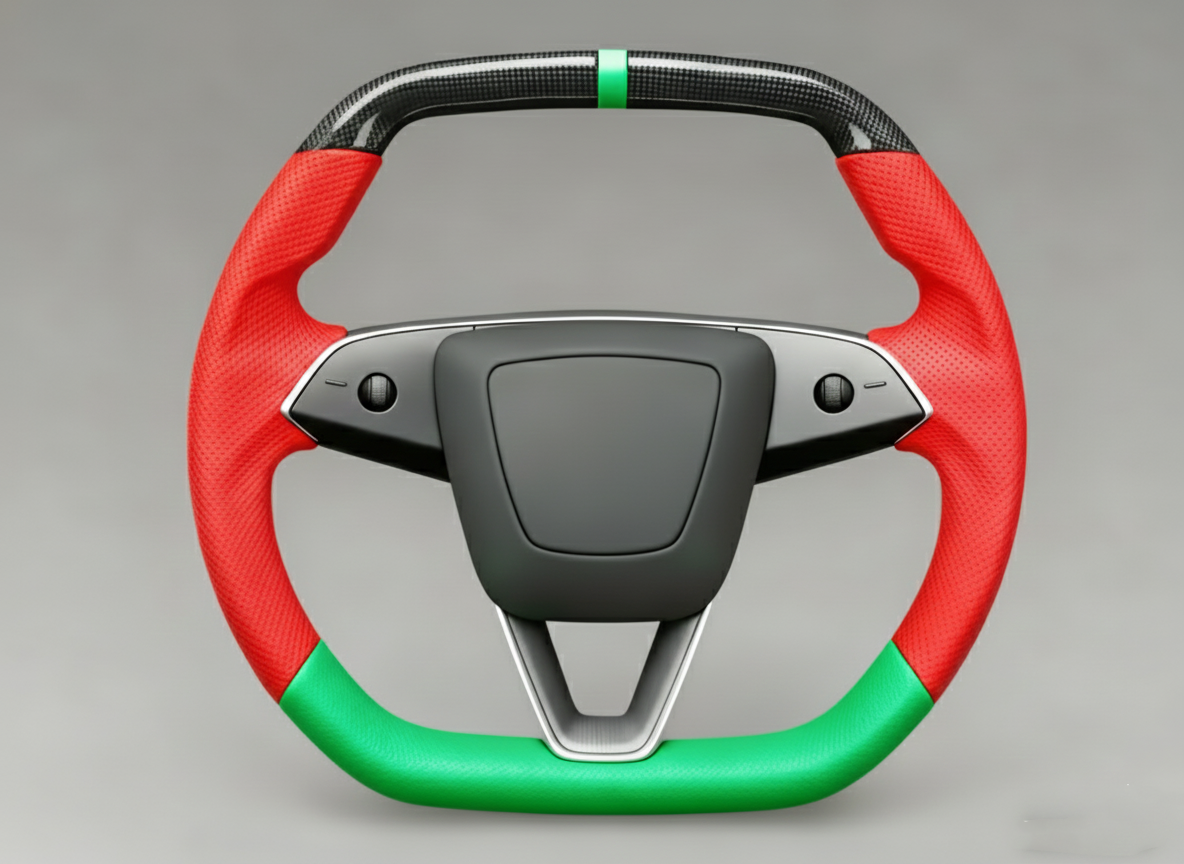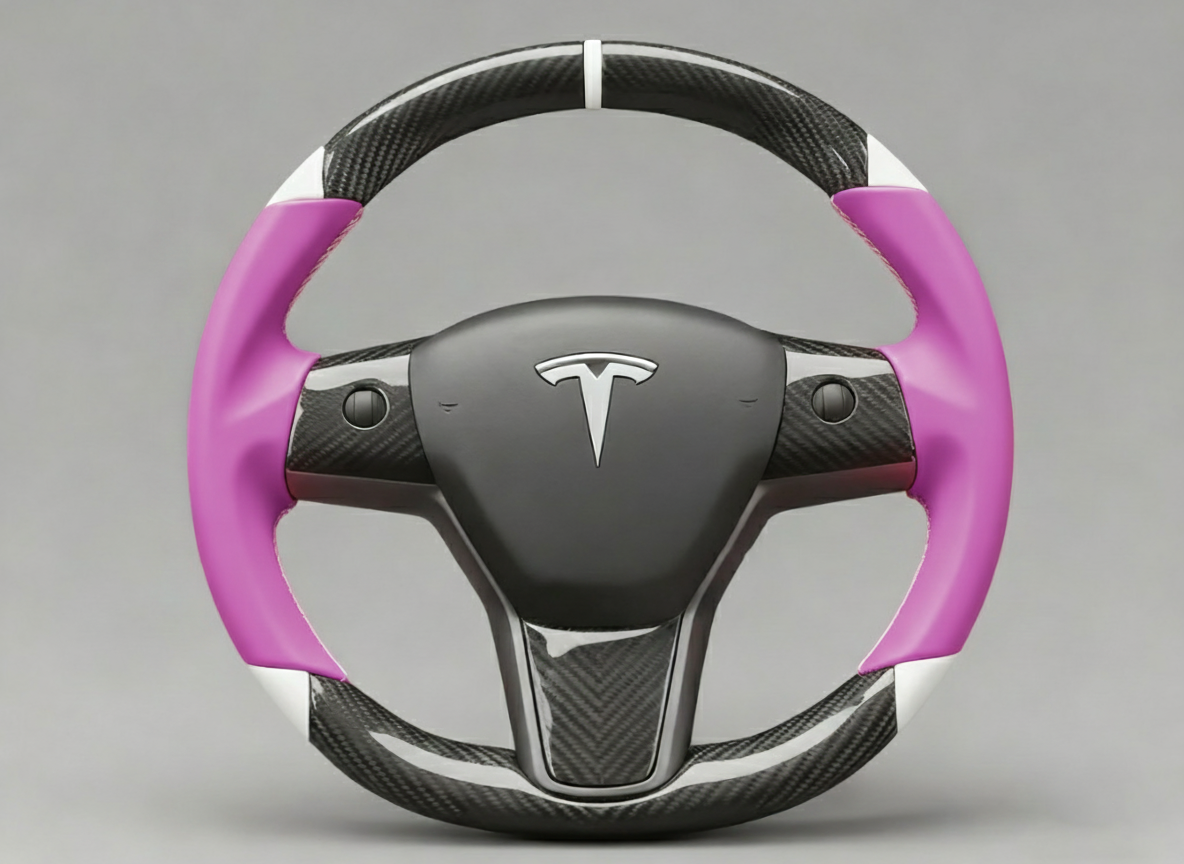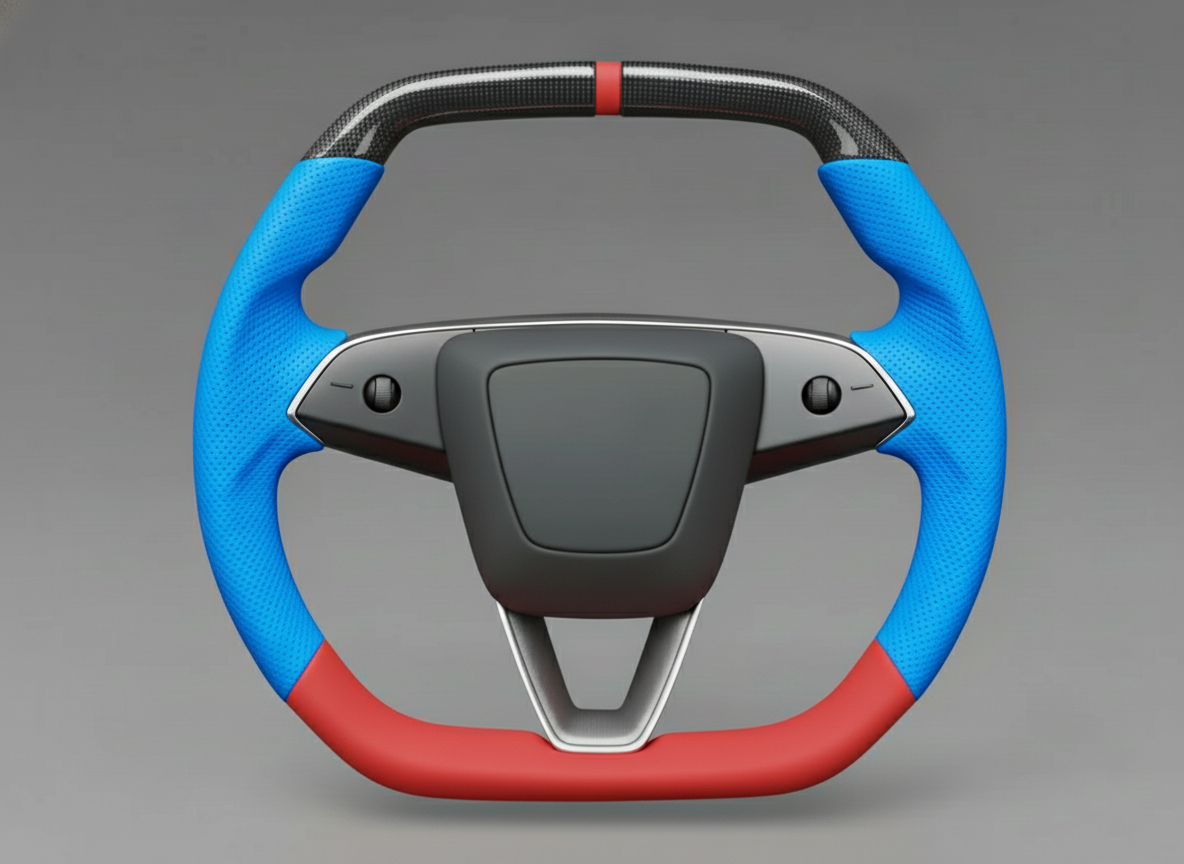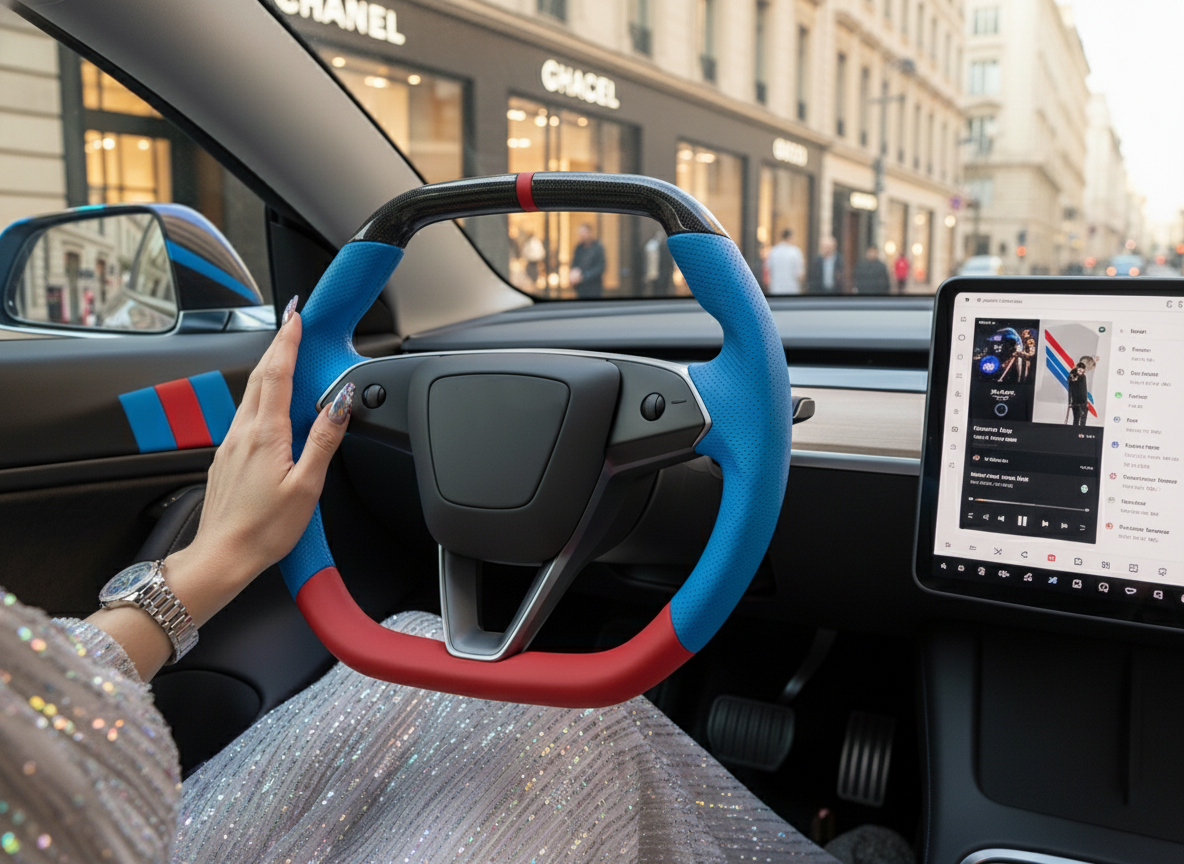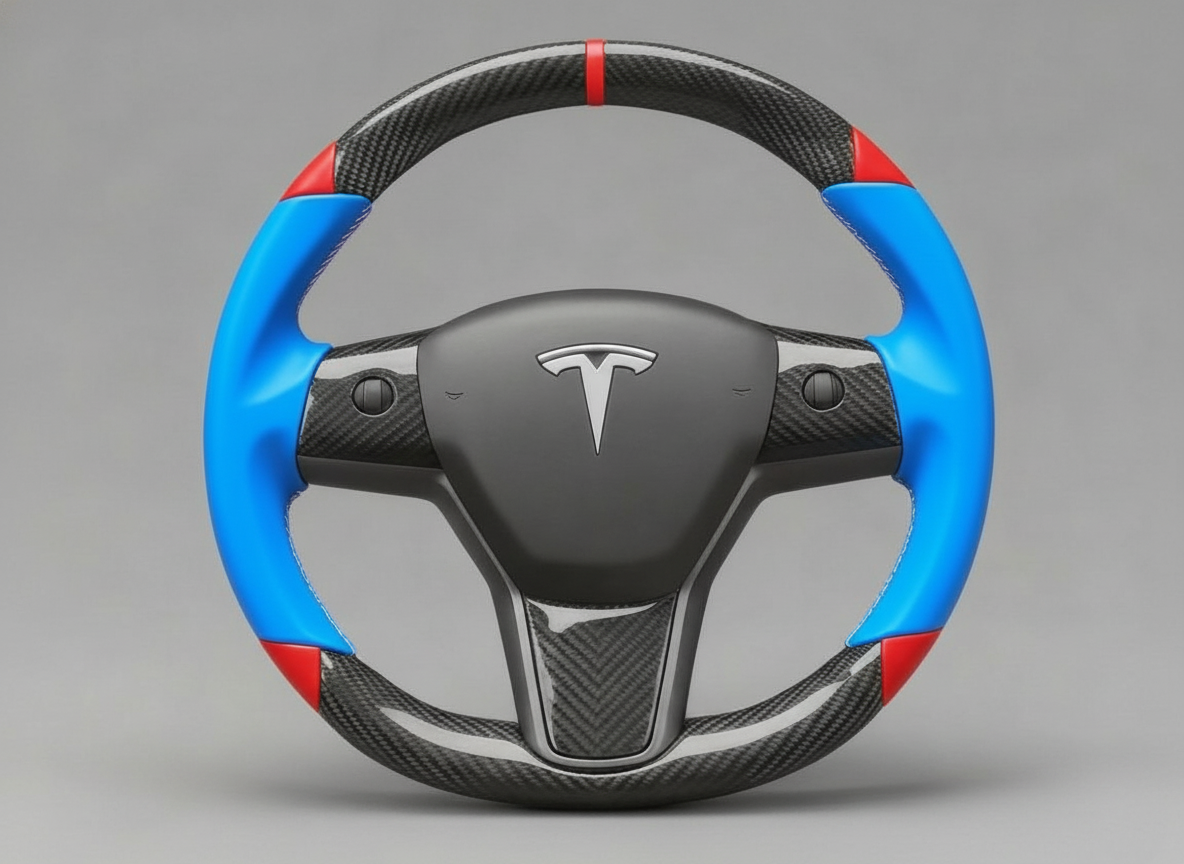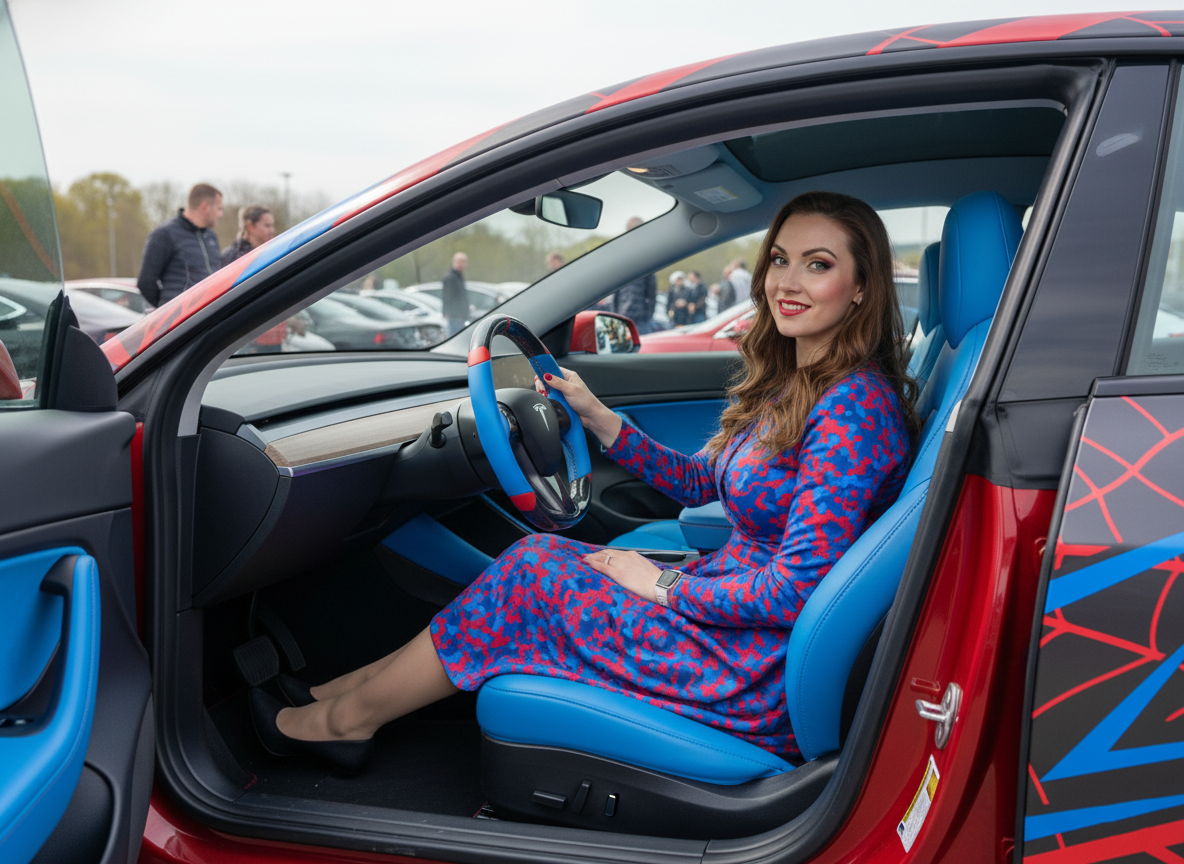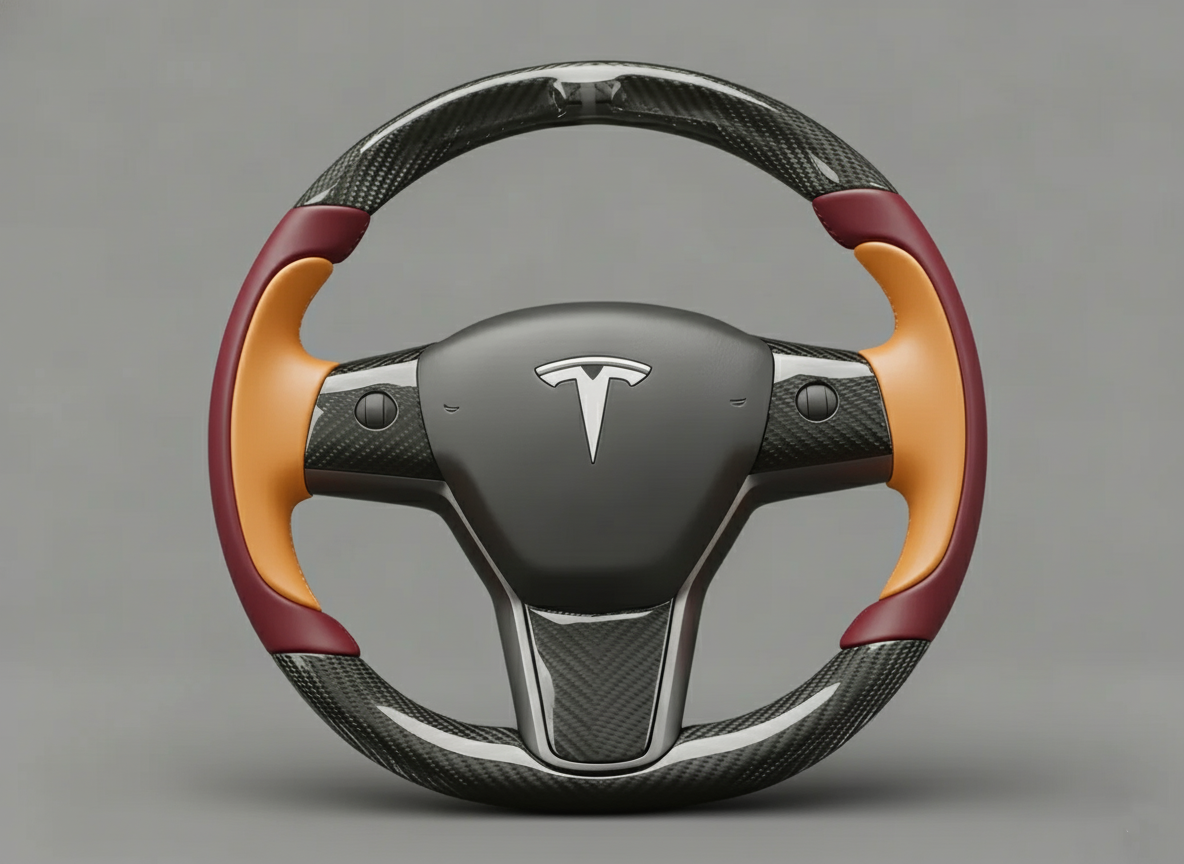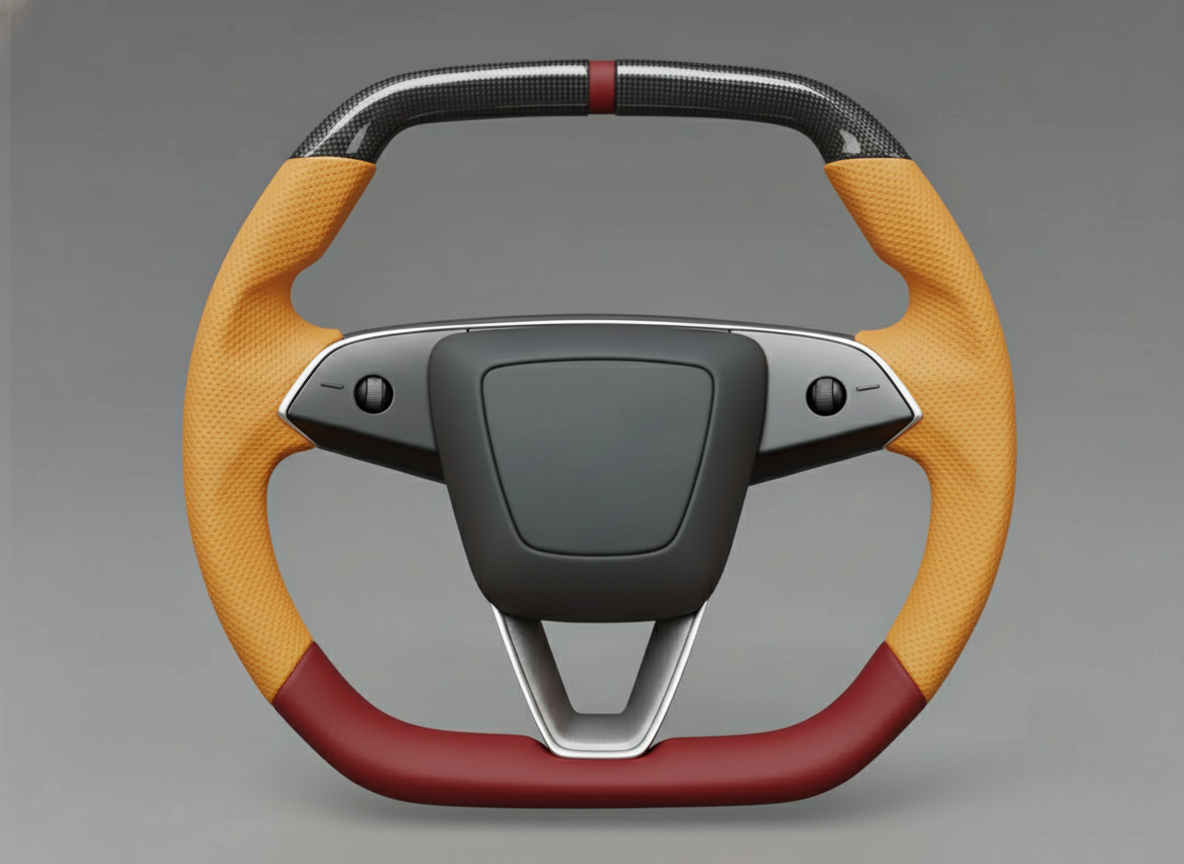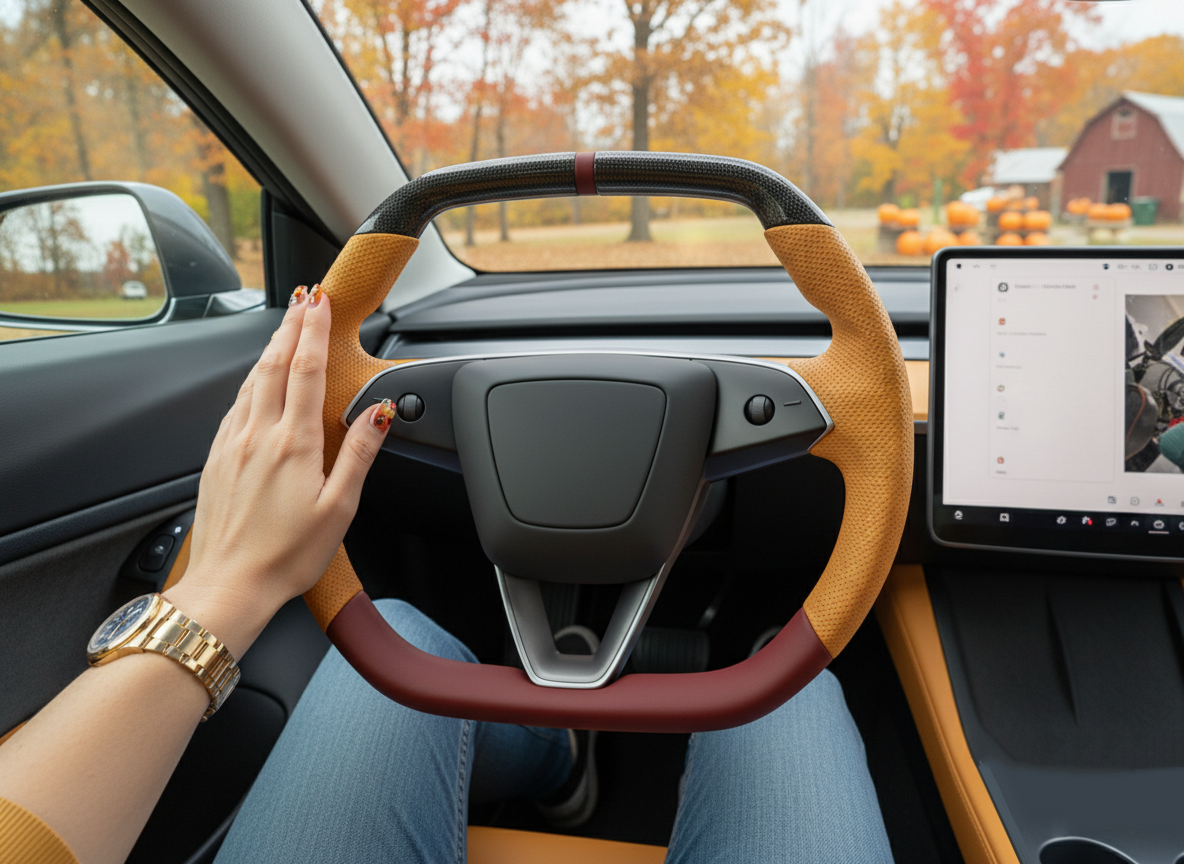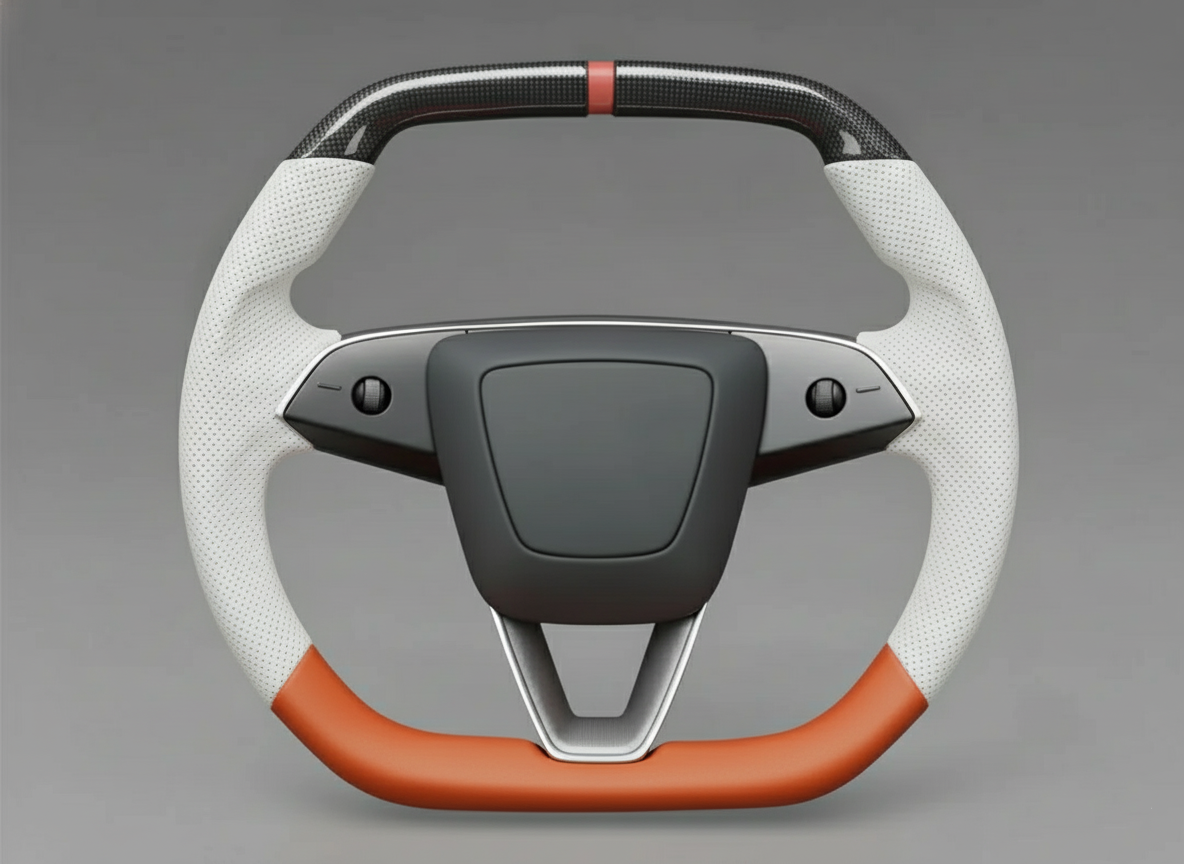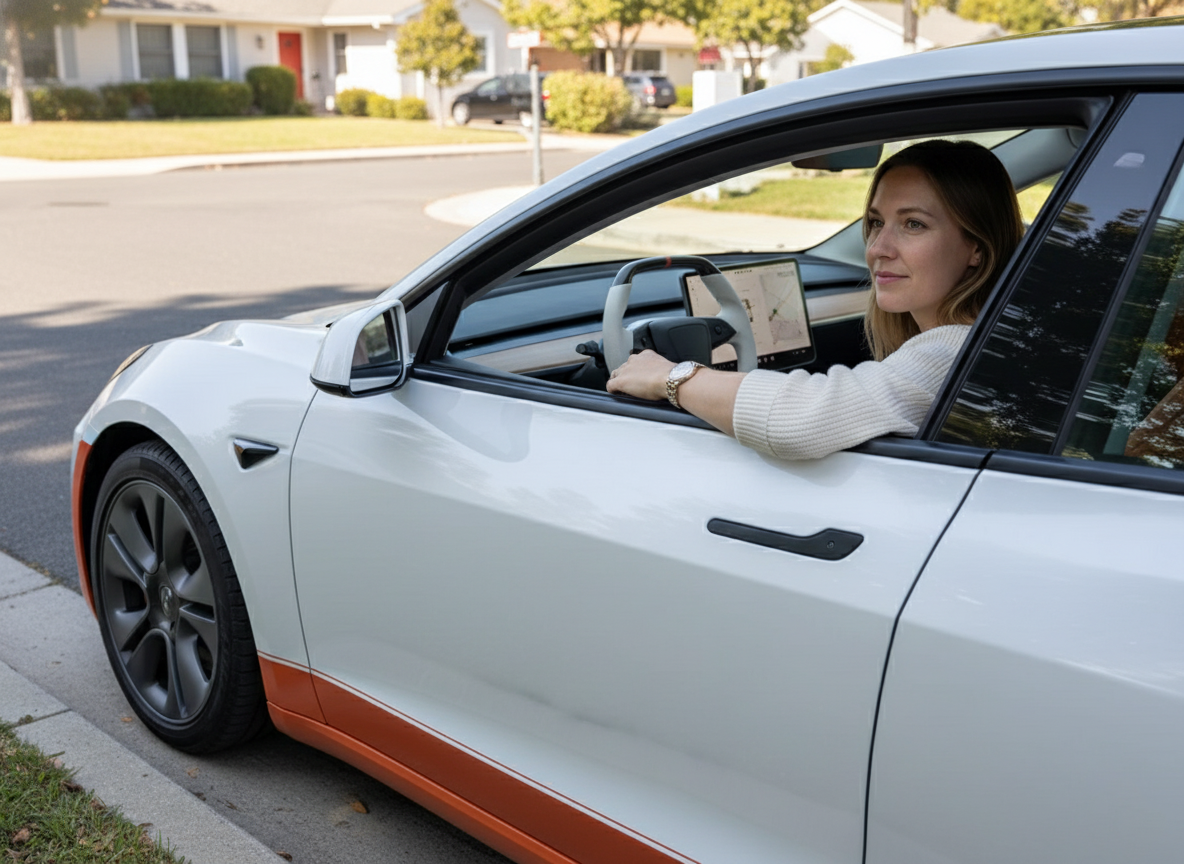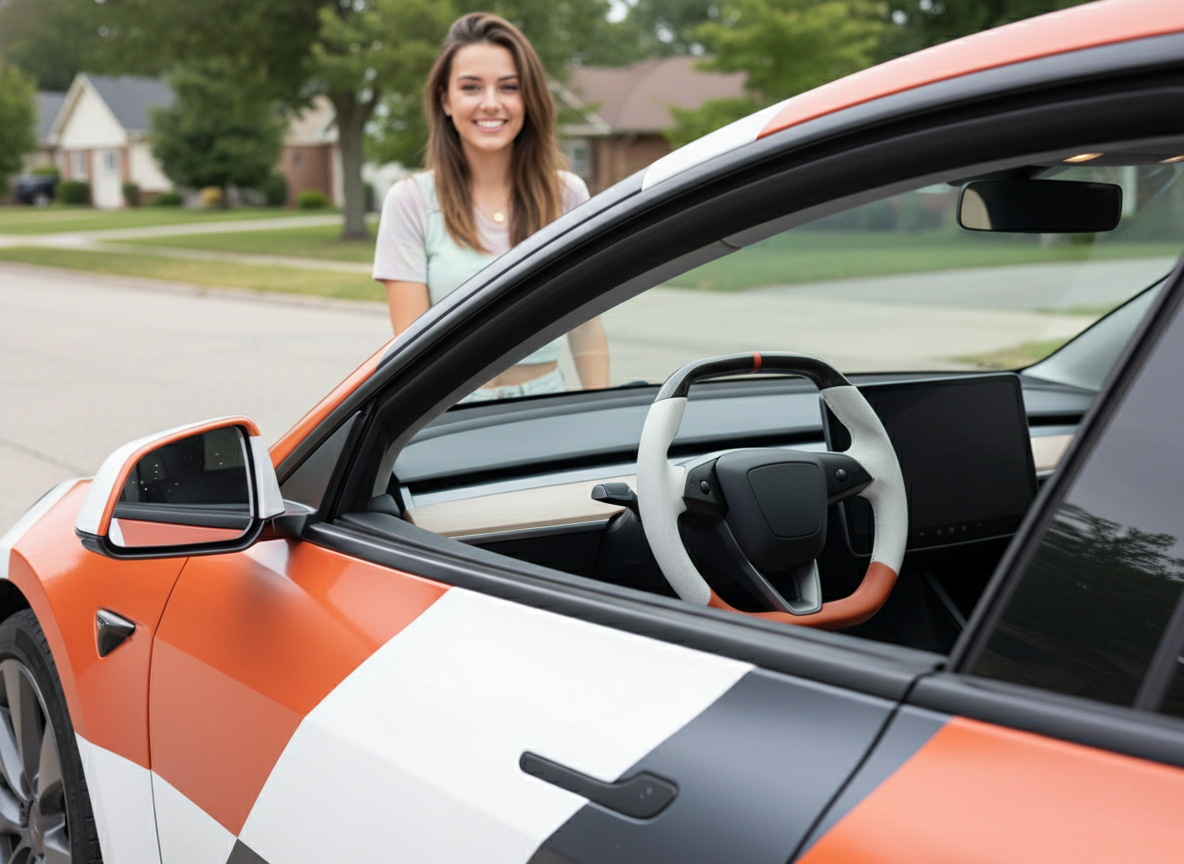
To prevent the Model Y Juniper's steering wheel from being corroded by hand sweat during the summer, it is recommended to install a microfiber suede (Alcantara) protective cover with a thickness of about 1.5mm. This can quickly absorb sweat and increase grip friction by about 30%.
Additionally, be sure to wipe it with a pH-neutral, non-alcoholic wet wipe every 5 to 7 days to promptly remove oils and salts, preventing the vegan leather coating from aging and peeling off.
Summer Driving
In a 35°C summer environment (such as Texas, USA), the cabin temperature of a Model Y under direct sunlight can rise above 65°C within 45 minutes.
The Juniper's standard black polyurethane (PU) steering wheel has a high heat absorption rate, and its surface temperature can exceed 70°C.
Test data shows that when touching a steering wheel with a surface temperature of 70°C, the palm's sweat output is about 4 times higher than at normal temperatures.
Slightly acidic sweat (pH 4.5 to 6.0) contacting the high-temperature PU coating will accelerate the hydrolysis of the material.
A sweat-proof protective cover provides a physical thermal insulation layer. Breathable materials (like Alcantara) can lower the contact surface temperature by 15°C to 20°C and block direct sweat penetration.
Cooling Performance
On a July afternoon in Arizona, USA, the outdoor solar radiation intensity can reach 1000 W/m². After infrared rays penetrate the glass, the heat inside the cabin is trapped due to the sealed structure, creating a greenhouse effect. When the outside temperature reaches 38°C, the air temperature inside the sealed cabin will climb above 60°C within 30 minutes.
The black polyurethane (PU) steering wheel standard on the Juniper version has an absorption rate of 85% for the infrared spectrum. The specific heat capacity of high-density PU foam is about 1.5 J/(g·K). Under the same solar radiation, the rate at which the black PU surface absorbs thermal energy far exceeds that of light-colored components in the car. After 60 minutes of direct sunlight exposure, the physical temperature of the steering wheel surface will soar to 72°C.
When the driver's palm touches the 72°C PU layer, thermal energy rapidly transfers to the skin via heat conduction. Object surface temperatures exceeding 45°C will cause tactile high-temperature discomfort. To reduce the instantaneous heat conduction rate upon contact, introducing a physical insulation material alters the thermodynamic state of the steering wheel surface.
The thermal conductivity and specific heat capacity parameters of various materials dictate the specific performance of heat absorption and dissipation. The following table quantifies the thermodynamic characteristics of four common steering wheel materials in high-temperature environments:
| Material Type | Thermal Conductivity (W/m·K) | Spectral Absorption Rate (%) | Surface Emissivity (ε) | Peak Temp after 60 mins of 38°C Direct Sunlight |
|---|---|---|---|---|
| Juniper OEM PU | 0.25 | 85% | 0.90 | 72.4°C |
| Black Perforated Leather | 0.15 | 80% | 0.85 | 64.1°C |
| Gray Alcantara | 0.05 | 65% | 0.75 | 52.3°C |
| 3D Mesh Fabric (PET) | 0.03 | 50% | 0.60 | 46.8°C |
Alcantara synthetic material is composed of 68% polyester and 32% polyurethane, with a single fiber diameter of only 0.004 mm. The dense fiber weaving structure encapsulates about 70% of static air volume inside. Static air has excellent thermal insulation properties, with a thermal conductivity as low as 0.024 W/m·K.
Even if the original PU layer has reached a high temperature of 70°C, the surface temperature of the Alcantara attached to it can still be maintained at around 50°C. The steep drop in thermal conductivity slows down the instantaneous temperature rise rate of the contact surface by 60%.
Standard CNC perforation technology evenly punches 25 round holes with a diameter of 1.2 mm per square centimeter of leather. The leather layer thickness is generally controlled at around 1.5 mm.
The penetrating round holes expand the total surface area of the material and establish physical channels for air circulation. After turning on the Model Y air conditioning system, cold air will trigger slight air convection within the holes. The convective heat transfer coefficient is increased by 40% compared to non-perforated flat PU materials.
After the car's air conditioning system is running, the temperature drop rates of different materials show significant data differences. Setting the AC outlet temperature to 18°C, the fan speed to level 5, and the initial ambient temperature to 65°C, the test records are as follows:
| Surface Covering Material | Surface Temp at Min 1 | Surface Temp at Min 3 | Surface Temp at Min 5 | Time to Reach Comfort Temp (40°C) |
|---|---|---|---|---|
| OEM PU Leather | 68°C | 55°C | 47°C | 11 mins 20 secs |
| Perforated Leather | 61°C | 48°C | 41°C | 5 mins 45 secs |
| Alcantara | 50°C | 41°C | 36°C | 2 mins 50 secs |
| 3D Mesh Fabric | 46°C | 38°C | 33°C | 1 min 15 secs |
3D mesh fabric (Spacer Fabric) is manufactured using a warp knitting process. The surface layer presents a honeycomb mesh structure, and the middle layer consists of polyester monofilaments interwoven into an "X" shaped support frame. The monofilament diameter is maintained in the range of 0.1 to 0.2 mm. The thickness of the middle layer is 2 to 3 mm, building a highly connected air convection layer.
When the cold airflow arrives, cold air flows through the honeycomb mesh into the middle layer of the fabric with minimal resistance, rapidly replacing the accumulated heat. The open pore area on the fabric surface accounts for more than 45%. Due to the extremely light overall mass and high porosity, the fabric's heat capacity is extremely low, and the surface temperature can drop by 15&°C within 60 seconds under ventilation.
The reduction in physical contact area simultaneously changes the amount of heat energy absorbed by the palm. The contact fit between the smooth PU material and the palm epidermis is close to 100%. The natural lychee texture inherent in the genuine leather surface reduces the actual contact area to about 85%.
The perforation process removes part of the solid leather surface, further reducing the macroscopic physical contact area to 70%. The micro-fleece on the Alcantara surface allows the palm to only touch the tips of the fibers, resulting in an actual contact area of less than 50%. The reduction in contact area proportionally deducts the total amount of heat exchange per unit of time.
Color options carry a considerable parameter weight in thermodynamic testing. Standard tests by the American Society for Testing and Materials (ASTM) show that light gray polyester materials have a solar radiation reflectance of over 60%. Deep black materials have an optical reflectance of less than 5%.
Equipping a light gray or beige heat insulation cover inside the cabin can reduce the physical accumulation of solar radiation energy during the initial exposure stage. Compared with the dark black version of the same product, the peak temperature of the light-colored surface under the same exposure environment will be 8°C to 12°C lower. Combined with the characteristics of low thermal conductivity materials, the cooling mechanism produces a superimposing effect on both the insulation layer and the optical reflection level.
Sweat Composition
In the high-temperature and high-humidity environment of Florida, USA in August, the cabin temperature of a Model Y without the air conditioning turned on can reach 55°C. Holding the steering wheel for 30 minutes, the sweat volume from a single hand will surge from 1.5 ml at room temperature to over 6 ml.
The continuously secreted sweat will form a liquid film about 0.1 mm thick between the palm and the steering wheel's polyurethane (PU) coating. The liquid film is not pure water; it contains a variety of complex chemical residues. After the water evaporates, the solutes will completely adhere to the microporous structure of the original steering wheel.
-
Water Composition: Accounts for 99% of the total volume, providing the high-humidity environment required for chemical reactions.
-
Sodium Chloride Residue: The concentration is about 0.9%, forming micron-sized solid particles after crystallization.
-
Lactic Acid and Uric Acid: Accounting for 0.05% to 0.1%, determining the acidity and alkalinity trend of the liquid.
-
Sebum Secretions: Contains free fatty acids, possessing strong fat-soluble characteristics.
Sweat containing lactic acid and uric acid is weakly acidic, with a free pH value maintained between 4.5 and 6.8. The eco-leather surface standard on the Juniper is synthesized with polycarbonate-based polyurethane (PC-PU). Under continuous soaking in slightly acidic liquids, the intermolecular hydrogen bonds of the high molecular polyurethane segments will physically loosen.
When the surface temperature exceeds 60°C, acidic catalysis will exponentially accelerate the hydrolysis reaction of the PU material. Hydrolysis destroys the urethane bonds of the polyurethane, causing the macromolecular chains to break into low-molecular-weight fragments. On a microscopic level, the dense coating on the surface of the original leather will develop network-like microcracks with a width of 0.05 to 0.2 microns.
Fat-soluble components such as free fatty acids penetrate into the material through the microcracks. Polyurethane has a physical affinity for grease, and long-term contact will trigger the plasticizing effect of the material. The plasticizing reaction causes the volume of the PU leather to swell by 1% to 3%, and the originally tight surface becomes loose with a faint sticky feel.
-
Salt Micro-cutting: 50-micron salt crystals generate sandpaper-like physical abrasive forces during steering.
-
Coating Easy to Peel: Adhesion decreases after hydrolysis, making it prone to fall off when subjected to 30 Newtons of shear stress.
-
Gloss Variation: Grease penetration causes the light reflectance of the matte surface to rise from 10% to 25%.
-
Hardness Decay: The damaged cross-linked network reduces the surface Shore hardness by about 15 degrees.
Sodium chloride crystals present a regular cubic structure with a Mohs hardness of 2.5. The Mohs hardness of the polyurethane on the surface of PU synthetic leather is generally below 1.5. When the driver turns the wheel at an angular velocity of 20 degrees per second, the downward pressure exerted by the palm presses the crystals into the leather layer, and the sharp edges will produce continuous microscopic cutting on the PU surface.
During driving, the hands touch the face or hair, transferring squalene (C30H50) to the steering wheel surface. Ultraviolet rays shining through the car windows cause photo-oxidative degradation of the squalene, releasing highly reactive peroxides. Peroxides further attack the PU coating, lowering the material's glass transition temperature (Tg) by 10°C.
A materials testing laboratory in California, USA, once conducted a 90-day simulated summer aging test on automotive synthetic leather. According to the ISO 1419 standard, 3 ml of artificial sweat was applied daily and exposed to a 65°C environment for 4 hours. After the test, the tensile strength of the PU sample plummeted from the original 25 MPa to 14 MPa.
The material's peel strength also experienced a steep decline. After being subjected to the dual attacks of artificial sweat and high temperatures, the force required to peel the original leather layer decayed from 80 Newtons per centimeter to below 45 Newtons. The sliding friction force exerted by the palm when turning the steering wheel in place often exceeds 50 Newtons, making it extremely easy to tear the aged leather layer.
Introducing a high-molecular moisture-absorbing material or microfiber suede as a protective layer changes the physical distribution path of sweat solutes. The internal porosity of microfiber materials like Alcantara reaches 65%. Each square centimeter of fabric can hold and lock about 0.5 ml of free water, preventing the liquid from penetrating downward.
-
Capillary Moisture Wicking: The water absorption rate reaches 2 mm per second, and the contact surface quickly returns to a dry state.
-
Physical Blocking: The 1.2 mm thick fabric layer keeps salt crystals on the top of the protective cover.
-
Acid-Base Buffering: PET polyester fibers are completely chemically inert to weak acids with a pH of 4.0.
-
Friction Reconstruction: The dry fiber surface provides a static friction coefficient of up to 0.8.
The isolation layer cuts off the physical contact surface between the weak acids, grease, and the bottom PU leather. The salt and uric acid crystals remaining on the protective cover can be thoroughly removed through regular washing or neutral foam cleaners. Under the cover of the isolation layer, the chemical stability of the original car steering wheel's surface coating can be maintained for a long time.
Grip
The static friction coefficient of the original OEM PU (polyurethane) eco-leather steering wheel in a dry state is about 0.6.
After being soaked in sweat, a water film with a thickness of about 0.1 mm will form on the leather surface, causing the friction coefficient to plummet to between 0.25 and 0.3.
When performing lane change maneuvers on an interstate highway at 70 mph (about 112 km/h), the driver typically needs to apply 3 to 5 Nm of steering torque.
A surface friction decay of over 50% will significantly increase the physical probability of the steering wheel slipping from the palm.
Maintaining a surface friction coefficient above 0.5 is the fundamental physical requirement to ensure anti-slip and precise steering.
Anti-slip Comparison
The Model Y Juniper steering wheel surface is wrapped in 1.2 mm thick polyurethane (PU) eco-leather. In an indoor constant temperature environment of 72°F, the surface static friction coefficient measured using the ISO 8295 standard is 0.61. When the driver's palm secretes about 5 grams of sweat per hour in the high temperature of 90°F in California, the non-porous physical structure of the PU leather prevents moisture from penetrating and dissipating.
Sweat accumulates on the surface of the PU coating, forming a microscopic water film with a thickness between 0.05 mm and 0.15 mm. The film plunges the static friction coefficient of the contact surface to 0.28. When executing an emergency lane change on an interstate highway at 65 mph, applying 4.5 Nm of steering torque to the steering wheel, a friction coefficient of 0.28 easily leads to physical slippage.
The physical baseline for maintaining precise steering requires the material to maintain a friction coefficient of 0.5 or higher in a wet state. Differences in the microscopic physical structures and surface energies of different interior materials result in varying physical efficiencies in handling moisture accumulation. The Society of Automotive Engineers (SAE) has standardized thin film friction measurements for common coverings.
| Material Type (Thickness) | Dry State Static Friction Coefficient (μ) | Wet State Static Friction Coefficient with 5ml Moisture (μ) | Surface Physical Porosity |
|---|---|---|---|
| OEM PU Eco-Leather (1.2mm) | 0.61 | 0.28 | < 0.1% |
| Microfiber Suede (1.0mm) | 0.66 | 0.57 | 45.2% |
| Perforated Full-Grain Leather (1.5mm) | 0.59 | 0.46 | 16.5% |
| Vulcanized Silicone Coating (2.0mm) | 0.74 | 0.63 | 0.0% |
| Matte Carbon Fiber Resin (0.8mm) | 0.55 | 0.41 | 0.0% |
The material, interwoven with 68% polyester and 32% polyurethane, contains numerous micron-level physical pores inside. The 200,000 independent fluff fibers distributed per square centimeter constitute a high porosity of 45.2%.
The high-density pores generate a physical capillary action that absorbs 0.2 ml of liquid per second. The moisture secreted by the palm is drawn into the interior of the fibers within 0.5 seconds of contacting the surface, destroying the physical water film that would cause slipping. In the 80% high humidity environment of Florida, the static friction coefficient of the microfiber after absorbing water is still maintained at 0.57.
Perforated full-grain leather combats the water film effect by changing its macroscopic physical form. The surface of the 1.5 mm thick leather is punched with dense round holes with a diameter of 1.2 mm by a CNC machine. About 40 through-holes are distributed per square inch, occupying 16.5% of the total surface area.
The edges of the holes provide mechanical biting space when the skin presses down. In a physical test applying 30 Newtons of grip force, the epidermal texture embeds into the 1.2 mm holes, generating shear resistance. Texas summer outdoor actual measurements show that the microscopic air convection channels built by the holes allow the surface moisture evaporation rate to reach 0.4 grams per minute.
The surface of the vulcanized silicone material is completely non-porous, and its anti-slip mechanism relies on the high surface energy of the high-molecular polymer. Liquid silicone with a Shore hardness of 55A has physical adsorption properties to the skin at room temperature. In a dry state, the static friction coefficient of the 2.0 mm thick silicone layer reaches 0.74, providing tremendous initial grip.
When the surface is covered with 2 ml of normal saline, the physical adsorption force of the silicone decreases. A 0.05 mm light-sensitive oil coating sprayed on the surface guides some droplets to physically slide off. Even with water film interference, the high deformation capability of the silicone surface still allows the wet state friction coefficient to maintain at 0.63.
Carbon fiber resin coverings are completely different from flexible materials in terms of physical hardness. A 0.8 mm thin shell formed by baking 3K carbon fiber cloth dipped in resin has a Shore hardness exceeding 85D. The high-gloss resin on the smooth surface experiences a sharp drop in static friction coefficient from 0.52 to 0.21 when encountering trace amounts of moisture.
Matte carbon fiber resin physically sanded with 2000-grit sandpaper alters the friction phenomenon. The micron-level physical scratches generated by sanding destroy the surface tension distribution of the water film. In a track test in Arizona at 105°F, the measured static friction coefficient of the matte carbon fiber surface stained with liquid was 0.41.
The specific heat capacity and thermal conductivity of different materials determine the extent of temperature rise after sun exposure and the physical environment for moisture evaporation. The ASTM C518 standard testing equipment quantifies the physical values of heat transfer for various materials.
| Material Type | Physical Thermal Conductivity (W/m·K) | Surface Moisture Evaporation Rate (g/min, 95°F) | Max Surface Temp After 120 mins Exposure |
|---|---|---|---|
| OEM PU Leather | 0.18 | 0.12 | 148°F |
| Microfiber | 0.05 | 0.65 | 132°F |
| Perforated Leather | 0.14 | 0.42 | 141°F |
| Vulcanized Silicone | 0.22 | 0.15 | 136°F |
The thermal conductivity of 0.05 W/m·K blocks the physical conduction of cabin high temperatures to the skin. Exposed to direct sunlight at 110°F in Nevada for 120 minutes, the surface temperature reached a maximum of 132°F, which is 16°F lower than the original PU leather.
The high evaporation rate of 0.65 g/min for microfiber allows it to return to a dry static friction coefficient of 0.66 in just 4.6 minutes after absorbing 3 ml of moisture. The airflow exchange of the perforated leather's holes provides an evaporation rate of 0.42 g/min.
Combining ASTM friction coefficients and thermodynamic test data, a single material has different physical degradation rates in extreme environments:
-
Microfiber easily absorbs sebum, causing fiber sticking. After 300 hours of high-frequency physical friction, the surface porosity drops by about 8%.
-
Silicone has a low evaporation rate of 0.15 g/min. Continuous contact for 90 minutes will accumulate physical heat in a closed gripping area.
-
The surface tension of OEM PU leather undergoes an irreversible 12% drop in physical elastic modulus after 50 cycles of 150°F high temperatures.
For a steering wheel with an outer diameter of 355 mm, covering the high-frequency grip areas at 3 and 9 o'clock with 1.0 mm thick microfiber establishes a wet friction coefficient of 0.57. Wrapping the low-frequency grip areas at 12 and 6 o'clock with 1.5 mm perforated leather utilizes the 16.5% surface porosity to build physical heat dissipation channels.
The two materials are fixed on a 1.2 mm thick polycarbonate inner liner through high-pressure hot melt seams. The inside of the skeleton is attached with 3M acrylic tape with an adhesion of 480 kPa, offsetting the anisotropic physical deformation caused by material splicing. When a steering torque of 5 Nm is applied, the lateral physical slip of the cover is strictly limited to within 0.1 mm.
Muscle Fatigue Response
[Image of human forearm muscle anatomy] At an air temperature of 105°F on the I-10 highway in Arizona, the driver's palm secretes 1.2 to 1.5 milligrams of sweat per square centimeter per minute. The surface friction coefficient of the Model Y's 355 mm diameter polyurethane steering wheel subsequently drops from 0.6 μ to below 0.25 μ.
To complete a lane change at 70 mph, the arm must output 3.5 Nm of steering torque to the steering wheel. Brain neurons will instruct the forearm muscle groups to increase grip strength, while the normal grip requirement is only 15 Newtons.
Because the contact surface becomes slippery, the actual grip force exerted by the driver will climb to 45 to 50 Newtons. The activity of the *Flexor digitorum superficialis*, responsible for bending the fingers, surges from 8% MVC in a relaxed state to 28% MVC.
High-intensity contraction of muscle groups will change the local blood circulation state of the forearm. The normal resting pressure of forearm capillaries is maintained at around 30 mmHg.
-
Flexor digitorum superficialis: Force exertion ratio increases by 200% to maintain finger bending fit.
-
Flexor carpi radialis: Bears 60% of the lateral torque compensation force.
-
Brachioradialis: Over-contracts when micro-adjusting the steering wheel, causing wrist soreness.
-
First dorsal interosseous: The force point when the thumb clasps the rim, extremely prone to stiffness.
When the grip force output exceeds 20% MVC, the internal pressure of the muscle will exceed the capillary pressure, blocking the delivery of fresh oxygen. Actual measurements on the US-50 highway in Nevada show that after 25 minutes of continuous driving, the muscles begin anaerobic metabolism.
The local blood lactic acid concentration in the forearm will climb from a baseline of 1.0 mmol/L to above 3.5 mmol/L. The pH value within the muscle tissue undergoes a slight drop, stimulating pain receptors and triggering soreness that extends from the wrist to the medial epicondyle of the humerus.
Prolonged static contraction leads to micro-tremors in the hand that are difficult to detect with the naked eye. Electromyography (EMG) sensor data shows that the discharge frequency of motor neurons becomes disordered, producing muscle tremors at a frequency of 8 to 12 Hz.
Physiological fatigue will delay steering control reaction times. Under dry conditions with sufficient friction, it takes a driver about 120 milliseconds to make a 0.5-degree fine-tuning correction to the steering wheel.
-
Steering wheel micro-adjustment delay: Extended from 120 ms to 280 ms.
-
Lane departure amplitude: Lateral drift increases by about 15 cm when cruising at 75 mph.
-
Emergency evasion exertion time: The time to reach peak torque increases by 0.4 seconds.
-
Grip force variance rate: The torque variance during static gripping increases by 40%.
-
Fatigue scale rating: The Borg CR10 reading exceeds level 6 after 30 minutes.
As the blood lactic acid concentration reaches the threshold of 3.5 mmol/L, the neural feedback loop conduction slows down. The reaction time for a 0.5-degree micro-adjustment is extended to 280 milliseconds, which will amplify the vehicle's tracking drift during 75 mph high-speed cruising.
Ergonomic tests at Texas A&&M University recorded changes in the "push-pull ratio." Faced with a low-friction surface, drivers will instinctively apply an additional 25 Newtons of pulling force to draw the steering wheel towards their chest, altering the natural curvature of the spine.
To stabilize the sliding hands, the elbow joint will change from a natural bend of 110 degrees to a stiffened state of 160 degrees. Consequently, the cervical spine needs to bear an additional 4.5 kilograms of vertical compression weight, involving the trapezius muscle group to participate in compensatory force generation.
During a 90-minute stop-and-go commute on Interstate 405 in Los Angeles, a driver needs to complete over 400 micro-steering maneuvers. Each maneuver forces the already fatigued flexor muscle groups into high-frequency contractions.
The tendon synovial fluid within the carpal tunnel becomes viscous under continuous high pressure. Under continuous contraction at 30% MVC, the physical friction resistance between the tendons and the carpal tunnel increases by 18%, making it extremely easy to trigger acute local aseptic inflammation.
-
Cervical spine pressure: An additional 4.5 kg of vertical stress.
-
Elbow joint angle: Changes from a natural 110-degree bend to a 160-degree stiff state.
-
Carpal tunnel pressure: Climbs from a normal 15 mmHg to over 40 mmHg.
-
Tendon synovial fluid friction: Physical resistance increases by 18% under high-frequency micro-manipulation.
Physiological recovery of muscles has a physical timetable. Once the hands leave the steering wheel to release the grip, restoring the muscle internal pressure to 30 mmHg and restarting normal blood perfusion requires at least 45 minutes of absolute rest.
Using an Alcantara suede or perforated breathable leather cover can pull the friction coefficient of the steering wheel surface back up to 0.6 μ. The grip force required by the driver will drop back to the healthy range of 15 Newtons.
The activation level of the forearm muscle groups subsequently falls back to the baseline of 8% MVC. The flexor digitorum superficialis stops overexerting, cutting off the physiological cycle of lactic acid accumulation and eliminating the 8 Hz micro-tremors.
Anti-slip Solutions
The microfiber material composed of 68% polyester and 32% polyurethane provides a high-density water absorption layer.
The spinning process compresses the diameter of a single microfiber to 0.0001 mm, and up to 200,000 independent fluffs are distributed per square centimeter of the surface. The high-density fluff structure generates a strong physical capillary effect. In outdoor summer tests at 105°F in California, 3 to 5 grams of moisture secreted by the driver's palm can be completely absorbed by the fiber layer within 12 seconds.
According to the ASTM D1894 thin film friction coefficient standard test, after absorbing 5 ml of pure water, the surface static friction coefficient of the microfiber material only slightly drops from 0.65 to 0.58, which is still far higher than the safe steering threshold of 0.5.
After absorbing moisture, the material must possess rapid dehumidification capabilities. The low moisture regain characteristic of polyester fiber allows its natural moisture evaporation rate to reach 0.8 grams per minute in Arizona's average 15% relative humidity environment. After the vehicle is exposed to the sun for 4 hours, the surface temperature of the microfiber is 12°F lower than that of the original PU leather.
The perforated leather solution focuses on building an air convection environment through physical space. Top-grain cowhide supplied from Texas ranches is processed with chrome-free tanning, and then high-density punching operations are performed on the surface by CNC machines, altering the physical topology of the material.
-
The diameter of the round holes is strictly controlled between 1.2 mm and 1.5 mm, and the hole center spacing maintains a standard 4 mm.
-
The perforation process increases the total physical surface area of the wrapped region on the steering wheel by about 18%, providing more space for heat dissipation.
-
The 90-degree vertical cuts generated at the edges of the holes provide extra mechanical bite when pressed by the palm, increasing the lateral anti-slip resistance by 22%.
The physical holes build micro-ventilation cabins between the palm and the steering wheel surface. Turning on the Model Y's A/C system in Florida's 85% high humidity environment allows cold air to pass through the hole gaps at a speed of 0.5 meters per second. The increase in local air velocity makes the moisture evaporation rate on the palm epidermis 3.5 times higher than that of airtight PU leather.
Cabin environment tests by SAE International show that after 120 minutes of continuous driving using the gripping area of 1.5 mm perforated leather, the driver's palm skin temperature stabilizes at 92°F, with no moisture accumulation on the surface.
For track driving scenarios, Thermoplastic Elastomer (TPE) materials provide mechanical grip through a three-dimensional topological structure. High-molecular TPE used for car interiors has a Shore hardness set between 60A and 65A. When gripping pressure is applied, the contact surface can produce a 1.2 mm elastic deformation to fit the contour of the palm.
Injection molds imprint 0.8 mm deep diamond or hexagonal three-dimensional protrusions onto the TPE surface. When holding the steering wheel, the skin texture of the finger pads partially sinks into the 3D grooves, forming a mechanical interlock on a physical level. Under the condition of applying a 40-Newton grip force, the shear yield strength of the contact surface exceeds 1.5 MPa.
When the surface is covered with 2 ml of simulated sweat (a solution containing 0.5% sodium chloride), the drainage grooves of the TPE 3D texture can guide the liquid to non-contact areas. In high-load tests conducted at the Laguna Seca track, the static friction coefficient of the grip area with 0.8 mm raised textures in a wet state maintained at 0.62.
The fitting precision between the anti-slip cover and the Juniper's original steering wheel determines the transmission efficiency of steering torque. The outer diameter of the Model Y Juniper steering wheel is 355 mm, and the perimeter of the grip cross-section fluctuates between 105 and 110 mm. The cover must provide sufficient radial clamping force within this dimensional tolerance.
The full-wrap sewn protective cover uses 0.8 mm thick waxed nylon thread, cross-stitched at a stitch pitch of 6 mm. After applying 25 pounds of tension to tighten the stitches, the anti-slip grid on the inside of the cover can generate up to 80 Newtons of radial clamping force. The abundant friction prevents the kit from physically sliding during sharp steering.
The half-wrap snap-on protector relies on a built-in high-strength polycarbonate (PC) skeleton to maintain its overall shape. The PC skeleton is 1.2 mm thick, and its thermal deformation rate is less than 0.1% in the high-temperature cabin environment of 210°F. The interior of the skeleton is attached with a 0.25 mm thick 3M VHB 4914 double-sided tape.
The acrylic foam substrate of 3M VHB 4914 tape achieves a shear strength of 480 kPa in an 80°C environment. The high-strength adhesion ensures that the snap-on piece remains firmly fixed when subjected to 5 Nm of steering torque.
The added thickness of the cover alters the driver's physical gripping feel. Increasing the thickness by 1.5 mm to 2.0 mm on top of the original diameter improves the palm fit for an adult male by 15%. A material layer thicker than 3 mm will absorb 20Hz to 50Hz high-frequency road vibrations, reducing the physical clarity of road feedback.
The surface static friction coefficient of silicone material remains above 0.75 year-round, providing extremely high initial grip. High-purity liquid silicone, after being vulcanized and molded, is sprayed with a 0.05 mm thick layer of light-sensitive oil coating on the surface. The extremely thin coating reduces the stickiness of the high-friction material surface and prevents the adhesion of suspended dust in the air.
In extreme high-temperature climate tests at 125°F in Death Valley National Park, the silicone protective cover did not precipitate chemical silicone oil substances on the surface after 6 hours of direct sunlight. The high specific heat capacity of silicone makes it heat up 20% slower than OEM PU leather. The rate of heat conduction to the palm is reduced by about 0.3 watts/cm².
Splicing microfiber material at the 3 and 9 o'clock positions of the steering wheel provides high static friction, while using perforated leather at the 12 and 6 o'clock positions enhances breathability. The stitched seams of the dual-splicing process undergo a high-pressure hot flattening treatment, and the surface protrusion height is strictly controlled to within 0.3 mm.
According to the Martindale abrasion test standard (ASTM D4966), after a 1.2 mm thick suede is rubbed against wool felt 50,000 times under a pressure of 12 kPa, less than 3% of the surface fibers fall off. A 0.5 mm bottom reinforcement mesh cloth is added to the areas that are frequently stressed daily, preventing physical stretching and deformation under heated conditions.
Wear
During summer driving, the driver's hands secrete an average of 20 to 30 ml of sweat per hour. The contained sodium chloride, urea, and lactic acid drop the local pH value to between 4.0 and 6.8.
Slightly acidic liquid penetrates the eco-leather surface of the Model Y Juniper. Compounded by a frictional force of about 10 to 15 pounds per steering maneuver, it can destroy the surface wear-resistant coating (Topcoat), which is about 0.05 mm thick, within 3 to 6 months on average.
Once the coating is depleted, the underlying material is directly exposed to sunlight with a UV index of 10+, increasing the material aging rate by 3 times and causing surface peeling.
Accelerated Degradation Process
The outdoor temperature at summer noon in Phoenix, Arizona frequently reaches 110°F, and the interior temperature of an unshaded parked car climbs above 160°F within 45 minutes. At this temperature, the molecular activity of polyurethane (PU) materials rises exponentially, and the surface tension drops by about 15%. High-temperature baking accelerates the volatilization rate of plasticizers inside the original leather, and the base layer, which is about 1.2 mm thick, gradually loses its original elastic support. Continuously exposed to a 150°F environment for over 200 hours, the tensile elongation rate of PU materials will plummet from the initial 150% to below 80%.
Long-wave ultraviolet rays (UVA, wavelength 315-400 nm) generated by sunlight penetrating the windshield can continuously penetrate into the deep layers of the leather. Photo-oxidation reactions break the macromolecular chain segments of the polymer, generating free radicals and destroying the molecular structure of the material.
In areas of North America with strong sunlight, the amount of UV radiation endured by the upper half of the steering wheel is 4.5 times that of the backlit area. Photochemical degradation causes the originally neatly arranged polyurethane molecular chains to undergo random fractures, and the Shore hardness of the surface material increases by 10 to 15 degrees within 6 months.
-
UVA penetration rate is up to 70% under non-insulated glass.
-
Temperatures above 150°F cause the PU coating's softening point to arrive prematurely.
-
Plasticizer precipitation leads to 0.02 mm tiny pores on the surface.
-
The tensile strength of materials in high-frequency sunshine areas generally decreases by about 20%.
In coastal areas like Miami, Florida, the relative humidity (RH) inside a car in summer frequently exceeds 80%. Free water molecules in the air react with ester groups in the PU material, inducing hydrolysis under thermal catalysis. The hydrolysis process generates carboxylic acids and alcohols, disintegrating the network cross-linked structure of the polyurethane from the inside. In an aging test at 85°C and 85% RH, automotive-grade PU leather showed visible micro-cracks after 500 hours, and its tear strength dropped by more than 30%.
The driver's palm has about 3,000 sweat glands per square inch. In the initial driving stage without the air conditioning turned on, it secretes up to 0.5 ml of mixed liquid per minute. The roughly 0.9% concentration of sodium chloride in human sweat mixes with squalene secreted by the sebaceous glands, forming a natural acidic microenvironment with a pH value between 4.5 and 5.5. The weakly acidic liquid will erode the water-based polyurethane varnish, which is only 0.05 mm thick, at a microscopic level, destroying the cross-linked network structure on the material's surface.
| Common Contact Substance | Main Chemical Composition | Quantified Physical Damage Manifestation |
|---|---|---|
| Sunscreen (SPF50+) | Avobenzone, Oxybenzone | Dissolves 0.05mm wear layer, water permeability rises 40% |
| Hand Sanitizer | 60%-70% Ethanol, Isopropanol | Strips surface bound water, causing 0.1mm deep micro-cracks |
| Natural Hand Sweat | Sodium Chloride, Urea, Lactic Acid | Long-lasting mild acid corrosion, friction coefficient drops 0.2 |
Data from Austin, Texas indicates that hands with sunscreen residue, over a 30-day daily commute, cause the matte coating on the steering wheel surface to lose 0.015 mm in thickness. Fat-soluble components in sunscreen penetrate the pores of the PU surface, producing an irreversible chemical extraction effect. Mineral oil components cause swelling phenomena in the polyurethane material, leading to a volume expansion rate of 2% to 5%, creating interlayer peeling stress between the surface layer and the substrate.
The wear-resistant coating of the original eco-leather can withstand more than 50,000 Martindale rub tests at room temperature, but in a softened state at 140°F, the surface wear resistance coefficient plunges by 30%. The twisting force applied to the steering wheel during a single U-turn or parking maneuver is usually between 10 and 15 pounds, and high temperatures make the coating extremely susceptible to being peeled off by transverse shear stress. Mechanical stress is highly concentrated in the grip areas at 3 and 9 o'clock, accelerating the fatigue fracture process of the local resin.
-
Sweat salt crystals dry out to form 5-10 micron abrasives.
-
The water permeability of the damaged coating area increases exponentially.
-
Metal accessories cause plastic deformation deeper than 0.1 mm on the softened surface.
-
The coating thickness in high-frequency grip areas decreases at a rate of 2-3 microns per month.
-
Frictional heating causes the local instantaneous surface temperature to rise by another 5-8°C.
For a commuting vehicle in California driven 15,000 miles a year, the contact time between the driver's hands and the steering wheel exceeds 350 hours. In tens of thousands of high-frequency micro-slides, the microscopic rough surface of the hand's stratum corneum continuously cuts the softened PU surface like 800-grit sandpaper. The physical cutting removes free polymer molecules, aggravating the continuous consumption of antioxidants and light stabilizers in the deeper materials.
Once the coating breaks through the wear critical point of 0.03 mm, the underlying porous micro-foaming structure is completely exposed to the air. Tiny dust particles in the air (PM2.5 to PM10) quickly fill the approximately 50-micron pores on the surface. The dust mixes and solidifies with residual sebum and lactic acid, forming hard-to-remove dark attachments. This changes the refractive index of the material, causing uneven oily reflections on the original matte surface.
Some aftermarket aging data in the Los Angeles area shows that for vehicles without physical sun protection measures, by the 8th month after delivery, the chromaticity deviation (ΔE) at the top area of the steering wheel exceeds 3.5. Visible fading and localized peeling indicate that extensive chain scission reactions have occurred within the polyurethane macromolecular backbone inside the material. At this point, the water contact angle on the material surface drops from an initial 90 degrees to below 60 degrees, losing basic hydrophobic performance.
Phased Wear
Under the commuting conditions of driving an average of 12,000 miles per year in North America, the physical and chemical consumption of the steering wheel PU coating shows a strict timeline progression. Within the first 90 days after new car delivery, the 0.05 mm thick matte water-based polyurethane protective layer on the surface begins to withstand primary mechanical friction. The average grip force exerted by the driver's hands at the 9 o'clock and 3 o'clock positions is about 8 to 12 pounds, and the microscopic friction coefficient remains between 0.6 and 0.7 during the first 100 hours.
Trace amounts of dust particles attached to the surface mix with a small amount of naturally secreted sebum from the hands, forming an extremely thin covering layer less than 0.01 mm thick on the surface. Long-term exposure test data in the Los Angeles area show that in an environment with a UV Index (UVI) of 8 or above, the matte texture of the new car's steering wheel will experience a gloss increase within the first 45 days, with the reflectance measured by a colorimeter increasing by about 12%.
-
Surface micro-pores are physically filled by dust with a particle size of less than 2.5 microns.
-
The hydrophobic contact angle of the OEM coating slightly decreases from 95 degrees to 88 degrees.
-
About 0.2 grams of solid dirt residue accumulates at the stitches on the outer ring of the steering wheel.
-
The coating thickness loss in local high-frequency friction areas is about 2 to 3 microns.
The physical rise in gloss is accompanied by an initial decline in chemical protection capabilities. Entering the 3rd to 6th month consumption cycle, the high-humidity summer environment in Houston, Texas (relative humidity higher than 75%) prompts trace hydrolysis of the residues. The sweat salt (about 0.8% sodium chloride concentration) attached to the steering wheel surface crystallizes under the 120°F high temperature baking inside the car, forming fine particles with micro-abrasive properties.
| Exposure Cycle (Months) | Average Coating Loss (mm) | Friction Coefficient Change | Surface Tension (dynes/cm) |
|---|---|---|---|
| 1 - 3 | 0.005 | 0.65 down to 0.60 | 38 |
| 4 - 6 | 0.015 | 0.60 down to 0.52 | 42 |
| 7 - 9 | 0.030 | 0.52 down to 0.45 | 48 |
| 10 - 12 | 0.050 | 0.45 down to 0.35 | 55 |
After the coating loss exceeds 0.015 mm, the absorption rate of water and grease by the PU substrate surges by 400%. Outdoor parking data in Orlando, Florida, indicates that for a single parking session over 4 hours with an interior temperature reaching 140°F, the semi-exposed polyurethane soaked in sweat will release 0.5 ppm to 1.2 ppm of Volatile Organic Compounds (VOCs), and the surface tactile feel begins to soften and become sticky.
The emergence of stickiness marks the irreversible rupture of the cross-linked network structure. Thermodynamically driven, the underlying plasticizers migrate to the surface and chemically fuse with the penetrating fat-soluble sunscreen components (such as oxybenzone). The surface Shore hardness plummets from the original A65 to A45 under a high temperature of 150°F, and the material's tensile strength simultaneously loses about 18%. A transverse twisting force exceeding 15 pounds during a single emergency lane change can trigger minor plastic deformation.
-
The surface develops irregular physical micro-cracks up to 0.02 mm deep.
-
The weight-average molecular weight of the polyurethane macromolecular chains decreases by 15% to 20%.
-
The urea component in sweat causes the local pH to remain around 5.0 long-term.
-
Photo-oxidation reactions cause the L-value (lightness) of black PU leather to rise by more than 2.5.
The expansion of micro-cracks triggers large-scale physical peeling during the 9th to 12th months. The extremely dry climate in Las Vegas, Nevada (relative humidity below 20%) accelerates the rapid evaporation of moisture inside the damaged leather. The PU foam layer, having lost moisture and plasticizer protection, becomes exceptionally brittle. When the temperature drops sharply from 160°F to 70°F after turning on the air conditioner, the internal stress generated by thermal expansion and contraction causes cracks to penetrate to the base cloth in the roughly 1.2 mm thick base layer.
| Typical North American Climate Zone | Prob. of Peeling/Cracking After 12 Mths | Estimated Remaining Coating Thickness | Average Cost for Repair/Rewrap (USD) |
|---|---|---|---|
| Arizona (Dry Heat + High UV) | 85% | < 0.005 mm | 150 - 250 |
| Florida (Humid Heat + High Salt) | 78% | 0.010 mm | 150 - 250 |
| Washington State (Mild & Rainy) | 35% | 0.025 mm | 150 - 250 |
| Colorado (High Altitude + Strong UV) | 65% | 0.015 mm | 150 - 250 |
The highly frequently used 3 o'clock and 9 o'clock grip zones are the first to lose their complete covering form, exposing the rough synthetic microfiber base cloth beneath. The friction coefficient of the base cloth is extremely low, making it highly susceptible to absorbing dust and moisture with a particle size of less than 10 microns remaining in the air. Within the subsequent 30 days, dark stains breed, losing the anti-slip performance set by the factory.
The cost of parts and labor to replace the entire steering wheel assembly totals between $750 and $900. If choosing to re-stitch using Nappa leather or Alcantara material at a third-party automotive interior modification shop, it takes about 4 to 6 hours, and the material and labor costs range from $350 to $500.
The water absorption rate after the base cloth is exposed explodes by over 50 times compared to the intact PU coating state. When the temperature drops to 20&°F in the Chicago area in winter, trace amounts of moisture penetrating into the base cloth physically freeze, expanding in volume by about 9%. The expansive force of the micro ice crystals further tears the originally well-attached residual coating around it, causing the peeling area to spread rapidly towards the 12 o'clock and 6 o'clock directions at a rate of about 0.5 square centimeters per week.
-
The tensile yield strength at the edges of the peeled area is less than 5 MPa.
-
The reflectance of the exposed base cloth to long-wave ultraviolet rays drops to less than 5%.
-
The capillary rise height of hand sweat among the rough fibers can reach 15 mm.
-
In sub-zero environments, the overall embrittlement temperature threshold of the material advances to 15°F.
Once the damaged area exceeds 15% of the total surface area of the steering wheel, the physical gripping balance of the overall structure is broken. Quantitative defensive driving tests by the California Highway Patrol (CHP) show that an inhomogeneous gripping surface will delay a driver's steering response time by about 0.15 seconds during a 50 mph moose test. The intertwining texture of rough and smooth surfaces disrupts muscle memory's anticipation of friction, increasing the probability of operational errors by 0.8% to 1.2%.
Reducing Wear
Alcantara steering wheel covers with a thickness of 1.2 mm to 1.5 mm, common in the North American aftermarket, block the polyurethane (PU) leather from hand sweat. The material is interwoven with 68% polyester and 32% polyurethane. The internal fiber fineness is only 0.08 denier, and the diameter of a single fiber is 100 times thinner than human hair.
Summer field tests in Atlanta show that Alcantara material, with a porosity as high as 65%, can absorb 0.2 ml of sweat micro-droplets accumulated on the surface within 3 seconds.
After absorbing sweat, the microscopic three-dimensional network structure disperses the moisture to an area of 10 square centimeters for natural evaporation. If a synthetic Microfiber protective cover is selected, the surface friction coefficient is maintained in the range of 0.75 to 0.85 in both dry and wet states. A high-density Neoprene protective cover with a thickness of 2.0 mm can withstand a maximum sun exposure temperature of 220°F.
-
The breathability rate of polyester fiber covers is over 50 cm³/cm²·s.
-
The thermal conductivity of a neoprene cover is as low as 0.05 W/m·K.
-
The snug-fit design provides at least 15 pounds of radial clamping force.
-
Surface flocking technology increases the contact area between the palm and the steering wheel by 25%.
In addition to installing a protective cover, cleaning surface residues on time blocks the continuous corrosion of acidic substances. Auto care shops in Los Angeles, California recommend water-based cleaning of the steering wheel every 300 miles driven or every 14 days. The operation uses a neutral interior cleaner with a pH value between 6.5 and 7.5, matched with a 250 GSM (grams per square meter) density microfiber towel for wiping. Spraying 3 to 5 ml of cleaner each time dissolves a 0.01 mm thick mixture of sebum and salt on the surface.
Strong disinfecting wipes containing 70% isopropanol strip away 2% of the bound water on the surface of the PU coating in a single wipe, triggering microscopic cracking at a depth of 0.005 mm.
As an alternative to strong disinfecting products, alcohol-free and fragrance-free pure water wet wipes remove daily deposited sweat. The water content of pure water wipes is over 99%, and the physical cutting force generated by a single wipe is less than 0.5 Newtons. After cleaning and drying, apply 303 Aerospace Protectant anti-UV conditioner to the steering wheel surface every 45 days. The water-based sunscreen forms an anti-UV isolation film about 2 to 3 microns thick on the PU surface.
-
The UV isolation film blocks more than 85% of UVA radiation with a wavelength of 315-400 nm.
-
The surface tension after spraying the protectant recovers to the set threshold of 45 dynes/cm.
-
The friction coefficient of pure water wipes is around 0.2, avoiding wearing down the 0.05 mm OEM clear coat.
-
The material cost for a single maintenance operation averages less than $0.50 in the North American market.
Reducing the environmental heat input inside the cabin slows down the rate of thermal aging of polymer materials. By turning on the Cabin Overheat Protection function via the Tesla mobile app, set the activation threshold to 90°F or 100°F. When the sensors inside the car detect that the temperature has reached the set value, the air conditioning system intervenes and runs at about 1.5 kW of power. The system forcibly suppresses the maximum temperature in the cabin to below 105°F, reducing the precipitation rate of plasticizers inside the PU substrate.
Deploying a front windshield sunshade when parked builds a physical barrier against the sun. Outdoor tests in Houston, Texas show that a custom sunshade with an aluminum foil reflective layer reduces the solar radiation energy hitting the steering wheel by 98%. Under a 100°F outdoor temperature, the sunshade drops the peak temperature of the steering wheel surface from 155°F to 110°F. The interlaminar shear stress caused by thermal expansion and contraction of the material drops by about 60%.
Nano-ceramic window tint with a Total Solar Energy Rejection (TSER) rate of over 60% reduces the infrared heat received by the upper half of the steering wheel by about 80%.
The transfer amount of chemical residues carried by the driver's hands affects the coating depletion rate in high-temperature environments. After applying an SPF50 sunscreen containing avobenzone or oxybenzone, the residue on the hands is between 0.1 and 0.2 grams. Washing hands with clean water before getting into the car, or waiting 15 minutes for the sunscreen to form a film on the skin surface, reduces the mass of chemicals transferred to the PU coating by more than 90%. After using hand sanitizer, wait at least 20 seconds for the ethanol to completely evaporate.
-
Within the first 30 minutes after applying mineral oil-containing hand cream, the surface friction transfer rate reaches 15%.
-
The natural evaporation rate of hand sweat in a 75°F environment is 0.05 ml per minute.
-
Washing the palms causes the skin's acidity to temporarily recover from mildly acidic pH 5.0 to neutral pH 7.0.
-
The static friction coefficient of dry hands gripping the steering wheel is maintained in the measured range of 0.65.
Metal jewelry worn on the hands generates friction cutting on a microscopic level when steering. The Mohs hardness of platinum or 18K gold rings is between 2.5 and 4.0, which exceeds the Mohs hardness of 0.5 of polyurethane leather. During single-handed palm steering maneuvers with a force exceeding 10 pounds, the edges of metal accessories generate localized concentrated stress of over 5 MPa on the softened PU coating. A single heavy scrape with a hard metal object can scratch through the 0.05 mm wear-resistant layer.
The driver's force habits during steering determine the magnitude of the mechanical stress endured by the steering wheel surface. Adopt the alternating pull steering method at the 3 o'clock and 9 o'clock positions to replace the single-point palm pressing twist operation. The 15 pounds of pressing force applied by the hands during steering is dispersed to 7.5 pounds per hand, reducing the lateral peeling force on a single point area. Regularly rotate the installation angle of the steering wheel cover every month so that the gripping pressure is evenly distributed across 12 different clock positions.