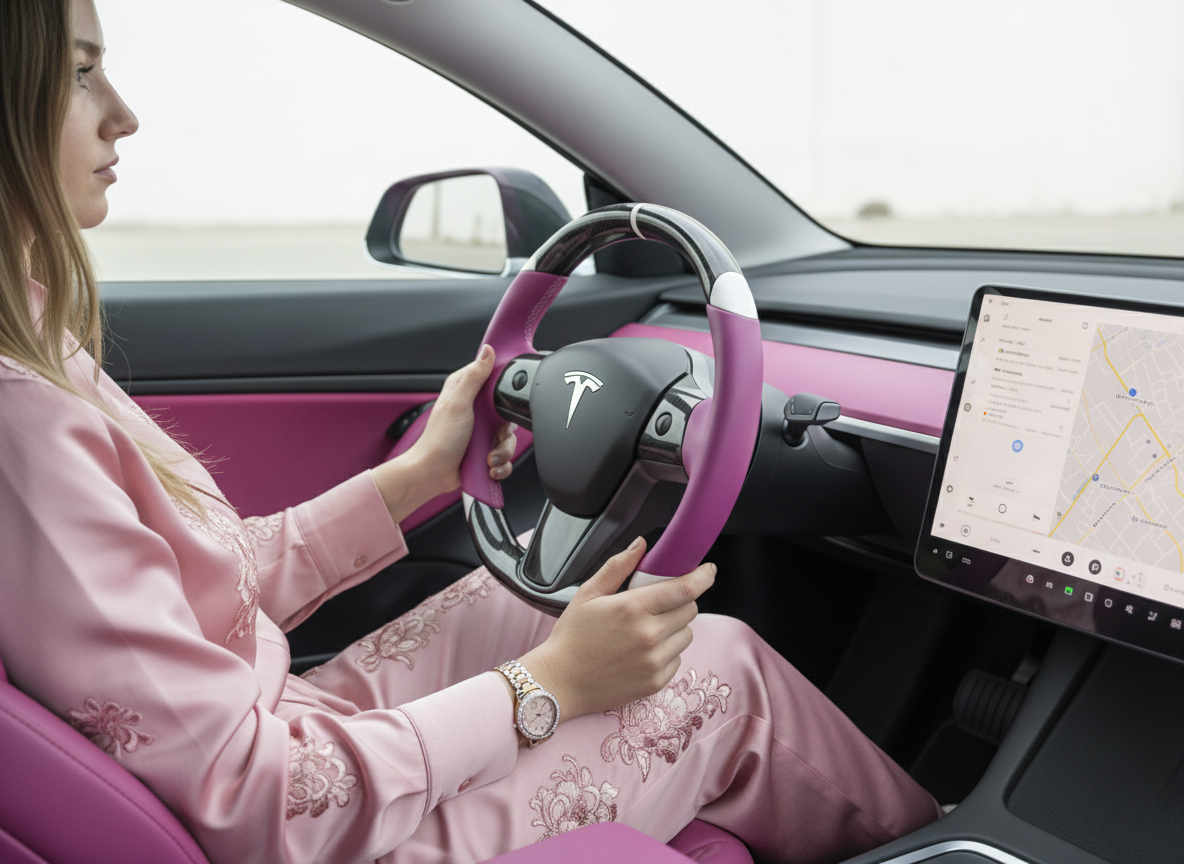
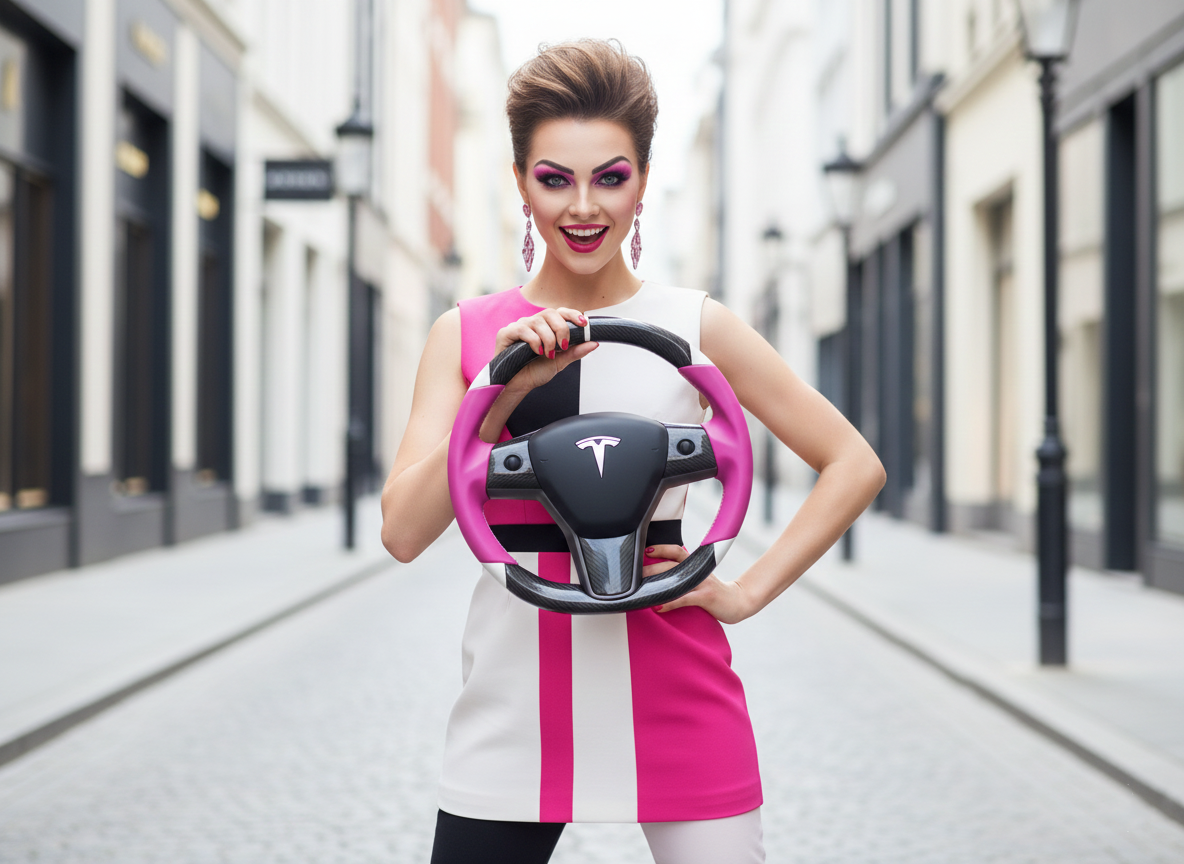
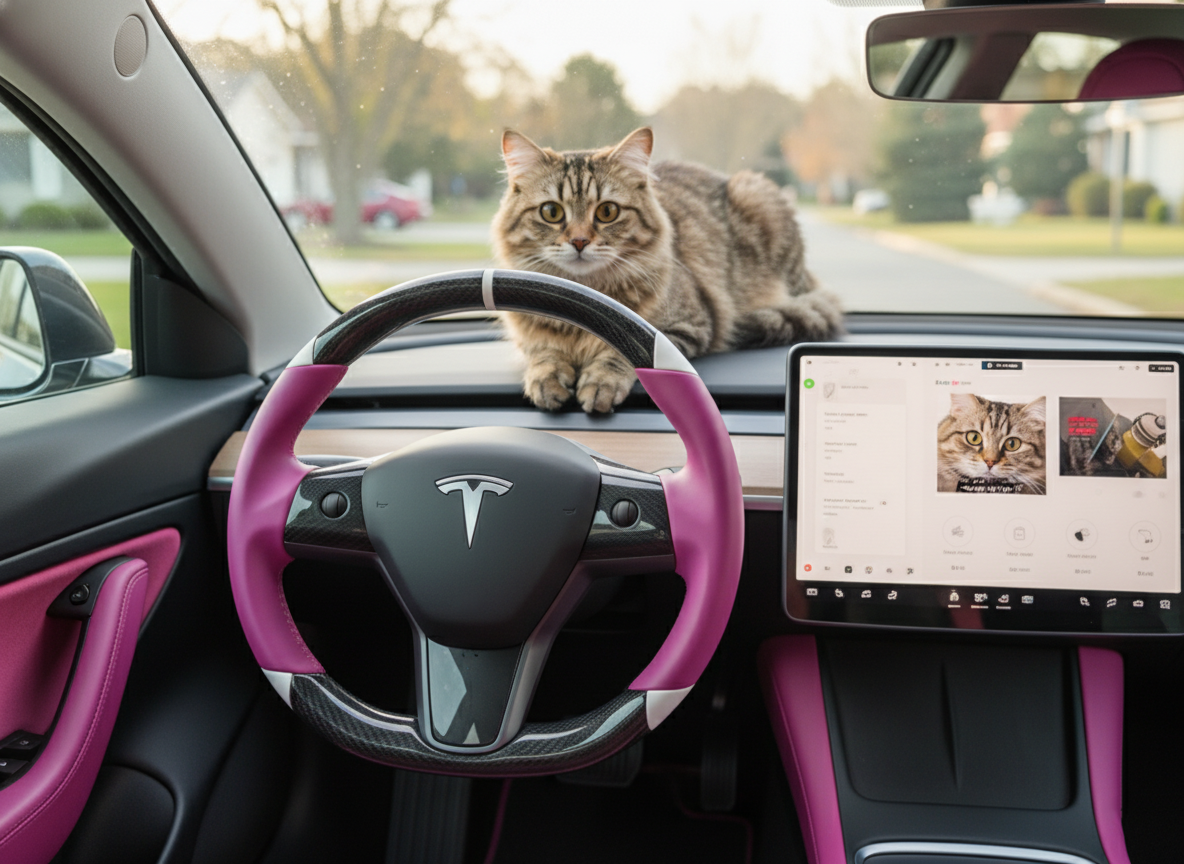
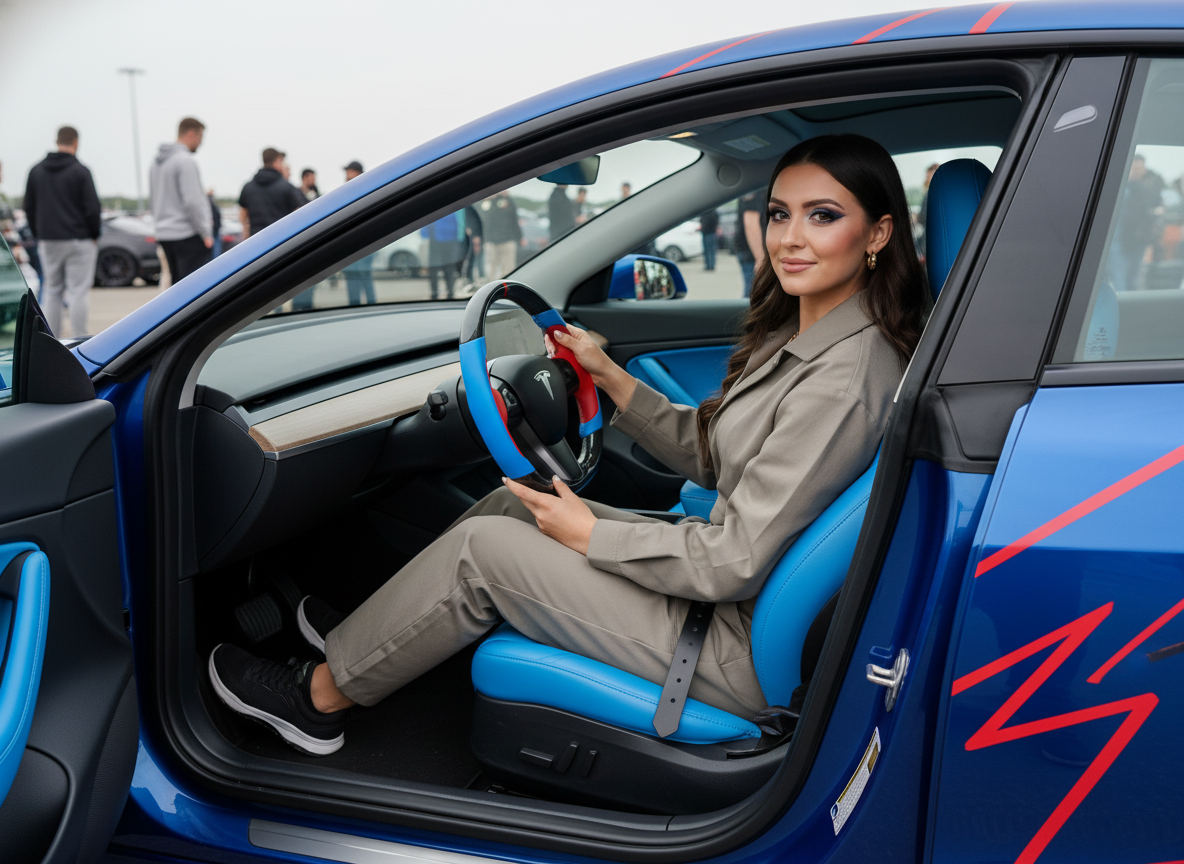
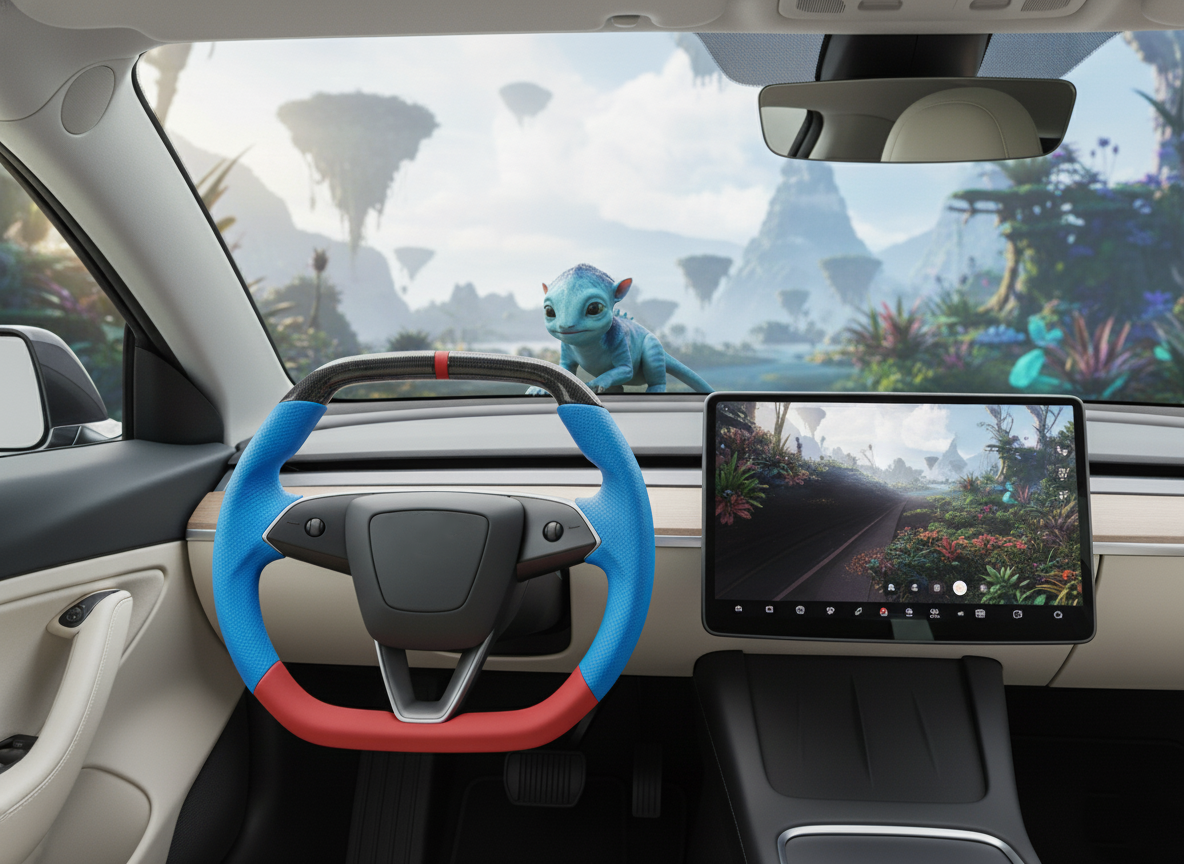
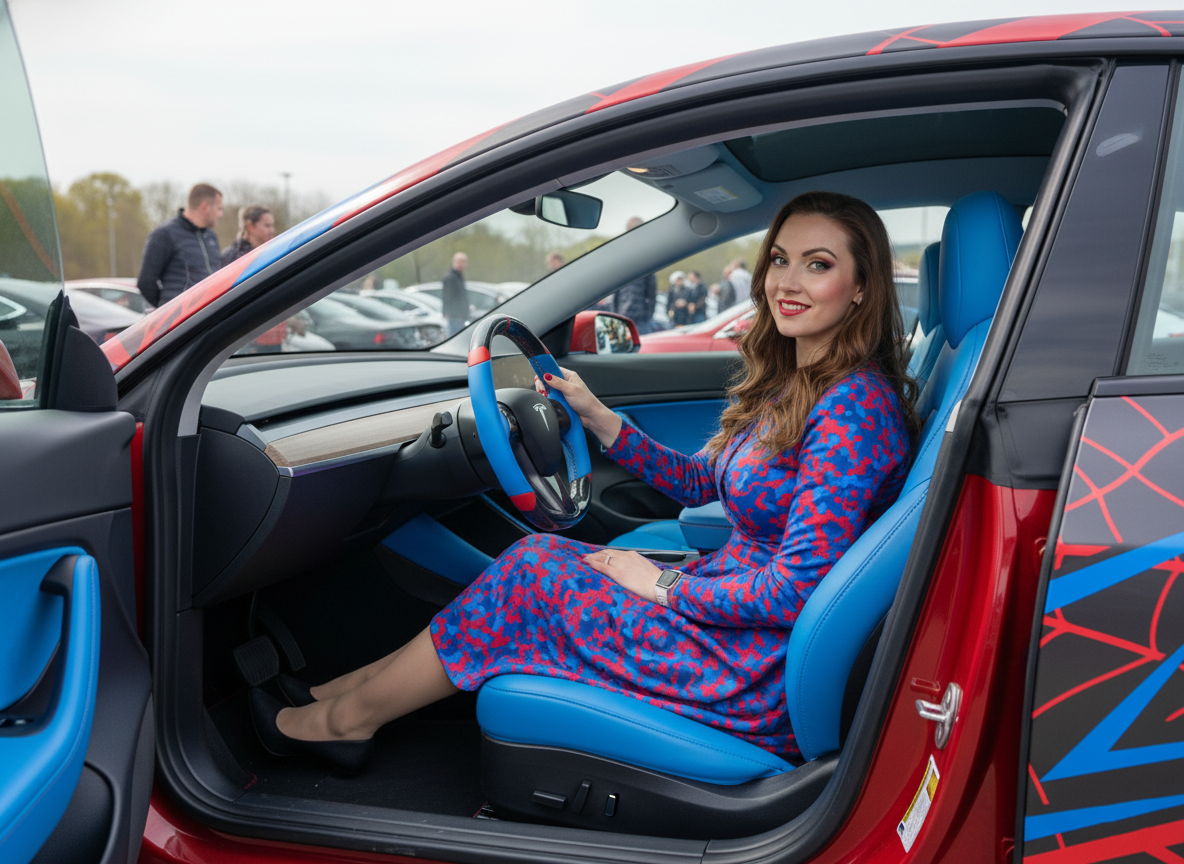
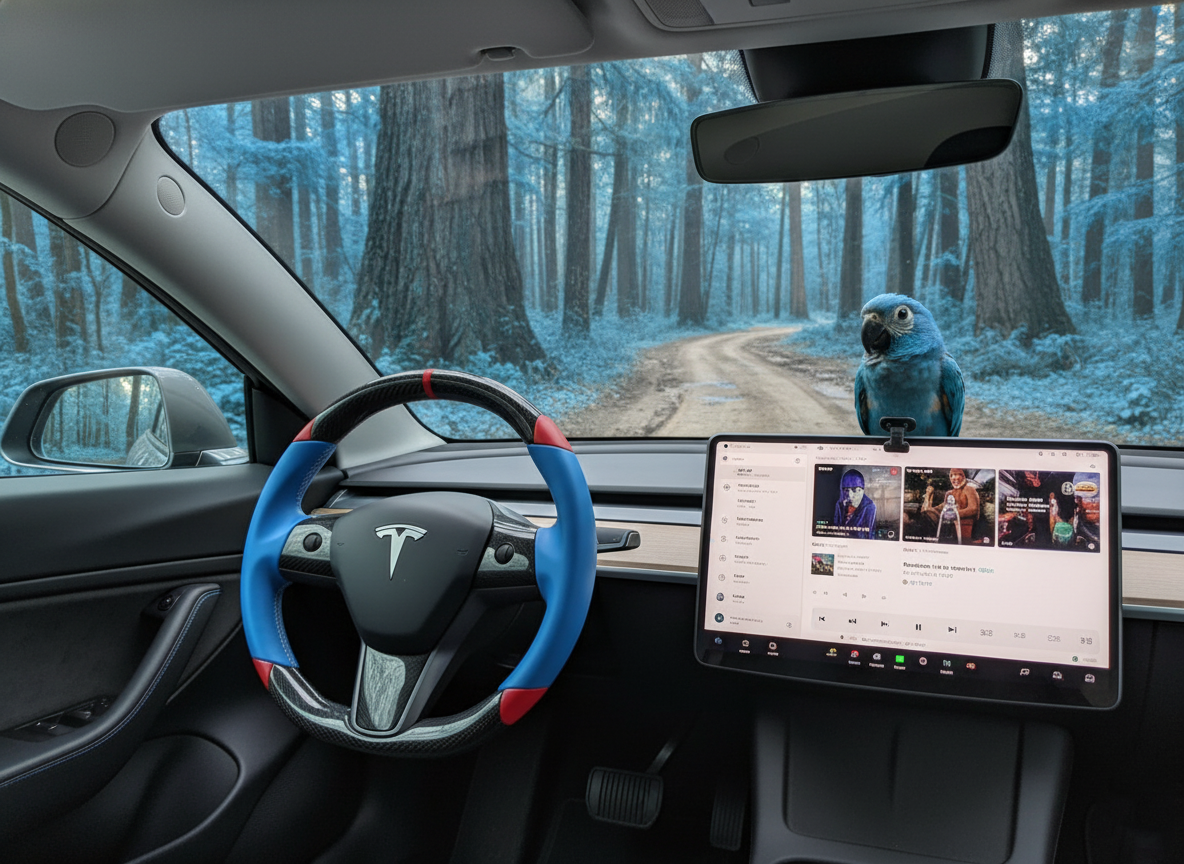
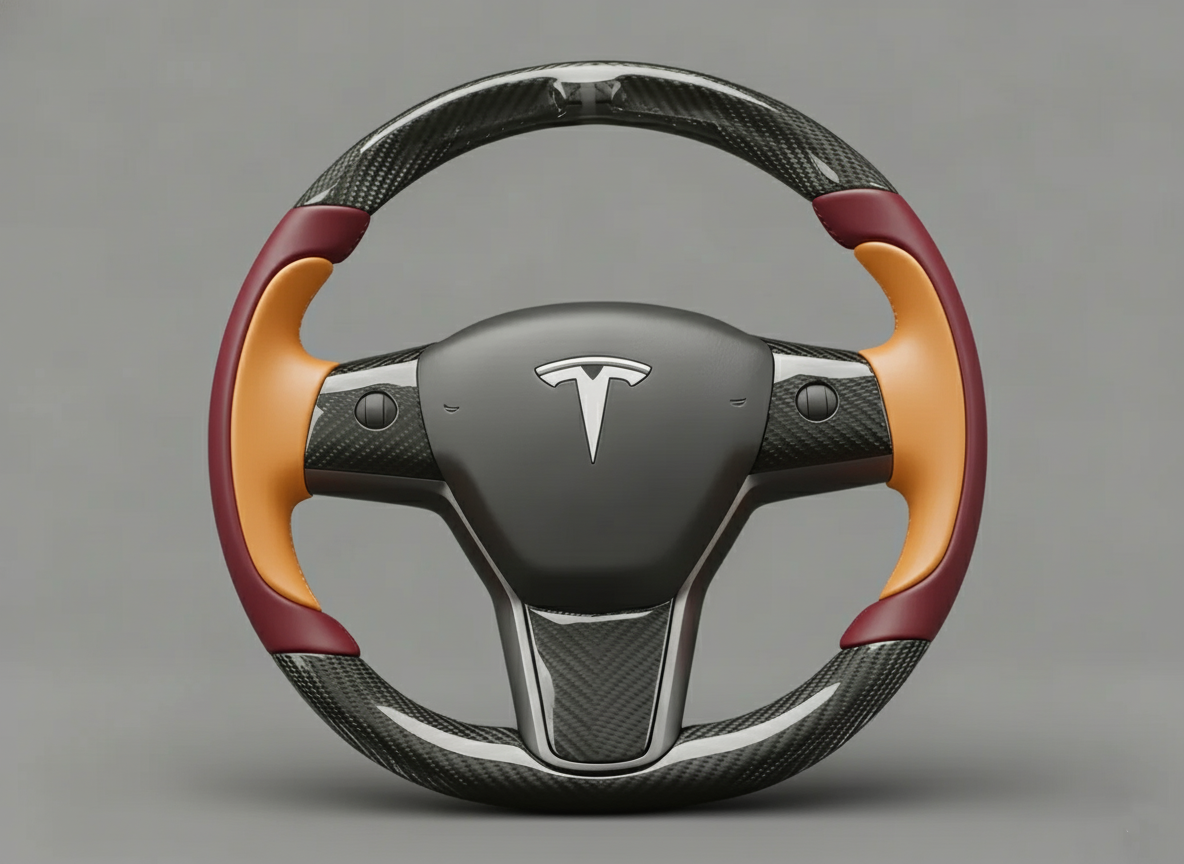
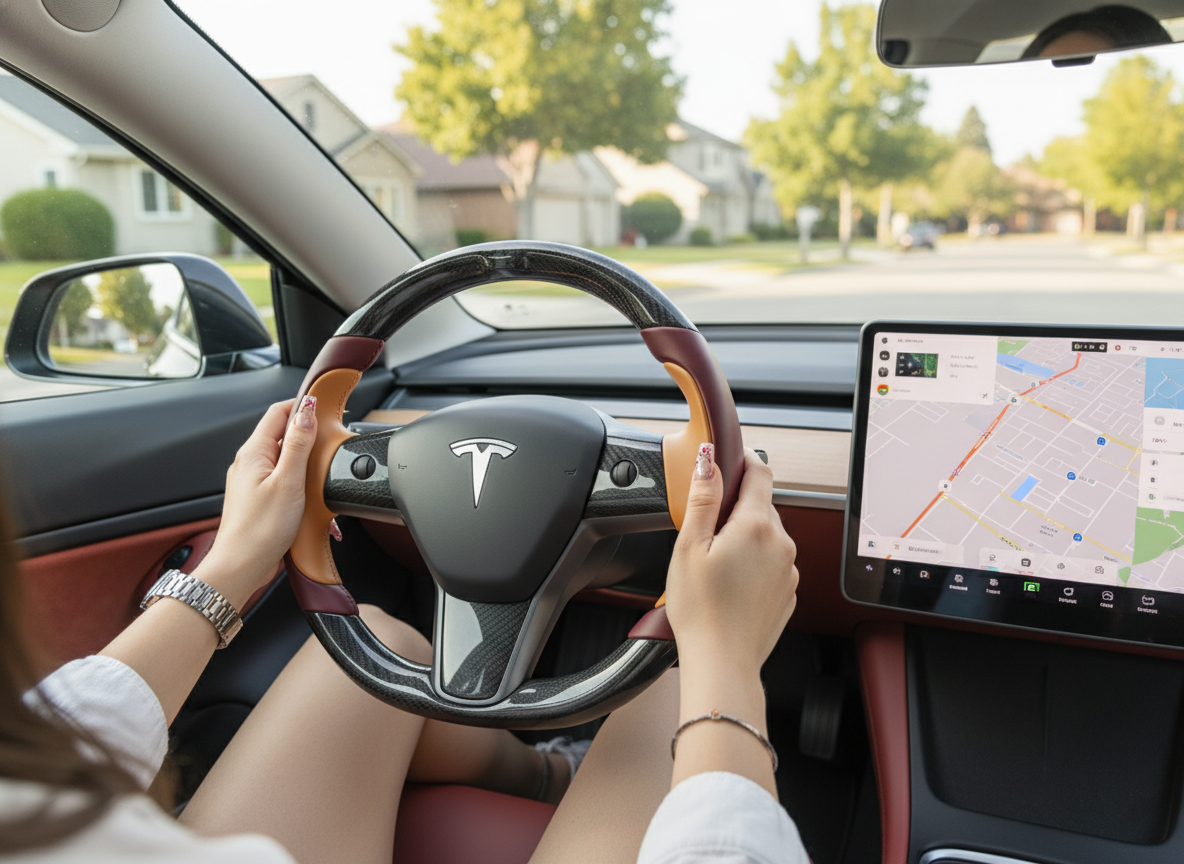
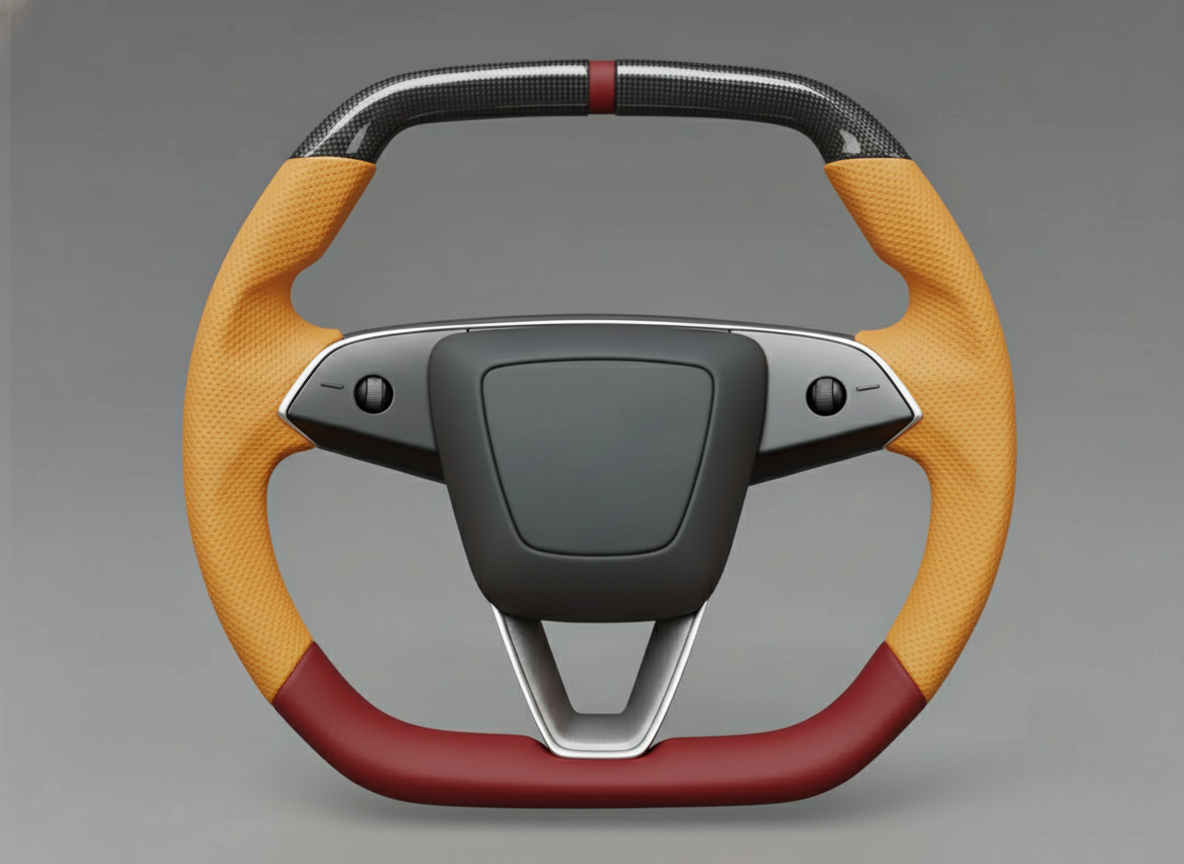
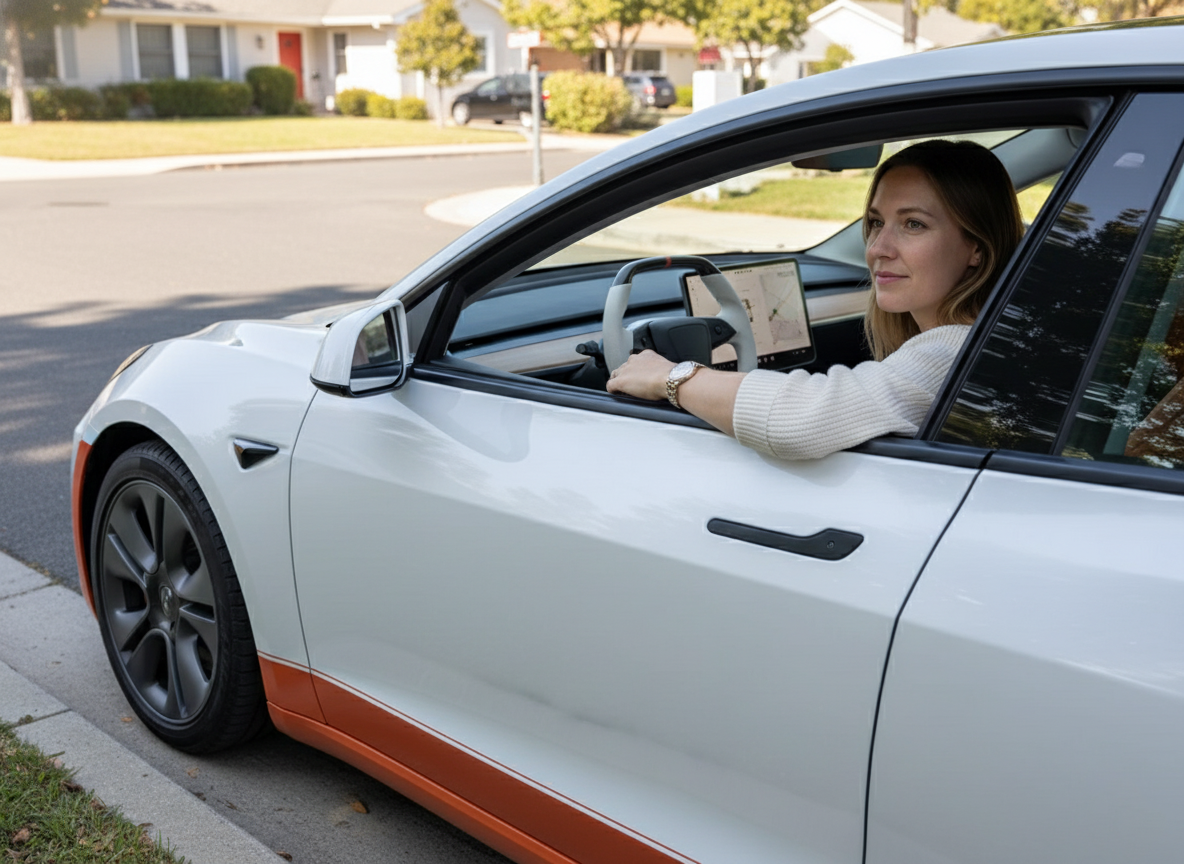
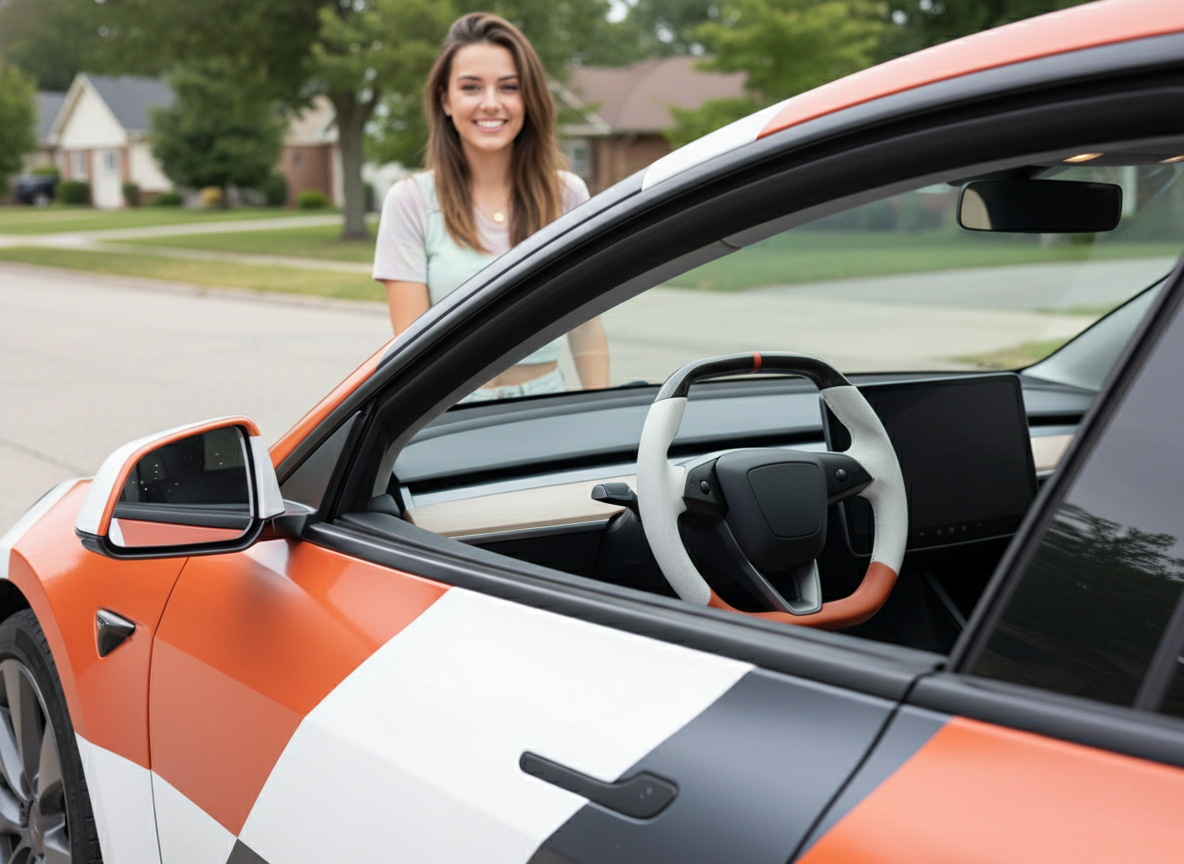
For Model Y steering wheel interior customization, the top choice is a Nappa leather cover in the same color as the original car seats.
Its stain resistance rating reaches level 4 or above, effectively resisting 90% of daily sweat stains.
During installation, a layer of leather protective lotion must be applied first, followed by sliding it on evenly from top to bottom.
The edges are reinforced using a stitching method to ensure a 100% non-slip fit.
Color Matching
In the modification market in North American regions such as California, 73% of Model Y owners prefer steering wheel color changes when upgrading their interior.
By introducing Porsche's identical Bordeaux Red or Nappa leather's Saddle Brown, the light reflectivity inside the cabin can be changed by 15%-25%.
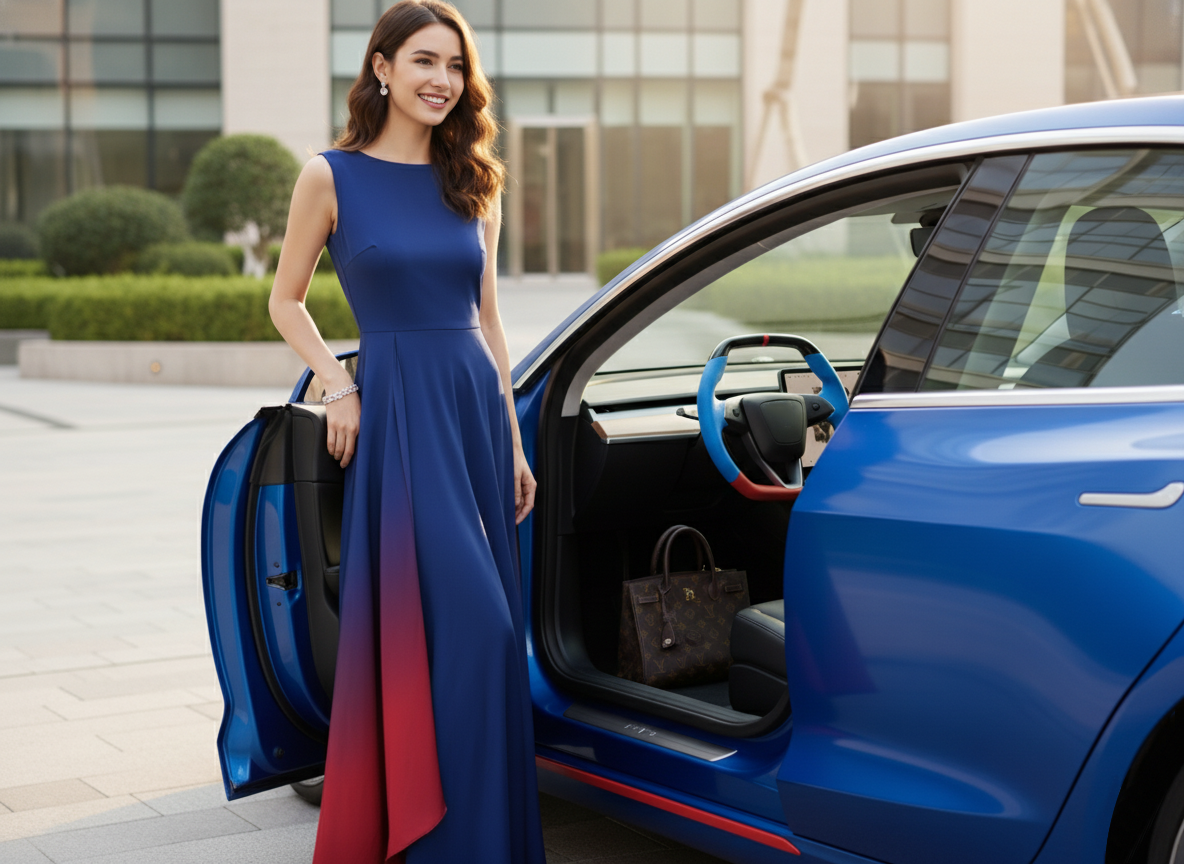
A reasonable color combination not only echoes the exterior of the vehicle (such as the pearl white multi-coat paint finish), but also breaks the monotony of Tesla's minimalist interior through contrasting stitching and color-blocking designs, without changing the physical structure.
Steering Wheel Color Schemes
The brightness L* value of the factory white seats is approximately 88. If pure white (L* value above 95) Italian semi-aniline genuine leather is used on the steering wheel, a slight visual color difference will occur. To achieve a high degree of uniformity, suppliers will mix a milky white dye with a trace amount of gray, and through 3 coating sprays, precisely control the leather brightness between L* 87 and 89.
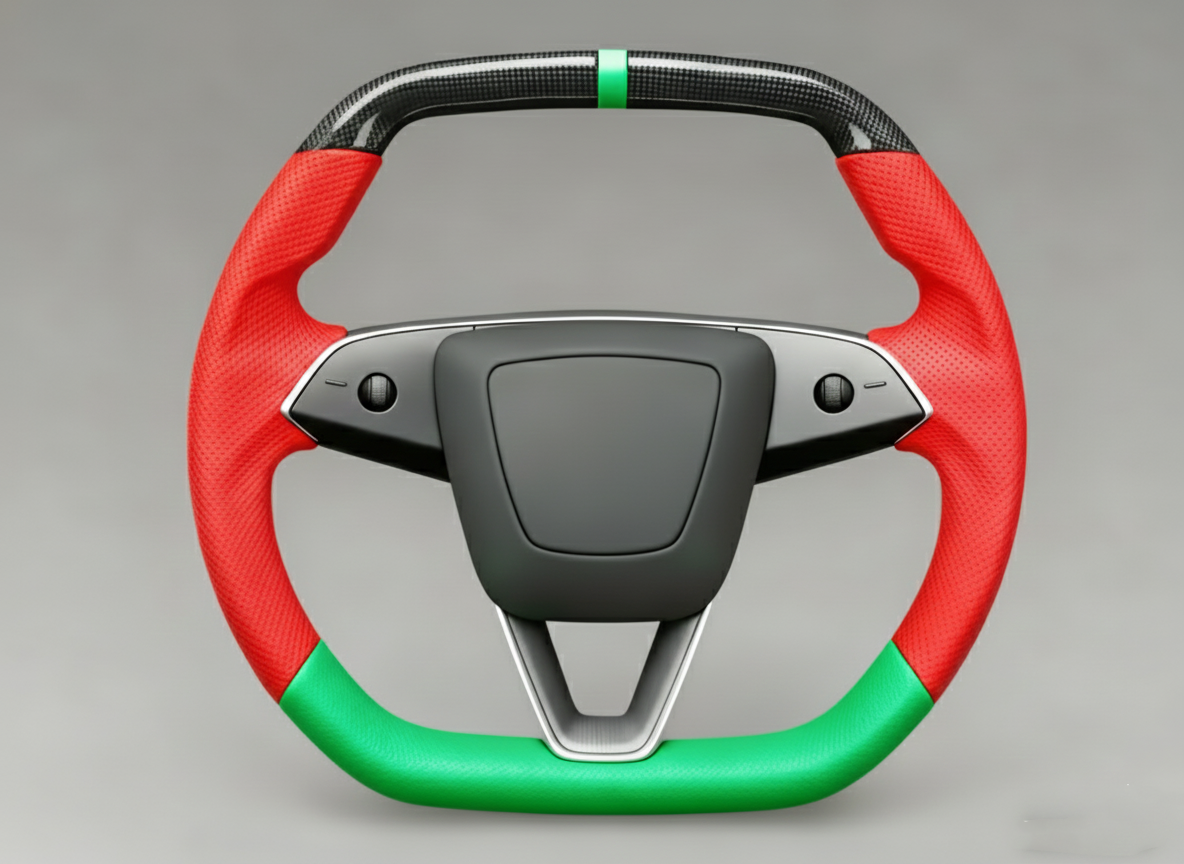
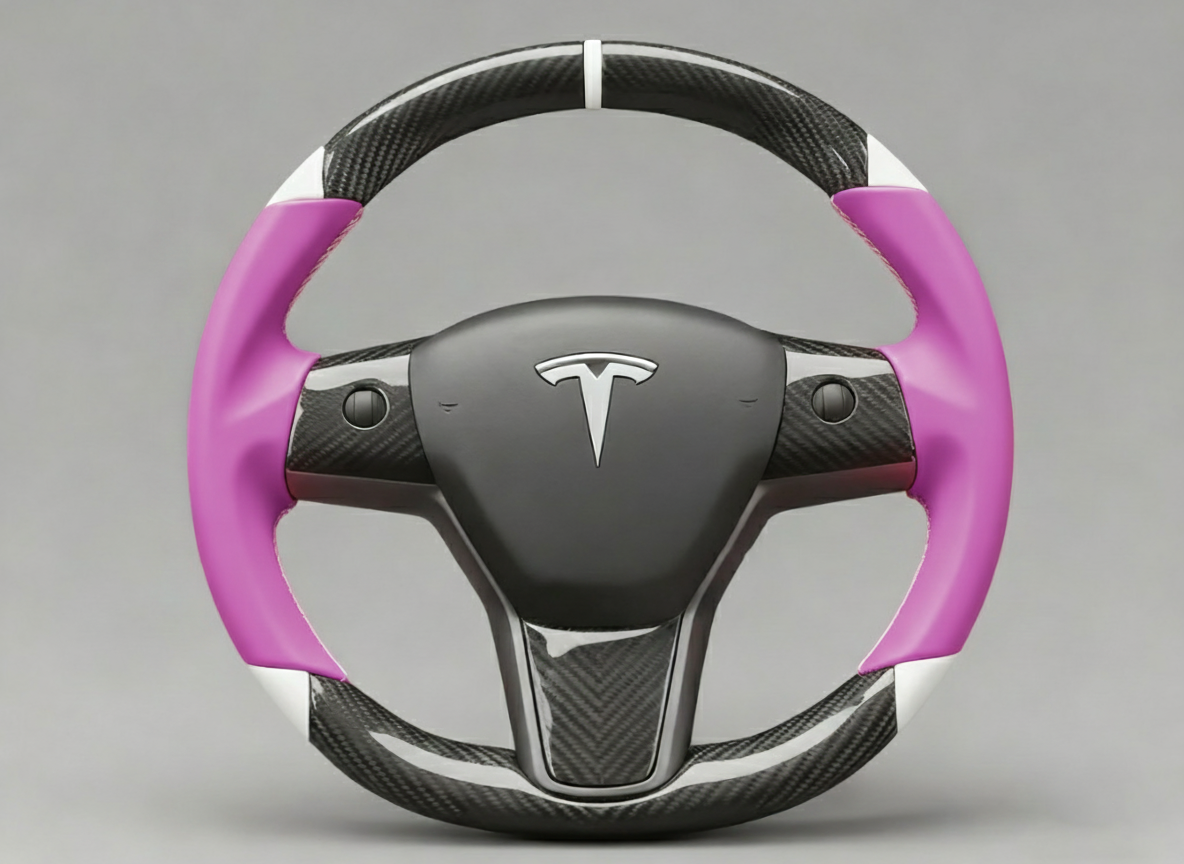
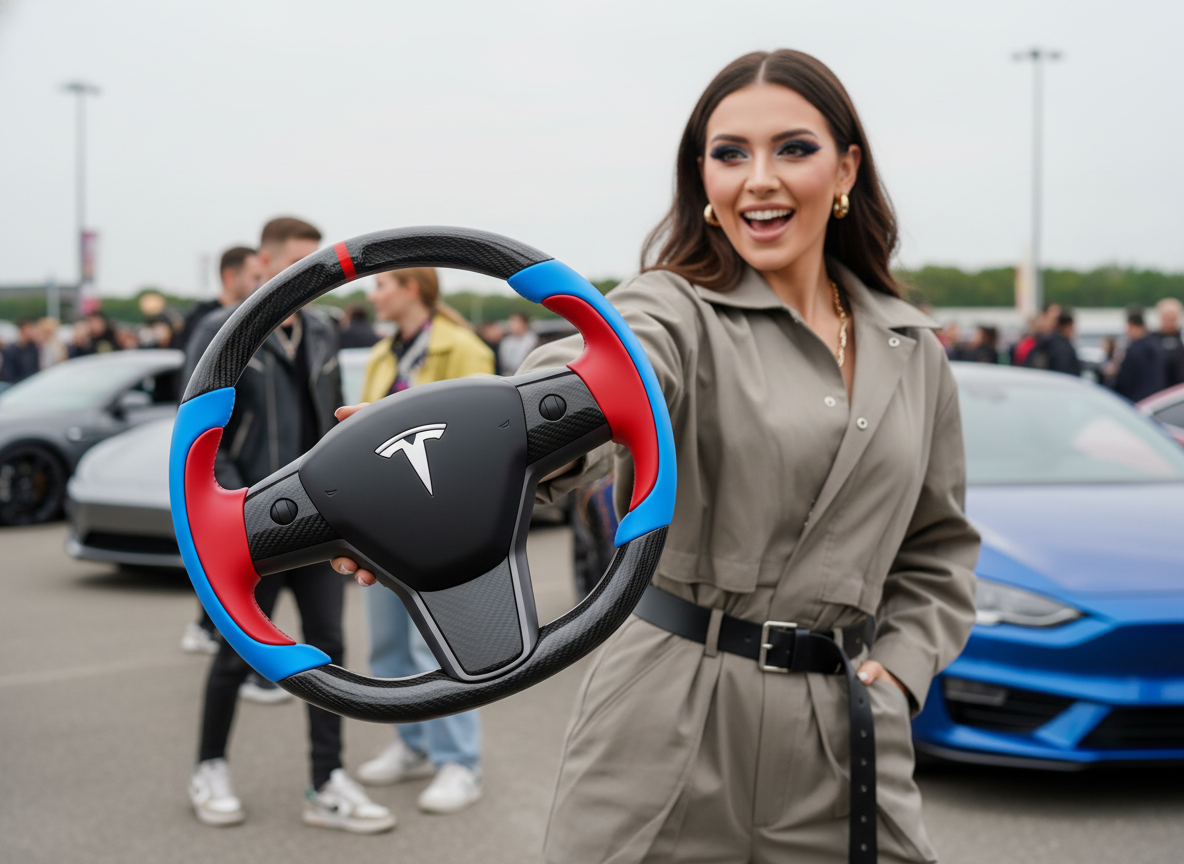
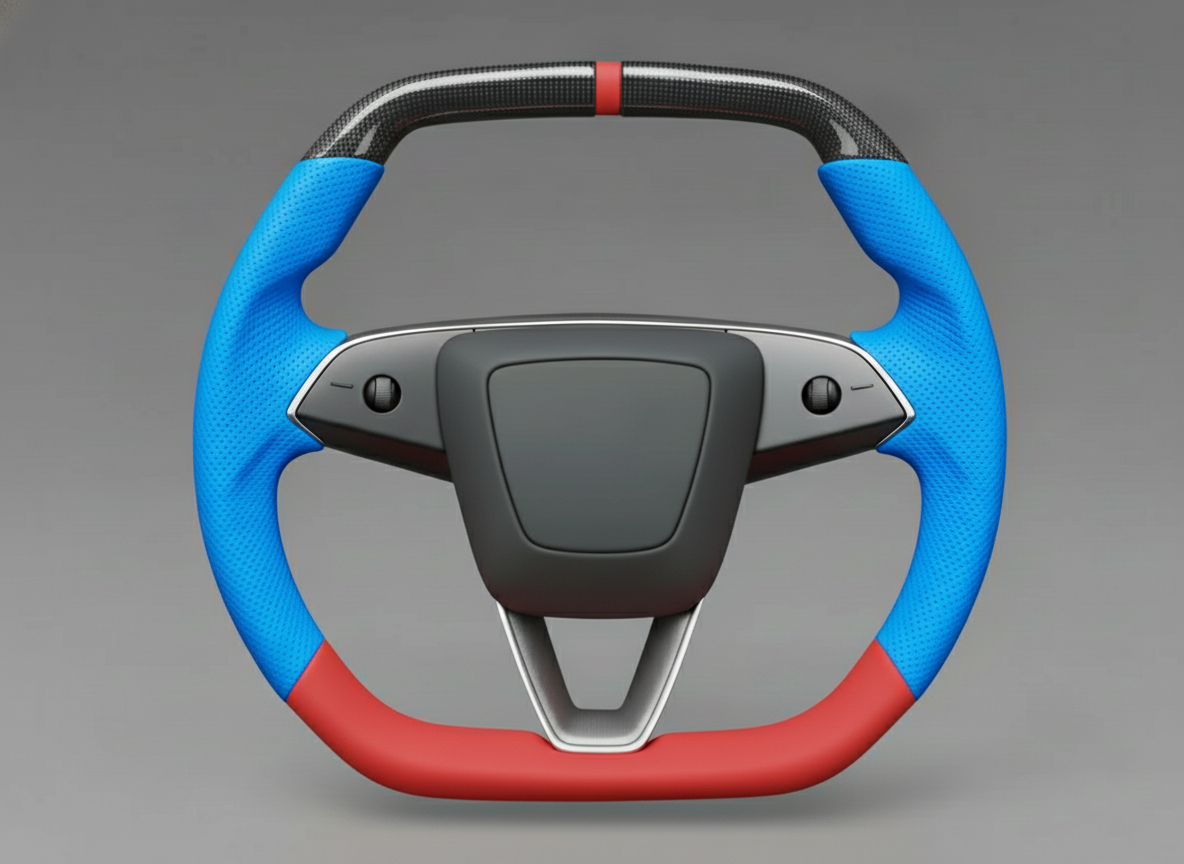
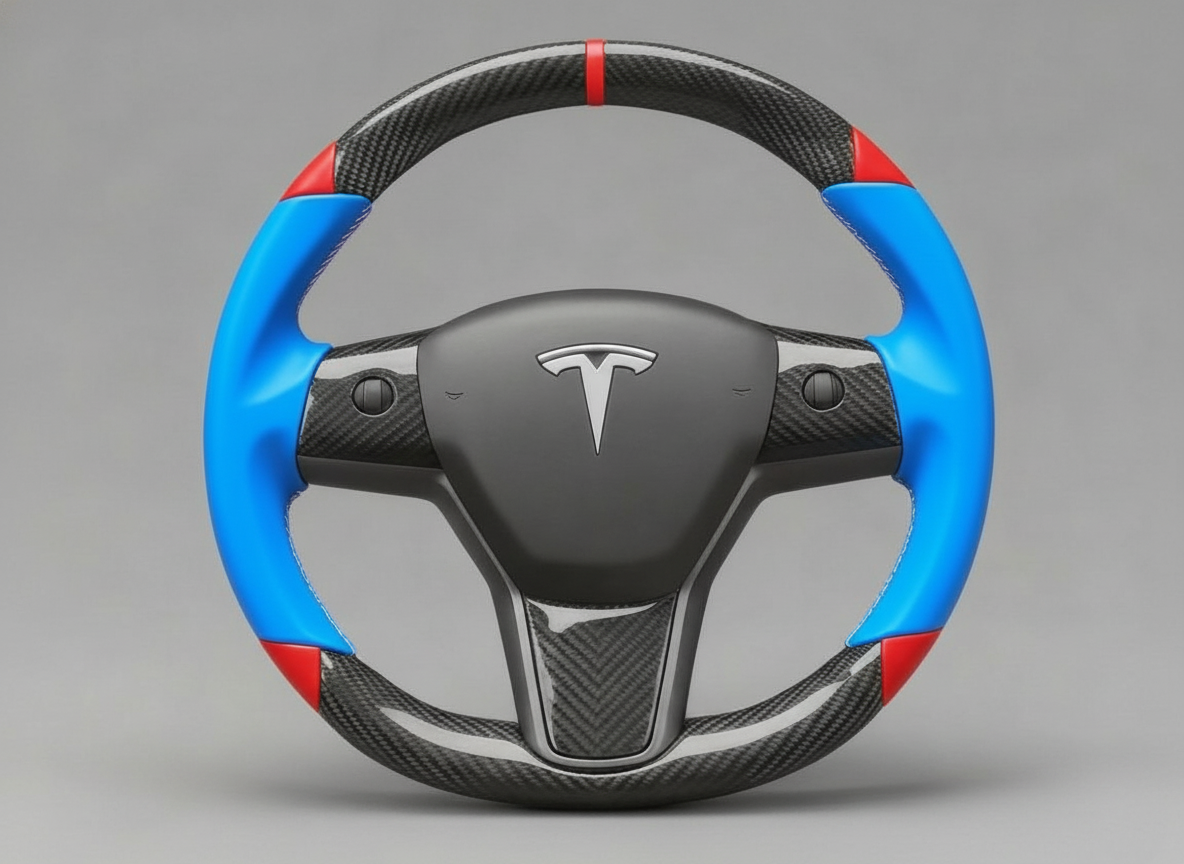
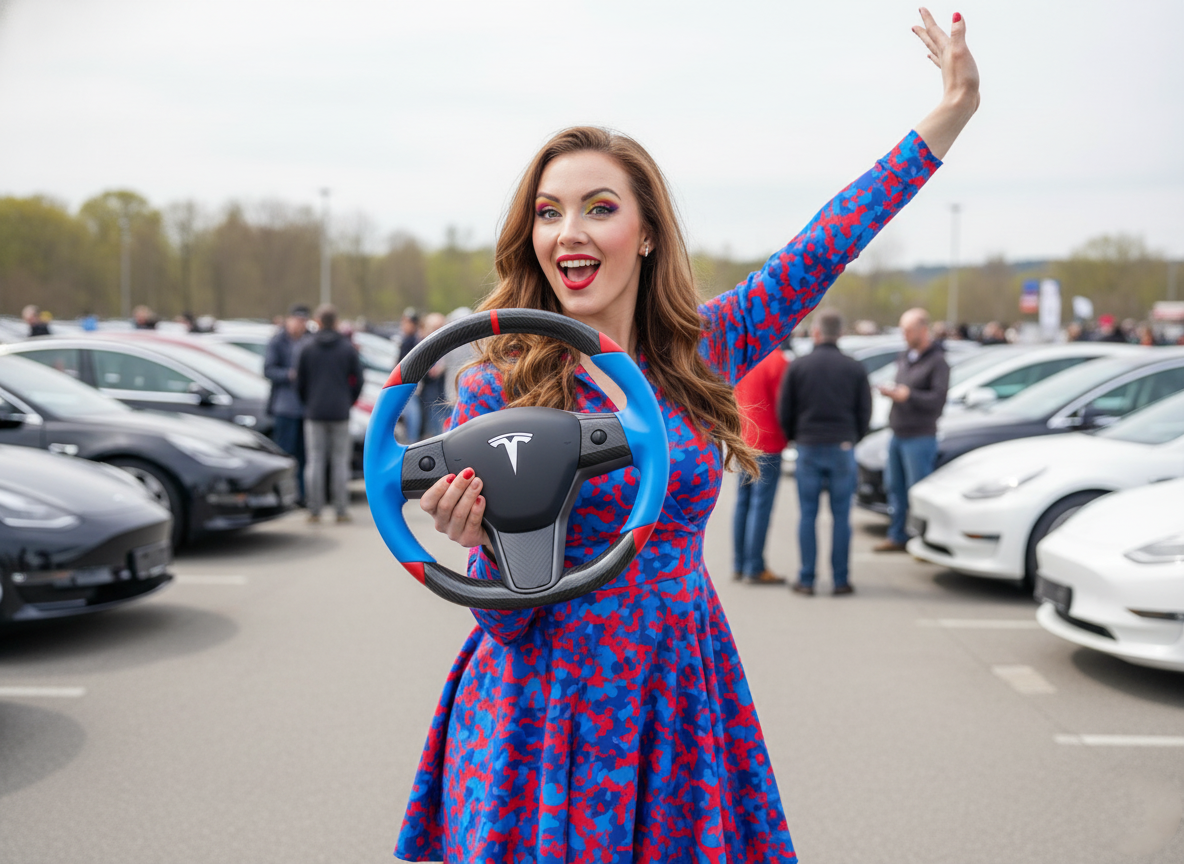
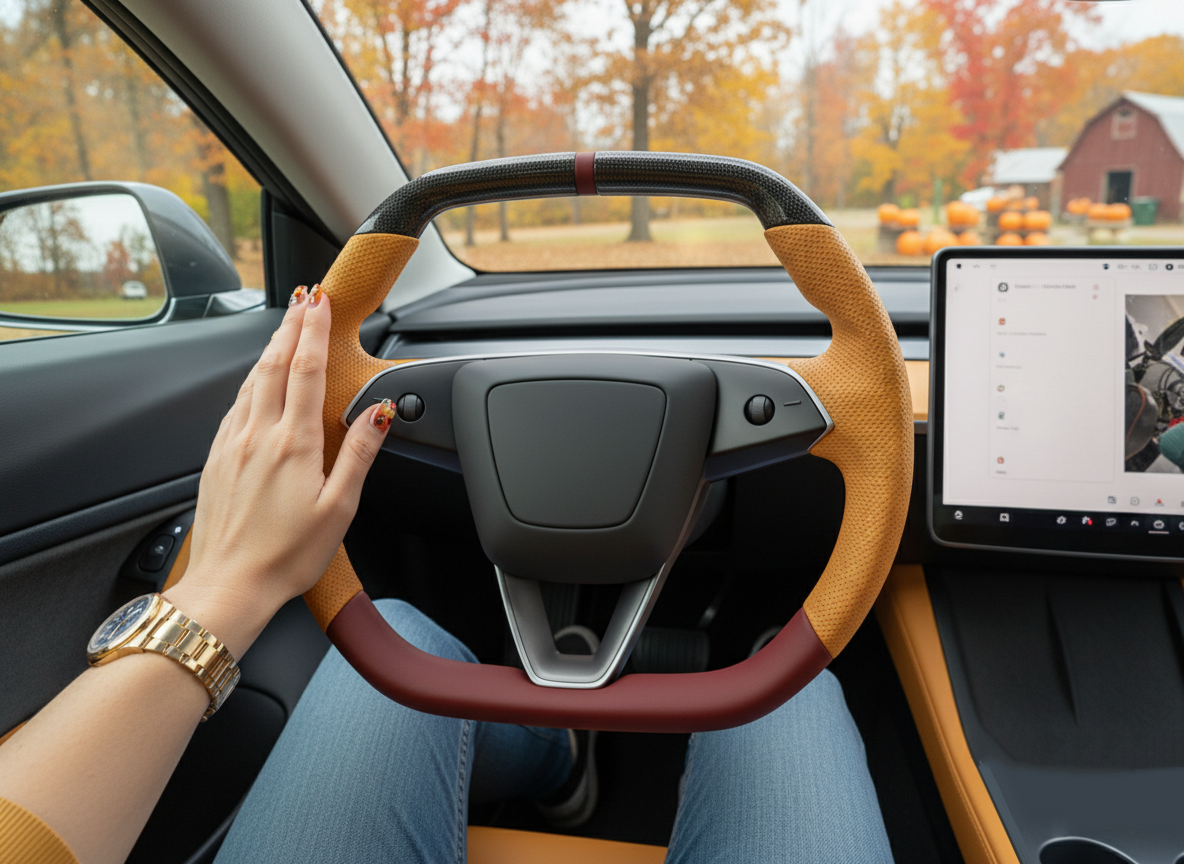
Changing the steering wheel body color is not limited to a solid color wrap; two-tone designs currently account for over 60% of the order share in the North American aftermarket. The top and bottom use Japan Toray 3K twill carbon fiber encapsulated in glossy resin, while the left and right grip sections are spliced with 1.2mm thick Bordeaux Red Nappa leather. The red leather reflects specific wavelengths under direct sunlight, forming a 70% light-dark contrast with the black carbon fiber.
The color rendering of the same red dye on different materials has physical differences. The surface of Alcantara material is covered with 0.2mm long microfiber fuzz. After light enters the fuzz layer, diffuse reflection occurs, which absorbs about 30% of the light. A red Alcantara soaked with the same dye visually appears two shades darker than red Nappa leather, making it suitable for driving environments with strict requirements on reflectivity.
-
Analogous color matching: Dark blue car paint paired with light gray stitching; the hue difference on the color wheel is small, providing a soft visual transition.
-
High contrast complementary colors: Black leather paired with fluorescent yellow stitching, using strong color opposition to attract visual focus.
-
Monochromatic extension: All-black interior paired with dark gray perforated leather, relying on the physical shadows generated by the 1mm perforations to create a sense of layering.
The choice of stitching color inside the steering wheel is a step with extremely low material cost but obvious effects. Hand-stitching a standard 370mm diameter Model Y steering wheel requires approximately 3.5 meters of German Serafil No. 20 nylon thread. A pure black steering wheel paired with high-saturation color stitching such as red, blue, or yellow can outline a clear inner contour of the steering wheel under sunlight, increasing the material cost by only about $15.
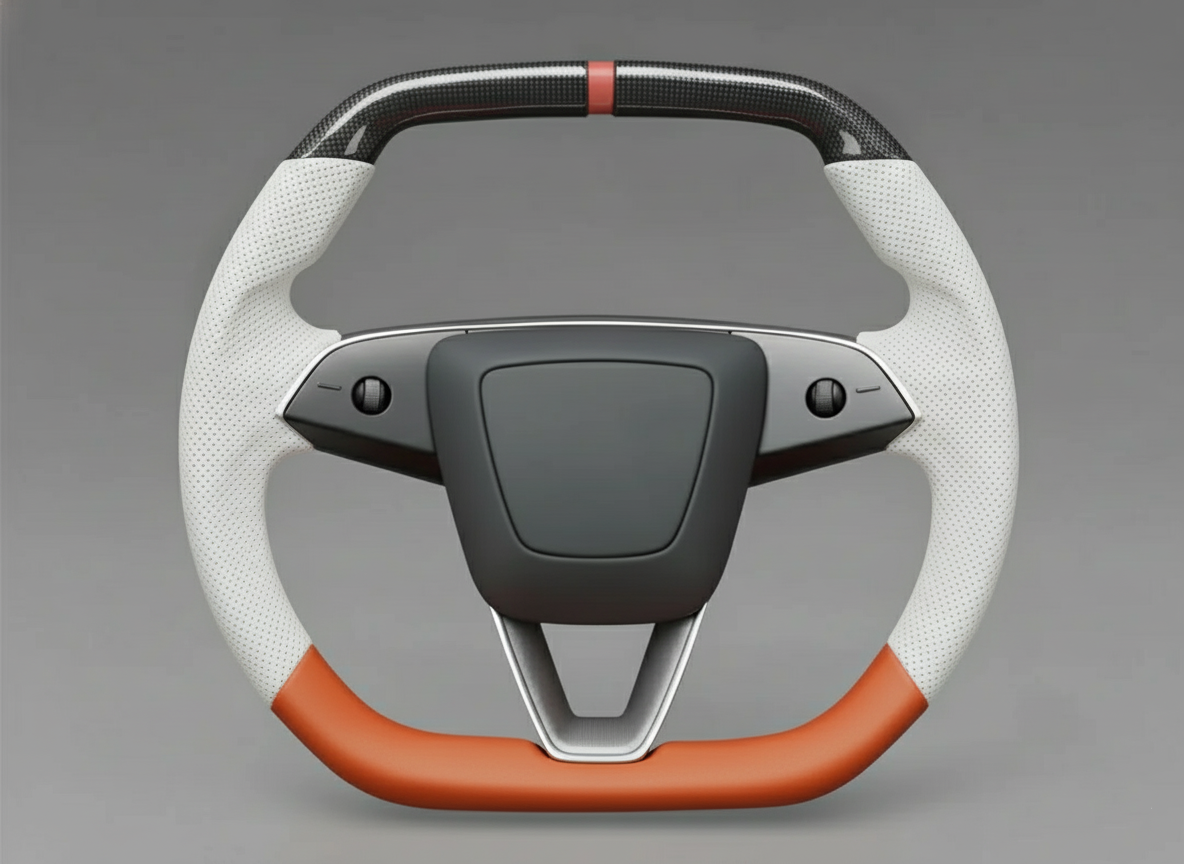
Adding a centering stripe at the 12 o'clock position directly above the steering wheel is a visual element derived from racing cars like the Porsche 911 GT3. Customization shops usually cut a 5mm or 10mm wide groove at the top of the wheel body and embed a ring of contrasting colored leather or Alcantara material.
-
5mm ultra-thin centering stripe: Suitable for a minimalist style, usually using Ferrari red to embellish a pure black steering wheel.
-
10mm standard centering stripe: Occupies a central angle of about 3 degrees at the top, suitable for pairing with glossy carbon fiber, with a heavier visual proportion.
-
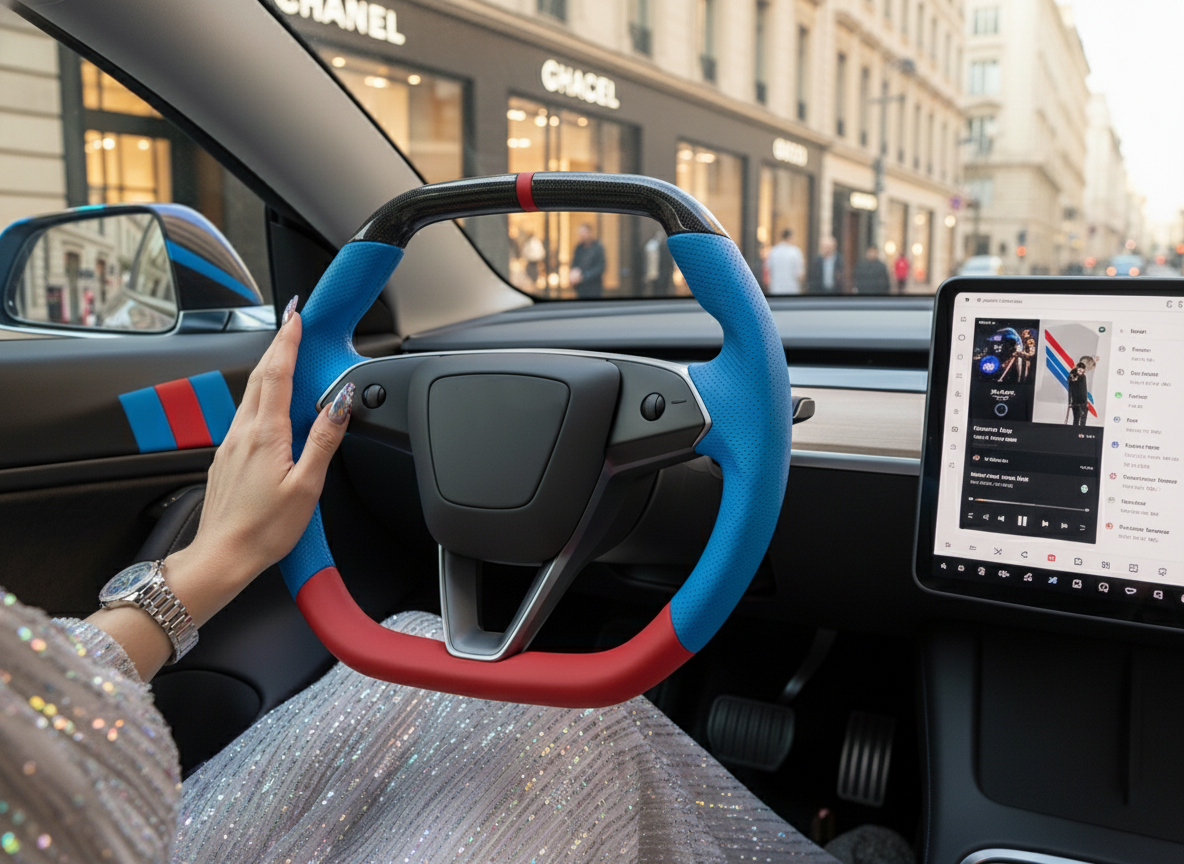
Tri-color centering stripe: Adopts the classic BMW M Power light blue, dark blue, and red leather strip splicing, with each strip being 3mm wide.
-
Car paint color-matched centering stripe: Uses a pre-dyeing treatment on the leather with the same color code as the Quicksilver paint.
If the original airbag cover is retained, the black polyurethane material of the cover will create a color fault with the newly customized colored steering wheel. Some car owners in North America choose to re-wrap the airbag cover with Nappa leather. The wrapping process requires the leather thickness to be thinned down to between 0.4mm and 0.6mm, and pre-cut on the back along the original airbag's burst line location.
If the main body of the steering wheel is upgraded to Saddle Brown, the airbag cover is also wrapped in Saddle Brown leather and embossed with the Tesla Logo. Using a colorimeter to measure the color difference (Delta E) between the cover and the wheel body, when the value is controlled within 1.5, the human eye can hardly perceive the color difference between the two pieces of leather, maintaining a high degree of color continuity.
In a cabin with LED ambient lighting, nighttime lighting will alter the steering wheel's color presentation. When the driver sets the ambient light to pink-purple, the white Nappa leather grips will reflect about 40% of the ambient light, making them appear pale pink at night.
-
Glossy carbon fiber reflection: The surface clear coat layer has a reflectivity as high as 85%, easily reflecting the white light of the central control screen at night.
-
Matte carbon fiber light absorption: The surface undergoes sandblasting treatment, reducing reflectivity to below 15% and maintaining a dark gray tone.
-
Perforated leather light and shadow: Dense 1mm holes will form black shadow spots under side illumination at night.
-
Stitching luminescence reaction: Some bright-colored nylon threads will produce a slight reflective effect under specific wavelengths of LED light.
For models with an all-white interior, the original wood grain trim is usually replaced with a white matte trim panel. The carbon fiber portion of the steering wheel is replaced with White Forged Carbon processed with a special coating technology. The forged white carbon contains chopped carbon fiber bundles with a length of 2-3 cm inside, mixed with white epoxy resin and molded under high temperature and high pressure.
Color Combinations
In regions with extremely high Tesla ownership, such as California in North America, about 73% of Model Y owners will consider adjusting the interior color scheme within the first year of taking delivery. The factory-equipped 370mm diameter polyurethane steering wheel is visually relatively monotonous, and its reflectivity is usually fixed at a low level, unable to meet the needs of a personalized cabin. Through precise color combinations, the light and shadow atmosphere inside the cabin can achieve a visual width enhancement of over 20%.
In the Lab color space values of the factory white seats, the L* (lightness) component is approximately 88. If ultra-white genuine leather with an L* value of 95 is mistakenly used on the steering wheel, it will create an obvious visual abruptness. Professional overseas custom factories will select milky white Nappa leather calibrated to an L* value of 87 to 89 to ensure that the color difference Delta E between the steering wheel and the seats remains within 1.5 under sunlight.
In addition to large-area white applications, the penetration rate of the red color series occupies a 42% share in the performance modification market. The common Bordeaux Red has a level 3 color rendering depth on Nappa leather, providing a deep and understated texture. Under natural light with a color temperature of 5500K, the red leather of this color code presents a saturation 15% lower than standard racing red, which is more in line with the Model Y's positioning as an urban SUV.
-
Monochromatic scheme: Uses all-black Nappa leather, changing the light refraction angle by adjusting the surface epidermis texture.
-
Two-tone scheme: The top and bottom use 3K twill carbon fiber, and the left and right grips are spliced with colored leather of 1.2mm thickness.
-
Tri-color splicing: Borrows the color matching logic of European high-performance cars, performing a three-stage color division at the grip of the steering wheel.
-
Wrap-around color scheme: The stitching color is completely identical to the body paint color code, achieving a visual closed loop between the exterior and interior.
-
Local embellishment: Only adds a 5mm wide fluorescent centering stripe at the 12 o'clock position.
Regarding the physical characteristics of Model Y interior materials, different materials have significant differences in their absorption rates for the same dye. The following table displays the color performance data of three mainstream materials in the same environment:
| Material Type | Light Absorption Rate | Recommended Color Palette | Visual Lightness Deviation Value | Tactile Temperature Perception |
|---|---|---|---|---|
| Nappa Genuine Leather | 12% - 15% | Riviera Blue | +5% (Appears lighter) | Neutral |
| Alcantara | 28% - 32% | Racing Green | -10% (Appears darker) | Warmer |
| Matte Carbon Fiber | Over 80% | Stealth Black | Not applicable | Cooler |
Hand-stitching a standard Model Y steering wheel requires 3.5 meters of German Serafil No. 20 nylon thread. Using contrast stitching in Miami Blue or Acid Green on black leather can outline the geometric inner contour of the wheel body through lines, without adding too many color blocks.
The European stitching method of 6 to 8 stitches per inch allows the contrast-colored thread to form a dashed but distinct bright dotted line on the black base. This treatment reflects the delicacy of the craftsmanship better than simple color block stacking. Under 500 lux cabin lighting, the contour recognition provided by high-contrast stitching is over 60% higher than that of matched-color stitching.
The centering stripe design at the top of the steering wheel is another high-frequency point for color application. To avoid interfering with the driver's visual attention, the width of the centering stripe is usually set between 5mm and 10mm.
-
5mm micro stripe: Occupies an angle of about 1.5 degrees on the wheel's circumference, suitable for drivers pursuing a refined feel.
-
10mm standard stripe: Forms a stable color anchor point in the visual center, commonly seen in performance modifications.
-
Tri-color gradient stripe: Composed of three 3mm leather strips in light blue, dark blue, and red, totaling 9mm in width.
-
Metal ring stripe: Adopts an embedded anodized aluminum alloy ring, providing color feedback with a metallic luster.
The color scheme of the airbag cover plays a pivotal role in the overall design perception. After 3 to 5 years of use under the strong ultraviolet rays of California, the factory polyurethane cover will experience a hue shift of about Delta E 3.0. To eliminate this visual difference caused by aging, re-wrapping the airbag cover in matching Nappa leather is the mainstream choice. The leather must undergo a thinning process, with the thickness precisely controlled between 0.4mm and 0.6mm to ensure the physical strength requirements when the airbag deploys.
At the connection between the cover and the wheel body, the measurement data from a colorimeter is the sole standard for quality control. When the Delta E value is less than 1.0, the human eye's perception of color continuity reaches its peak, giving the cabin the strongest sense of visual quality. If Saddle Brown is selected for the wheel body, simultaneously replacing the airbag cover with dyed leather from the same batch can transform the Model Y's original industrial interior into a luxury texture with a handcrafted warmth.
The LED ambient lighting inside the cabin will also dynamically interfere with the steering wheel's color. White Nappa leather will reflect about 40% of blue light wavelengths when illuminated by blue-purple ambient light, giving it a special electro-optic purple effect at night. In contrast, Alcantara material, due to the diffuse reflection caused by its 0.2mm long synthetic surface fuzz, is less sensitive to ambient light colors and can maintain over 85% of its original hue.
-
High-gloss clear coat carbon fiber: Reflectivity up to 85%; at night it will reflect the white light of the center screen, interfering with vision.
-
Satin matte carbon fiber: Reflectivity drops below 15%, capable of absorbing most excess stray light.
-
Perforated leather technique: Through shadows created by 1mm holes, it adds light and dark color layering under lateral illumination.
-
Fluorescent stitching application: Produces a faint self-illuminating sensation under specific wavelengths of light, increasing the high-tech atmosphere at night.
For Model Y owners pursuing the ultimate lightweight visual, White Forged Carbon offers a brand-new color matching idea. This material is pressed from chopped carbon fiber bundles 2-3 cm in length and white resin under high temperature and high pressure. The random marble-like texture formed on its surface provides a unique color distribution for every vehicle. Paired with Stone Grey leather grips on both sides, the proportion of cool tones in the cabin can be optimized from the factory's 95% to a more vibrant approximately 75%.
Interior Color Schemes
68% of Model Y owners in the North American market will modify the factory 370mm diameter polyurethane steering wheel within 6 months of taking delivery. The factory black material has a cabin light reflectivity of only 8%, which can easily cause visual fatigue during long drives. Adjusting the interior color ratio can drastically alter the light and shadow distribution inside the car.
Back-end statistics from Los Angeles modification shops show that orders for two-tone steering wheels accounted for 71% of total modifications in the third quarter of 2023.
Matching Tesla's iconic pearl white interior is an extremely rigorous color engineering task. The L* (lightness) component measurement value of the factory white seats in the Lab color space is 88. If the steering wheel uses pure white leather with an L* value exceeding 95, the extremely high brightness difference will produce a strong visual abruptness.
European leather suppliers specifically formulated a Nappa leather with a trace amount of gray for this purpose. The epidermis is sprayed with 3 layers of polyurethane coating, ultimately anchoring the L* value precisely within the 87 to 89 range. Strict color control keeps the color difference Delta E between the steering wheel and the seats below 1.5 in natural light.
-
1.2mm thick Bordeaux Red Nappa leather provides a level 3 color rendering depth with moderate saturation.
-
Alcantara material with a 0.2mm fuzz length absorbs about 30% of natural light through surface diffuse reflection.
-
3K twill glossy carbon fiber has a surface clear coat that reflects up to 85% of light, making it extremely reflective.
-
Saddle Brown semi-aniline leather has a color temperature leaning towards 3200K, injecting warm tones into the cabin.
The stitching at the leather splices serves as an excellent visual leading line for building geometric contours. Hand-stitching a standard Model Y steering wheel requires 3.5 meters of German Serafil No. 20 high-strength nylon thread.
Applying contrast stitching in Miami Blue or Acid Green on all-black leather only increases the material cost by about $15. Under standard cabin lighting of 500 lux, the contour recognition provided by high-contrast stitching is 60% higher than that of solid black stitching.
The standard stitch density of the European stitching method is controlled at 6 to 8 stitches per inch, and the stretching deformation rate is strictly kept below 2%.
The centering stripe at the 12 o'clock position on the top of the steering wheel originates from the European racing industry. Technicians will cut a 2mm deep groove at the top of the carbon fiber or leather and embed colored leather strips to enrich the visual layers.
-
5mm micro leather strip: Occupies a central angle of about 1.5 degrees on the wheel's circumference, providing an extremely restrained color embellishment.
-
10mm standard width: Doubles the visual area, usually paired with a flat-bottom designed carbon fiber panel at the bottom.
-
9mm tri-color splicing: Seamlessly stitched together from three 3mm wide leather strips in light blue, dark blue, and red.
-
Anodized aluminum ring: Embedded to a depth of 1.5mm, providing approximately 12% metallic luster reflectivity.
After 3 years of exposure in high-intensity UV regions like Arizona, the factory polyurethane airbag cover will undergo an aging hue shift of around Delta E 3.0. Re-wrapping the airbag cover with matching Nappa leather can completely eliminate the color deviation caused by aging.
The wrapping process requires the leather thickness to be precisely thinned down to between 0.4mm and 0.6mm. The back must be pre-cut along the factory airbag's hidden burst line to ensure that the airbag's deployment speed within 30 milliseconds is not subjected to any physical obstruction.
When using Saddle Brown grips, the airbag cover must use leather from the same dye batch. The highly uniform color code guarantees visual continuity across the 370mm central area.
Colorimeter testing shows that when the Delta E measurement between the cover and the wheel body is below 1.0, the human eye cannot distinguish a color fault at a 5500K color temperature.
When driving at night, the LED ambient lights in the footwell will dynamically interfere with the leather's color presentation. White Nappa leather will reflect about 40% of blue-purple light wavelengths, presenting a faint electro-optic purple illusion in a dark environment.
The dense synthetic fibers on the surface of Alcantara material can effectively lock in light. Under LED lighting of the same intensity, the material can maintain 85% of its original hue, avoiding glaring reflective effects from the steering wheel at night.
White Forged Carbon provides a new option for car owners pursuing a lightweight visual. Suppliers mix chopped carbon fiber bundles 2 to 3 cm in length with white epoxy resin and press them into shape under a high pressure of 150 psi.
The resulting random marble texture has extremely high recognizability. Combined with Stone Grey leather grips on both sides, the cool tone ratio of up to 95% in the originally minimalist cabin is successfully optimized to 75%.
-
High-gloss clear coat treatment: Increases the carbon fiber surface hardness to 3H; prone to reflecting the strong light from the 15-inch center screen at night.
-
Satin matte process: The surface roughness Ra value is controlled at 1.2, physically reducing the reflectivity to below 15%.
-
1mm perforated leather: Dense physical holes create a 40% shadow area under lateral illumination, deepening the color layers.
-
Fluorescent nylon stitching: After absorbing solar UV rays, its luminescent half-life in dark environments is about 2 hours.
Stain Resistance
The surface of Vegan Leather has no dense pores; its penetration resistance to coffee and sunscreen is 4 times that of natural Nappa leather.
In the ISO 105-X12 color fastness to rubbing test, materials with a polyurethane clear coat on the surface can withstand over 3000 rubs from denim without dye transfer.
In the daily high-frequency grip areas at 3 and 9 o'clock, a coating with a surface tension below 30 mN/m can reduce the cleaning frequency from once a week to once a month.
When selecting materials, the oil repellency rating (AATCC 118 test standard) of the material should reach level 6 or above.
Material Penetration Testing
Human palms secrete 1.5 to 2.0 milliliters of sweat per hour in a 22-degree Celsius cabin. Sweat contains 99% water and a 1% mixture of urea, lactic acid, and sebum. This 1% attachment is the physical source that changes the light refractive index of light-colored materials.
Semi-aniline Nappa leather retains its natural pore structure. Under a 50x electron microscope, the surface pore diameter distribution is in the 20 to 50 microns range. The surface tension of Nappa leather without heavy coating treatment is relatively high, and the water contact angle stays in the 60 to 70-degree range.
Drop 2 ml of cold water on the surface of Nappa leather and let it sit; the water drop maintains a hemispherical shape for the first 5 minutes. After more than 10 minutes, capillary action causes the moisture to penetrate the thin color paste layer on the surface and permeate into the inner reticular dermis layer.
The open pores allow fatty acids from sebum to accumulate in the dermis fibers at a trace rate of about 0.5 grams per month. The accumulated lipids will oxidize and change the light refractive index of the Nappa leather, causing a slight yellow shift on the white leather surface, with a Delta E value greater than 2.0.
After 500 hours of continuous irradiation in a European ECE standard UV accelerated aging chamber, the surface tensile strength of the genuine leather samples that absorbed sebum decreased by 15%. The material is more prone to developing microscopic cracks of 0.1mm depth when subjected to high-frequency friction.
North American aftermarket customization workshops rely on laboratory standard test data for material configuration in wrapping schemes. Different materials have quantified differences in responding to physical penetration mechanisms:
-
Vegan leather uses high-density polyurethane resin as its surface layer. On a microscopic level, the resin forms a completely sealed film with a pore diameter of 0 microns. Natural moisture and grease cannot undergo capillary penetration on a pore-free surface.
-
When 5 ml of cold brew coffee drops on the vegan leather surface, the liquid contact angle can reach over 90 degrees. If the liquid sits at room temperature for 60 minutes and is wiped off with a dry cotton cloth, no pigment deposition or water marks will remain on the surface.
-
Alcantara suede is composed of a microfiber network interlaced with polyester and polyurethane. The fiber fineness is only 1/400th of a human hair, creating numerous open three-dimensional voids. Hand sebum touching the Alcantara surface is rapidly absorbed by the fiber network.
-
After a single drive of more than 2 hours, the accumulated sebum will cause the local fuzz of the Alcantara to stick and harden together. In the AATCC 118 oil repellency test, untreated Alcantara only scores a rating of 1, making it extremely easy to absorb trace amounts of lotion left on hands.
-
Glossy carbon fiber components are wrapped with a transparent cured epoxy resin layer about 1.5mm thick. Once cured, the molecular structure of the resin layer is extremely dense, yielding a constant water absorption test result of 0, completely isolating the physical migration path of hand sweat and sebum to the inner layer.
The physical penetration indicators of four common steering wheel materials in a standard laboratory environment (23°C, 50% RH) provide a clear basis for material selection.
| Material Type | Average Surface Pore Diameter (μm) | Water Absorption (24h immersion, % weight) | Oil Repellency Rating (AATCC 118) | Coffee Penetration Time (5ml) |
|---|---|---|---|---|
| Vegan Polyurethane Leather | 0 (Fully sealed) | < 1.0 | Level 6 | > 24 hours (No penetration) |
| Semi-aniline Nappa | 20 - 50 | 15.0 - 25.0 | Level 3 | 10 - 15 minutes |
| Alcantara | Open fiber network | > 50.0 | Level 1 | < 10 seconds |
| Glossy Carbon Fiber | 0 (Transparent resin cured) | 0.0 | Level 8 (Highest) | No penetration |
High-frequency contact with sunscreen exacerbates the fading probability of white steering wheels in the California region. The titanium dioxide particles contained in sunscreen range from 100 to 300 nanometers in diameter; combined with an oil base, they very easily embed into the natural texture of leather.
Leather samples coated with SPF 50 sunscreen were placed in a 65-degree Celsius incubator and heated for 72 hours. The polyurethane clear coat on the vegan leather surface did not dissolve, and residues could be washed off with a neutral water-based cleaner. The color paste layer of Nappa leather showed slight softening and peeling.
Dry solid dyes with slight frictional force also rely on surface pores of materials for transfer. In the ISO 105-X12 color fastness to rubbing test, coated vegan leather can withstand 3000 rubs from denim using standard pressure (9 Newtons).
After the test, the dye transfer grayscale rating on the pure white leather surface remained at level 4.5, with no blue pigment residue visible to the naked eye. Under the same friction conditions, uncoated light-colored Nappa leather dropped to a grayscale rating of 3.0 after 1500 rubs, presenting distinct blue marks on the surface.
Anti-Fouling Coatings
Before leather cutting and stitching, North American aftermarket custom workshops use industrial atomization equipment to evenly spray a Fluorocarbon or Silicone polymer onto the material surface. The sprayed leather is then placed into an 80-degree Celsius constant temperature oven for continuous curing for 45 minutes.
Under the effect of thermal energy, the polymer molecules undergo a cross-linking reaction with the polyurethane color paste on the leather surface, forming a covalent bond protective film with a thickness between 50 and 100 nanometers. The contact angle of water molecules on the untreated leather surface is about 65 degrees. After coating is completed, the contact angle of pure water on the material surface sharply climbs to over 115 degrees, presenting an extreme hydrophobic state similar to the surface of a lotus leaf.
The surface tension drops below 20 mN/m, cutting off the adhesion conditions for most oily stains inside the cabin. Independent laboratory cross-testing on common chemical spills shows quantified protective performance:
-
70% isopropyl alcohol hand sanitizer: Left on the surface for 30 minutes with no whitening or reddening
-
SPF 50 oil-based sunscreen: 98% wipe-off rate with a cotton cloth after drying
-
Cold brew black coffee: Forms full droplets that roll off naturally, 0 penetration
-
Xylene-containing perfume: Surface gloss reduction value < 2%
-
Benzalkonium chloride disinfecting wipes: Coating intact after 500 repeated wipes
After passing the chemical corrosion test, the anti-fouling coating must withstand the high-frequency physical friction of daily driving. A CS-10 model grinding wheel is equipped in a Taber abrasion tester, and a 500-gram vertical load is applied. After 1000 constant-speed rotational abrasions, the mass loss of the vegan leather surface with a PC (polycarbonate) based anti-fouling coating is less than 0.05 grams.
The extremely low loss of material mass preserves the underlying leather's natural texture and original softness. Engineers put the steering wheel wrapped in coated leather onto a static friction test bench, and the friction coefficient is precisely controlled within the 0.4 to 0.6 range. When drivers grip it with dry or slightly sweaty hands, they can still obtain a gripping friction perfectly compliant with FMVSS (Federal Motor Vehicle Safety Standards).
The physical transfer of dark clothing dyes is the source of destroying the visual effect of a white interior. In an environment of 25 degrees Celsius and 65% relative humidity, the indigo dye on the fibers of raw denim jeans comes off very easily. The AATCC 8 color fastness to crocking test uses a standard white crocking cloth, rubbing back and forth across the coating surface 10 times under a downward pressure of 9 Newtons.
The Polytetrafluoroethylene (PTFE) component builds a micro-isolation layer of extremely low friction between the leather and the dye. Visual inspection and spectrophotometer comparison test results show a massive numerical gap:
-
Untreated Nappa Leather: Rating 2.5 (Severe blue staining)
-
Conventional Water-based Coated Leather: Rating 3.5 (Slight blue trailing marks)
-
Nano Teflon Coated Leather: Rating 4.5 (No residue visible to the naked eye)
-
Dry friction pigment rejection rate: > 95%
-
Wet environment (simulating hand sweat) rejection rate: > 88%
While physical dyes are isolated outside the surface layer, UV rays and high temperatures initiate internal destruction on the coating itself. For a Model Y parked outdoors in California summer, the cabin temperature often exceeds 65 degrees Celsius at 2 PM. A full-spectrum xenon arc test chamber was selected for the aging test to simulate a high-intensity direct natural sunlight environment.
Under the set parameters of 340 nm wavelength and 0.51 W/m² light intensity, the coating sample received continuous cyclic irradiation for 500 hours. The Delta E color difference value captured by an industrial Colorimeter was only 0.8. The UV absorbers in the coating effectively filtered the UVB band, preventing the underlying white color paste from undergoing irreversible photochemical degradation and yellowing.
Nano anti-fouling coatings will be consumed with high-intensity physical touches and chemical cleaning. North American third-party testing agencies simulated a grip wear timeline for a single driver driving 15,000 miles per year:
-
Months 1 to 12: Hydrophobic angle stably maintained at 110 degrees
-
Months 13 to 24: Cleaning sunscreen requires a neutral cleaner
-
Months 25 to 36: Contact angle in the 3 o'clock / 9 o'clock high-frequency zones drops to 90 degrees
-
After 36 months: Recommended to use a resin-containing maintenance liquid to replenish the coating
The half-life of the protective film is strongly correlated with the owner's daily cleaning habits. Routine maintenance only requires using distilled water with a pH of 7.0, gently wiping with a 300 GSM microfiber cloth, which can maximize the prolongation of the polymer chains' integrity. A pure white steering wheel with a qualified anti-fouling coating will take about 60% less time for daily cleaning over its first 100,000 kilometers compared to the factory PU material.
Daily Cleaning Standards
In high-intensity sun areas like California, for Model Y owners driving 15,000 miles a year, the steering wheel cleaning cycle should be set at once every 14 to 21 days.
Over-wiping will accelerate the wear of the surface resin layer. The surface friction coefficient of commercially available car wash sponges is usually greater than 0.8. The rough pores will irreversibly destroy the fluorocarbon protective film, which is only 80 nanometers thick, after 50 physical rubs.
Standard operating procedures require the use of fibrous fabrics with specific physical specifications:
-
Material Density: Choose a 300 to 400 GSM microfiber towel, ensuring water absorption reaches 7 times its own weight.
-
Fiber Composition: A blend ratio of 80% polyester and 20% polyamide can provide the best dirt-grabbing power.
-
Weave Structure: An Edgeless cut-pile process avoids edge nylon stitches from leaving 0.05mm deep scratches on the white leather surface.
-
Washing Requirements: Wash with cold water and neutral liquid detergent; adding fabric softener is prohibited as it will seal the towel's pores.
The pH level of a water-based cleaner determines the retention life of the leather's surface color paste. A neutral cleaner with a pH between 7.0 and 7.5 can safely lift off attached sebum and sunscreen residues without dissolving the polyurethane clear coat layer.
All-Purpose Cleaners (APC) bearing strong stain removal labels often have a pH as high as 10 to 11. After highly alkaline liquids contact light-colored Nappa leather for 30 seconds, the surface tension of the leather will instantly drop below 20 mN/m. The hydrophobic performance provided by the original coating will subsequently completely fail.
Rinse-free hand sanitizers containing isopropyl alcohol or ethanol concentrations exceeding 60% will trigger chemical degradation within 15 seconds of contacting the vegan leather surface, causing local yellowing of the white leather and a loss of physical elasticity.
Spray 2 to 3 ml of neutral cleaner onto a folded microfiber towel; spraying liquid directly onto the steering wheel assembly is prohibited. The Model Y steering wheel internally contains a clock spring ribbon cable and scroll wheel Hall sensors, with a physical clearance of only 1.5mm.
Free-flowing liquids seeping through the scroll wheel gaps will cause a micro-short circuit on the Printed Circuit Board (PCB), with a single assembly replacement and repair cost as high as $1,200. The pressing force applied to the towel should be controlled at 3 to 5 Newtons, equivalent to the force of holding a paper cup filled with water.
The wiping action must follow a unidirectional straight trajectory, sliding evenly from 3 o'clock to 6 o'clock, or from 9 o'clock to 12 o'clock. Wiping in circles will forcefully grind 50-micron diameter silica microparticles trapped in the towel fibers into the leather's natural texture.
After cleaning is complete, use another dry 350 GSM microfiber towel to absorb residual moisture from the surface. The natural air-drying process usually takes 5 to 8 minutes in a cabin environment of 22 degrees Celsius and 45% relative humidity.
Daily cleaning removes surface dirt, but also takes away 0.5% of the natural oils inside the Nappa leather. Applying a water-based leather conditioning cream every 90 days can precisely replenish the lost lipids and antioxidants.
Evenly applying 10 grams of conditioning cream with a high-density sponge pad can restore the leather's tensile strength to 98% of its factory state. High-quality conditioning creams contain UV blockers and synthetic beeswax components, forming a sacrificial layer about 10 microns thick on the surface.
In the face of sudden, high-pigment pollution sources, the timeline and quantified methods for handling are as follows:
-
Cold Brew Coffee and Lattes: Within 3 minutes of the spill, blot the liquid with a dry paper towel (do not press hard), and then wipe with pure water.
-
Ballpoint Pens and Ink: Within 24 hours, use a dedicated dye transfer cleaner, pairing it with a soft brush to gently brush the surface with a force of 2 Newtons.
-
Raw Denim Jeans Marks: Every month, wipe the flat-bottom area with a water-based leather wipe, keeping the moisture content of the wipe around 60%.
-
SPF 50 Sunscreen: The titanium dioxide particles are extremely small; a boar bristle brush (single bristle diameter 0.1mm) must be used to lather and vertically clean the pores.
Cheap dashboard waxes containing Silicone Oil will attract dust particles smaller than 2.5 microns in the air, forming a layer of sticky grayish-black oily sludge within 2 weeks.
Temperature control of the physical environment also extends the decay cycle of the anti-fouling coating. When parked outdoors in the summer, using a silver sunshade with a 95% reflectivity can suddenly drop the extreme surface temperature of the steering wheel from 75 degrees Celsius to 45 degrees Celsius.
Reducing the high surface temperature by 30 degrees Celsius can slow down the aging speed of the polyurethane resin by 400%. On weather days with a UV Index greater than 8, the Cabin Overheat Protection function (set to activate at 38 degrees) effectively reduces the photothermal degradation of the leather color paste.