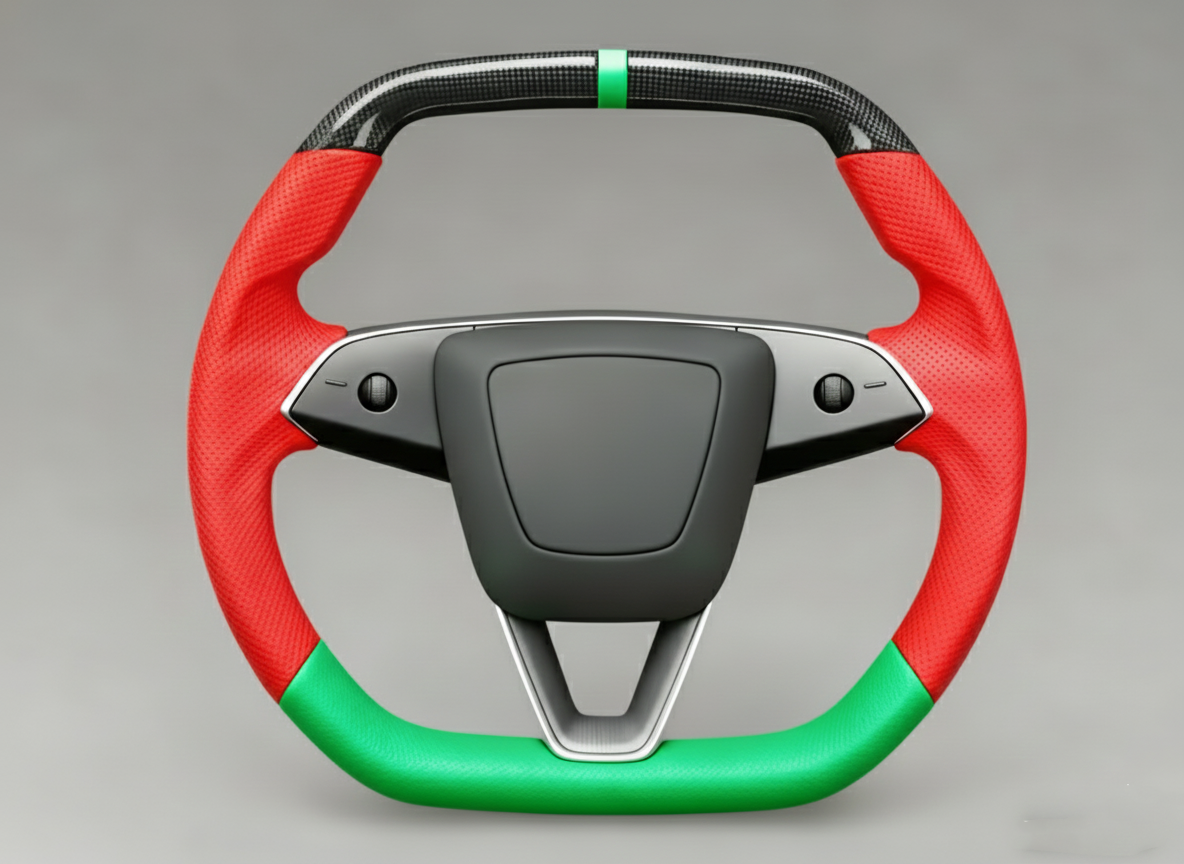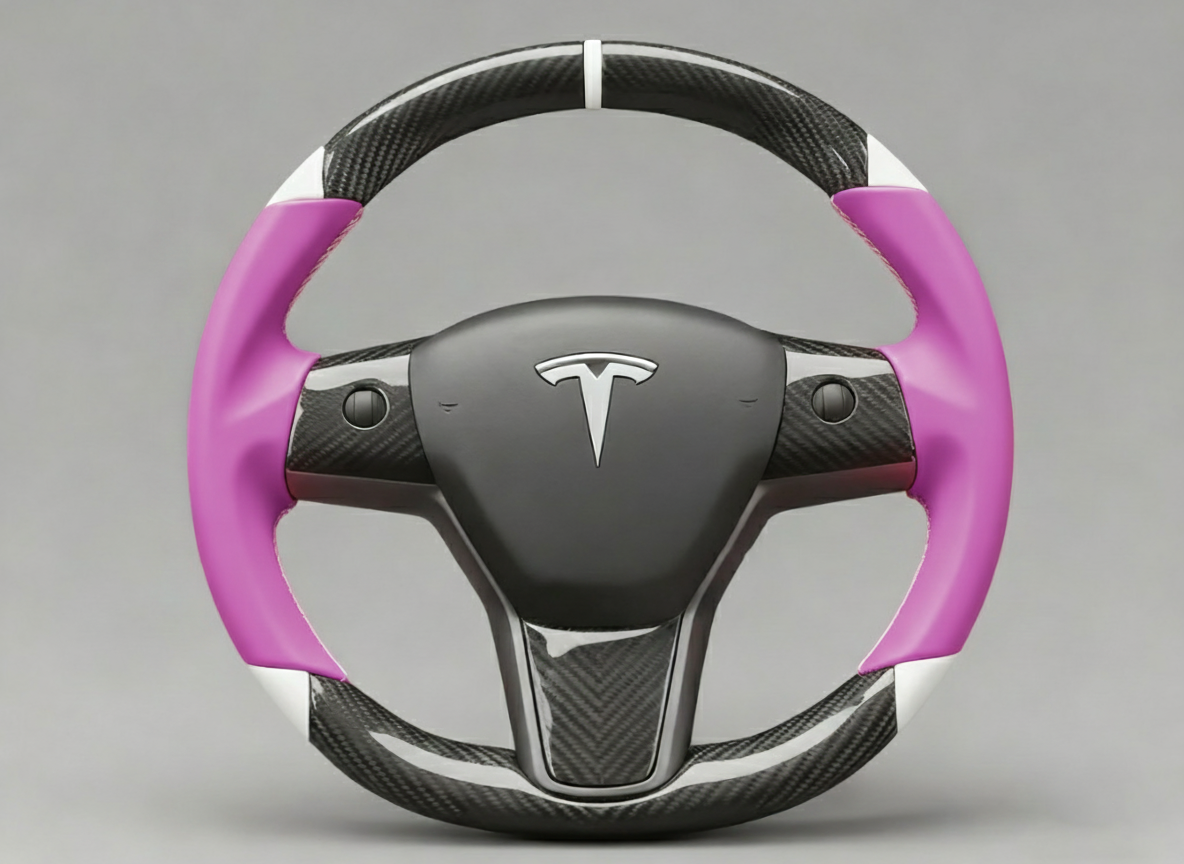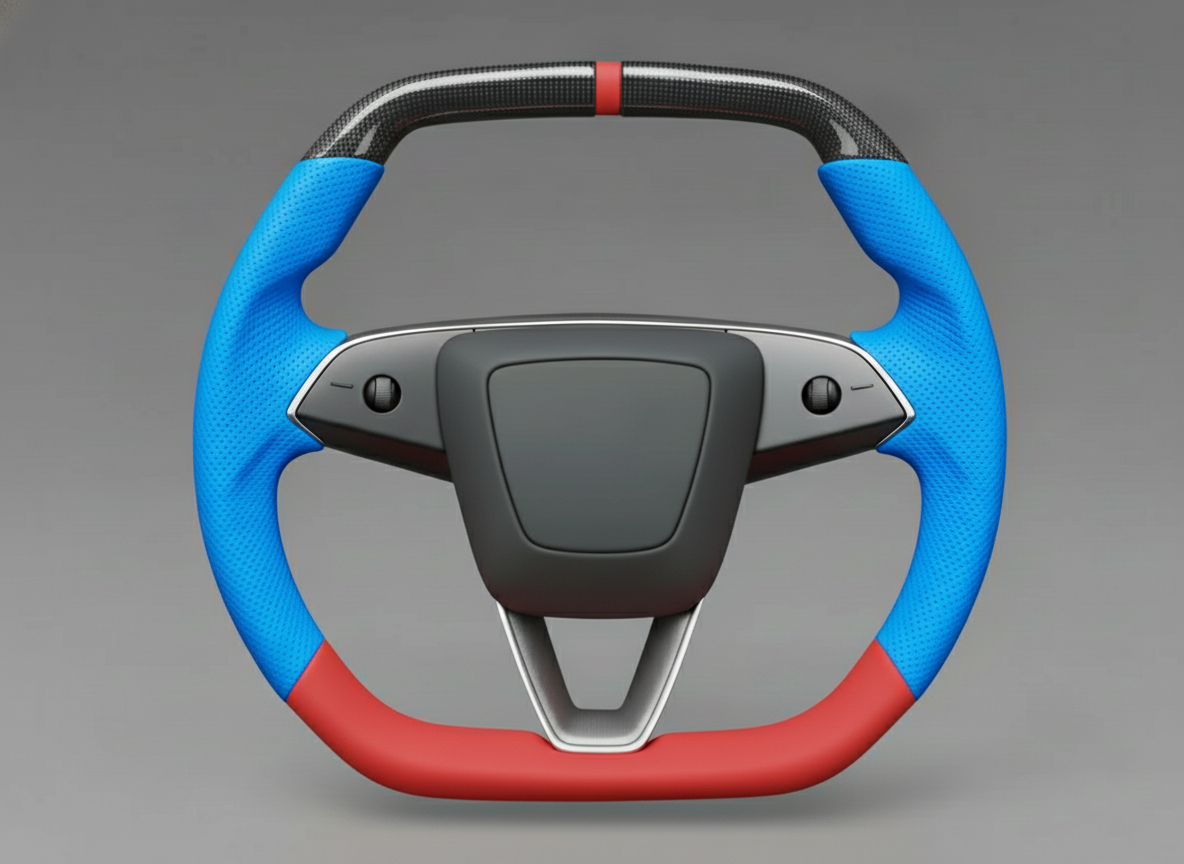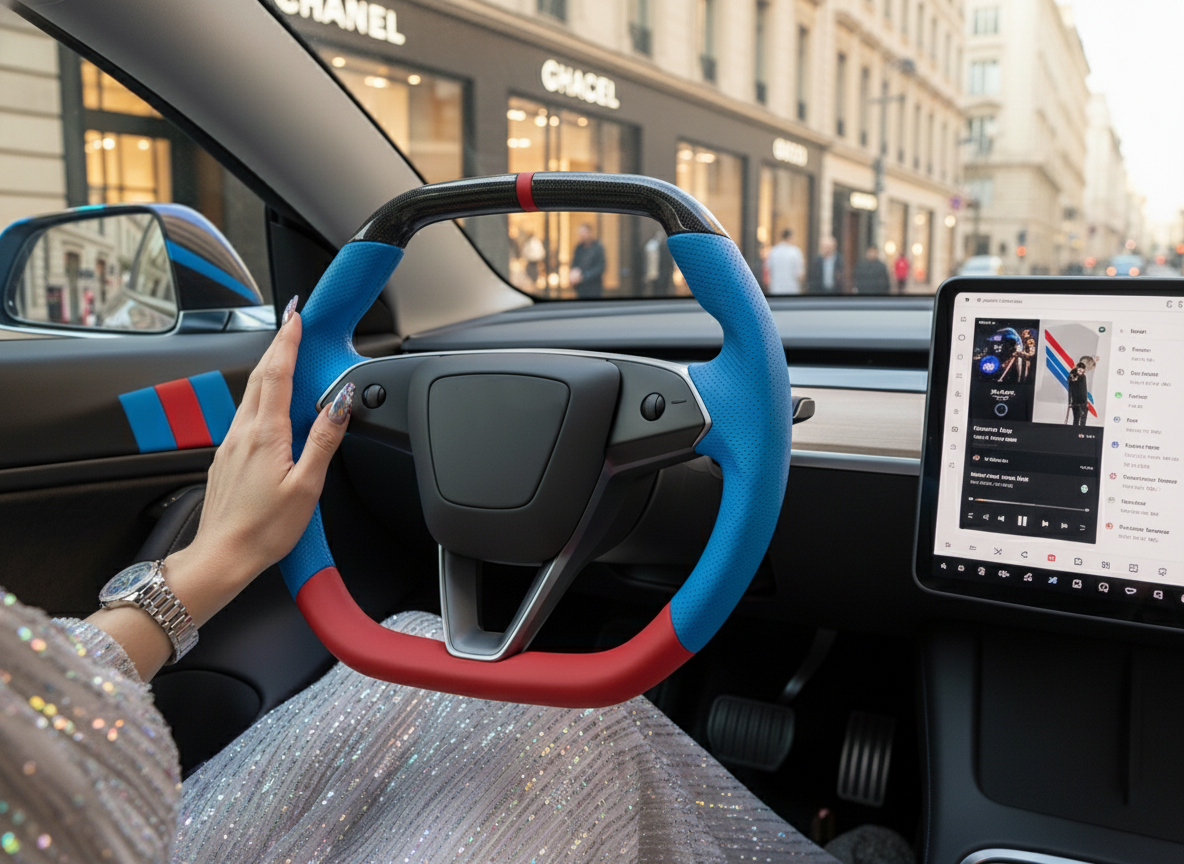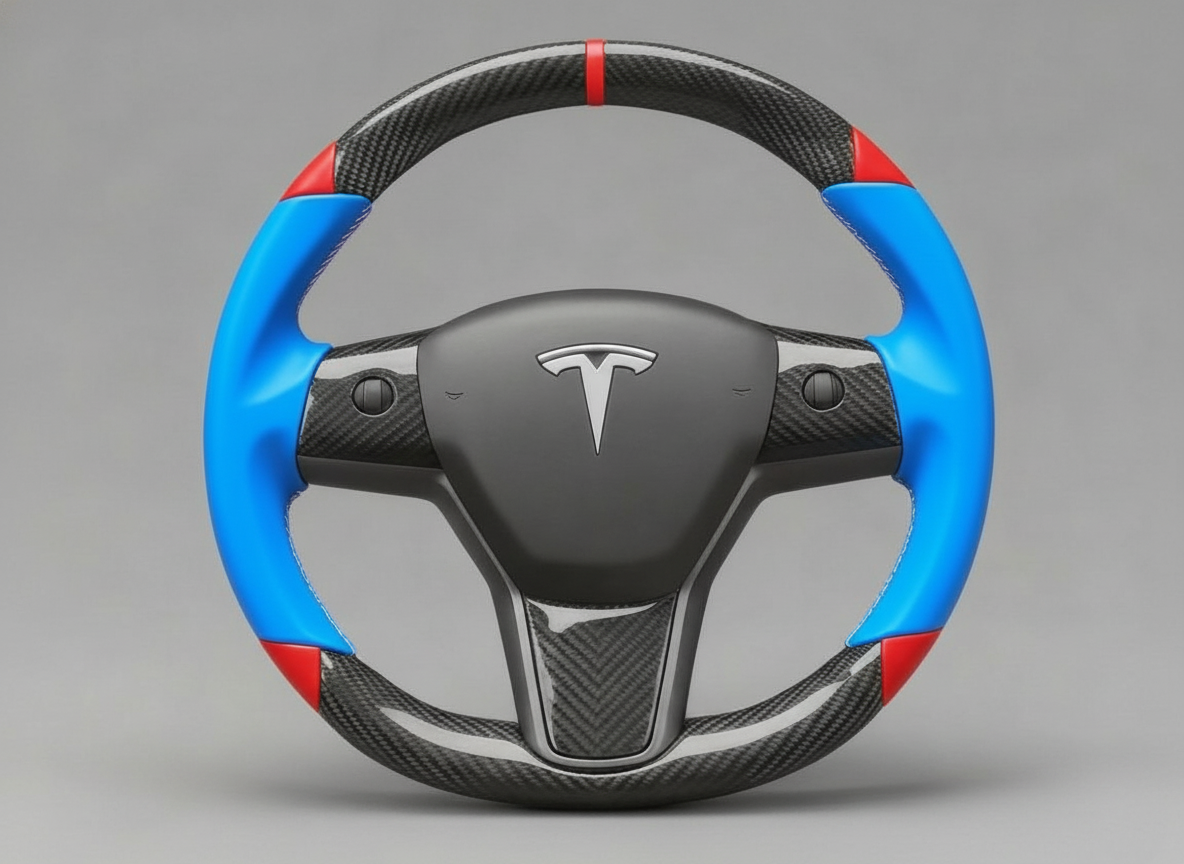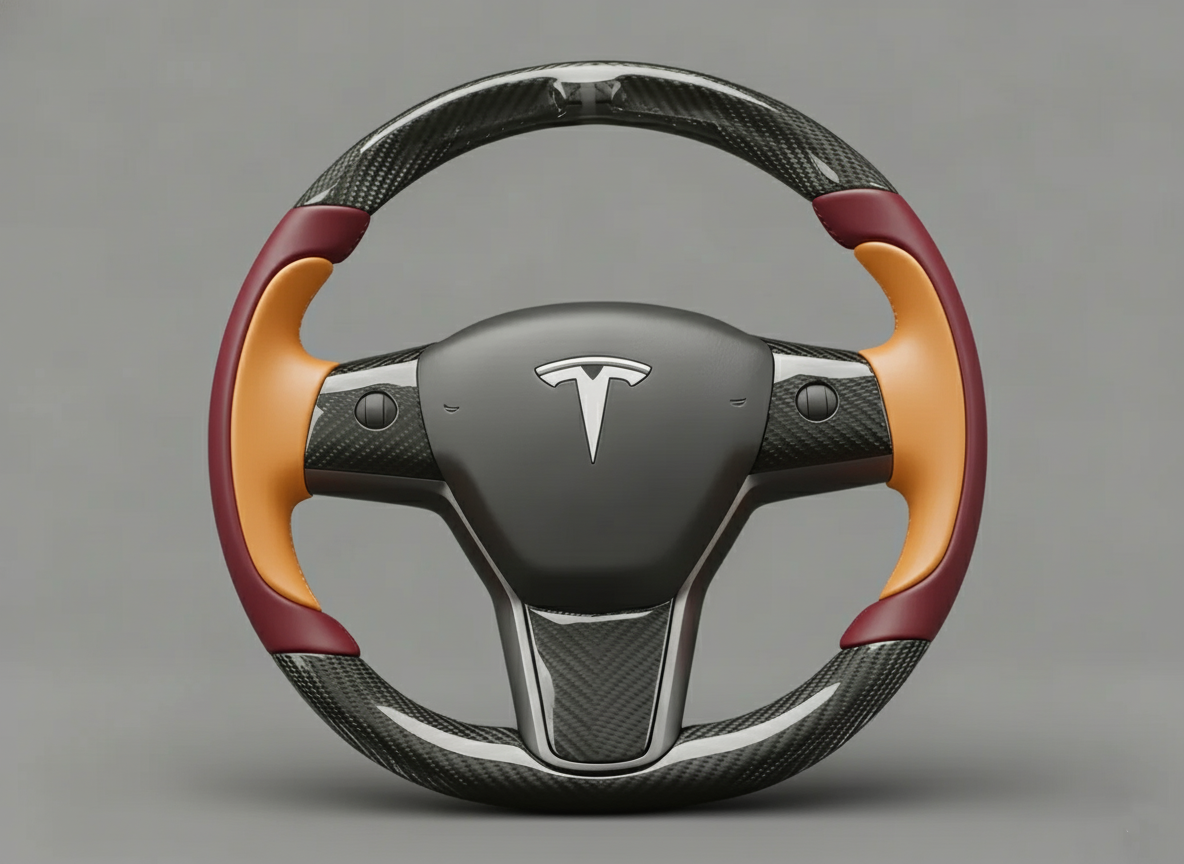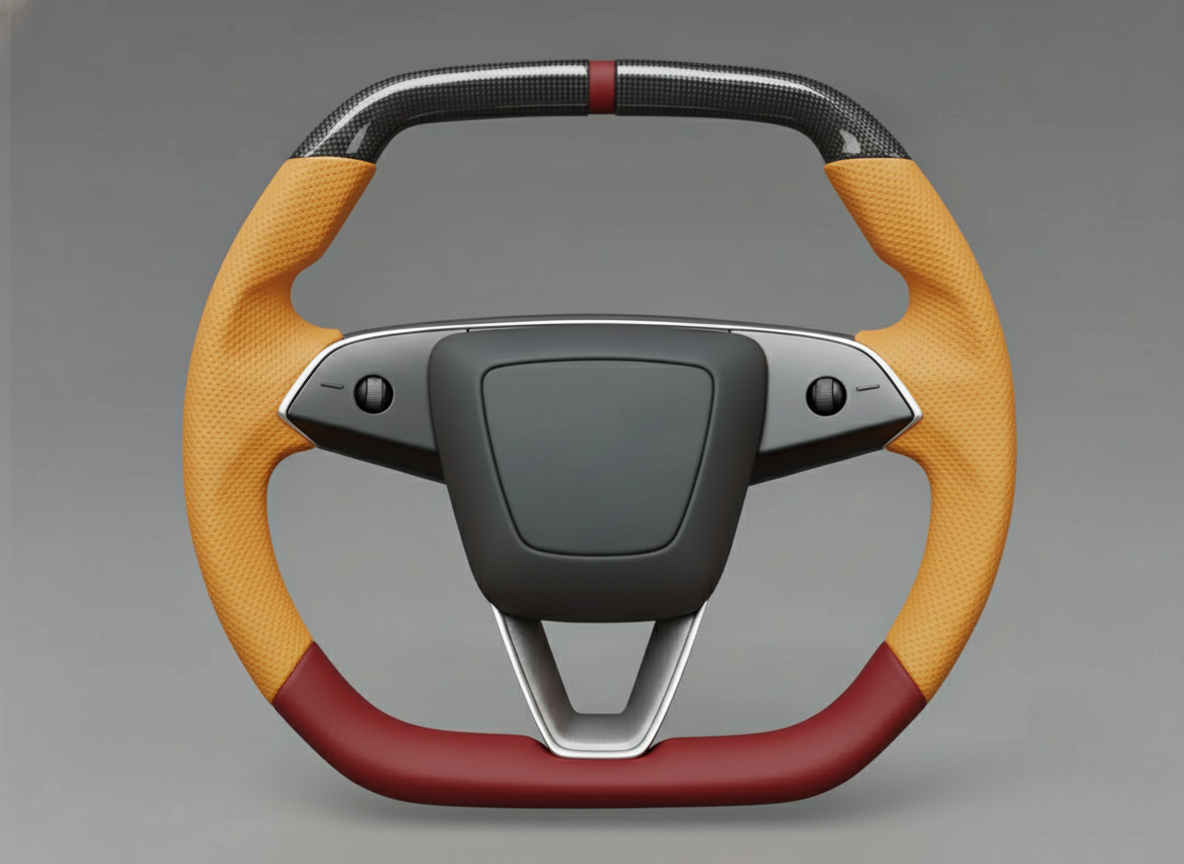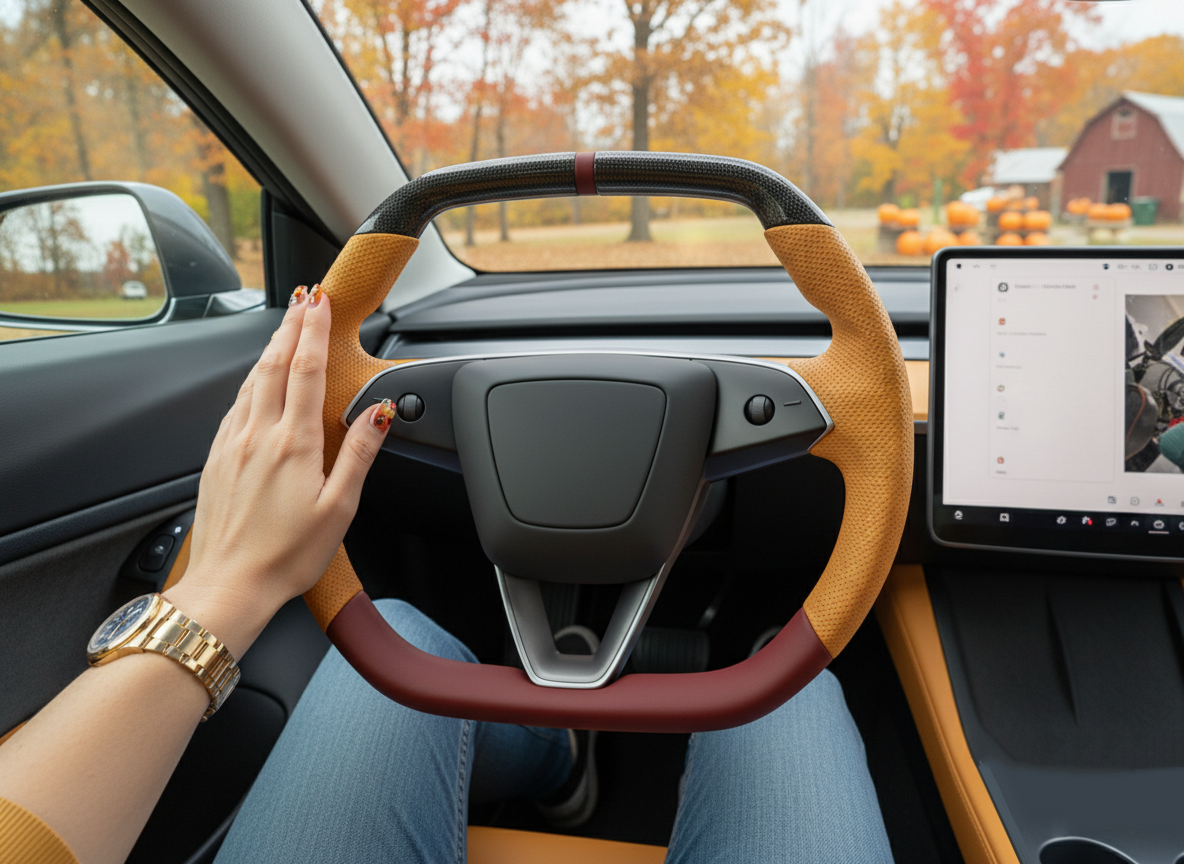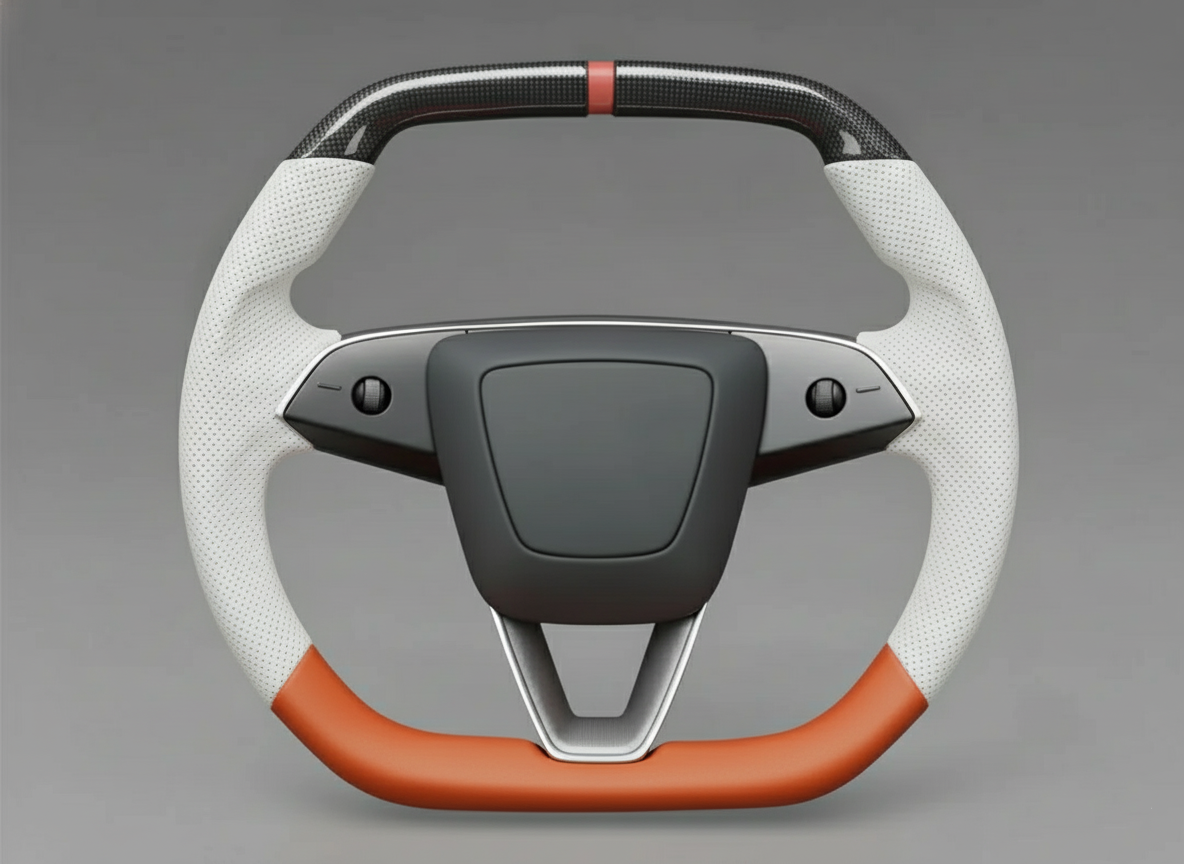
The steering wheel outer diameter of the Model 3 Highland is approximately 37.5cm.
A suede cover with a thickness of 1.5mm provides sweat absorption and anti-slip properties, genuine leather increases wear resistance by 30%, and silicone versions support stitch-free, instant installation.
When operating, please clean the original wheel rim first, align it from the 12 o'clock position and pull downward with force to fit it; finally, apply double-sided adhesive to the inner side of the 3 o'clock and 9 o'clock grip areas to fix and prevent sliding.
Suede/Alcantara
Mainstream Highland-specific suede covers mostly utilize microfiber with specifications ranging from 0.6mm to 1.2mm, aiming to increase the kinetic friction coefficient between the palm and the wheel surface by approximately 30% without adding a burden to the grip diameter.
Specifically for the new turn signal touch keys, these covers usually reserve a 2mm edge buffer to ensure there is no sensation of foreign objects at the side edges when operating the buttons blindly with the thumb, and to alleviate the burning feedback caused by high temperatures above 50°C inside the car during summer.
The Driver's Top Choice
The Model 3 Highland turn signals are integrated into the left spoke area of the steering wheel. Operating the surface touch keys requires a physical pressing force of about 2.5 Newtons. The original polyurethane imitation leather surface sees its static friction coefficient drop sharply from 0.6 to 0.3 when the hands are sweaty.
Drivers can easily slip off the preset touch area when palming the wheel or turning rapidly. The suede material is composed of 68% polyester and 32% polyurethane. Its surface features approximately 200,000 microfibers per square centimeter.
The dense microfiber structure magnifies the actual contact area during gripping by nearly three times. Even in a state where the palm secretes 15ml of sweat within an hour, the kinetic friction coefficient of the suede surface remains at around 0.75.
While the finger slides to locate the edge of the touch button, the 0.8mm thick microfiber suede fully preserves the haptic vibration feedback set by the factory. When the vehicle is parked outdoors under direct sunlight and the cabin environment temperature reaches 45°C, the surface temperature of the black leather steering wheel can climb above 65°C.
The micropores inside the suede contain a large amount of static air. The thermal conductivity of air is only 0.024 W/(m·K), forming a physical thermal insulation buffer layer inside the material. Within the initial 3 seconds of palm contact with the suede surface, the perceived temperature will remain at 42°C.
When North American winter temperatures drop to -10°C, the suede surface can quickly lock in the biological heat dissipated by the palm. After turning on the steering wheel heating function, it takes only 45 seconds for the heat from the bottom to penetrate the 1.0mm thick suede cover.
The time to reach a constant temperature of 35°C is a full minute and a half faster than wrapping with a 2mm thick silicone sleeve. Suede of uniform thickness can control the temperature difference across various areas of the wheel body to within 1.5°C.
The center of the Highland console is equipped with a 15.4-inch touchscreen. The screen's maximum brightness output in daylight can reach 1000 nits. Strong light hitting the smooth top of the steering wheel creates a specular reflection that projects onto the front windshield.
The surface texture of suede can absorb more than 90% of visible light. After the light contacts the microfibers, diffuse reflection occurs, significantly reducing the optical interference entering the driver's vision.
- Reduces front windshield reflection rate by 85%
- Eliminates high-light spots at the 3 o'clock and 9 o'clock positions of the wheel body
- Absorbs 60% of excess scattered light from the screen's night mode
- Maintains the same 15-nit diffuse reflection level as the dashboard anti-reflective suede material
The total weight of the finished suede kit is strictly controlled between 45g and 55g. The added weight is less than 2% of the total weight of the original steering wheel. The lightweight, form-fitting design will not interfere with the basic electronic signal readings of the torque sensor inside the steering column.
When Autopilot detects a light torque of 1.5 Newtons applied by the hand, it still maintains a baseline response latency of 10ms. The material itself possesses a physical lateral stretching limit of 15%.
By using 5 Newtons of tension for positioning during installation, the suede can tightly fit the 355mm diameter flat-bottom area of the steering wheel. During high-frequency gripping at the 3 and 9 o'clock positions for daily commuting, the physical friction in this area is at its maximum.
After 15,000 complete steering wheel return slip tests in a laboratory, high-quality suede shows only a slight fiber flattening of 0.2mm depth. Synthetic leather produces polyurethane coating peeling after 8,000 rubs, while the microfiber's wear resistance cycle is extended by nearly double.
- Use a soft brush to comb 3-5 times in a single direction with a force of 2 Newtons
- Spray 2ml of specialized neutral PH suede cleaner
- Let stand for 15 seconds to dissolve lipid attachments on the surface
- Wipe with a slightly damp microfiber cloth using a 5 Newton force in a sliding motion
- Air dry naturally for 20 minutes to restore the upright state of the surface fibers
Most suede covers on the market matching the Highland adopt European-style stitching. The stitch spacing is precisely set at 4.5mm, using high-tensile polyester thread with a thickness of 0.4mm. The uniform stitching provides an additional 1.2mm physical tactile scale as the finger pad slides over.
The driver can accurately perceive the current rotation angle of the steering wheel through the rise and fall of the stitches without looking down. A physical clearance of 3.2mm is reserved around the left and right scroll wheels. When the thumb scrolls to adjust volume or cruise speed, the edges will not feel scratchy against the cover.
Different suppliers on the market provide graduated thickness options to meet the grip requirements of different palm sizes. Every millimeter of thickness change alters the stretch tension of the hand muscles.
- 0.6mm specification: Maintains the original 34mm grip diameter, suitable for people with palm lengths under 17cm
- 0.8mm specification: Increases grip diameter to 35.6mm, filling a 1.5mm physical gap in the palm
- 1.2mm specification: Grip diameter reaches 36.4mm, alleviating knuckle fatigue during long-distance driving exceeding 2 hours
Covers with a thickness exceeding 1.5mm will cause a recessed pit with a depth of more than 1mm in the touch button area. When the thumb presses the turn signal at a 15-degree angle, the edge of the fingernail can easily hit the cover cutout, reducing blind operation accuracy by 40%. Choosing products with a 0.6mm to 0.8mm specification ensures the touch panel remains within a flush physical operating plane.
Thickness & Touch
The steering wheel panel of the Model 3 Highland is embedded with multiple inductive touch buttons. The trigger threshold for the pressure sensors beneath the buttons is set between 2.0 and 3.0 Newtons. Since suede material itself possesses a compression travel of 1.2mm to 2.5mm, the thickness of the cover physically alters the interaction distance between the finger and the sensor.
When the cover wall thickness exceeds 1.5mm, about 25% of the energy from the finger's downward press is absorbed by the microfiber structure within the material. This forces the driver to apply an additional 0.5 Newtons of pressure to activate the turn signal. This physical obstruction delays the operation confirmation time by approximately 150ms in high-speed lane-changing scenarios at 110 km/h.
To counteract this material damping, premium Highland-specific suede covers are usually thinned by 0.3mm at the button cutouts. The edge slope is precisely controlled between 15 and 20 degrees to simulate the recessed tactile feel of the original buttons.
| Suede Thickness Grade | Physical Compression Travel (mm) | Pressure Transmission Loss (%) | Blind Operation Evaluation |
|---|---|---|---|
| 0.5mm Competition Grade | 0.12 - 0.15 | < 5% | Identical to original; sharp button edge feel |
| 0.8mm Balanced Grade | 0.20 - 0.25 | 8% - 12% | Rounded feel; extremely high button positioning clarity |
| 1.2mm Comfort Grade | 0.40 - 0.55 | 18% - 22% | Buttons feel slightly deep; requires adaptation to finger pad pressure point |
| 1.5mm+ Thickened Grade | > 0.70 | > 30% | Risk of false touches; touch feedback logic obstructed |
When searching for turn signals or wiper buttons, the finger pad relies on the height difference of 0.5mm to 1.0mm produced between the skin and the button edge. If the cover thickness is perfectly flush with the button plane, this sense of physical boundary is eliminated. This phenomenon is known as "tactile smoothing," which can cause blind operation error rates to rise by about 35% during night driving.
Professional Highland cover molds obtain the original curvature of the steering wheel through 3D laser scanning. The tolerance for the button slot position is compressed within ±0.1mm. This high-precision cutting ensures that the finger can accurately perceive the 0.2mm edge protrusion of the button during the sliding process.
The elastic modulus of the material also affects touch continuity. Synthetic suede should maintain a longitudinal elongation rate of 10% to 12% when subjected to 10 Newtons of tension. Excessively high elasticity will cause the cover to shift in the button area, causing the button center point to deviate by more than 2mm.
- 3/9 O'clock Area: Uses 0.6mm ultra-thin cutting to ensure the thumb pad completely covers the touch zone.
- 12 O'clock Area: Thickness relaxed to 1.0mm to provide better visual fullness and structural support.
- 6 O'clock Flat-Bottom Area: Adds a 0.2mm inner anti-slip coating to prevent the cover from shifting during violent steering.
- Seams: Uses a 0.4mm fine nylon thread embedded stitching method to reduce foreign body irritation to the nerve endings in the palm.
The surface coating of the Highland's touch buttons has specific electrostatic charge conduction characteristics. The diameter of suede microfibers is typically 0.1 to 0.3 microns. This microstructure easily accumulates static electricity in dry environments, which can interfere with the readings of capacitive (non-pressure) auxiliary sensors.
To solve this electrical interference, high-end materials incorporate 1.5% conductive fiber components during production. This keeps the surface resistivity of the material between $10^6$ and $10^9$ ohms/square. Stable resistance ensures that drivers can still trigger shortcut menus on the screen through the cover even while wearing thin gloves.
- Static charge decay time: Less than 0.5 seconds
- Signal shielding rate: Less than 2.5%
- Touch success rate: 100% over 500 consecutive clicks
- Edge overflow current: Controlled below 0.1 microamperes
The increase in grip diameter after installing the cover is an important physical indicator for measuring driver fatigue. The average grip diameter of the original steering wheel is 34.5mm. For every 1.0mm increase in diameter, the grip force load on the forearm muscles during long-term driving increases by about 8%.
After wrapping and stretching, 0.8mm thick suede produces an actual single-sided thickness increase of only 0.72mm. This keeps the total grip diameter around 35.9mm. This value is widely recognized as the "golden grip zone" for most drivers during continuous driving of more than 2 hours.
For female drivers or those with smaller palm sizes, 0.5mm ultra-thin suede is the only choice that maintains the original grip proportions. At this thickness, the physical wear layer of the suede accounts for only 0.2mm. After 20,000 friction tests with a 10-Newton force, the surface fiber loss rate is about 12%.
Compared to the 1.2mm comfort version, although the wear life is increased by 40%, the extra 0.4mm of thickness increases the female driver's thumb-to-index web space angle by 5 degrees. This subtle geometric change accumulates to produce significant tendon soreness during long-distance drives of over 50km.
- 0.5mm Specification: Optimal choice for drivers with palm widths of 7.5cm - 8.5cm
- 0.8mm Specification: Standard choice for drivers with palm widths of 8.5cm - 9.5cm
- 1.2mm Specification: Power choice for drivers with palm widths > 9.5cm
The volume expansion rate of suede under different humidity levels is also a key consideration. In a water-saturated state, the thickness increase of suede must not exceed 5% of its original value. In an environment with 80% humidity, a 0.8mm cover will not expand beyond 1.0mm, ensuring the button gap remains at a constant range of 0.5mm.
This dimensional stability prevents the cover edges from expanding and covering the touch buttons in humid weather. In extreme high-temperature cabin tests at 70°C, the thermal shrinkage rate of qualified suede materials should be less than 1.0%. This ensures that after 100 high-and-low temperature cycles, the cover remains tightly fastened to the 355mm diameter steering wheel frame.
Maintenance & Longevity
The microfiber diameter of suede material is only 0.1 to 0.3 microns. This extremely high surface-area-to-volume ratio endows it with powerful physical adsorption characteristics. On average, there are over 200,000 microfibers per square centimeter of suede.
The skin of the palm secretes an average of about 20mg of sebum and 15ml of sweat per hour. These oils and inorganic salts gradually penetrate the base of the fibers. After continuous driving for 500km, the gaps between fibers become filled with oil, leading to a 30% volume compression of the material.
The accumulation of grease causes the suede surface to change from its initial matte state to a reflective "oily" look. Experimental data shows that uncleaned suede, when heated to 40°C, sees its kinetic friction coefficient decay from 0.75 to 0.45.
For the turn signal area of the Model 3 Highland, which is touched frequently, grease accumulates 2.5 times faster than at the 12 o'clock position. It is recommended to perform a deep degreasing treatment every 1,500km to maintain touch sensitivity.
Daily maintenance should use a soft brush with a fineness of 0.05mm, combing in the direction of fiber growth with a light pressure of 1 Newton. This combing action stands flattened fibers back up. Upright fibers add a 1.5mm air buffer layer, restoring the sweat absorption performance the material had when first installed.
If grease has already formed obvious dark patches, a neutral specialized cleaner with a pH value controlled between 5.5 and 6.5 must be used. Strong alkaline detergents will destroy the polyurethane molecular chains, causing the suede to increase in hardness by 20% after drying and lose its original soft tactile feel.
- Spray atomized cleaner from a distance of 15cm, ensuring coverage is less than 0.1ml per square centimeter.
- Use a 300 GSM microfiber cloth, applying 2 Newtons of pressure in a circular motion to extract deep-seated dirt.
- Strictly forbid the use of water above 50°C; high temperatures cause an irreversible 2.0% thermal shrinkage of the fibers.
- Natural drying time after cleaning should be maintained for over 45 minutes to ensure internal moisture is completely evaporated.
In Taber abrasion tests, premium suede must withstand 15,000 cycles of friction under 10 Newtons of pressure before slight pilling is allowed. In contrast, ordinary microfiber materials will show substrate exposure after 5,000 tests.
For drivers with a 40km daily commute, the expected service cycle of a high-quality suede cover is typically 36 to 48 months. In areas where the UV index reaches 8, the anti-UV coating on the material surface can slow down the fading rate by 90%.
Since the distance between the turn signal button edge and the cover cutout on the Highland is only 1.5mm, long-term fingernail friction is the primary cause of local damage. Studies show that high-frequency scratching of the fiber edges by nails generates 5 Newtons of shear force per square centimeter.
Select suede with a tear-resistant mesh substrate, which should have a tear strength of 100 N/cm. This structure ensures that even if physical damage occurs at the edge cutout, the notch will not expand more than 0.5mm into the surroundings in a short time.
In humid environments, for every 5% increase in the moisture content of suede, its wear life temporarily decreases by 10%. In areas where humidity exceeds 75%, it is recommended to shorten the maintenance cycle to once every 1,000km.
- Colorfastness after 500 hours of UV irradiation must reach level 4 or higher according to the ISO 105-B02 standard.
- The surface fiber pilling grade should remain above level 3 (out of 5) after 20,000 rubs.
- The ambient temperature fluctuation range must support 100 hot and cold cycles from -30°C to +85°C.
- Even after extreme wear, the material's flame retardancy must still meet the FMVSS 302 safety regulation requirements.
Material aging typically begins at the 3 o'clock and 9 o'clock positions. Due to long-term grip pressure in these areas, the fibers undergo permanent physical deformation. If fibers are found to flatten again within 10 minutes after combing, it indicates that the elastic modulus of the fibers has dropped by 40%.
At this point, the cover thickness may have compressed from the original 1.0mm to 0.7mm. This physical loss of thickness will change the finger's positioning habits for the Highland touch zone; it is recommended to replace the entire cover when fiber loss exceeds 0.3mm.
Periodically use compressed air to blow out the button gaps, with pressure controlled under 20 PSI. This can remove 0.1mm grain-sized micro-dust accumulated between the suede cutout and the electronic panel, preventing tiny particles from entering the button interior and triggering false touches.
In long-term physical lifespan prediction models, suede significantly outperforms genuine leather. Genuine leather has a cracking rate of about 15% after 3 years, while high-quality suede under the same conditions only shows a slight decline in surface texture. Its full lifecycle maintenance cost is approximately $15 to $25 per year.
Since the cost of replacing the Highland steering wheel assembly exceeds $800, a suede cover with a 4-year lifespan cycle provides a functional upgrade while protecting the original Vegan leather from 100% of grease erosion.
Genuine Leather
Choosing top-tier Nappa genuine leather with a thickness of 1.2mm to 1.5mm can increase the grip diameter of the Highland steering wheel by about 3mm, significantly improving the issue of insufficient support in the original synthetic leather.
Genuine leather naturally possesses over 2,000 micropores per square centimeter. Its heat dissipation efficiency is 35% higher than PU material, providing a constant friction coefficient during high-load steering operations to ensure a lower false-touch rate in the turn signal touch areas.
More Than Just "Cowhide"
Within the automotive aftermarket standard system, the EN 15987 specification strictly defines physical layering for leather. The outermost epidermis has the tightest collagen fiber network, with tensile strength test values generally exceeding 15 MPa.
The surface does not undergo any mechanical polishing, and the tear resistance reaches 40 N/mm, making it capable of withstanding high-intensity hand friction.
The undamaged epidermis layer maintains maximum breathability efficiency, with natural pores dissipating 50mg of water vapor per hour per square centimeter. Palm sweat generated during long-distance summer driving is rapidly absorbed by the surface layer and naturally evaporates within 3 minutes.
Top-grain leather undergoes a degree of light sanding to remove natural growth marks and blemishes from the raw hide surface. The factory will apply a 0.1mm to 0.15mm synthetic resin coating to ensure uniform color across the entire leather sheet.
The addition of the resin coating causes the breathability of the leather to drop by about 30% compared to full-grain leather, but it significantly improves water resistance. A 5ml drop of coffee on the surface of top-grain leather takes as long as 5 minutes before it begins to penetrate the interior.
In industrial classification, the term genuine leather usually refers to split leather, which uses the reticular tissue layer left over after the top grain is removed. The original surface is completely absent, and the fiber structure is relatively loose, failing to provide natural tactile feedback.
During the manufacturing process, a 0.5mm polyurethane artificial film is covered over the split leather, and a simulated lychee grain is embossed via a mold. In Martindale abrasion tests, the surface film usually shows peeling and flaking after 20,000 rubs.
- Full-grain leather: 40 N/mm tear resistance, wear cycles over 100,000
- Top-grain leather: 0.1mm synthetic coating, 5-minute liquid penetration resistance
- Split leather: 0.5mm polyurethane embossed surface film, prone to peeling after 20,000 rubs
- Nappa leather: Standard 1.2mm thickness, 30% to 50% elongation at break
Nappa is not a specific leather layer classification but rather a tanning process that originated in Napa Valley, California. It uses water-soluble dyes and chromium salts for a 48-hour soaking and tanning process, which does not alter the leather's natural respiratory pores.
The processed material exhibits extreme softness, with an elongation at break maintained between 30% and 50%. When wrapping the 360mm diameter Model 3 Highland steering wheel, Nappa leather can completely conform to the complex ergonomic curves at the 3 and 9 o'clock positions.
Automotive-grade Nappa leather thickness is strictly limited within a tolerance range of 1.2mm. Precise control of physical data ensures the total steering wheel grip circumference increases by only 7.5mm, maintaining the factory-set control feel.
Uncoated Nappa leather has excellent temperature regulation capabilities. When cabin temperatures reach 60°C under direct summer sunlight, its surface temperature will be 5°C to 8°C lower than synthetic leather, reducing the risk of being too hot to touch.
Tanning process branches also change the tactile feedback of the leather. Vegetable tanning uses tannins extracted from tree bark and requires a 60-day soaking cycle; the finished leather's pH is slightly acidic, at 4.5 to 5.0.
Vegetable-tanned leather is hard in texture, requiring 150N of tension to tighten the stitches during the manual sewing of a steering wheel cover. After 12 months of UV exposure and contact with hand oils, the color will darken by 3 shades on the Pantone color chart.
Chrome-tanned leather occupies 80% of the global automotive interior market. The addition of chromium ions gives the leather excellent elasticity; an adult male applying 10N of thumb pressure can produce a comfortable 0.3mm downward deformation in the leather surface.
- Perforation spacing: 2.0mm array arrangement
- Hole diameter: 0.8mm mechanical punching standard
- Breathability boost: 15% increase in contact surface airflow
- Cooling efficiency: Drops to 22°C within 3 minutes under direct A/C air
The perforation process utilizes high-precision CNC punching machines to apply 0.8mm diameter mechanical penetrations to the leather surface. A standard 38cm steering wheel cover contains approximately 3,500 through-micropores, physically altering the material's heat dissipation channels.
The large number of micropores increases the contact area between the leather surface and the cold cabin air by 15%. After the Highland's air conditioning system starts, the heat exchange efficiency of the steering wheel surface doubles, allowing it to drop from a high temperature to a comfortable 22°C within 3 minutes.
Material thickness tolerances directly affect the capacitive touch buttons on the Highland steering wheel spokes. The leather's dielectric constant must be below 3.0, and the skiving thickness at the button edges must be controlled at 0.4mm to ensure that light touch commands of 50 grams are accurately recognized.
Top-tier raw hide material mostly comes from cold regions such as the Bavarian Alps. Cattle grow in environments below 15°C, resulting in 20% fewer insect bites and barbed wire scratches on the epidermis compared to tropical hides.
High-grade raw hides have an effective cutting area of over 45 square feet. A single flawless whole hide can produce 15 continuous, unjointed steering wheel covers, avoiding joint gaps that disrupt the grip feel.
Dyeing process indicators distinguish top-tier leather from cheap products. Aniline dyes need to soak in the dye vat for 12 hours, with the color completely penetrating the 1.2mm genuine leather layer, leaving no covering pigments on the surface.
When a physical scratch 0.2mm deep occurs on the surface, the inner layer of aniline leather exposed is exactly the same color as the surface. Semi-aniline leather adds a 0.05mm transparent protective lacquer to the surface, raising the UV protection rating to UPF 50.
- Edge skiving: Thickness compressed to 0.4mm at joints
- Stitch spacing: Maintained at 4.5mm equidistant arrangement
- Stitching tension: 15N force ensures gap-free fit
- Dye penetration: 100% coloring of the 1.2mm leather layer
Physical covering repairs all natural flaws but completely seals the pores; water vapor transmission drops below 10mg, losing natural breathability.
The physical toughness of leather is determined by the collagen fibers of the reticular layer. In high-grade raw hides, the internal fiber bundles interweave at angles of 45 to 60 degrees, forming a multi-directional tensile 3D network.
When a driver performs an emergency evasion, the palm exerts an instantaneous shear force of up to 120N on the steering wheel cover. Low-grade leather with a linear fiber structure will produce an irreversible tensile deformation of 2mm under such force.
High-grade leather with an interwoven fiber network can recover its original dimensions within 3 seconds after the external load is removed. Physical rebound characteristics ensure that the steering wheel cover remains tightly attached to the wheel body even after 50,000km of city congestion driving.
Avoiding Touch Blind Spots
The Model 3 Highland steering wheel panel integrates turn signals, wipers, voice, and Autopilot adjustments. The capacitive sensing principle relies on charge exchange between the finger and the panel, with the sensing depth typically limited to between 1.5mm and 2.0mm.
If the edge thickness of an ordinary leather cover exceeds 1.5mm, it will produce a significant signal shielding effect. When the finger presses the turn signal icon, the charge cannot penetrate the thickened leather layer to reach the metal sensing layer below, causing the turn signal trigger failure rate to rise to over 40%.
High-precision genuine leather covers must undergo 3D laser scanning during the production phase. For the control area at the Highland spokes, the leather edges must use a skiving process to gradiently reduce the thickness from 1.2mm in the middle to 0.4mm at the edges.
This 0.4mm extreme thinness ensures that the height difference at the seam between the leather edge and the touch panel is less than 0.2mm. When drivers blindly operate the turn signal, the finger pad can slide smoothly from the leather surface to the touch zone without a physical step causing the pressing position to deviate by more than 3mm.
- Sensing Redundancy: Leather edges must reserve a 2mm physical gap to avoid the sensitive edges of the capacitive buttons.
- Dielectric Constant: Choose natural Nappa leather with a dielectric constant below 3.5 to reduce interference with electronic signal transmission.
- Friction Coefficient: Surface friction should be maintained at 0.6μ - 0.8μ to prevent false touches when fingers slide over the buttons.
- Anti-Displacement Tension: The inner side must withstand 50N of lateral force without shifting, preventing the cover from sliding into the button zone.
| Touch Button Type | Coverage Limit (mm) | Sensitivity Loss Ratio | Suggested Solution |
|---|---|---|---|
| Left/Right Turn Signal | 0.4 (Edge) | < 5% | U-shaped opening or ultra-fine skived stitching |
| Wiper Control | 0.6 (Edge) | < 8% | 1.5mm signal redundancy zone reserved at edges |
| Autopilot Scroll Wheel | 0 (Strictly no coverage) | 100% (Physical block) | Semi-circular arc cutout bypass |
| Voice/Volume Control | 0.5 (Edge) | < 10% | Pressure sensing compensation design |
The back of the Highland steering wheel also integrates strain gauge sensors to detect hand pressure. Installing a leather cover that is too thick or too tight will generate a preload of over 5N.
Qualified genuine leather covers utilize variable-density rubber materials for the lining at the 3 and 9 o'clock positions. In a static state, the radial pressure exerted on the wheel body should be controlled at around 2N, ensuring that baseline voltage fluctuations for the sensor stay within a safe threshold of 0.05V.
- Laser Edge Cutting: Error controlled within ±0.1mm, ensuring the opening contour perfectly matches the Highland touchpad.
- Adhesive Application: Apply only a 0.05mm thick layer of nano-grade anti-slip adhesive in non-button areas to avoid adhesive seeping into button gaps.
- Stitching Points: Avoid the core capacitive sensing area; the starting point of stitches should be at least 5mm from the button edge.
- Thermal Expansion Test: At 70°C, the leather expansion rate must be below 0.2% to prevent thermal deformation from obstructing the buttons.
When a finger presses the Highland touch panel, it's not just a charge exchange but also accompanied by a tiny pressure displacement. If the leather's hardness (Shore A) exceeds 60 degrees, it will absorb 30% of the downward feedback force from the finger, giving the driver the illusion that the button is "unpressable."
Choosing leather with a hardness between 45 and 55 degrees provides the best pressure transmission efficiency. When 1.5N of downward force is applied, the compressive deformation of the leather should be within 0.2mm, transmitting most of the kinetic energy directly to the capacitive sensing layer below.
Heating elements are integrated into the bottom crossbar of the Highland steering wheel. The thermal resistance coefficient of the genuine leather cover must remain below 0.12 W/(m·K). If the thickness exceeds 2.0mm, the surface temperature rise after 5 minutes of heating will lag behind the factory state by 45 seconds.
To optimize heating functionality, it is recommended to implant high thermal conductivity fibers into the inner side of the leather layer around the touch areas. These fibers can increase lateral heat conduction efficiency by 20% while maintaining the leather's 0.4mm thinness, solving the problem of cold button areas due to leather coverage.
- Sensing Latency: Top-tier genuine leather covers can control capacitive response latency to within 20ms.
- Button Travel: Even for capacitive buttons, the leather must not interfere with the 0.1mm physical micro-travel of the button bracket.
- Visual Redundancy: A 1.0mm buffer outside the visual boundary of the turn signal icons must be a clean zone.
- Sweat Isolation: Edge seal coatings must resist 24-hour artificial sweat immersion to prevent grease from seeping into the touch panel gaps.
During long-term driving, hand oils and dust will accumulate at the junction of the leather and the touchpad. If the leather cover edges do not have a 45-degree chamfer, these impurities will form a 0.2mm thick conductive film within 6 months, inducing random turn signal activations.
Treating edges with an oil-resistant coating can reduce surface energy to 20 mN/m. This allows grease to bead up and roll off the surface, preventing it from forming a continuous conductive path in the touch sensing area and reducing false trigger probability to below 0.1%.
Genuine leather covers specifically designed for the Highland usually feature "embedded" edge finishing. During installation, the 0.4mm leather edge needs to be tucked into the 0.8mm gap between the steering wheel control box and the wheel body.
Under this installation mode, even in extreme cold at -30°C where the leather shrinks, the embedding depth can still be maintained at 0.5mm.
Performance & Efficiency
In the Model 3 Highland modification system, the balance between performance and efficiency is built on the precise alignment of 1.2mm material thickness and installation labor costs. Opting for a hand-stitched solution requires about 120 minutes of precision work in exchange for a solid grip that increases the steering wheel circumference by 6mm to 8mm.
This installation method utilizes the physical ductility of genuine leather, tensioning the hide onto the wheel surface with a constant 15N force. This high-strength physical fit eliminates the 1mm to 2mm radial displacement common in traditional slip-on products, meaning steering command transmission delay is near zero during high-speed lane changes or emergency maneuvers.
Hand-stitched solutions typically use high-strength waxed thread of 0.5mm to 0.8mm, with lock-stitching every 4.5mm. This method provides a seam tolerance of within 0.2mm over the complex 3 and 9 o'clock curves of the Highland grip, significantly reducing the sensation of foreign objects during frequent steering changes.
- Construction Time: ~90-150 minutes for professional stitching; 15-30 seconds for ordinary slip-ons.
- Fit Precision: Radial displacement below 0.1mm for stitching; 1.5mm to 3mm for slip-ons.
- Grip Feedback: Increases grip circumference by 7.5mm, improving finger pad support by about 18% over factory synthetic leather.
- Thermal Degradation Resistance: Linear expansion coefficient at 70°C must be controlled below 0.5%.
If installation efficiency is prioritized, "embedded" semi-covers with adhesive assistance are the most efficient choice. These products only cover the areas of the Highland wheel that are frequently gripped, and the installation process only requires alignment with the core weight-bearing zones at 3 and 9 o'clock.
By avoiding the complex curvature changes at the top and bottom of the steering wheel, these kits usually utilize 0.8mm thickness with skiving. Even if installed within 30 seconds, their impact on the Highland touch zones is nearly zero, preserving the original minimalist visual language to the maximum extent.
Optimized for the Highland's thermal management, the embedded design leaves about 40% of the original surface exposed. After turning on the steering wheel heating, the time to reach 35°C on the surface is only 12 seconds slower than a bare wheel, far superior to full-wrap solutions.
- Heat Dissipation Area: 40% of original surface remains exposed, boosting air heat exchange efficiency by 25%.
- Installation Weight: ~200g for full wraps; only 85g for semi-covers, reducing steering column inertial load.
- Button Redundancy: 3mm clearance reserved at edges, completely eliminating physical interference with capacitive turn signals.
- Cost-to-Benefit: A higher Return on Investment (ROI) per minute of installation time.
High-performance genuine leather covers seek a balance in friction coefficient between 0.65μ and 0.75μ at the material science level. Too slippery can lead to loss of hand control during emergency maneuvers, while excessive friction (over 0.8μ) can cause palm abrasions during rapid one-handed wheel returns.
Test data shows that top-tier Nappa leather has a kinetic friction coefficient of 0.68 in dry conditions, which only fluctuates to 0.72 when palm sweat raises humidity to 85%. This extreme physical stability ensures steering precision for the Highland in rainy conditions.
A high-efficiency leather cover design must account for the material's "memory effect." High-quality cowhide should have a thickness compression of within 0.05mm after 10,000 cycles of 50N grip pressure testing, ensuring consistent hand feel over long-term driving.
- Dry Friction: 0.68μ coefficient, providing smooth and controllable steering resistance.
- Wet Stability: Friction fluctuation below 10% in 85% humidity.
- Compression Set: Thickness change under 4.5% after 10,000 dynamic loads.
- Rebound Rate: Recovers 98% of original height within 0.5 seconds after 10N pressure is removed.
In terms of performance trade-offs, the 40 N/mm tear resistance provided by full-grain leather is the ultimate guarantee of efficiency. Even when subjected to violent pulling over 100N in extreme cold (-20°C), the leather fibers will not break or undergo irreversible loosening.
The back of high-performance leather covers is usually coated with a 0.03mm anti-slip nano-coating. This coating doubles the static friction between the leather and the Highland wheel body without increasing physical thickness, preventing instantaneous slipping during aggressive steering.
For the Highland's capacitive buttons, the leather's insulation performance must be quantified. Standard tests show that the capacitance of a 1.2mm leather layer should remain between 50pF and 100pF, allowing the hand's bioelectric signals to penetrate and trigger turn signals within 15ms without loss.
- Tensile Limit: 40 N/mm tear resistance, adapting to extreme control conditions.
- Nano Anti-slip Layer: 0.03mm thickness, boosting static friction by 200%.
- Signal Penetration: 15ms touch response latency, close to the feedback speed of a bare factory wheel.
- Lightfastness: Color change less than E=1.5 after 400 hours of xenon lamp testing.
For owners seeking peak efficiency, regular maintenance is part of the performance guarantee. Applying high-penetration nourishing cream (containing 5% mink oil) every 5,000km can maintain fiber flexibility at the optimal 45 Shore A hardness.
When leather maintains a 12% moisture content, its absorption rate for tiny vibrations is at its peak. This can filter out about 8% of high-frequency micro-vibrations produced in the Highland's high-road-feel mode, thereby alleviating hand fatigue during long-distance driving.
Silicone
Redesigned specifically for the Model 3 Highland, silicone steering wheel covers stand out with extreme weather resistance from -40°C to 230°C.
The material thickness is typically controlled between 0.8mm - 1.2mm, providing necessary buffer protection without significantly altering the original steering wheel grip diameter.
For owners driving over 15,000 miles annually or living in areas where summer temperatures frequently exceed 35°C, silicone effectively prevents the original synthetic leather from peeling due to UV radiation and sweat erosion.
Characteristics & Durability
Compared to the carbon-chain skeleton of natural rubber, siloxane bonds have a high bond energy of 452 kJ/mol, giving the material high breaking strength at the molecular level.
When facing closed high-temperature environments in a car as high as 150°F during California summers, high-molecular silicone does not undergo thermal degradation. It can be exposed to extreme heat of 450°F for 1,000 consecutive hours while maintaining its physical shape without surface stickiness or delamination.
In response to winter climates, the glass transition temperature of silicone is far lower than common synthetic plastics. In the -40°F cold of Alaska, where original materials might harden, the silicone sleeve remains flexible, showing no micro-cracks under bending tests.
- UV Aging Test (QUV): 3,000 hours of continuous irradiation, color fade less than 1.5%.
- Ozone Resistance Test: No cracking after 72 hours of exposure to 50 pphm ozone.
- Thermal Expansion/Contraction: Dimensional change less than 0.2% under a -40°F to 200°F temperature cycle.
- International Colorfastness Index: Reaches the highest level of 7-8 according to ISO 105-B02 standards.
Beyond weather performance, mechanical strength parameters greatly affect the daily lifespan of the cover. Silicone covers matching the Model 3 Highland usually have a thickness of 1.2mm and a tensile strength that generally reaches 7.0 MPa.
Its Shore A hardness is mostly set in the 45 to 55 range. This range buffers hand grip pressure while retaining road feedback and withstanding 25 kN/m of tension in tear strength tests.
The high-toughness physical properties greatly simplify installation. An elongation at break of up to 400% allows users to apply over 15 lbs of pulling force during fitting; the polymer network recovers its initial shape within 2 seconds of release, tightly conforming to the steering wheel body.
The surface friction coefficient is a critical data point for steering safety. Industrial manufacturing utilizes 50-micron-level laser etching to create micro-anti-slip textures on the cover surface, improving the raw feel of untreated surfaces.
In dry conditions, the static friction coefficient of textured silicone is approximately 0.8. When the driver's palms are sweaty, the kinetic friction coefficient still remains above 0.6, providing stable grip resistance for frequent steering maneuvers.
- Shore A Hardness: 45-55, balancing support feel and cushioning.
- Elongation at Break: >400%, high elasticity for easy stretching and fitting.
- Tear Strength: 25 kN/m, effectively resisting scratches from zippers or rings.
- Compression Set: < 2%, no finger indentations left after long-term one-handed palming.
The contact angle of water droplets on the surface is greater than 100 degrees; sweat, coffee, or sunscreen cannot penetrate the material's internal pores.
Chemical inertness leads to extremely low Volatile Organic Compound (VOC) emissions. High-quality automotive-grade silicone emits less than 10 ppm of VOCs, fully complying with the strict cabin air quality standards of the California Air Resources Board (CARB).
Odor tests before leaving the factory show that after 24 hours of baking at 176°F, the amount of condensate collected is less than 0.1 mg. In a sun-exposed, high-temperature cabin, it does not emit pungent plastic odors like cheap Polyvinyl Chloride (PVC) materials.
Introducing Taber wear test data for comparison: under a 1,000g load using a CS-10 wheel for 5,000 rotations, the mass loss of the silicone surface is only 15 mg, far lower than the 45 mg loss of common synthetic leather.
| Lab Test Project | Specific Test Parameters | Material Performance |
|---|---|---|
| Reciprocating Friction | 100,000 cycles | Texture depth loss < 5% |
| Tensile Fatigue | 100% deformation 50,000 times | Elastic recovery rate > 98% |
| UV Radiation Exposure | 1.2 W/m² (340nm) 500h | No surface chalking |
The 3 and 9 o'clock grip zones, after 100,000 simulated human hand repetitions of 10 Newtons of pressure, show extremely low thickness collapse rates.
Recording with 3D laser scanning equipment shows that the dimensional deviation before and after pressure is strictly controlled within 0.05 mm. The internal cross-linked network acts as a spring-like support, providing uniform rebound force.
When facing daily chemical pollutants like insect repellent with DEET or hand creams containing silicone oil, common coatings tend to swell. High-molecular inertness effectively blocks the reaction paths of most chemicals.
- Static Friction (Dry): 0.8, stable feel.
- Kinetic Friction (Wet): > 0.6, anti-sweat slip resistance.
- Surface Contact Angle: > 100°, exhibiting extreme hydrophobicity.
- Isopropyl Alcohol Resistance: No fading after 500 wipes with 70% alcohol.
After being soaked in common automotive interior cleaners for 48 hours, the tensile strength retention rate is as high as 99%. Only a damp cloth or water is needed for daily cleaning to completely remove chemical residues or stains.
From a micro-materials perspective, silicone itself does not contain nutrients to support the growth of bacteria and mold. In ASTM G21 mold resistance tests, mixed mold spores were inoculated and cultured continuously for 28 days at 85°F.
Scanning results under a microscope showed that the mold growth grade on the material surface was 0. In rainy Seattle or Florida, steering wheel covers left in the car for long periods will not emit a musty smell or develop black spots.
Products using platinum vulcanization have a molecular chain cross-linking degree 15% higher than traditional peroxide vulcanization. Platinum catalysts leave no byproducts after the reaction, giving the material a high base of transparency and anti-yellowing performance.
Different Materials
There are significant physical differences in the performance of silicone, suede (Suede/Alcantara), and genuine leather in the Model 3 Highland cockpit. In terms of thermal conductivity, silicone is about 0.20 W/m·K, while genuine leather is around 0.14 W/m·K. In the 110°F height of summer, the surface of silicone heats up slightly faster, but its physical limit is as high as 450°F, far exceeding the threshold of 160°F where leather starts to lose oils and harden.
Suede materials (especially Alcantara) consist of 68% polyester and 32% polyurethane. This structure provides a high grip friction coefficient of 0.95, far exceeding the roughly 0.7 of ordinary silicone. During intense mountain driving, suede provides resistance through physical interlocking between fibers, while silicone relies on Shore hardness deformation at 1.2mm thickness to increase contact area; the two are fundamentally different in control feedback.
- Water Absorption: Suede can increase in weight by 5% in 90% humidity, easily absorbing hand sweat; silicone water absorption is below 0.1%; genuine leather is about 15% and needs to "breathe."
- Wear Cycle: Suede will pill after 20,000 friction cycles; silicone can withstand 100,000 reciprocating rubs without surface loss; leather shows obvious gloss wear after 50,000.
- Installation Redundancy: Silicone sleeves have a 300% stretch rate, requiring only about 20 lbs of tension for installation; sewn leather sleeves require 5 lbs/inch of thread tension, making installation 15 times longer.
| Material Dimension | Silicone | Suede (Polyester-based) | Nappa Leather |
|---|---|---|---|
| Operating Temp Range | -60°F to 450°F | -20°F to 180°F | 32°F to 140°F |
| Cleaning Tools | Water or 70% alcohol | Soft brush + foam agent | pH neutral leather lotion |
| UV Resistance | No discoloration @ 3,000h | Noticeable fading @ 500h | Coating may crack @ 1,000h |
| Grip Diameter Incr. | 1.0mm - 2.0mm | 1.5mm - 3.0mm | 1.2mm - 2.5mm |
The installation of a leather sleeve usually involves a precision fit of 0.5mm, requiring high cutting accuracy. In contrast, silicone sleeves utilize the elastic rebound of their polymer chains to achieve 100% geometric coverage at the 3 and 9 o'clock grip positions. The Highland's original steering wheel circumference is about 4.1 inches; by presetting a 3% negative tolerance, the silicone sleeve ensures no more than 1 degree of radial displacement even after 12 months of use.
The feel of suede comes from its over 200,000 microfibers per square centimeter. While this structure provides the ultimate track-like anti-slip feel, it also creates a massive trap for dirt. Tests show that after 6 months of use, the total bacterial colony count on an uncleaned suede sleeve is over 40 times higher than that of a silicone sleeve, as silicone's non-porous surface provides no substrate for biofilm attachment.
For the Highland's unique tactile buttons, split silicone solutions show excellent physical compatibility. The edge thickness of silicone sleeves usually decreases to 0.5mm, ensuring that when the thumb operates turn signal touch positions on the screen, there is no more than 2mm of displacement resistance. Full-wrap leather sleeves, due to the presence of stitches, often create a bulge of more than 3mm at button edges, increasing operation error rates.
- Hand Feel: Silicone provides 50D Shore hardness elastic support; suede provides graininess from a 0.1mm fiber layer; leather provides a fleshy feel from a 0.8mm subcutaneous layer.
- Oil Stain Test: 10mg hand cream residue wipes clean from silicone in one pass; leather requires specialized degreaser; suede develops permanent dark spots.
- Weight Load: A full silicone kit weighs about 120g; hand-stitched leather with thread is about 180g; thickened Alcantara versions can reach 250g.
Long-term cost calculations reveal economic differences between materials. Taking a 3-year usage cycle, the initial purchase cost for silicone is about $25 with zero maintenance. Suede sleeves initial cost is around $60, but specialized cleaners cost $15 per quarter. Genuine leather faces a $20 annual professional oil expense, making the total cost of ownership 3.5 times that of silicone.
Due to the Highland's tight steering ratio, drivers perform large-angle maneuvers more frequently. Experimental data records that in 360-degree sharp turn tests, the loss of grip torque for silicone is 18% lower than original synthetic leather due to its micron-level etched texture. This stability remains consistent across 50 consecutive steering tests, whereas leather friction fluctuates by 5% as hand heat accumulates.
If pursuing 0.5mm extreme thinness, leather can achieve this through skiving. However, this pursuit comes at the cost of durability; genuine leather thinner than 0.8mm faces a 200% higher risk of edge tearing in high-interaction environments like the Highland than silicone of the same thickness.
Installation & Maintenance
Since silicone possesses an elongation at break of 300% to 500%, its installation depends on the recovery force generated by physical stretching. For the Model 3 Highland's approximately 14.5-inch diameter steering wheel, silicone sleeves are typically designed with a 2% to 3% negative tolerance.
Installation requires overcoming about 15 lbs of radial pull to evenly expand and cover the wheel rim. Ambient temperature plays a decisive role in this process. When room temperature is below 50°F, movement of the polymer chain segments is hindered, and the material's Shore hardness temporarily increases by 5 degrees.
Using a 1,200-watt hair dryer at an 8-inch distance for 60 seconds of uniform heating can raise the silicone surface temperature to 104°F. At this point, the material's Young's modulus drops significantly, reducing the force required for installation from 20 Newtons to 12 Newtons, ensuring the edge can precisely snap into the seam behind the Highland steering wheel.
- Alignment Benchmark: Prioritize aligning the center line of the cover with the top edge of the Highland screen, with deviation controlled within 2 mm.
- Symmetric Stretching: Use an installation logic of progressing from 12 o'clock towards 3 and 9 o'clock simultaneously to ensure balanced left and right stretching torque.
- Button Avoidance: The Highland lacks stalks; during installation, a 5mm redundancy space must be reserved for the 3 and 9 o'clock touch zones to prevent edges from blocking turn signal sensors.
After installation, a 360-degree radial torsion test should be performed at the 3 o'clock position. If displacement is under 1 mm, it indicates the material recovery force has fully locked onto the wheel body.
The maintenance phase highlights the absolute advantage of silicone as a non-porous material. Under a 500x microscope, the silicone surface presents a dense network structure with pore diameters far smaller than salt particles in sweat (about 0.5 microns) or grease molecules.
This prevents coffee stains, sugary drinks, or sunscreen residue from creating penetrative deposits as they do in leather. Experimental data shows that after dropping 1ml of dark liquid on the surface and letting it sit for 24 hours, a single wipe with a 90% water-content wipe yields a 99.8% stain removal rate.
For long-term accumulation of dead skin cells or air dust, silicone exhibits high chemical stability. It can withstand various household cleaners with pH values between 3 and 11. In arid regions like California, static electricity often causes dashboards to collect dust, but anti-static treated silicone surfaces have a charge density below 1.5 kV.
- Weekly Care: Use disinfecting wipes with isopropyl alcohol content below 70%; full-wheel sterilization takes only 15 seconds.
- Deep Cleaning: If dust is embedded in the surface texture, use a soft brush with 20HB hardness and neutral dish soap for localized scrubbing.
- Water Removal: After cleaning, silicone surface tension causes water to bead up; pressing with a 350gsm microfiber cloth for 5 seconds will dry it.
Strictly forbid using dashboard restorers containing high concentrations of silicone oil. Such chemicals form a film with a sliding friction coefficient of only 0.2 on the silicone surface, seriously affecting grip safety during turns.
For the Highland's specific interior materials, a removal frequency for the silicone sleeve is suggested once every 5,000 miles. This is to clean up tiny friction debris between the sleeve and the original synthetic leather, preventing these dust particles (hardness about 2 Mohs) from wearing the original finish under vibration.
In coastal regions with high salt spray, such as Florida or Sydney, salt condensation may enter gaps. Quarterly removal and rinsing with flowing 68°F water for 30 seconds ensures internal metal structures are not threatened by potential electrochemical corrosion.
Long-term durability tests show that even after 1,000 installation and removal cycles, the permanent deformation rate of high-quality platinum-cured silicone remains under 1%. Compared to leather sleeves, where removal often permanently enlarges stitch holes by 15%, silicone's structural integrity ensures a snug fit upon reinstallation.
- Heat Shrinkage: If long-term direct sunlight causes slight edge warping, soak it in 176°F hot water for 5 minutes to restore the shape via heat shrinkage.
- Odor Barrier: The silicone physical barrier blocks over 90% of hand odors from transferring to the steering wheel substrate.
- Chemical Compatibility: No reaction with the eco-friendly polyurethane (Bio-PU) used in the Highland factory; no bonding after 720 hours of peel strength testing.
During deep cleaning, never use steel wool or hard scrapers. While silicone is tensile-resistant, a risk of piercing by sharp objects exists when point pressure exceeds 50 lbs/sq inch, which can lead to tear propagation.
During maintenance, special attention must be paid to the gaps of the Highland touch buttons. The silicone sleeve edges should be kept dry to avoid cleaning fluids seeping into internal circuits via capillary action. It is suggested to spray cleaner onto the cloth rather than directly onto the steering wheel cover surface.
For long-term driving records over 15,000 miles, laser anti-slip textures on the silicone surface show about 0.05 mm of wear. This wear appears visually as a slight increase in local brightness, but because silicone is a homogeneous material, the drop in friction coefficient will not exceed 10% of its initial value.