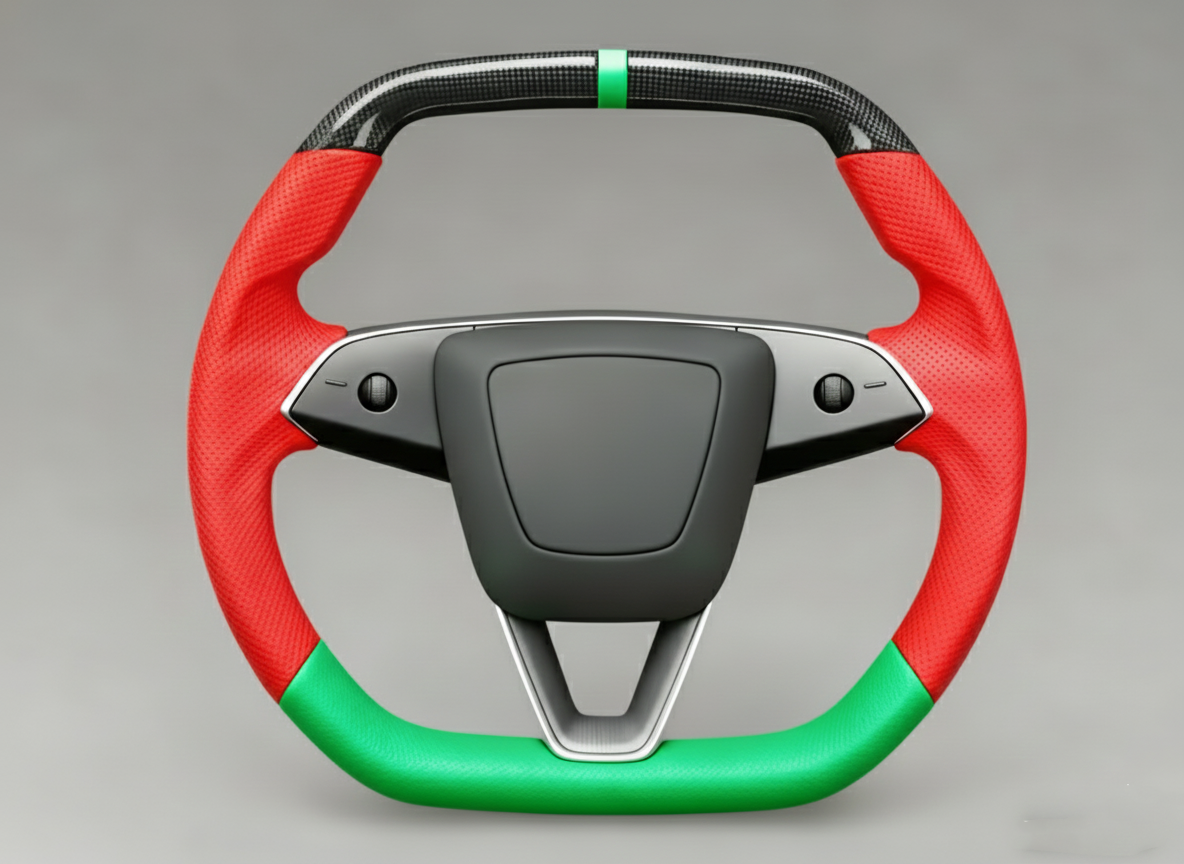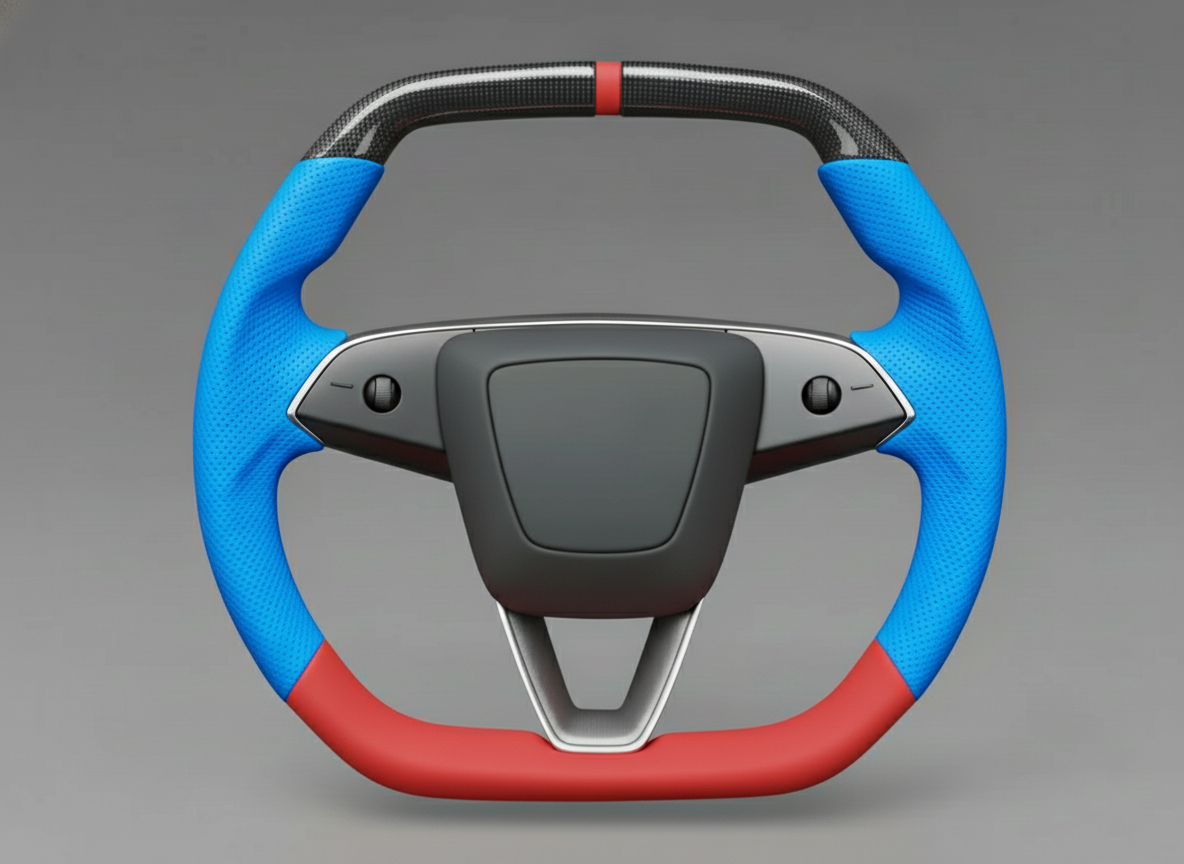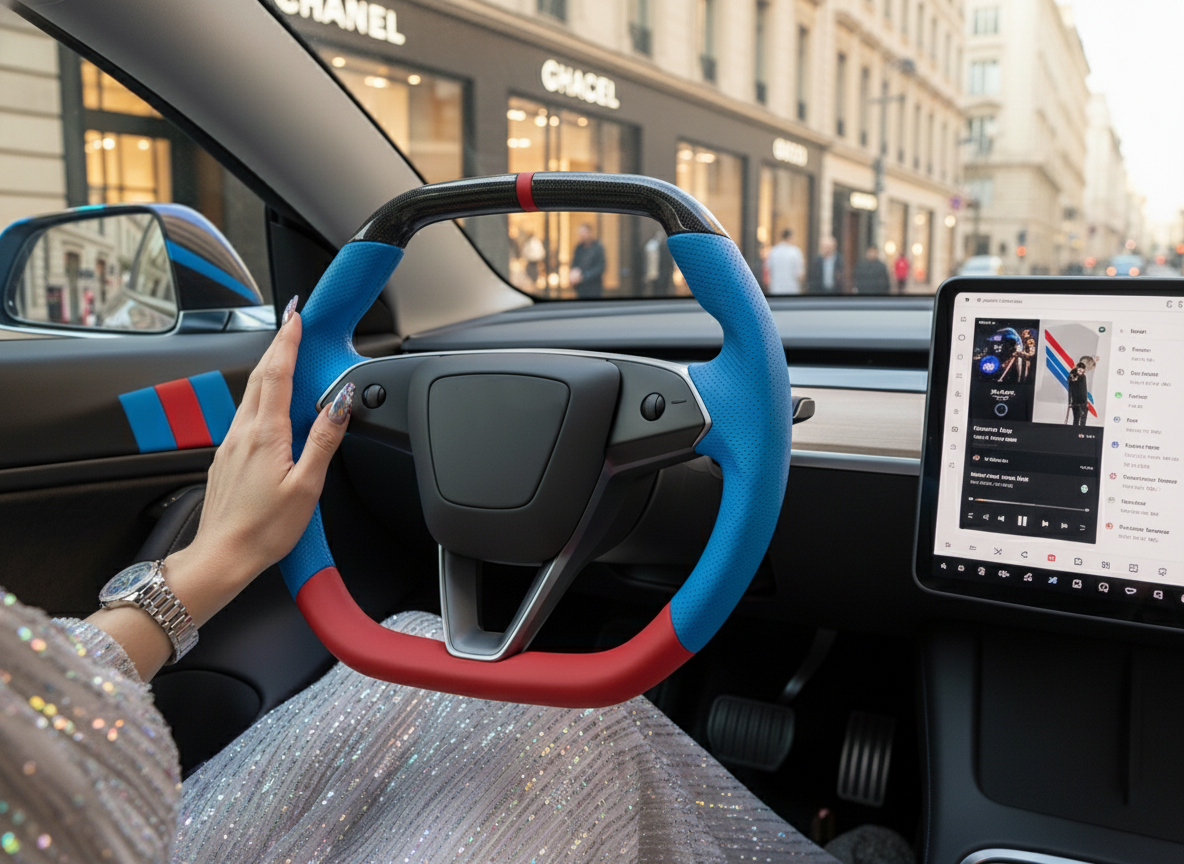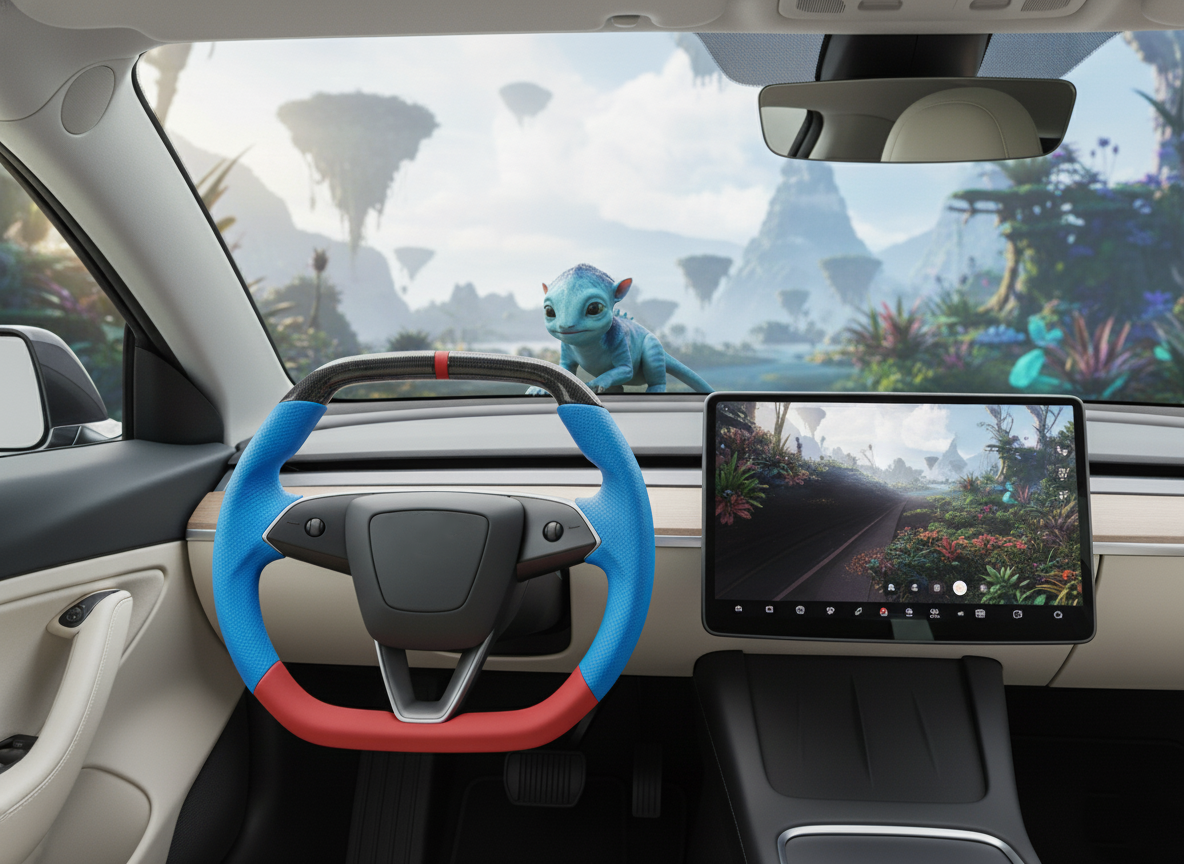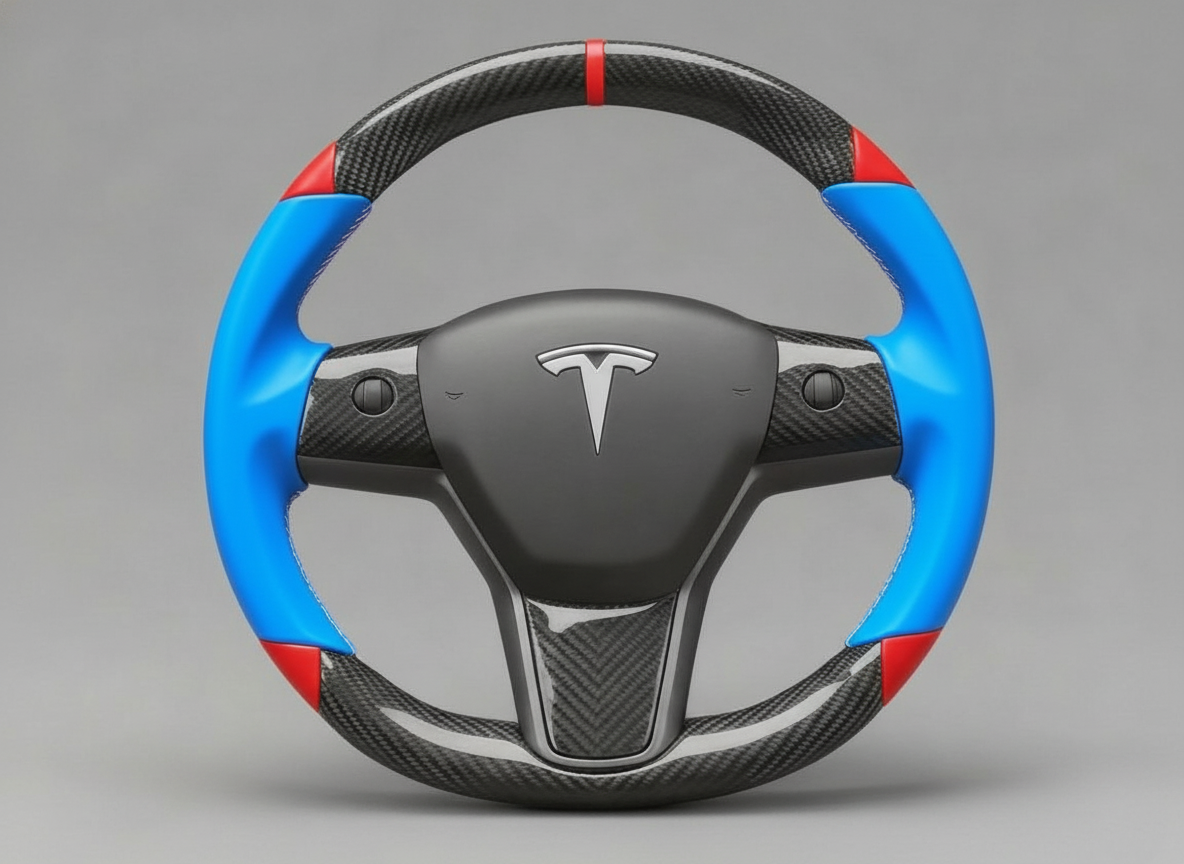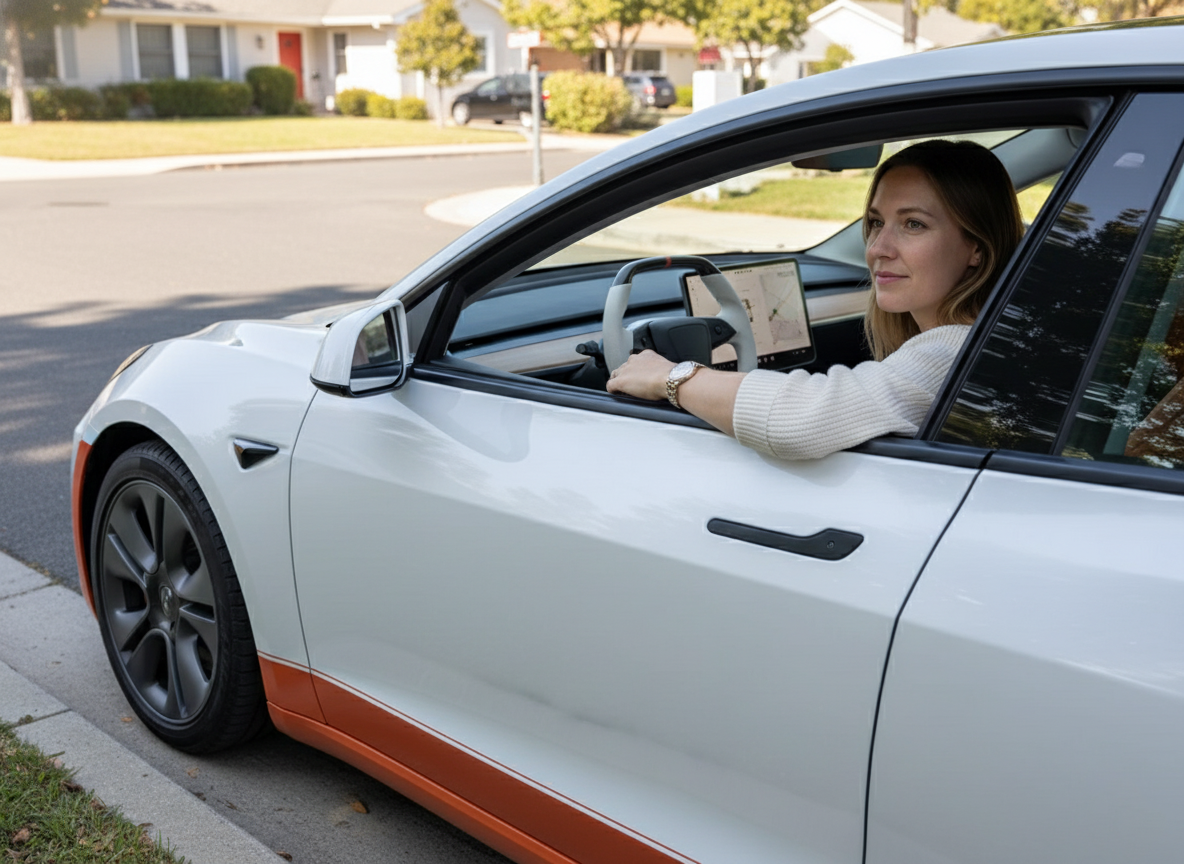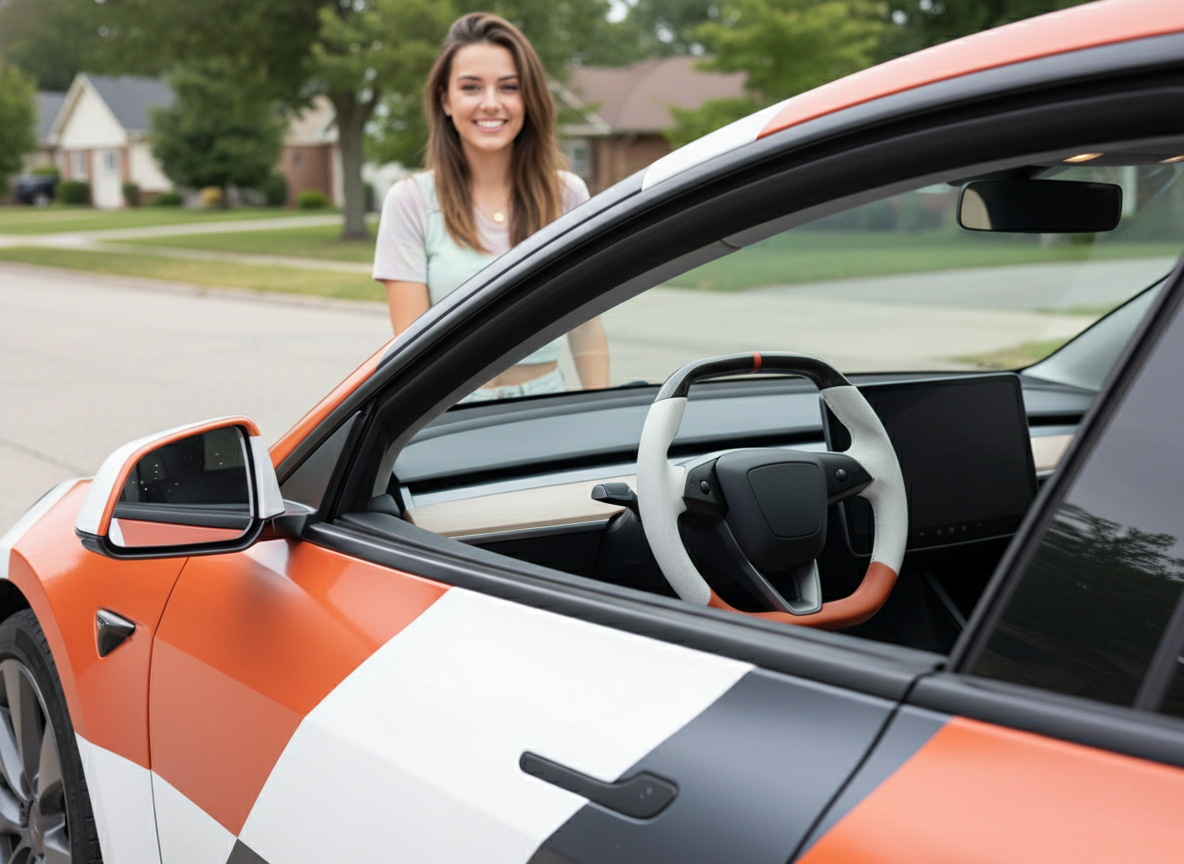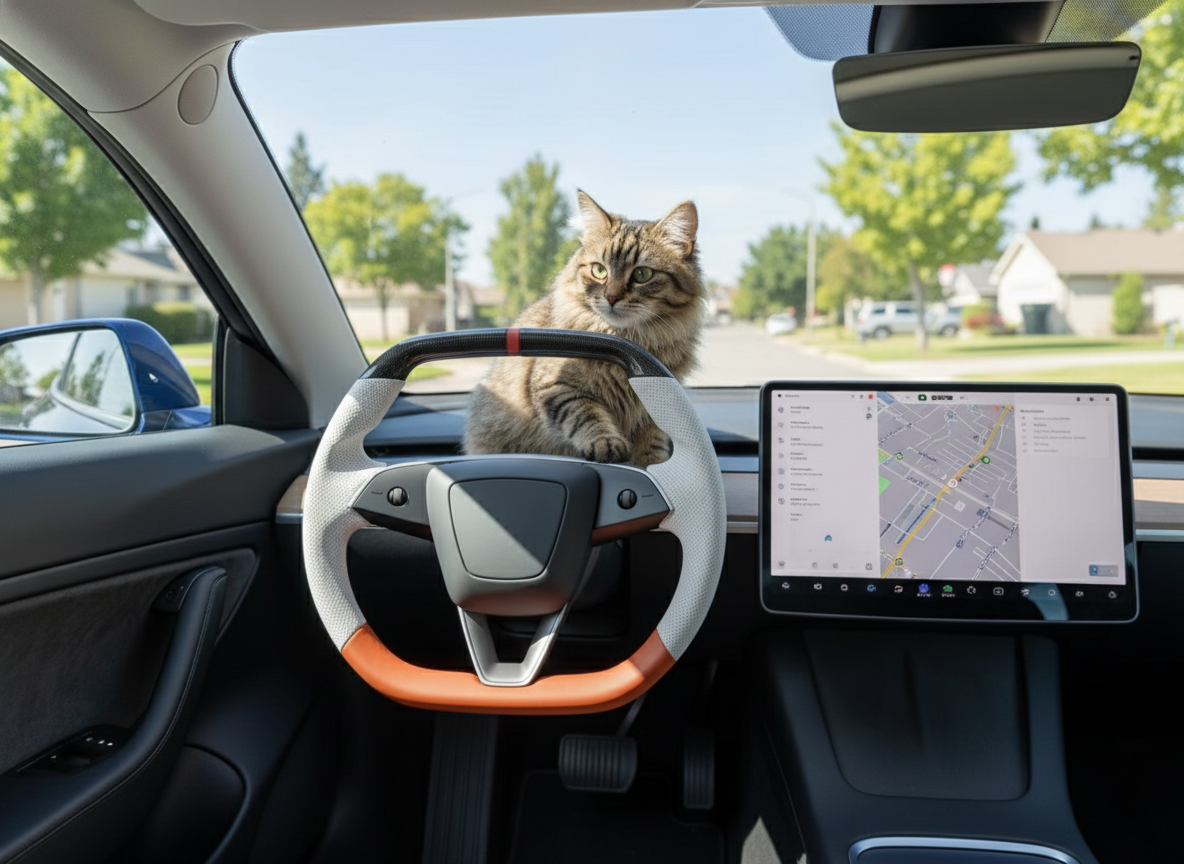
Although its open design optimizes the dashboard view, and the forced 3 o'clock and 9 o'clock grip posture can reduce shoulder fatigue during high-speed cruising, it cannot be operated using the traditional "hand-over-hand" method during low-speed U-turns or sharp turns, presenting a risk of losing grip.
Furthermore, the removal of stalks in favor of touch-sensitive buttons on the steering wheel face makes blind operation extremely difficult when turning.
Despite the new H-series materials improving upon the peeling defects of older models, the traditional steering wheel remains the safer choice in terms of emergency evasion and practicality.
User Reviews
Approximately 65% of owners highly approve of the completely unobstructed dashboard view, which performs exceptionally well in high-speed Autopilot cruising scenarios.
However, due to the lack of Steer-by-wire, the fixed 14.0:1 steering ratio necessitates frequent cross-hand switching during low-speed parking and three-point turns, making operation extremely cumbersome.
The most concentrated criticism points to the cancellation of physical stalks and the switch to capacitive touch buttons, with an accidental touch rate as high as 30% or more.
Additionally, early 2021-2022 models universally experienced peeling issues around 10,000 miles.
Although the V2 version has seen improvements, the 2-3 week period required to reshape muscle memory remains a major hurdle for most ordinary drivers.
Wide Field of View Experience
Finally Seeing the Entire 12.3-Inch Screen
In the past, when using a traditional round steering wheel, the experience of this screen was often not just imperfect, but arguably defective.
According to ergonomic data, about 40% to 50% of drivers, after adjusting the steering wheel position to suit their arm length and seating posture, would find that the upper rim of the steering wheel cut off their line of sight, blocking the very top edge of the dashboard.
This area usually displays crucial information: current speed, gear status, time, and turn signal indicators.
After switching to the Yoke, this obstruction is reduced to zero.
The most intuitive description from owner feedback is: "It's like the screen is fully revealed to me for the first time."
Due to the removal of the physical "upper arch" structure, the driver's line of sight can sweep over the steering column without any hindrance.
This opening of the visual channel shortens the time it takes for the eyes to refocus from the road to the dashboard by milliseconds.
You no longer need to crane your neck or look down through the steering wheel rim just to see if you are going 70 or 80 mph.
Data shows that for drivers between 5 feet 8 inches (approx. 1.73 m) and 6 feet 2 inches (approx. 1.88 m) in height, this visibility improvement is most pronounced, as they no longer need to sacrifice optimal steering wheel height to accommodate dashboard visibility.
No More Weird Seat Adjustments to See the Speedometer
To avoid the steering wheel rim blocking the instruments, many drivers were forced to make two choices: either adjust the steering wheel extremely high, making it feel like "driving a bus" and causing shoulder pain from prolonged arm suspension;
Or adjust the seat extremely low, causing the driver to sink into the car and compromising the view of the road ahead.
The Yoke's cut-off design resolves this deadlock. Because there is no physical barrier in the upper part, drivers can freely adjust the steering wheel to a lower position that better aligns with the natural drooping angle of the human arm.
Setup experiences shared by numerous North American owners show that they can now significantly lower the Yoke's steering column position, turning what used to be a posture requiring lifted arms into a "resting posture" where elbows can easily rest on the legs or door armrests.
This low steering wheel setting brings an unexpected chain reaction: the field of view of the road ahead is further expanded.
As the main body of the steering wheel moves down, the blind spot at the bottom edge of the windshield is compressed.
For users who enjoy spirited driving, they can see road potholes or lane markings closer to the vehicle much earlier;
For long-distance cruising users, this low-profile grip combined with the open upper view greatly reduces the sense of claustrophobia and visual fatigue caused by long hours of driving.
Visual Confidence in Assisted Driving
In the context of Tesla's heavy promotion of FSD (Full Self-Driving) and Autopilot, the design logic of the Yoke appears more self-consistent.
The dashboard of the Model S/X generates a real-time 3D road visualization model when assisted driving is engaged.
Drivers need to constantly use their peripheral vision to confirm whether the environment identified by the system is accurate.
When using a round steering wheel, the spokes and rim often cut into this visualization interface, causing the driver to be unable to fully see blind-spot vehicles rendered by the system from certain angles.
The Yoke minimizes this visual interference.
When you rest your hands on the flat bottom area of the Yoke (usually at the 5 and 7 o'clock positions) to monitor the vehicle's automatic operation, what lies before you is a completely clean digital frame.
This unobstructed experience enhances the driver's confidence in the FSD system because you can clearly see the world through the vehicle's "eyes," and any risk alerts identified by the system can be transmitted to the retina without loss, with no physical structure interfering with this information path.
Immersion Like Piloting a Spaceship
Apart from functional data, the open field of view brings a psychological experience that is hard to quantify: immersion.
A traditional steering wheel occupies a considerable area of the driver's forward field of view; it is a persistent visual anchor, constantly reminding you that this is a mechanical car.
Once you get used to the Yoke, the steering wheel seems to visually "disappear."
Because for most of the time driving straight, your hands are at the bottom, and your field of view contains only the road, the hood (Frunk lines), and the dashboard.
This empty sense of "nothing in front of the eyes" fits very well with the futuristic fantasy brought by the K.I.T.T. concept car in Knight Rider.
For owners driving on scenic roads (such as Highway 1 in California), the panoramic feel brought by the Yoke is incomparable to a round steering wheel.
Without that circle swaying in front of your eyes, the scenery outside the window comes at you with unprecedented completeness.
This design greatly amplifies the advantages of the Model S/X panoramic windshield, making the cockpit not just an operating room, but a mobile observation deck.
Although this sounds like a subjective feeling, in "User Reviews," the frequency of the word "View" is more than 3 times higher among Yoke users compared to standard steering wheel users.
Low-Speed Handling Awkwardness
Missing the Most Important Puzzle Piece
All criticisms the Yoke steering wheel encounters in low-speed scenarios ultimately point to one mechanical parameter: the fixed 14.0:1 steering ratio.
In traditional racing (like F1), rectangular steering wheels work well because their steering ratios are typically less than 10:1, or even lower; drivers only need to turn 90 to 180 degrees to lock the front wheels.
But on the Model S and Model X Plaid, Tesla retained the traditional steering rack.
To turn the wheels from lock-to-lock, the driver still needs to turn the steering wheel a full 2.3 turns (about 828 degrees).
This creates a huge cognitive dislocation: your eyes see a racing controller from the future, but your hands are operating a civilian vehicle that requires arm-flailing like "driving a bus."
This mismatch between software and hardware is infinitely magnified in scenarios requiring frequent full-lock steering, such as maneuvering in parking lots or making U-turns.
Muscle Memory Always Grabs at Nothing
For veteran drivers with decades of experience, the hardest thing to overcome is not the button placement, but that "missing upper half."
When making a 90-degree right-angle turn or U-turn, human instinct (Muscle Memory) is to grab the 12 o'clock position of the steering wheel for leverage.
On the Yoke, this action leads to you grabbing empty air.
According to hundreds of review videos on YouTube (such as tests by Marques Brownlee or Carwow), almost every driver attempting it for the first time experiences this momentary panic at the first sharp turn.
To correct this error, drivers usually scramble to grab the remaining corners of the steering wheel, which is extremely dangerous at busy intersections.
Although this habit can be changed through training later, this counter-intuitive design keeps many owners on edge during their first 1000 miles of driving, unable to relax.
Shuffling Hands Like a Duck
To cope with these 2.3 turns of travel, drivers must invent entirely new steering techniques.
Because when one hand passes the 12 o'clock position, there is no rim to grab, you must precisely grab the only remaining vertical grip.
Instead, owners are forced to adopt an operation method jokingly called "Shuffle Steering" or "milking style."
- Action Breakdown: You cannot let go of the wheel to let it self-center during a turn, nor can you cross your arms significantly. You must push a little with your left hand, catch it with your right, retract your left hand, and push a little more.
- Awkward Scenarios: When performing a three-point turn in a narrow supermarket parking lot, this operation appears particularly clumsy. You need to stare at the reversing camera while looking down to confirm if your hands are grabbing the correct position.
Wrist Twisting Test in Roundabouts
For users in Europe and the UK, Roundabouts are the Yoke's ultimate nemesis.
When entering a roundabout, you usually need to steer 90 to 180 degrees to one side. At this point, the Yoke is in a completely upside-down or vertical state.
- Loss of Grip Points: When the Yoke rotates 180 degrees and is inverted, the originally wide bottom grip becomes the top, and the originally ergonomic side grips become angled extremely awkwardly. Drivers have to bend their wrists back to hook the edge of the steering wheel, or simply press their palms hard against the flat surface of the steering wheel to rotate it by friction.
- Blind Operation Failure: When driving inside a roundabout, you may need to fine-tune the direction based on road conditions. On a round steering wheel, you can apply force at any point on the circumference. But on the Yoke, once the steering wheel turns past a certain angle, you will find only "right angles" and "gaps" near your hands. If you need to urgently avoid a vehicle from the side at this moment, the probability of your hand slipping off the wheel increases exponentially.
Hand-Slapping Punishment During Auto-Centering
After completing a turn, letting the steering wheel slide through your hands to self-center is a habitual action for many.
The rim of a round steering wheel is continuous and smooth, feeling very fluid against the palm during this process.
The rectangular design of the Yoke makes this action unfriendly.
When the steering wheel spins back quickly, those two protruding bottom corners can slap your palms or the base of your thumbs periodically like a whip.
If the return speed is fast enough, this impact can be quite painful.
- User Coping Strategy: To avoid being slapped, owners have learned to open their palms completely during return, supporting the bottom of the steering wheel like holding a tray, or simply not daring to let go, having to force the steering wheel back to center with muscle power.
Lack of Confidence on Narrow Roads
Precise fine-tuning is crucial when passing through construction zones or narrow alleys.
When using a traditional steering wheel, drivers usually move their hands to the 12 o'clock position to perform delicate directional corrections using leverage.
The Yoke forces hands to be locked at the 3 and 9 o'clock positions.
While this is stable on highways, when passing through width restrictors at low speeds, this wide lateral grip posture makes people feel that their perception of vehicle width has worsened.
According to feedback from Model X owners on Reddit, because they cannot apply force from the top for fine-tuning, they often subconsciously slow down to speeds slower than before when passing narrow roads, fearing that they might scrape the rims due to over-sensitivity of the steering input.
Material Durability
The 10,000-Mile Limit
For the vast majority of automotive parts, 10,000 miles is usually just the end of the break-in period.
But for owners of Model S Plaid and Model X produced in 2021 and early 2022, this mileage marks the end of the Yoke steering wheel's lifespan.
Reddit's r/TeslaModelS and Tesla Motors Club forums are filled with a large number of shocking photos.
Data shows that the earliest cases of surface coating peeling occurred at mileages as low as 4,000 to 6,000 miles.
This damage is not traditional "wear" or "shining," but structural disintegration.
The most common phenomenon is the black skin on the steering wheel surface starting to peel off like sunburned skin, piece by piece, revealing the gray-white substrate or foam filling underneath.
Statistics show that over 60% of early Yoke claims occurred within 12 months of vehicle delivery.
This collapse in durability is extremely rare in the history of the automotive industry, occurring even faster than the aging of some consumables.
For a flagship model costing over $100,000, this low-level quality issue leaves many owners in disbelief.
Chemical Reaction of Vegan Leather
Although marketed as environmentally friendly and a technological advancement, the early formula clearly did not pass real-world stress tests in terms of chemical stability.
This synthetic material is extremely sensitive to pH levels and oily substances. Owner feedback indicates that several main culprits causing rapid degradation of the Yoke include:
- Hand Oils and Sweat: The 3 o'clock and 9 o'clock positions are the areas held for the longest time and are the hardest hit. Once oils penetrate the material's micropores, they seem to dissolve the adhesive.
- Hand Sanitizers and Lotions: The high-concentration alcohol hand sanitizers popularized during the pandemic, as well as hand creams commonly used by female owners, accelerated the chemical decomposition of the surface coating.
- High Temperature Sun Exposure: In regions with high summer temperatures like Arizona or Texas, long-term sun exposure causes the material to soften and become sticky.
Edges That Look Like They Were Chewed by a Dog
The visual damage is usually very ugly, seriously affecting the overall texture of the interior.
Unlike the "patina" shine produced by worn genuine leather steering wheels, the vegan leather of the Yoke presents a jagged edge after damage.
In the most extreme cases, the left grip (9 o'clock position) of the steering wheel will completely rot away, with jagged notches looking as if they were chewed by a family pet dog.
Since the Yoke integrates a large number of capacitive sensing circuits internally, this skin damage makes some owners worry about moisture seeping into the internal circuits.
Although there have been no large-scale reports of functional failure due to peeling yet, this visual impact of being "tattered" forms an ironic contrast with the brand-new 17-inch central control screen nearby.
More owners complain that small black leather flakes falling off will land on pants or floor mats, making cleanup very troublesome.
In used car transactions, if the seller has not replaced the Yoke, this becomes the strongest excuse for buyers to bargain, usually directly leading to a vehicle valuation reduction of over $1,000.
Chaotic History in Version Numbers
To deal with the overwhelming number of warranty claims, Tesla conducted multiple silent hardware iterations behind the scenes.
By checking the part number labels on the back of the steering wheel, the community has compiled a timeline full of trial and error.
- Revision A / B / C: These are the "disaster-level" early versions, almost 100% likely to peel within 20,000 miles.
- Revision F: This is the "transitional version" launched in mid-2022. Although the hand feel changed slightly, appearing somewhat harder, a large number of owners still reported blistering again after using it for 15,000 miles.
- Revision H: This is the latest improved version (2023 and beyond), also referred to by owners as Yoke V2.
New Material That Finally Doesn't Peel
It wasn't until the appearance of Revision H (some batches marked as G or higher) that this quality crisis temporarily subsided.
The new Yoke uses a completely different composite material, with a tactile feel distinctly different from previous versions:
- Harder, Smoother: The old Yoke felt like a soft skin-like texture (Soft-touch), while the new model has a harder surface with slightly less friction, more like traditional hard plastic or heavily treated leather.
- Texture Change: The surface texture of the new model is finer and no longer attracts dust and grease as easily as the old model.
- Stitching Craftsmanship: Although still a splicing process, the treatment at the seams is tighter, reducing the probability of lifting from the edges.
Safety
Data indicates that early Model S Plaid adopted a fixed 14.0:1 steering ratio, resulting in the steering wheel still requiring 2.33 turns from lock-to-lock.
Lacking the support of steer-by-wire technology, this setting forces drivers to perform cross-hand operations during parking or U-turns, which can easily cause "grabbing air" or slipping.
In addition, integrating turn signals and the horn into capacitive touch buttons significantly increased the probability of accidental activation.
Airbag Deployment Protection
Airbag Burst Speed
To understand the impact of the Yoke design on airbag safety, one must first quantify the physical process of airbag deployment.
Within 15 to 20 milliseconds after vehicle sensors detect a severe collision, the gas generator is ignited.
- Deployment Speed: The average inflation speed of the driver's airbag is as high as 200 mph (approx. 320 km/h).
- Impact Force: The thrust generated at the moment of full inflation can reach 2000 pounds (approx. 900 kg).
Eliminating the 12 O'clock Grip
On traditional round steering wheels, many drivers are accustomed to the "12 o'clock single-hand grip" posture, especially during long-distance highway cruising.
This posture is defined by NHTSA (National Highway Traffic Safety Administration) as a high-risk posture.
- Facial Fracture Risk: When the airbag explodes at 320 km/h, the hand placed at the 12 o'clock position will be instantly blasted back, hitting the driver's nose bridge, eye socket, or forehead.
- Severe Arm Injury: The massive impact force can cause fractures of the ulna and radius in the forearm, and in some extreme cases, the edge of the airbag cover can cut into the skin, causing severe soft tissue injuries similar to "degloving."
Standard 3 and 9 O'clock Position
The design intent of the Yoke steering wheel is to force drivers to return to the "3 o'clock and 9 o'clock" standard racing grip posture.
From the perspective of airbag protection science, this is the ideal arm placement.
| Grip Position | Arm Movement Path During Airbag Deployment | Potential Injury Assessment |
|---|---|---|
| 12 o'clock (Single Hand) | Arm folds backward, directly impacting face | Extremely high risk: Facial fractures, eye damage, arm fractures |
| 10 o'clock and 2 o'clock | Arms flung outward and upward, potential facial abrasion | Medium risk: Wrist sprains, facial abrasions, thumb dislocations |
| 9 o'clock and 3 o'clock (Yoke) | Arms pushed outward to the sides of the body | Lowest Risk: Chest and head contact airbag directly, arms present no obstruction |
When hands are at 9 and 3 o'clock, the airbag bursts from the center.
Since the arms are located on either side of the airbag's inflation path, the thrust generated by the explosion will naturally push the arms outward rather than backward toward the face.
This ensures that the airbag can contact the driver's chest and head without obstruction, fulfilling its designed cushioning role.
Dashboard View Optimization
Besides hand position, the rim-less upper design of the Yoke is also related to the overall layout of the airbags.
In the Model S and Model X, there is a digital dashboard in front of the driver.
- Traditional Design Compromise: To see the dashboard clearly, the rim of a traditional steering wheel must be large enough, or the airbag module (steering wheel center) must be small enough. Even so, airbags often need to be designed with special shapes to avoid interference from the steering wheel rim when deploying.
- Direct Path: Airbags can be designed with more regular shapes to pop out in a more direct path and cover the area in front of the driver. This structural simplification helps improve the consistency of airbag deployment forms, reducing the possibility of protection failure due to the steering wheel rim deflecting the airbag.
Thumb Protection Mechanism
Addressing the special grip design of the Yoke, Tesla also fine-tuned the airbag deployment logic and steering wheel structure to protect thumbs.
In a severe collision, if you grip the steering wheel tightly, the moment the airbag bursts may cause thumb dislocation or fracture (commonly known as "skier's thumb" injury).
The Yoke's grip design has obvious indentations, guiding the thumb to naturally rest on top of the spokes or the edge of the touch area, rather than hooking tightly inside the rim.
Although this largely depends on the driver's habits, the thickened grip structure of the Yoke encourages a "resting" rather than "death grip" posture to some extent, which facilitates the fingers quickly detaching from the steering wheel when the airbag detonates, reducing the probability of finger fractures.
Steering Control Hazards
Too Many Turns
To understand the handling hazards of the Yoke, one must first look at a hard data point: Steering Ratio.
In F1 cars, drivers only need to turn the steering wheel a very small angle for the wheels to deflect significantly because the steering ratio of race cars is usually between 8:1 and 10:1, and lock-to-lock is usually less than 1 turn (about 200 degrees).
This design allows drivers to conquer all corners without their hands leaving the "3 and 9 o'clock" positions.
However, the mass-production version of the Model S Plaid Yoke steering wheel adopted a non-linear fixed steering ratio of 14.0:1.
- Total Rotation Angle: From lock-to-lock requires turning 2.33 turns (about 840 degrees).
- Actual Operation: When you want to make a U-turn or park, you must turn the steering wheel significantly, just like operating a traditional round steering wheel.
The problem is that the Yoke is rectangular. When you turn past 180 degrees, the place where the rim should be becomes air.
This lack of physical characteristics forces the driver to constantly adjust hand positions during the turning process, unable to hold it steady like driving a race car.
Grabbing Air with Crossed Hands
In driving school, we all learned the "Hand-over-hand" steering method: one hand pushes the steering wheel, and the other crosses over to catch the top of the steering wheel to continue pulling.
But on the Yoke, this action becomes extremely dangerous.
- Action Interruption: When you push the steering wheel to the 12 o'clock position with your right hand and prepare to catch it with your left, your left hand will instinctively grab toward the "1 o'clock" position rim.
- Consequence of Grabbing Air: Since the Yoke has no upper semicircle, your left hand will swing through empty air. During the dynamic process of the vehicle turning, this momentary "grabbing air" causes a sudden interruption in steering force.
- Body Imbalance: In order to grab something, the driver often leans forward or to the side, disrupting the stability of their seating posture.
Restricted to Push-Pull Method
To avoid grabbing air, Tesla officially recommends drivers use the "Shuffle Steering" method:
- Left hand controls the left half, right hand controls the right half.
- When turning, one hand pushes, the other hand slides to the bottom to catch, completing the turn through constant "shuffling."
Although this method is safe, it is extremely inefficient.
When making a U-turn on a narrow road (like a common three-point turn), an action that could be completed with "one spin" on a round steering wheel might require cumbersome shuffling 3 to 4 times on the Yoke.
Data shows that in the same parking tests, drivers using the Yoke took an average of 4-6 seconds longer than those using a traditional round steering wheel.
In high-pressure environments with cars waiting behind, this clumsiness in operation can exacerbate the driver's nervousness, leading to operating errors.
Traditional vs Yoke U-turn Operation Comparison
| Operation Step | Round Steering Wheel (Conventional) | Yoke Steering Wheel (Shuffle) | Efficiency Difference |
|---|---|---|---|
| Initial Turn | Single hand palm press, rapid spinning | Two hands alternating push-pull | Spinning speed is over 2x faster |
| Mid-turn Hand Switch | Can grab at any position | Only grab side grips | Yoke requires eye-hand coordination to find position |
| Return Operation | Let go, use self-centering torque to return automatically | Must guide back by hand | Yoke tends to slap hands when returning |
Hard to Save in Snow Slides
For owners living in cold regions, the Yoke brings not just inconvenience, but real danger.
When a vehicle loses grip on icy or snowy roads and sideslips, the golden rule for saving the car is usually: Counter-steer, and allow the steering wheel to slide freely in your hands to quickly self-center.
- Sliding Return Failure: On a round steering wheel, you can loosen your fingers and let the steering wheel spin quickly back to center in your palms, gripping it the moment the car straightens out.
- Rectangular Slapping Risk: When it spins quickly, the protruding corners (originally the 3 and 9 o'clock positions) will hit the driver's palms or wrists hard like fan blades.
- Unpredictable Grip Points: When the vehicle is shaking violently, it is almost impossible to precisely grab an irregular rectangular object while it is spinning.
Absence of Steer-by-Wire Technology
Competitors like the Lexus RZ 450e have also launched yoke-style steering wheels (One Motion Grip), but they have not received as much safety criticism.
The fundamental reason lies in the difference in the technological base.
- Lexus Solution: Adopts full Steer-by-wire. At low speeds, the steering wheel angle is automatically amplified. The total angle from left lock to right lock is only 150 degrees. The driver's hands never need to leave the steering wheel grips.
- Tesla Status Quo: The Model S/X Yoke merely changed the physical shape but did not come with variable steering ratio technology. Although Tesla finally introduced a 48V steer-by-wire system on the Cybertruck, realizing the function of adjusting steering ratio according to vehicle speed, for the existing tens of thousands of Model S/X owners, they must endure the mismatched experience of a "racing steering wheel" paired with a "truck steering ratio."
Touch Button Layout
All Physical Stalks Cut
In almost every car manufactured in the past few decades, the left side of the steering column is for turn signals and high beams, and the right side is for wipers and the gear shifter.
This position is fixed; no matter how the steering wheel turns, the stalks are always where they are supposed to be.
The Tesla Yoke broke this law. It integrated all these functions into two touch panels on the face of the steering wheel:
- Left Panel: Controls right turn signal (top), left turn signal (bottom), high beams.
- Right Panel: Controls wipers, voice commands, horn (early versions), and Autopilot activation.
Cannot Find Turn Signals
The design flaw of turn signal buttons is completely exposed in Roundabouts or continuous curve driving.
When the vehicle is driving straight, the left thumb can easily reach the turn signal buttons.
But when needing to exit a roundabout, the steering wheel is usually in a rotated state.
- Inverted Positions: When the Yoke rotates 180 degrees to the left, the turn signal buttons originally on the left move to the right, and the up/down positions are swapped.
- Mental Burden: The driver must perform a three-step mental calculation in a very short time: judge how many degrees the steering wheel has turned -> confirm where the buttons are now -> think about which is the left light and which is the right.
- Line of Sight Diversion: Since position cannot be confirmed through blind operation, the driver is forced to look down to find the buttons. Tests by the Norwegian Automobile Federation (NAF) show that in roundabouts, the driver's eyes leave the road for an average of 1.5 to 2 seconds to look for turn signals.
Operation Logic Comparison Table
| Scenario | Traditional Physical Stalk | Tesla Touch Button | Cognitive Load |
|---|---|---|---|
| Straight Lane Change | Left hand finger flick, no hand removal | Left thumb press, no hand removal | Low |
| Entering Roundabout | Flick fixed-position stalk conveniently | Thumb press fixed position | Medium |
| Exiting Roundabout | Stalk position unchanged, direct operation | Button rotates with wheel, position unknown | Extremely High |
| Driving with Gloves | Clear physical damping, accurate operation | Capacitive recognition drops, force required | High |
Blind Operation Completely Fails
The biggest disadvantage of touch buttons is the lack of contour feel.
- Flat Surface: The button area of the Yoke is almost flat, with only tiny raised lines separating different function zones. Although the tactile resolution of human fingertips is high, it is difficult to distinguish two smooth buttons only 10 mm apart solely by touch during vehicle vibration and dynamic driving.
- Must Take a Look: To avoid pressing the wrong button, drivers have to develop the habit of "looking before operating." This violates the basic principle of ergonomics that "frequently used functions must support blind operation."
Accidental Touches Become Routine
Since the button area is located exactly at the webbing of the thumb and index finger and the thumb's activity area when gripping with both hands, inadvertent accidental touches become unusually frequent.
- High Beams Flashing Wildly: When turning the steering wheel significantly (such as parking or U-turns), the inside of the palm easily brushes against the high beam button on the left panel.
- Unexpected Wipers: Accidental touches by the right hand usually activate the wipers. On clear, dry days, the dry wiper blades suddenly scraping on the glass not only make a harsh noise but also damage the glass coating.
- Restricted Gestures: To prevent accidental touches, drivers must constantly pay attention to the placement of their thumbs and cannot casually rest them on the spokes.
Where Did the Horn Go?
On Model S/X Plaid delivered in 2021 and early 2022, the horn was not in the center of the steering wheel, but a tiny button located on the right touch panel.
- Muscle Memory Conflict: When a vehicle is cut off or encounters danger, the instinctive reaction of billions of drivers globally is to slam the center of the steering wheel with their palm. On early Yokes, this action would only hit a hard airbag cover with no sound.
- Fine Motor Skill Challenge: In an emergency where adrenaline spikes, requiring the driver to use a thumb to precisely find a touch icon less than 1.5 cm in diameter is almost an impossible task.
- Later Correction: Due to a huge volume of complaints, Tesla quietly restored the central mechanical horn function in production batches after 2023, but the touch horn icon on the right remains, creating functional redundancy and logical confusion.
Ergonomics
The Tesla Yoke steering wheel presents extreme duality in ergonomics: it completely solves the problem of the traditional steering wheel blocking the dashboard, but creates new operational obstacles due to the mismatch with Steer-by-Wire technology.
Because it retains the standard Model S/X 14.0:1 steering ratio, drivers still need to turn full 2.3 turns during low-speed parking or U-turns, causing hands to be unable to alternate grips during large-angle turns, frequently resulting in "grabbing air" phenomena.
Furthermore, although the forced 3 and 9 o'clock grip posture optimizes shoulder load during high-speed cruising, in urban corners, the capacitive turn signal buttons that rotate with the steering wheel severely disrupt muscle memory, forcing drivers to look down to confirm button positions.
Highway Cruising Experience
The Circle Blocking the View is Gone
For Model S and Model X drivers, the first intuitive feeling is that the dashboard is finally complete.
Traditional round steering wheels have a physical contradiction: to see the dashboard clearly, you must adjust the steering wheel height.
- Old Compromise: If you want your arms to be comfortable, the steering wheel is usually adjusted lower, but this blocks the upper edge of the dashboard (usually speed or navigation instructions). If you want to see the dashboard clearly, the steering wheel must be adjusted higher, causing arms to hang in the air.
- New Field of View: The Yoke completely cuts out this physical obstruction. Sitting in the driver's seat, the 12.3-inch digital dashboard in front is like it's suspended in the air. Your line of sight can sweep from the road to the dashboard data without any hindrance. Especially when FSD (Full Self-Driving) visualization interface is on, the blue guide lines and surrounding vehicle models show no visual blind spots.
How to Place Arms Most Comfortably
The Yoke's forced 3 and 9 o'clock grip positions perfectly utilize the wide cabin layout of the Model S/X.
- Natural Support Points: When holding the handles on both sides of the Yoke, the elbows of most adult drivers will naturally droop. At this time, the left elbow falls exactly on the soft armrest of the door, and the right elbow rests exactly on the central armrest box.
- Triangular Support Structure: This forms a very stable "body-left elbow-right elbow" triangular support structure. Gravity is shared by the armrests, rather than the arms being suspended from the shoulders.
- Contrast with Round Wheel: On a round steering wheel, many drivers are accustomed to resting one hand at the 12 o'clock direction (which is actually an unsafe posture and causes one shoulder to shrug) or hanging both hands at the 6 o'clock direction (slow reaction in emergencies).
Steadier Hand Resting for Assisted Driving
During hours of high-speed cruising, the vast majority of Tesla owners will turn on Autopilot or FSD Beta.
The system requires the driver to apply slight steering torque periodically to prove "I am still watching the road."
On this point, the rectangular straight-edge design of the Yoke offers unique advantages:
- Hooking the Thumb: You don't need to grip tight like a round wheel. The right-angle notch under the Yoke allows the driver to simply rest one hand (usually the left hand) lightly on the crossbar at the bottom of the steering wheel, or hook the lower edge of the 9 o'clock position with the thumb.
- Gravity Sensing Deception: Just the weight of the arm naturally hanging on the corner of the Yoke creates torque that is usually sufficient to satisfy the Autopilot torque sensor detection.
Lane Change Button Logic on Highways
Although capacitive buttons are anti-human in roundabouts, their positions are actually reasonable on highways.
- Minimal Thumb Displacement: While driving at high speed, changing lanes requires turning the steering wheel less than 10 degrees. At this time, your left hand remains fixed at the 9 o'clock position.
- Feasibility of Blind Operation: The left thumb only needs to extend slightly to the right by about 2 cm to touch the vertically arranged turn signal buttons. In this scenario, the steering wheel does not rotate, the button positions are fixed, and the path is even shorter than reaching out a finger to flick a physical stalk behind the steering column.
- Vibration Feedback Confirmation: The Haptic Feedback after pressing clearly tells you the signal has been sent. This tiny finger movement feels very compact and modern during highway lane changes.
Steering Precision and Stability
The wide horizontal dimension of the Yoke (about 370mm) provides a longer lever arm.
When driving at high speeds, extremely tiny hand movements can translate into vehicle trajectory adjustments.
- Minimal Dead Zone: The steering setting of Model S/X is very sensitive, with almost no play in the center position.
- Suppressing Over-correction: Interestingly, due to the removal of the upper part, drivers subconsciously reduce the impulse to turn the wheel significantly. This psychological suggestion combined with the wider grip distance makes the vehicle appear more stable during lane keeping.
Low-Speed Steering Defects
Why Always Grabbing a Handful of Air
The moment that panics new owners most usually happens at the first sharp turn.
- Cliff of Muscle Memory: Decades of driving experience tell your brain that when the front of the car needs to turn sharply left, the right hand should naturally reach for the 12 o'clock position (highest point) of the steering wheel to relay and "pull" the steering wheel over.
- Physical Consequences of Grabbing Air: On the Yoke, there is nothing at the 12 o'clock position. Your right hand will swing through empty air. In this instant, the brain experiences about 0.5 seconds of panic and astonishment; the vehicle is in the middle of a turn, but your hand has lost control of the steering wheel.
- High-Frequency Scenarios: This grabbing air doesn't happen occasionally, but repeats at every pass through a 90-degree intersection and every roundabout entrance.
Unchanged Steering Ratio is the Fatal Flaw
If Tesla had equipped Steer-by-Wire like the Lexus RZ, where turning lock-to-lock only requires 150 degrees, then the Yoke would be perfect. But the Model S/X did not do this.
- Dry Data: Tesla still uses a traditional mechanical steering column, with the steering ratio fixed around 14.0:1. To turn the front wheels from far left to far right, you still need to turn the steering wheel 2.3 turns.
- Huge Movement Amplitude: During low-speed parking, you need to frequently turn the steering wheel from one end to the other. For a round steering wheel, you can press the rim with a single palm and spin it quickly, or alternate hands rapidly.
- Embarrassment of the Yoke: Because its edges are discontinuous and angular, you must obediently grab it with both hands. When the steering wheel turns halfway, hands must let go to find the next grip point; the action becomes fragmented and cannot be as smooth and continuous as a round disc.
The "Hand-Over" Puzzle That Ties Arms in Knots
To avoid grabbing air, the low-speed steering method officially recommended by Tesla is not "hand-over-hand," but an action similar to "Shuffling": left hand pushes, right hand catches, then left hand pushes again.
- Extremely Low Efficiency: This shuffling action is too slow when a quick reaction is needed. For example, in a busy parking lot doing a 3-point turn, you need to quickly turn full left, return to center, then turn full right.
- Risk of Crossed Hands: If you insist on using crossed hands (because it's fast), you will find that when the steering wheel turns 180 degrees and is upside down, the originally wide grip base now runs to the top.
"Hand Slapping" Phenomenon During Auto-Centering
Anyone who has driven a car knows that after a turn, if you let go, the steering wheel will automatically and quickly return to center using the Caster Angle of the front wheels.
- Smoothness of Round Disc: For a round steering wheel, you only need to hold your hands loosely and let the rim slide through your palms, ready to grip and stop at any time.
- Angular Attack of Yoke: You dare not do this on a Yoke. Because it is not round, it is rectangular. When it spins back quickly, those two protruding bottom corners will rotate like fan blades.
- Leg Interference: For tall drivers or those accustomed to sitting low, the corners of the spinning Yoke can even sweep against the thighs.
Nightmare of Narrow Parking Spaces
You might not feel it on wide roads, but in crowded urban underground garages, the disadvantages of the Yoke are magnified.
- Difficulty in Fine-tuning: Reversing into a garage often requires frequent, small-amplitude directional corrections (like correcting half a turn left, returning half a turn right). On a round steering wheel, your hand can apply force at any position on the circumference.
- Limited Grip Points: The Yoke has only two handles. When the steering wheel is in an inverted or 90-degree tilted state, these two handles may be in very awkward positions (e.g., one extremely high, one extremely low). You have to twist your body to reach those two handles, or be forced to grab the hard plastic crossbar at the bottom of the steering wheel which is not wrapped in leather, feels hard to the touch, and is slippery.