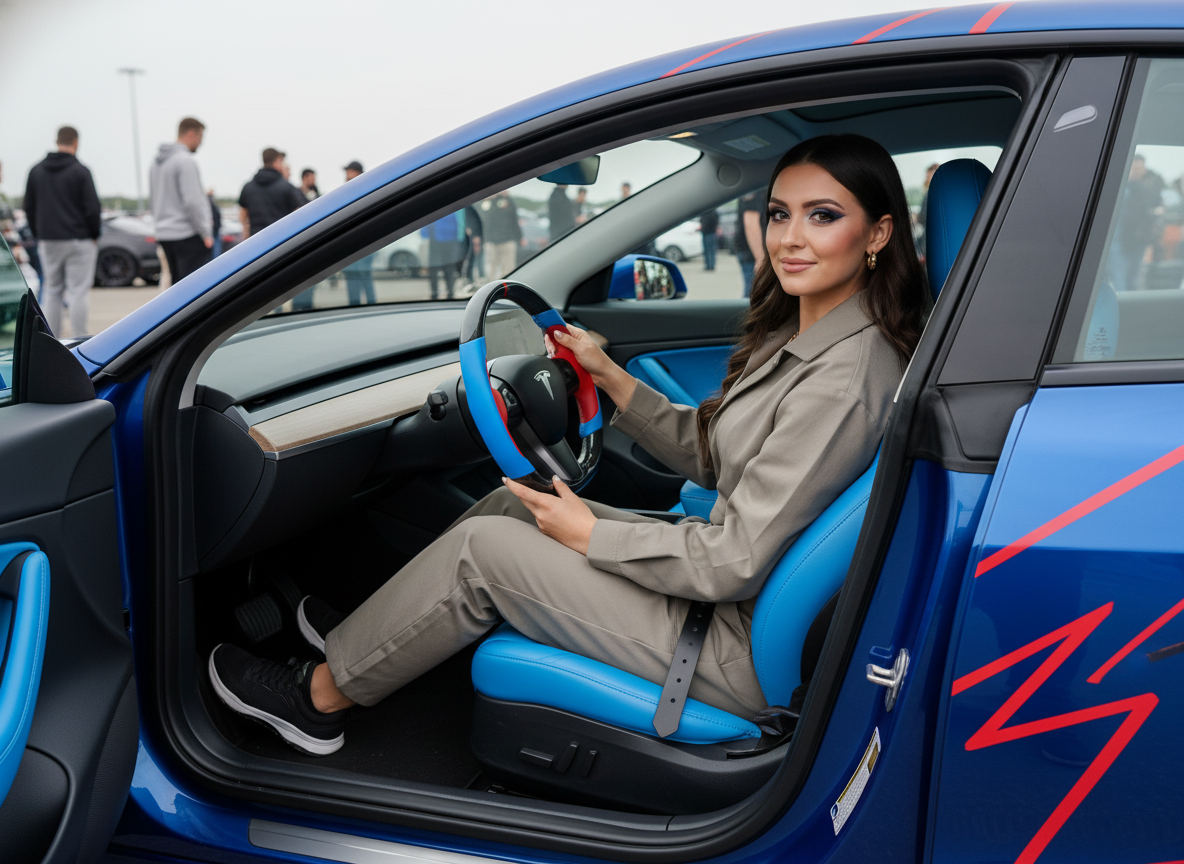
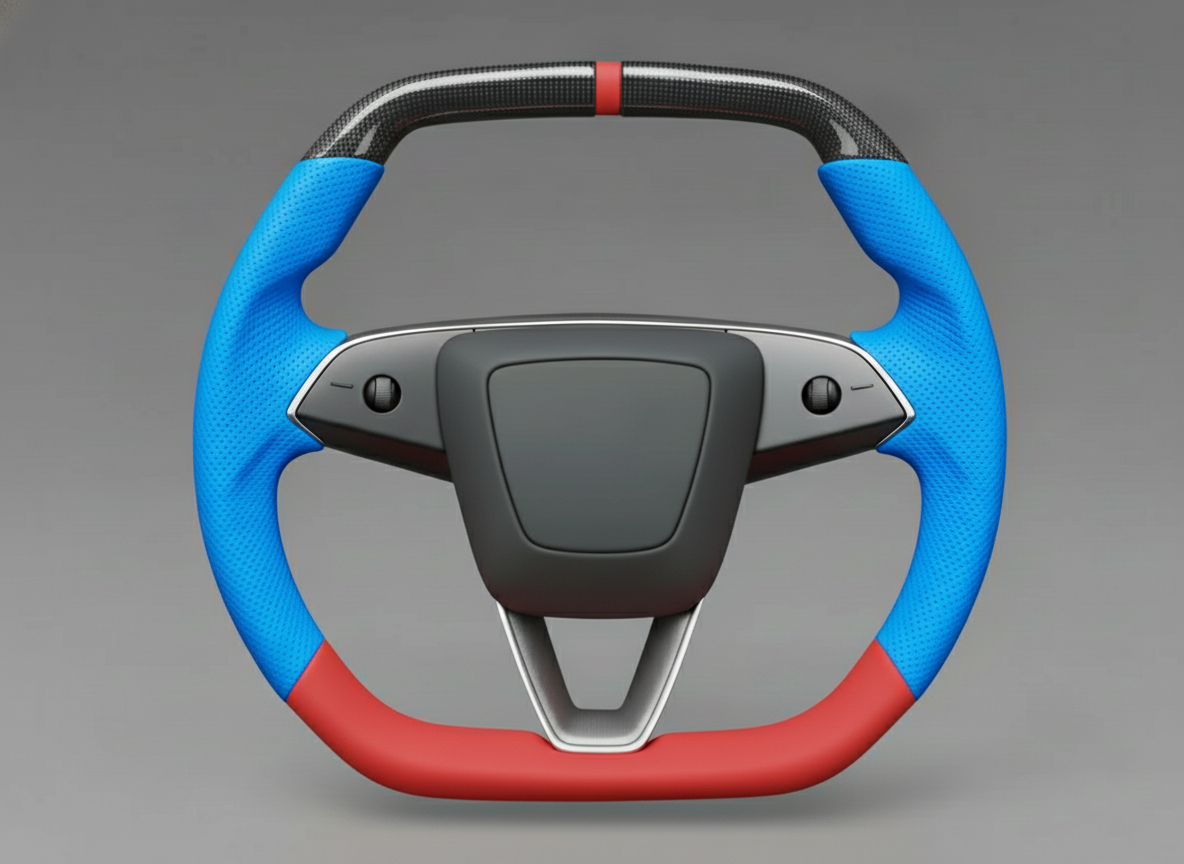
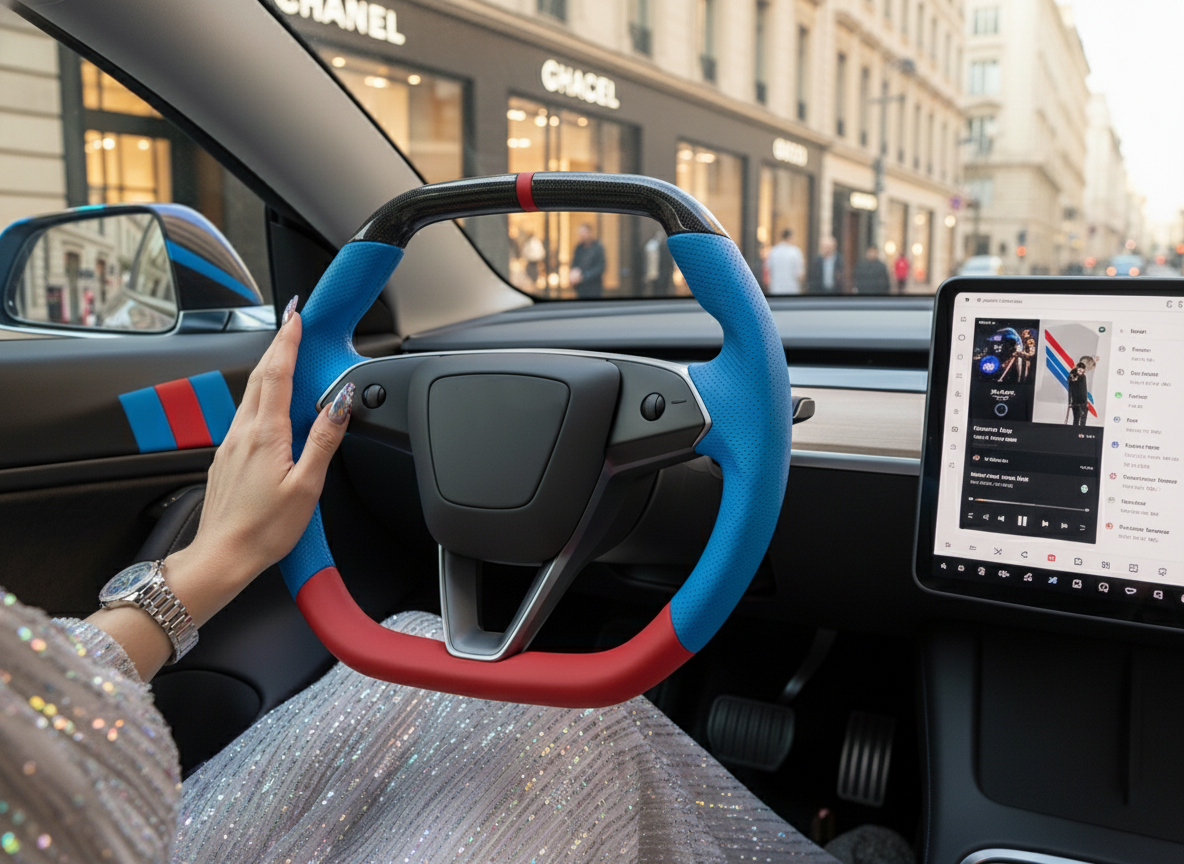
To repair scratches on the Tesla Model Y steering wheel, for minor wear, first use a dedicated leather cleaner to remove dirt, then apply a leather conditioner containing natural oils, and let it sit for 15 minutes to penetrate and fade the marks.
If the scratch is deep into the leather layer, a leather repair kit containing filler paste is required. Take about 2 grams of repair paste to evenly fill the gap, lightly sand it flat with 400-grit fine sandpaper, and finally spray it with matching color self-painting paint to restore the original matte texture of the car.
Conditioners
For steering wheels like the Tesla Model Y that use 100% synthetic leather (Vegan Leather), the main task of the conditioner is to treat nail marks or shallow abrasions with a depth of less than 0.05mm.
Through a water-based emulsion containing nonionic surfactants and anti-UV ingredients (SPF 30+ level), it can penetrate into the synthetic fiber gaps within 5-10 minutes.
This can increase the color saturation at the scratch by 15%-20%, and provide up to 90 days of anti-static protection, reducing dust adhesion and epidermal embrittlement caused by drying.
Technology & Materials
The steering wheel wrap of the Tesla Model Y uses a polyurethane (PU) synthetic material with a thickness of 1.2 mm. Unlike animal leather, which has 0.02 mm microscopic pores, the surface layer of the synthetic material presents a completely closed molecular structure. Traditional animal fats with a molecular weight exceeding 1000 Daltons cannot penetrate this physical barrier due to their large volume.
The existence of the physical barrier requires the conditioning liquid to use chemical solvents of a specific particle size. The water-based emulsion encapsulates the active ingredients in water droplets with a diameter of 0.5 microns, which perfectly matches the microscopic texture of the synthetic leather surface. At an ambient temperature of 22°C, the deionized water, which accounts for 70% of the formula, will completely evaporate within 120 seconds.
-
Polyurethane coating thickness 1.2 mm
-
Number of natural capillary pores 0
-
Surface physical tension 35 mN/m
-
Factory gloss < 10 GU
After the water evaporates, the nonionic surfactant with a hydrophilic-lipophilic balance (HLB) value of 12 left in place begins to take effect. The compound penetrates deeply into the shallow scratch gaps that are 0.05 mm deep, and reduces the rigidity by 30% of the hardened fibers turned up at the edges due to physical friction.
The softening of the edges handles the physical phenomenon of rough texture, while the visual color difference repair relies on polymer filling technology. The non-oily modified polydimethylsiloxane (PDMS) derivative will deposit an extremely thin coating with a thickness of about 3 nanometers in the depression of the scratch.
The nano-film changes the refractive index of light at the damaged site. For the area that was originally whitened due to physical breakage, its color saturation will be increased by 15% through refraction, visually reintegrating into the surrounding 8 GU matte black background.
While controlling light refraction, the high-temperature effects brought by solar radiation must be handled. In high-light areas such as Phoenix, Arizona, the closed temperature inside the car in summer often climbs to 65°C. The conditioning formula is usually mixed with micron-sized zinc oxide particles with a particle size of 40 nanometers as a UV blocker.
-
Formula pH 5.5 to 6.5
-
Deionized water accounts for 70%
-
UV blocker 40 nm zinc oxide
-
Nonionic surfactant HLB value is 12
When zinc oxide particles exert their sun protection effect, the pH of the formula needs to be maintained in a specific chemical range. The weakly acidic pH value of 5.5 to 6.5 perfectly matches the chemical environment of the original PU coating. An alkaline solution with a pH value exceeding 8.0 will dissolve the matte layer on the surface within 48 hours.
Once the chemical layer is dissolved, it is irreversible, so high-risk chemical substances must be strictly excluded from the formula. Petroleum distillates and volatile organic compounds (VOC) with a concentration exceeding 2% are explicitly prohibited. Hydrocarbon solvents will cause abnormal expansion of up to 15% in the polyurethane molecular matrix.
Material expansion will cause the epidermis to blister and eventually physically peel off from the bottom foaming skeleton. Pure silicone oil brings another physical hidden danger; the oil film it forms on the surface will suddenly drop the friction coefficient to 0.1 μ, causing severe hand slippage during driving.
The slipping phenomenon also exists in products containing natural wax components. The melting point of carnauba wax is 82°C, but it will rapidly solidify at a conventional room temperature of 25°C. The solidified wax will fill the 0.2 mm deep bionic leather texture on the surface of the steering wheel.
-
Prohibit petroleum distillates > 0%
-
Limit VOC concentration < 2%
-
Exclude pure silicone oil components
-
Prohibit carnauba wax and beeswax
The wax filling the texture will air-dry into visible white powdery crystals within 7 days. Modern water-based conditioners have abandoned waxes in favor of cross-linked acrylic polymers. After 5 minutes of curing, the polymers will interweave into a microscopic grid with breathability.
The microscopic grid can effectively block airborne dust particles with a diameter greater than 10 microns from falling into the depths of the scratches. The inherent anti-static physical property of the polymer grid can suddenly reduce the static charge on the surface of the steering wheel from 2000 volts to below 50 volts.
After the static electricity is eliminated, a single standard application amount of 5 ml can provide a physical dust-proof state for up to 90 days. To verify the true decay curve of the protection period, the laboratory introduced a Martindale abrasion tester to simulate the friction frequency of daily driving.
Under the condition that the test parameter is set to a pressure of 9 kPa, the PU leather treated with the conditioner can withstand 50,000 friction cycles before showing minor scratches 0.05 mm deep. The untreated original surface will produce the same degree of physical wear at 30,000 cycles.
The improvement in wear resistance is attributed to the synthetic ceramide added at a concentration of 0.5% in the formula. Lipid molecules have the best penetration rate at a room temperature of 20°C to 25°C. When the temperature is lower than 15°C, the capillary pore size of the PU material will shrink by 30%, greatly reducing the absorption efficiency.
The reduction in absorption efficiency will cause 40% of the liquid to remain on the surface, increasing the sticky feeling on the hands and absorbing suspended particles in the air. When operating in Michigan in winter, the car heater must be turned on for 15 minutes in advance to raise the surface temperature back above 20°C before application.
Strict temperature control combined with a 120-second resting penetration time can ensure that 0.1 mg of active ingredients per square centimeter completely embeds into the breaks of the molecular chain. After completing the chemical attachment, the tensile strength of the material can be temporarily increased by 8%, which is enough to withstand the scraping force of daily ring edges within 10 Newtons.
Process & Steps
Before treating polyurethane (PU) materials, the ambient temperature needs to be controlled in the range of 20°C to 25°C. When it is below 15°C, the molecular chains of the synthetic leather surface layer will shrink, causing the capillary pore size to shrink by about 30%, hindering the penetration of the water-based emulsion. In areas with strong sunlight (such as Florida in summer), the UV index often exceeds level 10. During operation, the vehicle must be parked in an indoor garage to prevent ultraviolet light from accelerating the evaporation of water in the emulsion within 3 minutes, causing the polymer to agglomerate.
Use an ultra-fine microfiber cloth containing 200,000 fibers/square inch, matched with a neutral surfactant whose pH is maintained at 7.0. Spray the cleaning fluid onto the cloth, press out about 3 grams of liquid, and strictly avoid pouring the liquid directly into the gaps of the steering wheel. Apply a vertical downward pressure of about 300 grams and wipe clockwise along the outer ring. After continuous action for 45 seconds, the sebum dirt on the surface will be transferred to the cloth, and the originally reflective areas will return to the 8 GU (gloss unit) state when it left the factory.
After cleaning, it needs to stand for 180 seconds to allow the moisture to completely evaporate in an environment where the air humidity is less than 60%. Trace amounts of moisture residue will dilute the concentration of the subsequent emulsion and reduce the physical adhesion rate of the SPF 30+ blocker in the ingredients.
-
Ambient humidity < 60%
-
Steering wheel surface temperature < 30°C
-
Microfiber cloth dryness 100%
-
2 spare high-density sponges
Take 2 to 3 ml of water-based conditioning emulsion and squeeze it into the center of a polyurethane sponge with a porosity lower than 15%. Use your fingertips to gently press the back of the sponge to evenly distribute the liquid on the applying surface, avoiding uneven absorption of the coating caused by excessive local concentration.
Aim at the area with 0.05 mm shallow scratches, apply 500 grams of downward pressure, and perform a circular friction with a radius of 2 cm. Maintain a frequency of 2 rotations per second and continue for 15 seconds to allow the nonionic active agent to penetrate the microcracks through frictional heat generation. After completing the local repair, add 1 ml of emulsion to cover the common grip areas at 3 o'clock and 9 o'clock with an even force. The coating here is usually 0.1 mm thinner than the top due to the long-term gravity pressure of the hands, and the dose of the conditioning liquid needs to be increased.
-
Avoid the stitching area by 3 mm
-
Stay and rub at the scratch > 15 seconds
-
Unidirectional circular motion
-
Back application angle 45 degrees
The texture depth on the back of the steering wheel is usually 0.2 mm, which is easier to accumulate dust particles than the front. When treating the back, the pressing angle of the sponge applicator needs to be adjusted to 45 degrees to ensure that the emulsion can reach the deepest part of the texture, and the overall dosage is reduced by 0.5 ml. The absorption rate of polyester fiber stitching to liquids is 5 times that of PU materials. When applying, a safe distance of at least 3 mm must be maintained from the inner stitching to prevent the emulsion from penetrating into the threads and precipitating about 0.1 grams of white crystals after 48 hours.
After application, enter the resting reaction period and time it for 5 to 8 minutes. At a room temperature of 22°C, the water-based carrier begins to evaporate, the polymer components physically adhere to the broken synthetic fibers, and the white reflectance at the edge of the scratch will drop by 20%. If there are still obvious droplets on the surface after 8 minutes, it indicates that the ambient humidity is high or the application amount has exceeded the standard by more than 1 ml. Touch the unabsorbed area lightly with your finger. If you feel viscous resistance, you need to immediately proceed to the final wiping process.
Switch to another dry microfiber cloth of 300 GSM (grams/square meter) and gently sweep over the surface with a force of less than 100 grams. Pressing too heavily will destroy the newly formed anti-static protective film with a thickness of about 5 microns.
-
Overall gloss 8 GU
-
Scratch color saturation increased by 15%
-
Friction coefficient 0.4 μ
-
No white powder residue
After wiping, keep the car windows open with a 3 cm gap for ventilation to maintain air circulation in the car for 1 hour. In the next 24 hours, avoid touching the steering wheel with hand sanitizers containing an isopropyl alcohol concentration higher than 5%. Alcohol solvents will dissolve the just-cured water-based protective layer within 3 seconds, re-exposing the scratches. Strictly following the above environmental and physical parameters, a single operation can maintain an anti-friction state for 90 days, and the amount of dust adhesion will be halved.
Environmental Differences
The physical state of polyurethane (PU) synthetic materials will change significantly with geographic and climatic parameters. In Arizona, where temperatures reach up to 45°C, the temperature in the closed environment of the car will climb to 72°C after being parked for 40 minutes.
High temperatures cause the polymer molecular chains of the synthetic leather surface layer to physically expand by about 2.5%. The expansion stretches the microscopic pores from the factory 0.02 microns to 0.05 microns, accelerating the physical volatilization of the internal plasticizers.
Once the plasticizer loss exceeds 15%, the tensile strength of the polyurethane material will drop by 40 Newtons.
The degradation of tensile strength makes the steering wheel extremely prone to developing a network of micro-cracks with a depth of 0.1 mm at the 9 o'clock position after enduring about 800 gripping frictions per day from the driver. In Florida, where the ultraviolet index (UVI) exceeds level 9 year-round, intense UV-A band radiation will penetrate the car window glass.
When radiation shines on the PU coating that has lost its plasticizer protection, it will trigger a photo-oxidation reaction within 120 hours. The originally 8 GU matte black surface will yellow, and the reflectance will rise to 15 GU.
For high-light and high-temperature environments, the frequency of conditioning operations needs to be adjusted to once every 15 days. Each applied emulsion must contain nano-scale titanium dioxide (TiO2) at a concentration of 3% to block ultraviolet rays with a wavelength between 320 and 400 nanometers.
| Climate Type | Representative Region | Max Surface Temp | Plasticizer Loss Rate | Suggested Care Cycle |
|---|---|---|---|---|
| Extremely Dry & Hot | Nevada | 68°C | 18% / month | 20 days |
| High Humidity & Strong UV | Florida | 65°C | 12% / month | 15 days |
| Extremely Cold & Low Humidity | Michigan | -15°C | 5% / month | 40 days |
| Constant Mild Zone | California | 40°C | 8% / month | 60 days |
Compared to the expansion caused by high temperatures, extremely cold environments trigger completely opposite physical shrinkage. In Michigan, where winter temperatures drop to -15°C, the volume of the PU material will shrink by about 1.8%, causing the surface hardness Shore A value to rise from 60 degrees to 75 degrees.
The increase in hardness greatly increases the brittleness of the material. When scraped by a fingernail with a Mohs hardness of 2.5, the stress point, which would originally only produce a white mark, will instantly rupture into a physical tear with a depth of 0.2 mm.
When the ambient temperature is below 5°C, the physical viscosity of the water-based conditioning emulsion will soar from 300 centipoise to 1200 centipoise.
The water-based emulsion with soaring viscosity is completely unable to penetrate the shrunken microscopic cracks. Forcing the application will cause 70% of the active ingredients to accumulate on the surface and form a white ice crystal residue after the water freezes, losing its 5-micron-thick film function.
The loss of the film function requires the driver to start the car's air conditioning heating system before operation in winter. Maintain the cabin temperature at 22°C for at least 20 minutes to raise the steering wheel surface temperature back above 18°C, so the porosity of the material can recover to its normal state of 85%.
Restoring the porosity is a prerequisite to ensure the downward penetration of the nonionic surfactant. In the desert areas of Nevada, where the relative air humidity is generally below 20% year-round, the low humidity environment brings another physical challenge: excessive accumulation of static charge.
Every sliding friction of the hands will generate a static voltage of up to 3500 volts on the extremely dry PU surface. Strong static electricity will tightly adsorb suspended particulate matter (PM10) within a radius of 50 cm into the 0.05 mm shallow scratches.
The particulate matter acts as a micro-abrasive inside the scratches. When both hands hold the steering wheel again and apply a grip force of 30 Newtons, the micron-level dust will perform a secondary physical cut on the bottom of the scratch, causing the damaged depth to increase by 0.02 mm within 7 days.
In environments with a relative humidity lower than 30%, the dosage of the conditioning liquid for a single application needs to be increased from the standard 5 ml to 7 ml.
The extra 2 ml of liquid can provide additional hydration. The cross-linked acrylic polymer in the formula can form a dense conductive grid on the surface, releasing the 3500-volt static charge to below 100 volts within 2 seconds.
The release of the charge drastically reduces the physical adhesion rate of dust. In Louisiana, however, where the relative humidity is as high as 85%, the saturated water molecules in the air will hinder the natural evaporation of the 70% deionized water in the water-based emulsion.
The curing process, which originally only took 120 seconds in a 22°C standard environment, will be stretched to over 480 seconds in a high-humidity environment. The delayed evaporation of moisture causes the emulsion to remain in a liquid, wet state for a long time.
| Relative Humidity | Curing Time | Surface Static Charge | Dust Adsorption Amount (mg/cm²) |
|---|---|---|---|
| < 20% | 90 seconds | 3500 V | 0.85 |
| 45% - 55% | 120 seconds | 800 V | 0.32 |
| > 85% | 480 seconds | 150 V | 0.15 |
A prolonged wet state will attract mold spores from the environment. In a closed cabin with a temperature of 30°C and humidity of 85%, incompletely cured nonionic surfactant residues will form visible white mold spots within 72 hours.
The mold spots will multiply rapidly along the polyester fiber stitching area at a rate of 200 colonies per square centimeter. At this point, a secondary dry wipe must be performed using a 300 GSM microfiber cloth, applying a vertical pressure of 150 grams to absorb the excess 0.5 ml of unevaporated moisture on the surface layer.
The secondary dry wipe ensures that the 3-nanometer-thick protective film can closely adhere to the polyurethane skeleton. The climatic variables of different dimensions require the operator to precisely adjust the contact time and applied dose of the chemicals based on the specific readings of local temperature and humidity meters.
Precise adjustment can maximize the physical efficacy of a single 150 ml bottle of conditioning liquid. Operations that strictly match environmental parameters can keep the steering wheel retaining a delicate grip with a friction coefficient of 0.4 μ in its factory state throughout an driving mileage of up to 150,000 kilometers.
Repair Kits
The Model Y steering wheel uses microfiber polyurethane (Vegan Leather), and its surface coating thickness is about 0.1 mm to 0.15 mm.
When the scratch depth exceeds 0.2 mm causing the internal structure to be exposed, Repair Kits based on waterborne polyurethane (PU) technology need to be used.
Professional kits usually include 20ml of flexible filler paste, 30ml of matte black leather dye, and 600 to 1500 grit precision sandpaper.
Compared to paying $750 to $900 to replace the entire steering wheel assembly, a $50 repair kit can restore the visual integrity of the damaged area to over 95% and withstand high in-car temperatures of 70°C.
Repair Kit Components
Synthetic leather repair kits priced between $40 and $70 on the market are packed in 15x10x5 cm hard cardboard boxes. The interior contains 5 to 7 liquid or paste substances with different chemical properties, as well as miniature physical construction tools, with a total weight typically between 150 grams and 200 grams. The Volatile Organic Compound (VOC) content of the chemical solvents is limited to below 250g/L, complying with the environmental emission regulations of the California Air Resources Board (CARB) in North America.
The left side of the box stores basic chemical preparations, presenting different physical forms based on density and volatilization rates, taking on degreasing, filling, and catalyzing functions:
-
70% Isopropyl Alcohol: Packaged in a 30ml PET spray bottle, it can dissolve the residual hand sweat grease and residual silicone oil conditioner components on the surface layer of the Model Y steering wheel within 15 seconds.
-
Waterborne Polyurethane Filler Paste: Packaged in a 20ml aluminum tube, with a density of 1.15g/cm³, the volume shrinkage rate of a single layer after curing is strictly controlled to within 10%.
-
Isocyanate Crosslinker: Packaged in a 5ml glass dropper bottle; when the ambient temperature is below 15°C, add it to the filler paste at a ratio of 1% to 3% to strengthen the internal three-dimensional network molecular structure.
The drying time and storage conditions of the chemical preparations are affected by ambient temperature and humidity. At standard atmospheric pressure and a room temperature of 25°C, the physical form and curing time of each component present non-linear variation rules.
| Chemical Reagent Name | Physical State Appearance | Packaging Volume & Material | Room Temp Drying Time (25°C) | Suggested Storage Temp Range |
|---|---|---|---|---|
| Isopropyl Alcohol Cleaner | Colorless transparent liquid | 30ml PET spray bottle | 15 to 30 seconds | 5°C to 30°C |
| Polyurethane Filler Paste | Off-white high-viscosity gel | 20ml aluminum tube | 30 to 45 minutes | 10°C to 25°C |
| Isocyanate Crosslinker | Colorless viscous liquid | 5ml glass dropper bottle | Varies with mixture | 5°C to 20°C |
| Waterborne Matte Black Dye | Black flowing emulsion | 30ml HDPE plastic bottle | 15 to 20 minutes | 10°C to 25°C |
| Polyurethane Matting Agent | White suspension emulsion | 10ml LDPE dropper bottle | Varies with mixture | 10°C to 25°C |
After filling, it needs to be covered with a 30ml bottle of waterborne matte black leather dye. The dye is a mixture of waterborne polyurethane resin and nano-scale carbon black pigment, with the carbon black particle diameter distributed between 20 and 50 nanometers. The pigment formula is precisely blended at a 1:1 ratio entirely based on Tesla's original factory code "1000" interior blackness standard.
The gloss meter 60-degree angle measurement value on the surface of the Model Y steering wheel is usually between 3 and 5 gloss units (GU). If the dye presents a reflective phenomenon above 6 GU after drying, a 10ml bottle of liquid matting agent needs to be added. Suspended in the matting agent are silica porous particles with a diameter of about 5 to 8 microns, which can forcefully generate diffuse reflection of light.
Besides chemical preparations, the right side of the box provides physical sanding and application auxiliary tools designed for the 35mm diameter tubular curved surface:
-
Silicon Carbide Precision Sandpaper: Contains five grades from 400 to 1500 grit, sized 5x5 cm, abrasive Mohs hardness of 9.2, used to flatten polyurethane warping edges over 0.5 mm.
-
POM Flexible Scraper: 8 cm long, the front end has a 30-degree bevel, and the edge thickness is injection-molded to 0.2 mm, enabling precise scrape coating of 0.1 mm thickness at micro scratches.
-
80 PPI Polyurethane Sponge: 2x2x3 cm specification, physical rebound rate upon pressing exceeds 95%, micropores can absorb liquid dye up to 3 times its own volume to prevent dripping during operation.
A 20x20 cm lint-free microfiber cloth is configured for the cleaning and wiping steps, and the fabric weight reaches 300 gsm. The diameter of a single fiber filament is only 0.4 microns, which is one two-hundredth the thickness of a human hair. The cloth surface adopts a warp-knitting process, with about 150,000 fine filaments distributed per square centimeter, possessing extremely strong static dust adsorption capabilities.
The bottom layer of the packaging box places protective isolation and color mixing accessories, used to control construction boundaries and liquid proportions:
-
Low-Tack Masking Tape: 18 mm wide, 0.02 mm thick acrylic pressure-sensitive adhesive, can withstand industrial heat gun baking at 80°C for 30 minutes without leaving adhesive residue.
-
Plastic Color Mixing Palette: Contains 6 circular grooves, a single hole has a diameter of 15 mm and a depth of 5 mm, and fully loaded it can hold about 2 ml of mixed liquids of different proportions.
-
Birch Wood Stirring Stick: 10 cm long, can withstand bending stress when mixing high-viscosity waterborne polyurethane paste, without breaking and producing wood chips that mix into the paste.
The shelf life of the entire set of consumables in the unopened state is set at 18 to 24 months. Once opened and exposed to moisture in the air, the chemical cross-linking activity of the waterborne polyurethane paste and dye will decay exponentially within 6 months. When stored, it must be kept away from open flames, the bottle caps tightly screwed on to maintain a seal, and placed in a light-proof space with a relative humidity below 50% and a constant temperature of 15°C to 20°C.
Specific Operation Steps
The repair operation needs to be carried out in an environment of 20°C to 25°C with a humidity lower than 60%. Excessive moisture in the air will hinder the cross-linking reaction of the waterborne polyurethane molecular chains, leading to shrinkage and cracking of the filled part within 72 hours. Nitrile gloves must be worn before operation to prevent the grease and sodium chloride secreted by fingers from adhering to the microfiber substrate.
In the preparation stage, all consumables need to be placed on the workbench within reach.
-
70% Isopropyl Alcohol Solution
-
Lint-Free Microfiber Cloth
-
Low-Tack Masking Tape
-
Plastic Color Mixing Palette
Take a piece of low-tack automotive masking tape with a width of 18 mm, and wrap the intact leather surface 5 mm beyond the scratch. Dip the microfiber cloth with 3 ml of 70% isopropyl alcohol solution, and wipe the damaged area and its outer edge in a single direction. After repeatedly wiping 3 times, let it sit for 5 minutes to allow the solvent to completely evaporate in the air.
After the solvent evaporates and takes away the impurities, take a small piece of 600-grit precision sandpaper and cut into the edge of the scratch at a 45-degree angle. Apply a downward pressure of about 200 grams with your fingertips, and sand unidirectionally for 10 to 15 times. The warped burrs originally at a height of 0.2 mm will be leveled off, forming a smooth downward micro transition slope.
Clean up the fine dust generated by sanding, and start preparing to scrape the filler paste. Select a flexible plastic scraper with a front-end thickness of only 0.5 mm, and pick up about 0.5 grams of filler paste on the edge of the scraper. The scraper needs to maintain a 30-degree tilt angle and closely fit the circular arc surface of the steering wheel while moving.
The filling technique requires the paste to be evenly pressed into the craters with a depth of more than 0.2 mm. The single-layer filling thickness is strictly controlled within 0.1 mm, and it is left to dry naturally at room temperature for 30 minutes after application. During the curing process of waterborne polyurethane, water evaporation will produce a volume shrinkage of about 10%.
Observe the shrinkage state of the paste. If the filled surface is lower than the original factory leather surface, continue to repeat the scraping action. A 0.5 mm deep hard object puncture wound usually requires 3 separate thin-coat fillings to complete. The final filling needs to make the paste slightly higher than the surrounding leather surface by 0.05 mm, reserving an allowance for subsequent physical leveling.
After the last layer of filler paste has rested for 2 hours to completely harden, switch to 1200-grit fine sandpaper for surface treatment.
-
Use a dry sanding method throughout
-
Move along the circular arc of the steering wheel
-
Use an air blower to clean the powder after every 5 sands
-
Use the fingertip pad to touch and confirm the flatness
In the color matching stage, take 2 ml of matte black leather dye and drop it into the palette. The Model Y black interior has an extremely low reflectance. If the dye in the repair kit is too bright, the liquid matting agent needs to be mixed in at a ratio of 10:1, and stirred with the color mixing stick for 30 seconds until completely integrated. If the ambient temperature is below 20°C, 1 drop of cross-linking catalyst can be added.
Cut the 80 PPI high-density sponge into 2 cm square blocks, dip a very small amount of dye, and scrape off excess liquid on the edge of the palette. Tap vertically downward on the repair area at a frequency of 2 to 3 times per second.
The physical action of vertical tapping allows the dye to form tiny granular protrusions in a semi-dry state. The tiny undulating shapes can replicate the microporous texture inherent in the original polyurethane coating. Flat coating techniques will destroy the light diffuse reflection, producing an abrupt, reflective plastic visual surface.
After the first thin coating is completed, wait 15 minutes for the surface to dry. Then proceed with a second or even third stippling coat until the base color of the repair area is 100% covered. The adhesion strength of multiple thin coats is 40% higher than a single thick coat, which can withstand the repeated friction of the palm during daily driving.
After the color completely covers the flaw, turn on the industrial heat gun set at the 60°C gear for thermal curing.
-
The nozzle distance to the leather surface is 15 cm
-
Maintain a uniform sweeping movement
-
A single heating should not exceed 2 minutes
The heat source can make the polymer resins inside the dye rapidly cross-link into a solid network structure. After the heat treatment is completed, tear off the surrounding masking tape and park the vehicle in a cool place for 24 hours. During this period, do not use any chemical wipes to clean or forcefully grip the repaired area.
Built-in Heating Function
Inside the Model Y steering wheel, a resistance heating wire made of copper-nickel alloy (Cu-Ni) is embedded, with a power rating calibrated between 45W and 60W. After this 12V DC-driven system is turned on, it can raise the leather surface temperature from 10°C to 35°C within 180 seconds. The heating wire is arranged in an S-shaped reciprocating pattern beneath the microfiber substrate, which is about 2.0 mm thick.
Since heat conducts from the inside out, the repair material in the damaged area must withstand frequent physical cycles of thermal expansion and contraction. The thermal expansion coefficient of the waterborne polyurethane (PU) filler paste must be maintained between 130 x 10⁻⁶/K and 160 x 10⁻⁶/K. If the physical parameters do not match, the 0.08% microscopic deformation caused by heating will cause the repair interface to peel off after 50 thermal cycles.
In the Society of Automotive Engineers (SAE) J326 interior test standards, the steering wheel must endure alternating high and low-temperature tests from -30°C to 85°C. For components equipped with heating functions, after the repair layer is continuously heated at a constant 48°C for 100 hours, its surface peel strength index must not be less than 6 Newtons per centimeter (N/cm).
The wire diameter of the resistance wire of the heating system is usually between 28AWG and 32AWG, wrapped in a high-temperature resistant polyimide film.
-
The spacing of the resistance wires is 8 mm to 12 mm.
-
The heat insulation layer uses a non-woven fabric material with a thickness of 0.5 mm.
-
The maximum temperature limit is locked at 52°C through an NTC thermistor.
-
The thermal conductivity coefficient of the surface leather is approximately 0.15 W/(m·K).
When sanding scratches deeper than 0.3 mm, the vertical projection area where the resistance wires are located must be avoided. If a 600-grit sandpaper is used for excessive grinding, it will cause the thickness of the microfiber substrate to thin to below 0.8 mm. This physical thinning will cause the heat of the heating wire to concentrate locally, causing the repaired paint surface to turn yellow or become brittle due to local high temperatures.
The selected polyurethane dye needs to possess excellent thermal stability, and its glass transition temperature (Tg) should be higher than 65°C. Under the heating condition of 45°C, the movement of molecular chain segments should not cause the coating surface to stick. If the Tg index is lower than the working temperature, the pressure of the driver's palm will permanently press clothing fibers or fingerprints into the softened repair layer.
For the chemical repair kit developed for Tesla interiors, its crosslinker component will undergo secondary curing in a 50°C environment. This characteristic makes it such that when the steering wheel heating function is turned on, it can actually assist the isocyanate groups and hydroxyl groups inside the repair material to react fully. Experimental data shows that the wear resistance of the coating after heating assistance is 25% higher than that of natural drying.
Because the heating function will accelerate moisture evaporation, humidity control during the repair process has a non-linear impact on the final lifespan.
-
The relative humidity of the construction environment must be maintained between 45% and 55%.
-
The initial setting time of the underlying filler paste is shortened to 12 minutes under heating intervention.
-
The shrinkage rate of each coating film in a 35°C warm state should not exceed 12%.
-
The thickness deviation of the dried repair layer should be controlled within ±0.02 mm.
Molecular migration occurring during heat conduction will affect the colorfastness of the dye. In the ISO 105-B02 lightfastness test, the repair area's grayscale rating needs to reach level 4 or above within 500 hours under 45°C coupled with strong UV irradiation. Low-quality carbon black pigments are prone to oxidation reactions leading to fading after continuous heating.
The integrated control unit inside the steering wheel monitors the total loop resistance value, which is usually maintained between 2.5 ohms and 4.0 ohms. If metallic thermal conductive fillers used during repair are mixed into the paste, they may interfere with the local electromagnetic field distribution. Although this interference is extremely small, it is still recommended to use purely non-metallic polymer composite materials for filling.
According to the weathering data from a North American third-party automotive laboratory, the Model Y steering wheel repaired with high-modulus waterborne polyurethane maintained a hardness difference of within Shore A 5 degrees between the repair point and the surrounding original leather surface after going through two complete winter heating cycles. This flexibility matching effectively prevented edge warping caused by temperature differential stress.
The surface tension of the synthetic leather after being heated will increase from 32 mN/m to about 38 mN/m.
-
The wetting angle of the liquid dye on the warm surface should be less than 60 degrees.
-
The thermal diffusivity of the repair layer needs to reach 0.12 mm²/s.
-
The proportion of thermal weight loss within 24 hours (TGA test) needs to be less than 0.5%.
-
The residual volatile content after long-term heating needs to be less than 50 micrograms/gram.
The junction between the repair layer and the original coating is a physical weak point where thermal stress concentrates. When performing edge feathering treatment, an extended 10 mm slope area is needed to disperse the shear force generated by thermal expansion and contraction. This geometric structure design can reduce the stress sustained per unit area by 40%, ensuring that the coating does not crack starting from the edges when the heating function is activated.
Considering driving safety, the friction coefficient (CoF) of the repair material under heated conditions needs to be stabilized between 0.4 and 0.6. Certain low-cost repair kits will produce an "oily feel" above 40°C, lowering the grip between the palm and the steering wheel. A qualified matte repair agent will maintain a dry physical touch even in a hot state by adding microsphere particles.
Targeting the Vegan Leather characteristics of the Tesla interior, it is recommended to control the total thickness increase after repair within 15% of the original nominal value. A repair layer that is too thick will form local "hot spots", which not only affects sensory comfort, but long-term local high temperatures may also shorten the physical lifespan of the heating elements underneath.
When storing the vehicle, if Tesla's "Cabin Overheat Protection" function is turned on, the internal temperature of the car will be maintained at around 40°C. This sustained medium-temperature environment is a long-term endurance challenge for newly completed repair coatings. High-quality repair kits will undergo a 200-hour constant-temperature storage test during the production phase to ensure that the chemical bonds do not degrade under continuous heating.
To summarize the compatibility of repairs and heating functions, the essence lies in the degree of matching between the material's elastic modulus and thermodynamic properties.
-
Tensile strength should be maintained above 15MPa at 45°C.
-
Elongation at break must be greater than 150%.
-
The onset of thermal decomposition temperature should be higher than 180°C.
-
The fluctuation range of gloss after heating cycles should be controlled within 1.0 GU.
Within the first 72 hours after completing the repair, avoid turning the heating function to the highest gear. The initial chemical cross-linking has not yet reached 100% density, and excessively rapid temperature changes will induce internal stress residues. It is recommended, in the first usage cycle, to gradually increase the heating duration to allow the polymer molecules in the repair area to complete their final physical arrangement.