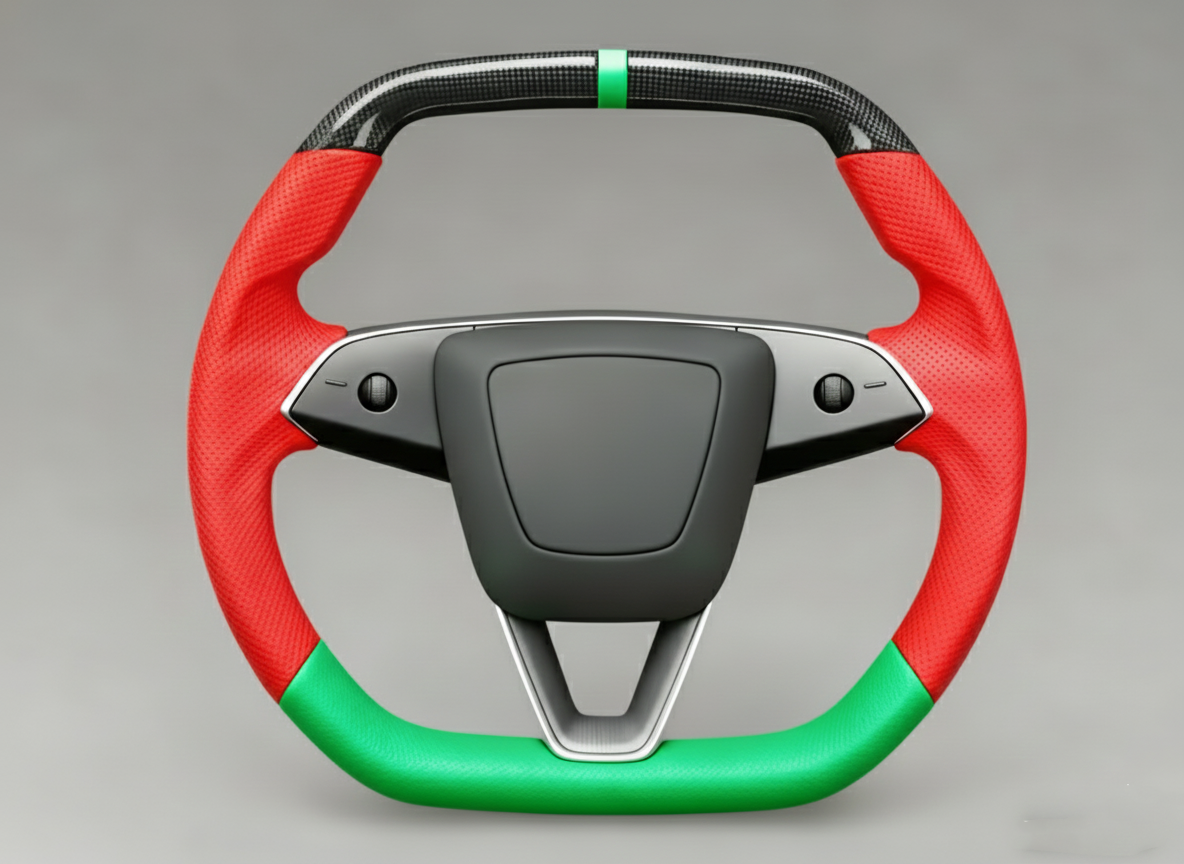
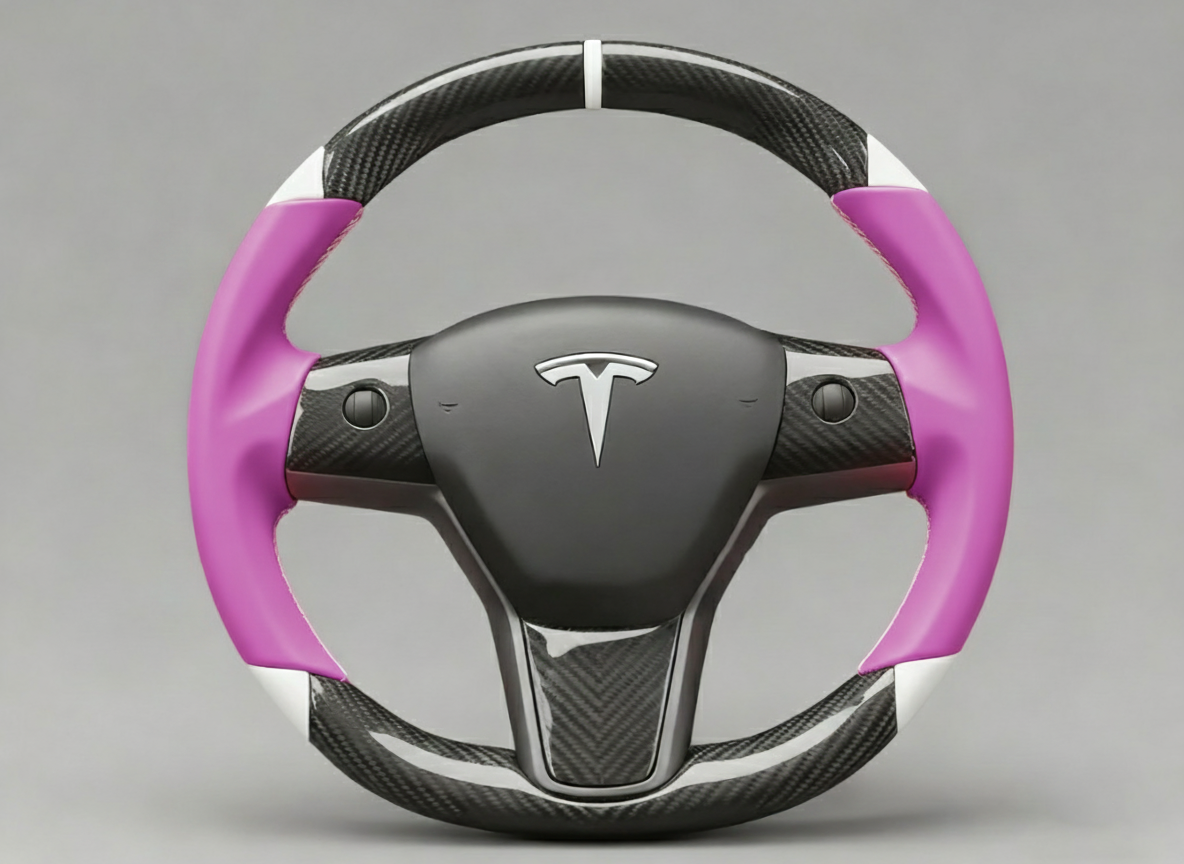
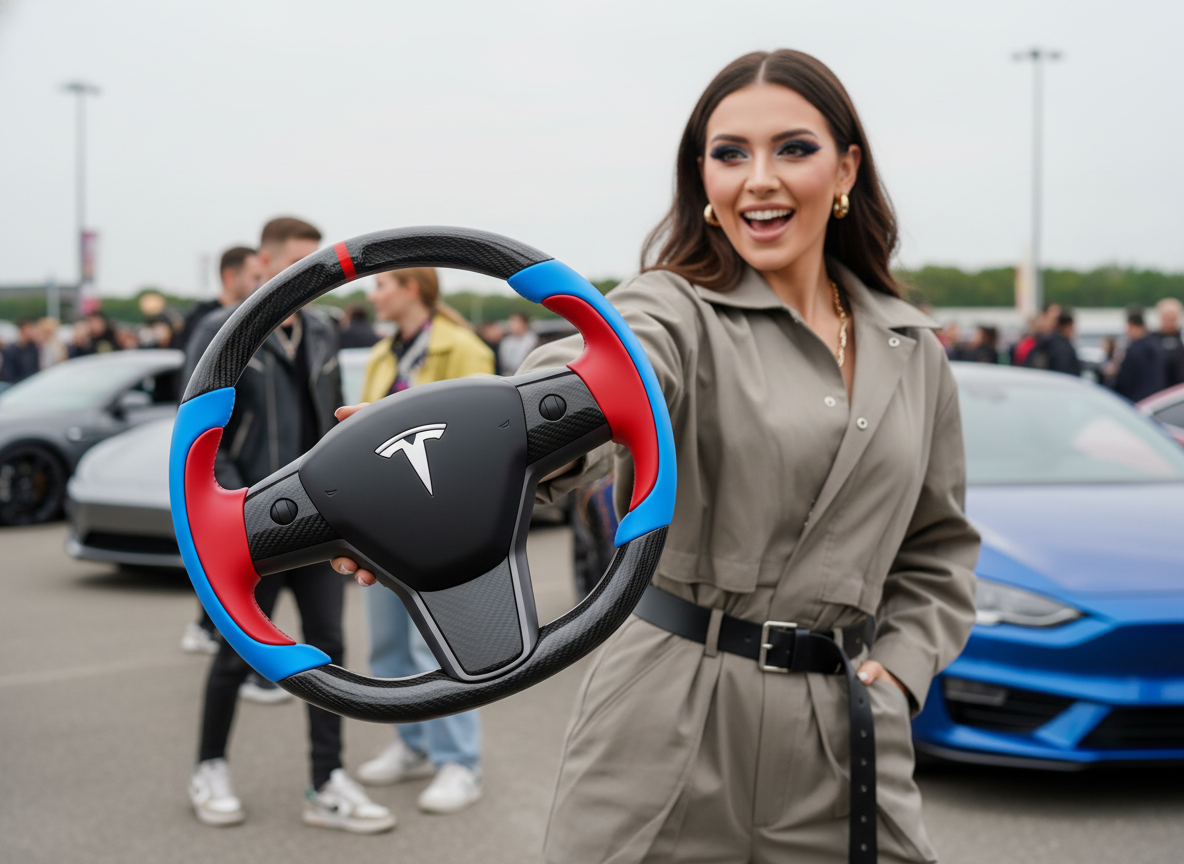
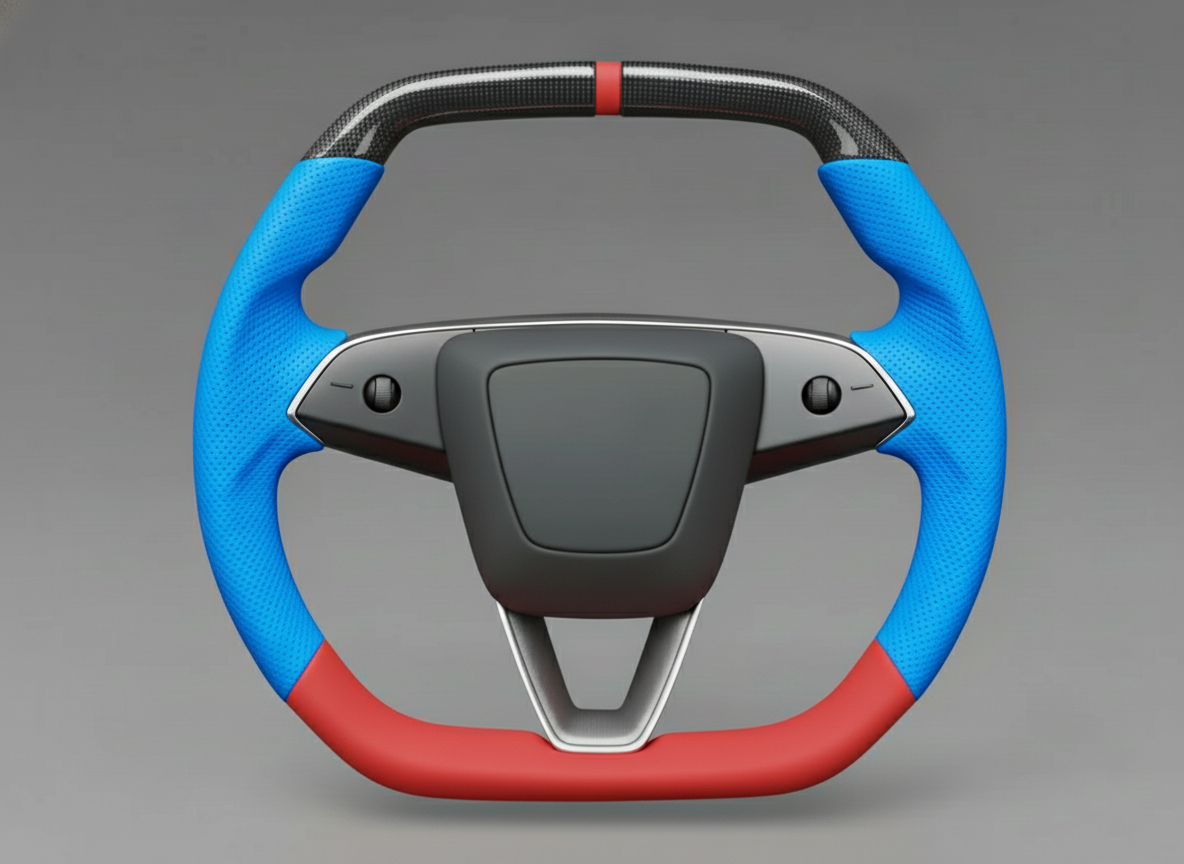
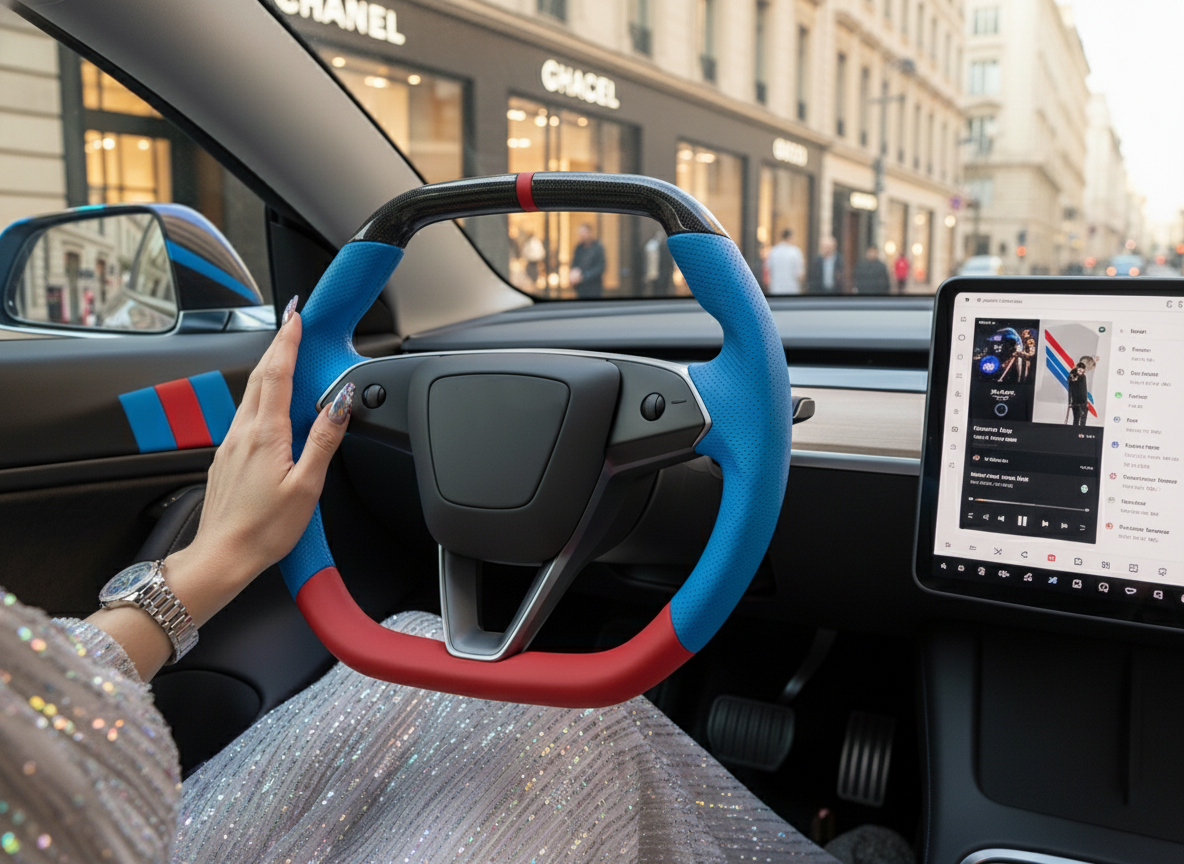
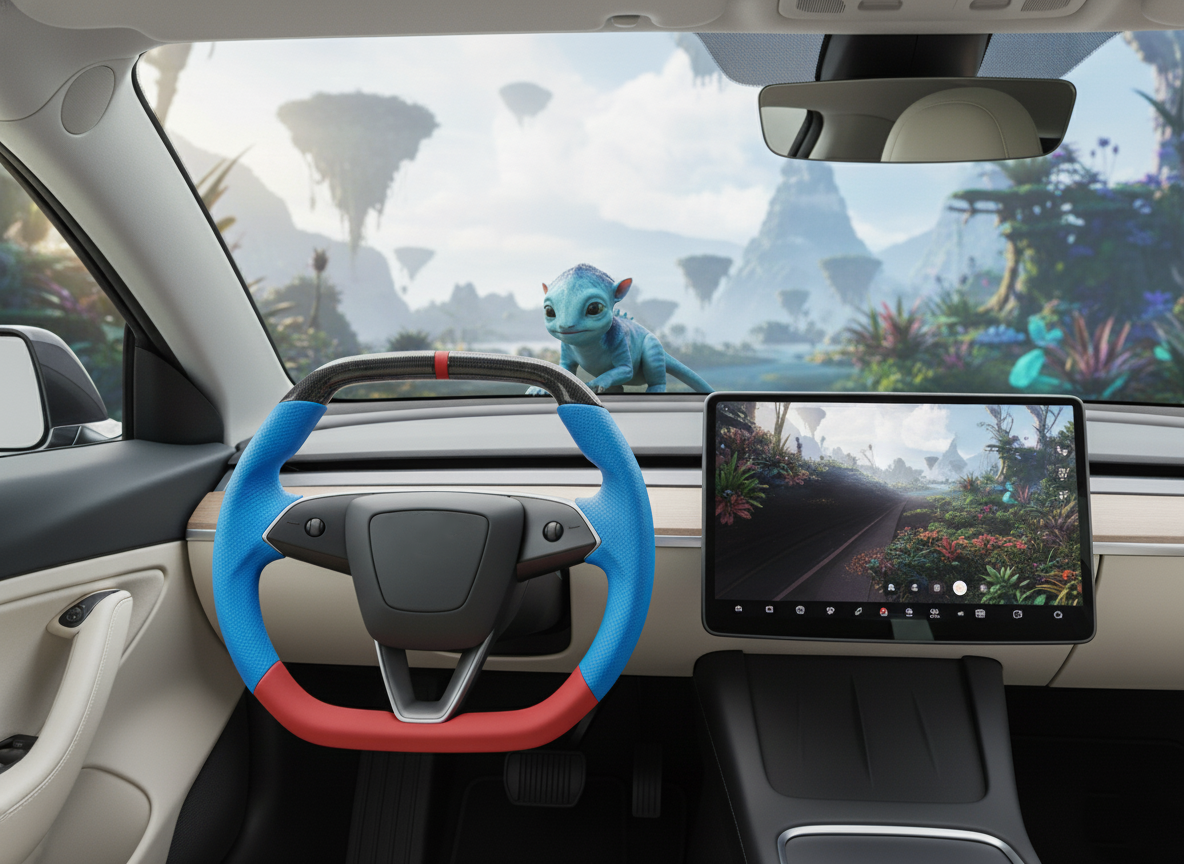
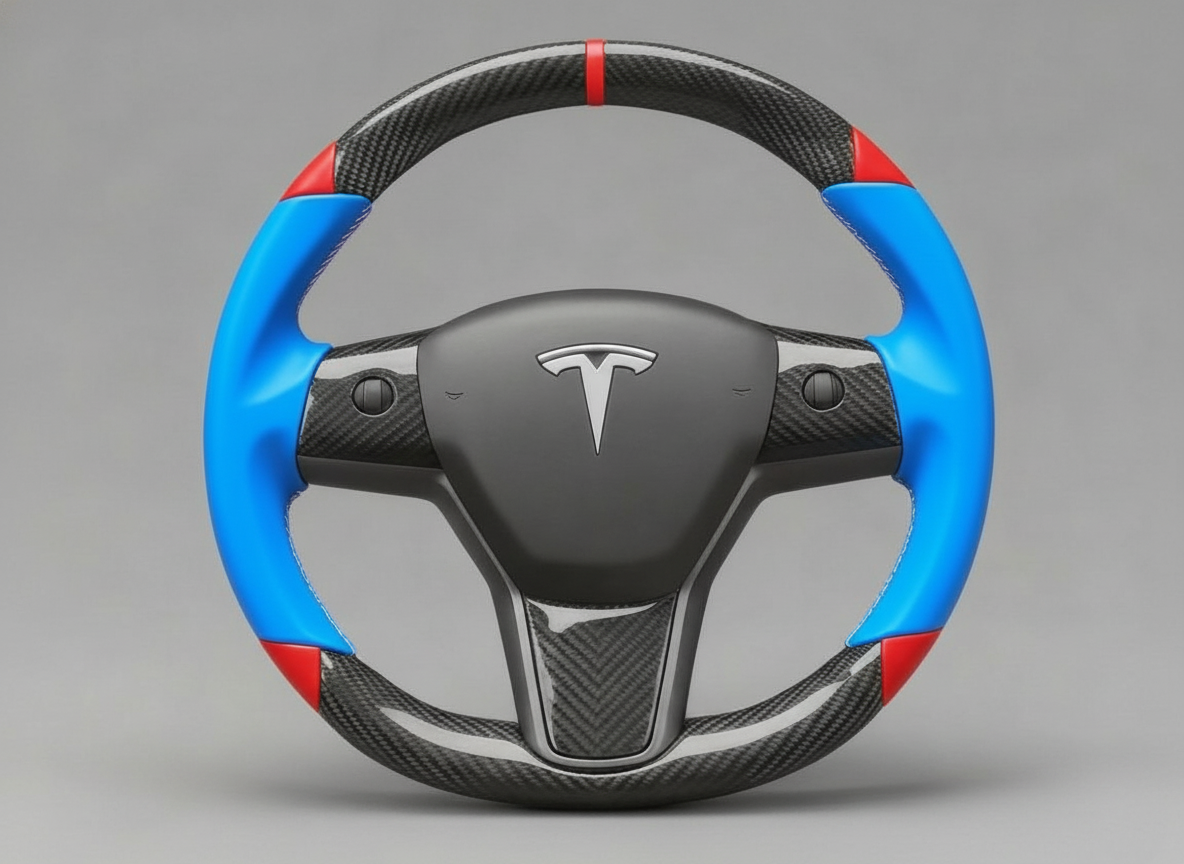
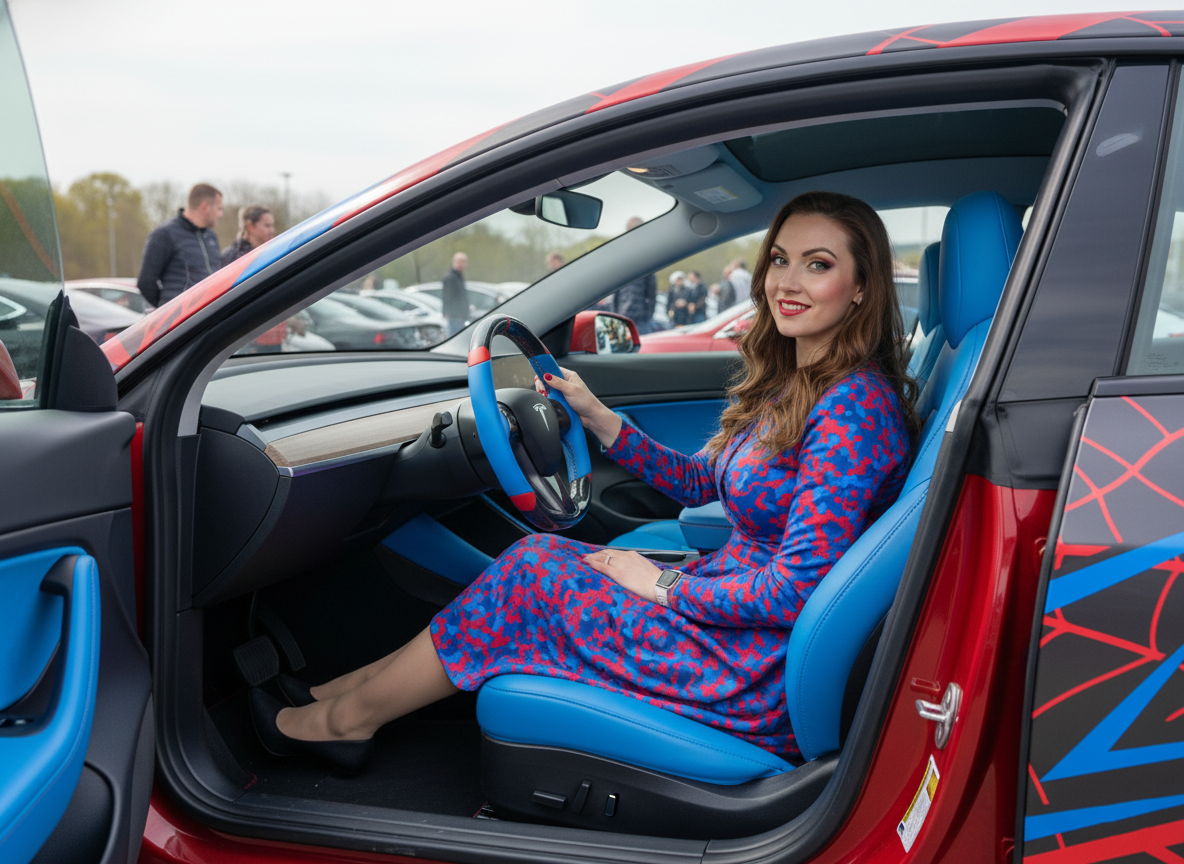
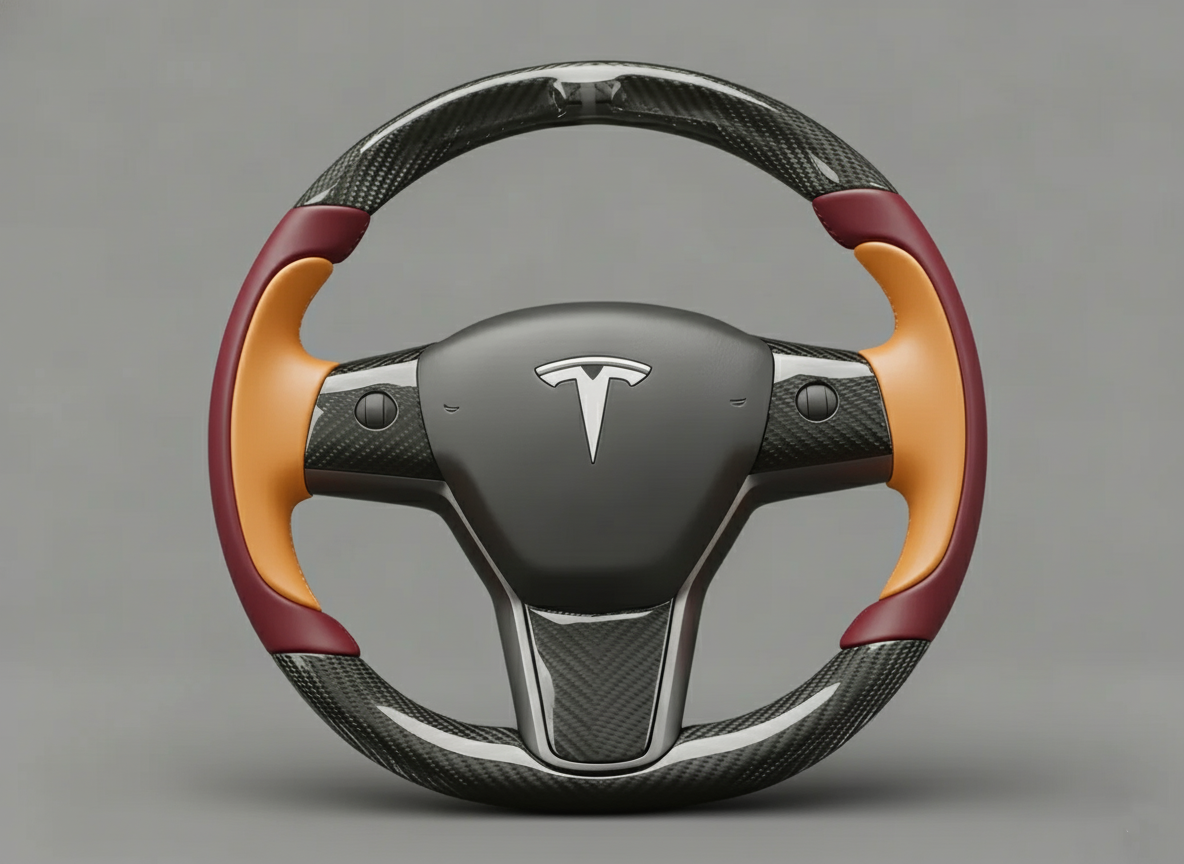
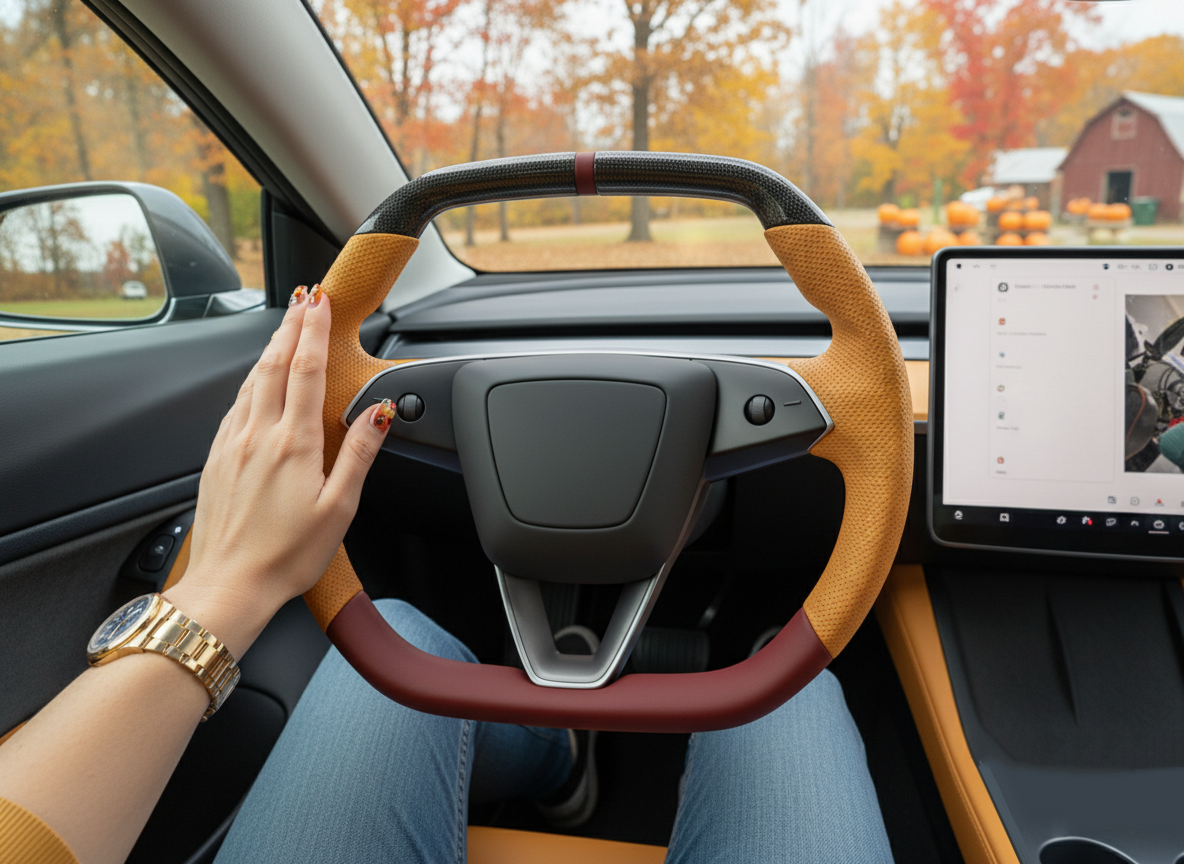
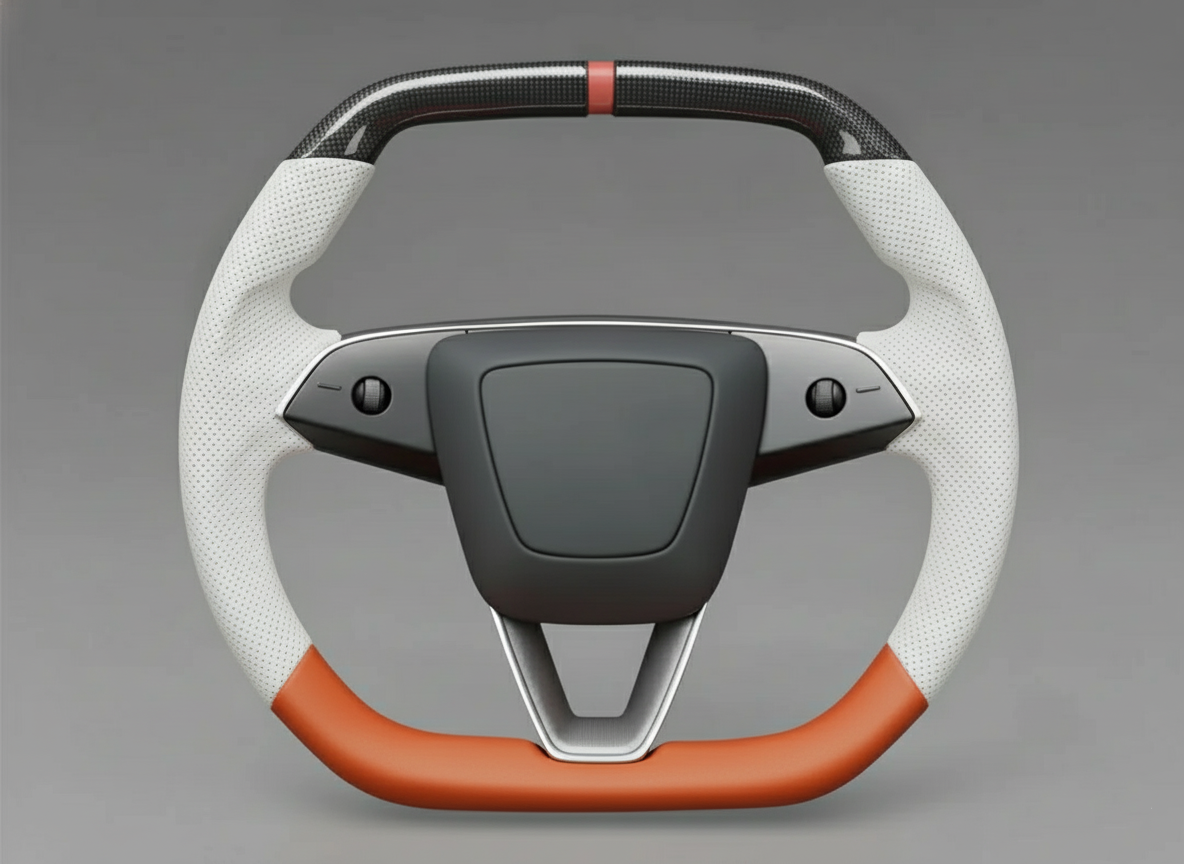
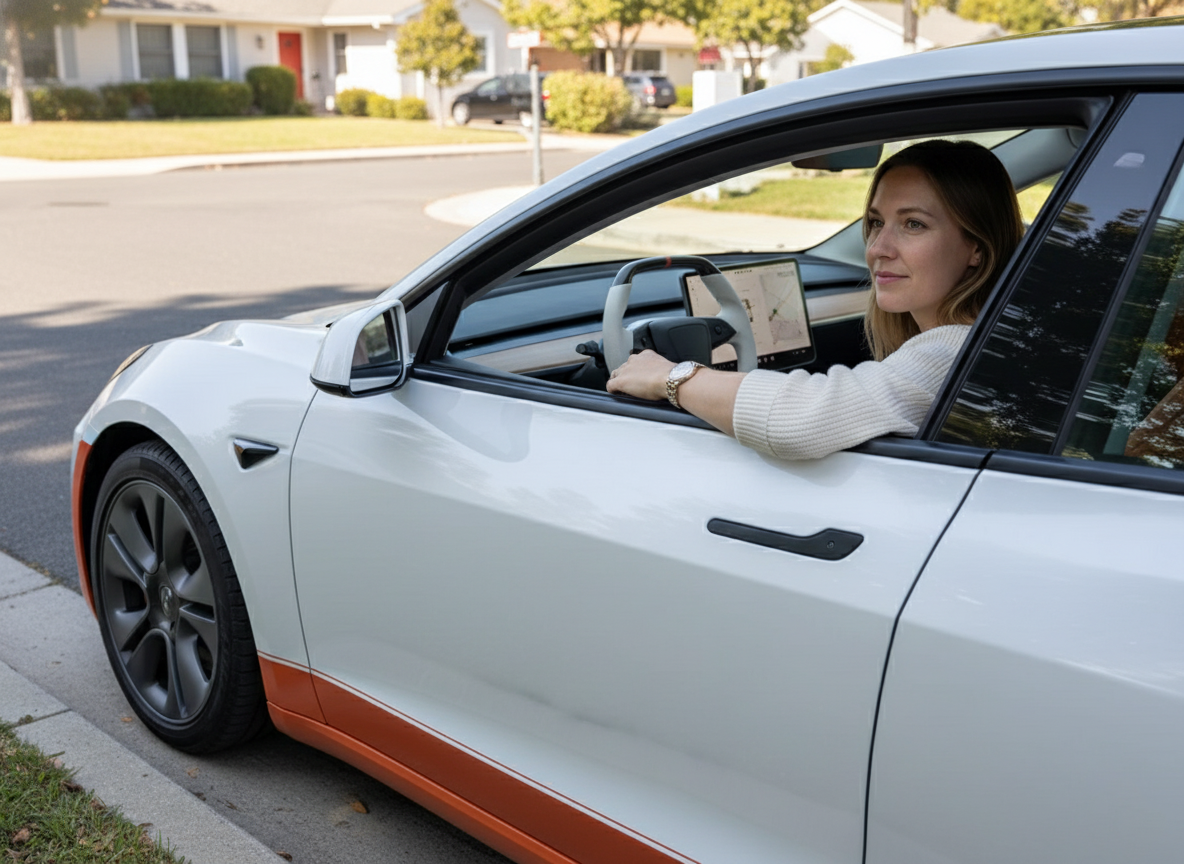
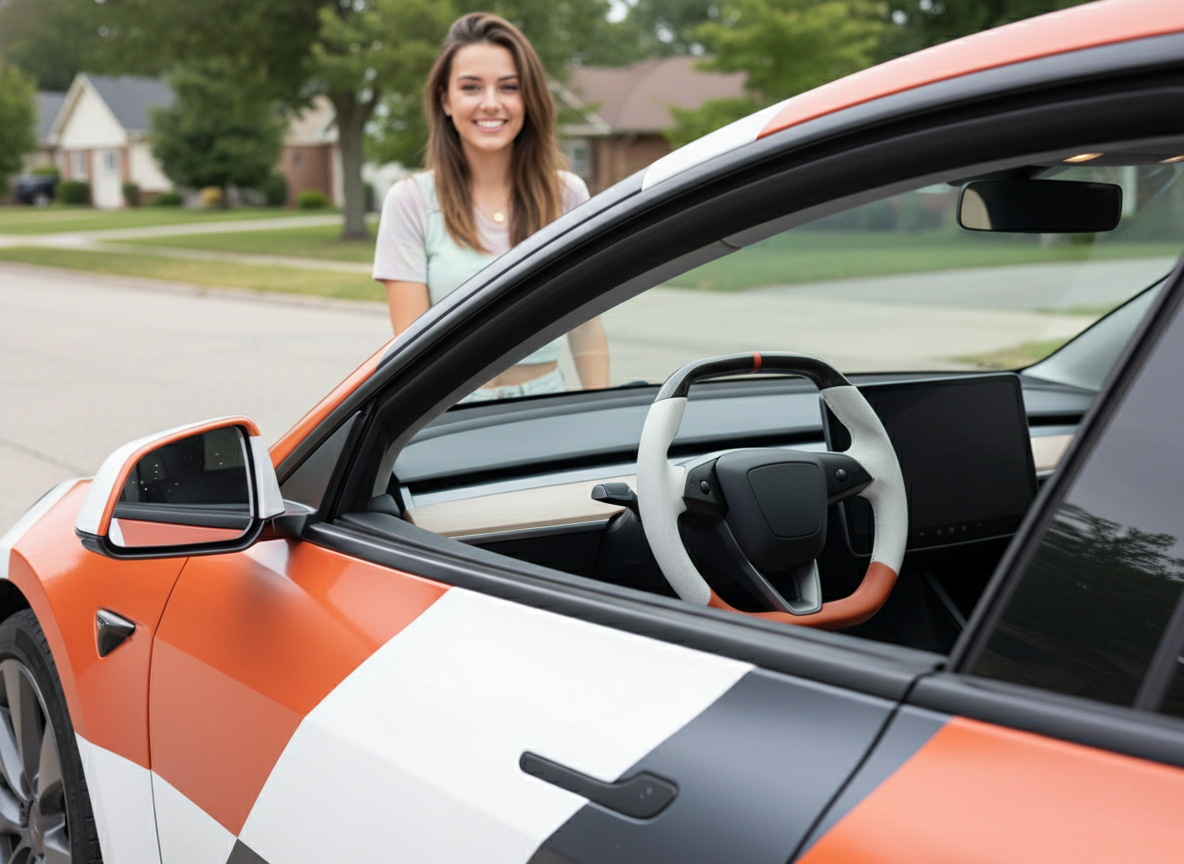
It is recommended to choose T700-grade patterned carbon fiber or Italian imported Alcantara material, which not only enhances grip but also provides wear resistance and sweat protection.
For the Highland model, customization must require the retention of the original HOD (Hands-Off Detection) capacitive sensing function to ensure the normal use of Autopilot (AP/EAP/FSD).
Aftermarket Parts
Globally, the unit price for Highland steering wheel aftermarket parts typically ranges from $400 to $850.
These accessories mostly utilize T700 carbon fiber and 1.2 mm Nappa genuine leather.
Currently, approximately 97% of high-end modification solutions support the original 12V heating protocol and capacitive hands-off detection.
Through physical structural optimization, these modified steering wheels increase the grip diameter thickness by 2 to 3 mm while maintaining a 50 ms button feedback speed, improving the hold during long-distance driving.
Shape Categorization
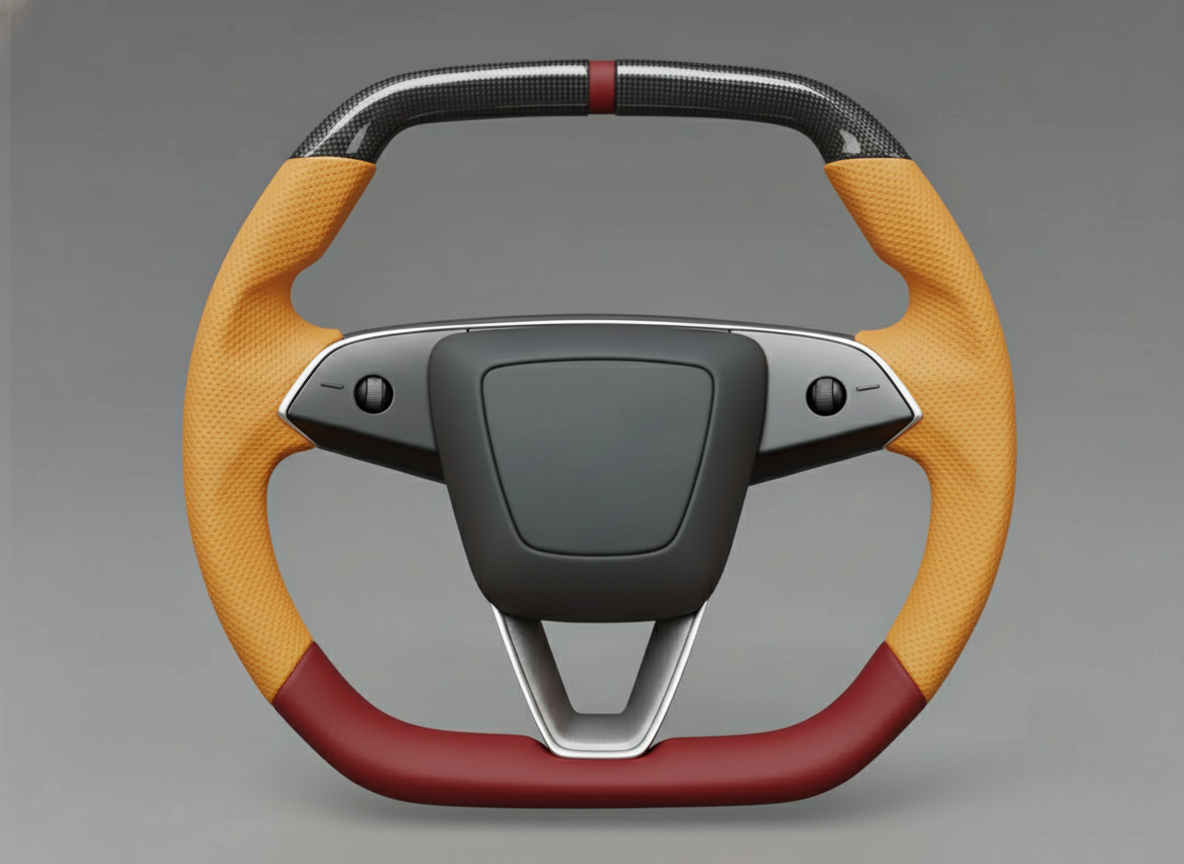
The shapes currently available in the mainstream market are mainly divided into Round, Flat-bottom, and Yoke racing styles.
The original Highland steering wheel has a diameter of approximately 365 mm, while aftermarket modification parts usually fine-tune this value.
For instance, for drivers seeking sporty handling, the Flat-bottom D-shape design flattens the bottom of the wheel upward by about 25 to 30 mm. This change in physical structure increases the clearance between the driver's thighs and the lower edge of the steering wheel, providing more ample movement space when entering or exiting the low-slung Model 3 cabin.
In terms of material composition, high-end aftermarket parts mostly use magnesium alloy or aluminum alloy as the internal frame, with the outer layer wrapped in T700-grade dry carbon fiber or 1.2 mm thick Nappa genuine leather.
Since the Highland model eliminated stalks, all turn signals and gear shifting logic are integrated into the capacitive buttons on the steering wheel. Therefore, while changing the shape, the aftermarket wheel body must precisely reserve an installation position for the button module with a thickness of 2.5 mm to ensure that the 0.5 mm button downward travel is not interfered with by the physical structure.
| Shape Type | Vertical Height (mm) | Lateral Width (mm) | Instrument/Screen Obstruction Rate | Applicable Driving Habits |
|---|---|---|---|---|
| Original Round | 365 | 365 | Approx. 18% | City commuting, frequent U-turns |
| Flat-bottom D-Type | 335 | 365 | Approx. 15% | Balances space with traditional feel |
| Yoke Solution | 190 | 360 | Less than 3% | Highway cruising, tech geeks |
| Racing Oval | 340 | 355 | Approx. 12% | Track days, quick steering |
The Yoke solution has a very high popularity rate in Tesla communities in North America and Europe. Its most significant physical feature is the removal of the top beam between the 10 o'clock and 2 o'clock positions.
This design compresses the overall vertical height of the steering wheel from the original 365 mm to approximately 190 mm, thereby completely removing the obstacle that blocks the left side of the 15.4-inch central control display.
According to actual measurements, after replacing with a Yoke, the driver's field of vision toward the bottom of the road expands by approximately 8 degrees.
Regarding weight distribution, because the Yoke modified wheel reduces material expenditure at the top, its total weight is typically 200 to 280 grams lighter than the original. This reduction in mass slightly lowers the moment of inertia of the steering system, making the damping feedback felt by the hands more sensitive during small-scale high-speed lane changes.
However, since the Highland's steering ratio was not reduced proportionally for the Yoke, drivers need to adapt to the situation of "grabbing air" at the top when hand-over-handing during right-angle turns that require large steering angles.
High-quality Yoke aftermarket parts will feature finger rest grooves with a depth of about 3 mm at the 3 o'clock and 9 o'clock positions to enhance the thumb's gripping force, preventing the hands from slipping off the wheel body during high-speed cornering.
For users who wish to retain traditional driving intuition, round or slightly curved flat-bottom steering wheels are the mainstream solutions.
Aftermarket manufacturers typically increase the grip thickness from the original thin 34 mm to 37 mm or 38 mm and add ergonomic contours (Contoured Grips) at the 10 o'clock and 2 o'clock positions.
This thickened design effectively disperses palm pressure, reducing muscle fatigue caused by long-duration gripping.
In terms of manufacturing processes, these wheel bodies mostly use segmented material splicing; for example, the side grip areas use perforated leather to improve heat dissipation, while the top and bottom sections use high-gloss or matte carbon fiber.
To remain compatible with Highland's capacitive Hands-Off Detection (HOD) function, a layer of capacitive sensing fabric only 0.1 mm thick must be laid beneath the genuine leather of these aftermarket parts and connected to the original vehicle's 12V power interface.
If the sensing layer coverage is uneven, it may frequently trigger false alarms when using assisted driving functions. Therefore, when purchasing, checking if the sensing layer coverage area reaches over 90% of the wheel body is an important indicator of quality.
| Performance Indicator | Original Standard | Aftermarket (Highland Spec) | Improvement/Change |
|---|---|---|---|
| Grip Circumference | Approx. 106 mm | 116 mm to 122 mm | Enhanced grip feel, reduced fatigue |
| Internal Frame Material | Die-cast Aluminum | Magnesium Alloy / Reinforced Steel | Increased structural strength, ~15% weight reduction |
| Heating Speed | 3 mins to 40°C | 2 mins to 42°C | Increased heating wire density, faster response |
| Vibration Feedback Transmission | Standard | Enhanced (via hard carbon fiber) | More direct road feedback |
Regarding safety, regardless of the shape chosen, the internal spline grooves of the aftermarket steering wheel must achieve a zero-deviation tolerance fit with the 18 mm specification of the Highland steering column.
During the installation process, the original single-stage or dual-stage airbag needs to be re-fixed to the aftermarket wheel body using two steel elastic clamps.
Since the Highland's airbag triggering logic is extremely strict, the depth of the aftermarket wheel's central cavity must be precisely controlled within 45 mm to ensure the airbag can deploy according to the predetermined trajectory within 30 milliseconds after a frontal collision, without being obstructed by the edges of the shape.
Additionally, for owners in cold regions, the layout of the aftermarket heating wires is redesigned according to the shape of the wheel body.
In the Yoke shape, the heating wires are concentrated in the vertical grip bars on both sides; in round or flat-bottom solutions, the heating wires are distributed in a ring throughout the outer rim.
High-specification aftermarket products will pass TUV's 50G static impact test, simulating structural integrity under extreme conditions to ensure the wheel body does not shatter and cause injury to the driver under impact loads.
Considering the convenience of daily operations, some aftermarket wheel shapes also fine-tune the physical angle of the buttons.
Since the Highland turn signal buttons are located on the left spoke, some modification parts tilt the button installation plane by 3 to 5 degrees toward the driver, making it easier for the thumb to reach the touch area in its natural state.
For wheel bodies integrating LED shift indicator light strips, the shape is usually made flatter to accommodate the PCB and transparent polycarbonate cover at the top.
These LED beads flash when the speed or motor RPM reaches set thresholds by reading data from the OBD2 interface, providing a visual reference for the driver.
During the selection process, it is recommended to observe the alignment of the carbon fiber patterns. High-quality accessories will have patterns that strictly follow a 45-degree symmetry; this is not only a requirement for visual aesthetics but also reflects the uniform pressure distribution during mold forming, thereby guaranteeing long-term service life.
Material Data Comparison
T700-grade dry carbon fiber is the preferred choice for high-performance accessories, with a tensile strength reaching 4900 MPa and a tensile modulus of 230 MPa.
Compared to ordinary T300 materials, T700 can reduce layup thickness by about 20% while maintaining the same structural strength.
The transparent coating on the surface of this material usually consists of three layers of UV-blocking resin, with a total thickness maintained between 0.15 mm and 0.2 mm.
After undergoing 4000 hours of simulated sunlight exposure testing, the yellowing coefficient of this coating is lower than 1.5%.
After 2 hours of direct summer sunlight, the thermal conductivity of the carbon fiber surface is 1.1 W/(m·K), and the surface temperature will rise to about 55 degrees Celsius. Therefore, most designs pair it with genuine leather grip areas to balance temperature distribution.
| Physical Property Indicator | T700 Dry Carbon Fiber | Nappa Leather (1.2mm) | Italian Alcantara | Forged Carbon Fiber |
|---|---|---|---|---|
| Tensile Strength (MPa) | 4900 | 25 - 35 | 45 - 55 | 3200 |
| Thermal Conductivity (W/m·K) | 1.1 | 0.13 | 0.08 | 0.95 |
| Friction Coefficient (Dry) | 0.35 | 0.55 | 0.75 | 0.38 |
| Wear Resistance (Cycles) | > 50,000 | 20,000 | 100,000 | > 50,000 |
| Weight Density (g/cm³) | 1.75 | 0.85 | 0.42 | 1.65 |
1.2 mm thick Nappa genuine leather serves as the mainstream wrapping material, and its physical properties must strictly match the Highland's capacitive sensing system.
This leather is treated with a chrome-free tanning process, maintaining an elongation rate between 25% and 35%, allowing it to tightly fit complex 3D contours.
To prevent false reports from the assisted driving system due to fluctuations in resistivity, the moisture content of the leather must be controlled within the range of 12% to 14%.
In terms of wear resistance, Nappa leather can withstand 20,000 cycles of reciprocating friction under a 500-gram pressure load.
For breathability needs, some areas undergo perforation with a 0.8 mm diameter, with hole spacing set at 3 mm, increasing palm sweat evaporation efficiency by approximately 40%.
The thickness of the finishing layer on the leather surface must be less than 20 microns to ensure that the heat generated by the heating wires can be rapidly conducted to the driver's palm.
Alcantara material consists of 68% polyester and 32% polyurethane, and its weight is only 50% of genuine leather of the same thickness.
In 100,000 Martindale wear tests, its surface pilling grade remains above Level 4.
The friction coefficient of this material is about 30% higher than ordinary genuine leather, providing stable resistance especially when the palms are damp.
Due to its porous fiber structure, in a 40-degree Celsius in-car environment, its surface sensory temperature is about 6 degrees Celsius lower than carbon fiber.
However, this structure easily absorbs skin oils; if not cleaned every 3000 kilometers, fiber collapse will lead to a friction decrease of about 15%.
| Modification Scheme Combination | Total Weight (g) | Relative Weight Change | Max Surface Temp Tolerance (°C) | HOD Sensitivity Retention |
|---|---|---|---|---|
| Full Carbon Fiber (No Heat) | 1150 | -280 | 150 | 95% |
| Carbon Fiber + Nappa Leather | 1380 | -50 | 105 | 99% |
| Full Alcantara | 1220 | -210 | 90 | 98% |
| Forged Carbon + Perforated Leather | 1420 | -10 | 120 | 99% |
Regarding the Highland's 12V heating protocol, the resistance wires inside aftermarket accessories are typically made of nickel-chromium alloy.
The layout density of the heating wires affects the uniformity of temperature rise; high-quality accessories will arrange about 5 cm of heating line per square centimeter.
After turning on the heating function, the 1.2 mm leather surface should reach 42 degrees Celsius within 120 seconds.
If low-quality glue is used to bond the leather and carbon fiber frame, bubbles or delamination may occur after repeatedly undergoing thermal cycles from 10 to 45 degrees Celsius.
Therefore, the amount of high-temperature epoxy resin used must be precisely controlled at approximately 35% of the total material weight to ensure the physical stability of the structure.
In terms of visual presentation, 3K pattern alignment is the standard for measuring carbon fiber craftsmanship. The number of carbon fiber bundles per inch should be strictly consistent, and the angular deviation of the interwoven pattern should be controlled within 2 degrees.
Forged carbon fiber uses a chopped fiber compression process; although its impact toughness is about 15% higher than woven carbon fiber, its surface reflectivity is lower, making it less likely to produce dazzling glare.
For the Highland's touch button area, aftermarket parts usually reserve a 0.5 mm fit gap and use rubber gaskets with a hardness of 70 Shore A to isolate vibrations.
Electronic System Compatibility
The electronic compatibility between aftermarket accessories and the vehicle's original system is mainly reflected in four levels: capacitive hands-off detection, heating control protocol, haptic feedback modules, and airbag resistance closed-loop.
Since the Highland completely eliminated turn signal stalks, all interactive commands rely on the internal circuit board (PCB) of the steering wheel to communicate with the vehicle controller.
Qualified aftermarket modifications must use specialized conversion harnesses to transmit signals completely back to the central control system without changing the original current frequency.
Taking capacitive Hands-Off Detection (HOD) as an example, this technology senses tiny changes in electrical charge generated by human skin through capacitive sensing fabric buried under the grip. Its sensing accuracy is required to be between 10 picofarads and 50 picofarads.
If the sensing layer coverage of the aftermarket part is lower than 90%, or if the dielectric constant of the material does not match the original, the Autopilot system will frequently issue takeover warnings.
- Capacitive Sensing Technical Indicators: The sensing fabric is only 0.1 mm thick and must be uniformly laid between the heating wires and the outer leather.
- Communication Protocol Interfacing: Internal wiring must support a Controller Area Network (CAN) bus rate of 500kb per second to ensure button response latency is below 20 milliseconds.
- Static Power Consumption Control: The modified wheel's leakage current in the vehicle's sleep state must be lower than 1 milliampere to prevent small battery power loss.
In terms of heating system compatibility, Highland uses a 12V Pulse Width Modulation (PWM) power supply mode.
The resistance value of aftermarket heating wires must be precisely set between 3 ohms and 5 ohms to match the output power of the original controller.
If the resistance is too low, it will trigger the system's overcurrent protection, causing the heating function to fail; if the resistance is too high, the heating speed will not reach the standard of 8 degrees Celsius per minute.
The temperature control system typically relies on a high-precision Negative Temperature Coefficient (NTC) thermistor to monitor real-time temperature.
High-quality aftermarket parts will lock their heating upper limit at 42 to 45 degrees Celsius to prevent surface material degradation due to high temperatures.
In actual operation, when the user turns on the heating switch via the central screen, the control signal is transmitted to the inside of the steering wheel through the clock spring. At this point, the aftermarket control box must be able to complete the handshake protocol within 200 milliseconds; otherwise, the vehicle display may pop up a steering system electrical fault code.
“In a 12V power supply environment, the stability of heating power depends on the real-time feedback accuracy of the thermistor to the PWM signal.”
For Highland's unique touch button modules, the physical housing slots of aftermarket parts need to reach a mold precision of plus or minus 0.05 mm.
This is because this button board is not only responsible for turn signals, wipers, and voice control but also integrates a small linear vibration motor to provide a click feel.
If the installation position is deviated or the hardness of the fixed bracket is insufficient, the driver will feel a significant looseness in vibration or mechanical empty travel when pressing the button.
The button travel is strictly limited to 0.5 mm, and aftermarket brackets must use rigid polycarbonate material to absorb excess resonance during motor operation.
Regarding gear shifting logic, although Highland mainly relies on screen shifting, the shortcut key backup logic on the steering wheel also depends on the signal output of this PCB.
The shielding layer of the aftermarket harness needs to resist high-frequency electromagnetic interference generated by the large screen and motors, ensuring that no turn signal mis-triggering occurs in any complex electromagnetic environment.
- Button Module Specs: Fits the capacitive button board for 14.5-inch wheel bodies, with installation depth maintained at 12 mm.
- Vibration Feedback Sync: Structural components must be able to transmit haptic vibrations at a frequency of 150 Hz without loss, simulating a real physical click effect.
- Harness Safety Redundancy: Uses automotive-grade Teflon wire temperature-rated for 125 degrees Celsius, with connector plug-in/pull-out force greater than 35 Newtons.
The Highland's airbag system monitors loop resistance to judge its working status, with standard resistance values typically between 2.1 ohms and 2.4 ohms.
The internal metal frame of the aftermarket steering wheel must reserve a precise airbag seat, and the clock spring wires connecting the airbag must not have any excessive stretching or twisting.
If the metal structure of the modified wheel interferes with the loop resistance, the airbag warning light on the dashboard will illuminate immediately.
In a collision, the trigger signal issued by the vehicle sensors must detonate the airbag initiator within 30 milliseconds.
The central cover area of aftermarket parts must not use decorative pieces with metal coatings to avoid generating flying fragments at the moment the airbag explodes.
All electronic connectors should be equipped with secondary locking mechanisms to ensure they do not loosen and cause signal interruption during aggressive driving or steering wheel vibration.
“If the airbag loop resistance variation exceeds 0.2 ohms, the on-board diagnostic system will determine it as a circuit abnormality and cut off the protection logic.”
Currently, some advanced aftermarket solutions also involve the integration of OBD2 data acquisition and display systems.
These accessories embed an LED display strip or a miniature OLED screen at the top of the wheel body. By reading real-time data from the vehicle bus, they display motor RPM, torque output, battery SoC, and actual speed directly below the driver's line of sight.
This integration requires the aftermarket part to have its own micro-data processing unit capable of parsing Tesla's proprietary communication protocols.
The power consumption of the display system is typically maintained around 2 watts, and the brightness must support automatic adjustment according to the vehicle's ambient light sensor to avoid visual interference during night driving.
To ensure system stability, these electronic components usually design independent overvoltage protection circuits; when voltage fluctuations exceeding 16V are detected, they will automatically cut off the display function to protect the underlying safety of the original vehicle electronic system.
Mods
Highland modifications achieve a weight reduction of 0.3 kg through 240g/m² specification 3K carbon fiber or 1.2 mm thick Nappa genuine leather.
The technical end must support pressure signal transmission within a 0.5-second response latency and be compatible with Tesla's original 25W heating module.
In the global market, Yoke designs account for a 40% share, primarily to increase the driving field of vision in the instrument area by 15 degrees. Modified parts' tensile strength usually needs to reach 500 MPa.
Material Selection Specifications
The steering wheel frame of the Model 3 Highland is usually die-cast from magnesium-aluminum alloy, with an original net weight of about 1.1 kg.
Modified parts first involve carbon fiber specifications; currently, the global modification market mainly uses T300-grade 3K twill carbon fiber provided by Toray Japan.
This material consists of 3000 filaments per bundle, with a weaving density of 240g/m².
Its density is only 1.76g/cm³, but its tensile strength reaches 3530 MPa.
During processing, the carbon fiber cloth needs to be cured under vacuum suction with epoxy resin at 120 degrees Celsius.
The finished surface will be covered with three layers of high-gloss or matte polyurethane varnish, with the thickness controlled at around 0.5 mm.
These varnishes contain UV absorbers that block 99% of UV rays, preventing yellowing or cracking in high-sunlight regions like Southern Europe or the West Coast of North America.
For users seeking grip feel, Italian imported Alcantara is the highest specification choice.
Common models in the market are Panel (9002) or Soft (9052), with a composition of 68% polyester and 32% polyurethane.
This material weighs about 220g/m², with a stable thickness of 0.83 mm.
Due to its non-woven microfiber structure, the friction coefficient for grip is as high as 0.85, far higher than ordinary genuine leather.
In an environment of minus 10 degrees Celsius, Alcantara's surface sensory temperature is about 5 degrees Celsius higher than leather, while under high-temperature summer exposure, its heat absorption rate is only 60% of dark leather.
In terms of physical wear resistance, it can pass 20,000 Martindale wear tests without pilling or damage, and breathability is maintained above 10 cm³/s/cm².
| Spec Parameter Item | 3K Twill Carbon Fiber | 12K Large Tow Carbon Fiber | Forged Carbon Fiber | Italian Alcantara | Nappa Top-grain Cowhide |
|---|---|---|---|---|---|
| Filament Strength (MPa) | 3530 | 4500 | 2800 | 35 | 22 |
| Standard Density (g/cm³) | 1.76 | 1.80 | 1.75 | 0.22 | 0.85 |
| Finished Thickness (mm) | 2.5 to 3.0 | 3.0 to 3.5 | 2.8 to 3.2 | 0.83 | 1.15 to 1.25 |
| Friction Coeff. (Dry) | 0.55 | 0.55 | 0.50 | 0.85 | 0.72 |
| Max Temp (°C) | 115 | 120 | 110 | 85 | 80 |
| Elongation Rate (%) | 1.5 | 1.8 | 1.2 | 35 | 25 |
Regarding leather, European standard Nappa genuine leather is selected from the backs of calves under 1 year old from Germany or Austria.
The thickness specification is strictly controlled at 1.2 mm, which ensures that after the Highland's steering wheel heating function is turned on, the heat conduction efficiency reaches its peak.
Nappa leather undergoes 72 hours of chrome or vegetable tanning treatment, with a tensile load greater than 15 N/mm².
The micropore density on the leather surface is about 200 per square centimeter, ensuring a breathability rate of 0.5 mg/cm²/h.
To enhance the control feel for drivers with sweaty hands, perforated leather hole diameters are usually set at 1.0 mm, with hole spacing at 3.0 mm. This arrangement increases surface airflow by 45%, effectively reducing the damp feel of long-duration holding.
The heating wire specifications inside Highland modification parts are an independent technical detail.
The original vehicle uses a 16V low-voltage power system, and the resistance value of the nickel-chromium alloy heating wires built into the modification parts must be set at 2.2 ohms.
The heating power design is between 35 and 45 watts, which can raise the steering wheel surface temperature from 15 degrees Celsius to 35 degrees Celsius within 180 seconds.
To fix these heating wires, pressure-sensitive adhesive with a temperature rating of 120 degrees Celsius is required. If the glue specification is insufficient, bubbles will appear at the junction of carbon fiber and leather during long-term heating cycles.
Furthermore, internal connectors must comply with TE Connectivity or Molex specifications, with a gold plating thickness of no less than 0.3 microns to ensure lossless transmission of pressure-sensitive button signals within 0.1 seconds.
The nylon 6.6 high-strength thread selected for stitching usually has a diameter of 0.8 mm and a breaking strength of no less than 5 kg.
Common stitching methods include European cross-stitch or baseball stitch, with 4.5 stitches per 10 mm length.
This stitch density ensures that the seam will not displace when the steering wheel is subjected to a 100 Newton torsional force.
The shape modification at the hand grip is based on ergonomic data, increasing the cross-sectional circumference at the 3 and 9 o'clock positions from the original 110 mm to 125 mm, adding 15% more thumb-web support area and reducing muscle fatigue during long-distance driving.
For wood trim pieces, the walnut or maple veneer selected is only 0.6 mm thick, using a 5-layer cross-lamination process to prevent deformation caused by climate changes.
Styling Structure Comparison
In the aftermarket, the physical evolution of styling structures directly changes the vehicle's turning torque distribution and the driver's physiological load.
The standard round design provides a constant 360-degree grip radius (182.5 mm) during full-turn operations with a 10.3:1 steering ratio. This ensures continuity in hand-over-hand movements in scenarios like frequent low-speed parking or U-turns with a 12-meter diameter.
In the ISO 3888-2 defined double-lane change test, the round structure allows the driver to complete a 180-degree reverse push-pull within 0.3 seconds, and its mechanical feedback symmetry is the benchmark for all non-standard steering wheels.
In contrast, the modification logic of the Yoke semi-rim structure is the thorough release of physical space.
This design cuts away the upper arc between the 10 and 2 o'clock positions, reducing the vertical height from the original 365 mm to approximately 225 mm, directly eliminating about 140 mm of visual obstruction above the dashboard.
For a driver about 175 cm tall, this means the visual blind spot between the bottom of the 15.4-inch screen and the road ahead is reduced by 15% to 20%.
Since Highland eliminated traditional stalks, the straight grip surfaces provided by the Yoke at the 3 and 9 o'clock positions are more in line with the distribution logic of the pressure-sensitive turn signal buttons.
Modified parts typically maintain the lateral width at 360 mm to 370 mm but reduce the weight by about 250 to 300 grams, thereby lowering the moment of inertia of the steering column.
-
Yoke Structural Parameter Details:
- Upper Cut-off Arc: 155 to 165 degrees.
- Lateral Grip Width: 360 mm.
- Vertical Space Occupied: 220 to 230 mm.
- Visual Openness Improvement: Visibility of the central screen display area increased by approximately 35 cm².
- Operational Limitation: Hand loses upper support point during steering input exceeding 180 degrees.
The Flat Bottom or D-type structure is a compromise solution. Its modification focus is on the linearization of the bottom arc.
Typically, modified parts shift the bottom center point upward by 25 mm to 35 mm, forming a straight section about 150 mm long.
This structure provides additional legroom for the driver without changing the upper 180-degree operational habits. For North American users with larger builds or those using bucket racing seats, the leg clearance when entering the cabin can increase by 22 to 28 mm.
In terms of physical feedback, the flat bottom serves as a natural "tactile reference point," allowing the driver to precisely perceive whether the current wheels are centered through thumb-web contact without looking at the steering wheel.
-
Flat Bottom Structural Parameter Details:
- Bottom Flattening Depth: 30 mm.
- Added Leg Clearance: 25 mm.
- Straight Section Length: 145 to 160 mm.
- Frame Material: 6061-T6 aviation-grade aluminum alloy or magnesium alloy.
- Return-to-Center Perception: Increased by 40% compared to round wheels.
Deep customization of Ergonomic Contouring is the most complex aspect of Highland modifications.
The original steering wheel cross-section is a relatively uniform oval, while modified parts usually add Palm Swells at the 3 and 9 o'clock positions, increasing the grip circumference there from 115 mm to 128 mm, thus increasing the contact area between the palm and the steering wheel by about 20%.
At the 10 and 2 o'clock positions, Thumb Rests with a thickness of 8 to 12 mm are added, which helps maintain direction during high-speed cruising through skeletal support rather than muscle force.
The back is designed with finger grooves 3 mm deep and spaced 20 mm apart, adapted to the average finger width distribution of adult males, ensuring stable physical friction even in damp or sweaty environments.
Highland's button integration places extremely high dimensional tolerance requirements on structural modifications.
Since turn signals, wipers, and high beams are all located on the spoke surface, the modified frame must ensure that the installation depth deviation of the button modules is controlled within 0.1 mm.
If the frame thickness exceeds the standard, pressure-sensitive touch buttons may misfire or fail due to excessive shell tension.
Currently, high-specification modified parts use 5 mm thick steel reinforcement plates at the spoke connections to bear the downward pressure of over 50 kg that a driver might apply during emergency braking.
Simultaneously, the central airbag box bracket must remain 100% consistent with the original to ensure the cover pops out according to the established trajectory during the 0.03-second airbag deployment window without being interfered with by irregular edges.
-
Ergonomic Customization Data:
- 3/9 O'clock Palm Support Circumference: 125 to 130 mm.
- 10/2 O'clock Thumb Rest Protrusion: 10 mm.
- Back Finger Groove Depth: 3.5 mm.
- Button Area Installation Tolerance: ±0.05 mm.
- Structural Tensile Strength: 500 MPa.
In extreme racing modifications, structural comparison also involves the forward or backward shifting of the entire steering wheel. Some Deep Dish steering wheels shift the center of the wheel face 20 to 50 mm toward the driver.
On the Highland model, this structural change needs to be paired with CAN-bus signal extension cables to ensure that the data transmission frequency of the pressure buttons remains above 125 Hz.
This structure increases the arm's bending angle, reducing the load on the shoulders during long-distance aggressive driving.
However, since the Highland lacks physical stalks, this deep concave structure actually shortens the physical distance between the hand and the central large screen by about 10%. For users who need to frequently operate the screen to adjust air conditioning or gears, this can improve operational response speed by about 0.2 seconds.
Electronic Display Module
The Tesla Model 3 Highland eliminated the traditional dashboard design, integrating all driving data into the 15.4-inch central display, which causes drivers to shift their gaze about 25 degrees to the right to observe speed or battery levels.
The logic of adding an LED Display Module lies in re-establishing the driver's forward visual focus.
These modules typically consist of a 2.0-inch or 2.4-inch OLED color display screen and a row of RGB LED indicator lights at the top.
The display resolution usually reaches 320x240 pixels, with a contrast ratio as high as 100,000:1, ensuring clear readings even under the intense direct sunlight of California.
Data acquisition is achieved by accessing the vehicle's CAN-bus. The Highland's chassis control network runs at a baud rate of 500kbps, and the modification module intercepts signals through high-sensitivity converters, maintaining a data update frequency of 10 to 20 times per second (10Hz-20Hz), keeping display latency within 50 milliseconds.
“In track driving mode, the driver's attention to RPM and speed is measured in milliseconds; a real-time digital display directly in front can reduce gaze shifting time by about 0.5 seconds.”
The top integrated LED light strip typically contains 10 to 15 high-brightness SMD 5050 RGB LEDs, with brightness reaching 800 to 1000 nits.
The arrangement logic of these LEDs simulates the shift indicator lights of a racing steering wheel, providing feedback on vehicle status through color sequence changes.
For example, when the motor power output reaches 80% of its maximum, the light strip transitions from green to yellow, and flashes red when reaching 95%.
Drivers can customize the trigger thresholds and color schemes of these LEDs via a companion smartphone app or physical toggle switches on the back of the wheel.
To match the Highland's 16V low-voltage system, the module integrates a wide-voltage step-down converter supporting an input range of 12V to 18V. The overall operating power consumption is typically suppressed between 3.5 and 5 watts, which does not create any perceptible load on the vehicle's range or low-voltage battery life.
| Technical Parameter Item | Spec Standard Data | Physical Manifestation/Impact |
|---|---|---|
| Screen Type | 2.0-inch OLED Full Color Panel | High contrast, zero latency response |
| Refresh Rate | 15Hz - 25Hz | Dynamic data without ghosting, strong real-time feel |
| LED Brightness | 1000 cd/㎡ (Nits) | Clearly visible even in strong light |
| Static Current | Below 10mA | No drain risk when the vehicle is sleeping |
| Working Voltage | 16V DC (Compatible with 12V-18V) | Perfectly fits Highland's new power architecture |
| Connection Protocol | CAN-bus 2.0 / OBD2 | Native data scraping, no simulation errors |
The real-time Telemetry data shown by the electronic display module covers five major dimensions of interest to Highland users.
First is basic driving data, including real-time speed (KPH/MPH), current gear, and SoC accurate to 1%.
Second is motor dynamic parameters, capable of real-time output of front/rear motor power distribution percentages and real-time torque values, which has practical reference significance for users driving on Nordic ice and snow roads to judge grip distribution.
Third is thermal management monitoring; the system extracts and displays the real-time temperature of the power battery pack and the driver system coolant temperature. When battery temperature exceeds 45°C or falls below 10°C, the system automatically issues a warning.
Fourth is Tire Pressure Monitoring System (TPMS); the module directly reads original data from the Bluetooth tire pressure sensors, with display precision reaching 0.1 Bar.
Finally is energy consumption statistics, showing average power consumption (Wh/km or Wh/mi) for the current trip, helping drivers optimize their driving style in real-time.
“Multidimensional real-time data feedback makes the steering wheel not just a turning tool, but the vehicle's performance secondary control room.”
In terms of hardware integration, these electronic modules are strictly encapsulated within carbon fiber or plastic housings above the steering wheel.
Since the screen generates some heat during operation, the modification parts are designed with an aluminum heat sink of about 15 cm² inside to maintain the OLED driver chip temperature below 60°C via air convection, preventing screen pixel aging or burn-in from long-term operation.
Harness connections typically use a Plug and Play design with automotive-grade connectors complying with USCAR-2 standards.
In the Highland model, the data cables are usually drawn from the gateway interface below the rear AC vents or the OBD diagnostic port in the front passenger footwell.
During installation, it must be ensured that the harness has sufficient redundant length when passing through the clock spring to prevent the cable from being pulled apart during full-turn (approx. 2.0 turns) of the steering wheel.
For users seeking a racing experience, the electronic module also provides a "Lap Timer" function.
Using the vehicle's GPS coordinates or physical button triggers, the module can record lap times and display maximum G-forces.
In high-end versions, the screen can also synchronously display the turn signal status, which to some extent solves the problem of Highland owners not being able to find the touch turn signal button position due to steering wheel rotation after a large turn.
To ensure safety, all electronic module firmware supports OTA updates and can continuously optimize data parsing logic via a Bluetooth smartphone connection to adapt to Tesla's frequent software updates.
The physical structure of the entire module has undergone vibration testing, capable of continuous operation for 500 hours under 3G frequency vibration without any parts loosening, ensuring stable readings even on unpaved country roads or track curbs.
Installation Construction Standards
In the installation process for the Tesla Model 3 Highland, because the vehicle has transitioned from a 12V architecture to a 16V lithium battery low-voltage system, the first step of construction must involve the physical disconnection of the power system.
The driver needs to first execute the "Power Off" command in the vehicle settings interface, then remove the High Voltage Loop safety plug under the rear seat and remove the 16V low-voltage power connection cable in the front trunk.
This process requires a wait of about 10 minutes to ensure that the residual charge in the capacitors inside the steering wheel is completely exhausted, preventing electrostatic sparks when removing the Supplemental Restraint System (SRS) module.
Removal of the airbag module depends on the 3 mm diameter physical access holes on both sides of the steering wheel. Technicians need to use a hex wrench about 150 mm long or a specialized removal tool to uniformly compress the internal metal spring clips at an angle perpendicular to the steering column.
When the spring displacement reaches 12 to 15 mm, the airbag cover will naturally pop out by approximately 20 mm due to internal spring force.
“The force balance during the airbag removal stage determines the integrity of the internal plastic brackets; excessive force on one side will cause displacement of the turn signal touch board.”
The central bolt of the Highland steering wheel uses a T50 Torx head specification, requiring an instantaneous torque of about 120 Nm for removal.
When installing the modified part, the tightening torque for the bolt must be strictly set between 80 Nm and 100 Nm, and construction personnel must use a digital torque wrench certified by ISO 6789 for re-verification.
It is generally recommended to apply a layer of medium-strength thread locker (blue glue) to the bolt threads to prevent physical loosening under long-term steering vibration.
The alignment precision between the steering wheel frame and the steering column splines is extremely high; the Highland's steering column has a positioning notch. If there is a deviation of 1 tooth during installation, it will lead to a visual skew of about 5.6 degrees in the steering wheel's physical center position when driving on a straight road.
-
Technical Parameters for Electronic Component Transfer:
- Capacitive Button PCB Screw Torque: 0.4 to 0.6 Nm, to prevent crushing the integrated circuit boards.
- Harness Bending Radius: Must not be less than 3 times the cable diameter to ensure data transmission frequency stability at 125Hz.
- Ground Terminal Contact Resistance: Should be lower than 0.1 ohms to avoid logic confusion in touch feedback.
- Electrostatic Discharge (ESD) Environment: Construction personnel must wear grounding wristbands to prevent sensitive components under the 16V system from being punctured.
The Highland steering wheel modification involves the transfer of highly integrated capacitive touch sensing components.
Since the original turn signal, high beam, and wiper control logic are all integrated on the two PCB circuit boards on the left and right, technicians must ensure that the fit tolerance between the back plastic support pieces and the new frame is less than 0.1 mm when migrating these components to the new frame.
If the gap is too large, it will cause the user to feel looseness when pressing the turn signals; if the installation is too tight, it may cause the capacitive sensors to be under constant pressure, leading to button auto-trigger malfunctions.
When connecting the clock spring plug, it must be confirmed that the 12-pin gold finger contacts are free of oxide layers and a distinct Click Sound is heard to ensure the airbag loop resistance stays within the nominal range of 2.1 ohms to 2.6 ohms.
“Since physical stalks have been eliminated, the number of plug-in/pull-out cycles for the harness adapter should be limited to 5 times to prevent plastic deformation of the metal pins leading to signal latency.”
-
Physical Function Verification Indicators After Installation:
- Steering Wheel Heating Power Test: After 5 minutes of activation, the surface temperature must be uniformly distributed between 35 and 42 degrees Celsius.
- Vibration Motor Feedback Intensity: In lane departure warning mode, the vibration amplitude should be a 1:1 restoration of the original, with no abnormal noise.
- Full-Turn Lock-to-Lock Check: The total turns from left to right should remain at 2.0 turns, and the clock spring harness should have no feeling of being pulled tight.
- Screen Button Mapping Response: Touch feedback time must be below 80 milliseconds, ensuring turn signals respond in seconds during quick overtaking.
For Highland models equipped with Yoke-style non-standard steering wheels, construction standards also include a systematic check of steering ratio visual adaptability.
Since the Yoke eliminates the upper half, its physical center of gravity is shifted downward by about 30 mm compared to a round steering wheel, which changes the static load distribution of the steering column bearings.
After completing hardware assembly, the vehicle must be started and entered into self-test mode to observe whether the 15.4-inch central screen pops up dashboard system communication fault codes (such as UI_a020, etc.).
If the airbag light stays on due to an incorrect power-off sequence during installation, a specialized diagnostic cable is needed to connect to the vehicle's gateway port for DTC clearing.
The final stage requires a 50 kg push test on the steering wheel, simulating the driver's support action in an emergency, to ensure that the modified frame does not exhibit any tiny deformation or abnormal noise under extreme stress.
The entire construction process also has specific requirements for ambient temperature; it is recommended to perform it indoors at 15 to 25 degrees Celsius. In this temperature range, the extensibility of the leather and the toughness of the carbon fiber varnish are in optimal states, effectively preventing physical stress accumulation caused by thermal expansion and contraction when tightening bolts.
Before delivering to the user, a pressure test on each of the 10 touch areas on the steering wheel surface must be conducted to ensure all vehicle commands are accurately issued under a pressing force of 3 to 5 Newtons.