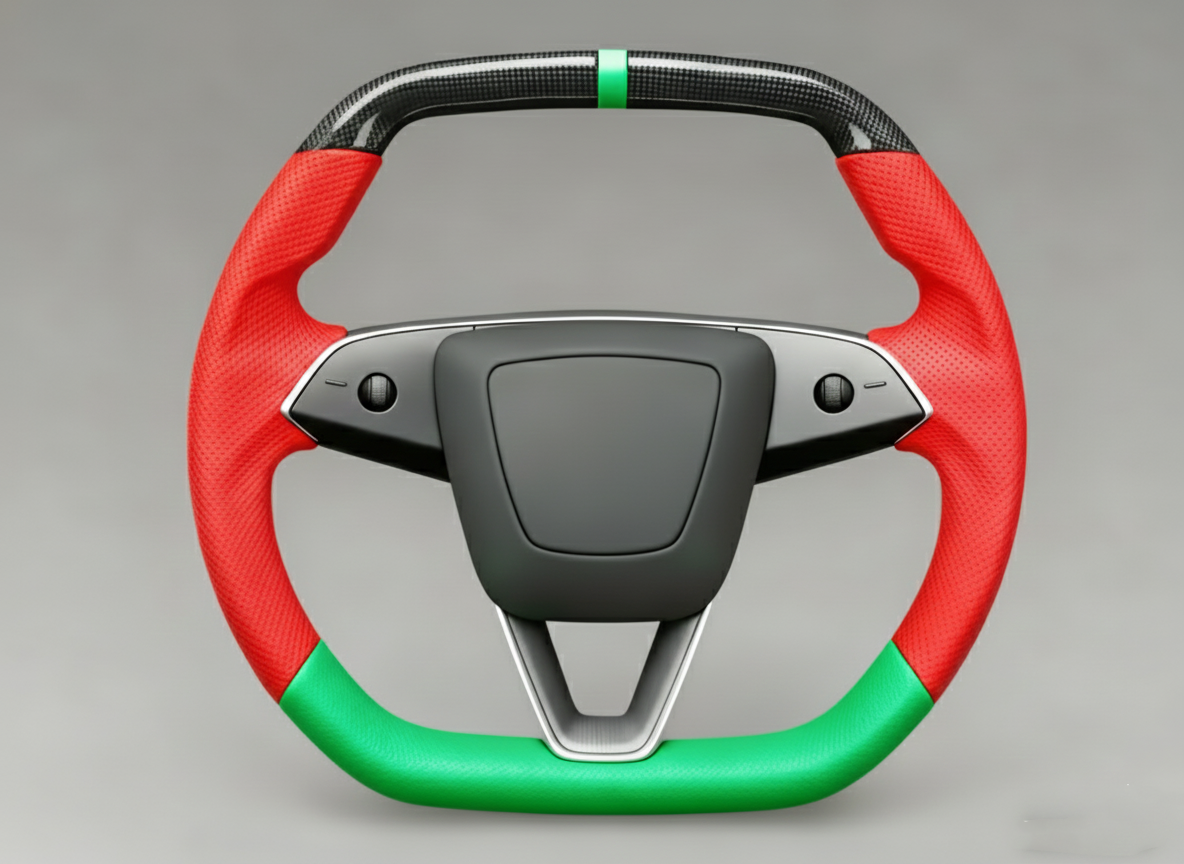
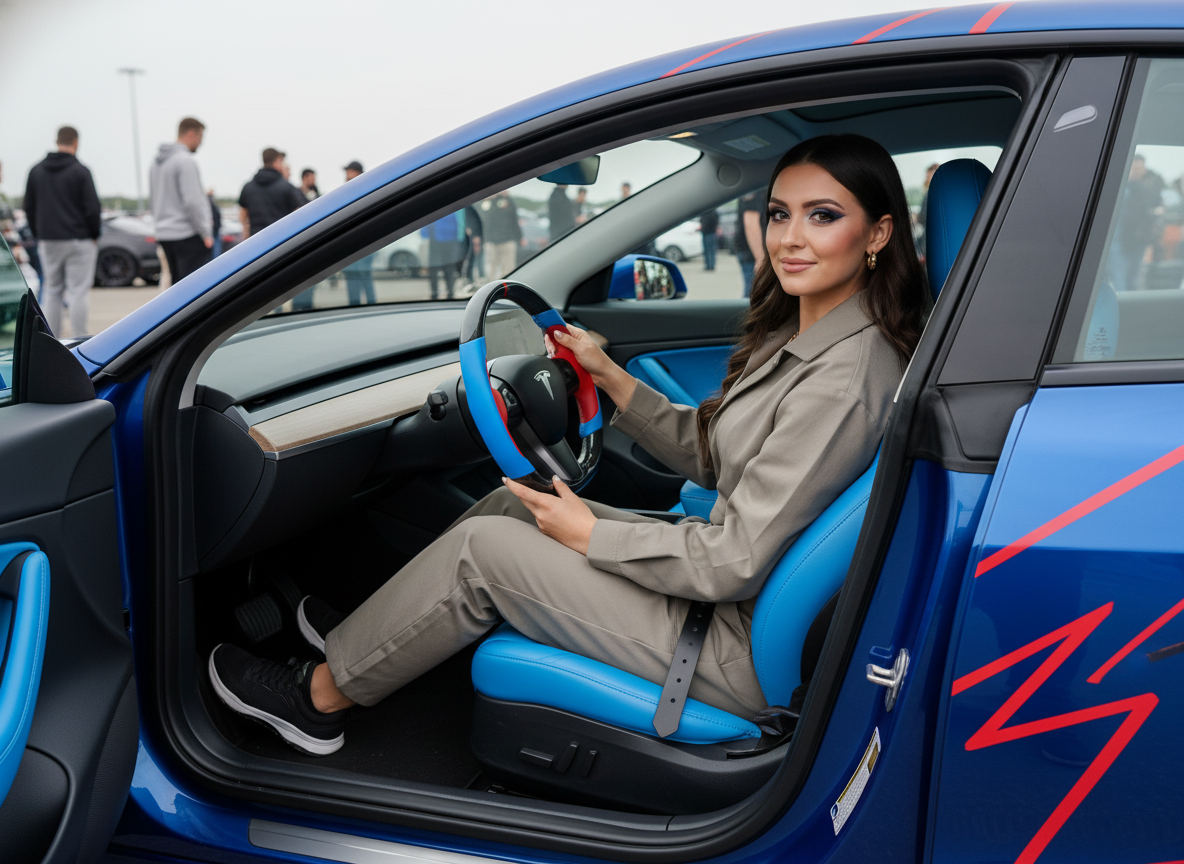
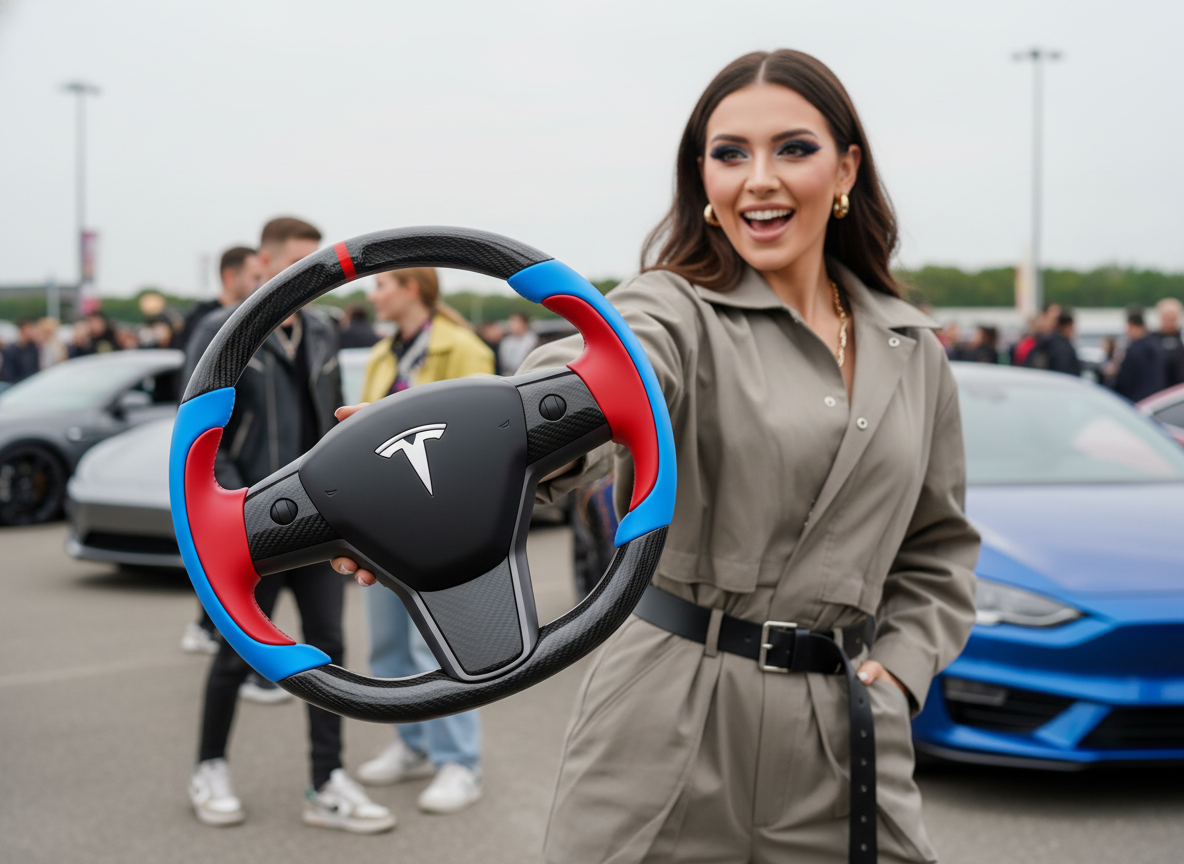
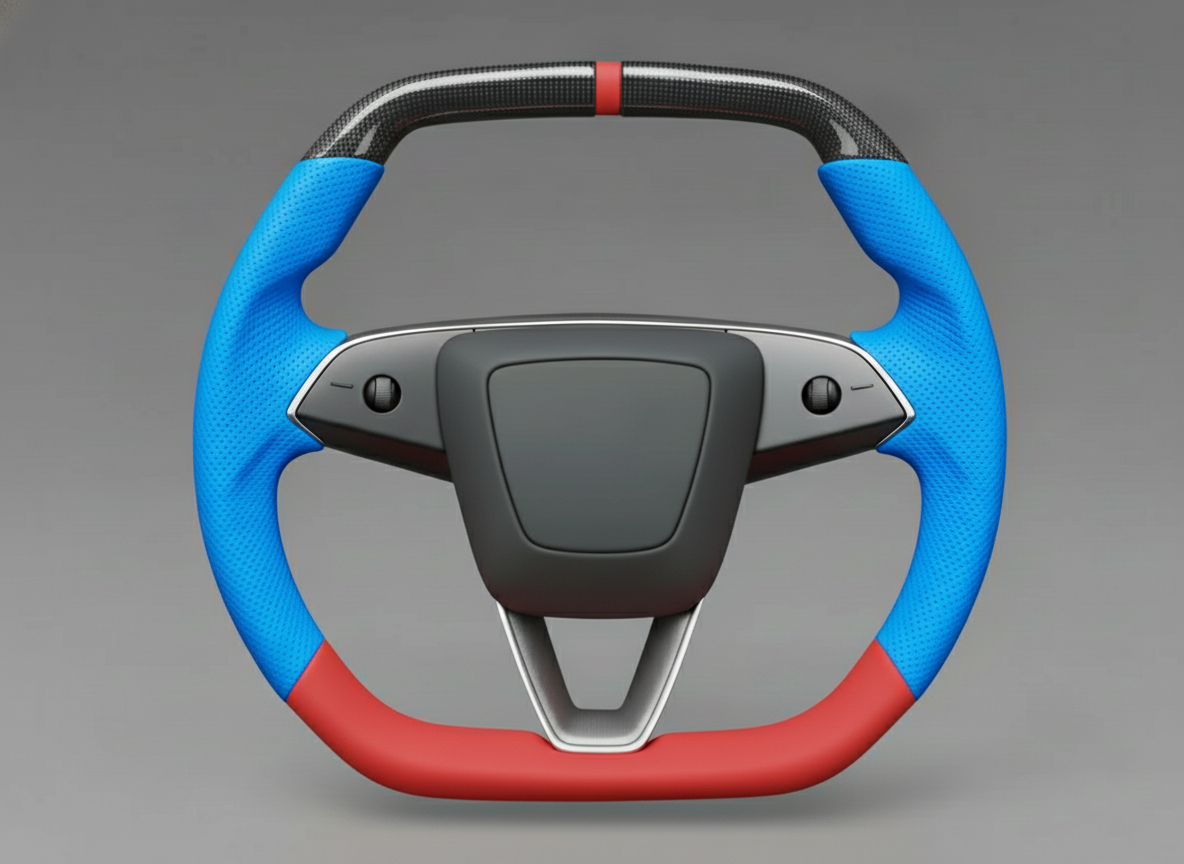
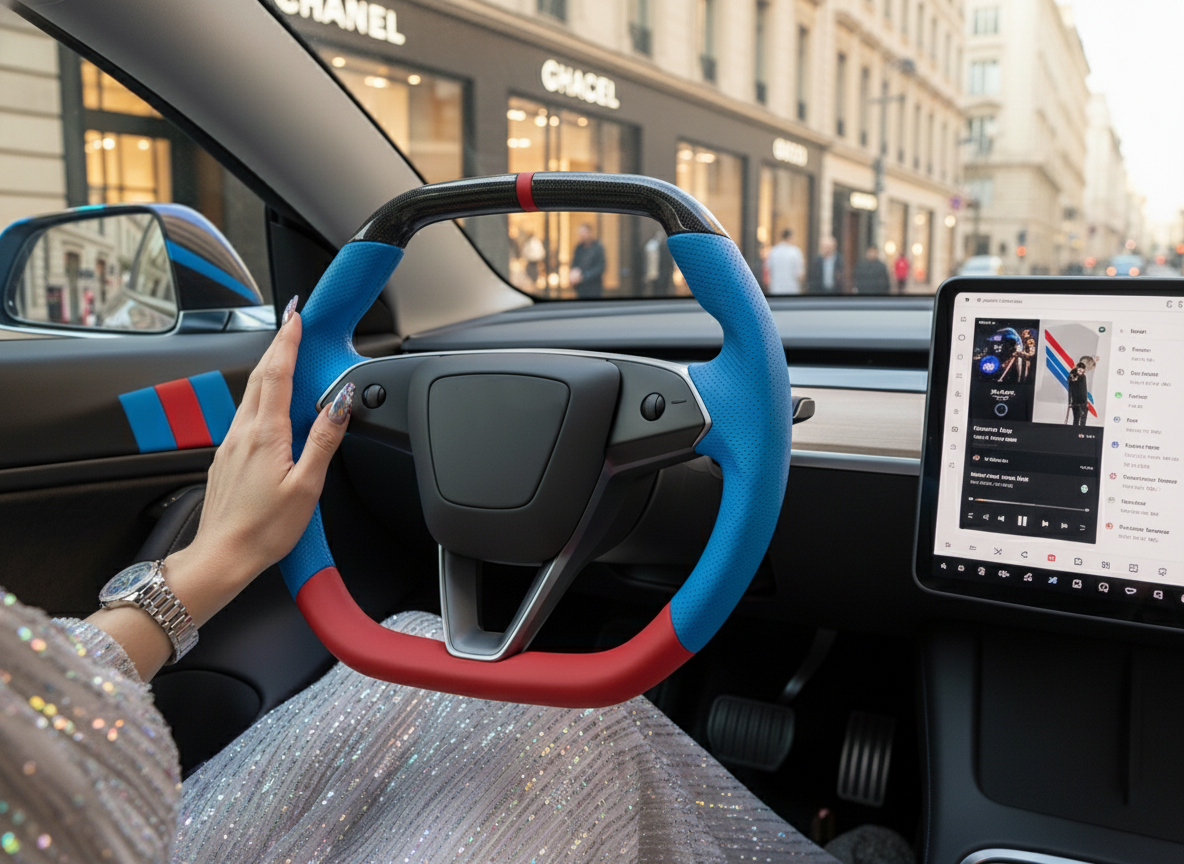
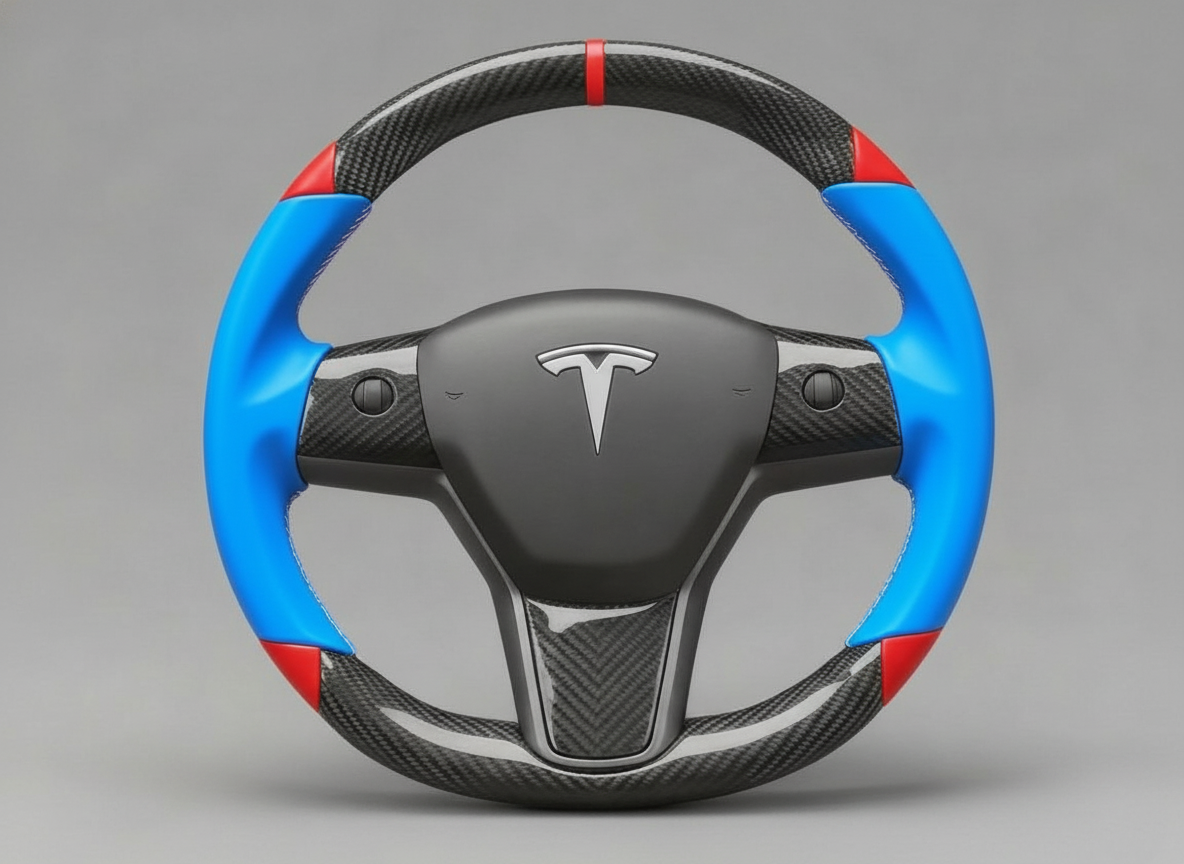
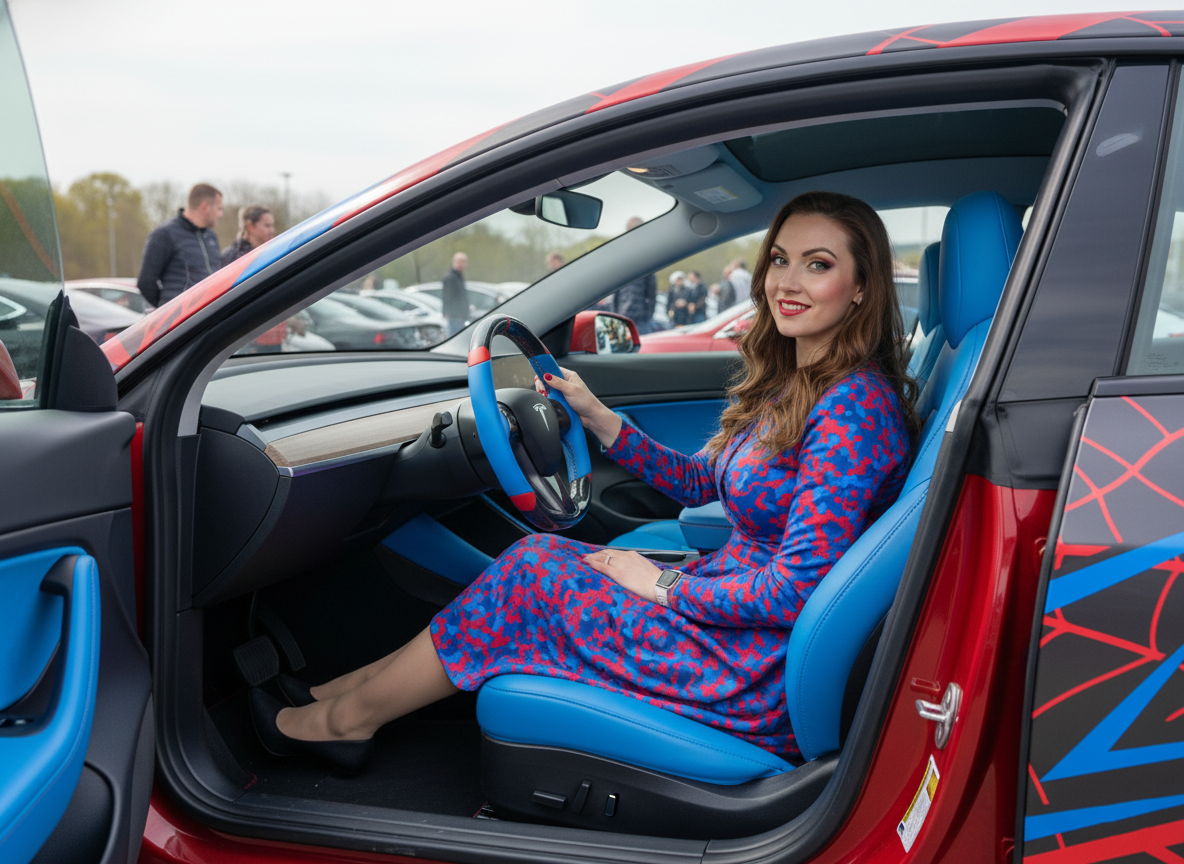
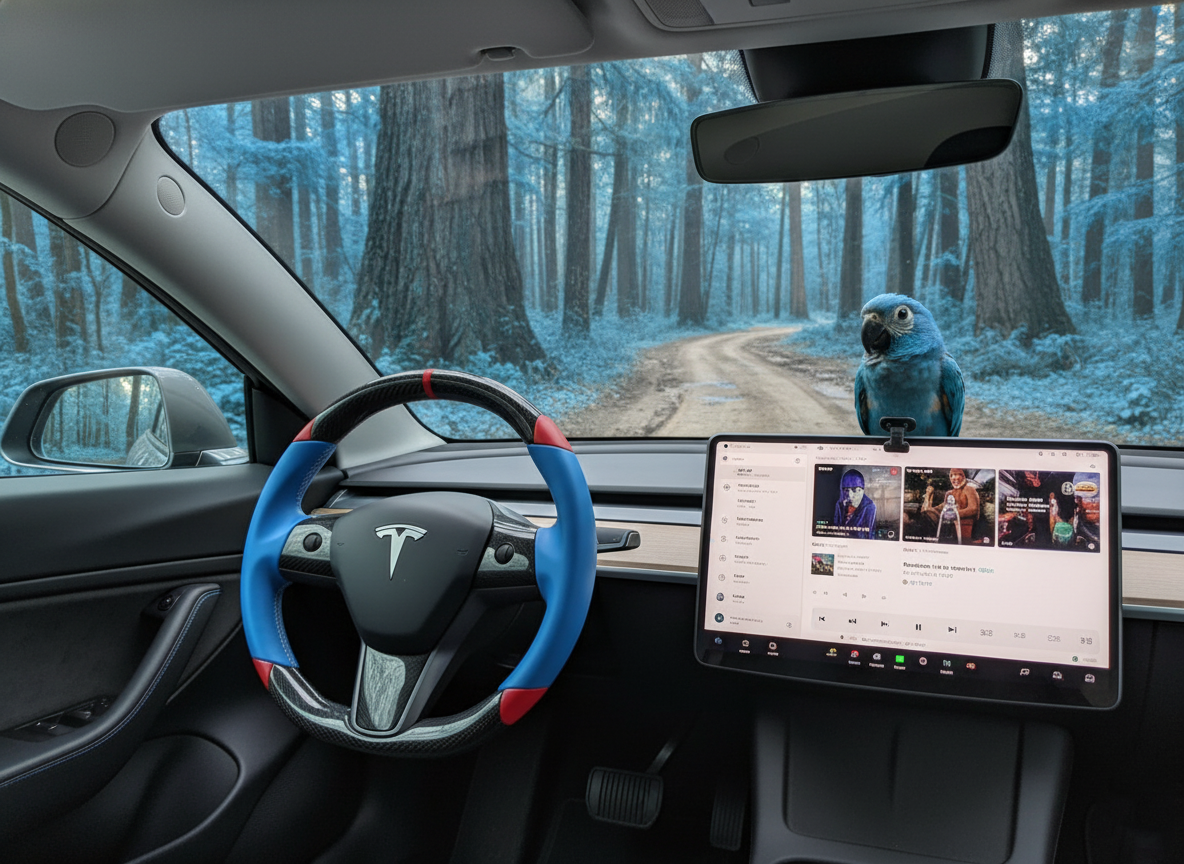
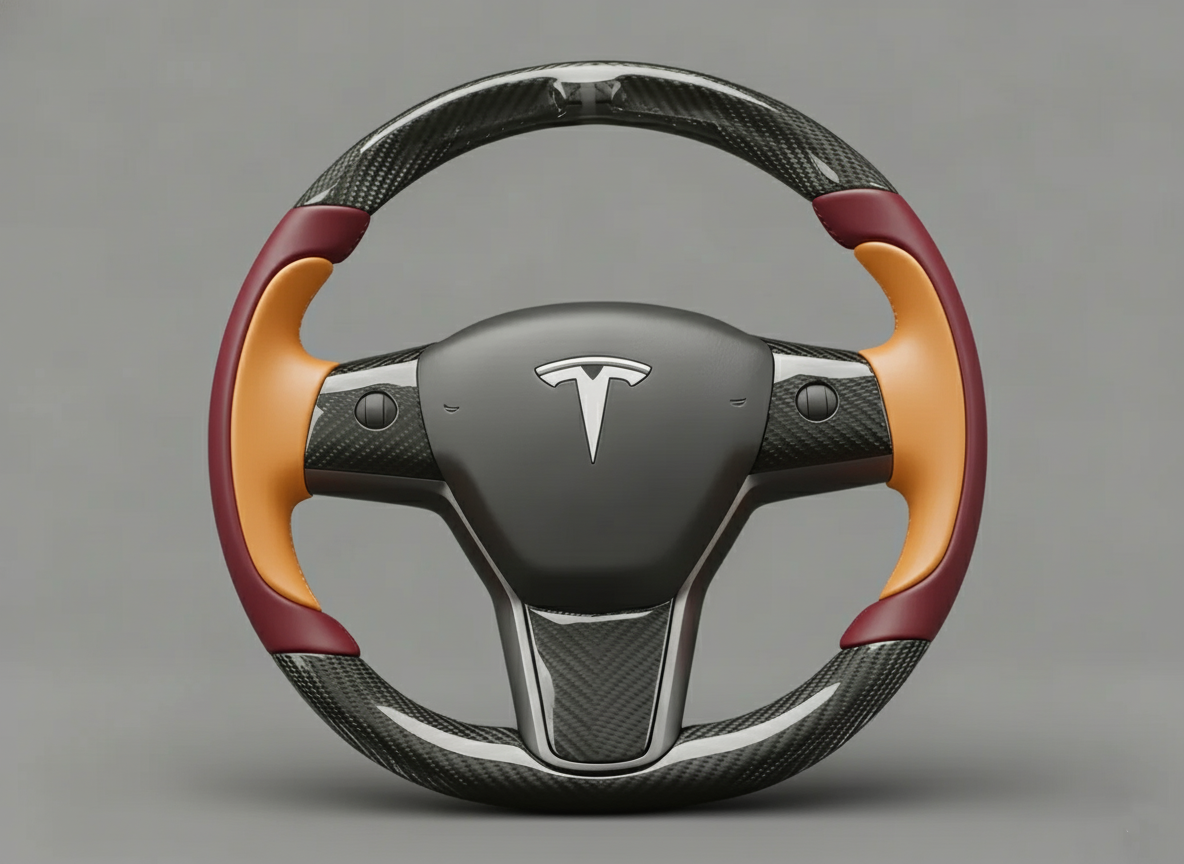
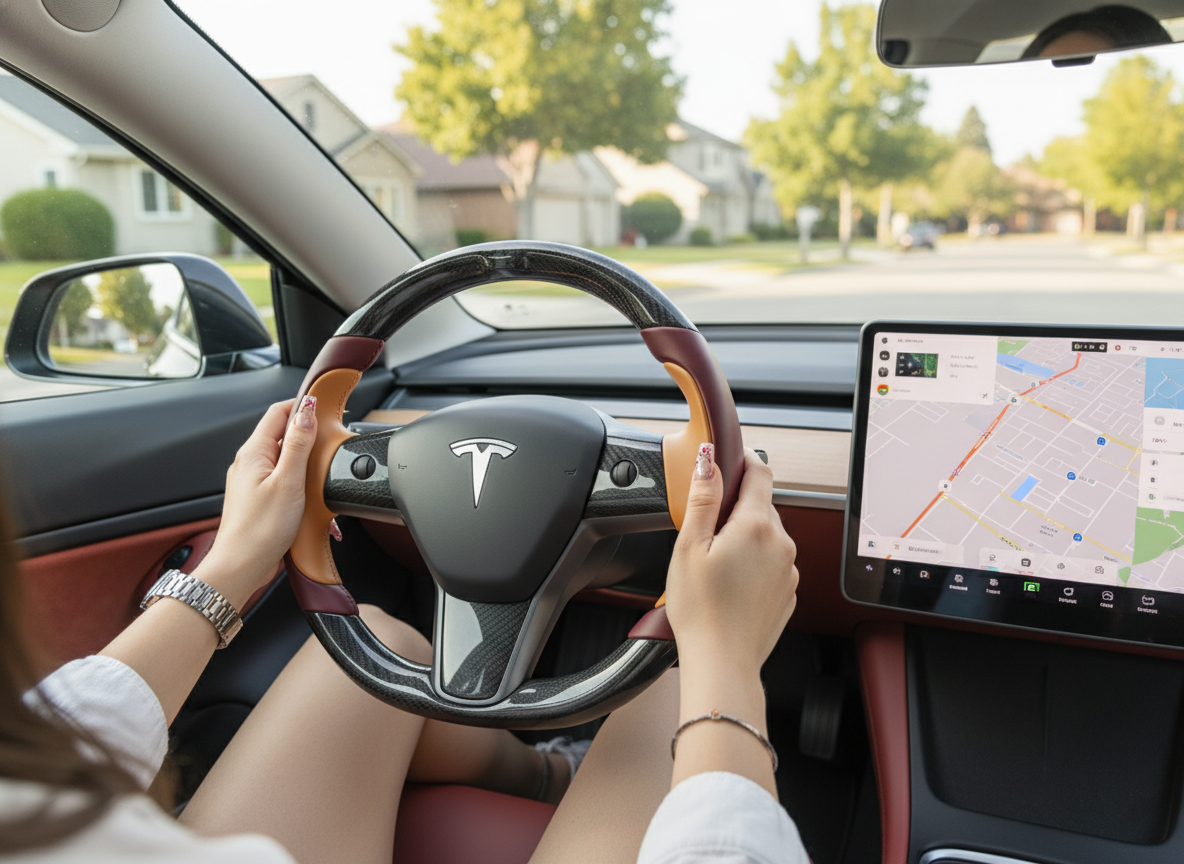
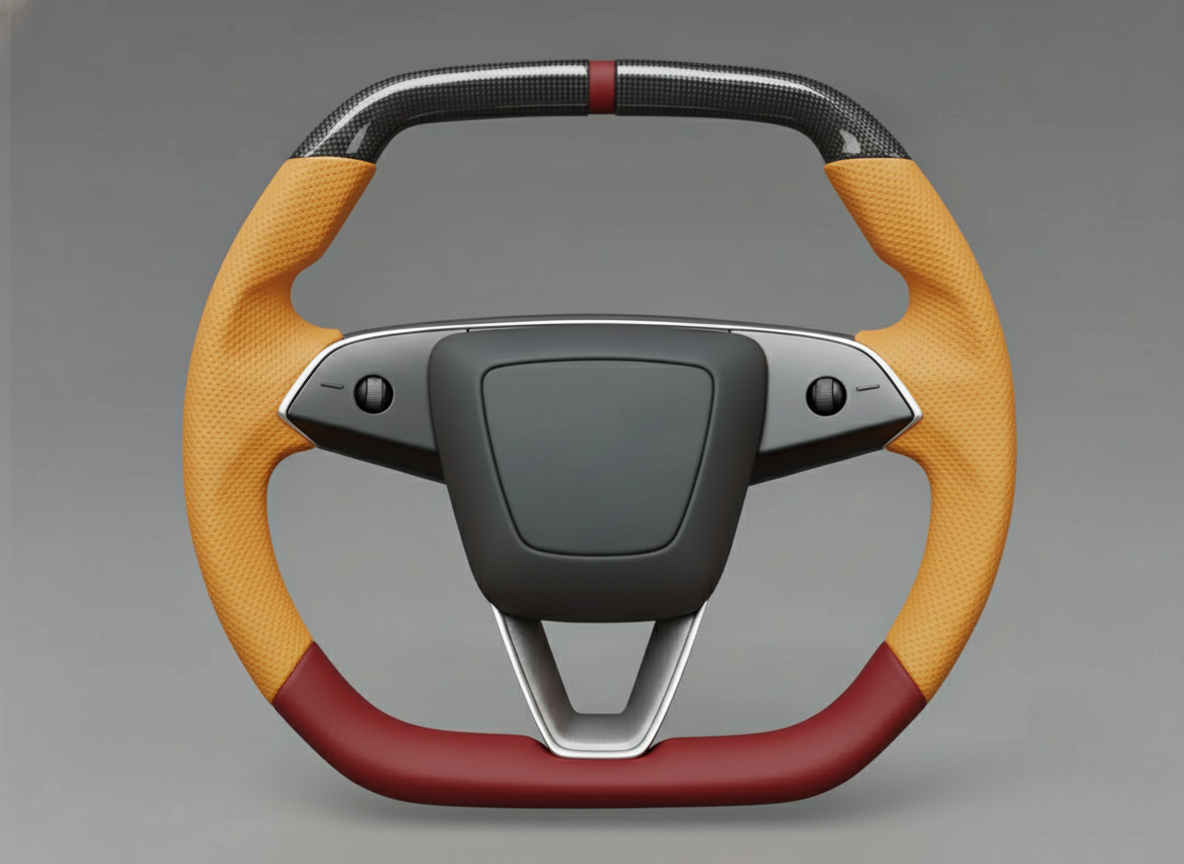
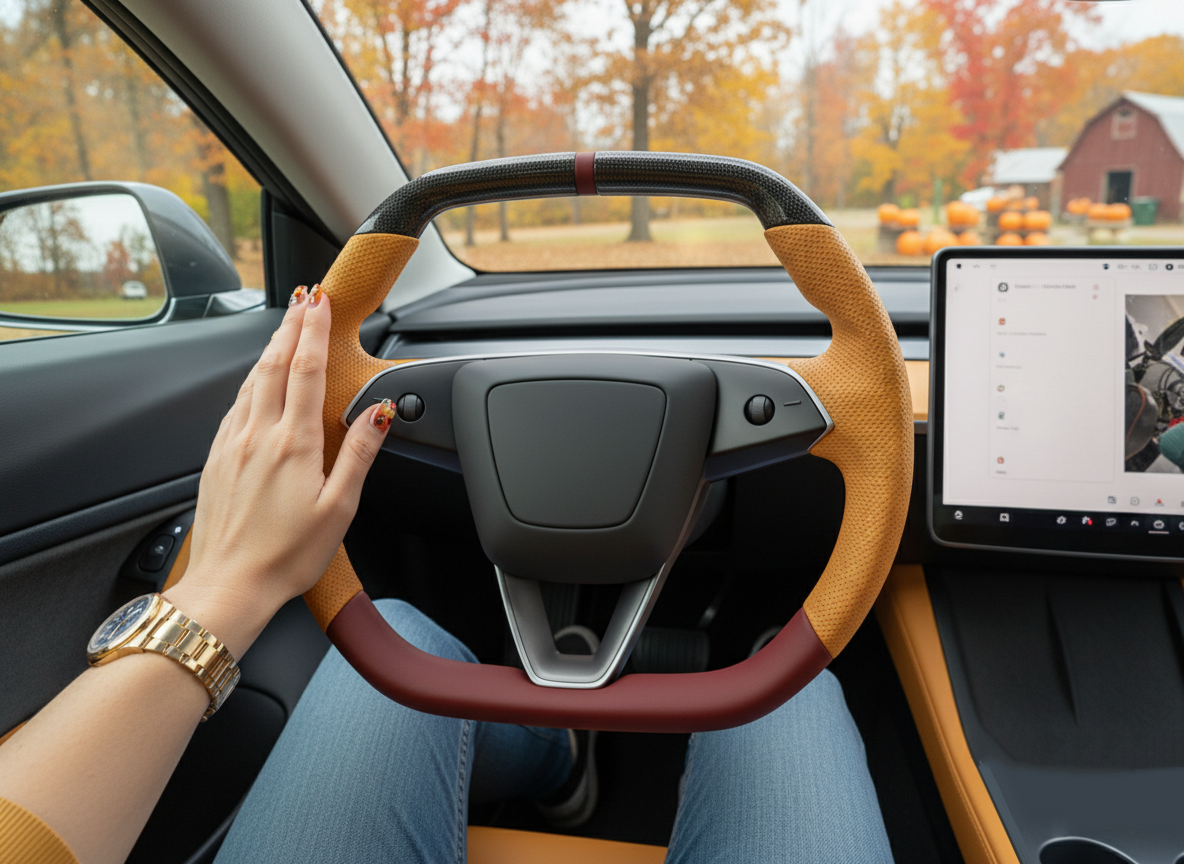
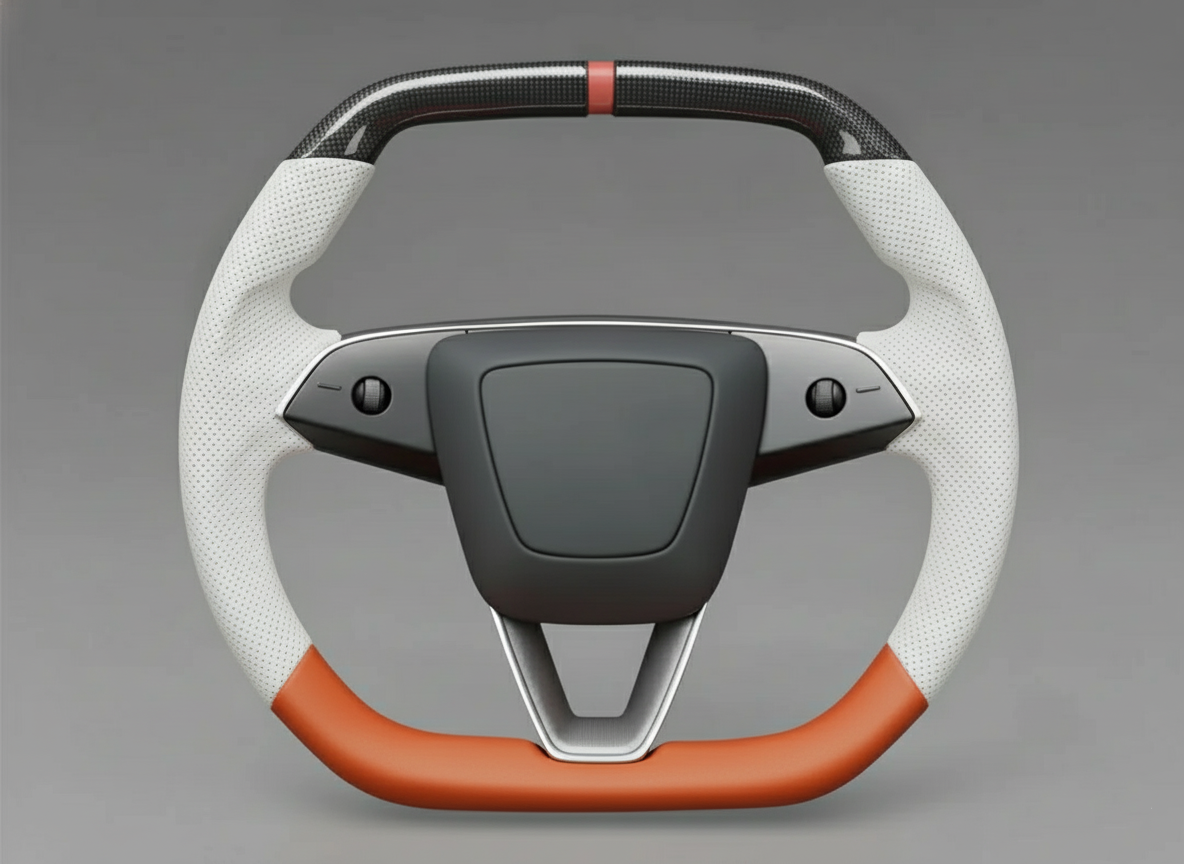
Cybertruck Carbon Fiber Steering Wheel: Utilizing T800 material for a 30% weight reduction and 20-minute non-destructive original-position installation.
Adapted to the original factory airbag protocol, it offers an excellent tactile feel with an extremely futuristic aesthetic, ensuring both safety and reliability.
Carbon Fiber
Carbon fiber steering wheel modification kits for the Tesla Cybertruck generally utilize T800-grade aerospace prepreg, integrally molded in an autoclave at 150 degrees Celsius.
This module reduces the component weight from the original factory's 3.2 kg to 1.7 kg, a reduction of over 45%.
Its tensile strength is maintained at 4900 MPa, capable of withstanding a torque load of 120 lb-ft. Under a 3K weave density, it ensures structural rigidity and anti-UV yellowing performance, making it the most definitive performance enhancement solution in current interior upgrades.
Manufacturing Material Specifications
Currently, steering wheel modules developed for the Tesla Cybertruck in the North American custom market primarily use Toray T800-grade high-tensile strength carbon fiber prepreg.
The tensile strength of this material reaches 4900 MPa with a tensile modulus of 294 GPa, and its elongation at break is maintained at approximately 1.7%.
Compared to entry-level T300 materials, T800 can compress material thickness to between 1.2 mm and 1.5 mm while maintaining the same rigidity.
During the manufacturing process, the diameter of the carbon fiber tows is typically controlled between 5 and 7 microns, with each 3K specification tow containing 3000 filaments.
These fiber tows are interlaced in a 2x2 twill ratio, forming a 45-degree geometric texture, which provides multi-directional torsional stiffness when under stress.
| Physical Property Indicators | T800 Aerospace Grade Carbon Fiber | Standard T300 Carbon Fiber |
|---|---|---|
| Tensile Strength | 4900 MPa | 3530 MPa |
| Tensile Modulus | 294 GPa | 230 GPa |
| Filament Diameter | 5 microns | 7 microns |
| Resin Content | 30% - 32% | 40% - 45% |
The molding of the carbon fiber module relies on a 150-degree Celsius high-temperature vacuum autoclave process.
Under a pressure environment of 6 atmospheres, the epoxy resin in the prepreg evenly penetrates the fiber gaps, reducing the void rate to below 0.5%.
This low void rate ensures the material will not develop internal stress cracks during long-term use.
The two-component epoxy resin system used has an extremely high glass transition temperature (Tg), usually between 120 and 150 degrees Celsius, ensuring the steering wheel structure undergoes no physical deformation even when the vehicle is sealed under intense summer sun.
The internal skeleton of the steering wheel is die-cast from 6061-T6 aerospace aluminum alloy or high-strength magnesium alloy, followed by secondary processing on a CNC machine with a precision of 0.02 mm to ensure a tolerance match with the airbag slots and original steering column stalks.
For users pursuing non-linear aesthetics, Forged Composite offers a different manufacturing dimension.
Instead of traditional weaving, it utilizes chopped carbon fiber filaments (3 mm to 5 mm) pressed in steel molds under pressures exceeding 1000 psi.
This process results in a finished product with a density as high as 1.6 g/cm³, exhibiting isotropic mechanical characteristics in impact testing.
When subjected to lateral impact, the material does not tear along grain lines like woven carbon fiber.
For high-end Cybertruck customizations, the grip area often combines 1.2 mm thick racing-grade Alcantara, which has a Martindale abrasion test rating exceeding 20,000 cycles, providing a constant coefficient of friction in both dry and wet environments.
| Experimental Test Item | Industrial Standard | Measured Parameter Data |
|---|---|---|
| High-Temp Aging Test | SAE J1455 | No fading after 500h at 105°C |
| UV Stability | ISO 4892-2 | 1200h exposure, color difference Delta E < 1.5 |
| Salt Spray Corrosion Resistance | ASTM B117 | 480h test, no oxidation at metal joints |
| Coating Hardness | ASTM D3363 | 4H grade hardness, resistant to light scratches |
The surface treatment layer utilizes a three-layer coating system, including a bonding promoter at the bottom, a UV-shielding clear coat in the middle, and a self-healing topcoat.
Benzotriazole-type UV absorbers are added to the UV shielding layer to intercept rays in the 290 nm to 400 nm band, preventing yellowing or degradation of the resin in the carbon fiber substrate.
The thickness of the clear coat is strictly controlled between 40 and 60 microns, ensuring a visual sense of mirror depth without cracking in extreme cold due to excessive thickness.
Fatigue testing conducted according to the SAE J1058 standard shows that this composite steering wheel maintains over 99% structural integrity after undergoing 100,000 cycles of torsional loading.
Regarding internal electronic integration, the custom steering wheel reserves dedicated installation slots for 12V flexible polyimide heating films.
The thickness of this heating element is only 0.15 mm, capable of raising the surface temperature from 0°C to 35°C within 3 minutes, with power consumption controlled under 45 watts.
All conductive connection points are gold-plated to prevent poor contact in long-term high-vibration environments.
The paddle shifters or button brackets on the back use carbon fiber reinforced nylon (PA12-CF) through 3D printing or injection molding, with a heat deflection temperature of 175°C, ensuring a crisp click feel and 0 ms response feedback.
In terms of weight efficiency, the original steering wheel weighs approx. 3.2 kg, while the full carbon fiber version typically stays between 1.6 kg and 1.8 kg.
This weight reduction directly lowers the rotational inertia of the steering system. Drivers can clearly feel the reduced load on the steering motor, resulting in a lighter and more precise feedback feel.
Specifically for Cybertruck steering characteristics, reinforcement points for the carbon fiber liner are distributed at the 3, 9, and 12 o'clock positions, with carbon fiber layup counts increased by 2 to 3 layers in these areas to handle the continuous stress from frequent Autopilot steering micro-adjustments.
Visual Surface Solutions
Gloss Finish is currently the most widely used visual treatment, with surface gloss levels typically maintained between 90 and 95. Three layers of high-transparency polyurethane coating are stacked to create a visual depth of approximately 0.5 mm.
This process amplifies the geometric symmetry of the 2x2 twill weave carbon fiber, allowing the 45-degree grain to present a gradient effect between dark gray and ink black under different light angles.
To ensure no coating yellowing occurs under long-term sunlight, 2% by mass of benzotriazole UV absorbers are integrated into the clear coat, extending the color retention period to over 10 years.
In the North American market, Matte/Satin Finish is favored by many drivers for its ability to reduce cabin reflections.
This solution limits gloss to between 10 and 15 by adding a specific ratio of micron-sized matting powder to the outermost coating, causing incident light to undergo diffuse reflection.
This treatment reduces dashboard reflections on the windshield by over 80%, improving visibility in high-light environments.
The friction coefficient of the matte surface is slightly higher than the gloss surface, with a touch similar to fine frosted metal, and it is less prone to fingerprints or oil residue.
Matching the cold tones of the Cybertruck's stainless steel material, matte carbon fiber creates an understated industrial aesthetic, with a surface hardness reaching 4H according to ASTM D3363 standards.
| Visual Solution Type | Optical Reflectivity | Surface Roughness (Ra) | Visual Characteristic Description |
|---|---|---|---|
| Glossy Mirror | 85% - 95% | < 0.05 microns | Sharp grain, strong 3D effect, high visual saturation |
| Satin Matte | 10% - 20% | 0.8 - 1.2 microns | Soft diffuse reflection, no glare, visually unified with steel |
| Forged Marble | 75% - 90% | < 0.1 microns | Irregular carbon bits, light changes randomly with angle |
Forged Composite presents a completely different aesthetic logic from woven patterns, with visuals composed of tens of thousands of 3 mm to 5 mm long fibers randomly stacked to resemble natural marble.
During the 1000 psi compression molding process, the grain distribution of each piece is unique, making it a popular choice for high-end customization.
The density of the forged surface is as high as 1.6 g/cm³. Due to the lack of a uniform weaving direction, reflection intensity is equalized across all angles, avoiding the regular flickering sensation of woven carbon fiber.
For users wishing to break the linear visual constraints of the Cybertruck, forged carbon fiber provides a more artistic fluid visual transition.
Personalized color integration schemes further expand the visual dimensions of carbon fiber by introducing pigments or metal wires into the resin system. Mature technologies include:
- Colored Clear Coat: Mixing 0.5% concentration semi-transparent dyes, such as deep blue, wine red, or Cyber Purple, into the clear coat to give the underlying carbon grain a specific tint.
- Metal Wire Weaving: Embedding 0.1 mm diameter aluminum or titanium alloy wires every 5 mm within the 3K carbon fiber weave, creating a metallic mesh effect via different reflectivity.
- Chameleon Paint: Using interference-type mica titanium pigments that switch between purple/green or blue/gold depending on the viewing angle, typically covering a 60-degree viewing arc.
According to SAE J1455 standards, these coatings must endure thermal shock cycles from -40°C to 85°C. After 200 cycles, adhesion must maintain a Grade 0 rating (no peeling) per ISO 2409.
Additionally, the surface must exhibit extreme chemical resistance, maintaining zero swelling or loss of gloss after 24 hours of contact with common cabin cleaners, sunscreens, or sweat components.
| Test Item | International Standard Requirement | Visual Retention Data |
|---|---|---|
| Anti-Yellowing Performance | ISO 4892-2 (1200h) | Color difference Delta E < 1.2 |
| Abrasion Cycle Resistance | ASTM D4060 (CS-10 wheel) | Mass loss < 2mg after 1000 rotations |
| Coating Adhesion | ASTM D3359 (Cross-cut) | 5B Grade (Smooth edges, no flake-off) |
| Weathering Cycle | PV 1200 (Multi-temp cycle) | No cracks or bubbles after 10 days of testing |
Regarding the Cybertruck's unique cabin lighting system, the reflection characteristics of the carbon fiber surface have also been optimized.
Under night LED ambient lighting, the carbon fiber grain captures and refracts specific wavelengths of light, enhancing the sense of cabin depth.
Especially in schemes using 12K large-grid weaving, where individual fiber tows reach 8 mm in width, the reflection area is larger, better echoing the flat visual feel of the vehicle's exterior stainless steel panels.
To enhance the combined tactile and visual experience, some high-end modules use "breathable" matte paint with a coating thickness of only 20 microns on grip areas, providing a basic stain barrier while retaining the original texture of the carbon fiber.
In the manufacturing flow, every steering wheel enters a dust-free inspection room within 48 hours of coating completion, where multi-point sampling is performed using high-precision gloss meters and thickness gauges.
Thickness deviation for glossy products is controlled within 10 microns to prevent visual distortion from uneven local light refraction.
This pursuit of optical precision ensures that modified parts maintain high consistency in visual quality with the original high-precision electronic displays and brushed metal trims when installed on the Cybertruck.
Structural Physical Indicators
The original factory steering wheel assembly weighs approximately 3.22 kg, while modification parts using T800-grade aerospace carbon fiber composite reinforced with 6061-T6 aluminum alloy skeletons typically weigh between 1.75 kg and 1.88 kg.
This nearly 45% weight reduction significantly lowers the instantaneous load on the steering motor.
Structurally, carbon fiber layup thickness is set between 2.8 mm and 3.2 mm, with 12 layers of multi-dimensional stacking (0°, 45°, 90° interlaced) ensuring an overall deformation of less than 0.5 mm when subjected to a torque load of 120 lb-ft (approx. 163 Nm).
"In composite engineering, specific-dimensional fiber arrangement determines the component's torsional strength; T800 carbon fiber's tensile modulus reaches 294 GPa, over 1.5 times that of standard stainless steel."
For structural safety verification, these modification modules must comply with the SAE J1058 automotive steering wheel laboratory testing standards. Specific structural physical parameters are as follows:
- Static Torsional Rigidity: Applying a 500N counter-force at the 3 and 9 o'clock positions; permanent plastic deformation of the rim must be less than 0.1 mm, ensuring the structure can fully rebound after extreme stress.
- Axial Thrust Load: The steering center column must withstand a 1000N (approx. 102 kg) longitudinal thrust for 30 seconds, simulating occupant impact during a collision; the carbon fiber substrate must not show visible cracks or delamination.
- Material Tensile Strength: Measured tensile strength of a single prepreg layer is 4900 MPa, cured in a vacuum autoclave at 6 atm, with void rates strictly under 0.3% to prevent internal micro-bubbles from expanding and causing structural failure at high temperatures.
- Coefficient of Linear Thermal Expansion (CLTE): The CLTE of carbon fiber is extremely low, approx. -0.1 x 10⁻⁶/°C, meaning stress changes between the steering wheel and metal liner are negligible across extreme weather conditions.
Cybertruck internal temperatures can reach 85°C under extreme sun, whereas the epoxy resin system used in custom wheels has a Tg of 155°C.
Regarding frequent vibration feedback, carbon fiber's damping characteristics are superior to traditional metal skeletons, absorbing fine vibrations between 50 Hz and 200 Hz, reducing hand fatigue during long-distance driving.
The connection between the internal skeleton and carbon fiber shell uses a combination of aerospace-grade structural adhesive and mechanical locking, with a shear strength of 35 MPa, ensuring the two maintain consistent movement trajectories across different vibration frequencies.
"Structural integrity depends not only on the material itself but also on the stability of the bonding interface between materials with different expansion coefficients."
Regarding safety integration, the physical architecture must reserve a complete airbag deployment channel.
According to experimental data, instantaneous pressure during airbag triggering peaks within 30 ms; the carbon fiber module's bracket uses high-toughness magnesium alloy with a 12% elongation at break, ensuring the bracket undergoes controlled plastic deformation to absorb energy rather than brittle fracture during deployment.
All fixed bolt holes are secondary-machined via CNC with a tolerance of ±0.01 mm, guaranteeing a tight spline engagement with the Tesla steering column.
- Fatigue Cycle Test: Simulating 15 years of use with 100,000 cycles of loading; after reciprocating rotation under 50N load, the structural rigidity decay rate is below 2%.
- Impact Energy Absorption: Per FMVSS 203, at an impact speed of 15 mph, the force exerted by the steering wheel assembly on the mannequin's chest must be below 2500 lbs; the carbon fiber layup includes energy-absorbing break points in specific zones.
- Environmental Adaptability: After 240 hours of 95% humidity testing, the interlaminar shear strength retention rate must be over 98%.
- Hardness Parameters: Surface protective coating reaches 4H Mohs hardness, preventing permanent scratches from rings or personal items.
A 0.8 mm deep wire harness slot is reserved inside the carbon fiber shell, with installation point deviations for heating coils and touch modules limited to within 0.05 mm.
This precision layout ensures that the Cybertruck's unique HOD (Hands-Off Detection) sensors receive accurate capacitive signal feedback.
To handle temperature variances across North American latitudes, internal heating films use polyimide substrates with a heating density of 0.5 W/cm² at 12V, uniformly raising the surface to 38°C within 180 seconds.
System Seamless Compatibility
The original steering wheel no longer connects via a mechanical column but relies on torque sensors and angle encoders at the base for signal transmission.
Modification liners must precisely fit the 13/16 inch installation hole, with spline tooth ratio tolerances controlled within 0.01 mm.
During installation, the tightening bolt torque is set to 50 Nm to ensure no mechanical play during high-speed steering.
Due to the lack of physical connection, the internal Angle Position Sensor must maintain a sampling resolution of 12 bits or higher, ensuring steering commands are transmitted to actuators within a 1 ms latency via the vehicle's redundant dual-chassis communication network.
"Steer-by-wire systems have extremely high requirements for physical feedback precision; any tiny geometric deviation is recognized by sensors and leads to algorithmic steering torque compensation fluctuations."
Regarding electronics, the Cybertruck wheel carries heavy interaction functions, the most challenging being the Hands-Off Detection (HOD) system.
This is a capacitive sensing film integrated within the rim that judges control status by monitoring charge changes in the driver's hands.
Carbon fiber is naturally conductive, which can interfere with the sensor's electromagnetic field.
To achieve seamless compatibility, high-end mods place a 0.5 mm thick high-dielectric-constant insulating material (Dielectric Constant approx. 3.2) between the carbon substrate and the sensing layer to physically isolate signal interference.
This design allows the sensor to maintain a 500 Hz scan frequency, ensuring Autopilot or FSD accurately recognizes grip pressure with a signal-to-noise ratio (SNR) maintained above 15:1, fully complying with OEM logic standards.
- Heating Protocol Adaptation: Internal 12V polyimide flexible heating film power is typically set between 48W and 60W. Built-in NTC thermistors (10k ohm at 25°C) feed real-time data to the chassis control module, controlling surface temp fluctuations within ±1.5°C.
- Communication Bus Connection: Multi-function wheels and touch buttons use the LIN bus protocol at 19.2 kbps. Internal wiring uses SAE J1128 standard shielded cables to prevent static buildup within the carbon shell from creating voltage ripples in 5V logic signals.
- Airbag Compatibility: SRS module installation uses 6061-T6 aluminum die-cast brackets with geometric center deviations < 0.05 mm. During the 30 ms inflation period, carbon fiber spokes resist over 2000 Pa of reaction force, ensuring the airbag follows FMVSS 208 trajectory requirements without deflection.
- Haptic Feedback Logic: Original button modules maintain haptic feedback via 0.1 mm precision tolerance matching. Carbon fiber's high elastic modulus helps linear transmission of vibration waves, providing clear physical confirmation when shifting or adjusting volume.
The Cybertruck's Driver Monitoring System (DMS) camera is above the center screen, and its line of sight must pass through the steering wheel's upper edge.
Therefore, geometric opening angles for carbon fiber Yokes or shaped wheels are set between 145 and 160 degrees, ensuring the camera captures driver eye features at any steering angle.
This physical visibility compatibility avoids Driver Fatigue Monitoring system errors caused by the modification.
Furthermore, internal electromagnetic shielding meets CISPR 25 Class 3 requirements, ensuring no interference with cabin high-frequency radar or Ultra-Wideband (UWB) phone key modules.
"System integration is not just physical assembly but deep matching of electrical characteristics; any impedance change could lead to the OBD system recording unexpected current anomalies."
For long-term reliability, connectors use IP67-rated gold-plated terminals with contact resistance < 2 milliohms to resist oxidation. In 20 Hz to 2000 Hz random vibration profiles, internal harnesses are secured with 125°C-rated Teflon tape to prevent insulation wear from friction.
Futuristic Style
Tesla Cybertruck steering wheel modifications are adapted for the 48V system.
Using 1.2 mm T700 carbon fiber, it is 400g lighter than the original. The Yoke design expands visibility to 160 degrees with a 360 mm width.
A 1.3-inch OLED screen communicates via CAN-bus, displaying real-time 0-60 mph acceleration and motor temps, with 20 adjustable RGB LEDs embedded at the top.
Heterogeneous Geometric Design
The original rounded-square configuration looks somewhat conservative; heterogeneous modification schemes usually adopt a 350 mm wide by 230 mm high trapezoidal architecture.
This ratio is based on an average 95 cm driver seating height. In the cockpit, a traditional round wheel's upper arc blocks about 22% of the center screen's field of view.
By removing the upper arc, the horizontal forward field of view is expanded to 168 degrees.
This change reduces arm movement during turns. Especially with steer-by-wire, rotation can be electronically limited to within 180 degrees, eliminating the need for hand-over-hand maneuvers.
The internal frame uses 4130 chromoly steel with a 2.5 mm wall thickness.
This steel's yield strength is over 800 MPa, ensuring no structural deformation during lateral impacts.
Over this skeleton, 12 layers of T700 aerospace carbon fiber are wrapped.
Each layer's orientation is calculated, using 0°, 45°, and 90° alternating stacks to handle multi-directional torsional stress.
In the vacuum adsorption process, pressure is constant at 2.0 bar, ensuring resin penetrates every 7-micron fiber.
After 120°C curing, the total weight is only 1.35 kg, approx. 0.5 kg lighter than the OEM magnesium-aluminum frame.
The grip area's geometric cross-section abandons traditional cylinders for an asymmetric oval section.
At 9 and 3 o'clock, the max grip diameter is 32 mm and the min is 28 mm. This data, referencing racing specs, keeps the gap between palm and grip within 0.5 mm.
To increase friction, 1.5 mm deep finger grooves are machined into the inner grip using 5-axis CNC with 0.02 mm error.
In high-speed emergency obstacle avoidance, this grip provides 15% more lateral resistance than OEM, preventing slipping under high torque.
Side cutting angles are set at 45 degrees, not just for aesthetics but to reserve space for bottom touch components.
On the back, paddle or button travel is set at 1.2 mm with a 60g trigger pressure, simulating mechanical keyboard tactility and preventing mis-touches on bumpy roads.
The electronic system via CAN-bus responds in under 5 ms.
Since Cybertruck uses a 48V low-voltage architecture, internal wiring uses higher-spec shielded cables to prevent EMI from affecting steering signals.
The flat-bottom design provides 680 mm of knee clearance, 45 mm more than the round wheel, significantly improving ingress/egress for drivers over 190 cm tall.
In fatigue testing, this design maintains structural displacement deviation within 0.1 mm after 100,000 torsional cycles.
The 4H-hardness nano-matte coating resists scratches from nails or rings. In 500h UV aging tests, Delta E is < 1.5, ensuring no fading or whitening.
Under the center cover, the SAE J1127-compliant airbag module ensures the deployment trajectory covers the driver's head even in a Yoke shape.
3K twill weave carbon fiber provides a deep refractive effect with fiber alignment error < 1.5 degrees, achieving a high-density combination of functionality and futuristic aesthetics.
Aerospace Material Application
Cybertruck steering wheel modifications use T700 high-modulus carbon fiber instead of standard plastics or aluminum.
With a tensile strength of 4900 MPa (7-9 times that of steel) and a density of 1.8g/cm³, it utilizes 12 to 14 layers of prepreg.
Each layer is exactly 0.125 mm thick, stacked in 0°, ±45°, and 90° symmetrical crosses to handle shear stress.
This ensures structural deformation < 0.05 mm under 150 Nm of torque, ensuring steer-by-wire feedback purity.
The skeleton connectors use 7075-T6 aerospace aluminum, with yield strengths over 500 MPa, improving fatigue resistance by 30% over OEM magnesium-aluminum.
- T700 Specs: 12K tow (12,000 filaments), filament diameter 7 microns.
- Vacuum Curing: 6 atm autoclave process at 135°C for 120 minutes.
- Resin Content: Fiber volume fraction of 65% for maximum rigidity.
- Weight Reduction: Total weight approx. 1.2 kg (450g lighter than OEM).
Surface treatment uses nano-ceramic coatings (20 microns thick) via chemical vapor deposition, resulting in 4H hardness.
It includes UV-9 absorbers; after 1000h UV tests, the yellowing index Delta YI is < 1.2.
For high-end visuals, Forged Carbon (25-50 mm chopped fibers) is used, pressed under 100 tons.
Since fibers are 3D-randomized, isotropic performance is superior for complex stresses, with structural redundancy over 300% of safety standards.
- Weather Resistance: No cracking after 200 cycles of 85°C to -40°C; expansion < 10⁻⁶.
- Chemical Resistance: Resists 95% alcohol and cabin cleaners; prevents sebum/sweat aging.
- Flame Retardancy: Meets UL94-V0 (self-extinguishing within 10s).
- Anti-slip Index: Micron-frosted grips with dry friction of 0.6 (wet > 0.4).
Adapting to the 48V system, internal heating uses NiCr 80/20 alloy wires (0.1 mm diameter) wrapped in Kapton polyimide film.
Heat efficiency is 15% higher; surface rises from 10°C to 35°C in 45 seconds with variance ±2°C.
Digital Information Interaction
This digital modification uses an integrated CAN-bus 2.0 interface to handshake with the vehicle gateway, processing over 500 signal packets per second.
This keeps display latency under 15 ms.
The 120MHz ARM 32-bit MCU parses binary data into graphics.
The 1.3-inch self-illuminating OLED (128x64 pixels) has a 10000:1 contrast ratio for daylight readability.
A 0.5 mm thermal silicone pad keeps the PCB under 70°C. The screen displays:
- Torque Distribution: Real-time torque for each motor in 1 Nm increments.
- Thermal Management: 2Hz refresh for battery and motor inverter temps.
- Acceleration Stats: Auto-triggered 0-60 mph timer via wheel speed sensors.
- Range Percentage: 0.1% precision battery display with dynamic remaining range.
Top-embedded 20-piece RGB LED strip uses 2000Hz PWM dimming for flicker-free interaction.
Colors are programmable (e.g., green to red as motor RPM limits approach; ice blue breathing for Autopilot).
| Interaction Feature | OEM Specification | Futuristic Modification |
|---|---|---|
| Signal Protocol | Basic Resistance | CAN-bus 2.0 / CAN-FD |
| Display Latency | N/A | < 15 ms |
| Operating Voltage | 12V Stepped Down | Native 48V Adapted |
| Haptic Feedback | N/A | 170Hz Linear Feedback |
| Lighting Gradients | N/A | 256-level RGB Adjustable |
| Button Travel | 1.5 mm Physical | 0.2 mm Pressure Sensing |
To eliminate turn signal stalks, pressure-sensitive touch panels at 3 and 9 o'clock distinguish 50g to 300g of force.
Two 15 mm Linear Resonant Actuators (LRA) provide a 170Hz micro-vibration in 2 ms, simulating a physical click.
48V wiring reduces harness diameter by 20%, allowing for more sensors.
All lines are double-shielded; data loss < 0.01% after 50h surge tests.
Installation uses a T-harness plug-and-play design, retaining SAE J1127 airbag support.
The ignition loop is independent with highest-priority physical power, ensuring 30 ms airbag response even if the display system fails.