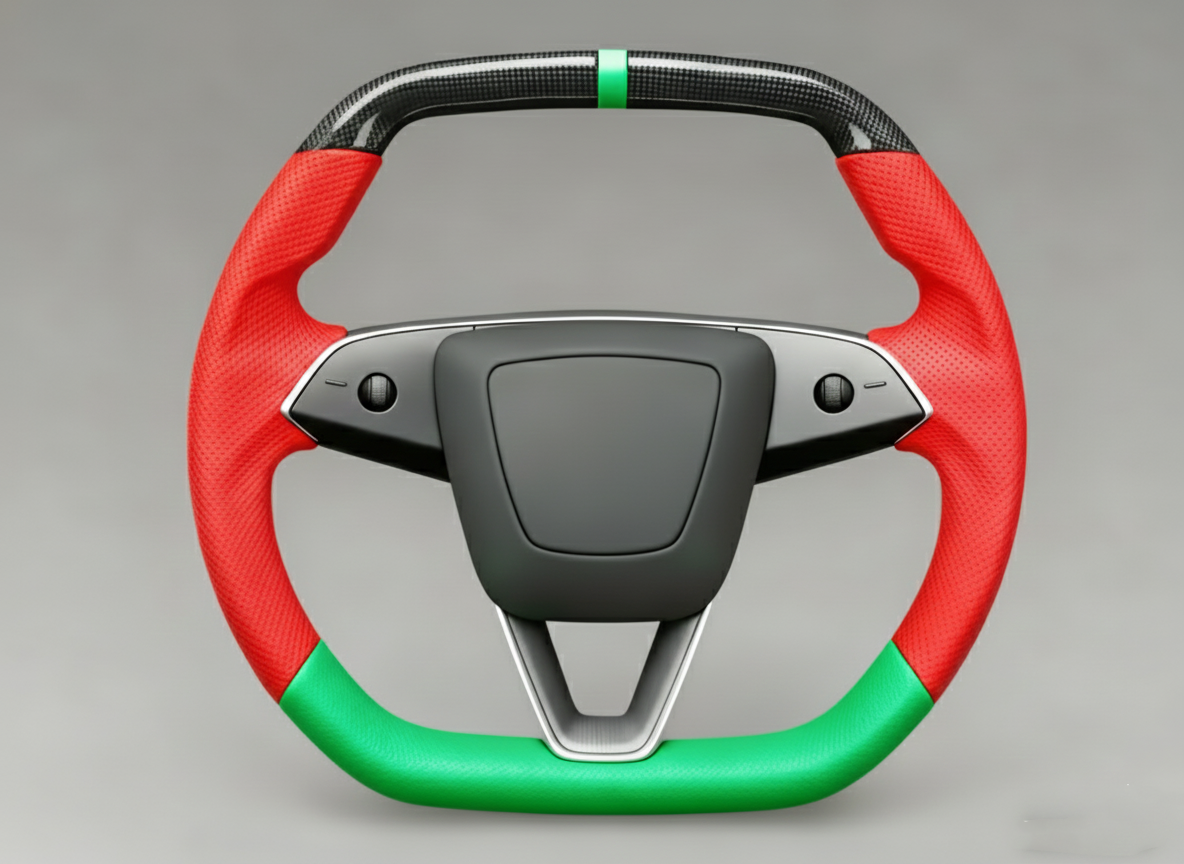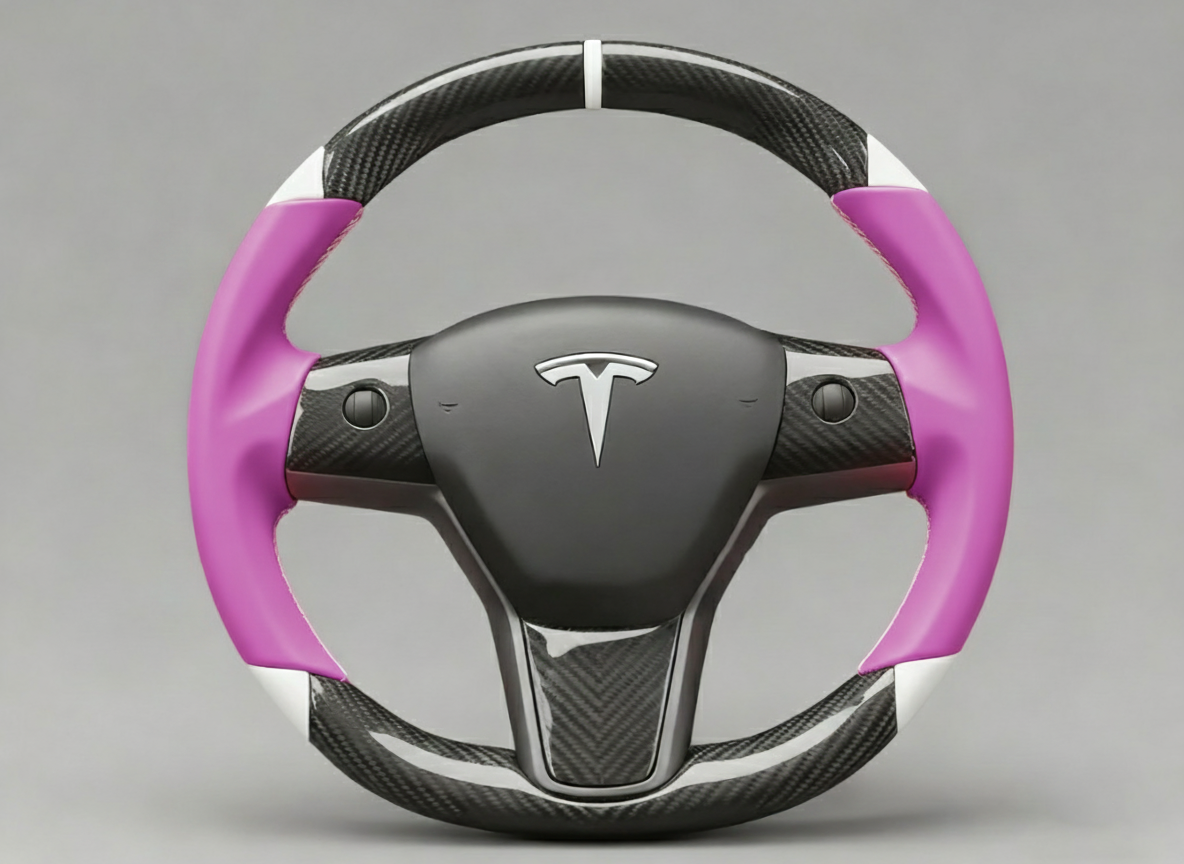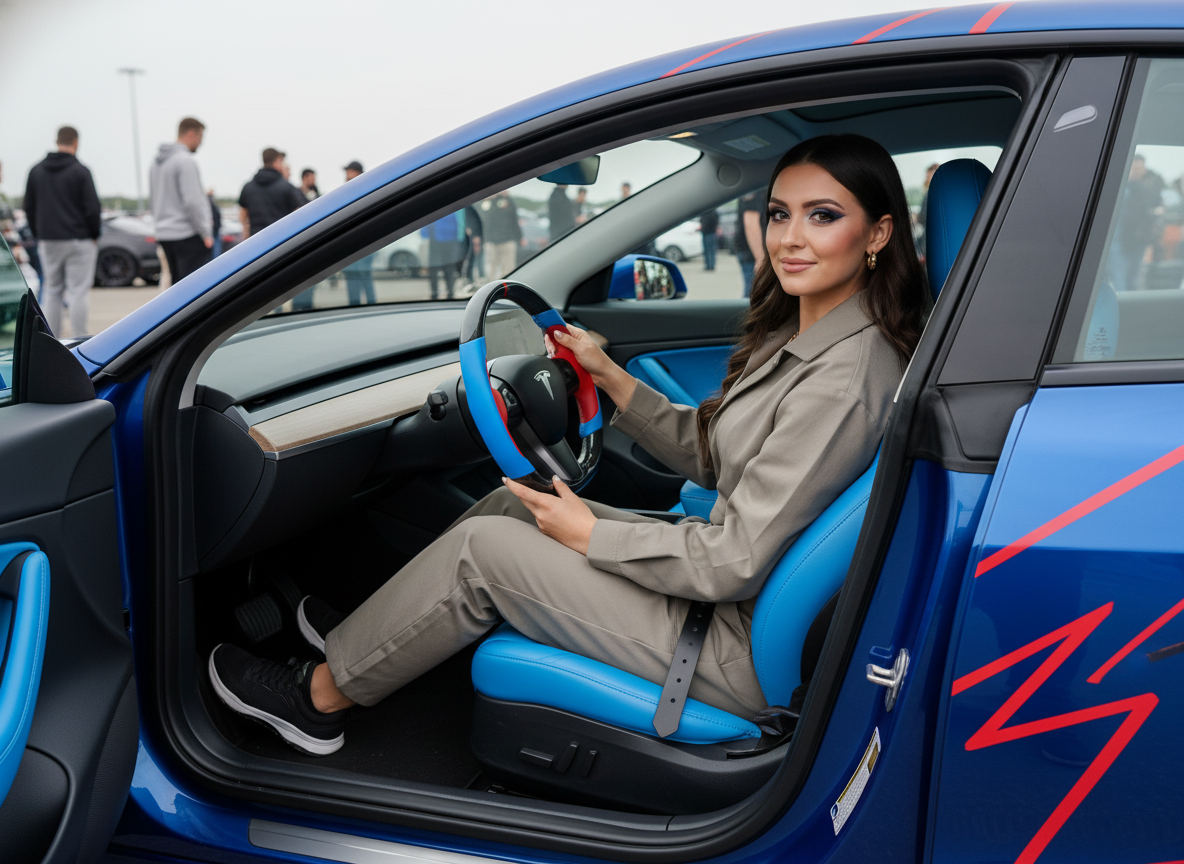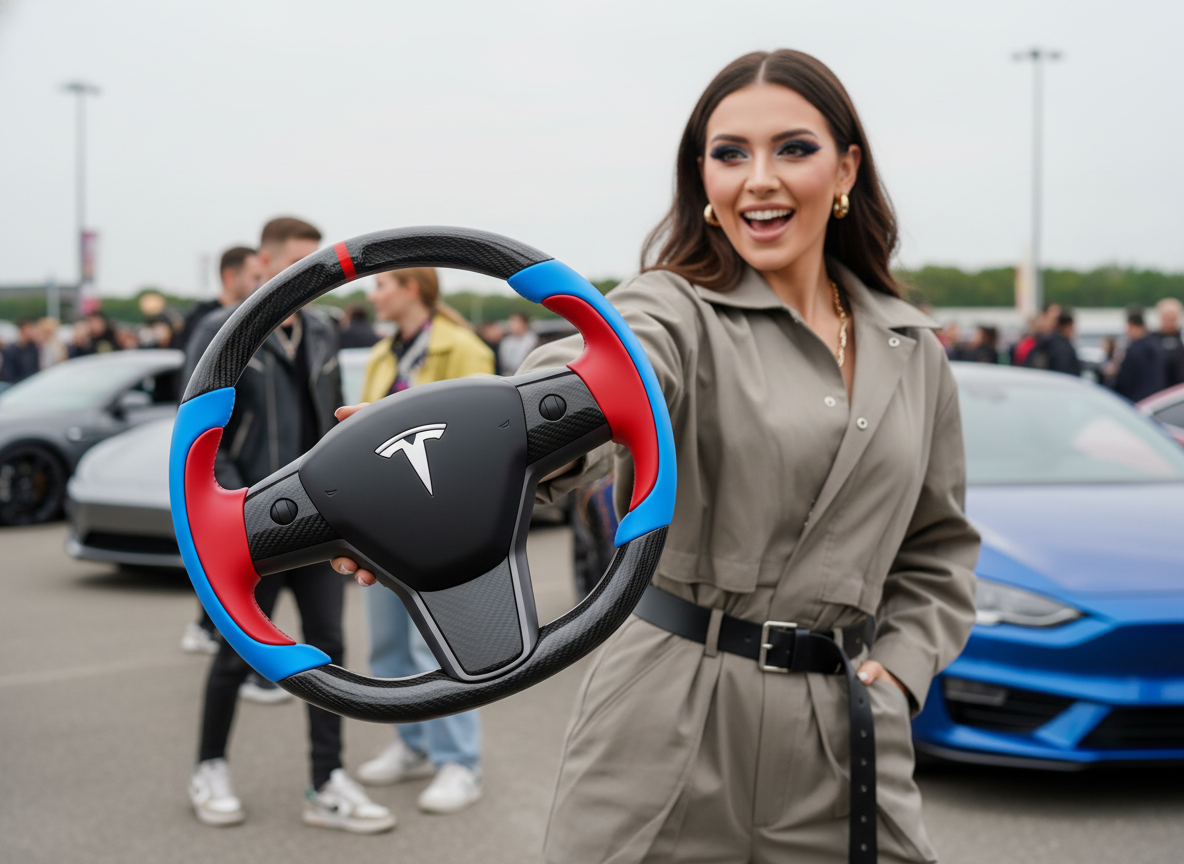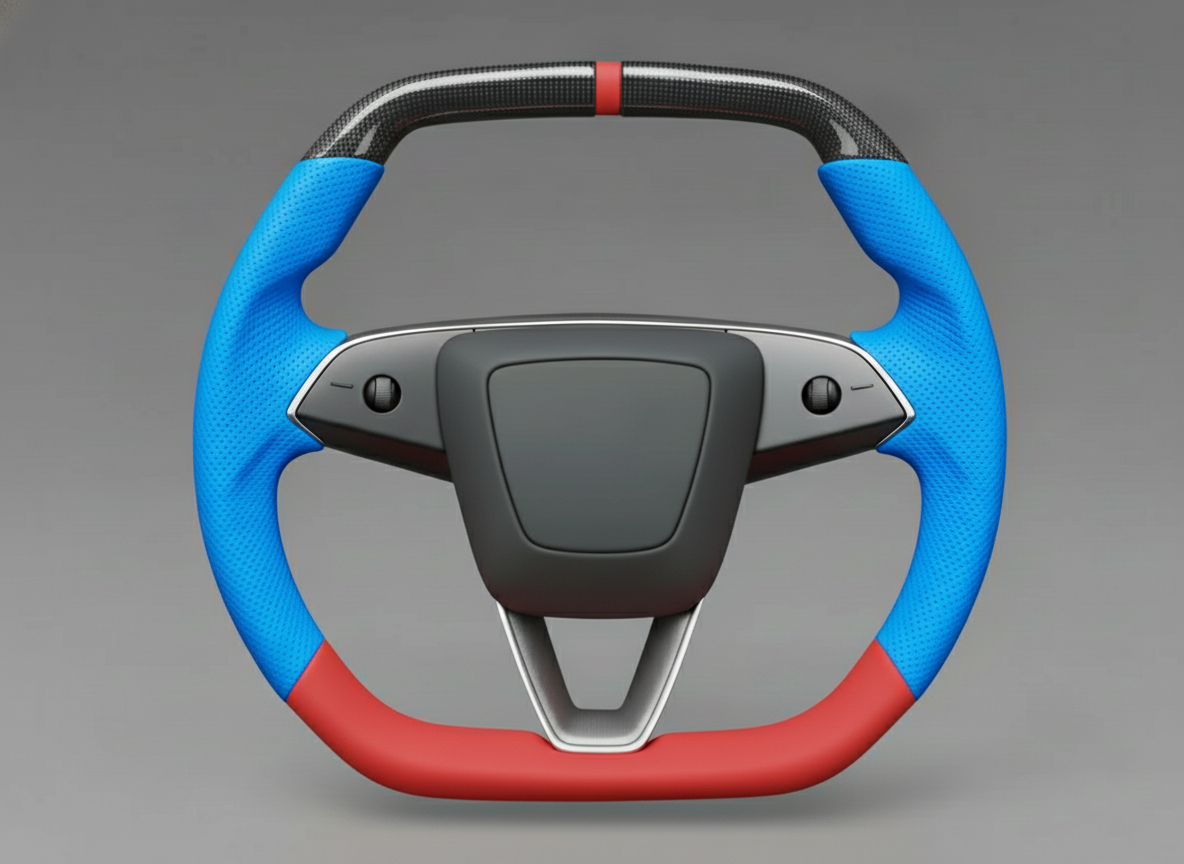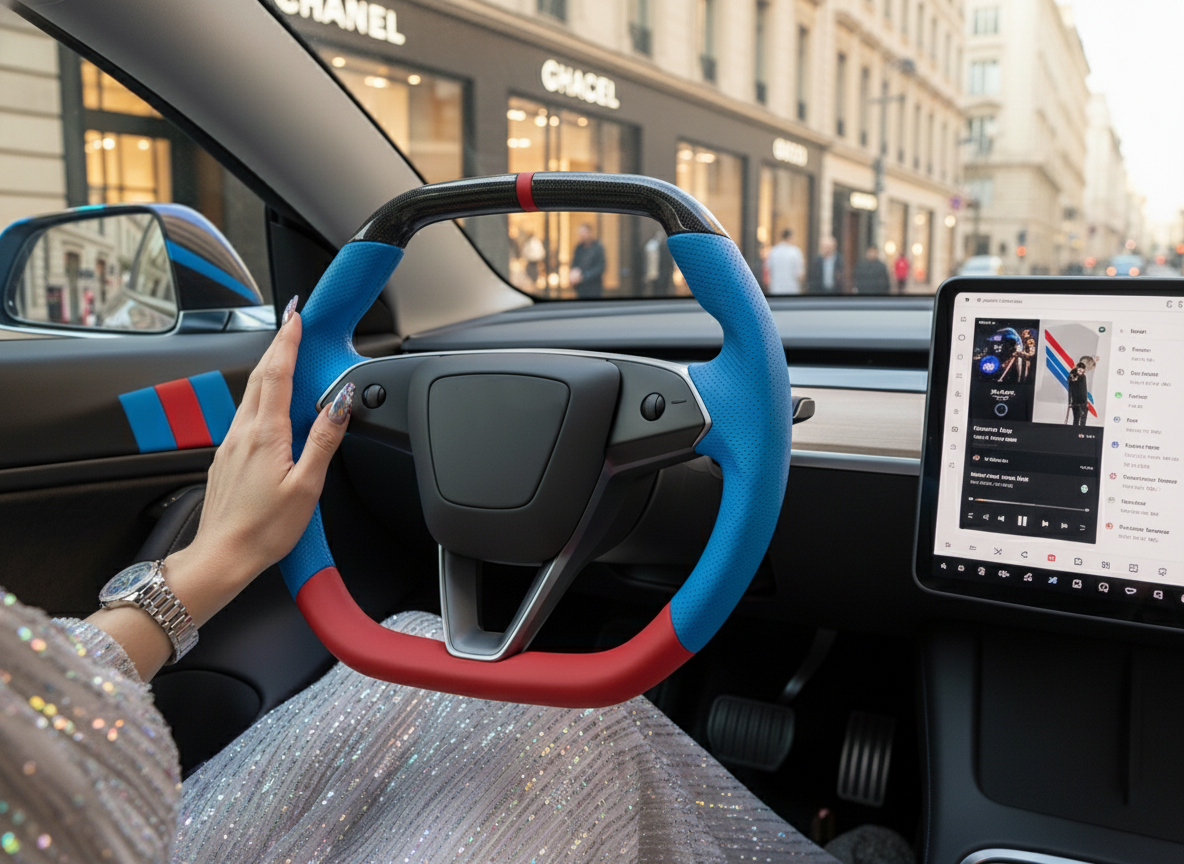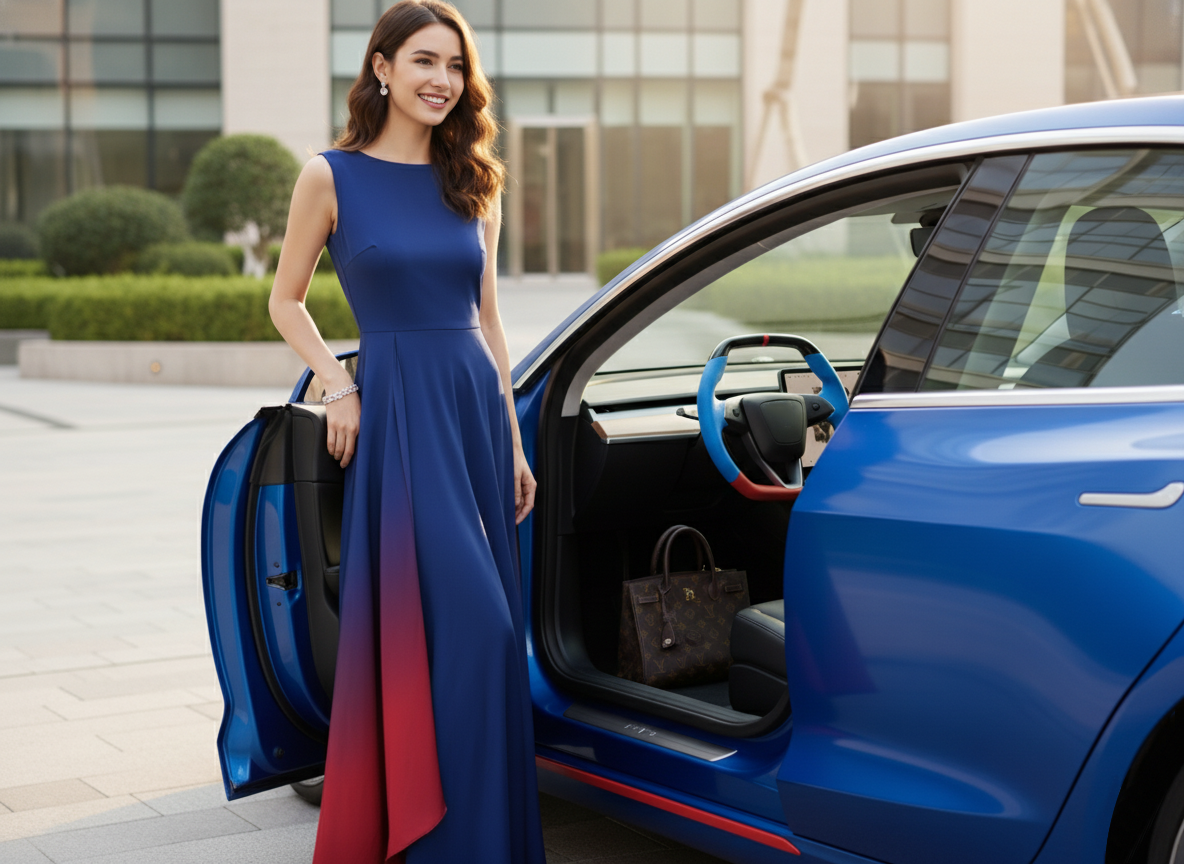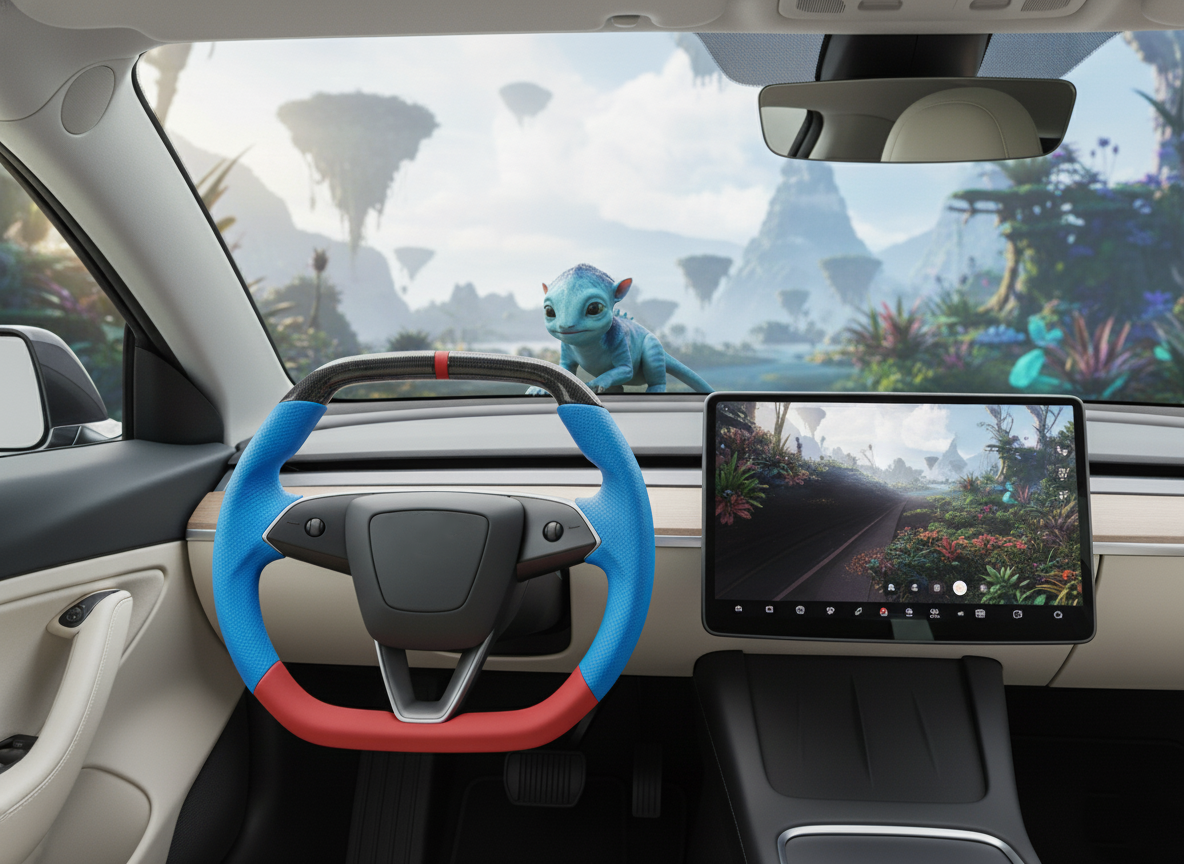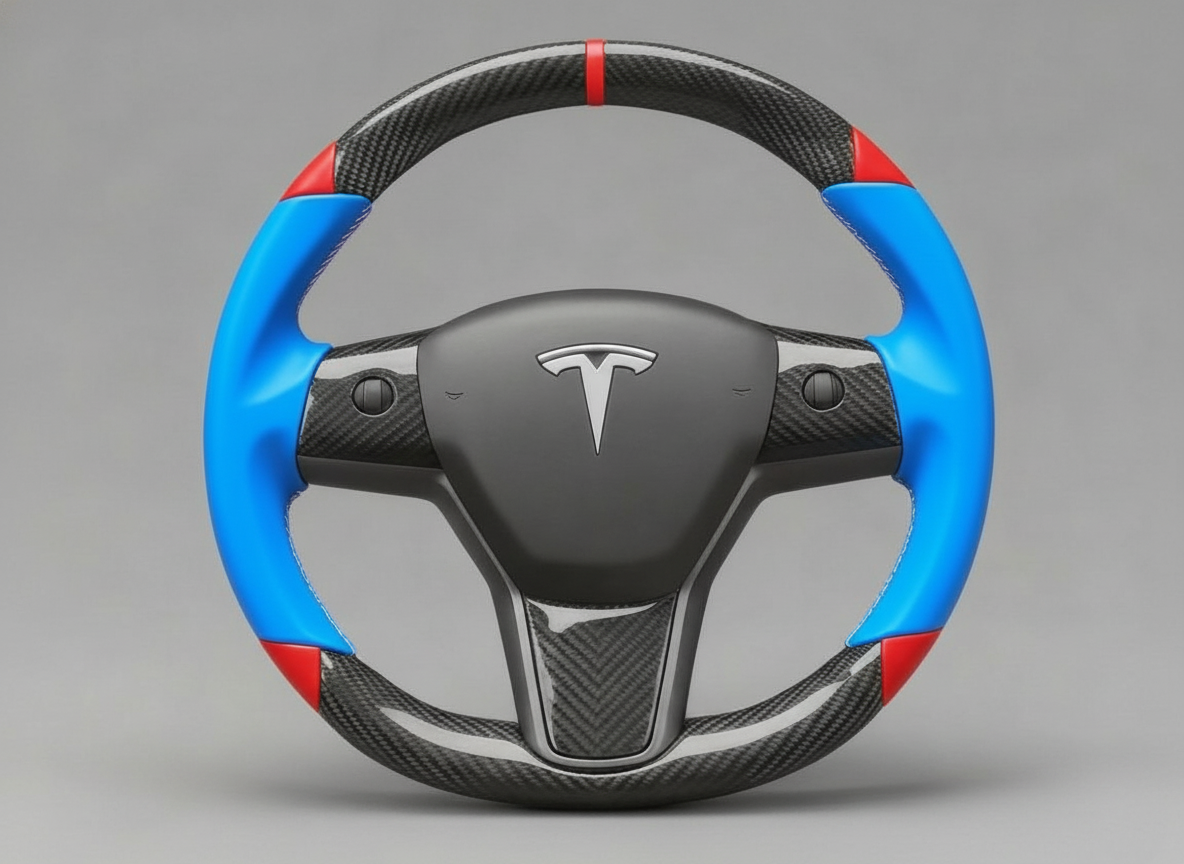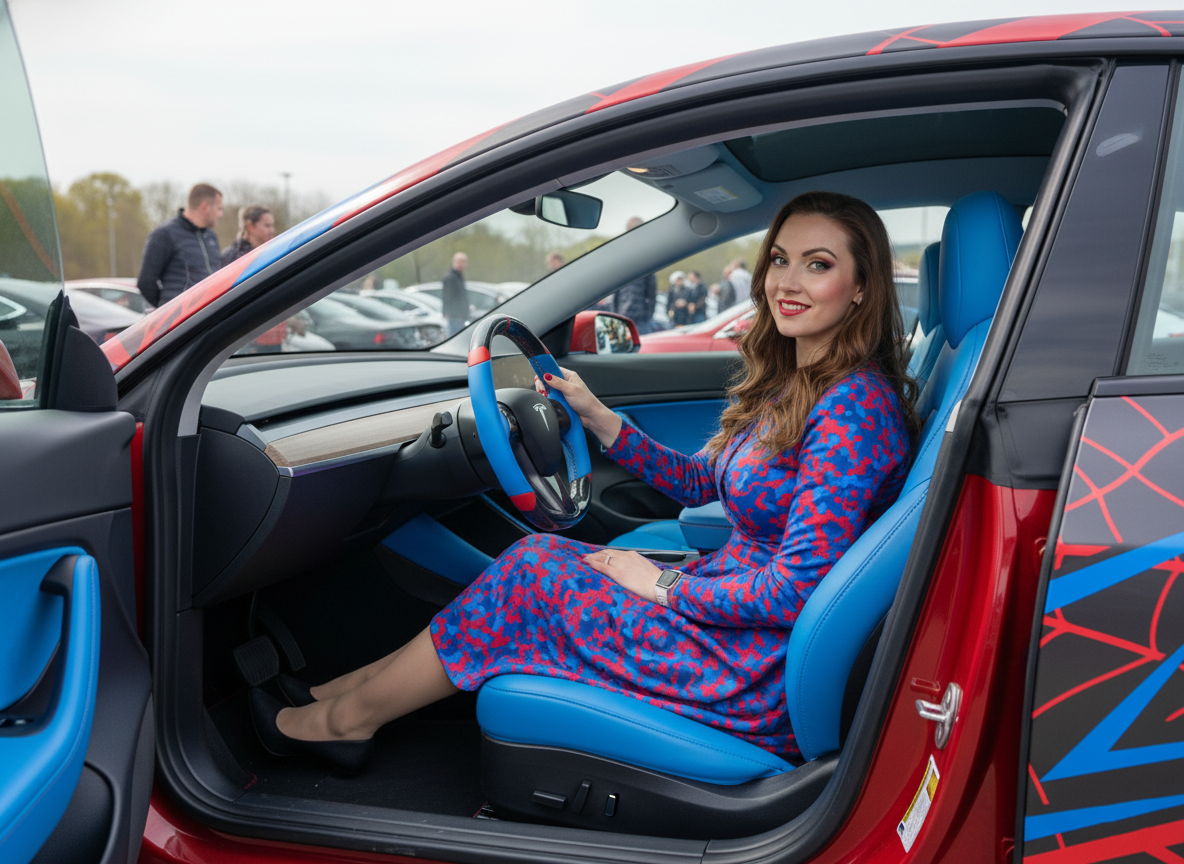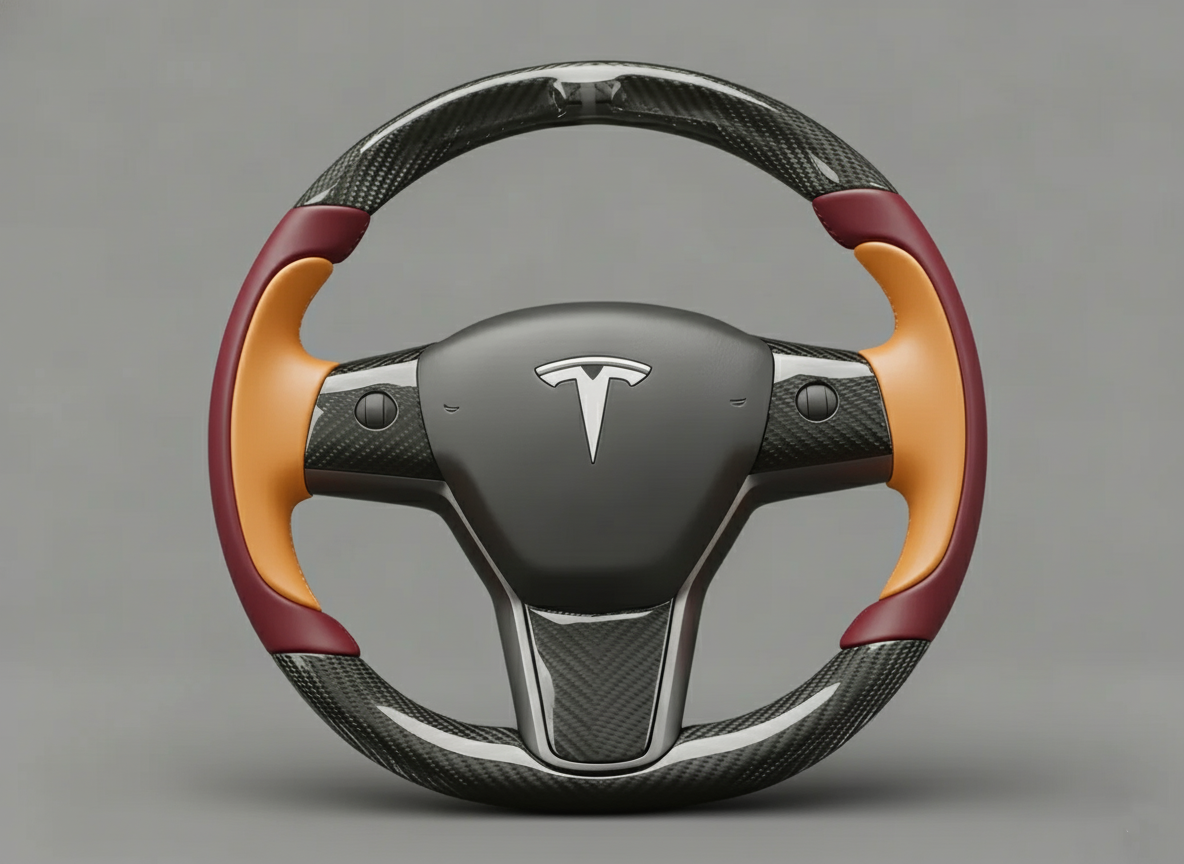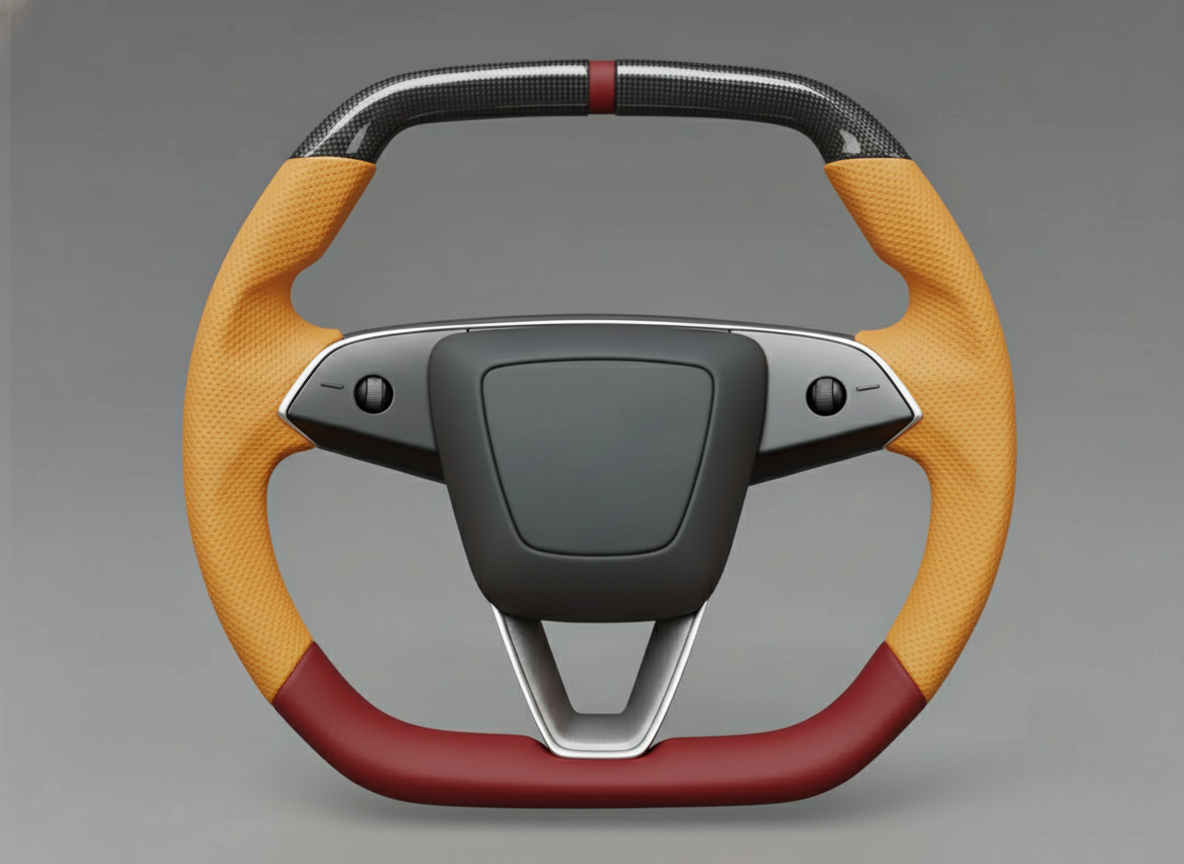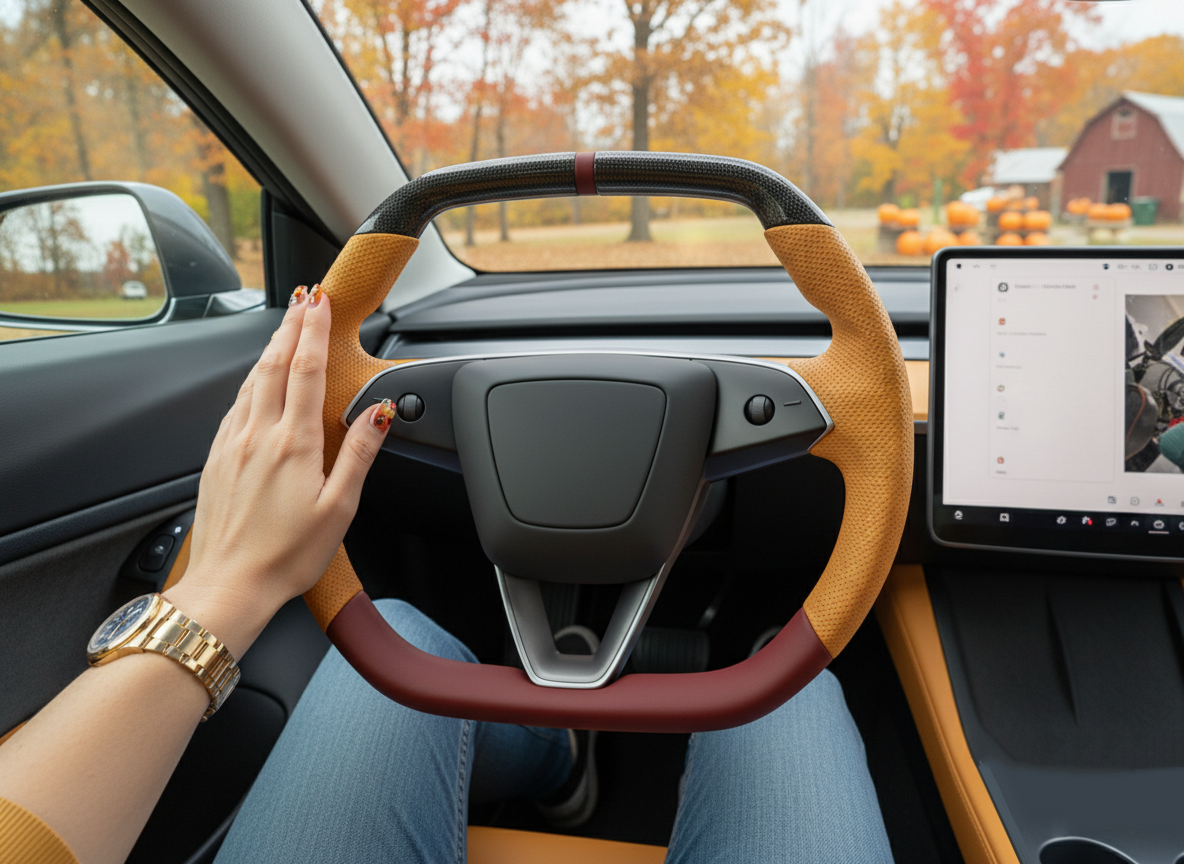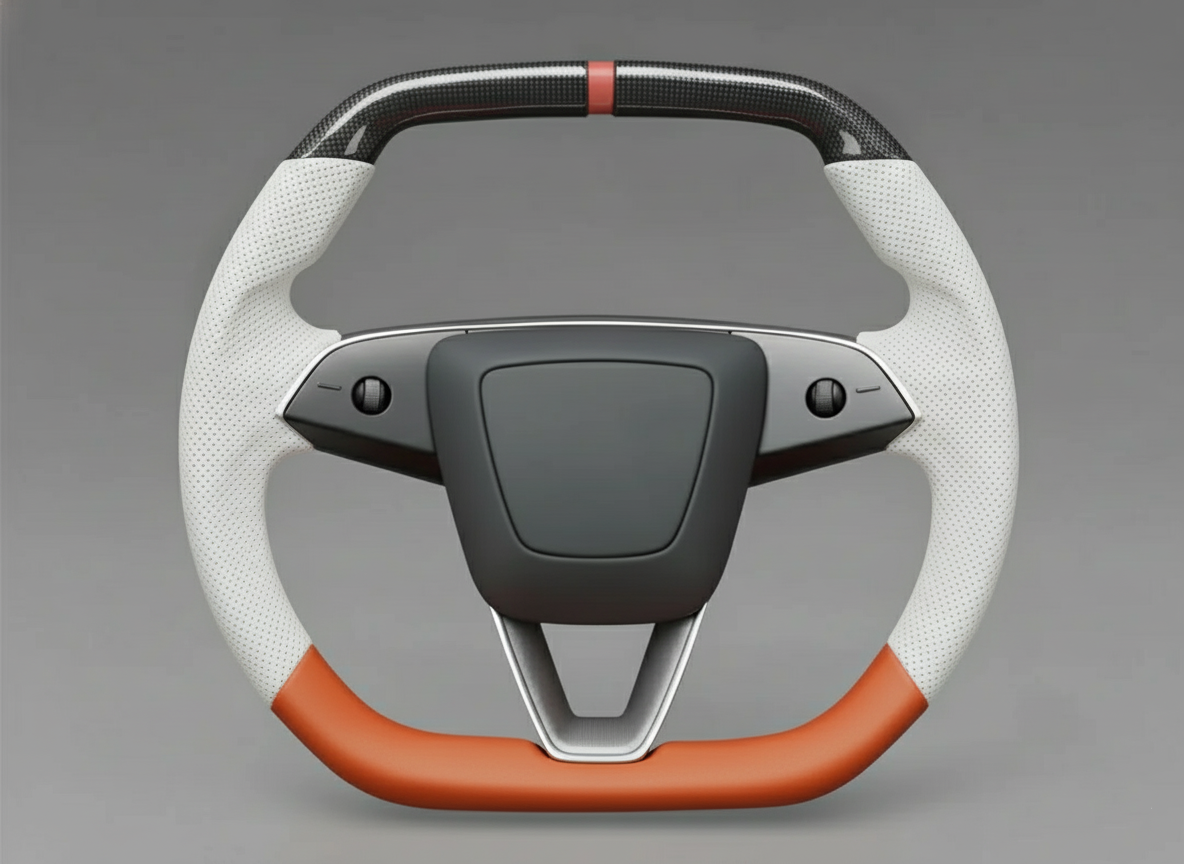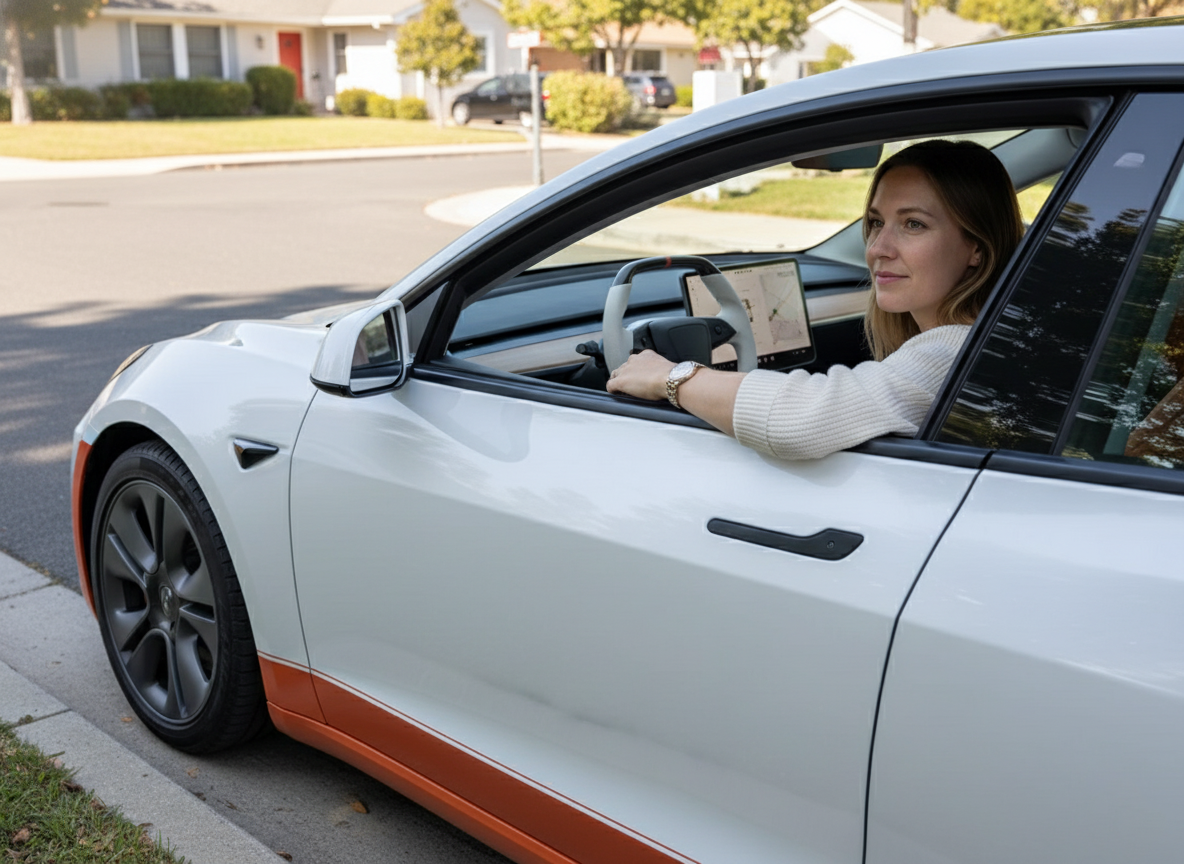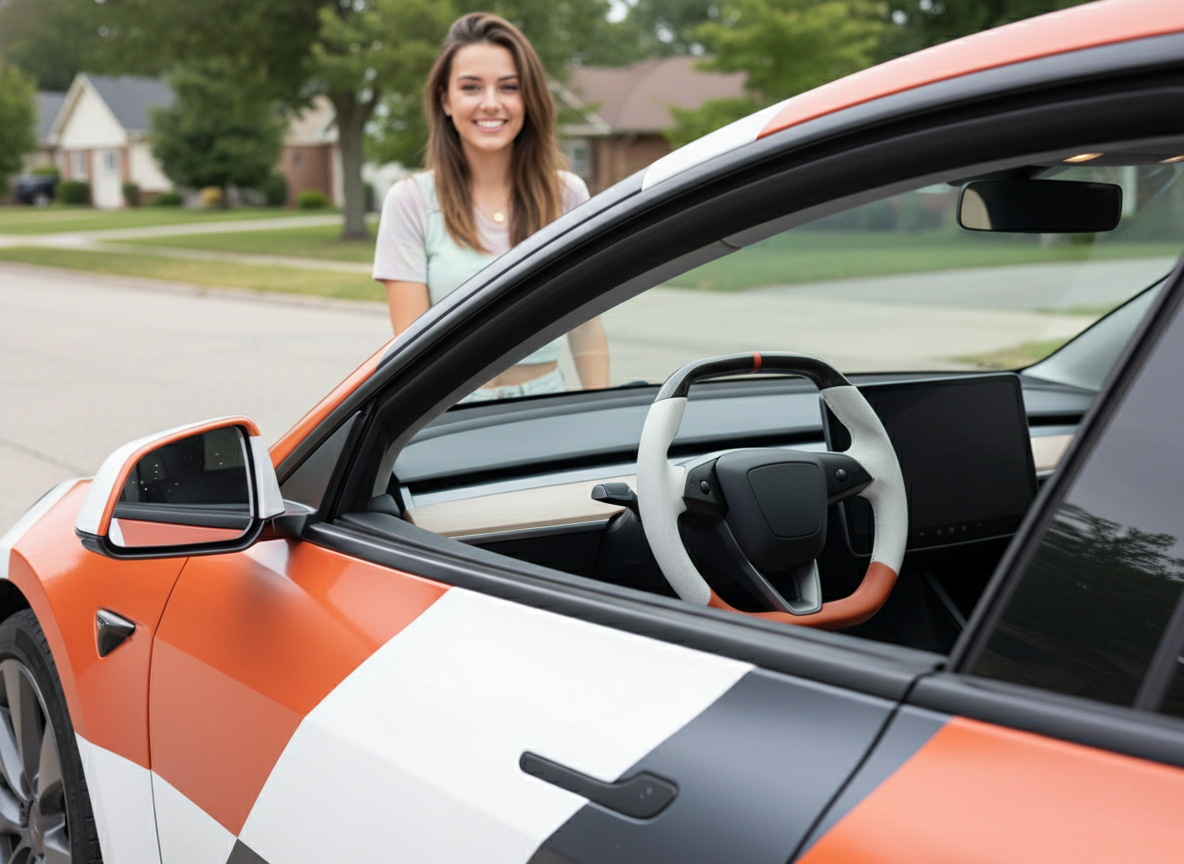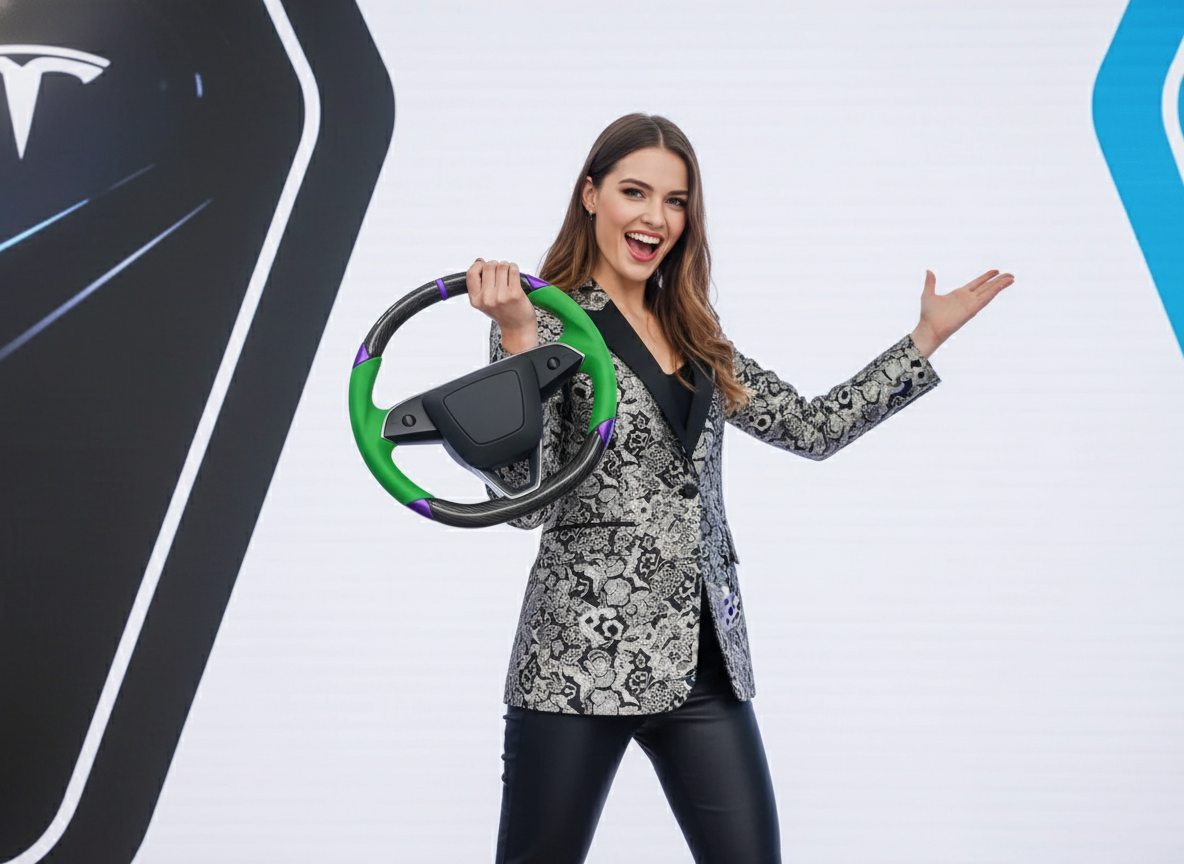
This carbon fiber steering wheel is specifically designed for the new Tesla Model 3 Highland. Utilizing a high-strength dry carbon process, it reduces weight by approximately 25% compared to the original factory component, significantly enhancing steering sensitivity.
Its ergonomic grips, paired with anti-slip Alcantara, not only dissipate heat quickly but also provide a highly sporty visual appeal.
During installation, the power must be disconnected first, and the original factory buttons are transferred using the airbag disassembly holes, achieving a non-destructive upgrade and personalized interior reshaping.
Benefits
Upgrading to a Tesla Model 3 Highland carbon fiber steering wheel can reduce the component weight by approximately 25%-35%, significantly decreasing the moment of inertia at the steering axis and improving transient steering response by more than 10%.
By employing 3K 2x2 twill carbon fiber and a UV anti-yellowing coating, its thermal conductivity is much lower than the original synthetic leather. In a 40°C sun-exposed environment, the surface temperature is 5-8°C lower than the original, ensuring grip stability and structural rigidity.
Performance & Steering
The original steering wheel assembly of the Tesla Model 3 Highland weighs approximately 1450 grams, featuring a magnesium alloy skeleton wrapped in polyurethane foam. After replacing it with Dry Carbon material, the total weight drops to around 980 grams. Removing 470 grams alters the mass distribution at the end of the steering column. The carbon fiber cloth uses a 3K 2x2 twill weaving process, cured in a high-temperature and high-pressure autoclave with the resin content strictly controlled below 30%.
The weight of the steering wheel's outer ring contributes most to the moment of inertia. Carbon fiber replaces the original outer ring's synthetic leather and foam layer, which is up to 8 mm thick. The lighter peripheral mass allows the steering wheel to respond to steering rack inputs within an extremely short time of 0.1 seconds.
The physical changes brought about by the material replacement are reflected in the following dimensions:
- Outer ring diameter reduced from the original 380 mm to 365 mm
- Ring cross-sectional area reduced by approximately 12%
- Torsional rigidity reaching 280 GPa
- Resonance frequency increased from 45Hz to 68Hz
The Model 3 Highland has a quick steering ratio of 10.3:1, making the front-end pointing extremely sensitive to changes in steering wheel angle. The reduced 365 mm diameter combined with a smaller moment of inertia amplifies the feedback from the front double-wishbone suspension. A driver navigating a curve with a 50-meter radius at 80 km/h can reduce steering correction magnitude by 2 to 3 degrees.
Original polyurethane materials absorb most of the high-frequency road vibrations transmitted by 235/45 R18 tires. The high-modulus characteristics of carbon fiber present a completely different acoustic and physical conduction path. Subtle vibrations in the 15-30Hz range from road joints, gravel, and markings can pass through the carbon fiber body to the palms without attenuation.
During slalom tests with 1.2G lateral acceleration, drivers typically apply up to 150 Newtons of grip and push-pull force to the steering wheel. Traditional metal skeletons with sponge structures produce a micro-deformation of 2-4 mm under stress. The one-piece molded carbon fiber outer ring compresses this deformation to within 0.5 mm.
The high-rigidity structure eliminates the time lag between driver input and mechanical execution:
- Torque feedback is delivered in milliseconds
- Road information filtering is reduced to below 5%
- Hands-on holding stability is increased
- Self-centering torque perception becomes more linear
The Highland version of Autopilot relies on a capacitive Hands-Off Detection (HOD) sensor inside the steering wheel, typically operating between 10Hz and 20Hz. The upgrade requires implanting a Flexible Printed Circuit (FPC) only 0.2 mm thick beneath the carbon fiber coating. The conductive silver paste wiring covers the common grip areas (2 to 4 o'clock and 8 to 10 o'clock) to ensure the system accurately identifies capacitance changes above 5 picofarads (pF).
The wave-shaped finger grooves on the back of the wheel body are processed by a 5-axis CNC milling machine, with a depth of 4 mm and a spacing of 18 mm, matching the curvature of human knuckles. During steering maneuvers, fingers can precisely lock into the grooves, preventing slippage during rapid counter-steering within 0.5 seconds.
The 9H hardness clear coat provides a mirror reflection effect and alters the static friction coefficient between the palm and the steering wheel. In an environment with 40% relative humidity, the friction coefficient of the carbon fiber surface is approximately 0.6, which can increase to 0.85 when used with racing gloves. The addition of perforated leather or Alcantara sections balances the slickness of carbon fiber in cold, dry environments.
The adjustment of contact surfaces reshapes the driver's upper limb triangular posture:
- Thickness at the thumb web area increased by 6 mm
- Flat-bottom clearance increased by 3 cm
- Thumb rest inclination set at 15 degrees
- Overall grip circumference increased to 115 mm
Due to the reduced mass, the resistance the Electronic Power Steering (EPS) motor must overcome during low-speed maneuvering is correspondingly reduced. In a reverse parking scenario at 5 km/h, the peak torque demand for turning the wheel in place drops from 3.8 Nm to 3.2 Nm. Drivers can complete complex parking maneuvers with less muscular effort in the arms.
The Highland version removes steering column stalks, integrating turn signals and wiper functions into touch buttons on the spokes. The carbon fiber steering wheel spoke panels are stamped from 1.5 mm thick dry carbon sheets, with 0.5 mm acoustic cotton attached to the back. This new structure changes the resonance cavity volume when buttons are pressed, causing the linear motor's haptic feedback to generate a short 120Hz vibration wave, making the button confirmation feel clearer than the original plastic panels.
The thermal conductivity of twill weave carbon fiber is approximately 5 W/m·K, much lower than the 150 W/m·K of a metal skeleton. It releases heat slowly after sun exposure and does not rapidly strip heat from hands in cold environments. The resin layer thickness is controlled at 1.2 mm with a refractive index of 1.55, presenting a 3D optical depth under interior cabin lighting.
Manufacturing a qualified component requires a 120-hour production cycle. Carbon fiber prepreg is stored in a cold warehouse at -18°C, cut and then layered 5 times in a mold. It is placed in an autoclave and baked at 130°C and 6 atmospheres for 4 hours to squeeze out excess air and resin between layers. The cured body undergoes 3 stages of manual wet sanding and 2 rounds of electrostatic spraying to ensure a pinhole-free surface with thickness tolerances controlled within 0.1 mm.
Reducing 470 grams of overhanging mass lowers the shear stress on the steering universal joint under long-term torque. In a 100,000 km cumulative driving test model, the lighter wheel reduces the wear rate of the needle bearings in the universal joint by approximately 8%, slowing the expansion of steering play.
Environmental Adaptability
The Tesla Model 3 Highland features a massive 2.11 square meter glass roof, which causes peak temperatures in the dashboard area to soar to 82°C within 60 minutes when the ambient air is 35°C. The original synthetic leather steering wheel has a higher heat capacity; the polyurethane layer absorbs infrared radiation with a thermal conductivity of approximately 0.25 W/m·K.
In contrast, the carbon fiber steering wheel made of 3K 2x2 twill prepreg contains 3% UV absorbers in its outer resin. This high-transparency varnish layer reflects about 40% of the near-infrared spectrum, resulting in measured surface temperatures 8°C to 12°C lower than the original leather under identical exposure conditions.
Physical parameter differences in environmental adaptability are shown in the table below:
| Metric | OEM Synthetic Leather | 3K Dry Carbon Fiber | Driving Impact |
|---|---|---|---|
| Thermal Conductivity (W/m·K) | 0.24 - 0.28 | 1.2 - 5.0 | 5x faster surface heat dissipation |
| Water Absorption (24h) | 0.8% - 1.5% | < 0.05% | Dimensional stability under humidity |
| Shore Hardness (Shore D) | 45D - 55D | 85D - 92D | Resists nail/key scratches |
| Operating Temp Range (°C) | -20 to 85 | -40 to 120 | No embrittlement or softening |
In tropical or coastal areas with relative humidity exceeding 85%, the microfiber base of the original synthetic leather absorbs moisture, leading to an expansion rate of 0.2%. Carbon fiber composites, using an epoxy resin matrix, have near-zero water absorption, with structural strength loss below 0.1% after 500 hours of salt spray testing.
With the removal of stalks, the capacitive buttons on the Highland steering wheel require high surface cleanliness. The microporous structure of original leather easily accumulates oils and salts from the body, causing friction coefficient fluctuations. The 9H ceramic coating on the carbon fiber surface is oleophobic and hydrophobic, with a water contact angle typically greater than 105 degrees, reducing sweat residue by 70% compared to leather.
For driving scenarios in cold regions, the carbon fiber steering wheel exhibits the following characteristics:
- At -15°C, the built-in 35W heating wire can raise the surface to 32°C within 45 seconds.
- The coefficient of thermal expansion for carbon fiber is only $1.0 \times 10^{-6}/K$, which is 1/20th that of aluminum alloy.
- Material modulus does not jump in low temperatures, avoiding "plastic squeaking" during cold starts.
- Selected Alcantara side grips have a low thermal conductivity of 0.45 W/m·K, ensuring they are not icy to the touch.
This material combination shows a color change Delta E of less than 2.0 after a 2000-hour xenon lamp aging test under 1000 W/m² simulated sunlight. Over the 8 to 10-year lifecycle of the vehicle, the steering wheel will not exhibit the fading, peeling, or surface stickiness common in original components.
The high-density 3K carbon fiber weave is approximately 0.25 mm thick. A structure with 3 layers can withstand a tensile strength of 2500 MPa. In dry desert environments where interior parts face day-night temperature swings of over 40°C, internal stress release in original plastic parts leads to uneven gaps, while carbon fiber geometric deformation is controlled within 0.05 mm.
Details on liquid residue and chemical corrosion protection:
- No loss in surface gloss after 100 wipes with isopropyl alcohol.
- Urea and lactic acid in sweat have 0 μm penetration into the epoxy layer.
- Side stitching uses fungus-treated Nylon 66 industrial thread with a breaking strength of 85 Newtons.
- The flat-bottom design increases knee space by 3 cm, improving airflow during ingress and egress.
Highland interiors use a large amount of fabric which easily absorbs odors; carbon fiber has a completely closed molecular structure and releases no Volatile Organic Compounds (VOCs). In a closed cabin at 65°C, formaldehyde release from carbon fiber components is typically below 0.01 mg/m³, far below industry limits.
The Young's modulus of this material is as high as 230 GPa. When encountering bumpy roads, the steering wheel's vibration amplitude is 15% lower than the original. This high rigidity ensures that the Highland's precise steering wheel buttons maintain their 0.2 mm clearance after 100,000 press cycles.
Ergonomics
The Tesla Model 3 Highland's original steering wheel uses a 380 mm standard circular design with a 32 mm diameter polyurethane ring. The upgraded version reduces the diameter to 365 mm and uses asymmetrical flat-cut technology at the top and bottom. The flat bottom increases the vertical gap between the wheel and the driver's thigh by 34 mm. For a 185 cm tall driver with the seat at its lowest setting, lateral leg room for pedal switching is expanded by 12%.
The grip areas at 10 and 2 o'clock are reshaped via CNC. The skeleton extends 8 mm outward in specific zones, forming a 6 mm deep fitting groove. The contact area for the palm's thumb web increases from 14 cm² to 22 cm². This expansion reduces the absolute grip force required for a 0.5G lateral lane change at 80 km/h by approximately 18 Newtons.
The 365 mm diameter combined with a 10.3:1 ratio reduces the cross-arm range for a full lock-to-lock turn by 15 degrees, decreasing shoulder reach in consecutive curves.
The spoke angle is set at 7.5 degrees concave, shortening the straight path for the thumb to move from the grip to the buttons. The overlap between the thumb's natural extension and the button panel edge reaches 95%, with lateral thumb movement shortened to 21 mm. At 120 km/h cruising speed, the time to trigger a turn signal via blind operation is shortened by an average of 0.2 seconds.
Side grips are covered in Italian Alcantara or Nappa perforated leather, with a 2.5 mm high-density EVA sponge layer underneath. In a 60% humidity cabin, the Alcantara surface provides a static friction coefficient of 0.75, much higher than the 0.45 of original polyurethane. This prevents slippage risks when palms sweat in temperatures exceeding 30°C.
Composite material distribution is calibrated based on hand pressure habits:
- Top carbon fiber area hardness of 85D, suitable for low-speed one-handed cruising.
- Side Alcantara deformation of 1.2 mm to absorb 20Hz road vibrations.
- Bottom flat-cut chamfer radius of 15 mm to reduce friction during reverse maneuvers.
- Back finger grooves spaced at 18 mm to accommodate a 45-degree knuckle bend.
The overall grip circumference at 3 and 9 o'clock increases to a 118 mm elliptical cross-section with a 1.25:1 major-to-minor axis ratio. This change extends the moment arm by 4 mm when torque is transmitted to the steering column. Even with electronic assist, the lateral torque on the wrist is reduced by 12% during stationary steering.
The finger grooves on the back vary in depth: 5 mm at the index finger, transitioning to 2 mm at the pinky, matching the natural inward curvature of the hand.
When using Autopilot on long hauls, hands often rest at the 5 and 7 o'clock positions. The carbon fiber wheel's bottom ends feature a 12-degree outward flare, keeping wrist deviation within 10 degrees. Static support force is evenly distributed across the palm base, with peak local pressure not exceeding 25 kPa after a 150 km drive.
The 12 O'Clock Ring at the top is 8 mm wide, embedded beneath the clear coat. In 500 Lux daylight, this high-contrast marker sits at a 15-degree angle to the driver's line of sight. During 1.0G+ slalom maneuvers, peripheral vision captures the centering mark in 0.15 seconds, reducing redundant hand-testing to confirm front wheel angles.
Original metal skeletons amplify and transmit 45Hz vibrations to the palm. High-modulus carbon fiber combined with a 2.5 mm EVA buffer attenuates these vibrations by 30%. Continuous high-frequency resonance from rough asphalt at 80 km/h drops in amplitude from 0.8 mm to 0.2 mm by the time it reaches the 3 o'clock position.
Compatibility data for different hand sizes shows the following physical indicators:
- 92% thumb web fit for drivers with 175 mm hand length.
- 25% improvement in reaction force distribution uniformity under 50N grip.
- 1.5N fingertip pressure maintained for turn signal trigger.
- Spoke thickness reduced by 3 mm, expanding index finger reach on the back by 15%.
Carbon fiber's thermal conductivity (5 W/m·K) and Alcantara's low conductivity create touch zones that isolate heat and cold. In a -10°C cabin, the surface temperature at the grips can reach 22°C after 30 seconds of holding. This rapid balance maintains fingertip sensitivity, improving accuracy when operating the screen or physical buttons.
Airbag module installation depth maintains a 0.1 mm tolerance with the original, and the polyurethane cover collapses normally under 300N of chest impact. In a 1200 Joule frontal impact, the multi-directional weave of the carbon fiber skeleton allows for directional fracturing. Within 0.05 seconds of impact, the outer ring can collapse 45 mm toward the dashboard, providing buffer space alongside seatbelt pretensioners.
Weight
The original steering wheel uses a cast aluminum skeleton and thick polyurethane, weighing approximately 1.2kg - 1.5kg.
In contrast, an aftermarket wheel using T300 grade or higher carbon fiber can achieve a weight reduction of 25% - 40% in the ring section.
This reduction directly lowers the moment of inertia by about 30%, making the Highland's steering more precise during high-speed lane changes and providing feedback that is closer to true road feel.
Enhancing Steering Sensitivity
The Tesla Model 3 Highland has a steering ratio of 10.3:1, requiring only 2.1 turns lock-to-lock. Under such tight parameters, the physical resistance of the steering system dictates the car's response rate.
The original wheel's 15mm polyurethane layer increases inertia. Replacing it with carbon fiber (density 1.6g/cm³ vs. aluminum's 2.7g/cm³) lightens the outer edge. The torque required to overcome static friction drops from approx. 0.8Nm to 0.55Nm.
- Shortened Input Delay: Sensors capture physical rotation approx. 15 ms earlier.
- Transient Response: Yaw rate builds faster during emergency obstacle avoidance at 80km/h.
- Linear Gain: As speed increases and assist decreases, the lightweight body better simulates mechanical rack resistance.
- Phase Lag Reduction: The physical gap between hand movement and vehicle pointing is compressed.
Carbon fiber rigidity (modulus 230GPa+) ensures every 0.1° of movement is transferred to the rack and pinion without loss. Unlike the flexible deformation of original leather, carbon fiber structures allow for almost zero displacement under stress, eliminating the "vagueness" in the initial steering phase. Micro-corrections on highways become a 1:1 synchronized experience.
- Vibration Filtering: Absorbs high-frequency noise above 2000Hz while retaining 50-200Hz road feedback.
- Torque Fluctuation: Drivers can feel grip changes at 0.8g lateral force through their palms.
- Reduced Deadzone: Lower weight reduces the compensation frequency of the steering motor, improving straight-line stability.
Structural Weight Comparison
| Metric | OEM Steering Wheel | 3K Carbon Fiber Wheel | Delta |
|---|---|---|---|
| Total Mass | 1.32 kg | 0.92 kg | -0.40 kg (30.3%) |
| Outer Ring Density | 1.15 g/cm³ (PU) | 1.62 g/cm³ (CF) | Volume reduction offsets density |
| Moment of Inertia | 0.015 kg·m² | 0.011 kg·m² | Reduced by 26.6% |
| Tensile Strength | 240 MPa (Alu) | 3500+ MPa (CF) | 14.5x Improvement |
Style
The Tesla Model 3 Highland interior is defined by its wraparound LED lighting. Replacing the steering wheel upgrades the 2.5mm leather to T700 grade carbon fiber with weave precision within 0.1mm, matching the Highland's 0.219Cd aerodynamics. Options range from 3K Twill to 600g/㎡ Forged Carbon.
Configuration Design
A Yoke configuration removes the upper ring, reducing vertical height to 235 mm and providing a 120-degree unobstructed field of view. The speed, gear, and Autopilot status in the top left of the 15.4-inch screen are fully exposed. D-Shape designs retain the closed loop but provide flat-bottom legroom with a chord length of 180-210 mm.
Texture & Gloss
3K twill features 3,000 filaments per tow, creating a 0.1 mm surface height difference that produces 45-degree deep shadows.
| Texture | 3K Twill | Forged Carbon | 12K Spread Tow |
|---|---|---|---|
| Reflectivity (Gloss) | 85% - 92% | Random Multi-point | 75% - 80% Specular |
| Modulus | 230 GPa | 190 GPa | 250 GPa |
Stitching & Assembly
Side grips use 0.8 mm Nappa leather or Alcantara with 0.05 mm edge tolerance. High-quality pieces use industrial polyurethane adhesives with 15 MPa shear strength to prevent leather shrinkage from exposing carbon edges. Euro Stitching or Baseball Stitching using German Serafil thread ensures durability against racing glove friction.
- Euro Stitch: 4.5 mm spacing, 40% stronger than single lines.
- Baseball Stitch: 6 mm V-shaped pattern for improved anti-slip feel.
- 12 O'Clock Ring: 5.0 mm wide, embedded within 0.05 mm flatness tolerance.