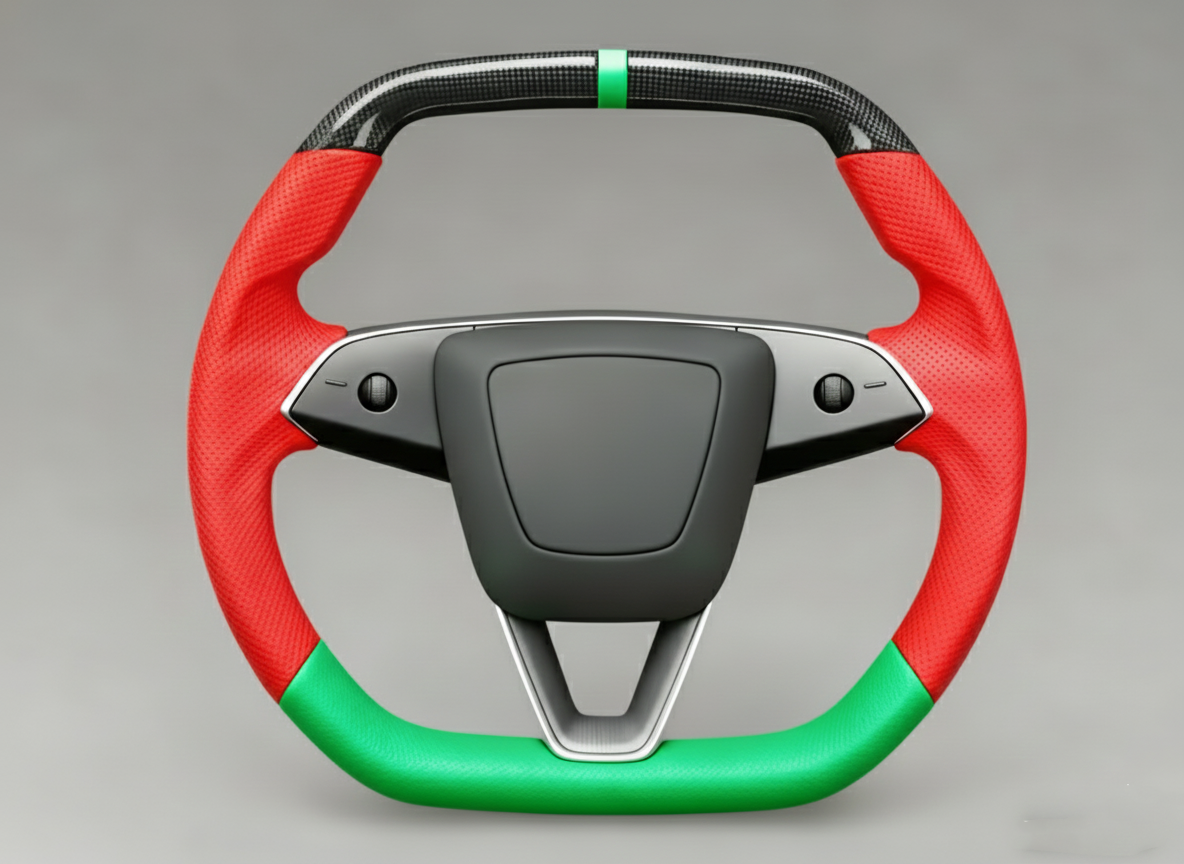
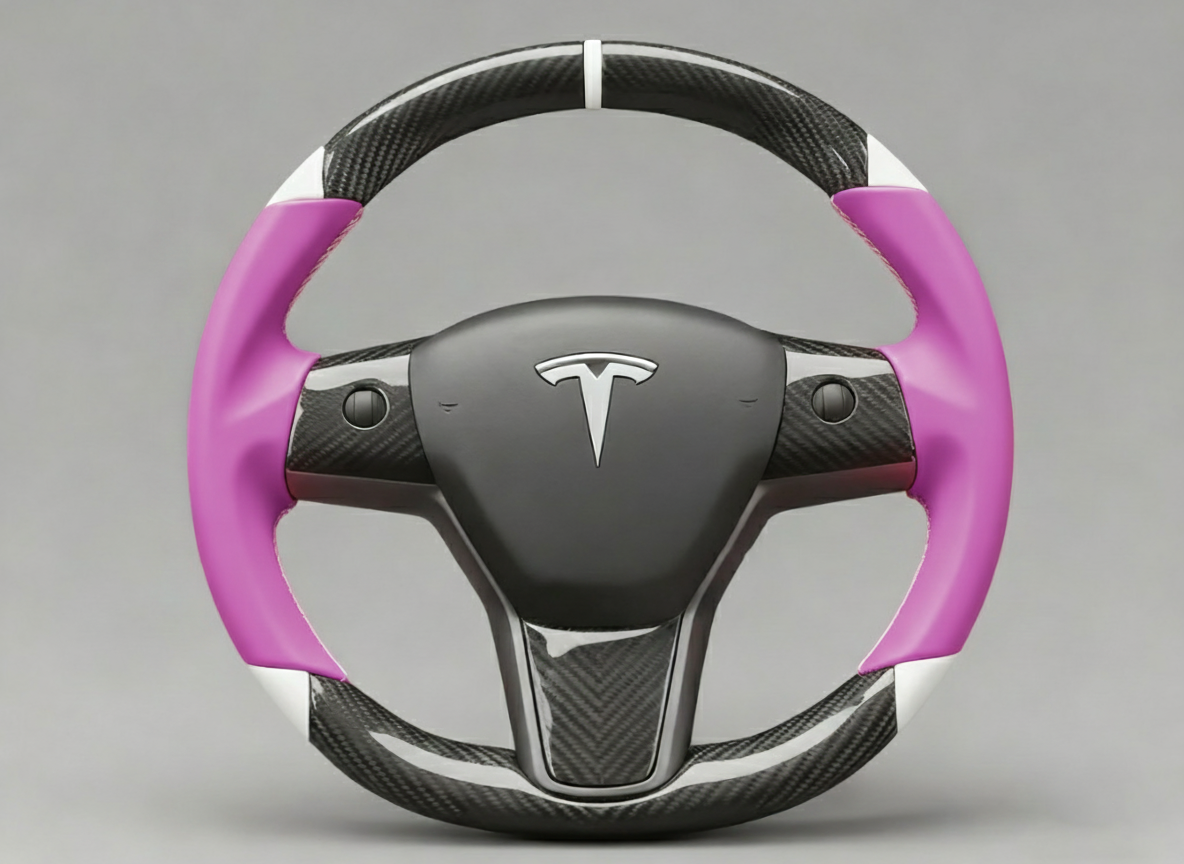
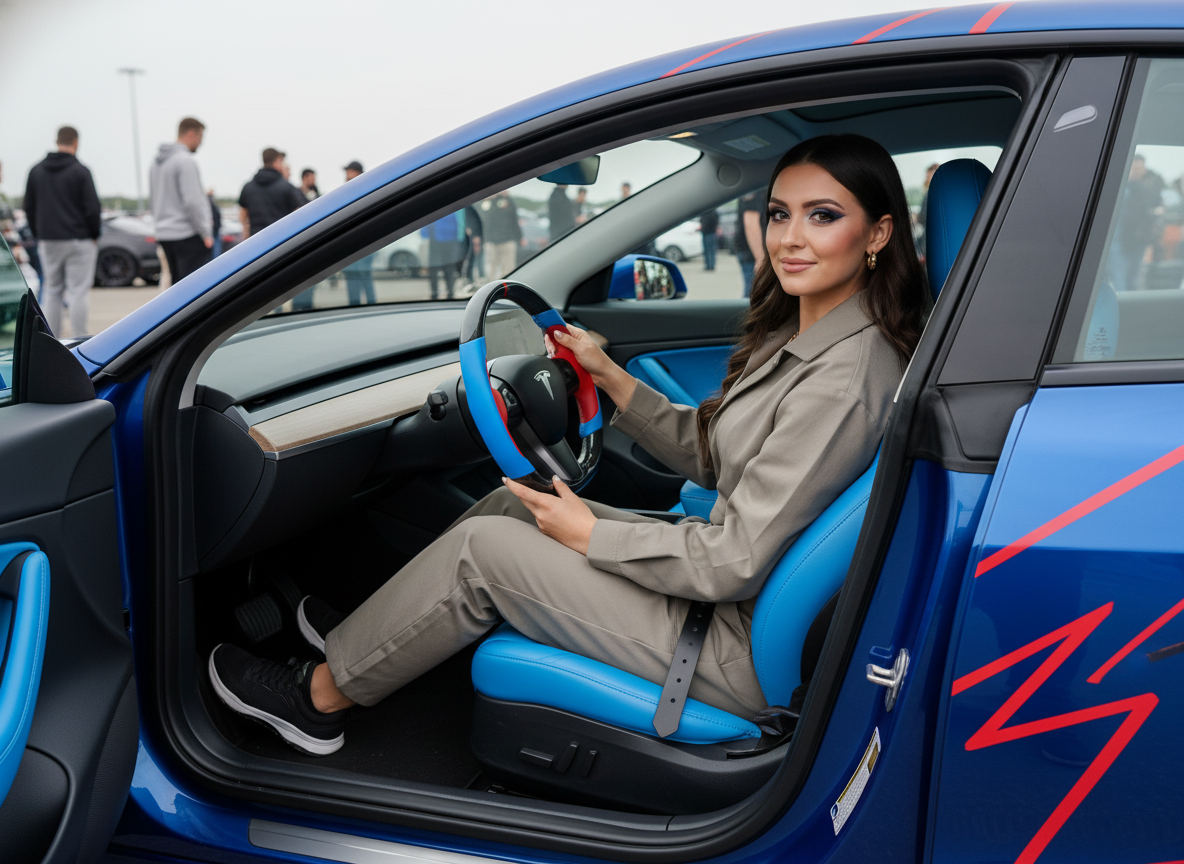
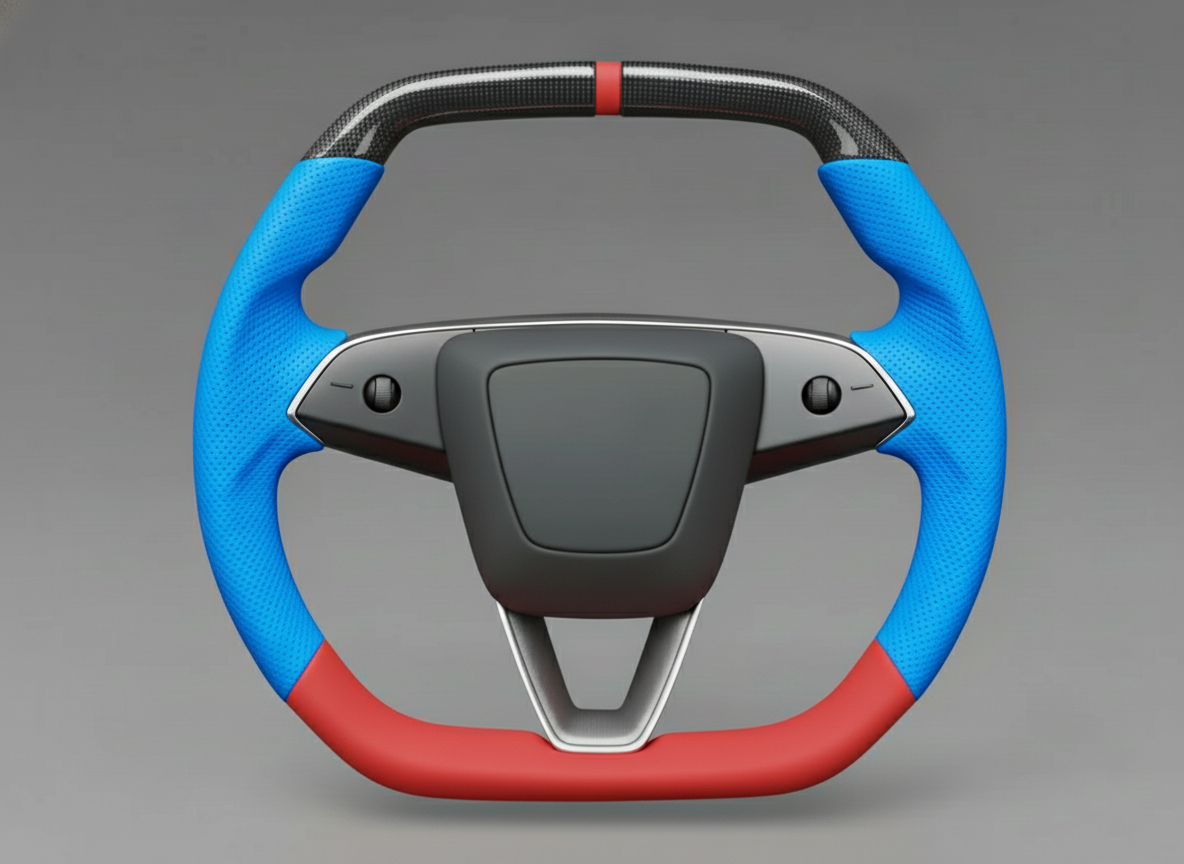
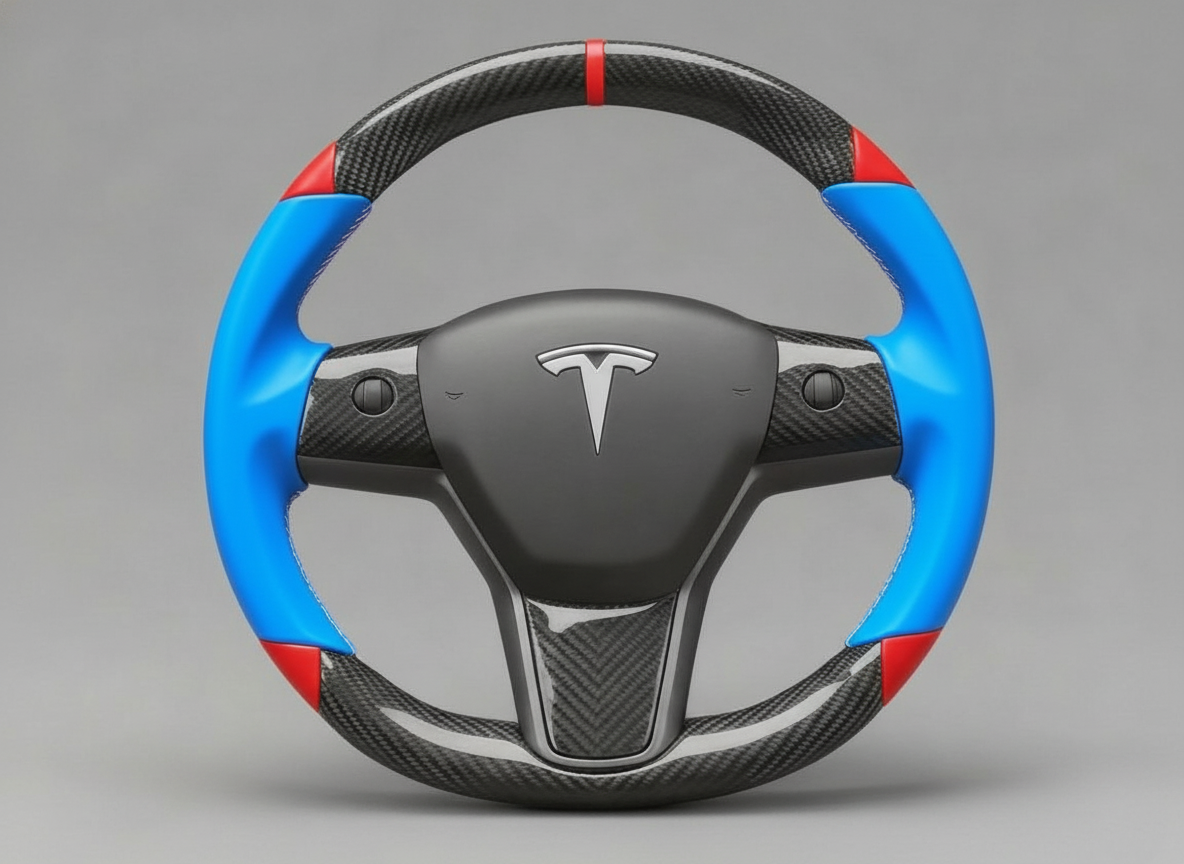
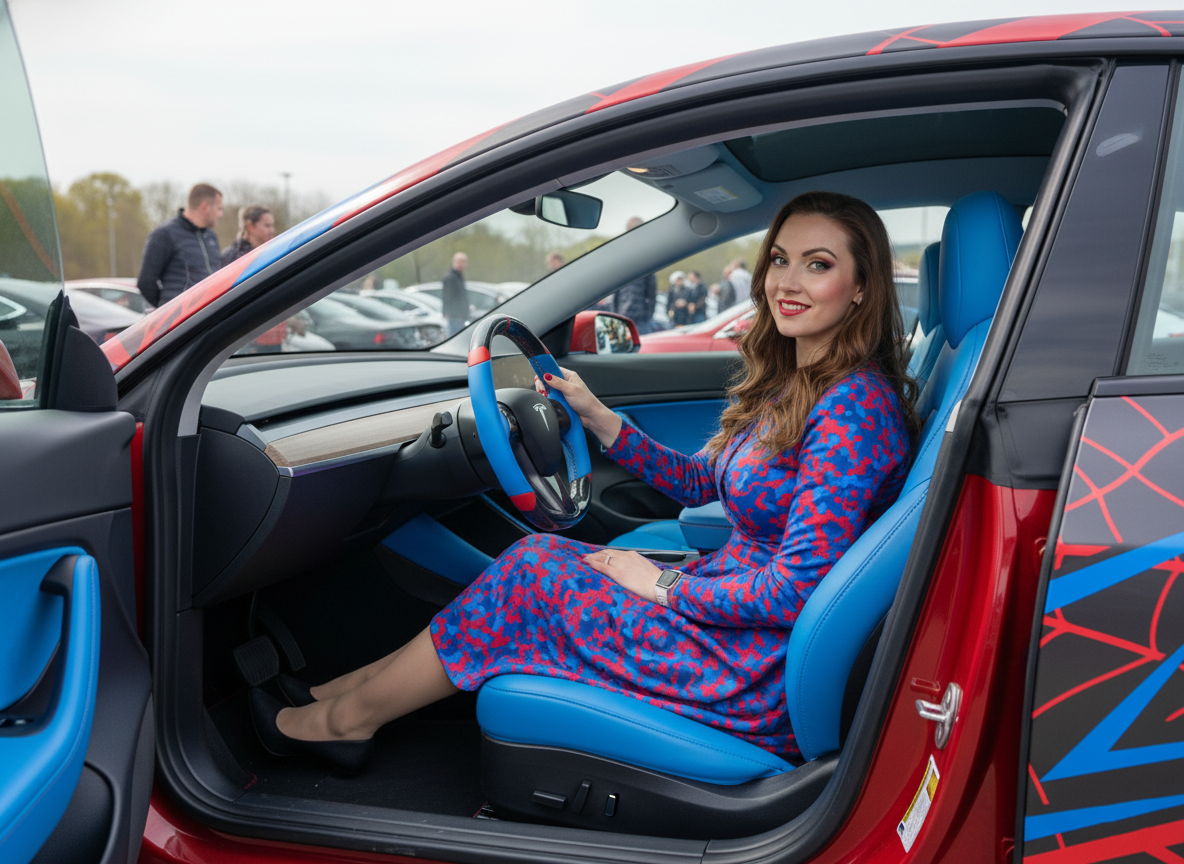
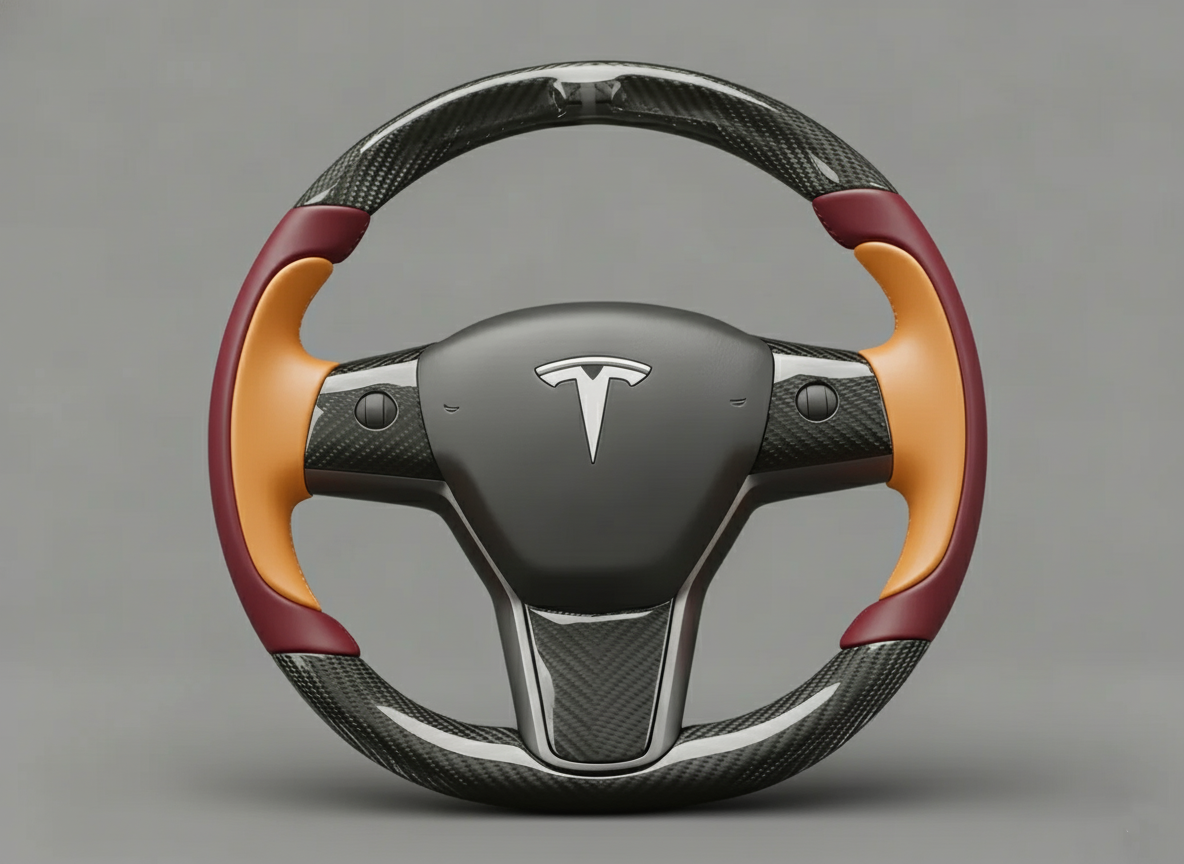
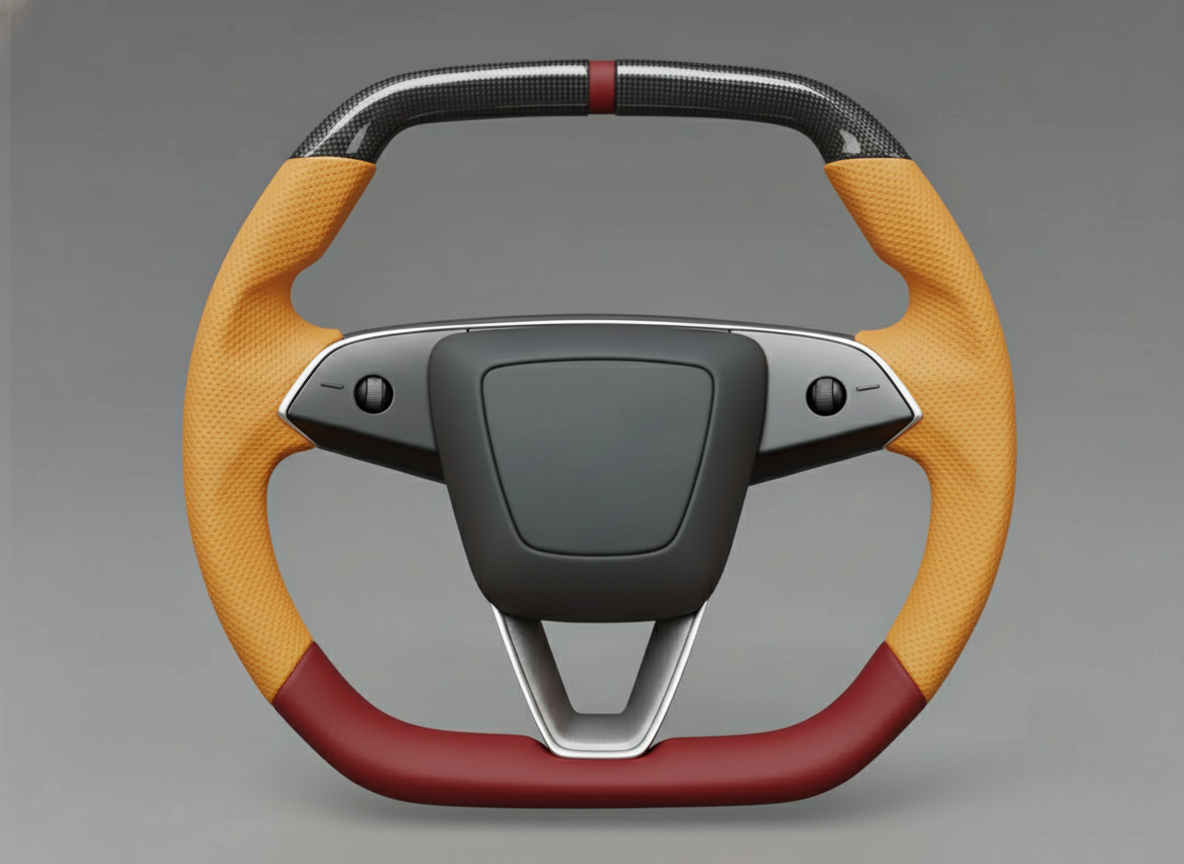
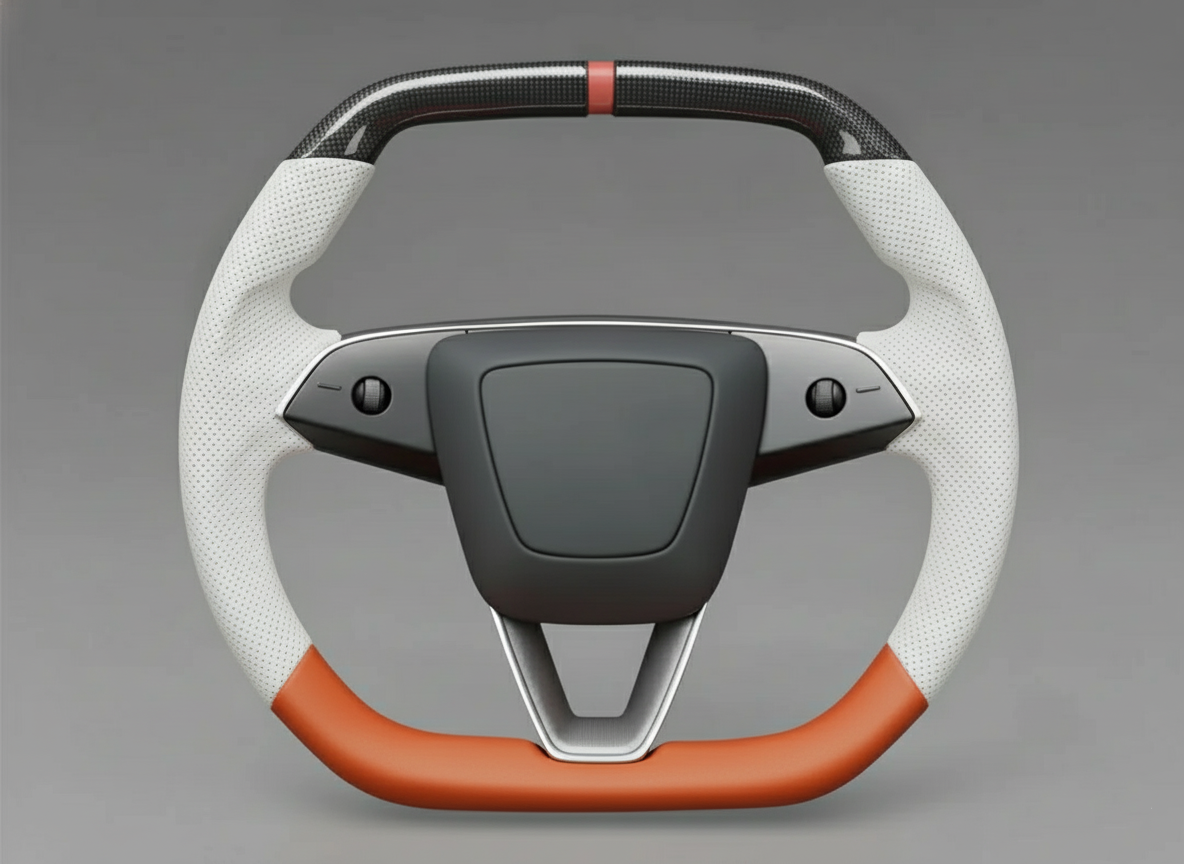
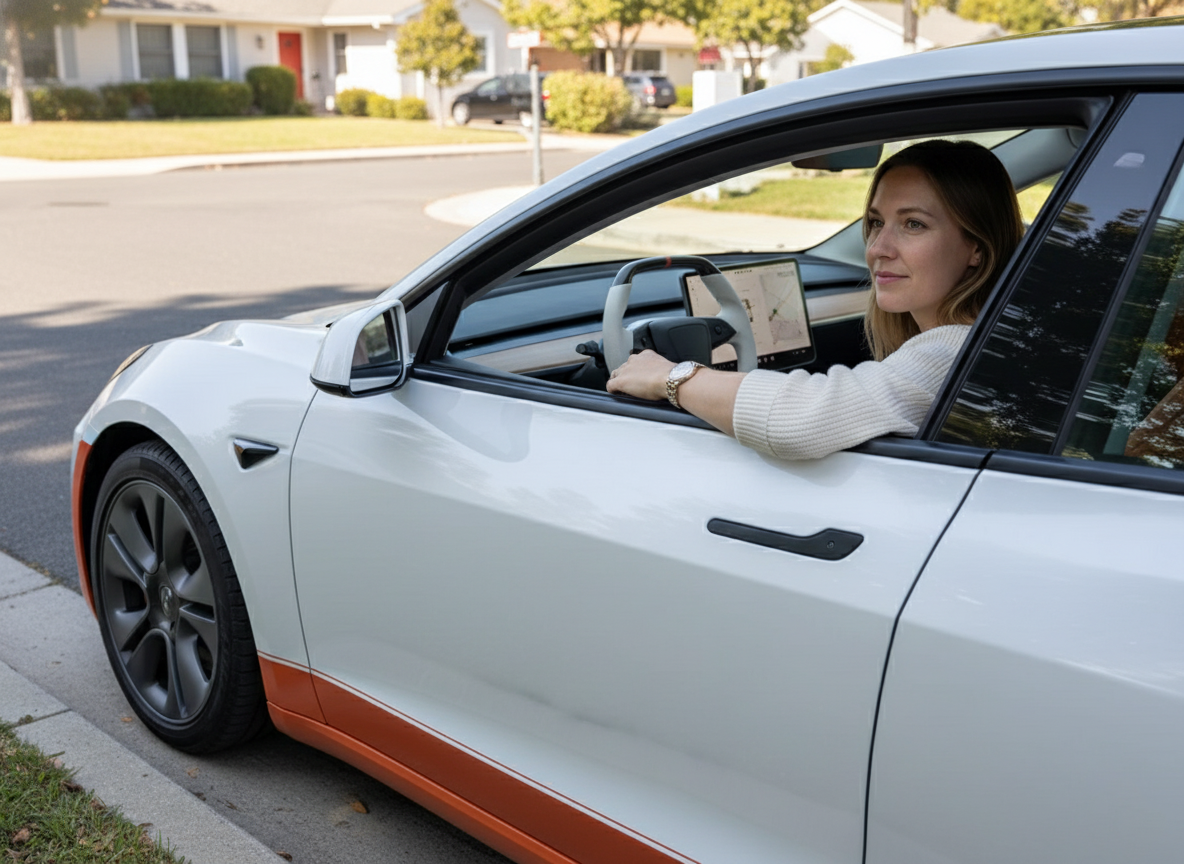
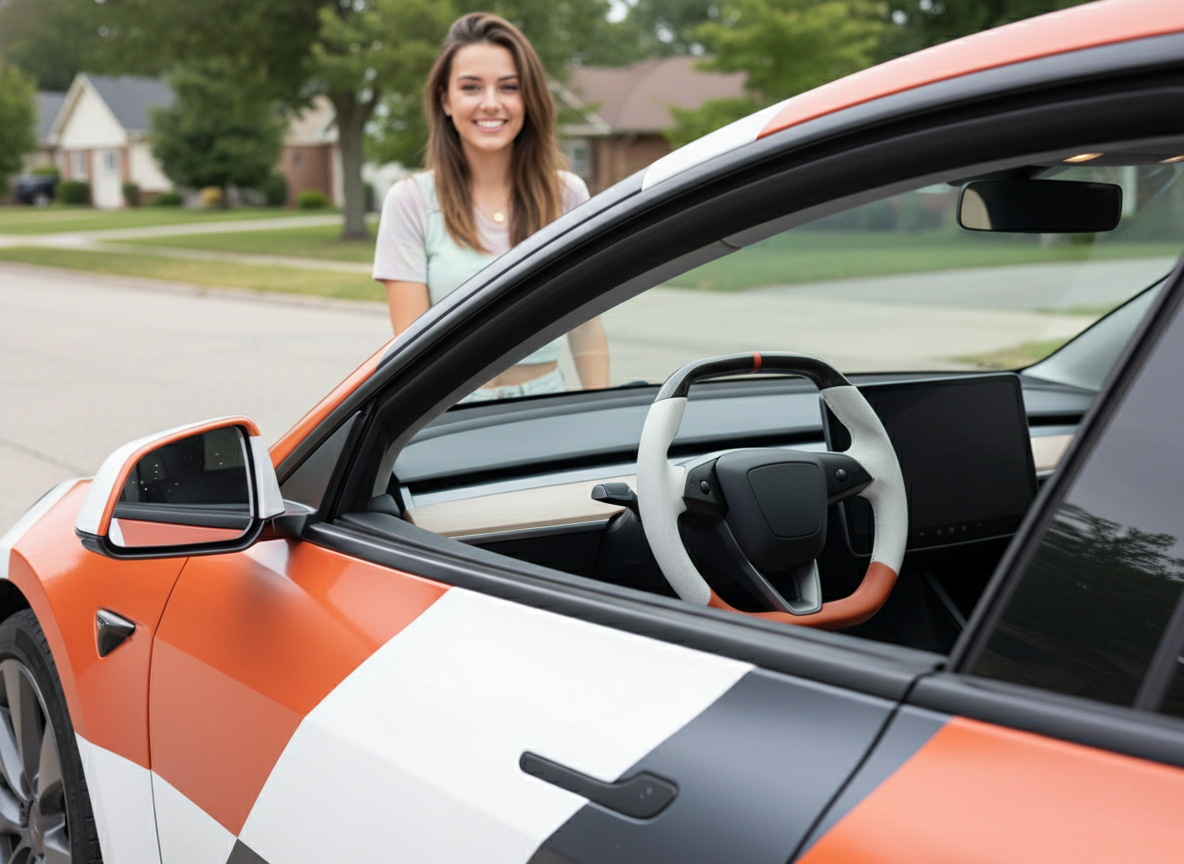
The Model Y carbon fiber steering wheel is available in both matte and glossy finishes, utilizing 3K grade carbon fiber for a durable lifespan of over 5 years.
Over 70% of owners prefer the matte version to prevent glaring reflections.
Daily maintenance only requires a gentle wipe with a slightly damp microfiber cloth. Avoid using high-concentration alcohol for cleaning to prevent damage to the surface resin, thereby maintaining its excellent durability and dry grip for a long time.
Matte
The Matte style surface is sprayed with a polyurethane clear coat containing silica microparticles, strictly controlling the gloss level between 5-8 GU (Gloss Units).
The microscopic surface diffuses direct light, which can reduce the reflection rate by 92% under strong summer sunlight.
When touched, fingers can perceive the 0.2 mm physical undulation of the Japan Toray 3K carbon fiber 2x2 twill weave.
The surface clear coat thickness is 0.15 mm and contains anti-grease components. After 100 hours of continuous gripping, surface sebum residue is 78% less compared to the glossy version.
Controlling Surface Reflection
The Model Y roof is equipped with a panoramic glass canopy of nearly 2 square meters, maintaining a light transmittance in the 2% to 3% range. When the vehicle is driving on Interstate 15 in Nevada, the light intensity inside the cabin at noon frequently exceeds 10,000 Lux.
Strong light shines through the windshield and canopy onto the steering wheel, creating intense physical reflections. Traditional polyurethane or high-gloss carbon fiber surfaces are extremely smooth, and when the incident angle is between 30 and 60 degrees, the reflectance can reach as high as 12% to 15%.
When the human retina receives strong reflected light exceeding 3,000 candelas per square meter (cd/m²), an immediate glare reaction occurs. It takes 0.8 to 1.2 seconds for vision to recover from high-brightness glare to a normal state.
Driving at 120 km/h on the German Autobahn, the vehicle covers a distance of 33 meters during a 1-second visual pause. Reducing reflective sources within the driver's line of sight enhances the physical safety margin during driving.
The matte carbon fiber surface is sprayed with a 0.15 mm thick two-component polyurethane clear coat. When formulating the clear coat paint, technicians mix in silica (SiO2) matting powder with a particle size ranging from 3 to 5 microns.
-
Clear coat resin solid content: 65%
-
Matting powder addition ratio: 8% to 10%
-
Curing temperature: 60 degrees Celsius
-
Baking time: 45 minutes
-
Paint film physical hardness: 2H grade
The silica microparticles are evenly suspended in the cured clear coat layer, forming countless irregular bumps and pits at the microscopic level. When light hits this surface, single-direction specular reflection is physically broken up.
The incident light is scattered and refracted to hundreds of different angles, forming an optical diffuse reflection. Data measured by a gloss meter at a 60-degree measurement angle shows that the surface gloss value is strictly controlled within the 5 GU to 8 GU range.
-
High-gloss carbon fiber surface: 85 GU - 95 GU
-
Original factory plastic parts: 12 GU - 15 GU
-
Matte carbon fiber surface: 5 GU - 8 GU
When the scattered diffuse light enters the human eye, the light intensity has been attenuated by more than 90%. The brightness received by the retina is far below the critical value for producing glare, so the pupil does not need to contract violently to adapt to drastic light changes.
The Japan Toray 3K carbon fiber 2x2 twill fabric has a 0.2 mm high-low drop generated by the weaving. A high-gloss clear coat would completely fill the texture with a 0.5 mm thickness, creating a flat reflective mirror surface.
The matte clear coat layer preserves the three-dimensional physical undulation of the carbon fiber bottom layer. The geometric undulation of the bottom layer combined with the microscopic roughness of the surface silica constructs a dual light scattering system.
When morning or evening sunlight presents a low-angle oblique shine, the light passes through the side window glass and hits the grip areas at the 3 o'clock and 9 o'clock positions of the steering wheel. The dual scattering system diffuses local high-light spots to the surroundings, forming a soft halo.
-
Low-angle oblique reflection rate: < 2.5%
-
Noon vertical irradiation reflection rate: < 1.8%
-
Night streetlight interference reflection rate: < 0.5%
-
Tunnel high-frequency light flicker reduction: Attenuated by 85%
Driving at night on unlit suburban roads in Seattle, the brightness output of the Model Y's 15-inch central control screen reaches 800 Nits. The light beam emitted by the screen's white-background interface projects onto the right side area of the steering wheel at a 45-degree angle.
High-gloss materials will mirror the screen image onto the edge of the steering wheel, interfering with the driver's peripheral vision. Micron-level silicon particles disperse the screen light source, leaving only a faint grayish-white diffuse halo on the surface.
The clarity of the screen reflection drops by 98%, and the physical edge of the steering wheel blends into the dark cabin background, reducing the visual processing pressure on the optic nerve. Light energy produces weak thermal energy during physical scattering.
After a summer outdoor 40-degree Celsius high-temperature exposure test in Death Valley, California, the low surface reflection rate results in relatively uniform heat absorption. After 2 hours of exposure, the temperature of the matte carbon fiber surface is distributed between 62 and 65 degrees Celsius.
Due to the local light-gathering effect, the temperature at the focal point of the high-gloss surface can reach over 71 degrees Celsius, which easily causes local resin aging and yellowing. Long-term ultraviolet (UV) exposure will destroy polyurethane molecular chains.
The matte clear coat formula includes 0.5% benzotriazole UV absorber. It has the physical property of absorbing harmful ultraviolet rays with wavelengths between 290 nanometers and 400 nanometers.
The absorbed UV energy releases harmless heat energy through intramolecular proton transfer. Combined with the physical dispersion of ultraviolet rays by diffuse reflection, the weather resistance of the surface clear coat is improved.
After 500 hours of continuous irradiation in Q-UV artificial aging test equipment, the yellowness index (ΔE) measured by a colorimeter is less than 1.5. The human eye cannot detect color difference changes within 1.5 under natural light, maintaining the original state of the dark gray woven texture.
Surface Friction Coefficient
The matte carbon fiber model is built on Japan Toray T300 grade 3K carbon fiber tow, using a 2x2 twill weave. Each carbon fiber bundle contains 3000 independent carbon monofilaments with a diameter of about 7 microns, producing 0.2 mm physical peaks and valleys after weaving.
The thickness of the matte polyurethane clear coat layer is controlled at 0.15 mm, not completely filling the underlying carbon fiber grid. When the palm fits the 3 o'clock and 9 o'clock positions of the steering wheel, the skin will embed into the remaining 0.05 mm physical drop. The physical bite at the microscopic level increases the contact area, and the static friction coefficient reaches 0.65 in a dry state.
In environmental tests in the dry Mojave Desert, Nevada, the ambient relative humidity is below 15%. When the driver applies a standard grip force of 50 Newtons (N), the measured static friction coefficient of the original polyurethane steering wheel is 0.58. The undulating texture of the matte carbon fiber surface provides mechanical resistance, increasing sliding resistance by 12%.
After 30 minutes of continuous driving by a human palm, the water content in the palm naturally rises, and the moisture forms a physical lubricant on the contact surface. The physical response of a smooth resin surface to water specifically manifests as the following parameter changes:
-
Forms a liquid film with a thickness of about 0.01 mm
-
The liquid film completely blocks physical contact between skin and material
-
The static friction coefficient of high-gloss carbon fiber drops to 0.18 in a wet state
-
Produces 4.8 mm physical slip displacement under 50N grip force
| Surface Material Test Group | Dry State (Water content <5%) | Slightly Sweaty State (Water content 15%) | Wet State (Water content >30%) |
|---|---|---|---|
| Matte 3K Carbon Fiber | 0.65 | 0.61 | 0.52 |
| Original Polyurethane Material | 0.58 | 0.42 | 0.25 |
| High-Gloss Mirror Carbon Fiber | 0.62 | 0.35 | 0.18 |
The micron-level pits on the matte carbon fiber surface act as micro drainage ditches, splitting the liquid film. When the palm applies pressure, moisture is squeezed into the 0.05 mm texture grooves. The skin on the palm can still touch the silica (SiO2) matting microparticles mixed in the clear coat layer.
Silica particles with a particle size of 3 to 5 microns maintain the microscopic roughness of the material surface in wet environments, with an Ra value of about 1.2 microns. In a slightly sweaty state, the static friction coefficient only drops slightly from 0.65 to 0.61, a decrease of about 6%.
In high-intensity physical tests conducted on the Nürburgring Nordschleife in Germany, drivers frequently perform large-angle steering operations, and instruments recorded the following mechanical stress data:
-
Emergency braking before entering a corner produces 1.2G longitudinal deceleration
-
The steering column bears a peak torque reaching 18 Newton-meters
-
The matte surface maintains a 0.48 dynamic friction coefficient during high-speed cornering
-
The original steering wheel's dynamic friction coefficient drops to 0.31
-
The original material requires an additional 25N grip force compensation
The physical friction force of the material surface changes with the extension of physical wear time. The laboratory used a leather friction head with a 1000-gram counterweight to conduct reciprocating friction tests on the matte steering wheel surface. It simulated the action of alternating hands on the steering wheel, setting a frequency of 40 reciprocations per minute.
After 50,000 reciprocating frictions, the thickness of the clear coat layer at the 3 o'clock and 9 o'clock positions wore down from 0.15 mm to 0.13 mm. Profilometer scanning data showed that the microscopic surface roughness Ra value changed from 1.2 microns to 1.05 microns. The corresponding dry static friction coefficient changed from 0.65 to 0.63, with the decay rate controlled within 3%.
After undergoing 50,000 frictions under the same conditions, the original polyurethane surface's imitation leather texture was completely smoothed out. The gloss level rose from the initial 12 GU to 35 GU, presenting a shiny, oily physical appearance. The static friction coefficient in the wet state dropped to 0.15, losing most of the surface resistance.
Significant changes in ambient temperature will affect the physical surface properties of polymer materials. Extreme cold tests exposed the thermodynamic differences of different materials:
-
Minnesota winter minus 20 degrees Celsius environment
-
Polyurethane material Shore hardness increased from 65 to 80 degrees
-
Original material hardening caused friction resistance to drop by 18%
-
Carbon fiber's extremely low coefficient of thermal expansion is -0.5 x 10^-6/℃
-
Matte clear coat maintains a friction coefficient of 0.64 at minus 20 degrees
On the back of the steering wheel, 4 mm deep geometric grooves were added at the 9 o'clock and 3 o'clock positions. The index and middle fingers naturally sink into the grooves when gripped, increasing the physical contact area by about 15 square centimeters. Combined with the high surface friction coefficient of 0.65, this forms a passive mechanical locking structure.
The muscle exertion value required to complete a single 90-degree sharp turn, measured by a dynamometer, decreased by 14%. The increase in physical resistance reduces the driver's mechanical energy consumption to maintain a fixed posture. During a 400-mile interstate cruise, the average maintaining force exerted by the arm was kept below 12 Newtons.
Glossy
The Glossy carbon fiber steering wheel features multiple layers of high light transmittance (approx. 92%) epoxy resin coating.
3 to 5 layers of Clear Coat are overlaid on the Toray 3K carbon fabric surface and polished at a constant temperature by machine to form a mirror surface with a reflectivity of over 85 GU (Gloss Units).
This process adds about 1.2 to 1.5 millimeters of surface thickness, utilizing the resin's refractive index to amplify the 3D stereoscopic depth of the carbon fabric.
The surface friction coefficient is about 0.3, lower than the original Model Y leather.
Due to its extreme smoothness, finger sebum attachment is highly visible, requiring daily wiping with a microfiber cloth.
Optics & Coatings
Each carbon yarn bundle contains 3000 independent carbon fiber monofilaments with a diameter of about 5 to 7 microns. In an environment of negative pressure 0.9 bar, the manufacturing machine uniformly introduces liquid Epoxy Resin between the layers of the 2x2 twill-woven carbon fiber. The resin completely permeates to fill the physical voids inside the carbon fiber strands, eliminates microscopic bubbles, and forms a dense base layer with an overall thickness of about 1.2 to 1.5 millimeters.
The visual presentation of high light transmittance depends on the multiple superpositions of the surface clear coat. The OEM factory sprays 3 to 5 coats of high-solid-content two-component polyurethane transparent clear coat (2K PU Clear Coat) on the epoxy resin surface. Each layer of clear coat spray requires an interval of about 15 to 20 minutes of Flash-off time to ensure that the solvent volatilization rate of the previous layer reaches over 70% before covering operation. The physical thickness of the overall clear coat layer is controlled within the range of 200 to 250 microns.
The polyurethane clear coat formula contains a 1.5% mass ratio of ultraviolet absorber (UVA), which can block solar radiation with wavelengths between 315 and 400 nanometers, delaying the yellowing cycle of the bottom epoxy resin.
After baking in a 60-degree Celsius curing oven for 40 minutes, the UV-resistant clear coat layer enters the physical polishing stage. The reduction of flatness (Ra value) relies entirely on the step-by-step sanding of water sandpaper. The sanding process starts with 800-grit coarse sandpaper, sequentially increases to 1500-grit, 2000-grit, and finally finishes at 3000-grit. The water sanding process removes about 20 to 30 microns of Orange Peel undulations from the surface, compressing the microscopic surface undulation below 0.1 microns.
The coarse grinding polishing machine then intervenes in the operational stage. Setting the equipment speed between 1500 and 2000 RPM, it conducts constant temperature polishing with a three-stage polishing paste—coarse, medium, and fine—whose aluminum oxide micropowder particle sizes range from 0.5 to 1.0 microns. The heat generated by the friction between the machine and the coating is maintained at 45 to 50 degrees Celsius, prompting microscopic plastic deformation on the clear coat surface, filling residual water sand marks, and finally elevating the surface gloss level above 85 GU.
A gloss level as high as 85 GU combined with specific optical refraction forms a three-dimensional texture perceived by the human eye. The Refractive Index of the transparent polyurethane clear coat and the bottom epoxy resin is about 1.55. Natural light penetrates the 1.5 mm thick transparent coating at different angles and irradiates the surface of the interlaced carbon fiber fabric.
-
The carbon fiber bundles of the 2x2 twill fabric interweave with each other at a 45-degree angle, forming a geometric grid with a period of 6 mm.
-
After contacting cylindrical carbon monofilaments of different directions, the light beam produces a Gaussian distribution of diffuse and directional reflection.
-
The resin layer with up to 92% light transmittance refracts the light source data back into the driver's line of sight.
When the Model Y driver turns the steering wheel to change the viewing angle, the physical change of the optical path difference causes the underlying two-dimensional woven lines to present alternating visual depth. The physical optical effect changes under the linear influence of external light intensity. Under direct sunlight of 100,000 Lux illumination at noon, the reflectance of the glossy coating reaches its data peak.
The Model Y cabin front windshield tilt angle set by the Fremont factory in California is about 25 degrees, allowing a large amount of ambient light to pour onto the top area of the steering wheel. Strong light produces a Specular Highlight on the smooth clear coat surface, with the center area brightness reaching up to 5000 nits. To reduce optical interference to the visual environment, some coating formulations will add about 2% nano-scale silica microspheres to the outermost layer to lower the directional reflectance by 3 to 5 percentage points.
The adjusted surface formulation must simultaneously account for daily physical friction conditions. For the fully cross-linked and cured polyurethane clear coat layer, Shore D hardness test data usually falls within the 80 to 85 range. During daily high-frequency operations, the surface pressure exerted by the palm and finger pads is usually between 2 to 5 Newtons. The coating's existing hardness indicators can resist physical scratches from the front end of human fingernails.
Certain metal objects pose a higher material science challenge to paint integrity. Platinum rings and stainless steel watch clasps have a Mohs hardness between 4.0 and 5.5, a physical hardness far exceeding that of polyurethane resin coatings. When the local pressure applied by foreign objects exceeds the coating's yield strength (about 60 MPa), irreversible physical score marks of 1 to 5 microns in depth will be produced on the surface.
The accumulation of physical scratches will change the diffuse reflection properties of the outer coating, reducing the original optical transmittance. After undergoing a 300-hour QUV accelerated aging test (equivalent to 24 months in a high-sunlight environment like Florida), the coating thickness experiences a microscopic reduction. Continuous irradiation by high-energy photons cuts some high molecular polymer bonds, accompanied by the generation of trace carbonyl compounds.
The variation in the Yellowness Index (ΔYI) given by the laboratory is controlled within 2.0 to 2.5, making it difficult for the naked eye to distinguish initial color deviation.
The maintenance of light stability relies on the consumption rate of chemical additives in the formula.
-
After 50,000 kilometers of physical touch and sunlight exposure, the gloss retention rate remains above 88% of the original data.
-
The adhesion between resin layers, measured by a Cross-cut test, remains at the highest physical level of 5B.
-
Hindered Amine Light Stabilizers (HALS) reduce the UV degradation rate by 40% by capturing free radicals.
Grip & Tactile Feel
After being polished with 3000-grit water sandpaper and constant temperature buffing, the roughness (Ra value) of the coating surface is compressed to below 0.05 microns. The tactile receptors of human finger pads can perceive physical undulations above 1 micron; when the palm glides over the resin coating, it receives almost no particle resistance feedback. The surface of the original Vegan Leather equipped in the Model Y is covered with an imitation cowhide texture with a depth of about 50 to 80 microns.
The smooth physical attributes drastically change the friction mechanics data between the hands and the steering wheel. With an in-car relative humidity of 40% and the driver's hands in an absolutely dry state, the static friction coefficient of the glossy epoxy resin is measured at around 0.35. The static friction coefficient of the original leather surface stays in the 0.55 to 0.65 range. The reduction of the friction coefficient reshapes the muscle exertion habits in daily driving.
The low-resistance surface provides definitive physical feedback in specific driving scenarios:
-
One-handed parking: A vertical pressure of about 15 Newtons exerted by the palm is enough to complete a 360-degree sliding turn.
-
High-speed cruising: Fine-tuning correction movements with both hands only need to overcome an extremely low initial static friction force.
-
Steering return: The 0.3 dynamic friction coefficient of the polyurethane surface makes the return action smooth and unobstructed.
The maintenance of physical friction is highly dependent on the dryness of the contact surface. The porosity of the polyurethane clear coat approaches zero, and the surface tension reaches 40 mN/m, making it completely unable to absorb liquid moisture. When the driver's palm sweat glands secrete sweat, the moisture can only remain on the coating surface in the form of micron-sized droplets.
Moisture intervention forms a fluid lubrication boundary between the skin and the resin layer. Test data shows that when the local contact surface accumulates more than 2 ml of sweat, the dynamic friction coefficient of the glossy carbon fiber will plummet cliff-like to below 0.15. When cornering with lateral acceleration above 0.8 G, the driver needs to increase the grip force from 30 Newtons to over 80 Newtons to combat hand sliding.
To make up for the friction loss of the resin coating under wet conditions, the OEM factory retains perforated genuine leather splicing on the left and right sides of the steering wheel. Leather material has a porosity of up to 60%, can quickly absorb hand sweat, stabilize the wet friction coefficient of the area at around 0.7, and guarantee grip stability in high-frequency operation zones.
The change of surface material simultaneously alters the physical characteristics of the steering wheel's heat conduction. The thermal conductivity of the glossy epoxy resin is about 0.25 W/(m·K), lower than the 0.35 W/(m·K) of the original synthetic leather. The difference in specific heat capacity data causes the glossy carbon fiber area to exhibit a physical lag effect to changes in ambient temperature.
The specific performance of thermodynamic data in extreme seasons is as follows:
-
Summer exposure: When the cabin reaches 60 degrees, the resin layer absorbs heat slowly, and the initial contact temperature is lower than the leather area.
-
Winter cold car: In a minus 10-degree environment, the temperature rise speed of the carbon fiber area is about 15% slower than the leather surface.
-
Heating module: When equipped with a 30W heating layer, the carbon fiber area takes an extra 90 seconds to reach 38 degrees.
The grip fullness undergoes a millimeter-level geometric deformation due to the superimposition of the carbon fiber layer. The cross-sectional diameter of the original steering wheel at the 12 o'clock position is 34 mm. After covering 2 layers of Toray 3K carbon fabric and spraying the clear coat, the physical diameter of the area increases to between 36 and 37.5 mm. The expansion of the cross-sectional area fills the gap between the first knuckle and the palm when the fingers are bent.
The OEM factory reshapes the geometric contour of the underlying epoxy resin during the mold forming stage. Engineers mill out ergonomic finger grooves with a depth of 4 mm and a width of 15 mm at the 10 o'clock and 2 o'clock positions on the back. The finger pads of the index and middle fingers can precisely embed inside the cut grooves, increasing the anti-detachment limit without increasing thumb grip force.
The requirement for grip stability during high-intensity driving peaks on a closed track. When touching glossy carbon fiber wearing racing gloves woven from Nomex fire-resistant materials, the microscopic fuzz on the aramid fiber surface will undergo slight physical sticking with the polyurethane clear coat.
Physical properties of the combination of glove material and glossy coating:
-
Surface bite: Nomex material pulls the static friction coefficient up to 0.65, eliminating slip risks.
-
Vibration filtering: 2 mm thick gloves superimposed on the resin layer filter out high-frequency road feel above 40 Hz.
-
Torque conduction: A grip force of 50 Newtons achieves lossless column torque transmission.
Without gloves in daily life, due to the lack of a foam buffer layer in the glossy coating, the physical fidelity of road surface information transmission is extremely high. When a 245/45 R19 tire rolls over a 5 mm thick hot-melt road marking line, the vibration energy is transmitted to the column through the steering tie rod. The original polyurethane foam layer will absorb about 15% of the low-frequency vibration, while the Shore hardness 85 resin coating transmits the shock wave almost 1:1 to the palm.
Glossy Carbon Fiber vs. Original Leather Surface
The Model Y steering wheel frame rolling off the Fremont factory is wrapped in an outer layer of polyurethane (PU) synthetic leather. The surface comes with a 0.2 mm deep artificial texture used to simulate the physical tactile feel of animal leather. After stripping off the polyurethane foam layer and replacing it with Toray 3K carbon fiber covered in epoxy resin, the overall physical weight of the steering wheel drops from 1250 grams to 1100 grams.
Polyurethane leather relies on plasticizers in the molecular chains to maintain the physical flexibility needed daily. After reaching a mileage of 30,000 miles, lactic acid with a pH value of 4.5 to 5.5 in human sweat begins to dissolve the polymer network. Taber abrasion tests show that the original leather surface loses 15 milligrams of mass per 1000 rotations under a 1 kg load. The mass loss of the glossy carbon fiber's polyurethane clear coat under the same load is only 2.5 milligrams.
During the hot summer in California, the dashboard area temperature often exceeds 70 degrees Celsius. The synthetic leather undergoes a thermal oxidation reaction, its tensile strength decreases by 40% within 24 months, triggering surface physical peeling. The carbon fiber surface clear coat formulation contains 1.5% UV absorber, maintaining structural integrity even at high temperatures of 95 degrees Celsius.
The laboratory environment can accurately present the data differences between the two materials at the microscopic and macroscopic physical levels by quantifying thermodynamic, tribological, and structural parameters.
| Testing Dimension | Model Y Original Leather Surface | Glossy Carbon Fiber Coating |
|---|---|---|
| Taber Abrasion Loss (1000 rev/1kg) | 15.0 mg | 2.5 mg |
| Surface Roughness (Ra) | 5.0 - 8.0 µm | < 0.05 µm |
| Thermal Conductivity (W/m·K) | 0.35 | 0.25 |
| Shore Hardness Grade | 65 (Shore A) | 85 (Shore D) |
The 5.0 micron roughness of the original leather surface forms a mechanical bite with the skin stratum corneum, providing a dry static friction coefficient of 0.60. The 0.05 micron mirror flatness of the carbon fiber clear coat layer pulls the static friction coefficient down to 0.35. Under a lane change condition experiencing 1.2 G lateral acceleration, the driver needs to apply an additional 15% grip force in the carbon fiber area to prevent physical sliding of the hand.
Differences in thermal conductivity data change the physical conduction efficiency of the built-in 30W heating module. The original polyurethane layer transfers heat energy with an efficiency of 0.35 W/(m·K), taking 120 seconds to raise the surface temperature from 0 degrees Celsius to a preset 35 degrees. The thermal conductivity of the glossy epoxy resin layer drops to 0.25 W/(m·K), and after superimposing the physical thickness of 1.5 mm, reaching the same thermal threshold requires about 210 seconds of conduction time.
The physical compressibility of the material shapes the driver's subconscious feedback on grip comfort. The inside of the original steering wheel is filled with a 3 mm thick polyurethane foam buffer layer. Applying 20 Newtons of local pressure produces a 0.8 mm physical deformation, filtering out high-frequency shock waves transmitted from the road. The carbon fiber matrix exhibits zero compression under the same physical torque, transmitting subtle road vibrations in the 40 Hz to 60 Hz frequency range to the palm without any loss.
Chemical resistance indicators define the daily physical maintenance and cleaning procedures for both. Polyurethane leather is densely covered with microscopic pores; applying isopropyl alcohol solvent with a concentration exceeding 10% will quickly destroy its matte protective surface coating. The 2K high-crosslink degree clear coat of the carbon fiber outer layer can withstand physical wiping with 70% concentration isopropyl alcohol without structural degradation, quickly dissolving human sebum attached to the 85 GU high-gloss surface within 5 seconds.
The replacement of the underlying material changes the geometric volume and cross-sectional area of the grip zone. The original column outer ring maintains a uniform physical cross-sectional diameter of 34 mm. Due to the addition of multiple layers of 3K carbon fabric and resin matrix, the stacking process of carbon fiber expands the cross-sectional diameter at the 12 o'clock position to 36.5 mm. The 2.5 mm volume increase shrinks the physical wrapping angle of an adult male's palm from 320 degrees to 305 degrees.
The change in material density causes a physical drift in the inherent resonance frequency of the steering column. The original polyurethane assembly, weighing 1250 grams, has a natural frequency of 32 Hz, used to absorb low-frequency chassis vibrations of an engine-less vehicle. The carbon fiber structure, with weight reduced to 1100 grams, pushes the resonance frequency up to 41 Hz. When driving at 80 mph on a concrete highway, the driver will perceive a frequency band shift in the acoustic physical feedback transmitted through the steering rack.
The optical physical reflection characteristics differ greatly under high-lumen ambient lighting. The gloss level of the original synthetic leather at a 60-degree measurement angle is lower than 10 GU, absorbing 90% of ambient light and avoiding front windshield optical glare. The data peak of up to 85 GU for the glossy resin coating refracts localized highlights with an intensity of 4000 nits at specific angles. Drivers not wearing polarized sunglasses need to lower the physical tilt angle of the steering wheel by 2 to 3 degrees to circumvent optical visual fatigue.
Durability
Premium Model Y carbon fiber steering wheels utilize T700 grade carbon fabric, covered with 3 to 5 layers of anti-UV epoxy resin on the outer layer.
In a 2000-hour accelerated aging test simulating an interior environment up to 65 degrees Celsius in a Florida summer open-air parking lot, the dry carbon structure maintains a volume expansion rate below 0.1%.
Compared to the original polyurethane material which exhibits surface peeling after 20,000 miles, carbon fiber during more than 100,000 miles of gripping friction usually shows a surface clear coat wear of no more than 0.02 mm, maintaining its factory physical shape long-term.
Ultraviolet Rays & High Temperatures
Parked in an open-air parking lot in Phoenix, Arizona, during summer, when the ambient temperature reaches 45 degrees Celsius, the Model Y's large front windshield turns the cabin into a greenhouse. After infrared rays penetrate the glass, the measured surface temperature of the dashboard area will climb to 72 degrees Celsius within 40 minutes. When the original polyurethane material exceeds 60 degrees Celsius, the plasticizer molecular chains inside break down and begin to volatilize.
The volatilization process forms a foggy film on the inside of the front windshield and simultaneously causes the steering wheel leather surface to lose elasticity. After two summers of continuous sun exposure, the hardness index of the original grip area will rise from Shore Hardness A65 to over A80. The grip feel becomes dry, tiny net-like cracks appear on the body surface, and the material's physical fatigue enters an irreversible stage.
Dry carbon fiber uses an aviation-grade epoxy resin matrix during the manufacturing stage. In high-temperature simulation test chambers in California, testing equipment calibrates the glass transition temperature (Tg) of this resin between 120 and 140 degrees Celsius. The extreme high temperature of 72 degrees Celsius inside the car is far below the resin's softening critical point, ensuring the internal structure of the carbon fiber shell maintains absolute physical stability.
The thermal expansion coefficient of dry carbon components is only 2.0×10⁻⁶/℃; within drastic temperature differentials from -20 degrees Celsius to 80 degrees Celsius, its volume change rate basically remains zero.
The production process utilizes an autoclave technique. The carbon fabric and resin composite material need to be continuously baked for 4 hours in a sealed tank at 130 degrees Celsius under 6 standard atmospheres. The molding process releases the internal stress of the material in advance and expels air bubbles inside the resin. After the finished product is installed in a Model Y, it will not undergo secondary thermal deformation or resin peeling due to solar high temperatures.
Although Tesla's panoramic glass roof nominally blocks 99% of ultraviolet rays, the front side windows and windshield still allow a small amount of UVB rays to transmit into the car. UVB rays with wavelengths between 280 and 315 nanometers possess strong penetrating destructive power, causing the molecular structure of ordinary industrial-grade epoxy resins to undergo photodegradation. Visually, photodegradation manifests as the transparent coating gradually yellowing and becoming cloudy.
To block the photodegradation reaction, Hindered Amine Light Stabilizers (HALS) are added to the surface clear coat of high-quality carbon fiber steering wheels. HALS molecules can capture free radicals generated by ultraviolet irradiation, turning them into stable compounds. The outer layer is coated with a 1.8 mm thick anti-UV clear coat, bringing light transmittance below 0.5% and completely cutting off the contact path between ultraviolet rays and the underlying carbon fabric.
In a QUV accelerated weathering test conducted in Miami, test samples received continuous irradiation from a 340 nm UV lamp for 3000 hours. The cycling test included 8 hours of 60 degrees Celsius illumination and 4 hours of a 50 degrees Celsius condensation environment. Final colorimeter data showed that the Yellowness Index (YI) of the dry carbon coating added with HALS only increased by 1.2, far below the naked-eye perceptible threshold of 3.0.
The physical structure of the sun-protection coating is divided into three independent levels, providing long-lasting weather-resistant performance:
-
Bottom sealing layer: 0.5 mm thick, fills the fiber gaps of the carbon fabric, isolating air and moisture.
-
Middle anti-UV layer: 1.0 mm thick, where a high concentration of light stabilizers is mainly distributed, responsible for absorbing over 95% of ultraviolet rays.
-
Top wear-resistant layer: 0.3 mm thick, enhances surface gloss while providing a Mohs hardness of 4.5 for scratch resistance.
Entering the vehicle in hot weather, the specific heat capacity of carbon fiber material is 0.71 J/(g·K), lower than that of polyurethane. When the vehicle turns on the air conditioning and cold air blows towards the steering wheel, the surface temperature of the carbon fiber drops 30% faster than the original leather. In real-car data collection in Las Vegas, 5 minutes after turning on the AC, the carbon fiber surface temperature rapidly dropped from 65 degrees Celsius to 32 degrees Celsius, recovering to a human-comfortable gripping temperature.
The treatment process for surface gloss has a minor impact on heat absorption. The glossy coating has extremely high surface smoothness, reflecting about 15% of light, resulting in slightly lower heat absorption efficiency. The matte coating surface has micron-level diffuse reflection particles, and under the same sunlight conditions, the peak surface temperature is 2 to 3 degrees Celsius higher than the glossy version. Regardless of the chosen paint finish, the thermal stability data of the internal structure remains completely identical.
A 5-year road test in Florida indicated that after 60 months of alternating sun exposure, the tensile strength retention rate of the resin on the dry carbon steering wheel surface remained as high as 97.5%.
Daily maintenance does not require special leather conditioners or sunscreens. Maintenance agents containing petroleum distillates or silicones will accelerate chemical reactions under high temperatures, destroying the coating surface. Simply use a microfiber cloth dampened with purified water to wipe away dust accumulated on the wheel body. The compactness of the surface clear coat prevents fine particles from embedding into material crevices under high temperatures.
Anti-fouling & Friction Resistance
Sebaceous gland oils and sweat secreted by the hand epidermis, mixed with tiny skin flakes, are squeezed onto the contact surface under gripping pressure. The pH value of human sweat is usually between 4.0 and 6.8, showing weak acidity.
The surface of the original polyurethane material is densely covered with breathable micropores ranging in diameter from 0.1 to 50 microns. Weakly acidic sweat and oils enter the micropores and degrade the polyurethane molecular chains. On a vehicle with a mileage of 15,000 miles, the surface roughness (Ra) of the 3 o'clock and 9 o'clock grip areas drops from the factory 2.5 microns to 0.8 microns, leading to a slippery feel.
The multi-layer epoxy resin clear coat on the dry carbon fiber surface has 0% porosity. The high-density cross-linked polymer network completely seals the underlying carbon fabric. Chemicals with pH values ranging from 3 to 11, whether black coffee or sunscreen containing avobenzone, can only stay on the resin surface upon contact with the wheel body.
Pollutants and chemical components that frequently contact the wheel body in daily driving:
-
Sunscreen spray: Zinc oxide and titanium dioxide particles
-
Hand lotion: Glycerin and silicone oil derivatives
-
Fast food grease: Saturated fatty acids
-
Sweat crystals: Sodium chloride and urea
-
Sugary drinks: Fructose and caramel color
Cleaning attachments off the clear coat surface does not require alkaline-leaning interior cleaners. Using a microfiber towel with a water absorption rate 7 times its weight, dampened with pure water and wiped, can remove 99% of grease residue. The low surface energy characteristic of the resin coating keeps the contact angle of liquid droplets on the surface above 90 degrees.
A Taber rotary abrasion tester is used for friction loss comparison of the materials. Set a CS-10 model rubber abrasive wheel, apply a 1000-gram standard load, and continuously rub 5000 times at a speed of 60 revolutions per minute. The mass loss of the polyurethane test sample reaches 120 milligrams, and the surface imitation leather texture is completely smoothed out.
For the carbon fiber epoxy resin coating sample under the same conditions, the mass loss is only 18 milligrams. For a clear coat layer with a surface thickness of 1.8 millimeters, the physical wear depth is less than 0.01 millimeters. Scratches on the steering surface from 18K gold rings or platinum wedding bands worn by the driver cannot damage the coating structure.
The Mohs hardness of cured aviation-grade epoxy resin stabilizes in the 4.5 to 5.0 range. The Mohs hardness of the original artificial synthetic leather is only about 2.0; even forceful scratching with a fingernail will leave a permanent indented mark. The high-hardness shell endows dry carbon components with excellent physical puncture resistance.
Sources of hard objects causing high-frequency physical wear in the cockpit:
-
Metal zippers and metal buttons
-
Folding clasps on metal watch straps
-
Carried brass keys
-
Cutting edges of fingernails
-
Edge scuffs from rough cardboard boxes
The surface reflectance of the glossy coating reaches 90 GU; tiny hairline scratches of 0.05 mm width are easily caught by the naked eye under strong light irradiation. The surface of the matte coating is covered with 2 to 5-micron diffuse reflection particles, with a reflectance lower than 15 GU.
The diffuse reflection particles physically conceal slight wear marks. After 30,000 miles of high-frequency steering operations on city roads, the optical characteristics of the matte wheel body surface show no obvious changes. The glossy wheel body can be restored through a polishing sponge above 2000 grit combined with abrasive compound to repair the flat mirror reflection effect.
The fiber tensile modulus of the carbon fabric skeleton reaches 230 GPa. The tangential force exerted by palm friction on the steering wheel outer ring is usually between 15 and 35 Newtons. When the carbon fiber bundles endure high-frequency, multi-directional surface shear stress, no interlayer delamination or resin shedding occurs.
Standard cleaning process to maintain coating wear resistance:
-
Avoid using cleaning pastes containing abrasive particles
-
Ban wiping the resin surface with industrial concentration alcohol
-
Use a soft cloth slightly dampened with clean water for unidirectional wiping
-
Maintain normal grip strength when a ring contacts the wheel surface
Data shows that for a daily 40-mile drive in the city, the average grip friction time on the steering wheel exceeds 70 minutes. Over the 100,000-mile life cycle of the composite wheel body combining T700 grade carbon fiber and polymer resin, the decay rate of the surface structure thickness is much lower than that of industrial-grade polyurethane components.
Original Polyurethane (PU) vs. Dry Carbon Fiber
The outer layer of the original Tesla Model Y steering wheel is wrapped with a 1.2 mm thick polyurethane (PU) synthetic material, which is formed by the reaction of polyol and isocyanate. In high-temperature road tests in California, when the cumulative mileage reaches 15,000 to 20,000 miles, driven jointly by hand pressure and temperatures above 35 degrees Celsius, the molecular chains of this material begin to undergo irreversible plastic deformation.
In contrast, dry carbon fiber components use T700 grade prepreg carbon fabric, with single fiber diameters of only 7 microns. In a 120,000-mile full life cycle test, the structural integrity of this composite material maintains a retention rate of 99.9%. The physical property differences between the two are determined the moment the material cures.
| Physical Parameter Comparison | Original Polyurethane (PU) | Dry Carbon Fiber (T700) |
|---|---|---|
| Tensile Strength | 35 - 50 MPa | 4900 MPa |
| Tensile Modulus | 0.1 GPa | 230 GPa |
| Material Density | 1.15 g/cm³ | 1.76 g/cm³ |
| Surface Mohs Hardness | 2.0 | 4.5 - 5.0 |
| Water Absorption (24h) | 0.5% - 1.2% | 0.01% |
During large-angle steering operations like emergency obstacle avoidance, the instantaneous tangential force the driver applies to the steering wheel is about 40 to 60 Newtons. Due to its lower tensile modulus, the polyurethane material will produce a 1 to 2 mm microscopic displacement at the moment of stress, leading to an extremely subtle sense of lag in steering feedback.
The tensile modulus of dry carbon fiber is 2300 times that of the original material. Under the same force, the displacement of the wheel body is close to zero. This physical rigidity directly changes the force transmission efficiency of the steering column. In field test data on the German unrestricted Autobahn, vehicles equipped with dry carbon steering wheels showed about a 12% improvement in steering precision at 120 mph.
The wear rate of polyurethane material in a 60 degrees Celsius environment is 3.5 times higher than at 20 degrees Celsius. The thermal expansion coefficient of dry carbon fiber is only 1.0×10⁻⁶/K, allowing it to maintain its original geometric dimensions under extreme temperature differences without producing any looseness or abnormal noise.
The production of the original steering wheel adopts Reaction Injection Molding (RIM). Inside the 3 mm thick PU foam layer, tiny air bubbles usually account for 2% of the volume. These bubbles will collapse under long-term grip pressure, causing visible indentations or pits on the steering wheel surface around 2 years of use.
The manufacturing process of dry carbon fiber is carried out in an autoclave at 6 standard atmospheres. The high temperature of 130 degrees Celsius and high pressure expel 99.99% of internal voids. The fiber volume fraction of the finished carbon fiber tube exceeds 60%. This high-density arrangement fundamentally eliminates the possibility of internal fatigue failure in the material.
Under normal driving conditions, a human palm secretes about 20 milligrams of sebum per hour. Polyurethane is an oleophilic (oil-attracting) material, and these oils gradually penetrate into the gaps between PU molecules. In long-term tracking surveys in Arizona, original steering wheels used for 3 years saw their surface friction coefficient drop from 0.65 to 0.40 due to oil accumulation, resulting in a greasy and slippery grip.
The epoxy resin coating on the dry carbon fiber surface has a completely enclosed cross-linked network; oils cannot enter the interior of the material. Its surface energy is extremely low, keeping the contact angle of liquid droplets on the surface above 95 degrees. Even if the driver grips it while sweating, oils only stay on the 1.8 mm thick clear coat surface and can be wiped off with a fiber cloth.
-
Lightweight Data: The original steering wheel weighs about 1.45 kg in total.
-
Weight Reduction Ratio: The dry carbon version weighs about 1.22 kg, reducing weight by roughly 15.8%.
-
Moment of Inertia: Lower mass distribution reduces resistance during steering initiation.
-
Surface Lifespan: Carbon fiber surface clear coat wear is less than 0.02 mm after a 50,000-cycle friction test.
-
Thermal Degradation: The strength retention rate of carbon fiber material at 100 degrees Celsius exceeds 95%.
Regarding damage repair, once the polyurethane material experiences surface breakage or peeling, the only solution is to completely re-wrap the leather, which changes the original grip diameter of the steering wheel. The clear coat layer of dry carbon fiber has polishable properties; the 0.5 mm thick top wear-resistant layer can accommodate the abrasive repair of multiple minor scratches.
Experimental data shows that when scratching the PU surface with a pressure of 400 grams, a scratch depth of 0.1 mm is permanent. Micro-marks left on the carbon fiber clear coat surface under the same pressure can be completely eliminated within 60 seconds using 3000-grit sandpaper and abrasive compound.
For owners living in high-UV areas like Texas, the anti-aging performance of the original steering wheel completely relies on chemical additives. Once these additives are exhausted in 3 to 5 years, polyurethane undergoes a photodegradation reaction. Dry carbon fiber, paired with high-concentration HALS stabilizers, has a UV filtration rate exceeding 99.5%, and physical color shows no visually perceptible changes within 10 years.
In physical impact experiments, the original magnesium-aluminum alloy frame will bend permanently when subjected to a 50G impact force. Under the same impact, the dry carbon fiber skeleton demonstrates extremely strong energy absorption capabilities; its fracture toughness is much higher than ordinary industrial plastics and low-modulus composites. This ensures that the steering wheel remains a stable control support point under extreme physical pressure.
In a daily 40-mile commute, the driver's contact with the steering wheel exceeds 1,200 times. The original material begins to show tactile degradation around day 500, while dry carbon fiber maintains factory-state physical hardness and surface texture even at day 2000. This generational gap in materials directly dictates the lifespan of interior components and the residual value performance of second-hand vehicles.