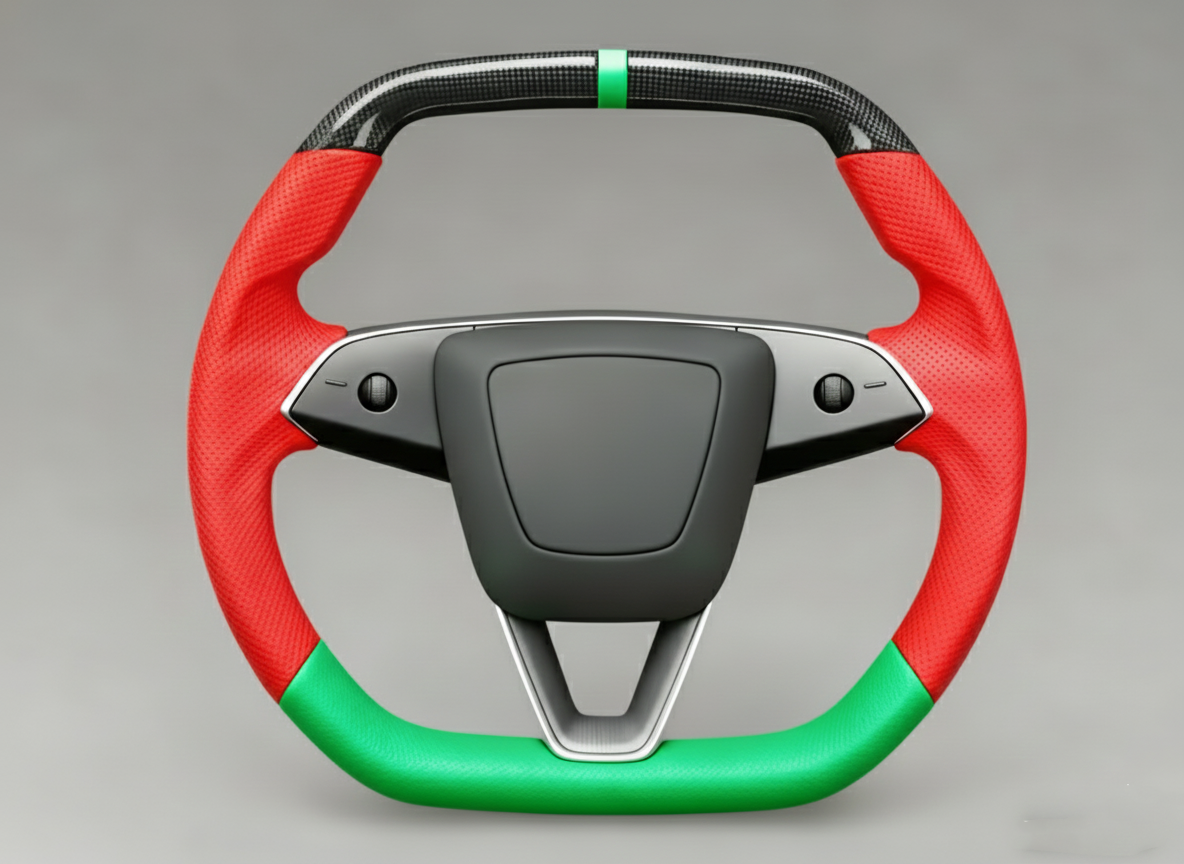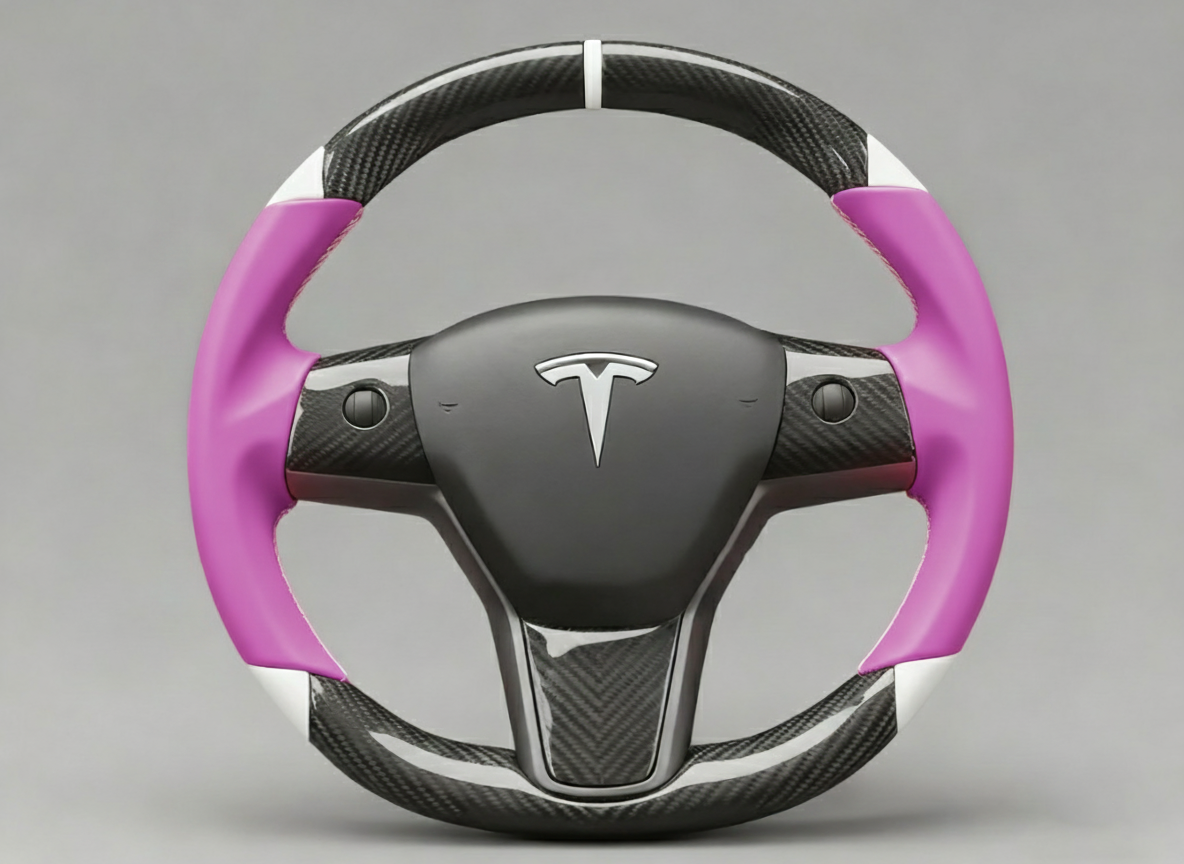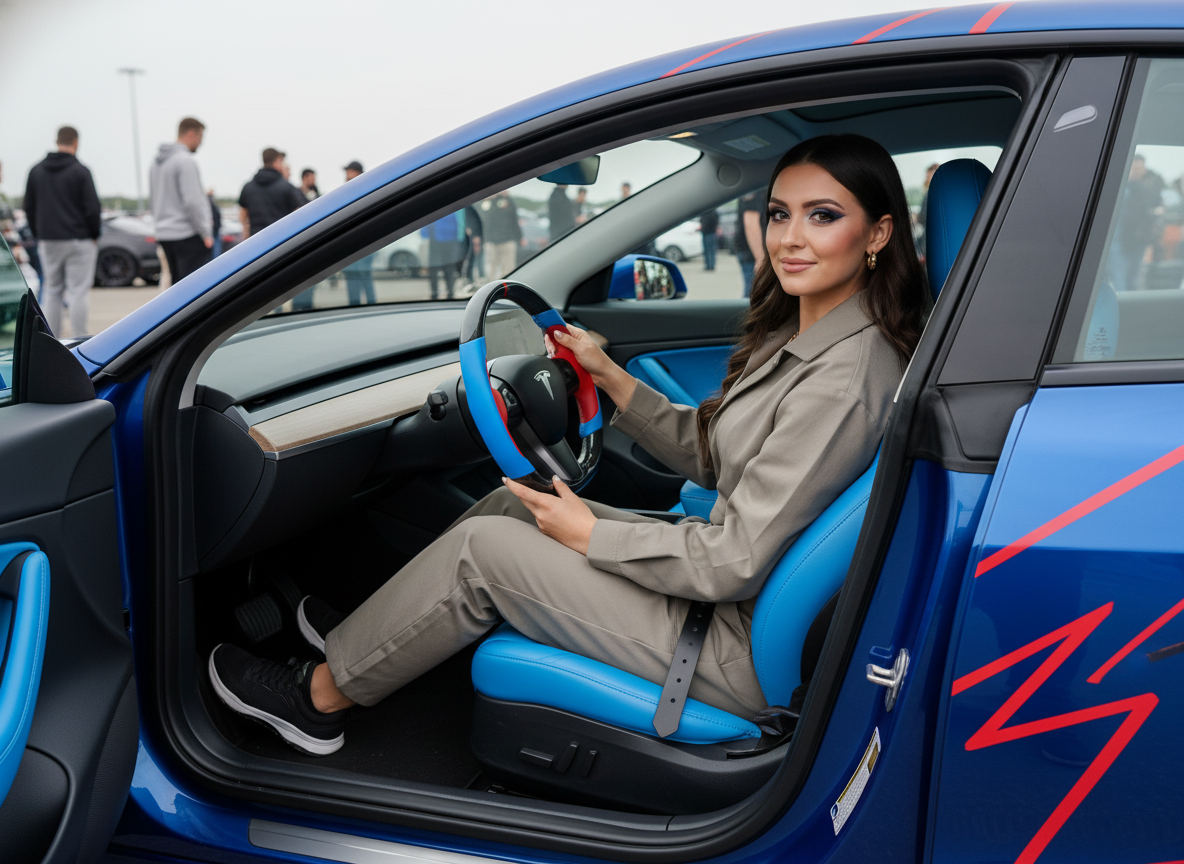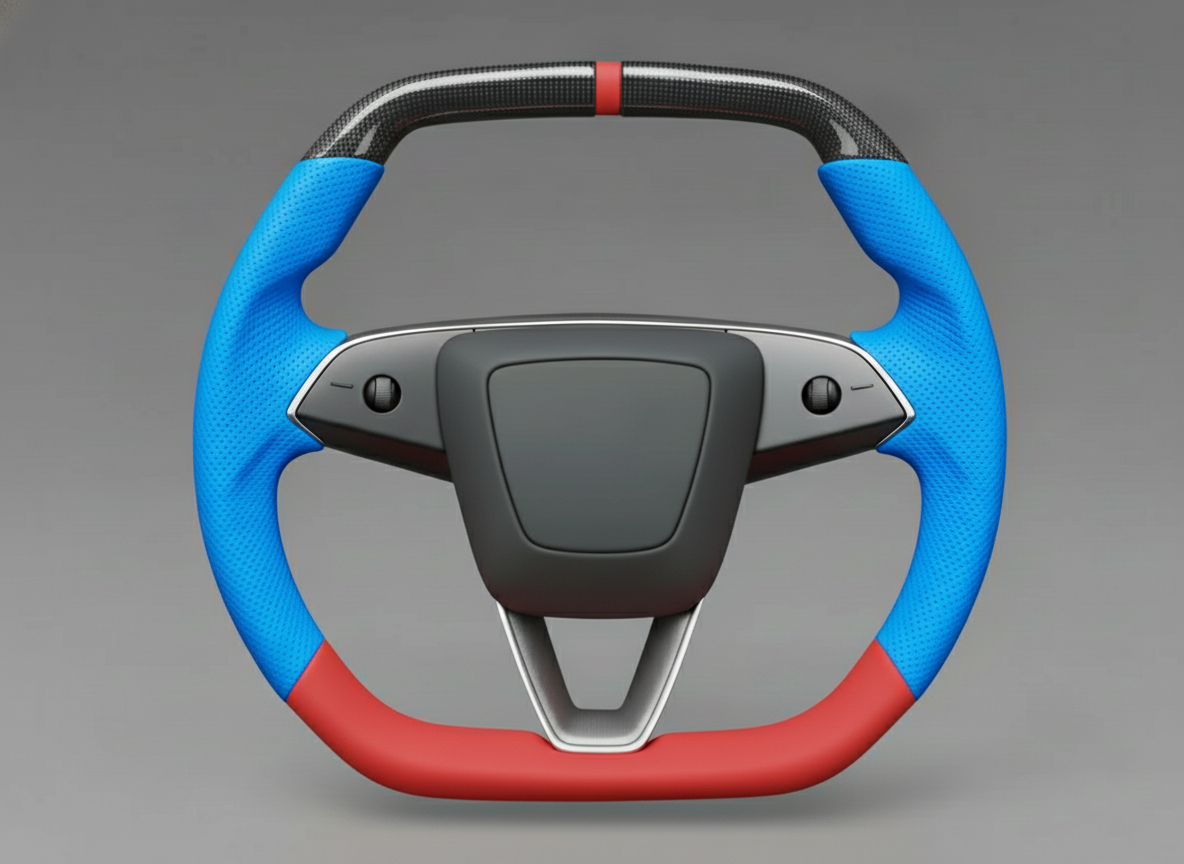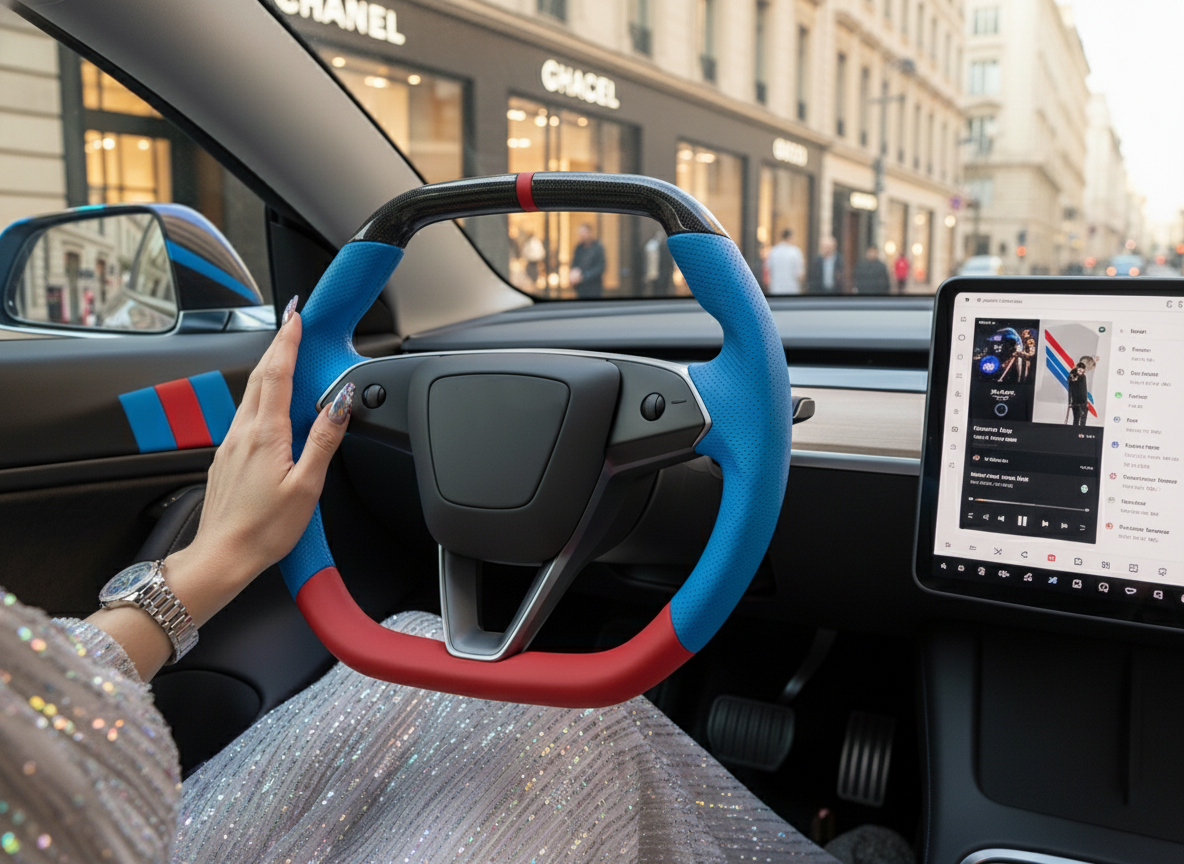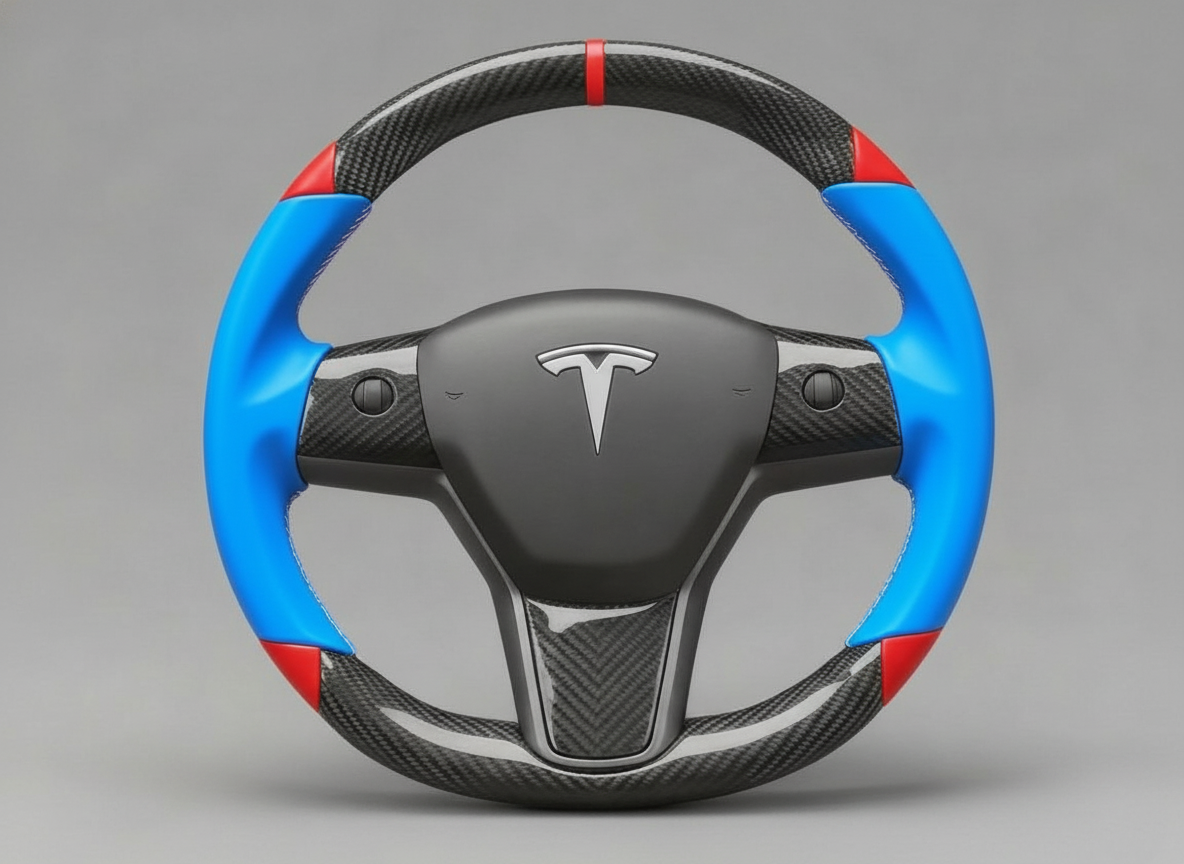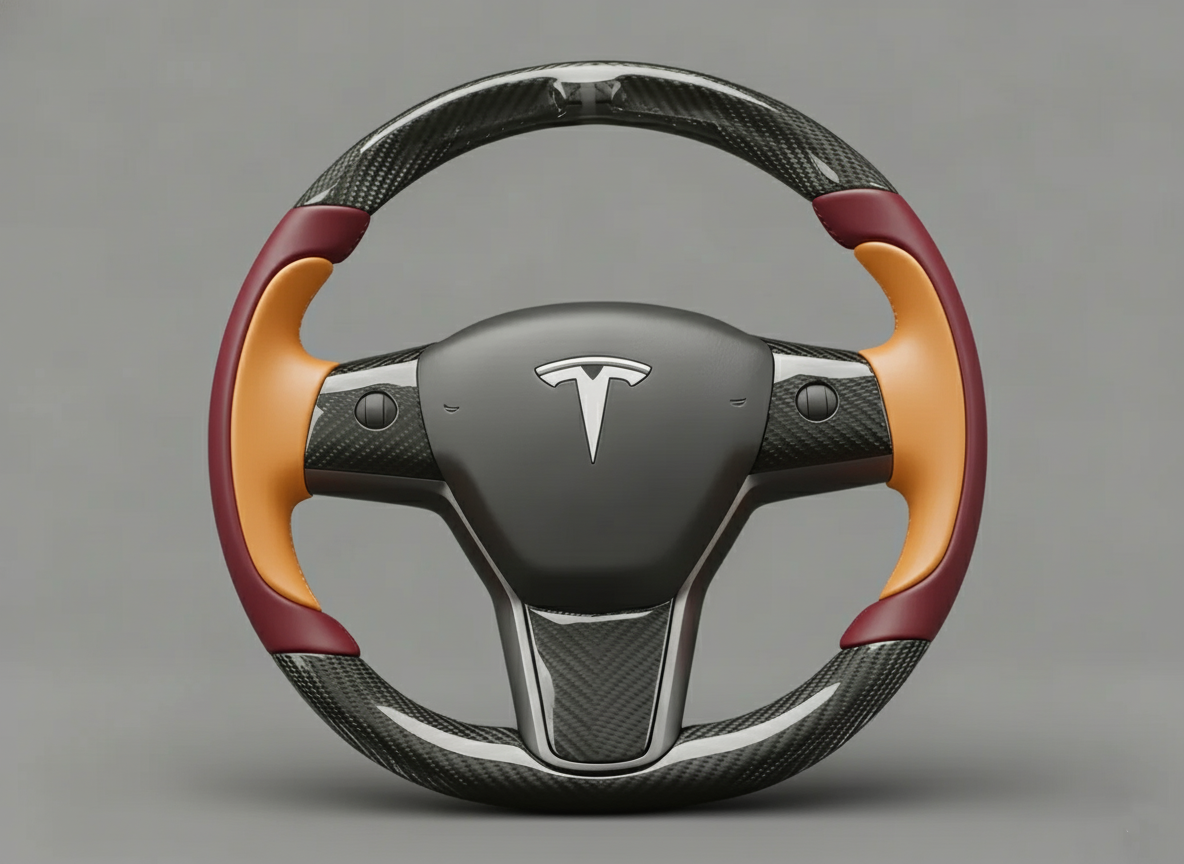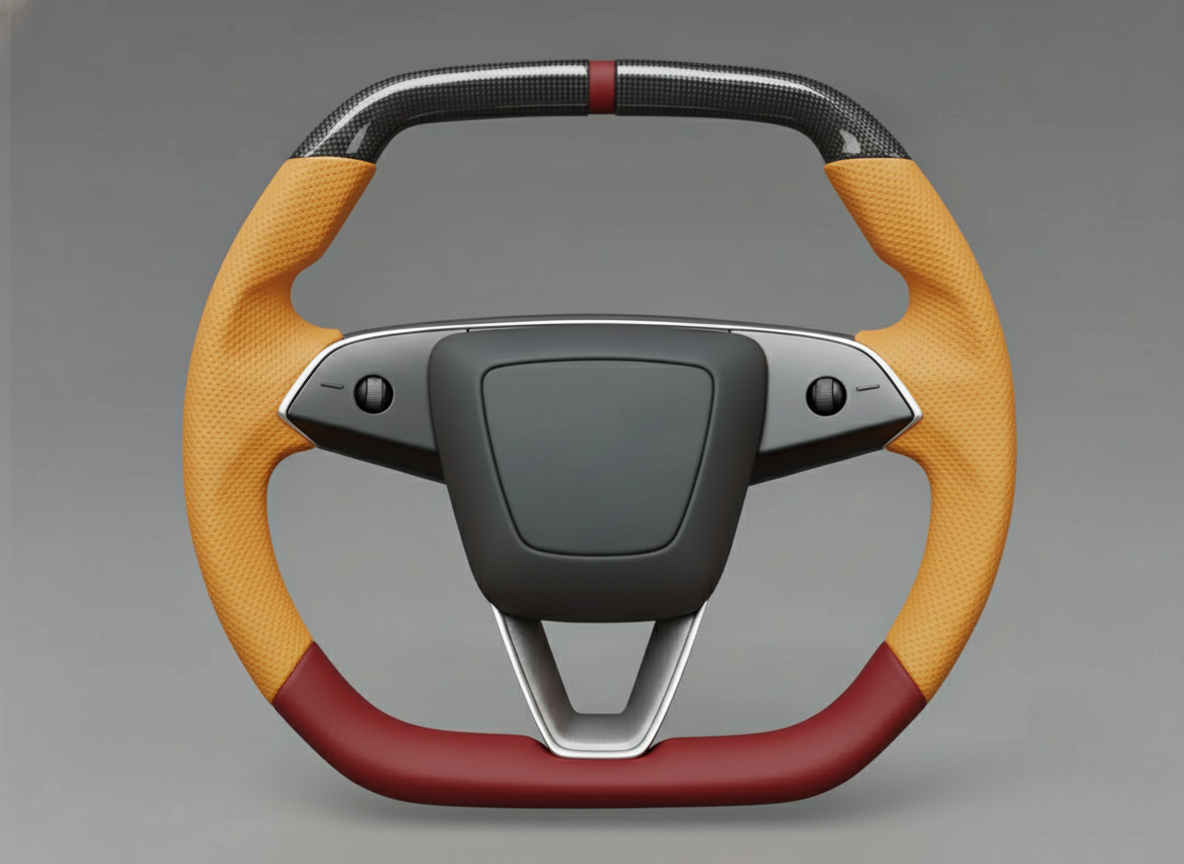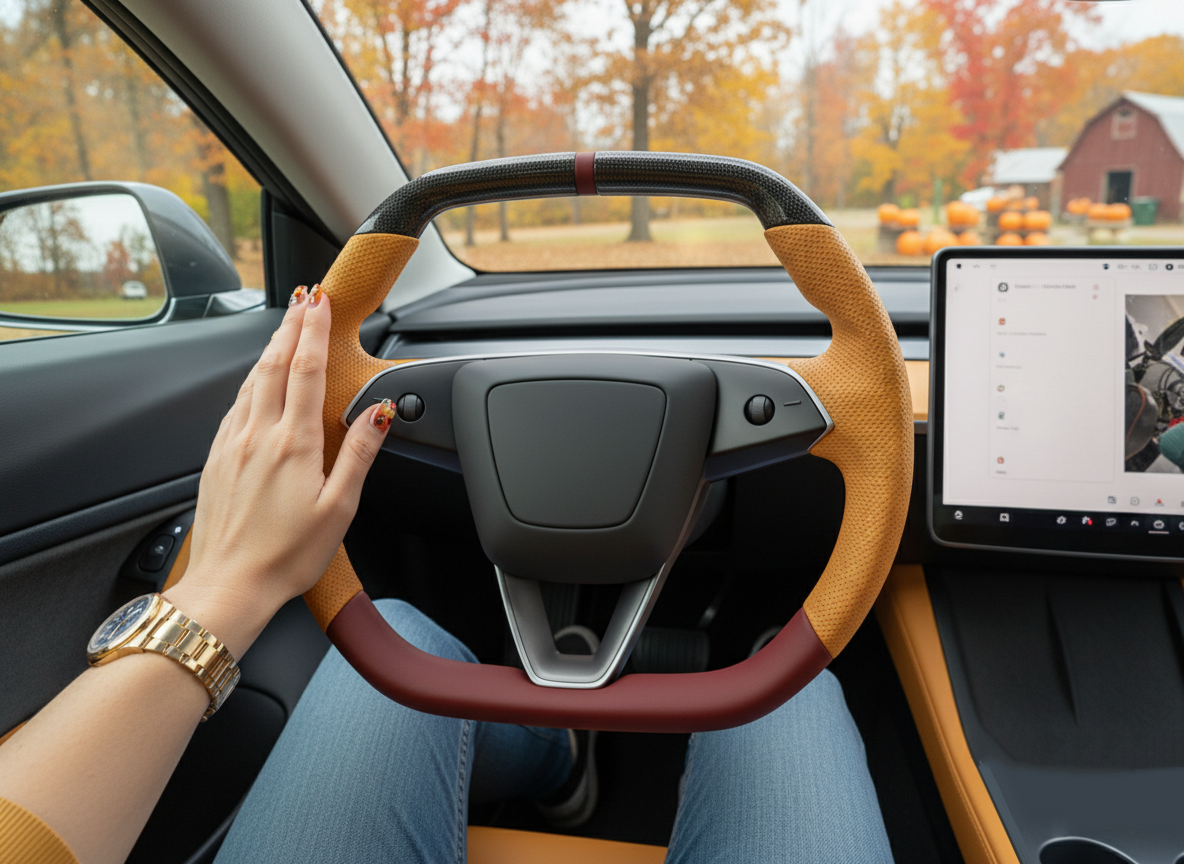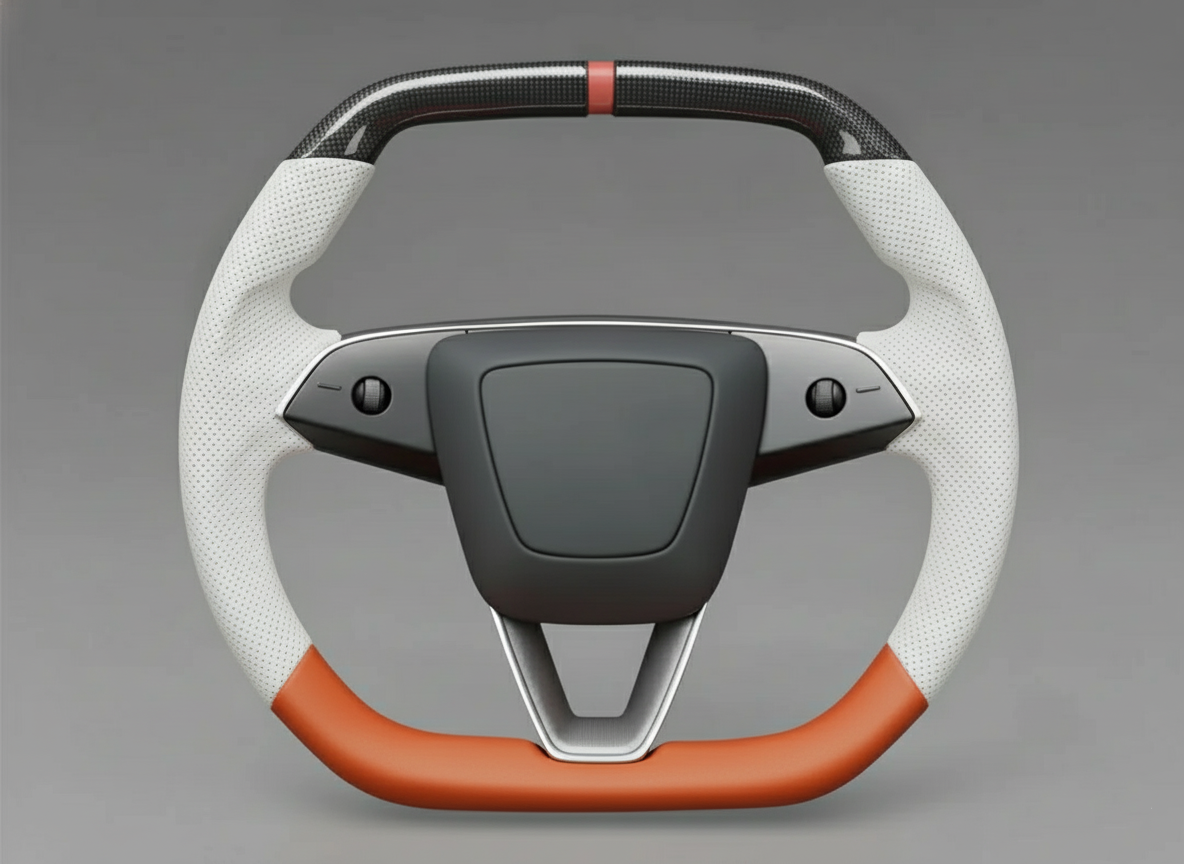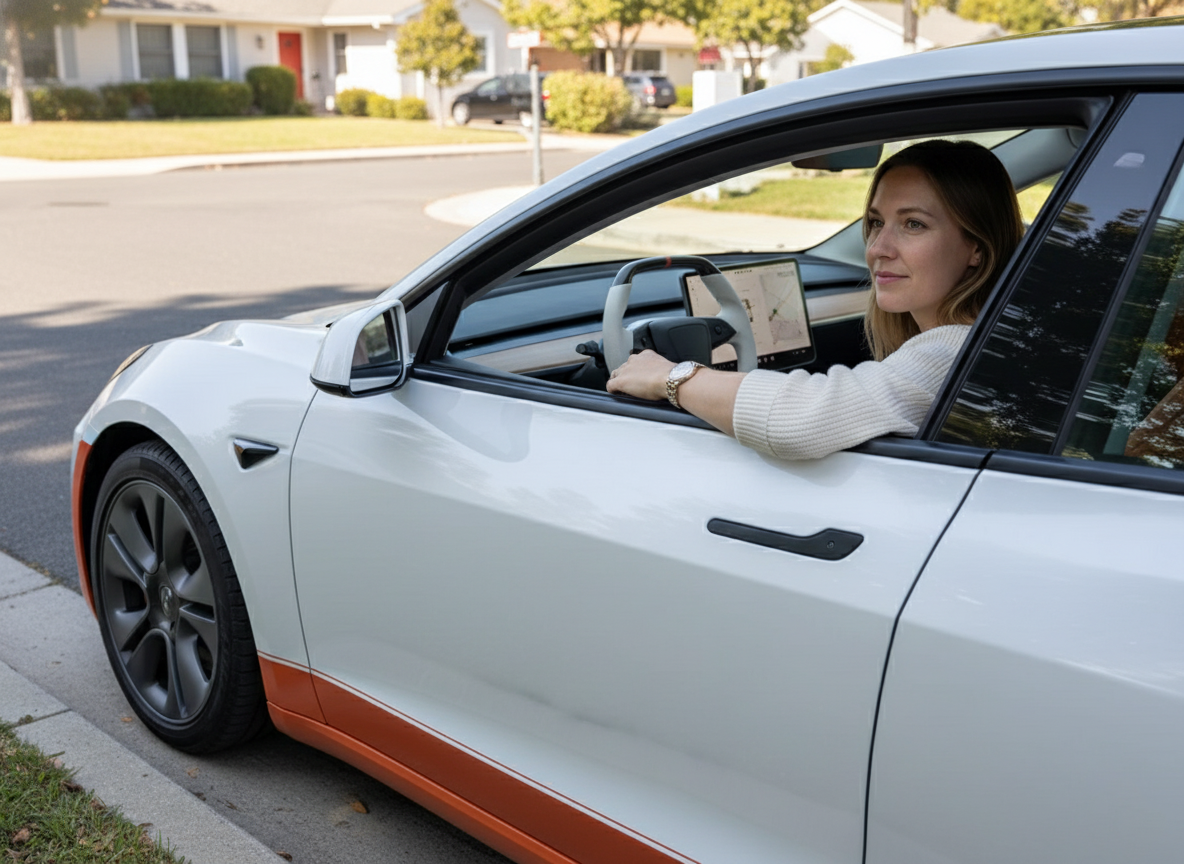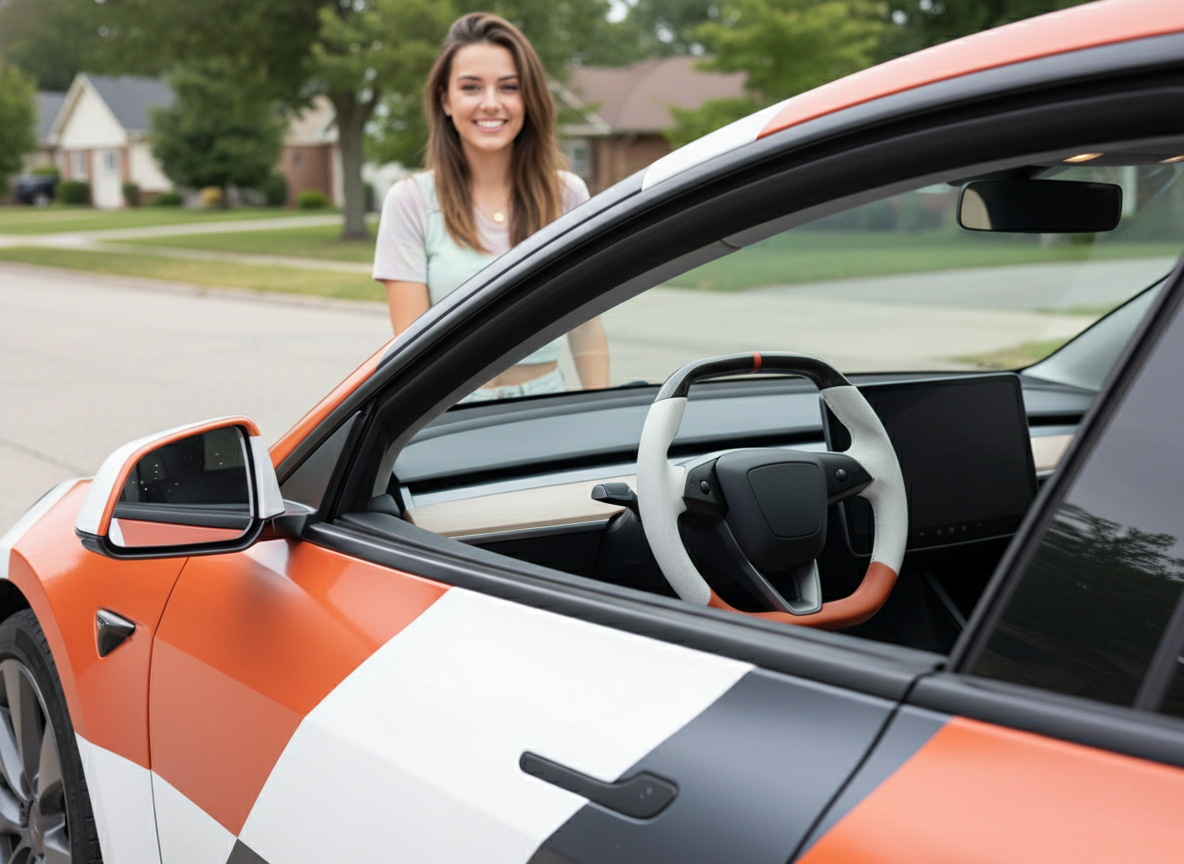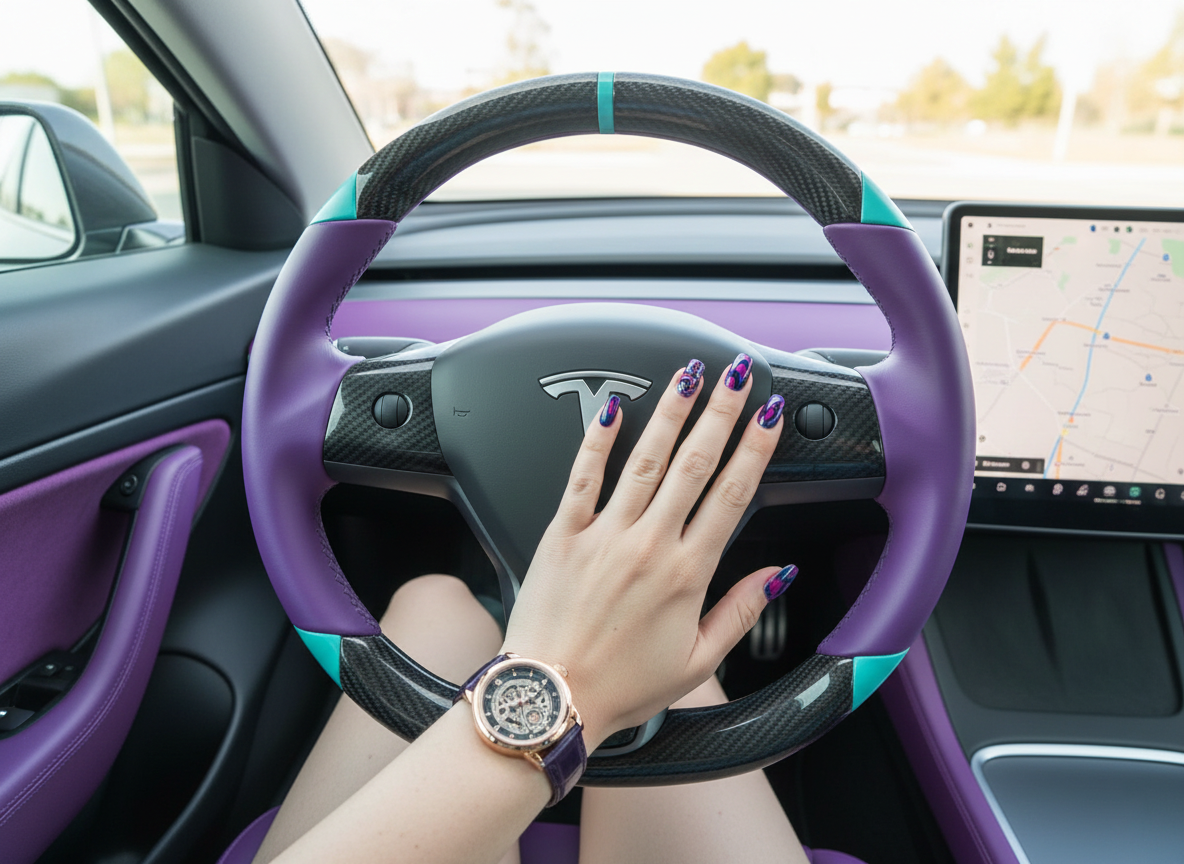
For the 2026 Model Y, the top recommended steering wheel accessories are the 1mm thick carbon fiber trims and suede covers, chosen by over 80% of owners.
First, thoroughly clean the surface with 75% alcohol, peel off the adhesive backing, align it with the original car seams to fit, and finally use a scraper to press the edges tight and exhaust the air.
The non-destructive installation takes only 10 minutes to complete and does not affect the original steering wheel heating function at all.
Trims
The 2026 Model Y steering wheel Trims mainly cover the scroll wheel panels at the 3 o'clock and 9 o'clock positions, as well as the bottom spoke at the 6 o'clock position.
Actual tests show that dry carbon fiber or ABS material trims with a thickness of 0.15mm to 0.25mm can maintain the 0.8mm pressing stroke of the original car's scroll wheels without interfering with sliding feedback.
Secured with 3M VHB 5952 double-sided tape, they can withstand a vertical peel force of 4.5kg under 70°C sun exposure inside the car, and will not warp for up to 3 years. The weight of a single set of components is controlled between 14g and 35g, ensuring no impact on the steering wheel's handling feel.
Materials & Styles
In the 2026 North American aftermarket, steering wheel decorative parts are divided into three main categories: composite materials, engineering plastics, and fabrics. Toray T300-level 3K twill carbon fiber occupies a 65% share of the high-end market. This material reaches a tensile strength of 3530 MPa and can withstand extreme summer high temperatures inside the car without physical deformation.
Dry carbon fiber manufacturing utilizes a prepreg process and is baked in an autoclave at 120°C for over 4 hours. Excess epoxy resin is extruded out, compressing the final product thickness to 0.15mm to 0.18mm. A set of dry carbon fiber decorative parts for the lower half of the steering wheel weighs only 14 grams.
The UV resistance index of the resin layer determines the material's life cycle. Resin without added anti-UV agents will yellow within 18 months when exposed to environments where the California summer UV index (UVI) reaches 10 or above. Products using Bayer anti-UV polyurethane clear coats extend the yellowing period to 48 months.
-
Weave density: 240g/m² standard 3K twill
-
Resin content: Strictly controlled between 30% and 35%
-
Clear coat thickness: 20-micron anti-scratch surface spray
-
Temperature limit: Continuously withstands 150°C without deformation
-
Tolerance range: Edge cutting accuracy ±0.05mm
Engineering plastics are another highly chosen option, typically Acrylonitrile Butadiene Styrene (ABS) manufactured through an injection molding process. The mold pressure reaches 150 tons, and the injected decorative pieces average between 0.35mm to 0.4mm in thickness. ABS products weigh about 32 grams, which is roughly twice as heavy as dry carbon fiber.
ABS surfaces usually utilize water transfer printing technology for filming. The water tank temperature is maintained between 25°C and 30°C, and the pattern on the PVA water transfer film adheres to the ABS substrate under the action of an activator. After applying two layers of matte clear topcoat, it can provide scratch resistance equivalent to a 4H pencil hardness.
Owners pursuing a high degree of consistency with the original interior tend to choose matte black or pearl white ABS parts. The pearl white formula adds 3% mica powder, achieving a 95% reflectance match with the original car's white PU leather seats. The surface roughness Ra value of the matte black is controlled at 1.5 microns to achieve a zero-reflection effect.
The 9002 dark gray suede produced by Alcantara SpA in Italy contains 68% polyester and 32% polyurethane. Combining 0.4mm thick Alcantara fabric onto a 0.2mm ABS skeleton via a hot pressing process keeps the total thickness under 0.65mm.
The diameter of the polyester microfibers is only 0.008 millimeters, providing an extremely high contact area and friction coefficient. During winter when interior temperatures drop to -10°C, its thermal conductivity is only 0.05 W/(m·K), feeling far milder to the touch than plastic. The fabric itself has a water absorption rate of 80 grams per square meter, capable of absorbing palm sweat.
-
Cleaning cycle: Recommended cleaning every 5,000 miles driven
-
Cleaning solvent: Use a dedicated cleaner with less than 5% isopropyl alcohol content
-
Brush hardness: Select horsehair brushes with a bristle diameter of 0.15mm
-
Drying time: Natural air drying takes 45 minutes to 1 hour
-
Abrasion testing: Exceeds 30,000 cycles on the Martindale abrasion tester
Open-pore wood grain decorative parts matching the original car's dashboard use real walnut or maple veneers. The raw wood slices are planed to a thickness of 0.25mm, and the moisture content is dried to 8% to 10% before processing. The back of the wood veneer is laminated with a 0.1mm layer of aluminum foil to prevent cracking.
A penetrating nitrocellulose lacquer is sprayed onto the wood grain surface with a coating thickness of only 15 microns. This preserves the depth of the wood's natural vessel texture, offering a distinct bumpy feel when touched. A single piece of wood grain trim weighs about 20 grams, falling between dry carbon fiber and ABS injection-molded parts.
Surface treatment styles affect the cabin's optical environment. High-gloss transparent coatings have a forward reflectance of over 85% to light. When the midday sun shines at a 60-degree angle, severe glare will cast into an area 15 degrees below the driver's line of sight.
Matte coatings contain 5% to 8% silica matting powder. Diffuse reflection scatters light in all directions, reducing reflectance to below 15%. Even under the 100,000 lux illumination of the midday Nevada desert sun, the driver will not be disturbed by reflections from the trims.
-
Gloss level (60° angle): High-gloss >90 GU, Matte <15 GU
-
Fingerprint retention rate: 95% for high-gloss surfaces, 10% for matte surfaces
-
Cleaning frequency: High-gloss requires weekly wiping, matte can be done monthly
-
Scratch visibility: Matte surfaces can conceal hairline scratches up to 0.05mm deep
Regardless of the material chosen, the specifications of the adhesive fixing the back remain uniform. A 3M VHB 5952 double-sided acrylic foam tape with a thickness of 1.1mm is used. Pressing and curing for 72 hours when the ambient temperature reaches 21°C can achieve 100% final bond strength.
Laboratory thermal cycling tests require the decorative parts to alternate between -40°C and 85°C for 100 cycles. The expansion coefficient of the material must remain consistent with the original Tesla polyurethane steering wheel substrate. If the linear expansion coefficient difference is greater than 2.0×10⁻⁵/°C, internal stress will cause the adhesive backing to peel off after 300 hours.
Installation & Purchasing
The 2026 North American aftermarket uses Faro Arm 3D laser scanners to reverse-engineer the Model Y steering wheel, achieving a scan point cloud accuracy of 0.02mm. After a qualified trim is installed, the physical gap between it and the left and right multi-function scroll wheel panels is strictly controlled between 0.6mm and 0.8mm. If the gap is less than 0.4mm, a plastic friction noise exceeding 45 decibels will occur when turning the wheels.
The specifications of the pre-installed double-sided tape on the back are a quantifiable indicator for judging product assembly yield rates. Using 0.76mm thick 3M VHB 4229P acrylic foam tape provides a peel strength of 110 N/100mm without causing the edges of the patch to visibly float. The die-cut width of the tape is fixed at 4mm, set back 1.2mm from the outer edge of the trim to prevent colloid overflow in a 65°C hot cabin.
The gate mark position from the injection molding process reflects the engineering standard of the mold design. High-precision ABS trims hide the injection gate inside the back adhesive groove, ensuring a front surface roughness (Ra) below 0.8 microns. If the gate remains on the peripheral edge, there is a 15% chance it will snag microfiber towel threads and accumulate dust during daily wiping.
Referencing the 2026 California auto parts market data, purchasing baselines are established by comparing parameters across different specifications.
| Material Type | Mapping Tolerance | Adhesive Coverage | Applicable Ambient Temp | Average Weight per Piece |
|---|---|---|---|---|
| Aviation-grade Dry Carbon | ±0.05mm | 45% | -40°C to 95°C | 12g |
| ABS Injection Molded | ±0.15mm | 60% | -20°C to 80°C | 28g |
| Composite Hot-pressed Panel | ±0.12mm | 55% | -30°C to 85°C | 22g |
The thermodynamic conditions of the installation environment greatly interfere with the initial tackiness of the foam tape. The 21°C to 38°C (70°F to 100°F) range is the ideal zone to activate the polymer's bonding performance. When the ambient temperature falls below 15°C, the acrylic colloid's ductility drops by 50%. A heat gun set to 45°C must be used to evenly heat the back of the trim at a distance of 10 cm for 15 seconds.
The original polyurethane surface is attached with hand sebum secretions and silicone-based interior protectant residues. Wiping the installation area 3 times repeatedly with a 70% concentration isopropyl alcohol (IPA) prep pad can completely strip away hydrocarbon oils. Although 99% industrial isopropyl alcohol evaporates within 3 seconds, high-concentration alcohol solvents will excessively strip plasticizers from the original car's vegan leather, causing it to whiten.
The V-shaped trim at the bottom 6 o'clock direction serves as an overall position calibration function. Maintaining a 1.5mm parallel offset between the bottom of the V-shape and the original steering wheel's bottom seam ensures the extension arms on both sides perfectly click into the spoke grooves. Using a 0.5-inch wide 3M blue painter's tape to draw a reference baseline 1.5mm from the edge helps control pressing deviation.
Once positioned, apply an even vertical pressure of 15 psi (roughly equivalent to a full-force press with a single thumb) along the trim's edge, and hold continuously for 60 seconds. The physical application of pressure can squeeze out the air layer between the tape and the steering wheel substrate, instantly increasing the initial contact area from 30% to over 85%.
The cross-linking reaction of the molecular chains inside the tape must follow strict time cycles; any premature external force intervention will cause displacement.
-
20-minute mark: Acrylic polymers complete 50% surface wetting, meeting initial fixing requirements
-
24-hour mark: Bond strength climbs to 90%, capable of withstanding regular friction from daily driving
-
72-hour mark: Achieves 100% full curing state, resisting 8 pounds of lateral shear force
-
Temperature redline: Avoid exposing the cabin to direct sunlight exceeding 65°C during the curing cycle
-
Liquid restriction: Strictly prohibit liquids containing surfactants from contacting the edge seams within 72 hours
Packaging specifications have a quantifiable impact on the shipping loss rate of dry carbon fiber trims. Using corrugated boxes with a burst strength of 200 PSI, internally fitted with custom EPE pearl cotton with a density of 2.2 lb/ft³, can suppress the probability of micro-cracks during logistics to 0.5%. Components packaged in ordinary bubble envelopes have a 12% breakage rate when subjected to 10kg of pressure from a sorting machine.
North American dealers offering anti-warping warranties of 12 months or more typically use modified resin raw materials with a Heat Deflection Temperature (HDT) of 98°C (under 1.8 MPa pressure). According to return logistics tracking data, 78% of dimensional mismatch complaints stem from thermal stress deformation of the patches when temperatures inside shipping containers reach 70°C, rather than original molding defects.
If physical interference is found between the left scroll wheel and the trim during installation, insert a 0.4mm feeler gauge into the gap between the wheel and the trim. While maintaining the resistance of the feeler gauge, apply 5 pounds of outward thrust and re-press the adhesive area for 15 seconds to forcefully reshape the standard 0.6mm active clearance.
Use a 500-lumen LED inspection light to conduct a 360-degree close-range illumination check. If there is a light-leaking gap greater than 0.2mm between the inner side of the trim and the steering wheel base, it indicates that the foam tape in that area has not been pressed firmly or the protective film has not been completely torn off. It must be gently peeled back with a plastic pry bar and reattached to prevent dust from intruding later and destroying the colloid's tackiness.
Wraps
Data shows that a stitched wrap using Italian Alcantara material can reduce the steering wheel surface temperature from 65°C down to 42°C under direct summer sunlight in California.
Mainstream stitched and slip-on products control their thickness between 1.2mm and 2.5mm.
The average material cost for replacing a high-quality Wrap is 45 to 120 USD. Compared to the approximately 800 USD steering wheel assembly replacement fee at a North American Tesla Service Center, it saves about 85% in hardware expenses.
Material Comparison
According to a 2025 sampling test by the California Automotive Aftermarket Association, original polyurethane materials experience a 14% increase in surface hardness after being exposed to a UV index of 8 or higher for 90 consecutive days. The materials engineering for replacement parts has evolved into the stage of micron-level fiber restructuring. Currently, the top three best-selling materials in the North American market exhibit entirely different physical properties in their molecular structures.
Synthetic microfibers produced in the Umbria region of Italy hold a 68% share of the high-end custom market. Made of 68% polyester and 32% polyurethane through a complex spinning process, a single fiber diameter is only 0.004 millimeters. The dense pile structure grants it a dry friction coefficient of 0.85, which is 0.3 higher than the original smooth PU leather. During long drives when palms secrete sweat, the moisture is rapidly dispersed into the porous fiber capillaries.
The air stored in the fiber gaps also forms an excellent thermal insulation layer. When Los Angeles summer temperatures hit 38°C and the vehicle sits out in the sun for 4 hours, the surface temperature of smooth leather usually spikes to 65°C. The measured temperature on the microfiber surface remains within the 41°C to 43°C range, causing no burning sensation when gripped. When switching on the steering wheel heating in winter, the 0.9-millimeter thickness specification will delay heat transfer by about 45 seconds.
The high porosity bringing water absorption characteristics also places strict data requirements on daily maintenance. Sodium salts and human sebum from sweat accumulating in the fibers for over 30 days will cause irreversible hardening and matting of the surface pile. The standard procedure for North American auto detailing shops requires deep extraction cleaning using a dedicated PH-neutral foaming agent.
-
Use a soft boar bristle brush for unidirectional combing
-
Cleaner residence time must not exceed 45 seconds
-
Avoid using towels with a water absorption rate below 200%
-
After washing, it needs to air dry naturally in a 22°C environment for 2 hours
Silicone-based vegan leather captured the largest mid-range market shipment volume in 2026. The surface is covered with a 0.02-millimeter thick anti-UV transparent polyurethane coating. In a xenon lamp accelerated weathering test simulating up to 1200 hours, the color fading rate was less than 1.5%. Its texture is embossed by large steel molds at a high temperature of 180°C, with depth accurately controlled at 0.15 millimeters.
The extremely low surface porosity completely blocks the downward penetration path of liquids. After being touched by hands stained with zinc oxide sunscreen or coffee oils, stains will only remain on the outermost water-blocking coating. They can be completely wiped off using ordinary non-alcoholic interior cleaning wipes applying 5 Newtons of pressure. Its tensile strength reaches 28 MPa, making it extremely hard to tear when pulling nylon thread during stitching.
The airtight skin structure inevitably alters thermodynamic and tribological performance. In winter testing in Minnesota at minus 15°C, the vegan leather's surface hardness increased by only 4% compared to room temperature, maintaining excellent flexibility. Under dry conditions, the grip friction coefficient is about 0.55, but when encountering a large amount of hand sweat, the moisture cannot escape, and the friction coefficient plunges below 0.35.
-
The reflection gloss of the coating changes from matte to high gloss
-
Micro-cracks deeper than 0.2 millimeters appear on the surface layer
-
The ductility of the seam edges decreases, causing hardening
-
The backing substrate begins to peel from the face layer
Medical-grade thermoplastic elastomer blended with high-density silicone materials has become the preferred choice for multi-child families. The Shore hardness is set between 55A and 65A, providing up to 2.5 millimeters of sink-in deformation cushioning space when gripped. Inorganic silver ion antibacterial agents are added internally, achieving a 99.9% 24-hour kill rate against E. coli and Staphylococcus aureus.
Strong chemical inertness grants it the ability to ignore conventional solvent corrosion. It can withstand soaking in 70% isopropyl alcohol for up to ten minutes without any molecular degradation. The one-piece injection molding process eliminates all physical seams, bringing the waterproof level to IPX8 standards. After driving in muddy conditions, owners can take it off and throw it in the sink to aggressively scrub it with dish soap.
Extreme durability compromises visual volume and weight. The material density is up to 1.2 g/cm³, pushing the weight of a single protective cover close to 280 grams, exactly 3 times heavier than the microfiber version. The overall diameter of the assembled steering wheel increases by 4.8 millimeters, making it difficult for drivers with smaller hands to hold when turning the wheel quickly. The thermal resistance layer of up to 4.5 millimeters also renders the original car's heating function nearly half ineffective.
-
Extremely prone to nicking when scratched by sharp metal
-
After sun exposure, the material emits a slight silicone odor internally
-
After prolonged stress, the elastic recovery rate will decay to 85%
-
The surface easily attracts dry static dust from the air
The splicing process of dry carbon fiber woven fabric mixed with leather has an extremely high appearance rate in the North American modification scene. 3K plain weave carbon fiber cloth is cured in a vacuum autoclave at 120°C, and the resin layer is sanded to a thickness of only 0.3 millimeters. The carbon fiber layer on the top section provides a tensile limit of up to 600 MPa. The anti-yellowing clear coat applied to the surface has a 9H scratch resistance hardness.
The smooth resin layer brings excellent visual gloss but also significantly reduces physical friction. When palms are completely dry, the friction coefficient of the contact surface is less than 0.25, making slippage highly likely during high-speed lane changes. Gap tolerances at the splices are strictly kept under 0.1 millimeters to prevent fine dust accumulation.
Installation Method Comparison
A physical test report released in 2025 by a California automotive aftermarket engineering lab quantified the binding stress between accessories and original components. Slip-on products rely on the physical tension of high-molecular silicone rubber to stay fixed, while stitched wraps lock onto the curved surface via the three-dimensional locking force of nylon braided thread. The physical structural differences between the two cause the Model Y's original 362mm outer diameter steering wheel to undergo completely different geometric deformations after installation.
Slip-on silicone covers embedded with wavy non-slip bottom textures possess a surface hardness of up to 65 Shore A. The product's cross-section features a 280-degree C-shaped opening, reaching 3.8 millimeters at its thickest point. Installers only need to apply about 45 Newtons of downward pull force, taking 15 to 30 seconds to snap it onto the outer rim of the original steering wheel. The chemical-free backing design relies entirely on the internal 0.5-millimeter deep silicone texture generating static friction against the original leather to prevent displacement.
Ambient temperature dramatically interferes with the elongation rate of high-density polyurethane materials. In outdoor winter environments in Michigan below 10°C, the ductility of the kit material plummets by 40%. Owners must use a 1200-watt heat gun to evenly heat the surface from 15 cm away for 3 minutes before it softens enough to stretch and slip on. Forcing a violent stretch at low temperatures will cause the finished opening edge to produce wavy gaps larger than 2 millimeters.
| Physical Parameters | Slip-on Silicone Cover | Hand-stitched Leather | Original Steering Wheel Data |
|---|---|---|---|
| Total Grip Outer Diameter | 37.8 mm | 36.4 mm | 36.0 mm |
| Installation Stress Points | C-shaped inner wall static friction | 360-degree physical locking | N/A |
| Edge Tolerance | 1.5 - 2.5 mm | 0.1 - 0.2 mm | 0.0 mm |
| Pull Force to Detach | 55 Newtons | 850 Newtons | N/A |
Unlike solutions relying on physical elasticity, hand-stitching leather heavily depends on manual labor hours and millimeter-level alignment precision. Professional auto interior mod shops in Los Angeles standardize a 3.5-hour labor time for stitching a Model Y steering wheel. The edges of the material are pre-punched with 120 to 140 threading holes spaced 2.5 millimeters apart. The operator must use a 0.8-millimeter Teflon-coated nylon thread with a tensile strength of 18 pounds to draw the two sides of the leather together.
The high-strength stitching tension presses the 1.2-millimeter thick Alcantara fabric tightly onto the polyurethane foam substrate. The overall increase in grip diameter is strictly controlled within 1.5 millimeters. When encountering the multi-function scroll wheel areas at the 3 o'clock and 9 o'clock positions of the steering wheel, the pre-cut leather ends need to be accurately tucked into plastic seams that are only 0.8 millimeters wide.
Technicians will use a specially made polyoxymethylene (POM) pry tool that is only 0.5 millimeters thick to press, avoiding damage to the internal circuit boards of the original buttons. Through extremely subtle physical extrusion, the leather edges are completely hidden under the trim panels. The high-density fit prevents moisture and fine dust particles from entering the bonding interface.
-
0.8mm Teflon-coated high-strength nylon braided thread
-
Two 50mm long blunt-tip carbon steel sewing needles
-
One roll of 5mm wide double-sided acrylic positioning tape
-
One 0.5mm thick polyoxymethylene round-head pry tool
-
A pair of micro titanium alloy scissors for trimming thread ends
Lateral G-force testing in track environments amplifies the limitations of static friction. During extreme driving through continuous S-curves at the Circuit of the Americas in Texas, the torque generated by the driver's hands instantaneously exceeded 30 Newton-meters. Friction-dependent slip-on products experienced a 4-millimeter radial slide on the steering wheel. Fifteen minutes after the steering wheel heating is turned on, internal silicone expands with the heat, further widening the sliding tolerance to 6 millimeters.
Physically locked stitched wraps, when enduring 1.2G of lateral acceleration, showed an instrument-recorded displacement of 0.05 millimeters. The 360-degree all-around wrap structure completely locks out the material's movement path along the tangential direction. When removed after a two-year use cycle, the wavy bottom texture of slip-on products leaves permanent indentations about 0.2 millimeters deep on the original car's vegan leather surface.
The process of peeling off a stitched wrap requires scissors to cut the nylon thread at all positioning holes. After spending about 45 minutes removing the residual double-sided acrylic positioning tape inside, the original steering wheel leather surface texture remains flat under long-term uniform stress wrapping. No chemical substances penetrate the original polyurethane protective coating.
Heating Function Testing
In a minus 15°C environmental chamber test set up in Anchorage, Alaska, a bare steering wheel takes 110 seconds to reach a set surface temperature of 35°C. Built-in NTC thermistors monitor surface fluctuations at a frequency of 10 times per second to prevent local thermal overload on the polyurethane skin.
Adding aftermarket wrap pieces establishes a physical thermal resistance layer between the heat source and the driver's hands. The 1.2-millimeter thick Italian Alcantara microfiber material significantly alters the thermal conductivity coefficient. The trace air stored within its 0.004-millimeter diameter fiber gaps forms microscopic insulation zones. In the same minus 15°C chamber test, a steering wheel wrapped in this material takes 165 seconds to reach 35°C.
Test instrument infrared imaging records show that microfiber materials delay the time it takes for heat to reach the surface, and cause the final steady-state peak temperature to drop by about 2.5°C.
Vegan leather with a polyurethane coating exhibits completely different thermodynamic characteristics. 1.5-millimeter thick Nappa-textured leather has a high physical density of 0.9 g/cm³ and lacks the air insulation gaps found in suede. Thermal energy penetrates the solid matrix relatively uniformly but is obstructed by the 0.1-millimeter thick double-sided acrylic positioning tape used during installation.
The thermal imaging camera scan records that the vegan leather wrap took 210 seconds to climb to 34°C. The acrylic tape layer absorbed about 12% of the initial thermal energy output during the early conduction phase. Heat distribution showed significant attenuation at the multi-function scroll wheel edge areas at 3 o'clock and 9 o'clock, with a temperature difference of up to 4°C compared to the central area.
-
A 0.5-millimeter bottom anti-slip rubber backplate blocks 15% of initial heat conduction
-
A 1.2-millimeter thick polyurethane foam mid-layer absorbs nearly 8 watts of heating power
-
A 0.1-millimeter surface anti-UV coating delays heat radiating into the extreme cold air
-
Double-sided tape hardening in sub-zero temperatures causes its physical thermal resistivity to rise by 22%
Thick, high-density silicone kits form the harshest thermal conduction barrier. For accessories formed by 3.5-millimeter thermoplastic elastomer single-piece injection molding, their physical mass severely suppresses heat dissipation. In actual tests simulating a minus 20°C winter morning in Montreal, Canada, the working efficiency of the heating wires is drastically weakened.
After the system runs at full power continuously for 5 minutes, the outer surface of the 3.5-millimeter silicone cover only registers 22°C. At this point, the original leather surface hidden under the silicone cover is already approaching the 38°C safety threshold, triggering the car software's current blowout protection protocol. The heat energy ultimately acquired by the driver's hands is less than 40% of the original setting.
The power management logic pushed in the V11.1 version for the North American region forcibly cuts off power to heating wires that remain overheated, and heavy third-party accessories frequently trigger the system's overheat protection mechanisms.
The splicing process of dry carbon fiber and perforated leather creates a highly uneven surface heat distribution map. The 0.3-millimeter thick epoxy resin coating combined with 3K carbon fiber cloth possesses excellent thermal conductivity. Thermal energy spreads quickly along the carbon matrix, and the top and bottom carbon fiber areas can break 35°C in just 135 seconds.
However, the perforated leather areas on the sides of the same steering wheel require 190 seconds to reach the same temperature. The two materials form a tactile temperature differential gradient of up to 12°C at the physical seam. When North American drivers execute a U-turn and let the steering wheel slide through their hands, they will feel intense hot-and-cold alternating stimulation when crossing the 0.1-millimeter splicing gap.
-
Epoxy resin carbon fiber has a specific heat capacity of 0.9 kJ/(kg·K), absorbing heat and rising in temperature extremely fast
-
Alcantara synthetic microfiber has a specific heat capacity of 1.3 kJ/(kg·K), with moderate heat storage performance
-
High-density polyurethane leather has a specific heat capacity of 1.8 kJ/(kg·K), consuming extremely long heating times
-
Eco-friendly silicone covers have a specific heat capacity up to 2.2 kJ/(kg·K), classifying as heavy thermal insulators
The extension of conduction time translates into an extra power load on the vehicle's 16V lithium-ion low-voltage battery. Over a 150-day winter in North Dakota, outputting an extra 45 watts of power for 3 minutes during every cold start cumulatively adds about 0.5 kilowatt-hours of energy consumption per season.
Maintaining full-load output for long periods accelerates the physical aging of the internal nickel-chromium alloy heating components. According to data sampled from a Toronto scrapyard, for steering wheels fitted long-term with 3.5-millimeter silicone protective covers, the resistance value of the internal heating wires increases by 0.05 ohms for every 100 hours of full-load operation.
Decals
The 2026 Model Y steering wheel decals primarily use automotive-grade calendered vinyl material with a thickness of 0.05mm to 0.12mm.
In high-sunlight areas like California, decals based on the 3M 2080 or Avery Dennison SW900 series feature anti-UV coatings that provide an anti-aging lifespan of up to 3 to 5 years.
A full set of steering wheel decals covers the central T-logo, the edges of the left and right scroll wheel paddles, and the bottom anti-slip area. The average installation time is under 10 minutes, and they peel off without leaving adhesive residue.
The price for a complete set of decals usually ranges between 15 and 35 USD.
Common Material Specifications
The outer layer of the 2026 Model Y steering wheel is wrapped in standard polyurethane synthetic leather. Third-party aftermarket decals intended for this surface generally range in physical thickness from 0.05 millimeters to 0.15 millimeters. The chemical composition and manufacturing processes of the material strictly dictate the sticker's shrinkage rate and peel strength in the hot environment of the cabin.
Industry primarily produces vinyl films through two different polymer material processing lines. Cast films involve coating a liquid resin solution onto a carrier roll and curing it in a 200℃ oven for up to 45 minutes. Calendered films involve heating solid plastic pellets to 150℃ and forcibly squeezing them into shape through three sets of steel rollers weighing 5 tons.
The thermal extrusion process inevitably leaves mechanical stress inside the molecular chains of the vinyl. When the formed film subsequently encounters ambient temperatures above 60℃, the molecular chains attempt to revert to their original shape. North American laboratories' constant temperature test chambers have produced baseline physical performance parameters for different substrates:
| Substrate Category | Manufacturing Process | Physical Thickness | Temp Limit | 24hr Shrinkage Rate at 100℃ | Max Peel Pull Force |
|---|---|---|---|---|---|
| 3M 2080 Series | Dual-layer Liquid Cast | 0.09mm | 107.2°C | 0.15% | 18 N/25mm |
| Avery SW900 | Single-layer Liquid Cast | 0.08mm | 110.0°C | 0.18% | 16 N/25mm |
| Oracal 651 | Solid Heated Calendered | 0.06mm | 80.0°C | 2.50% | 14 N/25mm |
| Generic PET Film | Polyester Fiber Stretched | 0.15mm | 70.0°C | 0.05% | 10 N/25mm |
The 3M 2080 series is an automotive-grade material used with extremely high frequency by modification shops around the Austin gigafactory in Texas. Within a total thickness of 0.09 millimeters, this material integrates a 0.01-millimeter clear surface protective layer and a 0.05-millimeter colored vinyl body. The bottom 0.03-millimeter acrylic adhesive backing features a micro-channeled air release structure.
The adhesive system adhering to the steering wheel surface utilizes microsphere pressure-sensitive technology. Approximately 300 glass microspheres with a diameter of 0.02 millimeters are distributed per square centimeter, allowing the adhesive to only contact the polyurethane leather with 20% of its surface area upon initial touch. When the operator applies 3 pounds of vertical pressure to crush the microspheres, the adhesive's tackiness instantly jumps to 12 N/25mm within 10 seconds.
The SW900 series produced by Avery Dennison boasts extremely high flexibility test scores. Its elongation at break reaches 150%, making it highly suitable for wrapping the 3.5-millimeter deep curved grooves around the left and right scroll wheels on the steering wheel. This material is equipped with EZ RS air-release technology, where the bottom grid depth is set to 0.015 millimeters, yielding an air exhaust rate of 25 cubic millimeters per second when pressed.
Regarding specific ambient temperature adaptive performance, different materials show starkly contrasting physical trajectories:
-
Minus 20℃ environment: Cast films maintain 70% of initial elasticity, while the embrittlement threshold of calendered films is breached, making them prone to shattering when stretched.
-
25℃ standard room temp: All pressure-sensitive adhesives are in peak activation states, and the application pressure applied at this point achieves 100% effective transfer.
-
85℃ sun exposure environment: Calendered film edges experience a 0.5-millimeter physical retraction, whereas cast film dimensional deformation remains within a safe 0.05-millimeter tolerance.
T-logo decals cut using calendered materials like Oracal 651 will expose material defects after parking outside a California garage for two weeks. The continuous high-temperature baking softens the adhesive backing at the four sharp corners of the decal, and a 2.5% physical shrinkage rate causes all edges of the sticker to retreat toward the center by more than 1.2 millimeters, exposing the original car's chrome border underneath.
Low-cost PET materials are often made into thick decals featuring 3D carbon fiber textures. The stretch rate of PET is nearly zero, with a physical thickness reaching 0.15 millimeters. When pasted onto the V-shaped spoke at the bottom of the steering wheel, the material's rebound stress of up to 15N constantly fights against the base adhesive's tackiness, generally causing both ends to warp and peel within 72 hours post-installation.
Some high-end product lines have started introducing aliphatic TPU materials with a thickness of 0.12 millimeters. The surface of TPU is coated with a 0.02-millimeter physical repair coating; a 0.01-millimeter deep scratch caused by a fingernail on the decal surface will physically smooth itself out through molecular memory within 3 minutes under 40℃ sunlight. Its heat resistance limit breaks past 120℃.
In up to 3000 hours of xenon lamp accelerated aging tests, the anti-UV coatings of premium materials demonstrate exceptionally strong data stability. The color degradation difference value (Delta E) of 3M 2080 is only 1.4, which is imperceptible color change to the naked eye. The Delta E value for white-label PET materials surges to 5.8 after 500 hours, and black surfaces severely whiten and turn gray.
After starting the 45W steering wheel heating module standard on the 2026 Model Y, the conduction time for heat to penetrate the original leather and reach the surface is 45 seconds. Covering it with a 0.09-millimeter thick cast vinyl decal only adds 1.2 seconds of heat conduction delay. The material's own thermal conductivity coefficient reaches 0.18 W/(m·K), which has almost zero impact on the grip heating experience during winter driving.
The physical processing of the surface texture determines the friction coefficient when touched by the driver's fingertips. The diffuse reflection rate of matte black material surfaces is set below 10%, eliminating optical glare when midday sunlight hits the dashboard. The 3D stereoscopic carbon fiber texture presses out a 0.02-millimeter deep bump array via high-pressure embossing rollers, elevating the surface static friction coefficient from the bare leather's 0.3 to 0.45.
When tearing off scrapped decals, the shear resistance data of the acrylic base adhesive is especially important. For materials complying with ASTM D3330 test standards, pulling at a 180-degree angle at a speed of 300 millimeters per minute results in a peel force stabilizing around 15 N/25mm. The bonding force between the adhesive layer and the vinyl film is far greater than the adhesion between the adhesive layer and the steering wheel leather, ensuring a 0% adhesive residue rate on the original car surface.
Capacitive Touch Compatibility
The 2026 Model Y removed the early version hands-off detection module based on a torque sensor, fully upgrading to a 4th-generation capacitive sensing array. At 0.8 millimeters beneath the outer polyurethane leather of the steering wheel, a sensor network comprising 144 high-sensitivity copper foil nodes is embedded.
The system emits a 100kHz micro-current detection signal to the steering wheel surface at a frequency of 50 times per second. When human hand skin contacts the steering wheel, a minute capacitive effect is formed at the contact interface. The capacitance value generated by normal adult finger contact is typically between 40 and 60 picofarads (pF).
Color-changing wraps or carbon fiber stickers covering the steering wheel's periphery act physically as insulating dielectric layers. The relative dielectric constant of vinyl material ranges between 2.8 and 3.1. An increase in thickness will cause an exponential decay in the capacitive sensing signal.
Third-party testing agencies in North America have conducted rigorous capacitance attenuation tests on common vinyl decal thicknesses on the market:
-
0.05mm Cast Film: Signal attenuation rate is only 1.2%, negligible.
-
0.09mm Calendered Decal: Signal attenuation is 3.5%, with no system detection delay.
-
0.15mm Thick PET Film: Signal attenuation reaches 12%, causing occasional touch recognition failures.
-
0.30mm Resin Drip Decal: Attenuation exceeds 40%, highly prone to triggering hands-off warnings.
Tesla FSD v13 and newer software versions have set an extremely high sensitivity threshold for steering wheel sensor inputs. Once the detected capacitance variation in a local area drops below 25pF, the onboard computer will determine within 0.4 seconds that the driver's hands are off the steering wheel.
If over-spec thick decorative stickers are applied to the 3 o'clock and 9 o'clock grip zones, after driving continuously for over 45 seconds, a blue warning bar will flash at the top of the center console screen. Accumulating three warnings will cause the vehicle to instantly disable the FSD function for the current trip.
Premium decals utilizing 3M 2080 polymer heat-shrink film or Avery Dennison SW900 materials have their physical thickness strictly controlled between 0.08 and 0.09 millimeters. The acrylic pressure-sensitive adhesive layer on the back of the film uses a specially adjusted formula, making its electrical conductivity about 15% higher than standard industrial double-sided tape.
Different pasting locations have drastically different levels of impact on the capacitive sensors; the following distribution data must be referenced during installation:
-
Top 12 o'clock area: Capacitance node density is only 2 per square inch, minimally affected by sticker thickness.
-
Left/Right 3/9 o'clock grip zones: Node density reaches up to 8 per square inch, requiring the use of ultra-thin films under 0.1mm.
-
Bottom 6 o'clock anti-slip area: Mainly handles auxiliary recognition, allowing for a signal attenuation tolerance within 10%.
-
Center Airbag T-logo: No capacitive sensors are distributed here; thickness is completely unrestricted by electronic signals.
Summer high-temperature tests in Long Beach, California, indicate that sweaty hands will alter the conductivity of the contact surface. Sodium chloride (the main component of sweat) accumulating on the decal surface can briefly spike local capacitance values above 70pF. High-quality anti-UV and anti-fouling coatings effectively repel water, maintaining a dry surface.
Some dedicated decals developed for 2026 models feature micro-perforation on the back of the grip areas. Roughly 40 invisible micro-holes, 0.1 millimeters in diameter, are distributed per square centimeter. This physical perforated breathable structure allows weak bioelectric signals from hands to physically penetrate the dielectric layer.
Hardware-level test bench feedback data shows that after applying a 0.09-millimeter standard automotive-grade decal, the time delay from the steering wheel sensing hand contact to the system canceling an alarm is 12 milliseconds. Compared to the bare steering wheel's 9-millisecond response speed, the 3-millisecond difference is beyond the limits of human neural perception.
If Autopilot frequently issues warnings during daily use, it is usually related to microscopic changes in the physical state of the decal:
-
Edge warping: A 0.5-millimeter gap traps dust, forming an air gap that isolates the capacitance signal.
-
Adhesive aging: Cabin high temperatures exceeding 65℃ in summer cause the adhesive layer to carbonize, changing the dielectric constant.
-
Cleaner residue: Silicone-containing car wash liquids adhering to the film surface decrease surface conductivity by 30%.
To maintain an HOD system recognition accuracy rate over 99.9%, it is imperative to thoroughly degrease the steering wheel with isopropyl alcohol before installing any decorative covering. Internal air bubbles with a flatness tolerance exceeding 0.2 millimeters will likewise act as blocking layers for capacitance signals.
Precision Fit Design
The standard manufacturing tolerance for the 2026 Model Y steering wheel when rolling off the Austin Gigafactory line is ±0.15 millimeters. Third-party accessory manufacturers use blue-light 3D scanners to reverse-engineer the original polyurethane leather surface and the central plastic trims. Scan accuracy reaches the 0.01-millimeter level, generating digital surface models containing over 450,000 polygon faces.
Accurate 3D coordinate data is inputted into CAD software to generate 2D flat layouts. The T-logo on the center airbag is 42.5 millimeters wide and 41.2 millimeters high, with a minute 0.12-millimeter physical chamfer around its edge. If the decal is cut at an absolute 1:1 size, its peripheral edges will overhang and cross the boundaries of the chamfered area.
Top-tier cutting processes reduce both the X-axis and Y-axis dimensions of the decal by 0.08 millimeters. The reserved 0.08-millimeter physical gap is specifically designed to handle the differing thermal expansion coefficients between the polyurethane material and the vinyl film. Under direct July sunlight in California, dashboard surface temperatures frequently breach 75℃.
Industrial standard ASTM D1204 test data indicates that a 0.2% thermal shrinkage rate corresponding to a 42.5-millimeter Logo decal yields a maximum physical dimension deformation of only 0.085 millimeters.
The 24-hour shrinkage rate of 3M 2080 series calendered film in an 80℃ environment is consistently below 0.2%. When industrial CO2 laser cutting machines are processing, the beam spot diameter is physically compressed to 0.03 millimeters. The high-frequency pulsed laser instantly vaporizes the 0.09-millimeter thick vinyl film, keeping cut edge smoothness errors under 0.02 millimeters.
Physical stamping dies are prone to producing visible 0.05-millimeter burrs when cutting high-molecular materials. The plastic trim panels around the scroll wheels on both sides of the steering wheel form a 3D curved surface, with the radius of curvature smoothly transitioning from 12 millimeters at the bottom to 4.5 millimeters at the top. Flat stickers applied to 3D curves are highly prone to developing stress wrinkles at the points of maximum curvature.
Advanced UV unwrapping algorithms are introduced during the drawing design phase, flattening the 3D curves into a 2D map with stress relief cuts. The actual structural design of the product at the curvature transition zones is subject to several physical parameter limitations:
-
Corner radii: At the four right angles of the scroll wheel cutouts, a preset radius of 0.8 millimeters prevents tearing under pulling forces above 15N.
-
Edge wrapping: A 1.5-millimeter inward coverage margin is designed to be tucked into internal structures along the assembly gaps of the plastic trims.
-
Grid air channels: The backing paper features high-density diamond-shaped air guide textures, with a physical density of 120 exhaust micro-holes per square inch.
Operators pressing with fingers combined with a specialized felt squeegee can expel air along the air release channels to the edges. By applying about 2 to 3 pounds of vertical pressing weight, the acrylic pressure-sensitive adhesive on the back of the film will molecularly adhere to the ABS plastic panel surface. The 1.5-millimeter hem design allows the film edge to embed within the 0.4-millimeter physical seam between the front and rear shells of the steering wheel.
Cheap PET stickers lacking chamfer scaling treatment accumulate up to 0.05 millimeters of dust at the edges after two weeks of high-frequency grip friction. Fine dust particles embed into the adhesive backing, causing a physical drop in tackiness of 70% and a peeling angle exceeding 15 degrees.
A peeling angle greater than 15 degrees allows car wash moisture to seep in, reducing the vinyl film's adhesion to the polyurethane substrate surface by 50%.
The V-shaped spoke at the bottom of the steering wheel has a length of 115 millimeters, narrowing from 32 millimeters at the top down to 18 millimeters. The decal for this area utilizes a two-piece spliced structure from left to right, leaving a physical seam width of 0.1 millimeters at the bottom of the V-shape. A single-piece heat-stretched decal would require heating to 65℃ with a heat gun.
The elongation at break for the film heated to 65℃ reaches 130%. By uniformly applying a 1.5-pound pull following the downward concave arc of the V-groove, it can perfectly fit the bottom surface of the 3.5-millimeter deep groove. Operation parameters during the 3D stretching process of the film must strictly adhere to physical limits:
-
Heating uniformity: Heat gun at a 10 cm distance from the surface, sweeping evenly at a speed of 5 cm per second.
-
Stretch limit: Maximum physical deformation must not exceed 15% of the original length to prevent rupturing the 0.02-millimeter thick adhesive coating.
-
Cooling fixation: Maintain finger pressure for 30 seconds after application, until the film cools to 25℃ to completely eliminate the memory effect.
The surface friction coefficient of the polyurethane coating on the 2026 steering wheels supplied by the Nevada Gigafactory has increased by 0.12. The initial tack of Avery SW900 film is set at 4.5 N/25mm, adapting to sliding and positioning operations on high-friction surfaces. Before the decal is completely squeegeed flat, it allows for sliding micro-adjustments within a 2-millimeter range on the leather surface.
Final alignment is accomplished by visually comparing the physical distance from the top of the T-logo to the steering wheel leather seam. The left spacing should be 14.2 millimeters, and the right spacing 14.2 millimeters, with left-right errors strictly controlled within 0.1 millimeters.
During the first 48 hours after application, the bonding strength of the pressure-sensitive adhesive gradually climbs from an initial 30% to its maximum peel force of 18N/25mm.
Once the built-in steering wheel heating wires are turned on, the surface temperature quickly rises to 38℃ within 3 minutes. Qualified decals exhibit a single-side dimensional deformation of less than 0.02 millimeters over 50 heating and cooling cycle tests. The precise calculation of laser-cut data and the physical allowances for thermal expansion and contraction ensure that sticker edges maintain a flush tolerance of 0.05 millimeters over the long term.