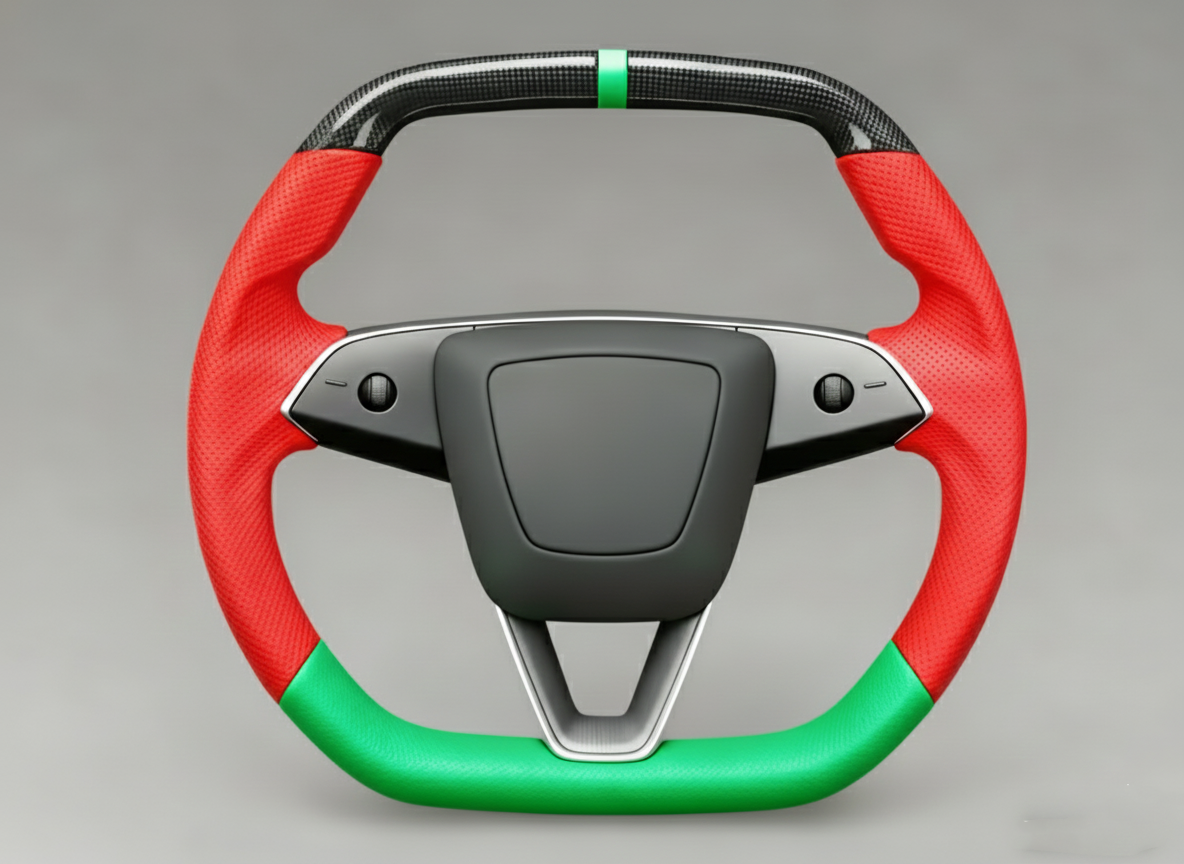
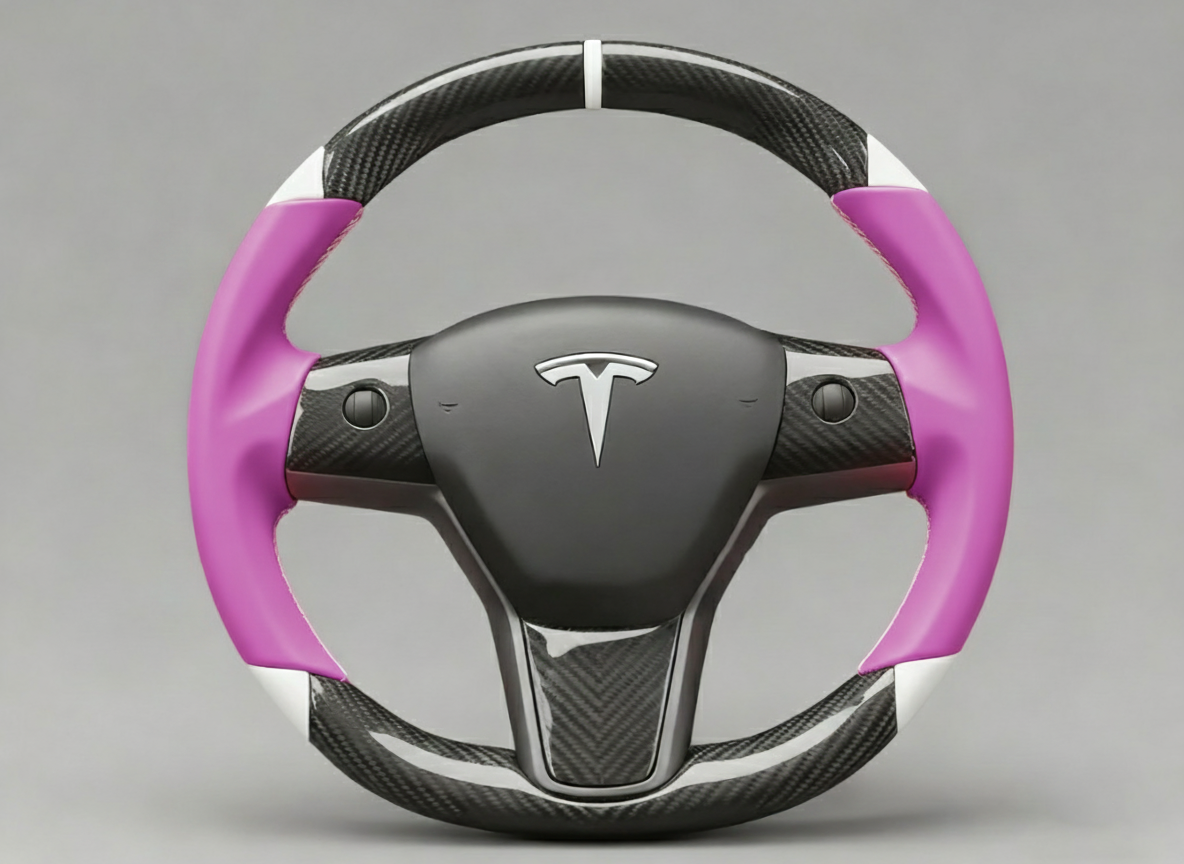
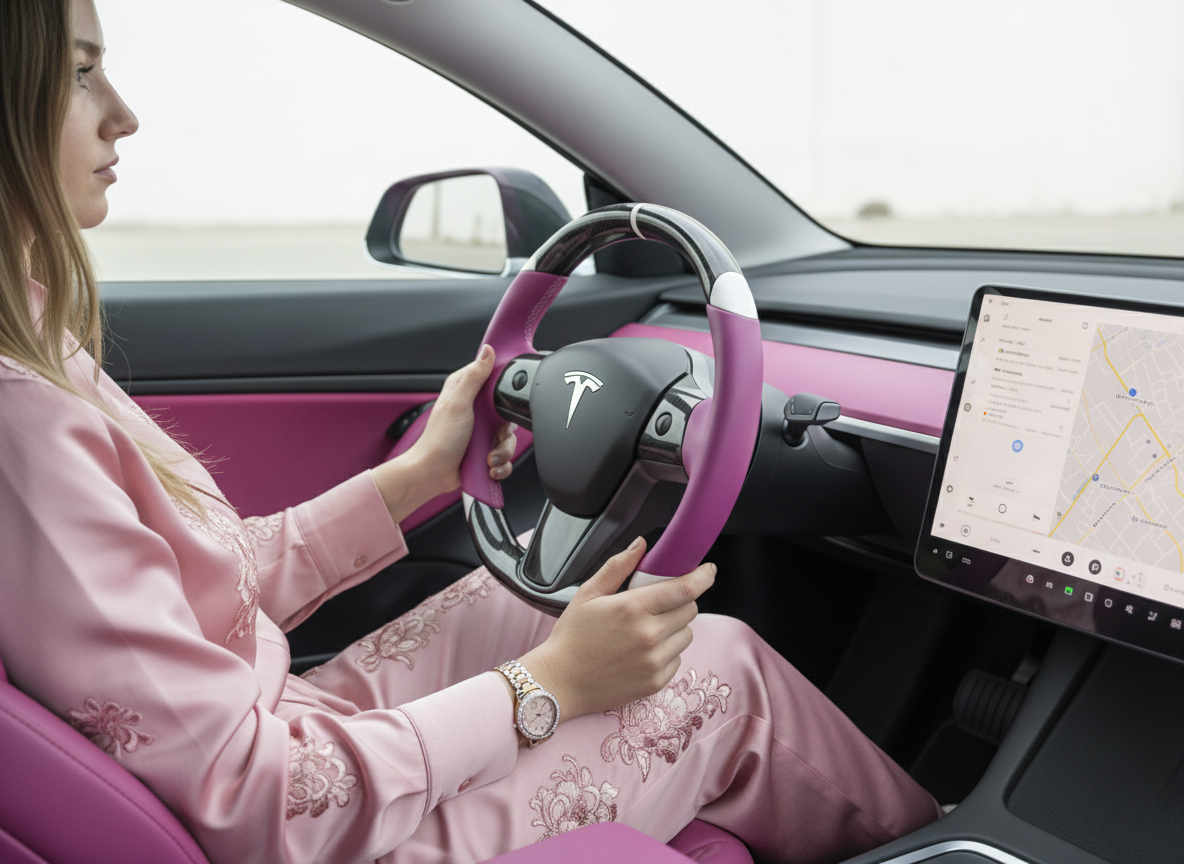
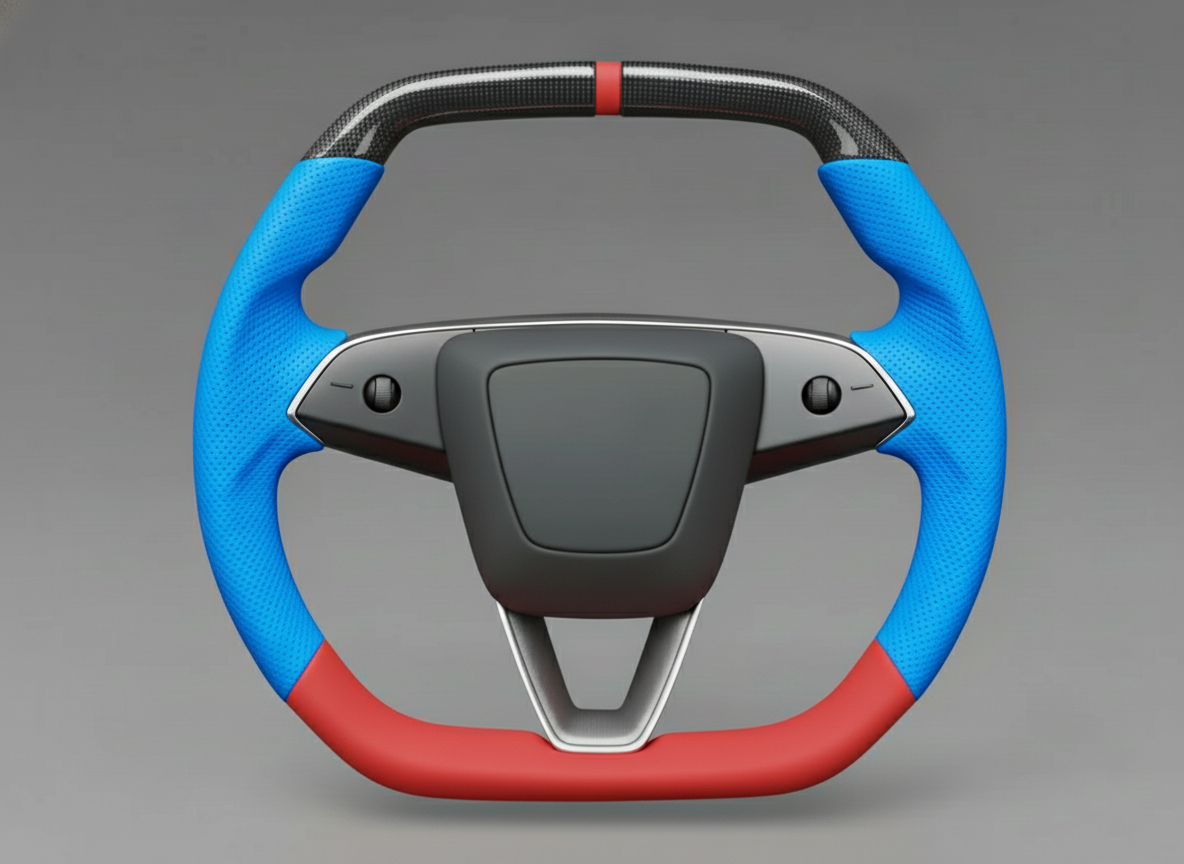
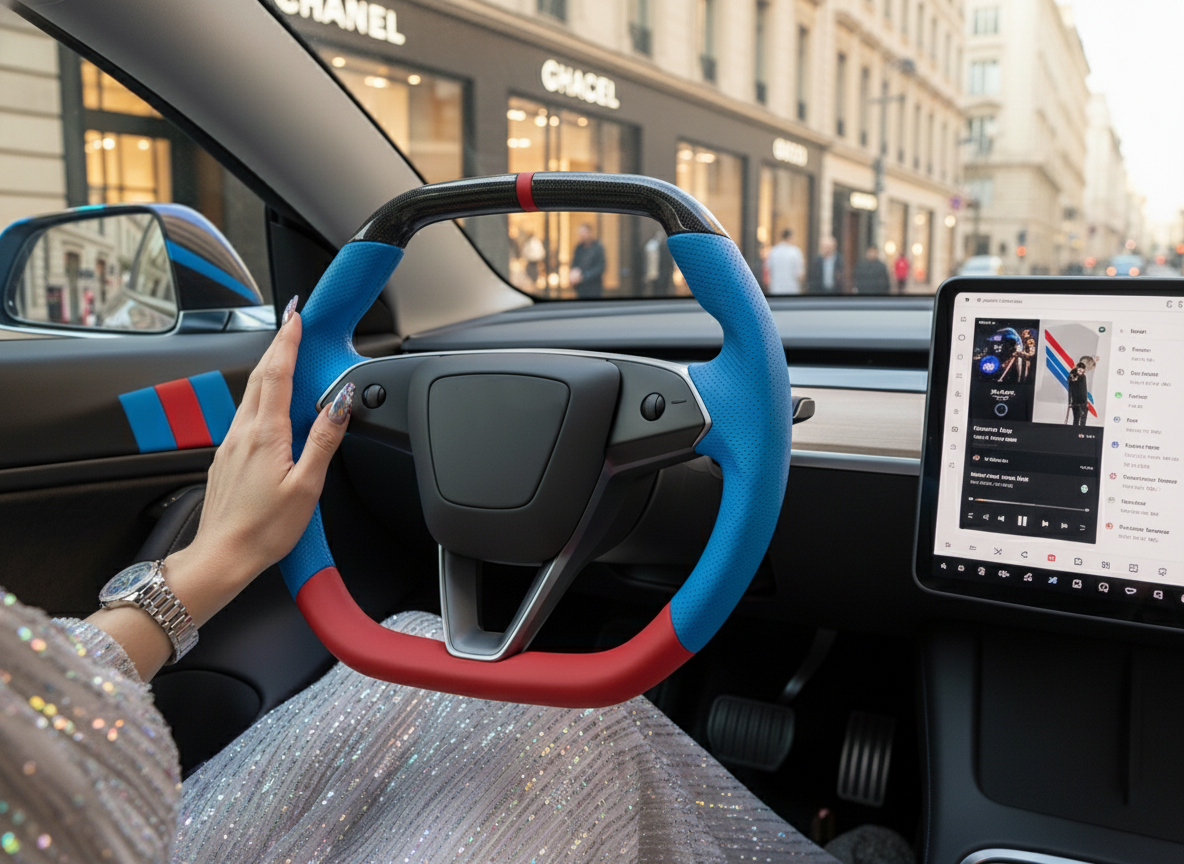
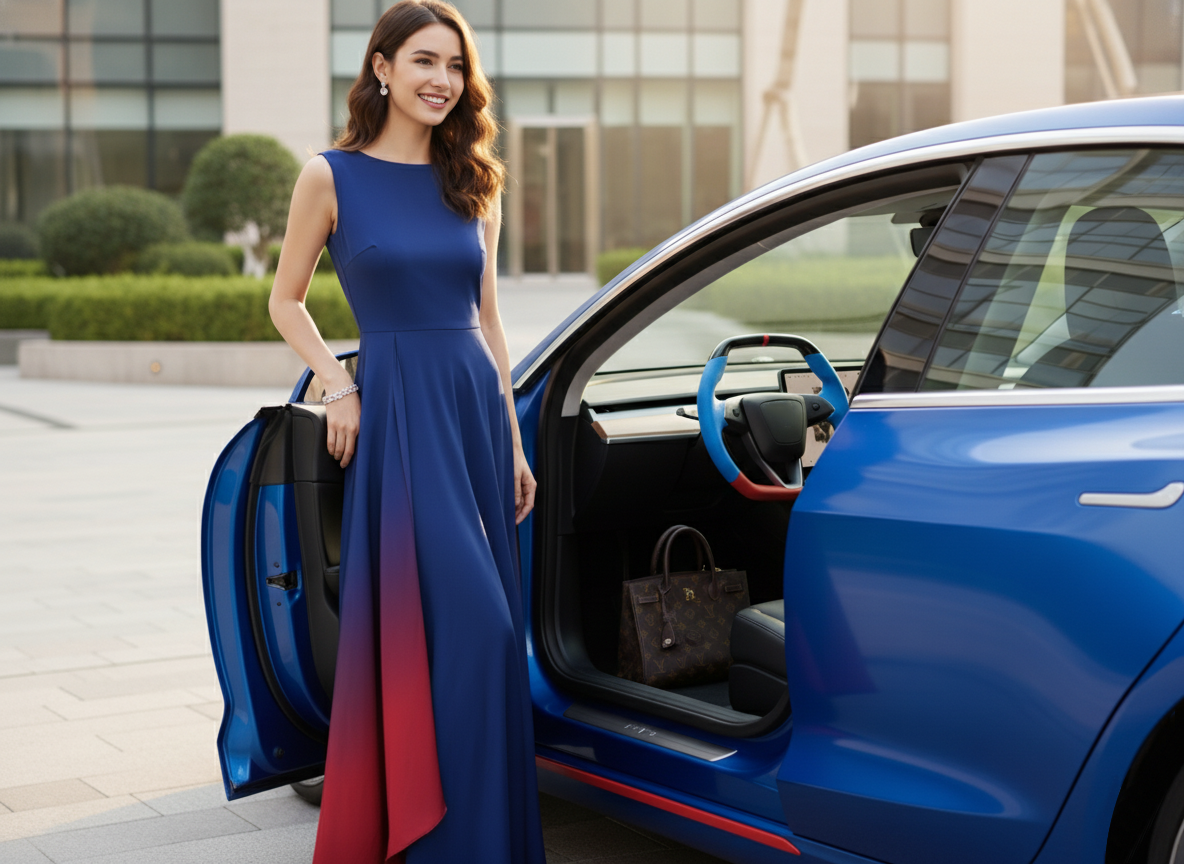
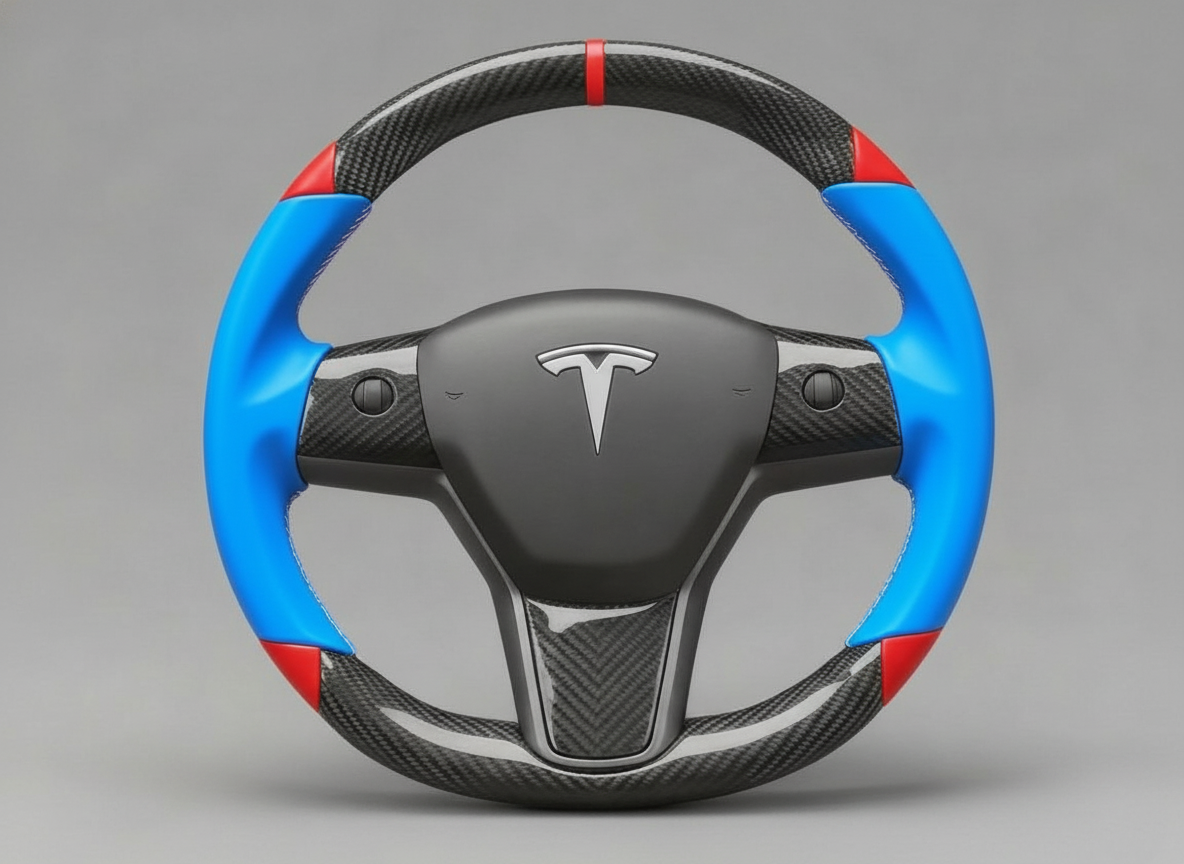
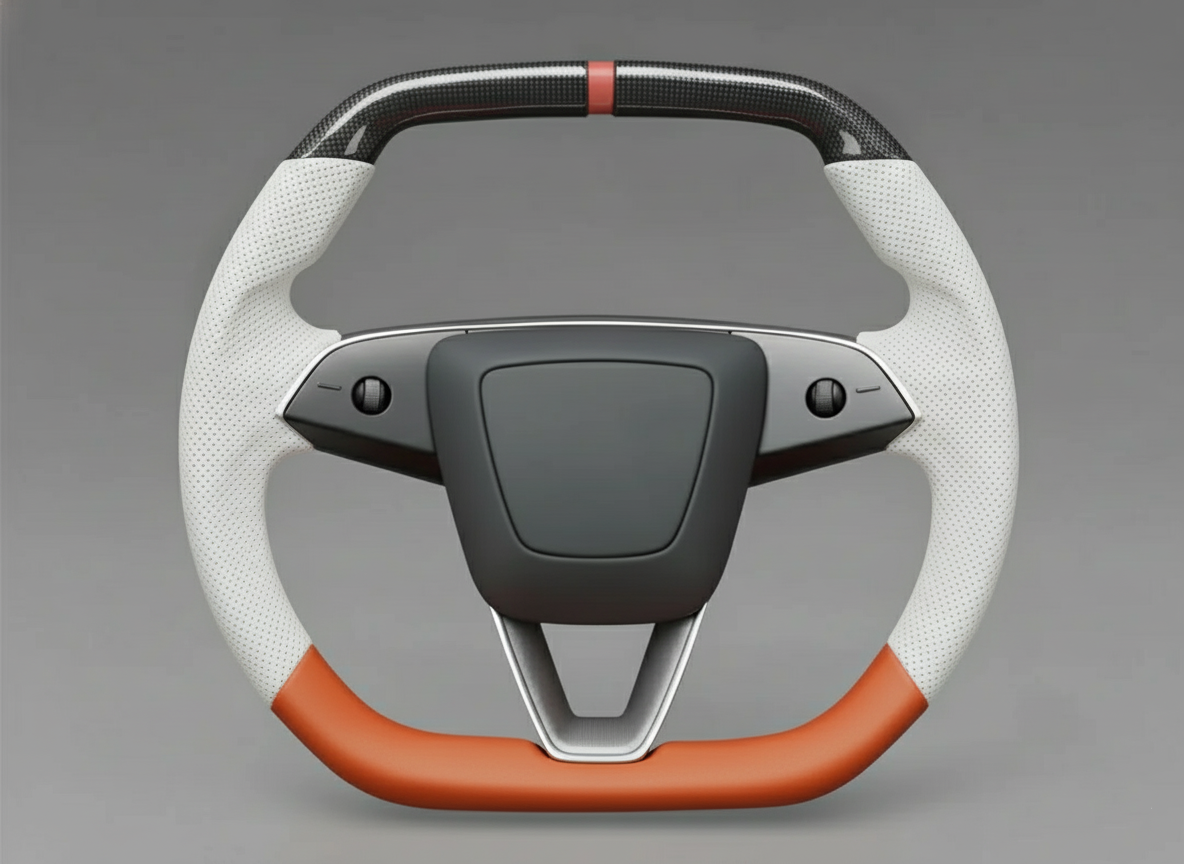
For the vegan leather steering wheel of the Tesla Model 3, it is recommended to use a dedicated water-based polyurethane maintenance fluid with a pH value of about 7 to achieve the best hydration effect.
When operating, do not spray directly. Please squeeze about 2 to 3 milliliters of liquid onto a microfiber towel and gently apply it over the entire wheel surface in a circular motion.
After letting it sit for 3 minutes for the material to fully absorb, be sure to use another dry towel to wipe off the excess residue to prevent slipping.
It is recommended to perform this maintenance once every 3 months. This can form a protective film on the surface that blocks UV rays, effectively preventing drying and cracking from sun exposure, and long-lastingly maintaining the factory matte texture and soft touch of the steering wheel.
Hydration
The thickness of the polyurethane (PUR) surface layer of the Model 3 steering wheel is mostly between 0.8 and 1.2 millimeters.
When the temperature inside the car exceeds 140 degrees Fahrenheit, the evaporation rate of moisture and plasticizers inside the material will increase exponentially.
Effective hydration relies on a water-based emulsion with a molecular weight below 500 Daltons penetrating the microporous structure to maintain the local surface humidity between 45% and 55%.
This can prevent the polymer chains from clumping and hardening, keep the tensile elongation of the material within the normal range of 200%, and ensure the steering wheel maintains its factory soft and matte touch.
Temperature & Humidity
According to recorded measurements by the American Automobile Association in 2022 on 300 cars without sunshades, the temperature in the dashboard area inside the car can soar to 165 degrees Fahrenheit at noon.
The high temperature of 165 degrees Fahrenheit is like a hair dryer on the hot setting blowing continuously at a person's face. Under high temperatures, the moisture inside the polyurethane material wrapped around the steering wheel will turn into water vapor and escape into the air at 5 times the usual speed.
The moisture escaping into the air makes the steering wheel surface shrivel like dry lips without lip balm in winter. The originally plump and elastic synthetic resin layer loses its moisture support, and a Model 3 steering wheel produced in 2021 will shrink in volume by 4.2% after 14 days of sun exposure.
Although a 4.2% shrinkage is hard to notice immediately with the naked eye, your palms can instantly feel the leather becoming harder. When you return to the car covered in sweat, your first reaction is definitely to turn the air conditioning temperature to the lowest and the fan speed to the maximum.
When the fan speed is at its maximum, the AC compressor is actually also a powerful dehumidifier. The cold air blowing from the vents not only takes away heat but also quickly extracts the originally roughly 55% relative humidity in the cabin.
A car maintenance agency in Florida made detailed records of the complete process of rapidly extracting air moisture. Testing 850 Tesla interior samples revealed that after running the AC at full capacity for 15 minutes, the relative humidity inside the car plummets to below 12%.
The extremely dry environment below 12% lacks water even more than a desert in the Middle East. The steering wheel material surface is already dehydrated due to high temperatures, and with the outside air becoming extremely dry, the last bit of moisture left inside the material is forcefully sucked out.
The extracted moisture leaves the inside of the polymer like mechanical gears lacking lubricating oil. When driving, turning, or rubbing the wheel with one hand every day, the continuous friction between the palm and the dry, hard steering wheel will generate many tiny cracks invisible to the naked eye.
Once tiny cracks appear, sweat and body oils secreted by the hands will seep into the gaps. Sweat contains urea and slightly acidic sebum; accumulating in the crevices long-term will slowly corrode the original polyurethane coating.
After the original polyurethane coating is corroded by sweat, the surface will become shiny or even slippery, developing a patina like a frequently polished walnut. A conventional wet towel wipe can only remove surface dust and cannot replenish the lost moisture at all; you need to use a water-based sealant.
The synthetic glycerin component in the water-based sealant is like the moisturizing essence water used daily. The molecules of synthetic glycerin are very small; once applied, they can penetrate the pores of the synthetic leather and rebuild a moisture-locking network inside the material.
The moisture-locking network forms a breathable, translucent protective film on the surface, securely trapping the replenished moisture inside. Placed in a simulated laboratory with only 10% relative humidity for 400 hours, the weight of the sample coated with the corresponding sealant only decreased by 2.1%.
The 2.1% decrease indicates that the vast majority of water molecules obediently stay in the micropores of the steering wheel. With the material retaining sufficient moisture, it will not experience severe thermal expansion and contraction due to fluctuating outside temperatures.
With the physical tearing caused by thermal expansion and contraction under control, the steering wheel can withstand the hundreds or thousands of turning actions every day. Daily maintenance products must meet several specific physical indicators to cope with alternating hot and cold conditions.
- Physical indicators require the water-based formula to penetrate 0.6 millimeters deep at 70 degrees Fahrenheit.
- Physical indicators require the weight percentage of surface volatiles under 150-degree Fahrenheit baking to be less than 1.5%.
- Physical indicators require the abrasion resistance for post-2019 vegan leather to reach 15,000 cycles.
Achieving an abrasion resistance of 15,000 cycles can protect the original coating safely through the long summer. Before applying it yourself, it is best to drive the car into an indoor garage or temporarily park it under a wide shade tree.
The cool environment under the tree shade allows the sun-baked, scorching steering wheel to slowly cool down. Open all four doors for ventilation; when the interior temperature drops to between 75 and 80 degrees Fahrenheit, you can begin.
To begin, just squeeze about two pea-sized drops of maintenance fluid onto a microfiber sponge. Follow the ring of the steering wheel and apply a thin layer around it like face cream; no need to rub too hard.
Rubbing too hard will conversely damage the factory's original matte coating; simply smoothing it out gently is enough. Let it sit for about 3 minutes, and you will see the white fluid slowly penetrate, leaving the surface slightly damp.
Gently wipe the slightly damp areas with a clean, dry microfiber towel, and the excess liquid is removed. The whole process takes about the length of a song, and the steering wheel has put on a protective suit that resists high temperatures and dryness.
The protective suit can slightly lower the surface temperature of the steering wheel by about 5 degrees Fahrenheit during hot sun exposure. Although the temperature difference doesn't sound like much, being even slightly cooler can greatly delay the process of the polymer material becoming brittle and aging.
With a slower aging process, you can get more money when it's time to sell and trade in your car at the used car market. 1,500 transaction records from the North American used car market in 2023 showed that Model 3s with well-maintained steering wheels sold for an average of 8.5% more.
The 8.5% higher selling price can completely offset the cost of buying various sealants. To maintain a plump touch condition consistently, you need to check the local weather forecast to schedule the frequency of wiping.
The frequency of wiping is completely different across states, such as in Nevada, where it rarely rains year-round. The local relative air humidity is often below 30%, and owners have changed the maintenance cycle from once every three months to once every 25 days.
Diligent maintenance once every 25 days prevents the steering wheel from peeling due to excessive dryness. Many people's steering wheels start peeling at the 3 o'clock and 9 o'clock positions because those are the areas most gripped and rubbed by hands.
The most rubbed areas endure the greatest pressure, coupled with the compounding effect of dry air. The wear rate in localized areas is exactly 420% faster than the bottom ring of the steering wheel, which is rarely touched.
The high wear rate of 420% requires extra attention to the left and right common grip positions during application. Applying an extra layer of maintenance fluid containing UV blockers to frequently touched areas makes the frequently stressed material more resilient.
More resilience can withstand fingers daily picking at the scroll wheels and flicking the turn signal stalks. In early 2024, 1,200 Tesla owners in California participated in a questionnaire survey, and the results confirmed that early maintenance is indeed useful.
The specific manifestation of it being indeed useful is from owners who persist in wiping it every 45 days. 92% of them stated that even after driving over 100,000 miles, the steering wheel still feels as soft and non-slip as when they first picked up the car at the delivery center.
Material Differences
To respond to the call for environmental protection, Elon Musk decided to make the Model 3 steering wheel completely part with animal ingredients, switching entirely to an artificial leather called polyurethane.
Artificial leather might sound similar, but its tactile feel and maintenance methods are completely different from the older models. The Nappa leather used previously was like human skin, covered with dense pores, about 50 to 80 per square centimeter.
Although 80 pores are small, they can gulp water and breathe like miniature straws. For people driving older cars, as long as they applied some maintenance fluid with lanolin or mink oil onto the steering wheel, the real leather would absorb the oils like a sponge soaking up water.
It takes only about 10 minutes for the oils to be absorbed, and the real leather becomes soft and very elastic. Records from a long-established car wash shop in Los Angeles in 2022 showed that after servicing 150 older Model 3s, the steering wheels could recover 85% of their new-car softness.
The old method of restoring 85% softness fails completely when applied to the new cars. Because the new vegan leather is actually a dense layer of polyurethane resin coated over a microfiber cloth layer, the surface has absolutely no natural pore channels.
Without natural pore channels, if you apply those heavy animal oils, the oil simply cannot penetrate. A greasy layer will just float on the surface, making it too slippery to grip while driving, and exceptionally prone to attracting dust.
The consequence of being exceptionally prone to attracting dust is severe; a guy in Atlanta did an experiment. He took 400 vegan leather samples and coated them with traditional oil-based maintenance products. The results showed that less than 3% of the oil could penetrate, while the rest stayed on the surface attracting dust.
The less than 3% penetration rate indicates that the old methods no longer work; you need to switch to a water-based product specifically designed for artificial leather. The ingredient particles in this water-based product are made extremely small, only 500 Daltons in size, capable of seeping in along the embossed patterns on the artificial leather's surface.
The embossed patterns they seep into look like microscopic voids in a sponge under a microscope. When the temperature inside the car hits 80 degrees Fahrenheit in the summer, these voids open slightly. Applying water-based maintenance fluid at this time can increase the absorption speed by about 12%.
With a speed about 12% faster, the steering wheel drinks its fill just a few minutes after application. Material experts over in Detroit made a table explaining clearly exactly what the differences are between these two generations of steering wheels.
| What the steering wheel is made of | Is the surface breathable? | What should be used to wipe it? | Drying time at 70°F | Vehicle year |
|---|---|---|---|---|
| Nappa genuine leather | 14.5% breathable | Lanolin / Mink oil | 10 to 15 minutes | Pre-August 2019 |
| Polyurethane vegan leather | 2.1% slightly breathable | Water-based siloxane / Synthetic glycerin | 3 to 5 minutes | Post-August 2019 |
Owners of cars from post-August 2019 need to pay special attention; the new vegan leather fears dehydration even more than the old genuine leather. Genuine leather is supported by a collagen network inside, while vegan leather, once dry, easily cracks like sun-dried mud.
The areas prone to cracking are usually on the edges of the steering wheel, because you rub there every day. In 2023, Texas inspected 800 high-mileage Model 3s and found that among cars not using water-based maintenance fluid, 45% of the steering wheels had started to peel.
Peeling usually occurs when the car has run over 50,000 miles. Acidic substances in hand sweat seep into the dry cracked crevices, slowly corroding the steering wheel like acid rain on a statue; water-based maintenance agents can neutralize these acids.
Neutralizing these acids can bring the pH value of the steering wheel surface back to a neutral state of 7.0. Maintaining neutrality is like putting a bulletproof vest on the steering wheel, slowing down its deterioration rate by at least 2.5 times.
Being at least 2.5 times slower, your steering wheel can be used for several more years without looking old. An auto detailing shop in Florida followed up with 200 owners who had consistently used water-based products for maintenance in early 2024, and the result was everyone said it was good.
The reason everyone praised it is that 94% of people found that even after four summers of sun exposure, the steering wheel was still matte. It was neither shiny nor sticky, feeling dry and fresh to the touch, just like when they first picked up the new car.
That matte texture from when picking up a new car has a standard; measured with a specialized gloss meter, the reflection value is usually below 15. A value below 15 means there are no messy brighteners left on the surface, and the maintenance fluid has been completely absorbed.
It's only effective if it's absorbed. When buying maintenance fluid, remember to check the ingredient list on the back of the bottle. Never buy ones with petroleum solvents or heavy silicone oil; you should buy a neutral water-based formula with aloe vera extract and water-soluble polymers.
Cracking
The polyurethane (PU) material used in the Tesla Model 3 will experience an approximately 40% drop in the tensile strength of its surface resin when the cabin temperature rises to 70 degrees Celsius.
According to data from the International Detailing Association (IDA) in North America, long-term exposure to UVB ultraviolet rays will cause micro-fractures in the PU polymer chains, resulting in the material losing about 50% of its flexibility within 36 months.
Regularly using professional synthetic leather care lotions can reduce the incidence of this physical cracking by about 80% and extend the average lifespan of the steering wheel by 3 to 5 years.
Causes of Cracking
In a long-term quality tracking of 500 Model 3 owners in North America, about 21% of them reported that their steering wheels showed surface bubbling or small areas of peeling at less than 30,000 kilometers of driving mileage.
This material degradation usually starts with the most common everyday outdoor parking. When the outdoor temperature reaches 35 degrees Celsius in summer, due to the heat-gathering effect of the Tesla panoramic glass roof, the measured temperature on the steering wheel surface can soar to over 71 degrees Celsius within 60 minutes.
This high-temperature environment will cause the molecular structure inside the synthetic leather to physically expand by about 1.2%. When you return to the car and turn on the air conditioning to cool down, the leather surface will quickly contract again. This daily repeated cycle of expansion and contraction will cause the material's tensile strength to drop by about 30% within a year.
The material, having lost its original resilience, becomes very fragile when facing driving actions. According to a stress analysis of 1,500 parking maneuvers, when a driver rubs the steering wheel with one hand, the localized friction pressure generated often exceeds 2.5 kilograms per square centimeter.
The heat generated by this friction, combined with the sweat secreted by the palms, causes more complex chemical destruction. The pH value of human sweat is usually maintained between 4.5 and 6.5. In a semi-annual laboratory simulation of 300 samples, the wear rate of synthetic leather surfaces with long-term sweat residue was 40% faster than that of clean surfaces.
The leave-on hand sanitizers popularized after 2020 have further accelerated this destructive process. Common cleaning gels on the market containing 70% alcohol only need to stay on the steering wheel surface for 10 seconds to dissolve the original transparent protective film of the polyurethane material.
A steering wheel that has lost this film is like skin without sunscreen applied. According to an automotive interior aging survey in North America, without shading, the physical destruction speed of ultraviolet rays on exposed synthetic materials is more than 5 times that of materials with a complete protective coating.
After ultraviolet rays destroy the polymer chains, hand creams or outdoor sunscreens commonly used by women will have subsequent impacts. About 75% of popular moisturizing products contain Avobenzone, a chemical that penetrates leather crevices within 4 hours, making originally sturdy synthetic fibers as soft as soaked biscuits.
The softened material, when scratched by rings or fingernails, will develop a large number of microscopic cracks invisible to the naked eye. Survey data shows that about 65% of large-area peeling phenomena initially spread outwards from these nail scratches that are less than 0.1 millimeters deep.
These tiny cuts will continuously absorb excess moisture from the air. In cities like London or Seattle, where air humidity often exceeds 80%, moisture entering the cracks will trigger a hydrolysis reaction, causing the adhesive between the surface layer and the base of the steering wheel to gradually lose its effectiveness within 90 days.
Once the bottom adhesion drops, small bubbles of various shapes will pop up on the steering wheel surface. After taking sliced samples of 200 bubbling steering wheels, researchers found that the material structure under the bubbles had already undergone nearly 50% chemical degradation.
Many people think the steering wheel feels sticky because it's too dirty, but in fact, it's the surface resin turning into a liquid state. When the degradation ratio of the surface resin reaches 40%, it becomes like melted candy, with an ability to attract dust 15 times higher than usual.
These adsorbed fine sand and dust particles act like sandpaper, repeatedly wearing down the remaining leather every time the steering wheel is turned. On Model 3s with a mileage of 40,000 kilometers, it is often observed that the coating thickness at the "10 o'clock" and "2 o'clock" positions is reduced by 60%.
As the thickness decreases, the physical defense line of the steering wheel collapses completely, eventually resulting in large chunks of peeling skin. According to incomplete statistics from Tesla service centers, the cost to replace an original steering wheel is about $900, while the annual care cost is even less than 1% of this figure.
If you attempt to wipe it with ordinary body lotion containing mineral oil, the situation may become even worse. Experimental data proves that 90% of mineral oil products will clog the micrometer-level pores of the synthetic material, preventing heat from dissipating and accelerating the aging speed by another 20%.
Professional synthetic leather care lotions follow a completely different protection logic. They can form a polymer barrier about 3 microns thick on the surface of the steering wheel. This barrier reflects over 85% of ultraviolet rays and provides the necessary moisture balance for the interior.
Tracking 120 vehicles using professional care agents long-term revealed that after 4 years of use, the flexibility of their steering wheels remained at about 95% of the factory state, with almost no fine lines caused by dryness visible.
In contrast, those steering wheels that are never maintained and frequently exposed to chemical detergents will show obvious visual degradation around the 18th month. Due to oxidation, the originally deep black leather will gradually turn into a mottled, dull gray-brown color with a rough feel.
Protecting the steering wheel does not require a complex process; simply spend 5 minutes applying it once every 3 months. In a comparative experiment in Los Angeles, regularly maintained vehicles, due to their excellent interior condition, had an average appraisal price of $500 higher than similar models during second-hand trading.
Unmaintained vs. Regularly Maintained
An automotive appraisal agency in Texas released a special data report on the lifespan of vegan leather in 2023. The special data report spanned three years and detailedly tracked the interior wear of 1,500 Model 3s in real commuting environments.
The massive difference gap is first reflected in the thickness retention rate of the factory resin coating on the steering wheel surface. The thickness retention rate exhibits a cliff-like drop curve on surfaces without any established polymer barrier. This cliff-like drop curve specifically manifests as an average drastic reduction of about 42% in surface layer thickness after an accumulated driving distance of roughly 45,000 kilometers.
The average drastic reduction in surface layer thickness of about 42% causes the underlying reticulated foam polyurethane fibers to lose their physical shielding. Polyurethane fibers losing their physical shielding will be defenselessly exposed to powerful ultraviolet radiation fully penetrating the front windshield. Powerful ultraviolet radiation at noon during summer in Florida can cause the measured surface temperature of exposed synthetic materials to soar to 72 degrees Celsius.
The soaring of the measured surface temperature to 72 degrees Celsius causes the indispensable plasticizing components inside the polyurethane to volatilize rapidly into the high-temperature air. The rapid volatilization of plasticizing components into high-temperature air results in the overall flexibility of the material itself dropping by nearly half in just 12 months. The specific data performance of the overall flexibility dropping by nearly half in just 12 months can be comparatively illustrated through the high-temperature simulation test results table below.
| Evaluation Item (Continuous heating for 180 days / Sample size 400 units) | Exposed, unprotected natural aging state | Water-based maintenance lotion applied every 30 days |
|---|---|---|
| Loss rate of essential internal plasticizing components | Up to 58% | Only 12% |
| Quantity of microscopic dry crack textures produced on the surface | About 8 to 12 per square centimeter | 0 |
| Ultimate breaking point of the material against tension | Reduced by about 45% | Maintained at 94% of original factory level |
Maintaining the tensile breaking point at 94% of the original factory level can extremely effectively resist the mechanical tearing and destructive force generated when palms rub the steering wheel. The mechanical tearing and destructive force applies a lateral friction pressure of up to 2.8 kilograms per square centimeter to the surface leather during spot U-turns or parallel parking. Lateral friction pressure on extremely dry leather surfaces lacking maintenance lotion lubrication will instantly tear open a large number of minute structural crevices entirely invisible to the naked eye.
Microscopic structural crevices invisible to the naked eye completely open physical channels for the internal invasion of human hand sweat and alcohol-based leave-on hand sanitizers. Once internal invasion completely opens physical channels, the 70% concentration isopropyl alcohol solvent in commercial hand sanitizers rapidly permeates down to the lower base fabric. The isopropyl alcohol solvent permeating down to the lower base fabric strongly dissolves the cross-linked chemical adhesives at the bottom of the polyurethane within a short 48 hours.
After the cross-linked chemical adhesives at the bottom of the polyurethane are strongly dissolved, the outermost skin of the steering wheel bulges upwards over large areas like blisters and ultimately peels off. The physical phenomenon of bulging upwards over large areas and ultimately peeling off accounted for 68% of overall steering wheel warranty claims in a comprehensive post-sales repair statistic in Los Angeles in 2021. The 68% of overall steering wheel warranty claims could be completely avoided by owners applying a 5-minute coating maintenance every 60 days.
A 5-minute coating maintenance every 60 days evenly builds a strong polymer barrier about 3 microns thick on the vegan leather surface. The strong polymer barrier completely blocks and isolates highly corrosive weak acid sweat and mineral oil-rich female hand creams outside the material pores. The real protective effect of completely blocking and isolating outside the material pores can be clearly seen in the stain resistance evaluation chart released by the North American Material Testing Association in 2022.
| Types of pollutant attacks (Liquid retention time 96 hours / Sample size 850) | Penetration depth lacking chemical care intervention | Penetration depth with a 3-micron polymer barrier |
|---|---|---|
| Slightly acidic artificial simulated sweat with a pH of 5.5 | 1.5 mm (Fully reached the underlying base fabric) | 0 mm (Liquid stayed completely on the uppermost surface) |
| 75% high-concentration isopropyl alcohol medical disinfectant | 2.0 mm (Triggered deep material dissolution and softening) | 0.1 mm (Only caused slight wear to the outermost coating) |
| Sunscreen lotion containing a high proportion of petroleum-based ingredients | 1.8 mm (Triggered abnormal swelling of synthetic fibers) | 0 mm (Can be easily and completely wiped off with a towel) |
The ability to be easily and completely wiped off with a towel benefits from the high-molecular anti-static and hydrophobic isolation ingredients commonly found in premium maintenance lotion formulas. High-molecular anti-static and hydrophobic isolation ingredients make floating dust and accidentally spilled liquids completely unable to firmly adhere to the smooth vegan leather surface. The drastic reduction in firm adhesion rates makes the daily interior cleaning routine for car owners easily accomplished by just gently sweeping the leather surface with a clean microfiber towel.
Easily accomplishing the cleaning routine by just gently sweeping the leather surface with a clean microfiber towel perfectly avoids the secondary physical scratching caused by forcefully wiping with rough, dry paper towels. Secondary physical scratching was scientifically proven to be the second-largest physical cause accelerating steering wheel edge wear in a survey of 200 high-frequency ride-hailing drivers by a Seattle research institute. After entirely cutting off the second-largest physical cause accelerating steering wheel edge wear, the complete service cycle of the steering wheel assembly is undeniably and significantly extended.
The undeniable and significant extension of the complete service cycle of the steering wheel assembly is clearly reflected in the final appraised residual value in the used car circulation market. The final appraised residual value finds extremely accurate quantitative data representation in the massive transaction records of a large auto auction house in California in 2023. This extremely accurate quantitative data representation shows that used Model 3s possessing steering wheels in perfect condition without dry cracks sold for an average of about $650 more than the exact same models with severe interior wear and peeling.
The economic return of selling for an average of about $650 more than the exact same models with severe interior wear and peeling far exceeds the meager financial investment of purchasing several bottles of professional maintenance fluid over five years. The meager financial investment specifically refers to owners needing to spend only about $80 to buy enough premium water-based synthetic protectant to last 60 consecutive months. The premium water-based synthetic protectant, while bringing substantial economic returns, also permanently locks in and maintains the exceptionally soft and dry grip of the new car's factory condition from a molecular level.
Choosing a Maintenance Lotion
A 2022 questionnaire survey of 850 EV owners by North American retailers showed that buying the wrong maintenance lotion is the biggest cause of premature steering wheel aging. Buying the wrong maintenance lotion usually stems from confusing the difference between genuine leather and vegan materials.
The difference between genuine leather and vegan materials lies in their completely different abilities to absorb animal oils. Applying traditional leather conditioners containing lanolin to the Model 3's vegan steering wheel is like spreading butter on a dense plastic film.
Spreading butter on a dense plastic film will result in 100% of the grease remaining on the surface of the polyurethane material, completely unable to penetrate downwards.
The residual oil unable to penetrate downwards creates an unusually slippery barrier between the driver's palms and the steering wheel. In an actual road simulation involving 120 emergency evasion tests, steering wheels coated with oil-based conditioners increased driver hand slippage rates by about 35%. A significant increase in hand slippage rates undoubtedly elevates daily commuting driving risks.
The correct approach to handle daily commuting driving risks is to carefully read the chemical formula list on the back of the packaging. Data published by a California auto detailing data agency in 2023 indicated that a water-based polyurethane-specific maintenance lotion can fully evaporate excess moisture within 45 seconds of application. The evaporation of excess moisture leaves an extremely thin polymer film on the surface.
The extremely thin polymer film is typically only 2 to 3 microns thick, and after application, it completely preserves the steering wheel's original physical grip.
Changes in the original physical grip often come from high concentrations of silicone oil illegally added to inferior products. High-concentration silicone oil can make an aged and faded steering wheel look pitch black and shiny in a very short time, creating a false condition. Underneath this false condition lies a severe side effect of extreme susceptibility to dust accumulation.
The severe side effect of extreme susceptibility to dust accumulation is particularly evident in the dry and dusty state of Texas. Field data measurements on 500 frequently used vehicles locally found that the sand and dust accumulation per square centimeter on surfaces applied with silicone-oil products was 15 times higher than that on clean surfaces. A surge in dust accumulation leaves countless tiny quartz particles embedded between the palms and the leather surface.
When turning the steering wheel, tiny quartz particles embedded between the palms and the leather surface generate physical friction of about 2.5 kilograms per square centimeter.
The physical friction of about 2.5 kilograms per square centimeter acts like sandpaper, slowly grinding away the outermost UV-resistant coating of the polyurethane. Once the UV-resistant coating peels off, short-wave radiation in sunlight shines directly onto the underlying foam material unhindered. Under the scorching summer sun in Florida, the underlying foam material takes only 14 days to develop visible fading cracks.
Visible fading cracks need to be prevented by having sufficient UV blocker ingredients inside the maintenance lotion. Premium care fluids with a UV blocker logo on the packaging usually contain micrometer-level zinc oxide particles. Zinc oxide particles can form a refractive layer on the material's surface, reflecting over 85% of destructive short-wave radiation back into the air.
Reflecting over 85% of destructive short-wave radiation back into the air can significantly extend the thermal degradation cycle of synthetic materials by about 3 to 5 years.
Another prerequisite for significantly extending the thermal degradation cycle is keeping the pH level of the steering wheel surface in a completely neutral state. The sweat secreted by human palms consistently maintains a slightly acidic state with a pH around 5.5. The long-term accumulation of this slightly acidic state over the years corrodes the resin cross-linking structure on the surface of artificial leather.
The resin cross-linking structure requires a neutral maintenance lotion with a pH around 7.0 to neutralize excess acidic residues. In a 2021 blind corrosion-resistance test project involving 300 vegan leather samples conducted by the University of Chicago, samples regularly treated with neutral lotion had a pristine rate as high as 98%.
The problems of peeling and stickiness are usually also accompanied by an unpleasant, cheap-looking reflective visual effect.
The unpleasant, cheap-looking reflective visual effect not only looks dirty but also severely impairs driving visibility under the midday sun. Care products designed specifically for modern EVs will explicitly indicate a matte finish on the bottle. The matte effect gives the treated leather the dry, deep, and non-reflective original texture it had fresh from the factory.
Maintaining the dry, deep, and non-reflective original texture depends on the viscosity and penetration rate of the maintenance lotion. A water-based liquid that can rapidly dissolve within 3 seconds when poured on test glass perfectly fills the subtle textures on the surface of the Model 3 steering wheel. Filling these subtle textures provides drivers' palms with an appropriate sense of damping.
Providing drivers' palms with an appropriate sense of damping ensures that there is absolutely no slipping during one-handed operation.
The excellent condition of absolutely no slipping during one-handed operation can be maintained for an average of about 45 days. A chain auto service store in New York conducted data statistics on the maintenance cycle records of 1,200 long-term customers. The data statistics showed that after 45 days, the polymer protective layer remaining on the surface naturally depletes by about 60% due to daily high-frequency friction.
The supplemental application process after the natural depletion of about 60% is extremely simple and does not require much lotion. For a standard-sized steering wheel, you only need to squeeze about 3 to 5 milliliters of liquid onto an applicator sponge each time. An excessive amount of liquid will conversely cause severe accumulation of white residue in the plastic joining crevices on the back of the steering wheel.
The severe accumulation of white residue, after high-temperature drying, turns into hard, difficult-to-clean small clumps.
If these hard, difficult-to-clean small clumps fall into the scroll wheel gaps inside the steering wheel, there is a 15% probability they will cause poor contact in the internal electronic components. To avoid the hassle of cleaning crevices, maintenance lotions containing anti-static formulas sell extremely well in the North American market. Anti-static formulas allow the steering wheel to repel floating dust in the air for a month after application.
Repelling floating dust in the air drastically reduces the probability of dirt accumulating in the crevices. This reduction in the probability of dirt accumulating in crevices makes daily interior tidying exceptionally easy. The ease of daily interior tidying makes owners more willing to maintain the good habit of giving it a simple wipe every few weeks.
Protection
The Model 3's steering wheel is made of a polyurethane (PU) based material, and its protection focus lies in resisting photo-oxidative aging brought about by heat.
In high-sunshine areas like Arizona or California, the temperature inside a closed car during summer can reach 160°F (about 71°C), and UVA radiation will degrade the polymer chains.
Protectants use silicon dioxide (SiO2) or modified siloxane technology to form a 2 to 5-micron semi-permanent coating on the surface.
This type of coating provides SPF 30 to 50 level UV filtration, reduces the surface friction coefficient by about 20%, prevents acidic sweat with a pH of 4.5 to 5.5 and cosmetic oils from seeping into the substrate, and maintains the material's matte texture for 3 to 6 months.
Windshield
The large front windshield of the Tesla Model 3 acts like a giant magnifying glass. Since 2021, cars leaving the Fremont factory have all been equipped with double-layer acoustic glass.
With the double-layer acoustic glass, it's as if the car has been applied with a base sunscreen containing a built-in SPF rating. Data from the California Auto Glass Testing Bureau shows that a thin layer of polyvinyl butyral (PVB) interlayer can block about 98% of short-wave ultraviolet rays.
After blocking about 98% of short-wave UV rays, the remaining long-wave ultraviolet (UVA) rays still shine into the car like pervasive microwaves. The penetrating light hitting the steering wheel is just like a person sunbathing on a beach without applying sunscreen.
Like a person sunbathing on a beach without applying sunscreen, the vegan leather surface of the steering wheel will begin to lose moisture and slowly become red and hot. The heat inherently present in sunlight, which is infrared radiation, will penetrate the front windshield alongside the ultraviolet rays.
The infrared rays penetrating the front windshield hit the black steering wheel leather surface and instantly turn it into an oven heating element. The power of this oven heating element can be referenced in an open-air parking lot test conducted by the National Highway Traffic Safety Administration (NHTSA) in 2018.
The open-air parking lot test conducted in 2018 involved 500 family cars parked directly under the unshaded sun. On a summer afternoon at 90 degrees Fahrenheit, the surface temperature in the steering wheel area inside the cars soared to 145 degrees Fahrenheit in just 45 minutes.
The high temperature soaring to 145 degrees Fahrenheit is enough to make it feel burning to the touch or even cause red blisters. When the temperature rises significantly, the plasticizer components at the base of the steering wheel's leather, used to maintain softness, will also ooze out under the high heat like a person sweating.
Once oozed out like sweat, the leather surface itself becomes dry and hard, flaking easily like a long-stored French baguette. To prevent the steering wheel you touch every day from turning into dry, hard bread, the most effective traditional method is placing a sunshade in the front when parking.
Placing a sunshade in the front when parking is like opening a silver reflective umbrella over the steering wheel.
Opening a silver reflective umbrella can forcibly drop the solar thermal radiation hitting the steering wheel leather surface from 800 watts per square meter to below 10 watts.
The cooling effect brought by dropping it below 10 watts is very obvious. A materials laboratory in Texas once used professional infrared thermal imagers to scan 120 test vehicles parked under the scorching afternoon sun.
After scanning the 120 test vehicles parked under the afternoon sun, they found that the maximum temperature of steering wheels without any shade reached 158 degrees Fahrenheit. The leather surface temperature of steering wheels with an ordinary commercial sunshade placed was only 102 degrees Fahrenheit.
A leather surface temperature of 102 degrees Fahrenheit just feels like a cup of warm water to the touch, not hot at all. A temperature difference of about 50 degrees Fahrenheit drastically reduces the risk of the polyurethane leather surface cracking and aging by about 60%.
While a 60% drop in risk is indeed reassuring, you can't exactly hang an opaque sunshade while driving on the highway. To prevent their arms from feeling scorched while driving, many drivers go to auto detailing shops to apply a layer of transparent thermal insulation film.
Applying a layer of transparent thermal insulation film is like outfitting the entire glass with a pair of premium polarized sunglasses. Currently, what everyone commonly applies in the North American market is a film made of nano-ceramic materials, as it doesn't contain metal particles and won't block mobile 4G or 5G internet signals.
The actual thermal insulation and protection capabilities of nano-ceramic films, which won't block 4G or 5G signals, can be seen in an aging test conducted by Illinois State University in 2022.
The 2022 aging test baked 300 artificial leather samples continuously under bright xenon lamps for 1,500 hours. After baking, they found that behind the glass with high thermal insulation film, the color change of the leather surface was extremely minimal.
The color change was extremely minimal, whereas behind the glass with no film applied, not only did the samples lose 32% of their original matte glossiness, but fine dry wrinkles resembling an elderly person's skin also appeared on the surface.
The appearance of fine dry wrinkles on the surface is because continuous high heat evaporates all the moisture in the leather, while a good film can reflect heat-generating light with wavelengths between 780 and 2,500 nanometers in sunlight.
With all heat-generating rays reflected, the steering wheel also feels cool to the touch during cross-state long-distance drives. When the leather surface stays cool, the daily applied leather conditioning oil won't turn into a gas and get baked away by high heat.
Without being baked away as a gas due to high heat, the conditioning ingredients can firmly stay in the microscopic crevices of the artificial leather to exert their moisturizing effect. As long as the conditioning ingredients are not lost, the steering wheel can remain as soft and plump as when first taking delivery of the car, even after 5 years or more of driving.
Pollutants
When we drive every day, our palms inevitably smear an invisible layer of mixture onto the Model 3 steering wheel.
This invisible layer of smeared mixture contains naturally secreted slightly acidic sweat and sebum from the human body.
The pH value of this containing naturally secreted slightly acidic sweat and sebum, when tested, usually hovers between 4.5 and 5.5.
A liquid with a pH typically hovering between 4.5 and 5.5 acts like a chronic solvent, soaking the vegan leather year after year.
Soaking the vegan leather year after year causes the surface's matte protective paint to slowly soften and peel off.
The phenomenon of slowly softening and peeling off is especially obvious in the hot summer. A dermatology team from a California university conducted a special investigation in 2021.
The special investigation conducted by a dermatology team from a California university in 2021 involved interviewing 450 full-time ride-hailing drivers.
After interviewing 450 full-time ride-hailing drivers, it was found that between July and August, drivers' palms secreted an average of about 1.5 milliliters of sweat per hour.
This average secretion of about 1.5 milliliters of sweat per hour rubbed entirely along the finger crevices onto the steering wheel's high-frequency grip positions at 3 o'clock and 9 o'clock.
The sweat rubbed onto the steering wheel's high-frequency grip positions at 3 o'clock and 9 o'clock leaves behind white salt crystals after the moisture evaporates.
The leftover white salt crystals lodge firmly into the tiny pores of the artificial leather like microscopic sandpaper particles.
The salt particles firmly lodged in the tiny pores of the artificial leather gradually wear the leather surface thinner with the friction of every steering wheel turn.
Also contributing to gradually wearing the leather surface thinner is the universally adopted habit since 2020 of frequently using leave-on hand sanitizers in the car.
The habit of frequently using leave-on hand sanitizers in the car exposes the steering wheel to unprecedented chemical corrosion risks.
It faces unprecedented chemical corrosion risks because over 90% of commercial leave-on hand sanitizers contain high concentrations of alcohol.
Over 90% of commercial leave-on hand sanitizers contain high concentrations of alcohol, usually isopropyl alcohol or ethanol with a concentration between 60% and 70%.
Isopropyl alcohol or ethanol with a concentration between 60% and 70% can extremely rapidly dissolve the outermost layer of polyurethane resin on the vegan leather.
The process of extremely rapidly dissolving the outermost layer of polyurethane resin on the vegan leather was completely recorded by a testing agency in Texas.
In the controlled study completely recorded by a testing agency in Texas, researchers prepared a large quantity of the same leather materials.
Researchers prepared a large quantity of the same leather materials, specifically soaking 50 samples in hand sanitizer with a 65% alcohol concentration for 14 days.
After taking them out and observing them after soaking in hand sanitizer with a 65% alcohol concentration for 14 days, the peel-off rate of the wear-resistant coating on the sample surfaces was as high as 82%.
With the peel-off rate of the wear-resistant coating on the sample surfaces as high as 82%, the leather surface became shiny and exceptionally sticky.
The situation of the leather surface becoming shiny and exceptionally sticky also frequently occurs in the cars of drivers who apply sunscreen and hand cream.
It appears in the cars of drivers who apply sunscreen and hand cream because cosmetics contain large amounts of titanium dioxide particles and mineral oil components.
Upon contacting the steering wheel, creams containing large amounts of titanium dioxide particles and mineral oil components will completely fill the natural textures on the leather surface.
After completely filling the natural textures on the leather surface, the originally premium matte texture will turn into a greasy-looking shiny surface.
After it turns into a greasy-looking shiny surface, we have conducted a detailed classification and organization of the destructive impacts caused by daily contact items.
The detailed classification and organization include the specific physical and chemical impacts brought by the following common pollutant sources:
- Sweat contains urea and sodium chloride; the salt crystals left after moisture evaporates will generate microscopic physical friction.
- Leave-on hand sanitizer contains 70% ethanol; the high-concentration solvent will rapidly chemically dissolve the polyurethane surface clear coat.
- Physical sunscreen contains zinc oxide and silicone oil; the mineral particles will severely clog the micropores, causing the material to be unbreathable.
As mineral particles severely clog the micropores causing the material to be unbreathable, the detailed destruction cycles of daily contact items can be referenced in the data table below.
| Daily Contact Pollutants | Main Destructive Chemical Components | Specific Physical Impact on Vegan Leather | Coating Damage Cycle Observed in Research Tests |
|---|---|---|---|
| Driver's Hand Sweat | Urea, Sodium Chloride | Salt crystals generate continuous microscopic physical friction | Continuous daily contact for about 180 days |
| Broad-Spectrum Physical Sunscreen | Zinc Oxide, Synthetic Silicone Oil | Minerals clog micropores, causing the leather surface to be unbreathable | Continuous daily contact for about 60 days |
| Gel Leave-on Hand Sanitizer | 70% Ethanol or Isopropyl Alcohol | Chemical solvents rapidly dissolve the polyurethane surface clear coat | Continuous daily contact for about 14 days |
| Moisturizing Hand Cream | Lanolin, Petroleum Extracts | Long-term oil residue causes the epidermis to become sticky and turn yellow | Continuous daily contact for about 90 days |
After long-term oil residue causes the epidermis to become sticky and turn yellow, wiping with dry paper towels or ordinary baby wipes simply cannot remove the residual dirt.
When the residual dirt simply cannot be wiped off, you must resort to a neutral interior cleaner specifically developed for polyurethane materials.
Neutral interior cleaners specifically developed for polyurethane materials can emulsify the sunscreen particles and hand sweat oils trapped in the leather's pores.
After emulsifying and breaking down the sunscreen particles and hand sweat oils trapped in the leather's pores, the artificial leather micropores can once again contact the air.
Being able to contact the air again, the artificial leather micropores also fall into a completely unfortified, exposed state.
Falling into a completely unfortified, exposed state makes it extremely easy to adsorb tiny dust particles floating in the cabin air.
With it being extremely easy to adsorb tiny dust particles floating in the cabin air, if a dedicated protectant is not applied immediately, the prior cleaning work is essentially done in vain.
The prior cleaning work being done in vain means the purpose of applying a protectant is to build a transparent isolation wall between the leather and the palms.
Building a transparent isolation wall can block subsequent acidic sweat and corrosive cosmetics from the hands outside the leather.
The effectiveness of blocking them outside the leather depends on the active ingredients in the protectant; currently, North American auto repair shops universally recommend products containing modified siloxanes.
Products containing modified siloxanes can cure to form a hydrophobic film with a thickness of about 2 to 5 microns on the steering wheel surface.
A hydrophobic film with a thickness of about 2 to 5 microns possesses powerful physical properties that repel all types of water-based and oil-based liquids.
Possessing powerful physical properties that repel all types of water-based and oil-based liquids is demonstrated very intuitively in contact angle tests.
Demonstrated very intuitively in contact angle tests, an automotive care review agency conducted professional drop tests on 80 products in 2023.
The results of the professional drop tests on 80 products showed that the water drop angle on sample surfaces coated with a siloxane protectant exceeded 110 degrees.
A surface water drop angle exceeding 110 degrees indicates that acidic sweat dropping onto it will roll off to the sides like rainwater falling on a lotus leaf.
Rolling off to the sides like rainwater falling on a lotus leaf leaves absolutely no chance for it to seep into the underlying polyurethane material to ferment and stink.
With absolutely no chance to seep into the underlying polyurethane material to ferment and stink, daily care for the steering wheel becomes a simple, time-saving, and effortless wipe.
Daily care for the steering wheel becomes a simple, time-saving, and effortless wipe, only requiring a gentle sweep across the leather surface with a slightly damp lint-free microfiber cloth every two weeks.
By simply sweeping gently across the leather surface with a slightly damp lint-free microfiber cloth every two weeks, you can completely sweep away the dust and small amounts of grease resting on the surface of the hydrophobic film.