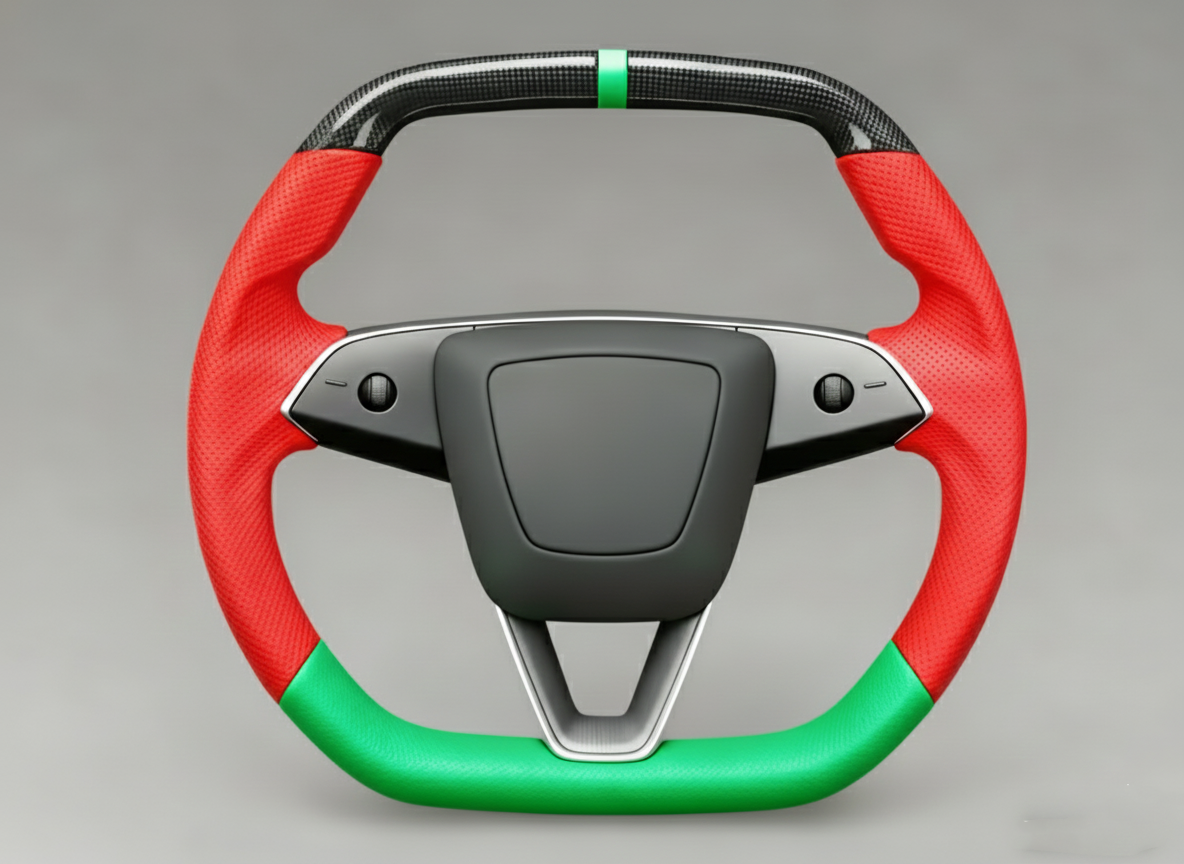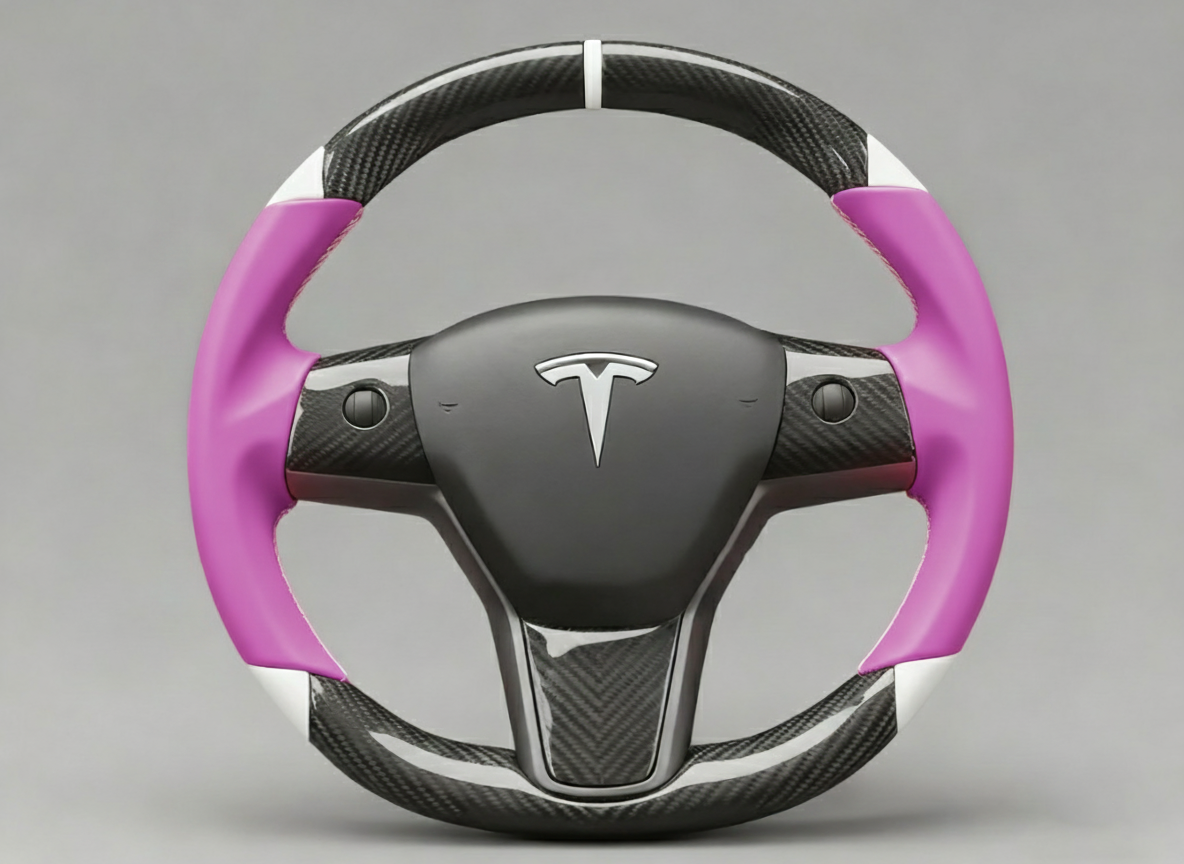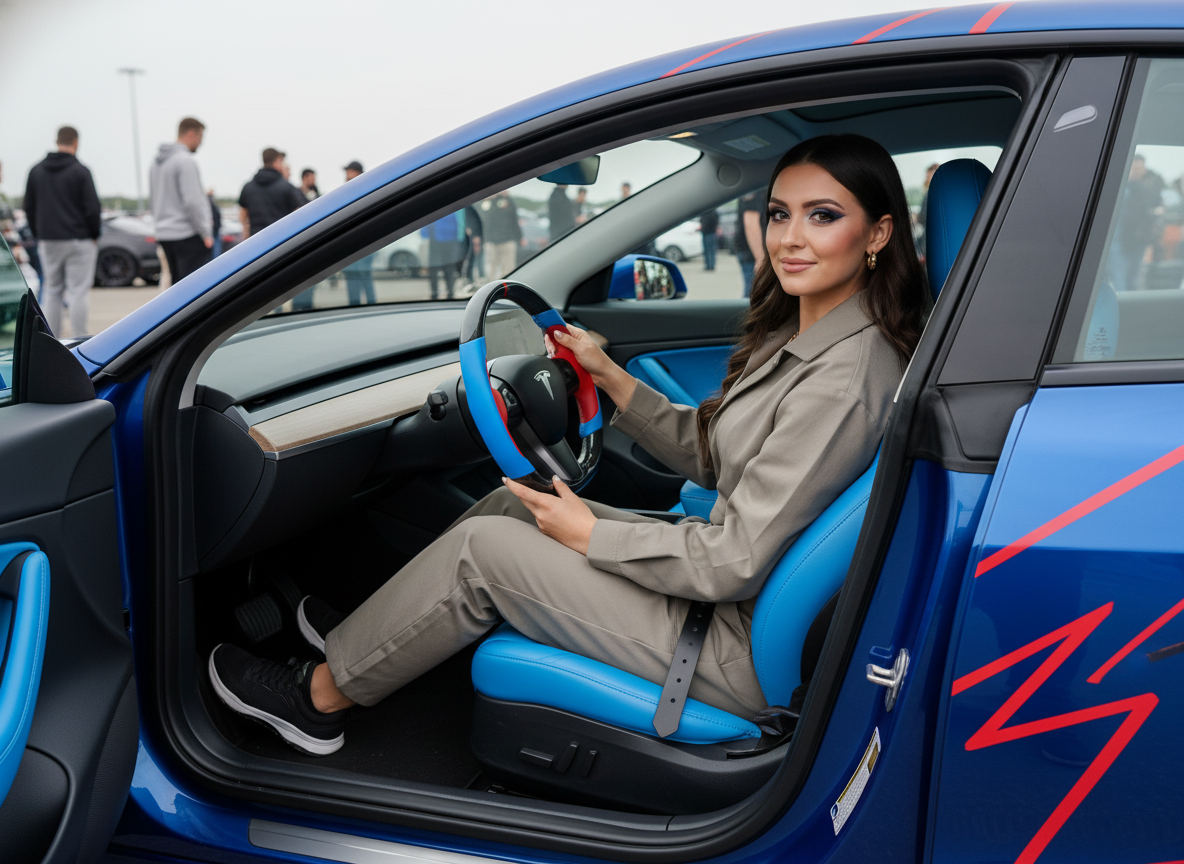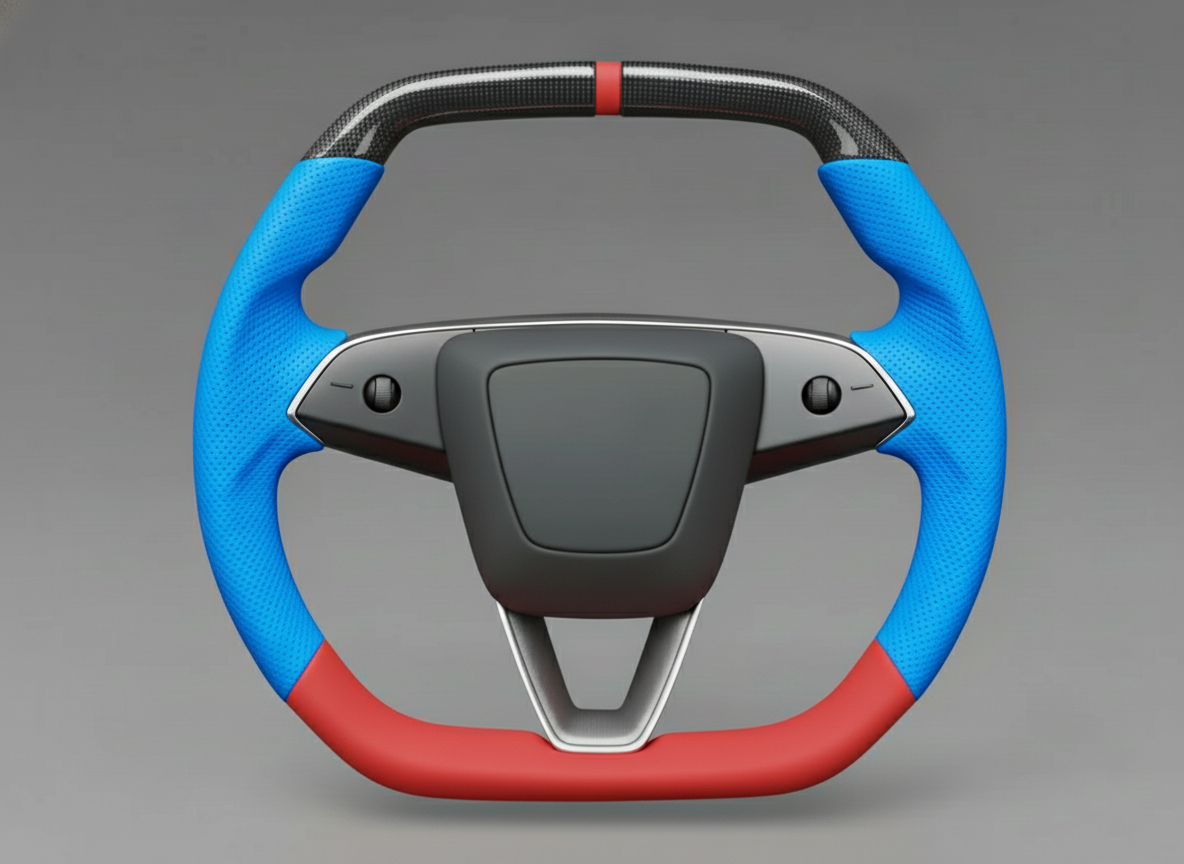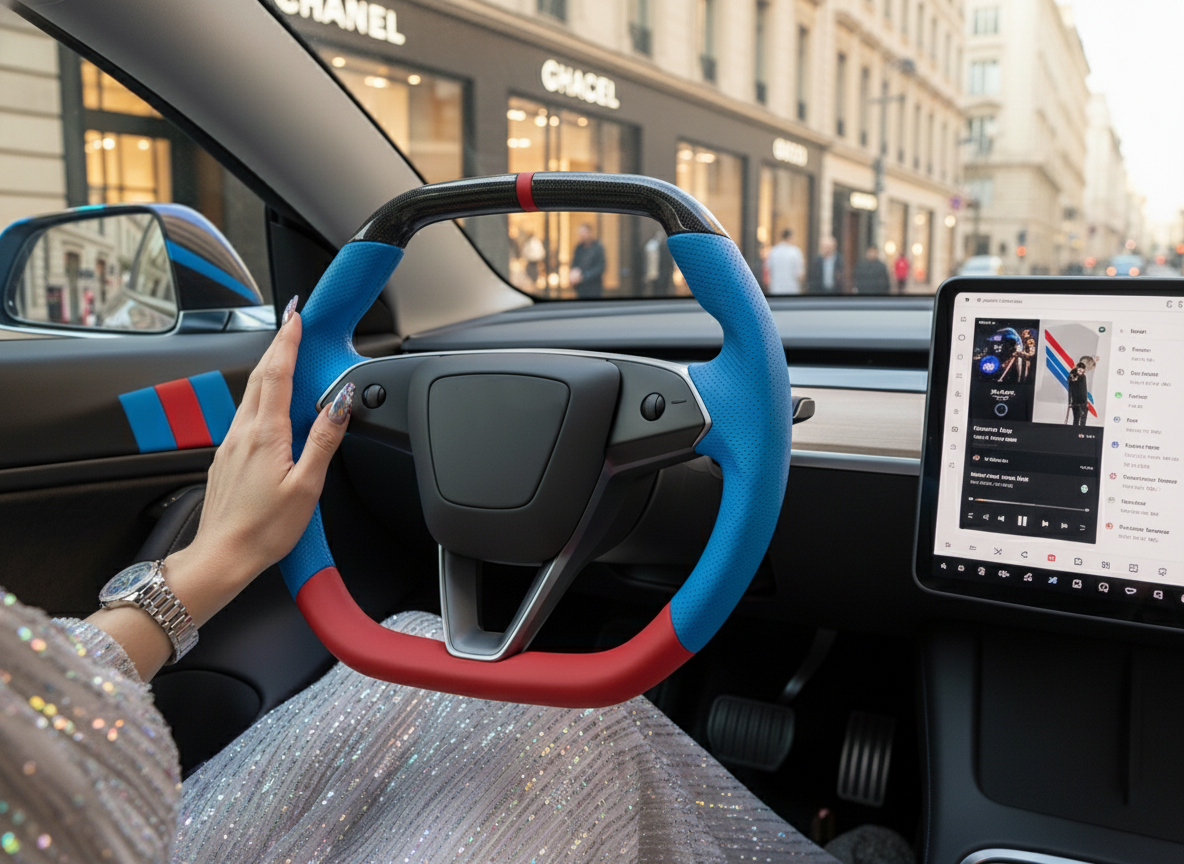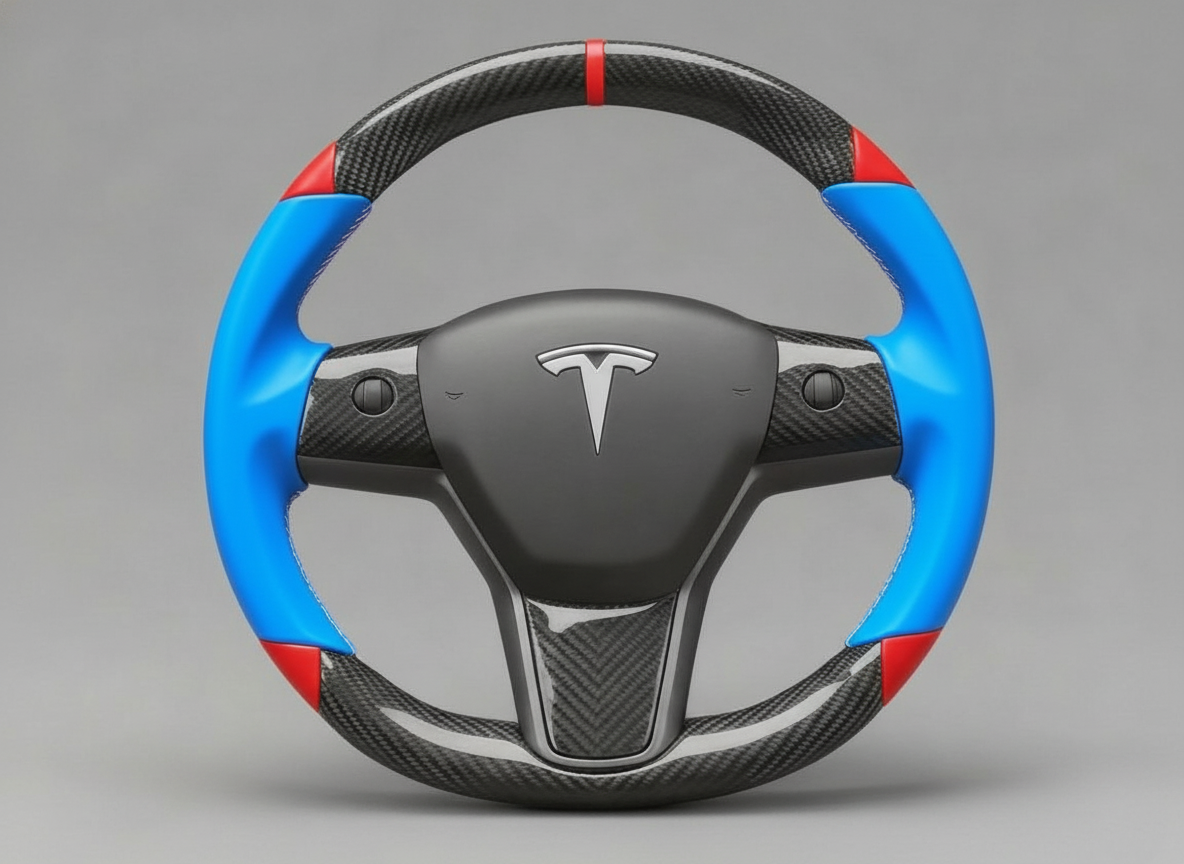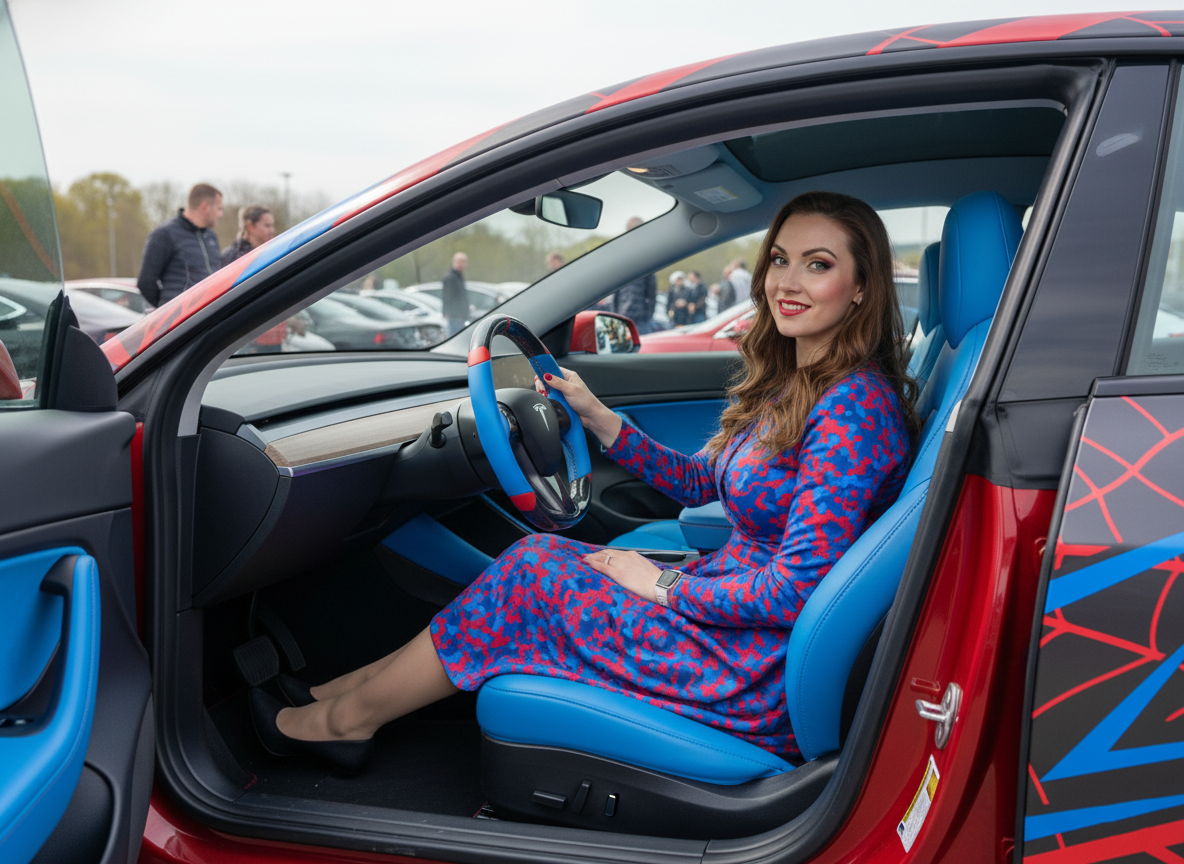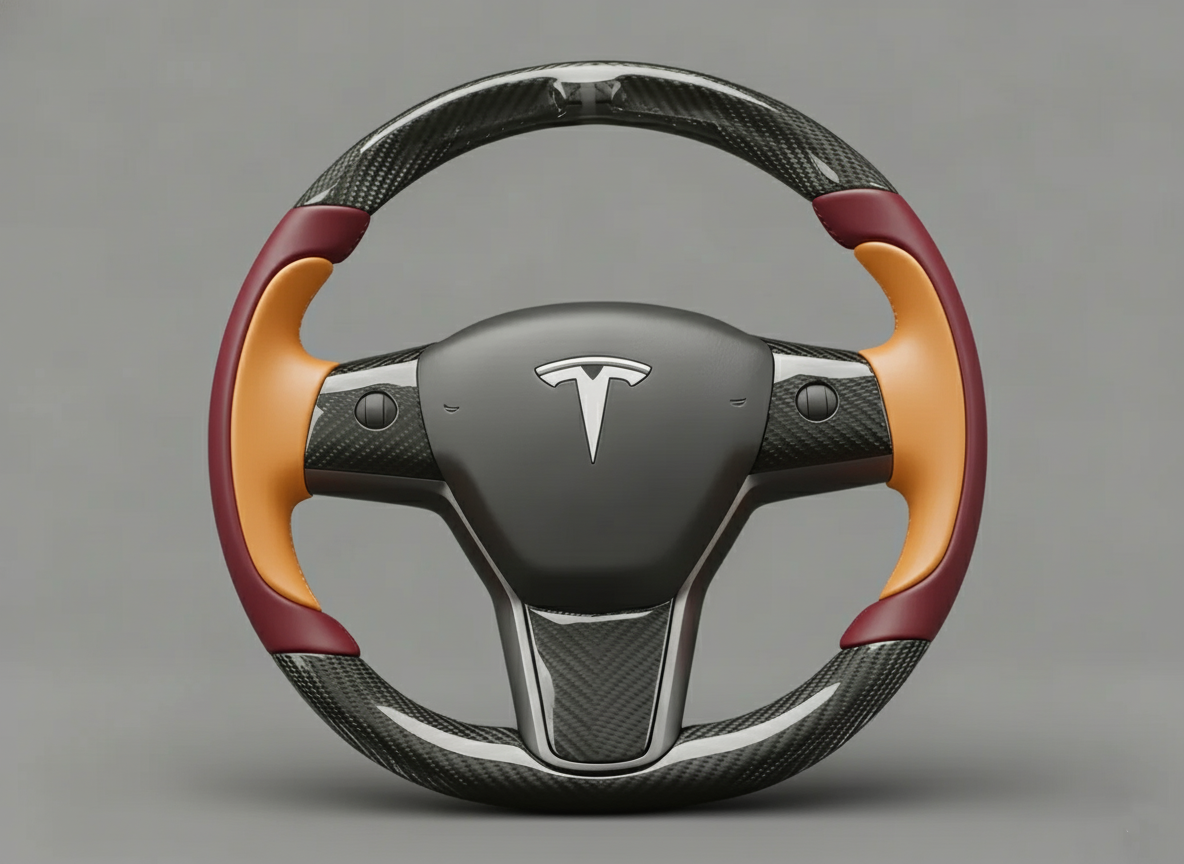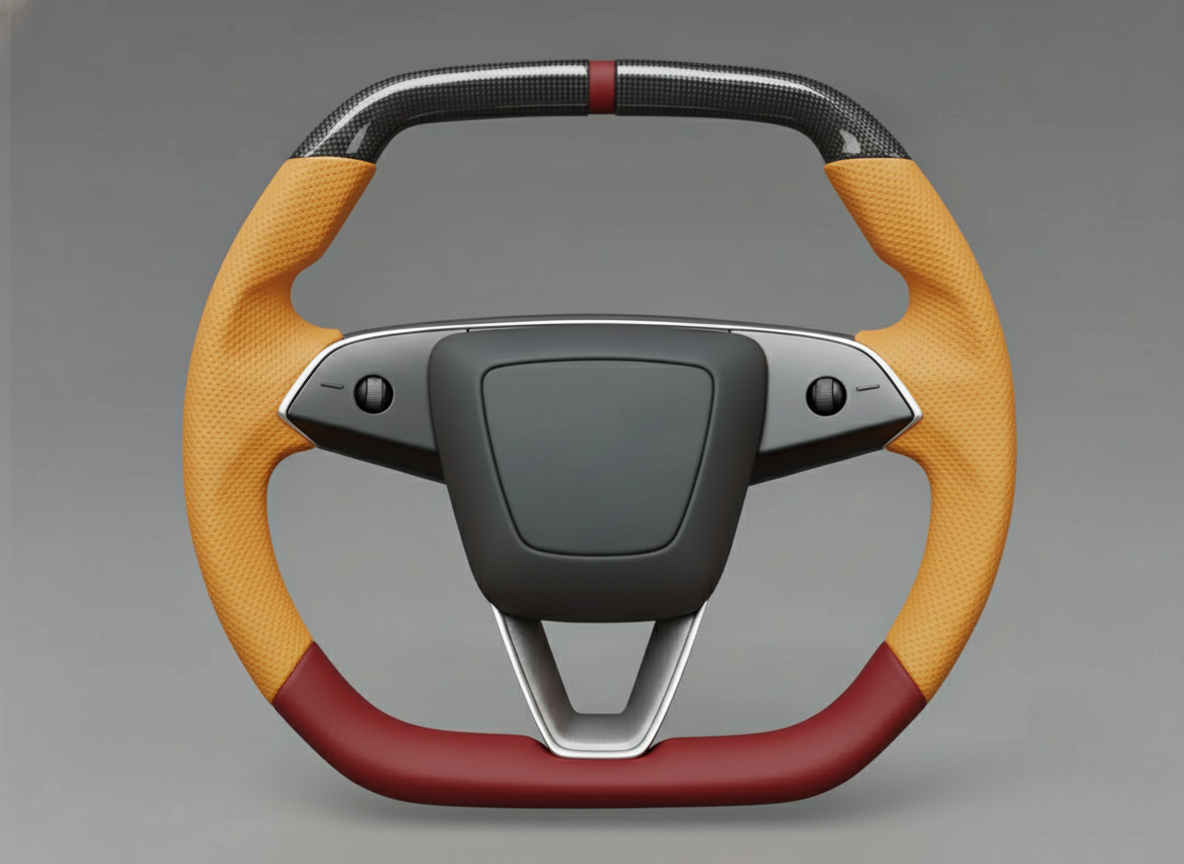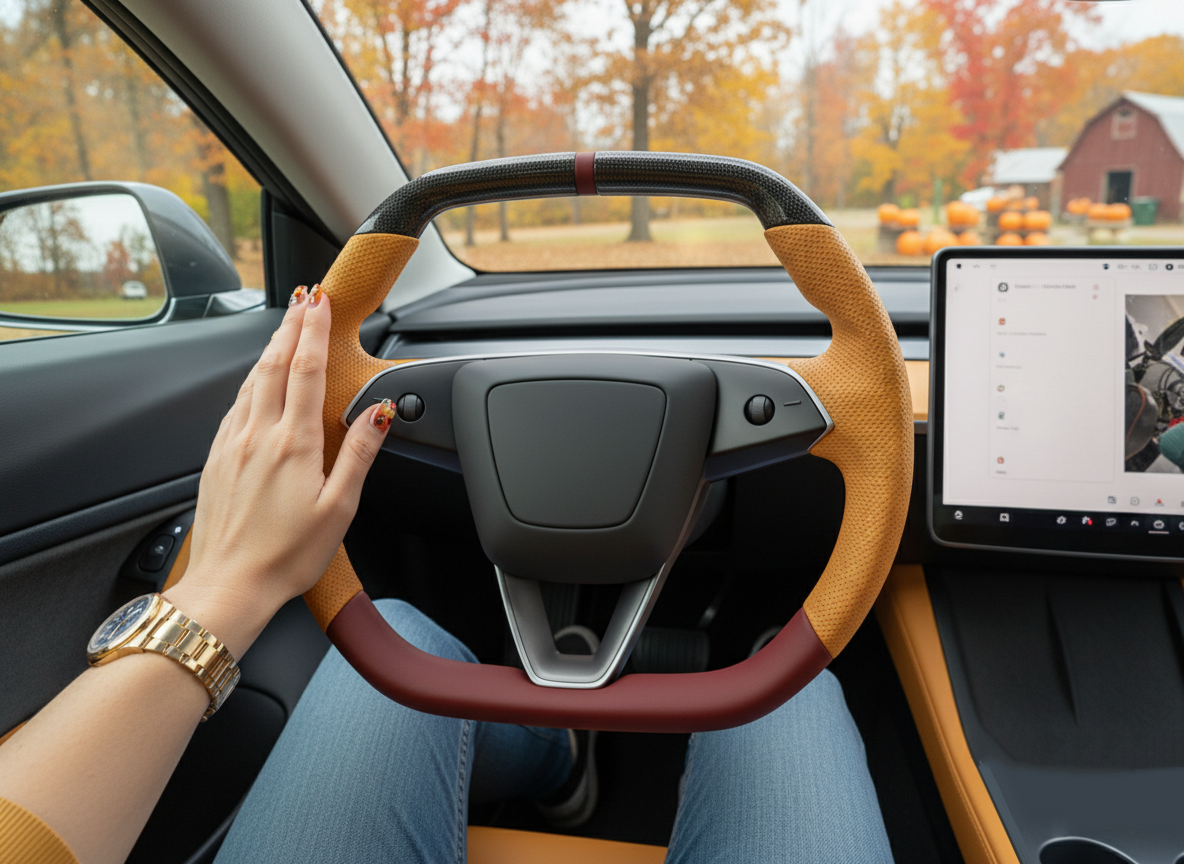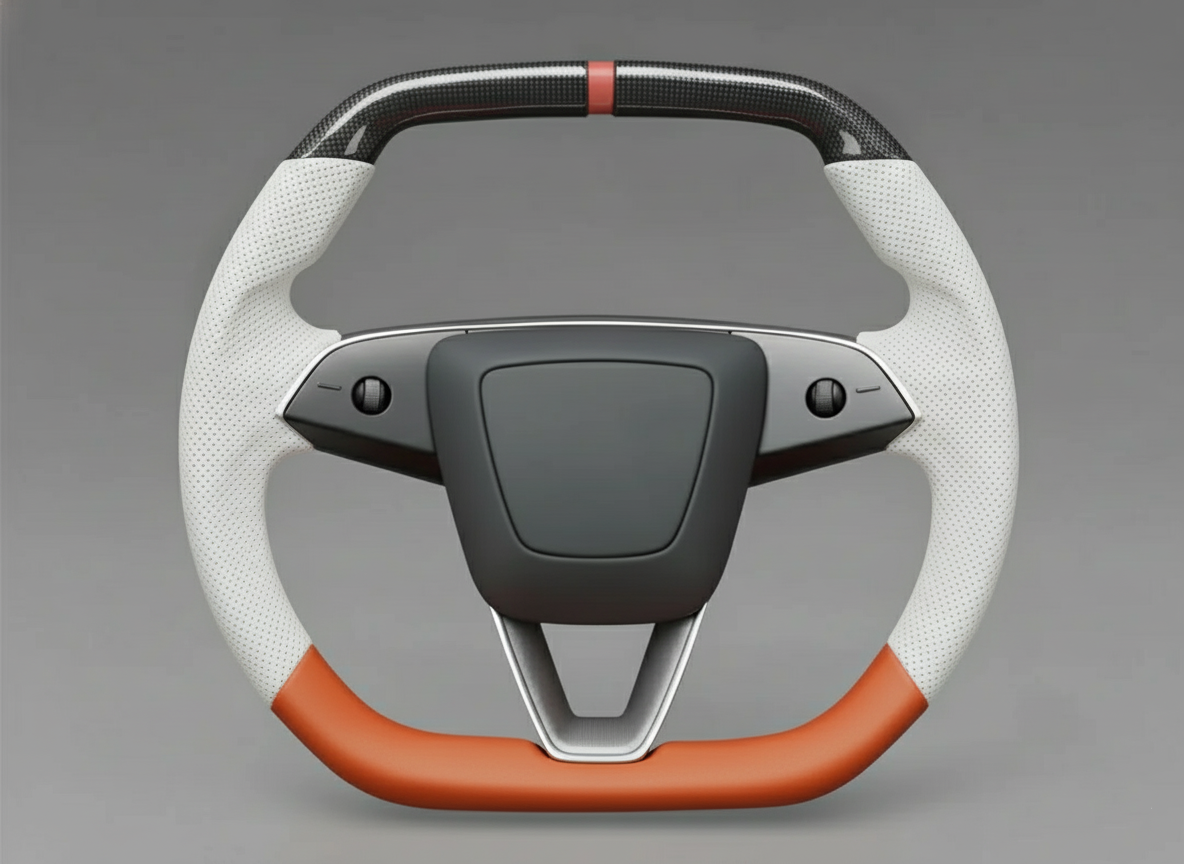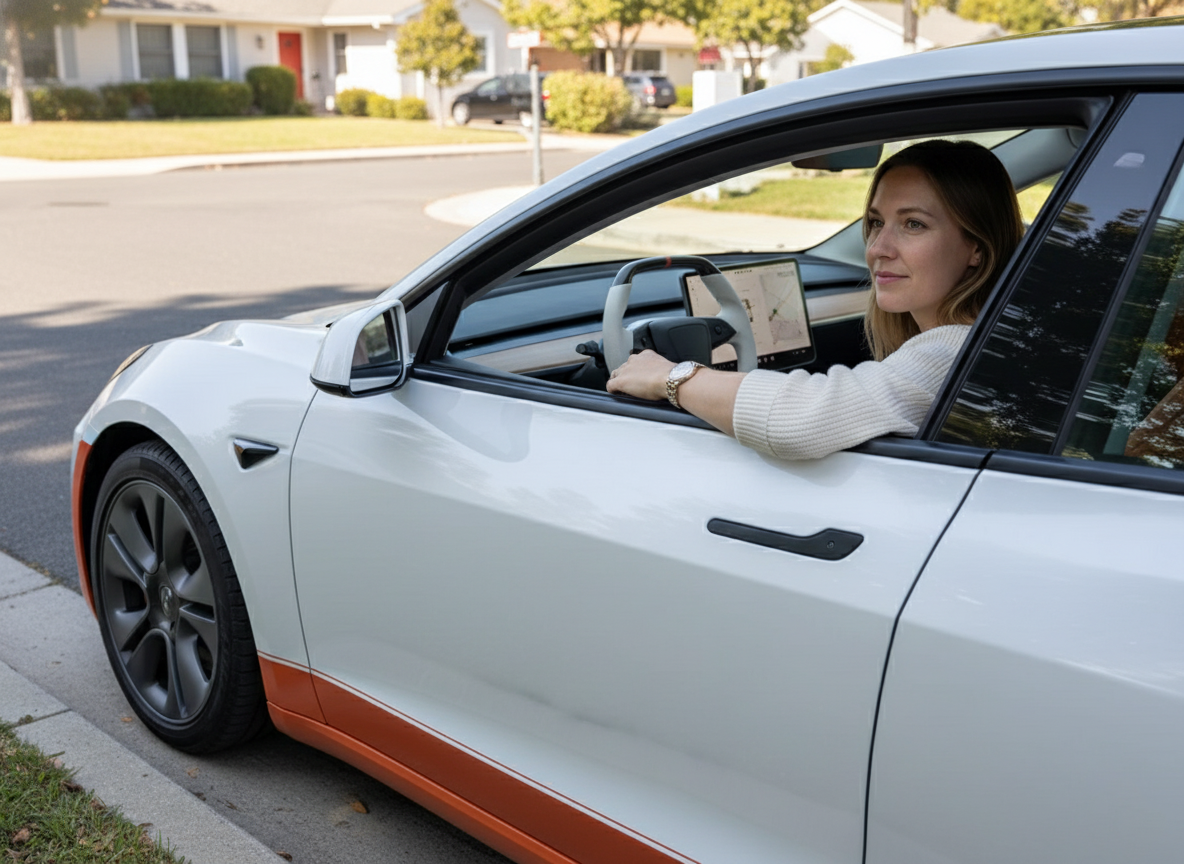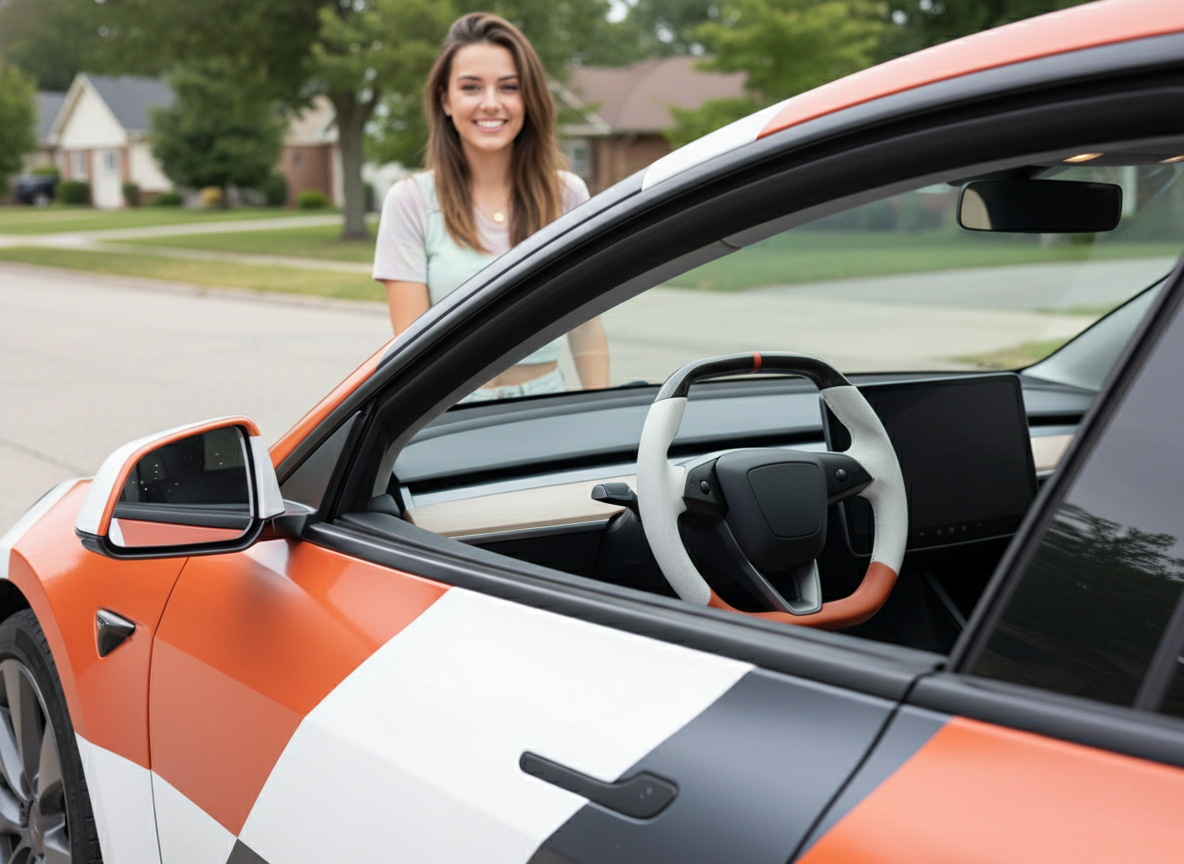
This carbon fiber steering wheel is specifically engineered for the new Tesla Model 3 Highland, utilizing a high-strength dry carbon process that reduces weight by approximately 25% compared to the original factory wheel, significantly enhancing steering sensitivity.
Its ergonomic grips, paired with anti-slip suede, not only dissipate heat rapidly but also provide a striking, sporty visual aesthetic.
Installation requires disconnecting the power first and utilizing the airbag release holes to transfer the original vehicle buttons, achieving a non-destructive upgrade and a personalized interior transformation.
Perforated Leather
The Model 3 Highland 362mm steering wheel integrates steering buttons, increasing the frequency of thumb friction. High-quality perforated leather generally utilizes full-grain cowhide with a thickness of 1.2mm–1.5mm, featuring mechanical micro-perforations with a diameter of approximately 0.8mm–1.2mm, maintaining an overall porosity between 15% and 25%.
Data indicates that compared to the original factory vegan leather, the surface air circulation is increased by nearly 300%. When held continuously for 45 minutes at a room temperature of 25°C, the surface friction coefficient under slight perspiration remains stable between 0.6 and 0.7.
By relying on a physical sweat drainage capacity of approximately 15–20ml per hour, it significantly reduces the probability of finger slippage when pressing turn signals without visual aid.
Structure & Breathability
The base material for perforated leather is typically top-grain cowhide with a thickness between 1.2mm and 1.5mm. Leather processing plants use custom CNC punching molds to perform high-frequency mechanical penetration on the surface of the leather per square inch. The punching machine operates at a frequency of 600 cycles per minute, pressing out micro-holes with diameters precisely controlled between 0.8mm and 1.2mm.
The physical spacing between holes is usually set at 2.5mm to 3mm. Overly dense pores can destroy the original reticular fiber bundles of the cowhide, resulting in a tensile strength lower than 20 N/mm. A reasonable pore distribution maintains the overall leather's perforation rate between 15% and 25%, preserving over 90% of the leather's tear resistance while creating physical channels for air circulation.
Magnified observation of the perforation cross-section reveals that each micro-hole acts like a vertical micro-ventilation duct. The ducts penetrate the dense surface finish layer, connecting to the loose reticular dermal fiber tissue at the bottom. When a driver's palm grips the 362mm Model 3 Highland steering wheel with a pressure of approximately 15 kPa, the compression of hand muscles forces the air within the pores to produce micro-flows.
- Air Exchange Rate: When pressure is applied during a grip, a single action can displace approximately 0.05 mm³ of static air within the micro-hole.
- Negative Pressure Suction: Releasing the grip allows the bottom fiber layer to rebound, generating weak negative pressure and physically drawing in fresh external air.
- Micro-circulation Establishment: Frequent steering operations facilitate dozens of micro-air exchanges per minute.
- Bottom Channeling: The crisscrossing gaps within the fiber layer allow airflow to diffuse toward unobstructed areas.
In a Texas summer where outdoor temperatures reach 85°F (approx. 29°C), the average human palm secretes 15ml to 20ml of sweat per hour. The original factory vegan leather surface is sealed by a polyurethane coating, preventing moisture from penetrating downward. Sweat can only accumulate between the skin and the polyurethane surface, forming a liquid water film approximately 0.1mm thick within 5 minutes.
The hole structure of perforated leather provides physical space for liquid discharge, as water molecule diameters are far smaller than the 1mm punched pores. The moment palm sweat contacts the perforated surface, it rapidly penetrates into the lower layers along the capillary-like fibers at the edges of the micro-holes. The water absorption rate of the underlying leather tissue can typically reach more than 30% of its own weight.
With the vehicle's AC system on and the vent speed set to level 3 or higher, the circulating dry cold air in the cabin brushes over the steering wheel surface. Influenced by temperature differences and airflow, moisture evaporates backward from the micro-holes at a rate of approximately 8ml to 12ml per hour, keeping the palm surface humidity reading stable in a relatively dry range of 40% to 50%.
- Fully Dry State: Friction coefficient of smooth vegan leather is approx. 0.55; perforated leather is approx. 0.60.
- Slight Perspiration (5ml secretion): Vegan leather drops sharply to 0.35; perforated leather rises to 0.65.
- Heavy Perspiration (15ml secretion): Vegan leather falls as low as 0.20; perforated leather maintains above 0.50.
The Model 3 Highland eliminates the stalk gear shifter and physical turn signal stalks, requiring high-frequency blind operation of touch buttons by the left thumb at the 3 o'clock to 9 o'clock positions. If the hand slips while driving at 65 mph on an interstate, the offset rate for thumb-pressing the turn signal increases by 40%. The rough edges and dry state of the perforated surface provide a stable pivot for the 2.5N vertical downward pressure exerted by the thumb.
In northern North America, such as Minnesota, winter nighttime temperatures often drop to -10°F. The internal resistance wires of the steering wheel typically have a power between 20W and 30W. The thermal conductivity of non-perforated leather is approximately 0.15 W/(m·K), and heat must pass through 1.2mm of dense leather to reach the palm.
The penetrating holes shorten the physical distance for thermal radiation and convection; air within the pores expands and spills upward when heated by the underlying heating element. Infrared thermal imaging data shows that after turning on the steering wheel heating function, the time required for the perforated leather surface temperature to rise from 32°F to a comfortable 85°F is only about 65 seconds.
- Tensile Deformation Resistance: Under continuous 50N tension for 10,000 cycles, the hole deformation rate is less than 3%.
- Edge Wear: After 45,000 Martindale test cycles, there is no significant fiber shedding at the punched edges.
- UV Aging: After 500 hours of continuous UV-B exposure, the pore structure shows no signs of embrittlement or fracture.
The leather grip installed on the 362mm wheel body is under a long-term tensile stress state of approximately 5% to 8%. High-quality perforation processes involve pre-stretching and setting the leather before punching. This pre-treatment ensures that under long-term exposure to high-temperature sunlight, the holes maintain their original circular or elliptical shape and do not produce tear-like deformations due to the leather's own shrinkage stress.
The edges of the perforated area undergo a special thinning treatment, controlling the thickness at the junction with the original wheel body to 0.6mm. This stepped thickness transition ensures that when hands slide across the wheel, the fingertips do not feel a sharp drop-off. During a U-turn with a turning radius of approximately 11.6 meters, the palms alternately rubbing against the perforated surface generate a slight physical vibration feedback at a frequency of about 50 Hz.
Increasing the perforation rate to above 30% can further increase breathability—test data shows surface air circulation can increase by another 15%. However, an excessively high porosity causes the overall wear life of the leather to shorten to less than 2 years. Currently, mainstream aftermarket brands generally lock the ratio of pore diameter to spacing between 1:2.5 and 1:3 to balance the breathability requirements of a 2-hour daily commute with a structural lifespan of over 5 years.
Material Types
The leather materials applied to the Tesla Model 3 Highland 362mm steering wheel are mainly divided into full-grain Nappa leather, semi-aniline leather, and modified microfiber leather (Synthetic). Full-grain Nappa belongs to the topmost layer of cowhide, fully preserving the natural dense fiber layer with a thickness of approximately 1.2mm to 1.5mm. The physical structure of its papillary layer has not been mechanically sanded, and the tensile strength of a single piece of leather is usually stable between 200N and 250N.
Under a microscope at 500x magnification, a large number of natural micropores with diameters of approximately 5µm to 10µm can be seen between fiber bundles. These natural micropores work in conjunction with the 0.8mm mechanical perforations to form a composite air circulation system.
Premium Nappa leather circulating in the North American aftermarket usually undergoes a light coloring treatment, with coating thickness strictly controlled between 15µm and 20µm. Overly thick coatings seal the breathability of the leather, while thin coatings allow the material to maintain an initial friction coefficient of about 0.60. When ambient humidity rises from 40% to 70%, the moisture-absorbing expansion characteristics of natural fibers cause slight tension changes in the leather surface, making the grip feel more tacky and stable.
| Physical Parameters | Full-Grain Nappa Leather | Semi-Aniline | Modified Microfiber |
|---|---|---|---|
| Raw Hide Level | Top Grain | Top Grain | Synthetic Polymer |
| Avg Thickness (mm) | 1.3 - 1.5 | 1.1 - 1.3 | 1.0 - 1.2 |
| Coating Thickness (µm) | 15 - 20 | 5 - 10 | 30 - 50 |
| Tear Strength (N) | > 40 | > 35 | > 50 |
| 24h Water Absorption (%) | 12 - 15 | 18 - 22 | < 2 |
| Odor Grade (VDA 270) | 2.5 (Very Low) | 3.0 (Normal) | 1.5 (Very Low) |
Since semi-aniline leather uses a drum-dyeing process, the pores inside the leather are not blocked by large amounts of color paste. This process improves the physical breathability of the leather by about 25%, allowing it to maintain some sweat-wicking ability even without mechanical perforations. However, on a model like the Model 3 Highland, which eliminates physical stalks and requires high-frequency palm friction, the Martindale wear limit of semi-aniline leather (approx. 35,000 cycles) is slightly lower than full-grain Nappa (45,000 cycles).
Choosing a 1.2mm thick full-grain leather provides a total outer diameter increase of about 2.4mm for the steering wheel rim. The Highland grip, which originally has a circumference of about 112mm, will increase to about 117mm after installation. This size change aligns with the grip habits of 95% of male drivers in North America. The fingertips at the 3 and 9 o'clock positions can perfectly encircle the wheel, while the thumb pad remains within the golden range of 2 cm from the gear shift and steering touch areas.
- Leather Density: Approx. 0.7g to 0.9g per cubic centimeter.
- pH Value: Stable between 4.5 and 5.5, non-irritating to skin.
- Volatile Organic Compounds (VOC): Benzene emissions below 5 µg/m³.
- Color Fastness: After 72 hours of exposure at 100°C dry environment, color difference grade ΔE < 1.0.
- Frictional Heat Energy: Sliding friction at 10N pressure results in a surface temperature rise of less than 0.2°C per second.
Premium perforated leather maintains a fatliquor content of about 12% upon leaving the factory. In the high-UV environment of California, the oils inside the leather dissipate at a rate of approximately 1.5% per year. When the fatliquor content drops below 8%, the leather fibers lose elasticity, and small radial cracks appear at the edges of the perforations.
To delay this physical decay, anti-UV polymers are added during the leather processing, with the Ultraviolet Protection Factor (UPF) usually set at 50+. This ensures that even if the steering wheel is exposed to the strong sunlight of the Nevada desert for a long time, the aging speed of its physical structure can be reduced by about 60%.
- Cold Crack Temperature: No cracks during 180-degree folding at -30°F.
- Sweat Resistance: No bubbling of surface coating after 24-hour immersion in synthetic sweat.
- Tensile Rebound: Rebound rate > 95% within 1 minute after stretching under 30% stress.
- Button Adaptability: Leather edge cutting precision must reach 0.1mm to avoid obstructing touch feedback.
Although high-density microfiber leather can reach 100,000 cycles in wear resistance, its thermal conductivity is only 0.08 W/(m·K). When using the steering wheel heating function in winter, the heat penetration speed is about 45 seconds slower than natural Nappa leather. For a pure electric vehicle like the Model 3 Highland that emphasizes efficiency, the heat conduction efficiency of natural leather better matches the vehicle's energy management system, reducing the high-power operation time of heating elements.
Typically, for every 100 square feet of raw hide, only about 25 square feet meet the standards for flawless perforation. If the raw hide surface has small natural scars exceeding 0.5mm, mechanical punching will cause irregular tearing at the hole edges, thereby reducing the steering wheel's grip stability during emergency steering operations.
Climate & Heating
The Tesla Model 3 Highland factory steering wheel features polyimide film heating resistance wires distributed in the 10-to-2 and 8-to-4 o'clock regions. The system operates at 25W to 30W at the highest setting, with the heating element located approximately 2.0mm from the outer surface of the steering wheel.
After covering with 1.2mm to 1.5mm perforated Nappa leather, the heating logic undergoes physical changes. Heat conduction in non-perforated leather primarily relies on the collagen fibers of the leather base, with an initial thermal conductivity of only 0.14 W/(m·K).
The 40 to 60 mechanical micro-holes per square inch create straight escape channels for the underlying thermal radiation. In the -15°F Alaskan winter, once the heating function is activated, the cold air within the micro-holes is heated, expands, and is expelled within 15 seconds.
Compared to the factory vegan leather which takes about 120 seconds to raise the surface temperature to 80°F, the heating curve of perforated leather is much steeper. Infrared thermal imaging data shows that under the same initial temperature, the perforated leather surface reaches 80°F in only about 75 seconds, an improvement in heating efficiency of nearly 37%.
In extreme cold testing in Minnesota, 1.2mm perforated leather maintained a temperature of 92°F at the pore edges under 30W of continuous heating for 45 minutes, with no fiber hardening due to localized overheating.
Summer high-temperature environments place entirely different demands on the physical heat dissipation capability of steering wheel materials. In an unshaded outdoor parking lot in Arizona in July, the cabin temperature at noon usually soars to over 140°F within 40 minutes.
The factory-sealed vegan leather surface absorbs and accumulates large amounts of short-wave solar radiation, with surface temperature peaks reaching 155°F. Perforated leather, with a total surface area porosity of about 20%, reduces the absolute absorption area for infrared rays.
When the driver enters the car and starts the AC, and the vents deliver 60°F cold air into the cabin at a speed of 5 meters per second, the physical advantages of the perforated structure become apparent. Flowing cold air not only brushes over the outer surface but also penetrates into the leather base through the 0.8mm to 1.2mm pore diameters.
Airflow forms small vortices within the loose reticular fiber layer, rapidly carrying away heat absorbed by the fiber bundles. Tests show that under the same AC cooling power, perforated leather takes only 3.5 minutes to drop from 150°F to a grippable 90°F.
- Cooling Rate: Perforated leather drops 17°F per minute; non-perforated leather drops 11°F per minute.
- Heat Capacity: 1.5mm full-grain cowhide absorbs about 15% less ambient heat than vegan leather of the same thickness.
- Constant Temperature Performance: After 2 hours of driving in a 75°F AC cabin, the perforated leather surface remains at 82°F.
- Light Reflection: Perforated leather with light-colored finishing can reach a solar reflectance of 28% to 32%.
Frequent alternation of extreme temperature differences causes irreversible physical pulling on the collagen fibers of the leather base. Rapidly heating from -10°F in winter to 90°F causes the leather to produce a volume expansion of about 0.5%.
The perforation process physically cuts some continuous fiber bundles, which instead gives the leather greater deformation redundancy. The holes provide a buffer space for the lateral expansion of the fibers, effectively reducing the internal stress of the leather during intense thermal expansion and contraction cycles.
In 500 cycles of extreme greenhouse cold-heat cycle testing, switching instantly from -40°F to 175°F, the tear strength at the perforation edges only dropped by 4.2%. On ordinary non-perforated leather of the same thickness, micro-cracks with a depth of 0.1mm appeared on the surface coating after only 300 cycles.
Sharp changes in air humidity usually accompany seasonal shifts. In the 85% relative humidity of a Florida summer, the moisture absorption rate of the perforated leather base will climb to about 18%, increasing the overall leather weight by about 25 grams.
When the ambient relative humidity drops sharply from 85% to the 15% typical of the Nevada desert, the pore structure allows the moisture stored in the base to evaporate uniformly at a rate of 4 grams per hour, preventing the leather from hardening and becoming brittle due to rapid dehydration.
The introduction of humidity also fine-tunes the touch friction of the steering wheel. When air humidity exceeds 60%, the exposed fibers at the edges of the micro-holes absorb water and expand slightly, causing the pore diameter to shrink from 1.0mm to about 0.95mm.
Micro-level structural changes increase the roughness of the contact surface. When using the touchpads on the left side of the Model 3 Highland steering wheel for continuous lane changes, the sliding friction coefficient between the driver's thumb pad and the perforated leather surface rises from 0.60 in a dry state to 0.68.
Ideal testing environments with constant temperature and humidity cannot fully simulate the complex car usage scenarios across North America. For example, in the high-altitude regions of Colorado, lower average air pressure (approx. 800 hPa) accelerates the release of volatile organic compounds.
- Low-Pressure Evaporation: In regions at 6,000 feet altitude, oil volatilization in perforated leather increases by 12%.
- Static Accumulation: Under 20% low humidity in winter, 100 cycles of continuous friction produce a static voltage of less than 0.5 kV.
- Flame Retardancy: Complies with FMVSS 302 vehicle safety standards, with a burn rate below 101.6 mm/min.
- Dust Cleaning: In dusty Midwestern climates, the frequency of deep cleaning for micro-holes needs to be shortened to once every 15 days.
High-frequency use of the heating system also accelerates the loss of the protective wax layer on the leather surface. Based on a 5-month winter heating period per year, with steering wheel heating on for 1 hour a day, the natural retention rate of the leather surface will drop to below 30% after 120 days.
Physically replenishing oils into the pores is a necessary maintenance step to maintain adaptability to high-altitude and extreme cold climates. Using a liquid conditioner at a dosage of 5ml/m² applied uniformly can give perforated leather the fiber toughness to withstand -20°F for the next 6 months.
Maintenance & Cleaning
The 0.8mm to 1.2mm mechanical micro-holes on the Model 3 Highland 362mm steering wheel grip physically constitute natural micro-collectors. An adult male in North America driving for 1 hour in a 75°F cabin secretes an average of 1.5g of sebum and 15ml of sweat.
During a typical commute of about 1,000 miles per month in Los Angeles, sebum, sweat crystals, and PM10 suspended particulates in the air mix physically. This semi-solid mixture gradually fills the pores along the walls, typically occupying about 15% to 20% of the micro-hole volume within 30 days.
When the pore blockage rate exceeds 30%, the physical ventilation efficiency of perforated leather drops sharply by 45%. The dynamic friction coefficient of the leather surface will drop from 0.65 at the factory to 0.40, increasing the probability of physical sliding when the finger operates the left turn signal panel.
Routine wiping with a flat microfiber towel can only remove stains from the 15-micron surface finish. Approximately 40% of the residue will be physically squeezed by the towel's horizontal thrust into the bottom of the 1.2mm deep micro-holes, creating more stubborn deep accumulation.
- Horsehair Brush: Bristle length should be between 20mm and 25mm, with a single fiber diameter of about 0.15mm.
- Cleaner: Must use a water-based, silicone-free formula with a pH between 6.0 and 7.0.
- Adsorption Medium (Microfiber): Fiber weight (GSM) must be above 300, with high capillary suction.
- Physical Blowing (Air Duster): Compressed air spray pressure must be strictly controlled below 30 psi.
Spraying water-based cleaner directly onto the leather surface is a high-risk operation; the 1.5ml of liquid from a single press far exceeds the 0.05 mm³ volume of a single pore. Excess liquid will penetrate the underlying reticular fibers within 3 seconds, causing internal collagen to produce a 2% volume expansion due to over-absorption of water.
Standard operating procedures require spraying 2 to 3ml of cleaning solution onto the tips of the horsehair brush. Using 5 to 8 Newtons of vertical downward pressure, fit the bristles to the wheel surface and perform physical circular rubbing with a diameter of about 2 to 3 cm.
The 0.15mm soft horsehair can easily penetrate the 0.8mm mechanical pores. Maintaining a physical agitation frequency of about 120 circles per minute, the bristles will physically break up solidified sebum clumps within 15 seconds and use the surface tension of the cleaning solution to suspend them.
Subsequently, a 300 GSM dry microfiber cloth must be used within 10 seconds to press the surface with a very light pressure of 3 Newtons. If moisture stays on the leather surface for more than 30 seconds, the suspended dirt particles will re-precipitate into the depths of the pores as the water naturally evaporates.
The cleaning process removes about 3% of the natural free oils from the leather base. In dry areas like Arizona where environmental humidity is below 20%, reticular fibers that lose oil protection will undergo a physical contraction of 0.5% within 48 hours, causing the pore edges to become hard and rough.
- Avoid High-Viscosity Pastes: Conditioning wax with a viscosity exceeding 500 cP will cause irreversible physical blockage.
- Control Single Dosage: For a grip with a 117mm circumference, the total liquid amount for a single application must not exceed 5ml.
- Specific Application Tool: Use a high-density polyurethane sponge block for press-style application.
- Physical Setting Time: After application, it must be kept static in a 65°F environment for 8 to 12 hours.
Conditioners should be a water-based emulsion with a viscosity below 100 cP. Drop 2ml of liquid onto the polyurethane sponge and squeeze it 5 times. The micro-pores inside the sponge will evenly disperse the liquid, avoiding localized liquid overload when contacting the leather surface.
Use the sponge to maintain a slight 2N friction force on the wheel rim for sliding application. A liquid film less than 5 microns thick can successfully penetrate the finish layer to moisturize the leather while not forming liquid bridges that obstruct air circulation between the 0.8mm physical pores.
Hand sanitizers containing 70% isopropyl alcohol, widely used in North America, act as chemical solvents against the 15-micron polyurethane coating on the leather surface. Contacting the steering wheel within 30 seconds of applying hand sanitizer will instantly dissolve 2 microns of the coating thickness, causing the Martindale wear limit to fall below 15,000 cycles.
Turning on the steering wheel heating function on perforated leather that is not completely dry (moisture content higher than 15%) will trigger physical micro-explosions at the base. The 25W to 30W heating wires will cause the water in the pores to vaporize and expand rapidly; the resulting high-temperature steam can permanently stretch the 0.8mm pores to 1.1mm within 5 minutes.
- Coastal High-Salt High-Humidity Areas: Extend cleaning intervals to 45 days, and reduce the physical amount of conditioner by 30%.
- Desert High-UV Climates: Shorten cleaning intervals to 20 days, ensuring the conditioner has an SPF 30+ blocking rate.
- High-Frequency Short-Trip Commuting: Increase the frequency of local physical cleaning for the 3 and 9 o'clock touch blind-operation zones.
- Winter Low-Temperature Maintenance Limits: Suspend liquid maintenance when cabin temperature is below 50°F.
A Model 3 Highland perforated leather grip that undergoes regular standard physical cleaning will still maintain 95% of its original circular pore outline after 50,000 miles. The 40 to 60 holes per square inch will continue to provide a stable surface friction coefficient of 0.65, ensuring accurate physical feedback when blind-operating the turn signal touchpads.
Suede
Suede (typically referring to Alcantara or microfiber materials) is the top choice for performance drivers in Model 3 Highland upgrades, offering a high static friction coefficient of 0.6–0.8 (approximately 30% higher than traditional smooth leather).
This material is woven from microfibers only 1/100th the thickness of a human hair. Its porous structure can accommodate trace amounts of palm sweat while maintaining a constant temperature. In extreme in-car environments ranging from -20°C to 60°C, the surface tactile temperature fluctuation is only about 5°C.
Grip Performance
The suede surface consists of extremely fine microfibers, with a single fiber diameter of only 10 microns—about one-fiftieth the thickness of a human hair. The composite spinning process of polyester (68%) and polyurethane (32%) implants more than 200,000 independent fibers per square centimeter.
The dense microscopic fibers construct a three-dimensional buffer layer with a thickness of 0.2 to 0.5 mm on the steering wheel surface. When palm pressure is applied, the surface fibers deform and fill the gaps between palm prints, forming a mechanical interlocking structure.
In ISO 8295 standard testing, the static friction coefficient of untreated suede against human skin is measured between 0.78 and 0.85. The factory-configured polyurethane synthetic leather has a static friction coefficient of only 0.55 to 0.62 under the same test conditions.
- Surface Fiber Density: 200,000 fibers/cm²
- Single Fiber Physical Diameter: 10 microns
- Polyester Composition Ratio: 68%
- Polyurethane Composition Ratio: 32%
- Room Temperature Static Friction Coefficient: 0.78 - 0.85
The Model 3 Highland has a steering ratio of 10.3:1; small steering wheel angles are quickly amplified into yaw movements of the wheels. During an Elk test at 77 km/h, the driver needs to complete a 180-degree left-right counter-steer within 0.5 seconds.
Increased friction effectively reduces the probability of hand slippage during rapid wheel manipulation. Measured data shows that the sliding displacement of the palm on the suede surface is reduced by 12 to 15 mm compared to smooth synthetic leather.
On the Nürburgring Nordschleife circuit during high-speed cornering, the vehicle can experience lateral accelerations of up to 1.1G. Due to chassis geometry settings, the torque fed back from the front wheels to the steering wheel can surge to 8 to 10 Nm.
The human palm secretes approximately 0.5 to 1.5 ml of sweat per hour during intense driving or high mental concentration. Smooth leather or synthetic leather surfaces cannot absorb moisture, forming a micro-water film about 0.05 mm thick between the palm and the wheel.
The appearance of a water film causes the dynamic friction coefficient of the surface to drop by more than 40%, leading to physical slippage. The open micro-pore structure of suede possesses a capillary siphon effect, allowing it to quickly disperse sweat into the underlying sponge layer.
The surface polyurethane material exhibits high porosity, with a breathability rate of 25 to 30 cm³/s. Dry cold air from the AC vents can remove free moisture stored in the fiber layer within 15 to 20 minutes, restoring its original dry state.
- Intense Driving Palm Perspiration Rate: 0.5 - 1.5 ml/h
- Smooth Surface Micro-water Film Thickness: 0.05 mm
- Friction Coefficient Drop Due to Water Film: >40%
- Polyurethane Breathability: 25 - 30 cm³/s
The 18-inch Photon wheels or 19-inch Nova wheels equipped on the Model 3 Highland generate 30 to 50 Hz of high-frequency road noise vibration when passing over speed bumps or rough asphalt. High-frequency vibrations travel losslessly along the rigid steering column to the steering wheel frame.
Suede used for aftermarket wrapping typically includes a high-density sponge base with a thickness of 1.5 to 2 mm. The foam base has high damping characteristics, capable of absorbing and filtering out about 15% to 20% of fine high-frequency vibrations.
The overall outer diameter of the factory steering wheel is 362 mm. After standard hand-stitched wrapping, the grip circumference increases by about 8 to 12 mm, and the diameter increases by 3 to 4 mm.
The slightly thicker wheel body better fits the palm-thumb arch of the 50th to 95th percentile of adult European drivers. The full cylindrical structure disperses the local pressure on the palm, delaying palm muscle fatigue during continuous drives exceeding 300 km.
If the driver wears professional racing gloves made of Nomex flame-retardant material, the silicone anti-slip particles on the palm will produce deep physical interlocking with the suede surface fibers.
Measurement instruments show that the dynamic friction coefficient of the silicone-suede contact surface breaks 1.15. Under full braking deceleration to 0.5G, the driver only needs to apply 20N of grip strength to keep the steering wheel absolutely stable, a 35% reduction in muscle contraction force compared to holding synthetic leather bare-handed.
- Fine High-Frequency Vibration Filtering Rate: 15% - 20%
- Wheel Circumference Increase: 8 - 12 mm
- Wheel Diameter Increase: 3 - 4 mm
- Silicone Racing Glove Dynamic Friction Coefficient: >1.15
- Muscle Contraction Energy Consumption Reduction: 35%
The polymer formula of suede maintains a stable mechanical structure under extreme temperature changes. In tensile tests in a -20°C freezer, the elongation at break of the microfibers remains above 120%, with no hardening or brittleness caused by molecular chain breakage.
When the cabin reaches 65°C under direct summer sunlight, the measured tensile strength of the surface fibers is 25 MPa. Thermal expansion does not change the three-dimensional structure of the fibers; the surface static friction coefficient change across the full temperature range of -20°C to 65°C is strictly controlled within 5%.
Mechanical stability test data ensures that whether the vehicle is parked in the snowy environment of Alaska or the deserts of Arizona, the wheel can provide a constant friction coefficient support of 0.82 when the driver performs a 0.2-second rapid evasive maneuver.
Thermal Management
When the ambient temperature reaches 35°C, the panoramic glass roof of the Tesla Model 3 Highland, lacking any physical sunshade, results in a very high infrared radiation absorption rate in the center console area. The absorption rate of a black synthetic leather steering wheel surface is as high as 92%; after 60 minutes of direct sunlight, the surface temperature often soars to 63.5°C.
In contrast, suede (Alcantara type) has a surface area approximately 300% larger than smooth leather due to its complex microfiber weave. This porous structure reduces the overall heat capacity of the material; under identical thermal radiation exposure, its maximum surface temperature typically stays around 44.2°C.
This physical characteristic reduces the instantaneous heat flux when a driver's palm contacts the steering wheel by about 45%. The lower instantaneous heat flux prevents the skin's stratum corneum from experiencing the burning sensation of touching a high-temperature object; tests show its tactile temperature is 18°C to 20°C lower than factory synthetic leather.
- Heat Capacity Comparison (J/kg·K): Suede approx. 1,200 vs. Synthetic Leather approx. 1,550
- Infrared Absorption Rate: Suede 75% vs. Factory Black Synthetic Leather 92%
- 1-Hour Exposure Temperature Rise: Suede +15°C vs. Factory Synthetic Leather +35°C
- Surface Cooling Speed: Suede is 25% faster than synthetic leather
In a -15°C arctic environment, the initial tactile temperature of a material is determined by its thermal conductivity. Factory polyurethane has a thermal conductivity of approximately 0.15 W/(m·K), which quickly draws heat away from the human palm, creating an icy, stinging sensation.
The interior of suede contains large amounts of static micro-air layers; air at room temperature has a thermal conductivity of only 0.026 W/(m·K). These micro-pores act as natural thermal barriers, slowing heat loss from the hand. Measurements show its initial grip temperature in extreme cold is about 8°C higher than smooth leather.
Even with the Model 3 Highland's steering wheel heating function on, the thermodynamic behavior of the two materials is completely different. Because factory leather is tightly bound to the internal heating wires, local heating is very fast but uneven, often with 45°C hot spots and 20°C cold spots coexist, showing sharp temperature gradients.
When suede is paired with a heating system, the 3D fiber structure acts as a heat diffuser, evenly distributing heat from the wires across the entire wheel surface. This uniform 360-degree thermal field ensures that whether the driver wears gloves or operates bare-handed, they receive consistent thermal feedback.
| Thermodynamic Indicators | Microfiber Suede | Standard Vegan Leather |
|---|---|---|
| Thermal Conductivity (W/m·K) | 0.04 - 0.06 | 0.12 - 0.18 |
| Specific Heat Capacity (kJ/kg·C) | 1.4 - 1.6 | 1.8 - 2.1 |
| Surface Emissivity | 0.85 (Low Reflectance) | 0.95 (High Absorption) |
| Temperature Distribution Uniformity | Fluctuation < 2°C | Fluctuation > 8°C |
The Highland model eliminates physical gear stalks; drivers must operate through the 15.4-inch center screen or the capacitive buttons at the top of the steering wheel. In high-temperature environments, palm sweating increases fingertip humidity to over 85%, and operating on smooth surfaces easily leaves salt crystals that are difficult to clean.
The physical moisture absorption of suede plays a synergistic role in temperature control; the surface area of a single fiber is extremely large, and the water evaporation rate is 40% higher than ordinary leather. When palm sweat evaporates, it carries away latent heat from the material surface, further lowering the temperature of the grip zone.
Under high-speed driving conditions, AC vents usually blow air at 5 m/s toward the steering wheel. The open-pore structure of suede allows cold air to penetrate about 1.2 mm deep into the fibers, whereas smooth leather only experiences convective heat exchange at a 0.05 mm boundary layer.
- Micro-pore Depth: 1.2 mm
- Water Evaporation Enhancement Rate: 40%
- Convective Heat Transfer Coefficient: Suede is 35% higher than synthetic leather
- Cold Start Thermal Equilibrium Time: 45s (Suede) vs. 180s (Synthetic Leather)
This efficient convection mechanism reduces the thermal equilibrium time of the steering wheel surface from 3 minutes to less than 45 seconds. Drivers can feel the steering wheel cool down almost immediately after turning on the AC in summer, greatly improving operational comfort during the initial stages of a drive.
Reflectivity is also an often-overlooked factor in thermal management; matte suede has a visible light reflectance of less than 5%. This not only reduces ghosting on the windshield but also avoids local temperature rise points caused by light concentration, maintaining the long-term stability of the material's physical structure.
In simulated UV exposure experiments exceeding 500 hours, high-grade suede in an 80°C oven maintained a color fading grade of 4 or higher on the gray scale. The material did not show thermal degradation or surface cracking like cheap synthetic skins, ensuring durability in extreme climates.
Installation & Maintenance
The Tesla Model 3 Highland uses a 362mm diameter non-circular steering wheel design. Aftermarket hand-stitched suede covers require a pre-reserved shrinkage tolerance of 1.5 to 2.0 mm. High-precision CNC cutting ensures that the leather edges perfectly fit the finger-groove curves at the 3 and 9 o'clock positions after stitching.
A complete wrapping job typically takes 120 to 180 minutes. Operators first need to disconnect the negative terminal of the 16V low-voltage battery in the frunk. Wait 15 minutes for the capacitors to fully discharge to prevent accidental deployment of the airbag module during subsequent handling.
Removing the airbag module requires using a 5mm Allen wrench to push out the internal clips from the two access holes behind the steering column. After removing the module, the 10mm hex center nut on the steering wheel frame is exposed. Unplug the 4-pin communication harness for the horn and multi-function buttons to separate the factory wheel body.
Slide the pre-cut suede cover onto the frame and fix it at the 12 o'clock center point with 10mm wide 3M double-sided tape. Edge finishing requires a special hard plastic tucking tool. Evenly tuck approximately 4mm of excess leather into the gaps behind the multi-function button trim panels.
- Stitching Thread Material: High-strength tensile polyester fiber thread, 0.45mm thick
- Needle Specification: 50mm long blunt-tip specialized leather curved needle
- Stitching Pitch: 8 to 10 stitches per inch (8-10 SPI)
- Tension Suggestion: Apply a constant pull of approximately 2.5N per tighten
Using a hexagonal grid stitching method results in extremely high fit stability. After stitching, the surface fibers may experience slight flattening due to external pulling. Using a heat gun set to 80°C and sweeping quickly over the surface 3 times from a distance of 15 cm can soften and shrink the polyurethane backing, eliminating minor wrinkles at the edges.
Daily high-frequency gripping leads to trace oils from the palm and dust particles smaller than 0.02mm depositing at the base of the fibers. The originally upright 10-micron fibers will be glued together by oil. The material will lose its matte texture and show shiny, greasy clumps under light.
Cleaning clumps requires a professional set of automotive interior care tools. Hard plastic brushes will break the 0.05mm fiber tufts on the surface. A natural horsehair or boar bristle brush with a Shore A hardness of about 40 should be chosen for physical cleaning.
- Cleaner Requirements: Neutral non-alcoholic formula with pH between 6.0 and 8.0
- Brush Hardness: Shore A 40 (natural animal/plant fiber)
- Towel Specification: 400 GSM density edgeless microfiber absorbent cloth
- Basic Maintenance Frequency: Deep cleaning every 3,000 to 5,000 miles
Spray neutral cleaning solution onto the tip of the horsehair brush—avoid spraying it directly on the steering wheel surface. Over-wetting will dissolve the 2mm thick foam damping layer inside. Apply about 150g of downward pressure on the soiled area and rub gently in a circular motion for 20 to 30 seconds.
Micro-foam generated by rubbing will encapsulate floating oil molecules and skin keratin. Quickly press the surface with a microfiber towel folded into quarters. The absorbent cloth can siphon away 90% of the dirty foam within 5 seconds, preventing moisture from re-penetrating into the bottom gaps.
When cleaning, never drag the towel horizontally; lateral shear force will pull the knit warp and weft lines at the base of the fibers. Vertical pressing to dry moisture best maintains the original 200,000 fibers/cm² density.
After cleaning, the suede surface will look slightly damp and darker. Turn on the Model 3 Highland's AC, set the fan to level 8, and the temperature to 22°C. Dry cold air will remove residual surface moisture within 15 to 20 minutes, completing the thorough drying.
After physical drying, the originally clumped fibers may still be flattened. At this point, use a dry soft brush to quickly comb the surface 5 to 10 times in a single direction. Mechanical combing can re-separate the stuck microfibers, restoring the 0.5mm fluffy buffer layer thickness.
For areas that have already experienced irreversible wear, such as peeling sections at the 9 o'clock position due to long-term stress, no chemical cleaner can regrow broken polyester fibers. Using ultra-fine sandpaper of 400 grit or higher to lightly sand for 30 seconds can slightly improve the fuzziness of severely worn edges.
Be sure to avoid using hand sanitizers containing isopropyl alcohol or organic solvents in the car. Contact with high-concentration alcohol for 10 seconds will dissolve 32% of the polyurethane resin component. The destroyed resin base causes the upper polyester fibers to shed in large areas, forming very unsightly bald spots.
Drivers waiting for hand sanitizer to fully evaporate before entering the cabin can extend the life of the steering wheel microfibers by more than 40%.
When parked outdoors for long periods, UV rays through the windshield accelerate polymer aging. Using an aluminum foil sunshade with 95% reflectivity to cover the dashboard can lower the peak daytime temperature of the steering wheel surface by 12°C. Physical shading is an effective way to prevent dark fibers from fading and whitening within 18 months.
- Alcohol Tolerance Threshold: Solutions with concentrations > 15% cause dissolution within 10 seconds
- UV Decay Data: Unshaded exposure for 18 months results in a 2-level drop on the gray scale
- Sunshade Cooling: Reduces peak infrared heat accumulation temperature by 12°C
- Maximum Life Expectancy: Can maintain original feel for 40,000 to 50,000 miles with proper care